Workplace Surveillance Camera Laws: Employee Guide
Independently fact-checked against primary sources (last audited September 12, 2026). · Reviewed by the RecordingLaw editorial team. · Law checked current as of August 7, 2026. · 9 primary sources cited on this page. How we verify our legal content
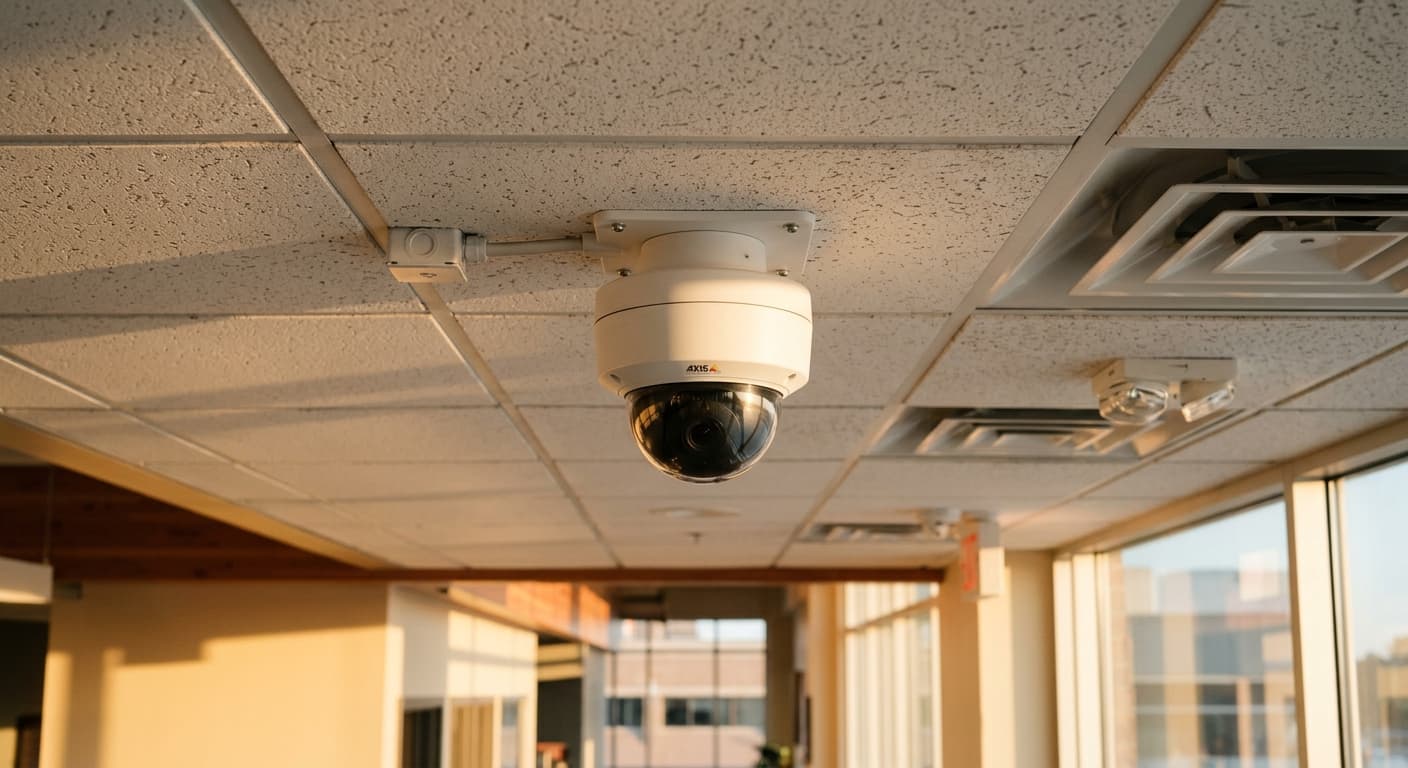
Whether an employer may use a workplace camera depends on the state, the room, whether the device captures sound, the notice given, and how the monitoring affects protected activity. No single rule in the sources reviewed decides every U.S. workplace setup.
Information last verified on September 12, 2026.
Jurisdiction scope: This article explains federal interception and labor-law frameworks and selected statutes in California, West Virginia, Connecticut, New York, and Delaware. It does not provide a 50-state camera-law census or decide a particular workplace dispute. Use the surveillance camera laws by state hub to reach the applicable state guide.
Workplace Surveillance Laws by State
Compare all 50 states and D.C.. Use the chart to open each state camera guide, a dedicated workplace recording guide where one is published, and a state audio guide. The substantive cells identify only the selected rules verified in this article. A navigation-only cell does not mean the state has no relevant law.
State-by-state comparison
Use this directory to compare verified camera and workplace-monitoring points, then open the linked state guides for scope and exceptions.
Navigation-only cells point to further state research. They do not mean that no law applies. Verified through 2026-09-12.
Can an Employer Use a Workplace Camera?
An employer’s ability to use a camera turns on several separate facts, so a nationwide yes or no answer is unreliable. Start with the governing state, the camera’s location and capabilities, the employer’s notice and stated purpose, and the way footage is collected or used.
A visible device in a reception area and a hidden device in a changing room present very different questions. A camera that stores silent video also differs from one that records conversations. State statutes may regulate specific rooms or forms of monitoring, while federal interception and labor laws can add separate issues.
The identity of the installer matters too. Determine whether the system belongs to the employer, building owner, landlord, security contractor, or another tenant. A workplace policy may describe the system, but a policy does not replace statutory requirements that apply in a particular state.
The safest first step is factual, not conclusory. Record where the camera is mounted, which area it appears to face, whether a microphone is enabled, whether signs or written policies exist, and whether monitoring occurs on an employer-owned or personal device. Avoid assuming that a visible lens shows the camera’s full field of view or recording settings.
Private Spaces: State Examples and Their Limits
Some states name particular workplace spaces, but each statute has its own wording. California and West Virginia provide useful examples, not a nationwide list of every protected room.
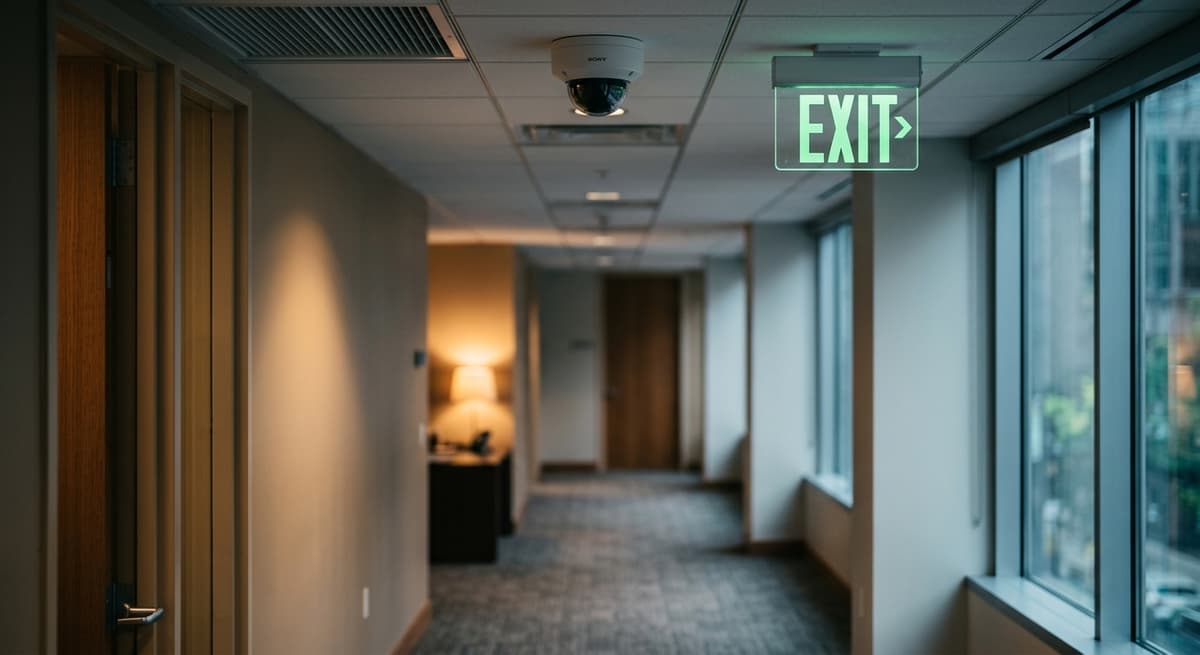
California bars an employer from causing an audio or video recording of an employee in a restroom, locker room, or room designated by the employer for changing clothes unless a court order authorizes the recording. It also bars the employer from using a recording made in violation of that rule. Those restrictions and the court-order qualification appear in Cal. Lab. Code § 435(a)-(b).
West Virginia uses a different list. It prohibits an employer or its agent from operating an electronic surveillance device or system to record or monitor employee activities in rest rooms, shower rooms, locker rooms, dressing rooms, and employee lounges, as stated in W. Va. Code § 21-3-20(a).
| State example | Conduct addressed by the cited provision | Important limit |
|---|---|---|
| California | Employer-caused audio or video recording in listed private rooms | The statute includes a court-order exception and separately restricts use of a violating recording |
| West Virginia | Employer electronic surveillance of employee activities in listed rooms | The employee-lounge language is a West Virginia rule, not a national rule |
These statutes do not support a claim that every state uses the same list or that every break room receives the same treatment. They also do not answer every question about a camera outside the listed spaces. The precise room, state, device, and employer relationship remain important.
Watch out: Do not reduce California’s rule to “cameras are forbidden in private spaces.” Section 435 identifies particular rooms, permits recording authorized by court order, and restricts an employer’s use of a recording made in violation.
Video Is Different From Audio Recording
A microphone can add a federal interception question that silent video does not present. Federal law defines a covered “oral communication” by reference to a speaker’s exhibited expectation that the communication is not subject to interception, in circumstances justifying that expectation, and defines “intercept” as acquisition through a device under 18 U.S.C. § 2510(2), (4).
The federal statute prohibits intentional interception, subject to statutory qualifications and exceptions. For a private actor, one provision permits interception where the person is a party or one party gave prior consent, unless the interception is for the purpose of committing a criminal or tortious act, under 18 U.S.C. § 2511(1)(a), (2)(d).
That framework does not mean every microphone violates federal law. It also does not mean one participant’s consent resolves state law. The communication, expectation, method of acquisition, consent, purpose, and other statutory exceptions must be examined. State recording-consent law may impose a different or additional rule, so consult the one-party and all-party consent state guide and then the relevant state page.
Device specifications can prevent a basic classification mistake. Check the model number, administrator settings, audio channel, storage system, live-monitoring features, and whether sound is disabled in software or only muted at a speaker. A camera housing may contain a microphone even when the deployed system does not save audio.
When an Employer Must Give Notice
Notice rules differ in both coverage and timing. Connecticut currently defines electronic monitoring to include cameras, while the cited New York and Delaware provisions enumerate telephone, email, and internet activity rather than creating a general CCTV-notice mandate.

As of September 12, 2026, Connecticut’s current law generally requires prior written notice to affected employees and conspicuous posting. Its camera-inclusive definition matters, but the statute excludes security collection in common areas held out for public use and monitoring prohibited by other state or federal law. See Conn. Gen. Stat. § 31-48d.
Connecticut has also enacted Public Act 26-73, which becomes effective October 1, 2026. The act adds location-specific notice content and posting requirements, plus a plain-language written statement for employees hired on or after October 1 identifying prohibited activities that may be monitored without prior written notice. The enacted text contains qualifications and exceptions, so its full terms should be checked for monitoring occurring on or after the effective date. See 2026 Conn. Pub. Acts 26-73.
New York requires notice for an employer’s monitoring or interception of employee telephone conversations or transmissions, electronic mail or transmissions, and internet access or usage. Although the provision lists electronic devices and systems used to monitor those subjects, that wording should not be converted into a standalone video-camera notice mandate. The enumerated scope appears in N.Y. Civ. Rights Law § 52-c*2(2).
Delaware likewise requires specified notice before an employer monitors or intercepts telephone conversations or transmissions, email or transmissions, or internet access or usage. The cited section provides for daily electronic notice or a one-time notice acknowledged by the employee, but it does not establish a standalone notice rule for ordinary workplace cameras. See 19 Del. C. § 705(a)-(c).
| Jurisdiction | What the cited notice law reaches | Camera-specific caution |
|---|---|---|
| Connecticut, through September 30, 2026 | Electronic monitoring, with a definition that includes cameras | Current notice and common-area exception must be read together |
| Connecticut, beginning October 1, 2026 | Amended electronic-monitoring requirements under Public Act 26-73 | Use the amended text for conduct on or after its effective date |
| New York | Listed telephone, email, and internet monitoring | Do not treat the device list as an independent CCTV rule |
| Delaware | Listed telephone, email, and internet monitoring | The cited section does not establish general camera notice |
A sign can supply useful information, but its presence or absence does not decide all other issues. A posted notice does not erase a private-room restriction, determine whether audio consent exists, or resolve a federal labor question.
Protected Concerted Activity and Union Issues
For employment covered by the National Labor Relations Act, camera use may raise a separate issue when it interferes with workers’ protected concerted activity. Section 7 protects covered employees’ rights to act together for collective bargaining or other mutual aid or protection, and section 8(a)(1) bars a covered employer from interfering with, restraining, or coercing employees in exercising those rights. See 29 U.S.C. §§ 157, 158(a)(1).
Those statutory sections support a warning, not a categorical workplace-camera rule. They do not establish from the text alone that every worker or employer is covered, that every camera is prohibited, that installing a camera always requires bargaining, or that a particular recording proves unlawful interference. A conclusion about a specific practice requires the applicable facts and controlling labor authority.
Documenting timing and context can help identify the question. Relevant facts may include when the camera appeared, what management communicated, whether its angle or settings changed, what activity occurred nearby, who had access to the footage, and whether the employer relied on it in discipline. Those facts do not decide the outcome by themselves.
How to Check the Rule That Applies at Your Workplace
Build a neutral record before choosing a legal route. The goal is to separate what can be observed from what remains unknown.
- Identify who installed, owns, and operates the system.
- Record the state and exact room or work area involved.
- Note whether the camera is visible, concealed, fixed, movable, or remotely controlled.
- Check whether it records audio, silent video, still images, live feeds, or some combination.
- Save relevant handbook pages, consent forms, onboarding notices, posted signs, and monitoring policies.
- Note the employer’s stated purpose and whether the device covers a customer-facing common area or an employee-only space.
- Determine whether monitoring involves an employer-owned device, personal device, work account, or personal account.
- Record whether footage was mentioned in discipline, an investigation, or a workplace dispute.
- Ask what retention period and access controls the employer’s policy states, without assuming the law creates a universal retention period.
- Preserve dates, photographs taken from lawful vantage points, messages, and policy versions without touching, blocking, or disabling the equipment.
An employee can ask the employer or human-resources department what the system captures and which policy governs it. A written request may create a clear record of the question, but this article does not promise a universal right to obtain footage or a particular response. Union-represented employees may also raise the issue through their representative.
If the facts point to audio, start with the relevant state recording-law page. If they point to a listed private room, compare the statute’s exact language with that room and employer relationship. For a broader map of state camera resources, use the workplace section of the surveillance camera laws hub.
This article provides general legal information about selected U.S. federal and state laws, verified September 12, 2026. It is not legal advice. Consult an attorney licensed in the relevant state for advice about a specific workplace, recording, notice, or labor issue.
Statutes cited reflect the versions reviewed as of September 12, 2026. Connecticut Public Act 26-73 is enacted and becomes effective October 1, 2026.
Last updated: September 12, 2026.
Frequently Asked Questions
Does a workplace camera sign make recording legal?
A sign may be relevant to notice, but it does not resolve every issue. California’s listed-room restriction, federal audio rules, and protections for covered concerted activity involve separate requirements.
Can a workplace camera record audio?
Audio may trigger 18 U.S.C. §§ 2510 and 2511 as well as state recording-consent law. The communication, expectation, acquisition, consent, purpose, and statutory exceptions all matter.
Does Connecticut require notice of workplace cameras?
As of September 12, 2026, Connecticut’s current electronic-monitoring law includes cameras and generally requires prior written notice and conspicuous posting, subject to exceptions. Public Act 26-73 is enacted and changes the requirements beginning October 1, 2026.
Can an employee demand a copy of workplace camera footage?
The authorities reviewed for this article do not establish a universal U.S. right to receive workplace footage. The answer may depend on state law, a workplace policy, a collective-bargaining agreement, litigation rules, or another specific legal process.
Updates
Added a comparison linking camera, workplace and audio guides for all 50 states and D.C.; reconciled the legal-source connections.
Rewrote the guide to remove unsupported nationwide rules, clarify federal audio and labor-law limits, and explain Connecticut Public Act 26-73 before its October 1, 2026 effective date.
Independently fact-checked against the cited primary sources
Corrected the summary of Michigan MCL 750.539d, which is a general private-place criminal statute rather than an express employer ban on restroom and locker-room cameras, and added the court-order exception in California Labor Code 435.
Independently fact-checked against the cited primary sources
Governing law re-checked for recent changes
Reviewed and approved by an editor
The Law Behind This Article
This article rests on the statutory provisions below, held in our own legal record and retrieved from the official source. Tap a section to read the operative text.
California Labor Code
§ 435In forcecited in 7 of our articles
(a) No employer may cause an audio or video recording to be made of an employee in a restroom, locker room, or room designated by an employer for changing clothes, unless authorized by court order. (b) No recording made in violation of this section may be used by an employer for any purpose. This section applies to a private or public employer, except the federal government. (c) A violation of this section constitutes an infraction.
Official text (excerpt) · last checked 2026-07-28 · Read the full text in our law library · Verify at leginfo.legislature.ca.gov
Cited in 1 court opinions in our collectionLatest citing opinion in our collection: 2006
Opinions citing this section in our collection:
- Trujillo v. City of Ontario (District Court, C.D. California 2006, 428 F. Supp. 2d 1094)“…See, e.g., Cal.Penal Code §§ 647(k), 653(n); Cal. Labor Code 435. While the laws concerning video survei…”
Identified automatically from the court opinions citing this section — not a ranking of which case controls.
Delaware Code, Title 19 (Labor), Chapter 007 (EMPLOYMENT PRACTICES)
§ 705Notice of monitoring of telephone transmissions, electronic mail and Internet usage.In forcecited in 8 of our articles
(a) As used in this section, “employer” includes any individual, corporation, partnership, firm or association with a place of business in Delaware and the State of Delaware or any agency or political subdivision thereof. (b) No employer, nor any agent or any representative of any employer, shall monitor or otherwise intercept any telephone conversation or transmission, electronic mail or transmission, or Internet access or usage of or by a Delaware employee unless the employer either: (1) Provides an electronic notice of such monitoring or intercepting policies or activities to the employee at least once during each day the employee accesses the employer-provided e-mail or Internet access services; or (2) Has first given a 1-time notice to the employee of such monitoring or intercepting activity or policies. The notice required by this paragraph shall be in writing, in an electronic record, or in another electronic form and acknowledged by the employee either in writing or electronically. The notice required by this subsection shall not apply to activities of any law-enforcement officer acting under the order of a court issued pursuant to Chapter 24 of Title 11.
Official text (excerpt) · last checked 2026-08-31 · Read the full text in our law library · Verify at delcode.delaware.gov
Cited in 1 court opinions in our collectionLatest citing opinion in our collection: 2013
Opinions citing this section in our collection:
- In re Information Management Services, Inc. Derivative Litigation (Court of Chancery of Delaware 2013, 81 A.3d 278)“…r (ii) obtain written consent from the monitored employees. 19 Del. C. § 705(b). Although the court need not reach t…”
Identified automatically from the court opinions citing this section — not a ranking of which case controls.
United States Code Title 18
§ 2510DefinitionsIn forcecited in 126 of our articles
As used in this chapter— “wire communication” means any aural transfer made in whole or in part through the use of facilities for the transmission of communications by the aid of wire, cable, or other like connection between the point of origin and the point of reception (including the use of such connection in a switching station) furnished or operated by any person engaged in providing or operating such facilities for the transmission of interstate or foreign communications or communications affecting interstate or foreign commerce; “oral communication” means any oral communication uttered by a person exhibiting an expectation that such communication is not subject to interception under circumstances justifying such expectation, but such term does not include any electronic communication; “State” means any State of the United States, the District of Columbia, the Commonwealth of Puerto Rico, and any territory or possession of the United States; “intercept” means the aural or other acquisition of the contents of any wire, electronic, or oral communication through the use of any electronic, mechanical, or other device.1 So in original. The period probably should be a semicolon.
Official text (excerpt) · last checked 2026-07-28 · Read the full text in our law library · Verify at uscode.house.gov
Cited in 2,382 court opinions in our collectionLatest citing opinion in our collection: 2026
In the courts (editorial summary, independently checked):United States v. New York Telephone Co. (1977) held that pen registers fall outside Title III because they do not acquire the contents of a communication as Section 2510(4) and (8) define interception. Forsyth v. Barr (1994) applied the same definitions, treating the defendant officers as law enforcement officers under Section 2510(7).
Opinions citing this section in our collection:
- Forsyth v. Barr (Court of Appeals for the Fifth Circuit 1994, 19 F.3d 1527)✓Neighbors tapped an informant's home line and the overheard charges reached Dallas internal affairs; the Fifth Circuit saw no evidence the police defendants intercepted anything and held they were 2510(7) law enforcement officers, so 2517(1) and (2) allowed their use of it.
- Nixon v. Administrator of General Services (Supreme Court of the United States 1977, 433 U.S. 425)“…of the Omnibus Crime Control and Safe Streets Act of 1968, 18 U. S. C. §§ 2510 et seq. 408 F. Supp., at 363 . We…”
- Gannett Co. v. DePasquale (Supreme Court of the United States 1979, 443 U.S. 368)“…of the Omnibus Crime Control and Safe Streets Act of 1968, 18 U. S. C. § 2510 et seq., be preserved prior to the d…”
Identified automatically from the court opinions citing this section — not a ranking of which case controls.
§ 2511Interception and disclosure of wire, oral, or electronic communications prohibitedIn forcecited in 418 of our articles
Except as otherwise specifically provided in this chapter any person who— intentionally intercepts, endeavors to intercept, or procures any other person to intercept or endeavor to intercept, any wire, oral, or electronic communication; intentionally uses, endeavors to use, or procures any other person to use or endeavor to use any electronic, mechanical, or other device to intercept any oral communication when— such device is affixed to, or otherwise transmits a signal through, a wire, cable, or other like connection used in wire communication; or such device transmits communications by radio, or interferes with the transmission of such communication; or such person knows, or has reason to know, that such device or any component thereof has been sent through the mail or transported in interstate or foreign commerce; or such use or endeavor to use (A) takes place on the premises of any business or other commercial establishment the operations of which affect interstate or foreign commerce; or (B) obtains or is for the purpose of obtaining information relating to the operations of any business or other commercial establishment the operations of which affect interstate or foreign…
Official text (excerpt) · last checked 2026-08-28 · Read the full text in our law library · Verify at uscode.house.gov
Cited in 2,045 court opinions in our collectionLatest citing opinion in our collection: 2026
In the courts (editorial summary, independently checked):Griggs-Ryan v. Smith (1990) applied the Section 2511(2)(d) prior-consent exception, treating a tenant repeatedly told that all incoming calls were taped as having impliedly consented. United States v. United States District Court (1972) read the then-current Section 2511(3) as conferring no presidential surveillance power.
Opinions citing this section in our collection:
- Mitchell v. Forsyth (Supreme Court of the United States 1985, 472 U.S. 511)✓The Attorney General authorized a warrantless 1970 national security wiretap that caught the plaintiff's calls; the Court held the since-repealed Section 2511(3) disclaimer left the tap lawful under Title III, and that Mitchell had qualified immunity.
- United States v. United States District Court for the Eastern District of Michigan (Supreme Court of the United States 1972, 407 U.S. 297)✓The Attorney General approved warrantless wiretaps on members of a domestic group accused of bombing a CIA office; the Court read Section 2511(3) as a congressional disclaimer conferring no surveillance power, then held the Fourth Amendment required prior judicial approval.
- Forsyth v. Barr (Court of Appeals for the Fifth Circuit 1994, 19 F.3d 1527)✓Dallas police used, in an internal affairs probe of an officer, calls private parties allegedly intercepted illegally; assuming that was unlawful, the Fifth Circuit held Section 2517(1) and (2) allowed the disclosure and use, defeating the Section 2511(1)(c) and (d) claims.
Identified automatically from the court opinions citing this section — not a ranking of which case controls.
West Virginia Code
§ 21-3-20Use of video and other electronic surveillance devices by employers prohibited.In forcecited in 17 of our articles
(a) It is unlawful for any employer or the agent or representative of an employer, whether public or private, to operate any electronic surveillance device or system, including, but not limited to, the use of a closed circuit television system, a video-recording device, or any combination of those or other electronic devices for the purpose of recording or monitoring the activities of the employees in areas designed for the health or personal comfort of the employees or for safeguarding of their possessions, such as rest rooms, shower rooms, locker rooms, dressing rooms and employee lounges. (b) Any employer or agent thereof who violates any provision of this section is guilty of a misdemeanor and, if convicted, shall be fined $500 for the first offense. An employer or agent thereof convicted a second time under this provision shall be fined $1,000. For the third and any subsequent offense, the penalty shall be $2,000.
Official text (excerpt) · last checked 2026-08-31 · Read the full text in our law library · Verify at code.wvlegislature.gov
Cited in 1 court opinions in our collectionLatest citing opinion in our collection: 2019
Opinions citing this section in our collection:
- Blackwood v. Berry Dunn, LLC (District Court, S.D. West Virginia 2019)“…out being in an area protected from monitoring by W. Va. Code § 21-3-20, it cannot be said that taking a…”
Identified automatically from the court opinions citing this section — not a ranking of which case controls.
Connecticut General Statutes, Title 31 (Labor), Chapter 557
§ 31-48dEmployers engaged in electronic monitoring required to give prior notice to employees. Exceptions. Civil penalty.In forcecited in 20 of our articles
(a) As used in this section: (1) “Employer” means any person, firm or corporation, including the state and any political subdivision of the state which has employees; (2) “Employee” means any person who performs services for an employer in a business of the employer, if the employer has the right to control and direct the person as to (A) the result to be accomplished by the services, and (B) the details and means by which such result is accomplished; and (3) “Electronic monitoring” means the collection of information on an employer's premises concerning employees' activities or communications by any means other than direct observation, including the use of a computer, telephone, wire, radio, camera, electromagnetic, photoelectronic or photo-optical systems, but not including the collection of information (A) for security purposes in common areas of the employer's premises which are held out for use by the public, or (B) which is prohibited under state or federal law.
Official text (excerpt) · last checked 2026-08-31 · Read the full text in our law library · Verify at cga.ct.gov
Cited in 4 court opinions in our collectionLatest citing opinion in our collection: 2021
In the courts (editorial summary, independently checked):Gerardi v. City of Bridgeport (2010) held that section 31-48d creates no private right of action, reading subsection (c) to delegate all enforcement of the electronic monitoring notice duty to the labor commissioner. J.P. Alexandre, LLC v. Egbuna (2012) cited that reading when rejecting an implied right of action under a tax statute.
Opinions citing this section in our collection:
- Gerardi v. City of Bridgeport (Supreme Court of Connecticut 2010, 294 Conn. 461)✓Bridgeport put GPS units in fire inspectors' city vehicles without telling them, then disciplined them; the Connecticut Supreme Court held section 31-48d creates no private right of action because subsection (c) leaves enforcement to the labor commissioner.
- Borelli v. Renaldi (Supreme Court of Connecticut 2020, 336 Conn. 1)“…(2010) (comparing electronic monitoring statute, General Statutes § 31-48d, to other employment statutes…”
- J.P. Alexandre, LLC v. Egbuna (Connecticut Appellate Court 2012, 137 Conn. App. 340)“…idgeport, supra, 294 Conn. 472 (rejecting claim that General Statutes § 31-48d [c] provided private right of action wh…”
Identified automatically from the court opinions citing this section — not a ranking of which case controls.
United States Code Title 29
§ 157Right of employees as to organization, collective bargaining, etc.In forcecited in 8 of our articles
Employees shall have the right to self-organization, to form, join, or assist labor organizations, to bargain collectively through representatives of their own choosing, and to engage in other concerted activities for the purpose of collective bargaining or other mutual aid or protection, and shall also have the right to refrain from any or all of such activities except to the extent that such right may be affected by an agreement requiring membership in a labor organization as a condition of employment as authorized in section 158(a)(3) of this title.
Official text (excerpt) · last checked 2026-07-28 · Read the full text in our law library · Verify at uscode.house.gov
Cited in 3,557 court opinions in our collectionLatest citing opinion in our collection: 2026
Opinions citing this section in our collection:
- Abood v. Detroit Board of Education (Supreme Court of the United States 1977, 431 U.S. 209)“…tively, Mich. Comp. Laws §§ 423.209 , 423.215 (1970); see 29 U. S. C. § 157 ; 45 U. S. C. § 152 Fourth; and the r…”
- National Labor Relations Board v. Bell Aerospace Co. (Supreme Court of the United States 1974, 416 U.S. 267)“…the National Labor Relations Act. Section 7 of the Act, 29 U. S. C. § 157 , provides that “[ejmployees shall have…”
- Epic Systems Corp. v. Lewis (Supreme Court of the United States 2018, 584 U.S. 497)“…llective bargaining or other mutual aid or protection,” 29 U. S. C. §157. But §7 focuses on the right to orga…”
Identified automatically from the court opinions citing this section — not a ranking of which case controls.
§ 158Unfair labor practicesIn forcecited in 2 of our articles
It shall be an unfair labor practice for an employer— to interfere with, restrain, or coerce employees in the exercise of the rights guaranteed in section 157 of this title; to dominate or interfere with the formation or administration of any labor organization or contribute financial or other support to it: Provided, That subject to rules and regulations made and published by the Board pursuant to section 156 of this title, an employer shall not be prohibited from permitting employees to confer with him during working hours without loss of time or pay; by discrimination in regard to hire or tenure of employment or any term or condition of employment to encourage or discourage membership in any labor organization: Provided, That nothing in this subchapter, or in any other statute of the United States, shall preclude an employer from making an agreement with a labor organization (not established, maintained, or assisted by any action defined in this subsection as an unfair labor practice) to require as a condition of employment membership therein on or after the thirtieth day following the beginning of such employment or the effective date of such agreement, whichever is the later,…
Official text (excerpt) · last checked 2026-07-28 · Read the full text in our law library · Verify at uscode.house.gov
New York Civil Rights Law
§ 52-c*2Employers engaged in electronic monitoring; prior notice requiredIn forcecited in 4 of our articles
* § 52-c. Employers engaged in electronic monitoring; prior notice required. 1. For purposes of this section, employer means any individual, corporation, partnership, firm, or association with a place of business in the state. It shall not include the state or any political subdivision of the state. 2. (a) Any employer who monitors or otherwise intercepts telephone conversations or transmissions, electronic mail or transmissions, or internet access or usage of or by an employee by any electronic device or system, including but not limited to the use of a computer, telephone, wire, radio, or electromagnetic, photoelectronic or photo-optical systems, shall give prior written notice upon hiring to all employees who are subject to electronic monitoring. The notice required by this subdivision
Official text (excerpt) · last checked 2026-09-12 · Read the full text in our law library · Verify at nysenate.gov
Search our full record of US law — 2.1 million sections, every state + federal →
Sources and References
- Cal. Lab. Code § 435, recording employees in listed rooms(leginfo.legislature.ca.gov).gov
- W. Va. Code § 21-3-20, electronic surveillance of employees(code.wvlegislature.gov).gov
- 18 U.S.C. § 2510, oral communication and interception definitions(uscode.house.gov).gov
- 18 U.S.C. § 2511, interception prohibition and consent exception(uscode.house.gov).gov
- Conn. Gen. Stat. § 31-48d, current electronic-monitoring law(prdext2.cga.ct.gov).gov
- 2026 Conn. Pub. Acts 26-73, changes effective October 1, 2026(cga.ct.gov).gov
- N.Y. Civ. Rights Law § 52-c*2, notice of enumerated electronic monitoring(nysenate.gov).gov
- 19 Del. C. § 705, notice of telephone, email, and internet monitoring(delcode.delaware.gov).gov
- National Labor Relations Act §§ 7 and 8(a)(1)(nlrb.gov).gov