
North Carolina
North Carolina Workplace Recording Laws: Employee and Employer Rights
Independently fact-checked against primary sources (last audited August 15, 2026). · Reviewed by the RecordingLaw editorial team. · Law checked current as of August 15, 2026. · 13 primary sources cited on this page. How we verify our legal content
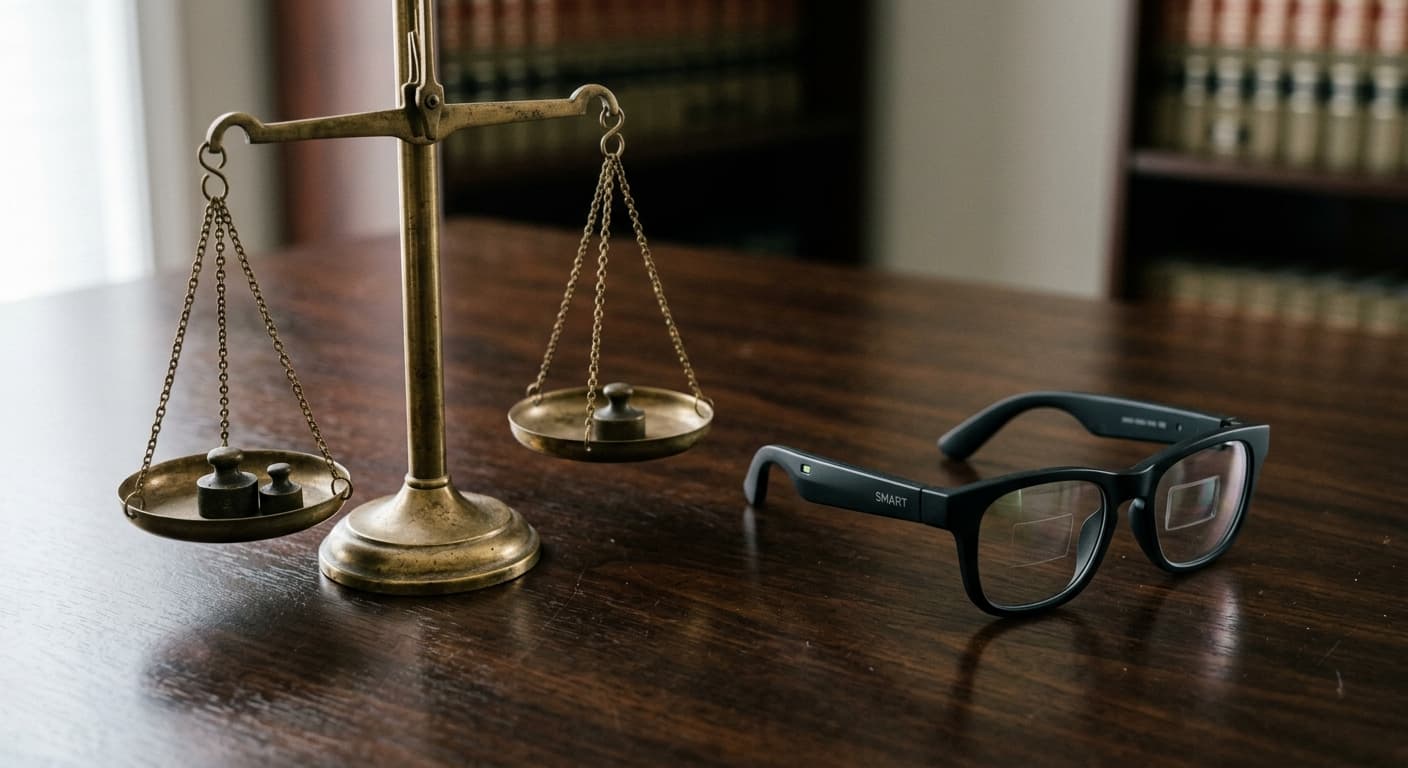
North Carolina is a one-party consent state, so employees can legally record any workplace conversation they participate in without notifying coworkers, supervisors, or HR under N.C. Gen. Stat. 15A-287. Employers may still enforce internal no-recording policies, and violating one can result in discipline or termination.
North Carolina's one-party consent law gives employees broad rights to record workplace conversations. Under N.C. Gen. Stat. 15A-287, you can record any conversation you participate in at work without telling your coworkers, supervisor, or HR department. At the same time, employers have their own rights to conduct video surveillance in common areas and may enforce internal policies that restrict recording. This guide covers the full picture of workplace recording rights and limitations in North Carolina.
Employee Rights to Record at Work
Can You Record Conversations With Your Boss?
Yes. As a one-party consent state, North Carolina allows you to record any conversation you are part of. This includes one-on-one meetings with your supervisor, performance reviews, disciplinary discussions, and informal conversations. You do not need to tell your boss you are recording, and you do not need to get permission.
Employees often record workplace conversations to:
- Document harassment or discrimination
- Preserve the details of verbal instructions or agreements
- Create a record of performance reviews and feedback
- Gather evidence for potential legal claims
- Record discussions about pay, scheduling, or working conditions
Can You Record HR Meetings?
Yes. If you are called into an HR meeting, you have the legal right to record it under North Carolina law. HR meetings involving investigations, disciplinary actions, terminations, and grievance discussions can all be recorded by any employee who is a participant.
This is particularly valuable because HR meetings often involve factual disputes about what was said. A recording creates an objective record that can support your version of events if a disagreement arises later.
Can You Record Coworkers?
Yes, as long as you are participating in the conversation. You can record conversations with coworkers during meetings, at lunch, or in casual discussions. You cannot, however, place a recording device somewhere to capture coworker conversations that you are not part of.
Employer Surveillance Rights
Video Surveillance in Common Areas
North Carolina employers can install video cameras (without audio) in common work areas where employees do not have a reasonable expectation of privacy. Permissible locations include:
- Entrances and exits
- Hallways and corridors
- Production floors and workstations in open areas
- Warehouses and storage areas
- Parking lots and loading docks
- Retail sales floors
- Reception and lobby areas
Employers do not need to obtain individual employee consent before installing video surveillance in these areas. However, posting visible signage notifying employees and visitors of the cameras is a recommended best practice that reduces the expectation of privacy and minimizes legal risk.
Prohibited Surveillance Locations
Employers cannot install surveillance cameras in areas where employees have a heightened expectation of privacy, regardless of any business justification. These include:
- Bathrooms and restrooms
- Locker rooms and changing areas
- Lactation rooms
- Break rooms used exclusively by employees (this area is debatable and depends on circumstances)
- Any area specifically designated for private use
Recording in these locations could violate North Carolina's voyeurism statute (N.C. Gen. Stat. 14-202) and expose the employer to both criminal prosecution and civil liability.
Audio Surveillance by Employers
If employer surveillance systems capture audio, the one-party consent rule under N.C. Gen. Stat. 15A-287 applies. This means the employer needs consent from at least one party to any conversation being recorded. In practice, this creates complications because employees in a monitored area may be having private conversations that the employer has no right to capture.
Many employment attorneys advise employers to disable audio recording features on workplace cameras entirely to avoid potential wiretapping liability. If audio recording is deemed necessary for a specific business purpose, the employer should notify all affected employees in writing and obtain their consent.
Employer No-Recording Policies
Can Employers Prohibit Recording?
Yes. North Carolina employers can implement workplace policies that prohibit or restrict employee recording. While recording is legal under state law, violating an employer's recording policy can serve as grounds for disciplinary action, up to and including termination. North Carolina is an at-will employment state, which means employers can fire employees for any reason that is not specifically prohibited by law.
A typical employer no-recording policy might state that employees are prohibited from recording meetings, conversations, or other workplace activities without advance approval from management. Violating such a policy could result in progressive discipline or immediate termination.
NLRA Limitations on No-Recording Policies
The National Labor Relations Act (NLRA) creates an important federal limitation on employer recording policies. Section 7 of the NLRA protects employees' rights to engage in "protected concerted activity," which includes actions taken with other workers to address workplace conditions.
The National Labor Relations Board (NLRB) applies the Stericycle, Inc., 372 NLRB No. 113 (2023) standard: a workplace rule violates the NLRA if it would reasonably tend to chill employees from exercising Section 7 rights, even if the employer has a legitimate justification. Under this standard, overly broad no-recording policies can violate Section 7 and Section 8(a)(1) of the NLRA. NLRB General Counsel Memorandum GC 25-05 (Feb. 14, 2025) rescinded a broad set of prior General Counsel memoranda, including substantive employee-protective enforcement guidance, but a GC memo cannot overturn Board precedent: the Stericycle standard remains the controlling law. A policy that would reasonably chill employees from exercising their rights to:
- Document unsafe working conditions
- Gather evidence of wage violations
- Record discussions about organizing or collective bargaining
- Capture evidence of employer unfair labor practices
...may be found unlawful by the NLRB.
Crafting a Compliant Policy
Employers who want to restrict recording should draft narrowly tailored policies that:
- Explain the legitimate business reasons for the restriction (trade secrets, client confidentiality, patient privacy)
- Include exceptions for legally protected activities
- Do not apply to public or common areas where no privacy expectation exists
- Are applied consistently and not used selectively to target employees who report concerns
An employer wearable recording device policy should similarly balance business interests against employee rights under both state and federal law.
Recording Harassment and Discrimination
Documenting Workplace Harassment
One of the most common reasons employees record at work is to document harassment. In North Carolina, you have the legal right to record:
- Verbal harassment from supervisors or coworkers
- Discriminatory comments or slurs
- Threats or intimidating behavior
- Hostile work environment conduct
- Sexual harassment incidents you witness as a participant
Because North Carolina follows one-party consent, your recording is legal as long as you are present and participating in (or directly subjected to) the conversation or conduct being recorded.
Using Recordings in Harassment Claims
Recordings can serve as powerful evidence in harassment and discrimination claims filed with the Equal Employment Opportunity Commission (EEOC) or in state court. A legally obtained recording:
- Provides objective evidence of what was said
- Eliminates the "he said, she said" problem
- Establishes a pattern of behavior when multiple incidents are recorded
- Supports claims of hostile work environment or quid pro quo harassment
Whistleblower Protections
North Carolina's Retaliatory Employment Discrimination Act (REDA) protects employees who report or oppose certain unlawful workplace practices from retaliation. While REDA does not create a specific exception to employer recording policies, an employer who fires an employee for recording evidence of illegal activity may face a retaliation claim, particularly if the recording documented safety violations, wage theft, or discrimination.
Federal whistleblower protections under statutes like the Occupational Safety and Health Act (OSHA) and the Sarbanes-Oxley Act provide additional layers of protection for employees who record evidence of workplace violations.
Remote Work and Virtual Meeting Recording
Recording Zoom and Teams Meetings
North Carolina's one-party consent law applies to virtual meetings the same way it applies to in-person conversations. If you are a participant in a Zoom, Microsoft Teams, Google Meet, or other video conference, you can record the meeting without notifying other participants.
However, cross-state considerations apply. If any participant in the virtual meeting is located in a two-party consent state, the stricter law may govern the interaction. When in doubt, use the platform's built-in recording notification feature, which alerts all participants when recording begins.
Employer Monitoring of Remote Workers
Employers who monitor remote employees through screen-capture software, keystroke logging, or webcam monitoring should provide written notice to employees about the scope and nature of the monitoring. While North Carolina does not have a specific employee monitoring disclosure statute, transparency reduces legal risk and maintains employee trust.
Wearable Recording Devices at Work
North Carolina's one-party consent framework applies to wearable recording devices at work the same way it applies to any other recording tool. If you are a party to the conversation, you can use a smartwatch, AI voice recorder, body camera, or other wearable to capture the interaction.
Smart glasses like Meta Ray-Bans raise additional considerations because they capture both audio and video. While the audio recording follows one-party consent rules, using video-capable wearables in areas where coworkers have a reasonable expectation of privacy (such as break rooms or private offices) could create legal exposure under North Carolina's voyeurism statute.
Employers can restrict wearable recording devices through workplace policies. As with general no-recording policies, these restrictions must be balanced against employee rights under the NLRA.
Industry-Specific Workplace Recording Rules
Healthcare Workplaces
Healthcare employers must balance recording rights against patient privacy obligations under HIPAA. Employees in healthcare settings should not record patient information or conversations that could reveal protected health information. Recording workplace interactions that do not involve patients (staff meetings, HR discussions, break room conversations) follows standard one-party consent rules.
Financial Services
Financial industry employers may restrict recording to protect client confidentiality and comply with regulatory requirements from agencies like the SEC and FINRA. These restrictions are typically enforced through employment agreements and compliance policies rather than state recording law.
Government Workplaces
North Carolina government employees have the same one-party consent recording rights as private-sector employees. However, government employers may have additional policies governing the use of recording devices in secure areas, during confidential proceedings, or when handling classified information.
The UNC School of Government has noted that public-sector employers in North Carolina face particular challenges in restricting employee recording, because government workplaces must also respect First Amendment considerations that do not apply in the private sector.
Penalties for Illegal Workplace Recording
Criminal Penalties
Illegal recording in the workplace carries the same penalties as any other violation of N.C. Gen. Stat. 15A-287. It is a Class H felony, carrying a minimum sentence of 4 to 25 months depending on prior record level, with corresponding maximum sentences of up to 39 months, under the state's structured sentencing guidelines.
Civil Liability
Under N.C. Gen. Stat. 15A-296, employees whose communications were illegally intercepted can sue for actual damages, statutory minimum damages ($100/day or $1,000), punitive damages, and attorney fees.
Employment Consequences
Even when a recording is legal under state law, violating an employer's recording policy can result in:
- Verbal or written warnings
- Suspension
- Termination
- Loss of severance or other benefits tied to policy compliance
North Carolina Recording Laws by Topic
Phone Call Recording | Audio Recording | Video Recording | Workplace Recording | Recording Police | Security Cameras | Recording in Public | Landlord-Tenant | Dashcam Laws | Schools | Medical Recording | Voyeurism & Hidden Cameras
Back to North Carolina Recording Laws
More North Carolina Recording Topics
More North Carolina Laws
Frequently Asked Questions
Can I record my boss without their knowledge in North Carolina?
Yes. North Carolina is a one-party consent state under N.C. Gen. Stat. 15A-287. You can legally record any conversation you participate in, including meetings with your boss, without informing them. However, check your employer's recording policy first, as violating it could result in disciplinary action or termination.
Can my employer put cameras in the workplace in North Carolina?
Employers can install video-only surveillance cameras in common work areas like hallways, production floors, and parking lots. Cameras are prohibited in bathrooms, locker rooms, and changing areas. If cameras capture audio, the employer must comply with one-party consent rules under the state wiretapping law.
Can I be fired for recording a conversation at work in North Carolina?
Yes. Although recording is legal under state law, North Carolina is an at-will employment state, and your employer can terminate you for violating an internal no-recording policy. However, the NLRB has ruled that overly broad no-recording policies may violate the National Labor Relations Act when they interfere with protected concerted activity.
Can I record evidence of workplace harassment in North Carolina?
Yes. You can legally record instances of harassment, discrimination, or hostile work environment conduct that you personally experience or participate in. These recordings can serve as evidence in complaints filed with the EEOC or in civil lawsuits. Make sure to keep the original recordings unedited and store them securely.
Does my employer have to tell me about workplace surveillance in North Carolina?
North Carolina does not have a specific statute requiring employers to notify employees about video surveillance. However, posting visible signage and including surveillance disclosures in the employee handbook is a recommended best practice. For audio surveillance, the employer must comply with one-party consent requirements under N.C. Gen. Stat. 15A-287.
Updates
Corrected the NLRB Stericycle, Inc. citation, which had linked to an unrelated case docket, to point to the case's actual docket (04-CA-137660).
Independently fact-checked against the cited primary sources; governing law re-checked for recent changes
Governing law re-checked for recent changes
Restated the Class H felony penalty as a 4 to 25 month minimum-sentence range with maximums up to 39 months under G.S. 15A-1340.17. Updated NLRA no-recording-policy analysis to cite Stericycle, Inc. (2023) as controlling standard. Fixed ncleg.net URLs to ncleg.gov. Added Stericycle to SourcesList.
Reviewed and approved by an editor
The Law Behind This Article
This article rests on the statutory provisions below, held in our own legal record and retrieved from the official source. Tap a section to read the operative text.
North Carolina General Statutes, Chapter 15A: Criminal Procedure Act.
§ 15A-287Interception and disclosure of wire, oral, or electronic communications prohibitedIn forcecited in 18 of our articles
(a) Except as otherwise specifically provided in this Article, a person is guilty of a Class H felony if, without the consent of at least one party to the communication, the person: (1) Willfully intercepts, endeavors to intercept, or procures any other person to intercept or endeavor to intercept, any wire, oral, or electronic communication. (2) Willfully uses, endeavors to use, or procures any other person to use or endeavor to use any electronic, mechanical, or other device to intercept any oral communication when: a. The device is affixed to, or otherwise transmits a signal through, a wire, cable, or other like connection used in wire communications; or b. The device transmits communications by radio, or interferes with the transmission of such communications.
Official text (excerpt) · last checked 2026-07-29 · Read the full text in our law library · Verify at ncleg.gov
Cited in 12 court opinions in our collectionLatest citing opinion in our collection: 2026
In the courts (editorial summary, independently checked):North Carolina courts apply Section 15A-287 to private recording. Kroh v. Kroh (2002) held it reaches one spouse's nonconsensual audio recording of the other in the family home, not video without sound, and adopted vicarious consent by a custodial parent. State v. McGriff (2002) held interception is not willful absent a bad purpose.
Opinions citing this section in our collection:
- State v. McGriff (Court of Appeals of North Carolina 2002, 151 N.C. App. 631)✓A neighbor's cordless phone picked up a call in which a girl said McGriff had tried to force oral sex on her, and she listened about an hour; the court held listening out of concern for a minor was not willful interception under Section 15A-287(a)(1), so the evidence came in.
- Wright v. TOWN OF ZEBULON (Court of Appeals of North Carolina 2010, 202 N.C. App. 540)✓A police chief hid a transmitter under a sergeant's patrol car seat to test whether he tipped off drug dealers; the court affirmed summary judgment on his Section 15A-287(a)(1) claim, finding the public safety purpose meant the interception was not willful.
- Kroh v. Kroh (Court of Appeals of North Carolina 2002, 152 N.C. App. 347)“…rs to intercept, . . . any . . . oral . . . communication.” G.S. § 15A-287(a)(l). An “oral communication” includes…”
Identified automatically from the court opinions citing this section — not a ranking of which case controls.
Also relied on in: North Carolina Smart Glasses Recording Laws 2026, North Carolina Video Recording Laws: Public, Private, and Voyeurism Rules, North Carolina Recording Laws (2026): One-Party Consent Rules
§ 15A-296Recovery of civil damages authorizedIn forcecited in 8 of our articles
(a) Any person whose wire, oral, or electronic communication is intercepted, disclosed, or used in violation of this Article, has a civil cause of action against any person who intercepts, discloses, uses, or procures any other person to intercept, disclose, or use such communications, and is entitled to recover from any other person: (1) Actual damages, but not less than liquidated damages, computed at the rate of one hundred dollars ($100.00) a day for each day of violation or one thousand dollars ($1,000), whichever is higher; (2) Punitive damages; and (3) A reasonable attorneys' fee and other litigation costs reasonably incurred. (b) Good faith reliance on a court order or on a representation made by the Attorney General or a district attorney is a complete defense to any civil or criminal action brought under this Article.
Official text (excerpt) · last checked 2026-07-29 · Read the full text in our law library · Verify at ncleg.gov
Cited in 4 court opinions in our collectionLatest citing opinion in our collection: 2026
Opinions citing this section in our collection:
- Kroh v. Kroh (Court of Appeals of North Carolina 2002, 152 N.C. App. 347)“…nce Act and awarded $1,000.00 in compensatory damages under G.S. § 15A-296. Following a bench trial on the remaini…”
- Riddick v. Gates Cnty. (Court of Appeals of North Carolina 2026)“…in the Board of Elections.” Plaintiff sues pursuant to N.C.G.S. § 15A-296, which creates a civil cause of action…”
- Wright v. TOWN OF ZEBULON (Court of Appeals of North Carolina 2010, 202 N.C. App. 540)“…damages, attorney’s fees, and associated litigation costs. N.C. Gen. Stat. § 15A-296(a) (2009); Kroh v. Kroh,…”
Identified automatically from the court opinions citing this section — not a ranking of which case controls.
Also relied on in: North Carolina Phone Call Recording Laws: What You Need to Know, North Carolina Ring Doorbell Laws: What You Need to Know in 2026, North Carolina Surveillance Camera Laws (2026 Guide)
North Carolina General Statutes, Chapter 14: Criminal Law.
§ 14-202Secretly peeping into room occupied by another personIn forcecited in 12 of our articles
(a) Any person who shall peep secretly into any room occupied by another person shall be guilty of a Class 1 misdemeanor. (a1) Unless covered by another provision of law providing greater punishment, any person who secretly or surreptitiously peeps underneath or through the clothing being worn by another person, through the use of a mirror or other device, for the purpose of viewing the body of, or the undergarments worn by, that other person without their consent shall be guilty of a Class 1 misdemeanor. (b) The following definitions apply in this section: (1) Photographic image. - Any photograph or photographic reproduction, still or moving, or any videotape, motion picture, or live television transmission, or any digital image of any individual. (2) Private area of an individual. - The naked or undergarment clad genitals, pubic area, buttocks, or female breast of that individual. (3) Room. - Includes, but is not limited to, a bedroom, a rest room, a bathroom, a shower, a dressing room, a dressing stall, a cubicle, or other similar area designed to provide privacy. (4) Under circumstances in which that individual has a reasonable expectation of privacy.
Official text (excerpt) · last checked 2026-07-29 · Read the full text in our law library · Verify at ncleg.gov
Cited in 17 court opinions in our collectionLatest citing opinion in our collection: 2026
In the courts (editorial summary, independently checked):In Matter of Banks (1978) the North Carolina Supreme Court upheld G.S. 14-202 against vagueness and overbreadth challenges, reading secret peeping to require spying intended to invade the occupant's privacy. State v. Pell (2011) applied its sex offender registration provision and reversed an order unsupported by evidence.
Opinions citing this section in our collection:
- Matter of Banks (Supreme Court of North Carolina 1978, 295 N.C. 236)✓A trial judge held the secret peeping statute unconstitutional. The court reversed, construing the statute to reach only spying done with the wrongful purpose of invading the occupant's privacy, and held it was neither impermissibly vague nor overbroad on that reading.
- State v. Breathette (Court of Appeals of North Carolina 2010, 202 N.C. App. 697)“…any child of either sex under the age of 16 years. N.C. Gen. Stat. § 14-202 .l(a)(l)-(2). The statute is unambiguou…”
- State v. Pell (Court of Appeals of North Carolina 2011, 211 N.C. App. 376)✓A man pleaded guilty to eight counts of felony secret peeping and was ordered onto the sex-offender registry. The court held the danger-to-the-community standard in this section is not vague, but reversed the registration order because the risk evidence did not support it.
Identified automatically from the court opinions citing this section — not a ranking of which case controls.
Also relied on in: North Carolina Audio Recording Laws: One-Party Consent Rules, North Carolina Landlord-Tenant Recording Laws: Cameras and Consent, North Carolina School Recording Laws: Student, Parent, and Campus Rules
Explore the law
This article also draws on these acts and chapters (opening at their first section): North Carolina General Statutes, Chapter 15A: Criminal Procedure Act. § 15A-101 (Definitions)
Related law for further reading — not part of this article’s citations.
Search our full record of US law — 2.1 million sections, every state + federal →
Sources and References
- N.C. Gen. Stat. Chapter 15A, Article 16 - Electronic Surveillance(ncleg.gov).gov
- N.C. Gen. Stat. 15A-287 - Interception and Disclosure Prohibited(ncleg.net).gov
- N.C. Gen. Stat. 14-202 - Secretly Peeping into Room(ncleg.net).gov
- N.C. Gen. Stat. 15A-296 - Civil Remedies for Illegal Interception(ncleg.net).gov
- NC Retaliatory Employment Discrimination Act (REDA)(ncleg.gov).gov
- National Labor Relations Act(nlrb.gov).gov
- EEOC - Filing a Charge of Discrimination(eeoc.gov).gov
- OSHA - Workers Rights(osha.gov).gov
- NC Courts Structured Sentencing Punishment Grids(nccourts.gov).gov
- N.C. Gen. Stat. 15A-287 - Interception and Disclosure Prohibited(ncleg.gov).gov
- N.C. Gen. Stat. 14-202 - Secretly Peeping into Room(ncleg.gov).gov
- N.C. Gen. Stat. 15A-296 - Civil Remedies for Illegal Interception(ncleg.gov).gov
- NLRB - Stericycle, Inc., 372 NLRB No. 113 (2023) - No-Recording Policy Standard(nlrb.gov).gov