
Louisiana
Louisiana Audio Recording Laws: One-Party Consent Rules and Penalties
Independently fact-checked against primary sources (last audited August 15, 2026). · Reviewed by the RecordingLaw editorial team. · Law checked current as of August 7, 2026. · 5 primary sources cited on this page. How we verify our legal content
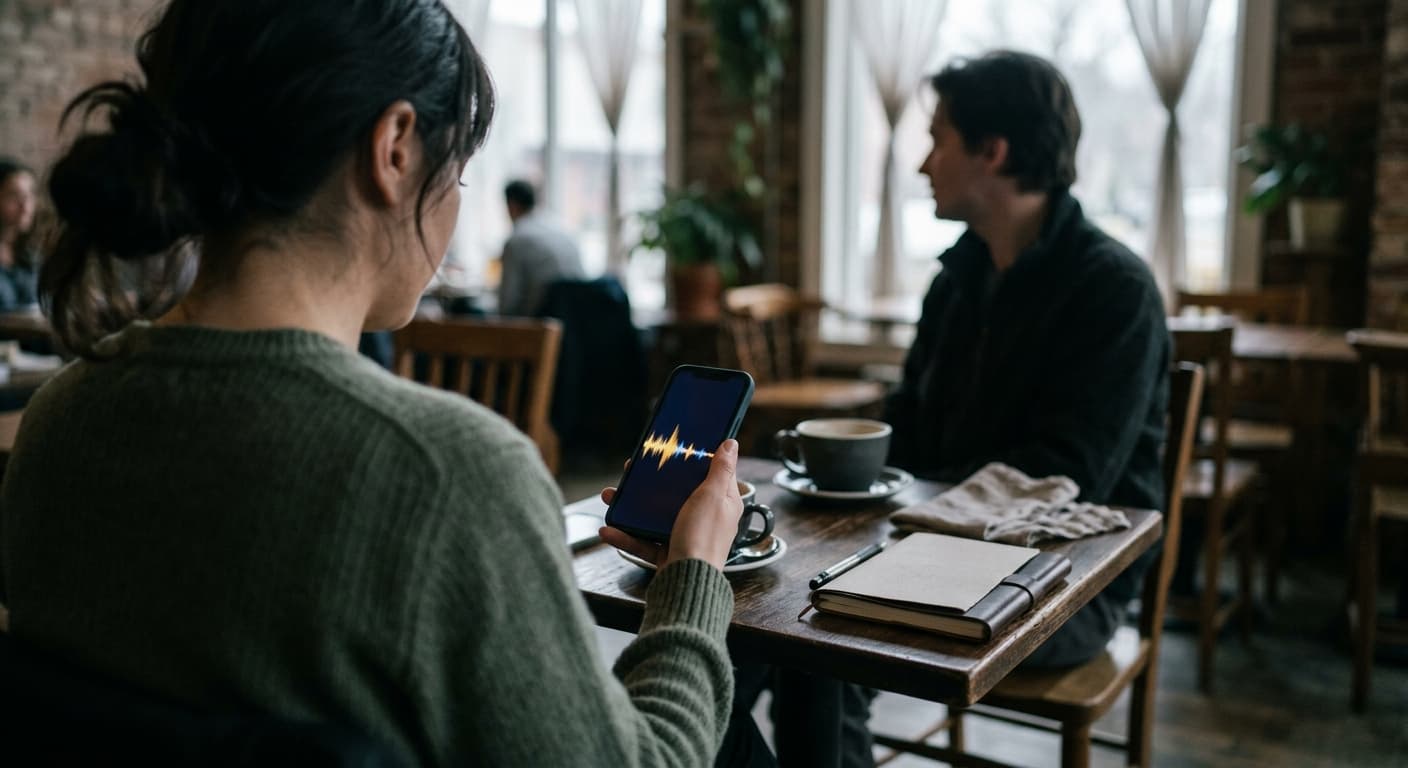
Louisiana is a one-party consent state for audio recording. Under La. R.S. 15:1303, you can legally record any phone call or in-person conversation you participate in without notifying the other parties. The law covers wire, oral, and electronic communications.
Louisiana is a one-party consent state for audio recording. Under La. R.S. 15:1303, you can legally record any phone call, in-person conversation, or electronic communication you participate in without notifying or getting permission from other participants. This protection extends to wire, oral, and electronic communications.
This guide explains how Louisiana's audio recording laws work in practice, what activities cross the line into criminal conduct, and how the rules apply to different types of audio communications. Whether you want to record a phone call with a customer service representative, document a conversation with a business partner, or preserve evidence for a legal dispute, understanding these rules will keep you on the right side of the law.
How Louisiana's One-Party Consent Law Works
The Statutory Framework
Louisiana's audio recording rules are found in Title 15, Chapter 7 of the Louisiana Revised Statutes, covering Sections 1301 through 1312. The key statutes work together to define what is prohibited and what is permitted.
La. R.S. 15:1303 establishes the core prohibition: it is unlawful to willfully intercept, attempt to intercept, or procure any other person to intercept any wire, electronic, or oral communication. The statute then provides the critical exception. Recording is lawful when at least one party to the communication consents to the interception.
La. R.S. 15:1302 defines the key terms used throughout the chapter, including what qualifies as a wire communication, electronic communication, oral communication, and interception.
La. R.S. 15:1312 establishes the civil remedies available to victims of illegal recording, creating a private right of action for damages.
What "One-Party Consent" Means in Practice
One-party consent means that exactly one person involved in the communication must know about and agree to the recording. That person is usually the one pressing the record button. You do not need to announce "this call is being recorded." You do not need a verbal or written agreement from the other parties.
Here are common scenarios where one-party consent protects you:
- Recording a phone call you are on. Whether it is a landline, cell phone, or VoIP call through Zoom, Teams, or Google Meet, you can record the audio without telling the other person.
- Recording an in-person conversation you participate in. If you are having a face-to-face discussion with someone, you can use your phone or a voice recorder to capture it.
- Authorizing someone else to record on your behalf. If you ask a colleague to record a meeting you will attend, their recording is lawful because you (a party to the conversation) gave prior consent.
What One-Party Consent Does NOT Allow
The one-party consent exception has clear boundaries. You cannot:
- Record a conversation you are not part of and have no party's consent for. Placing a hidden recorder in a room to capture other people's private conversations without any participant's knowledge is illegal interception.
- Intercept communications between two other people without either person's knowledge. Tapping a phone line or using software to capture someone else's calls violates the statute.
- Use illegally obtained recordings for any purpose. Under La. R.S. 15:1303, it is also unlawful to willfully use or disclose the contents of a communication you know was obtained through illegal interception.
Types of Audio Communications Covered
Wire Communications
Wire communications include traditional telephone calls, cell phone calls, and any communication that travels over a wire or cable at some point during transmission. Under La. R.S. 15:1302, a wire communication is defined as any aural transfer made in whole or in part through the use of facilities for the transmission of communications by wire, cable, or other connection. Louisiana's one-party consent rule covers all wire communications.
This includes:
- Traditional landline telephone calls
- Cell phone calls that route through wired infrastructure
- VoIP calls through services like Zoom, Microsoft Teams, Google Meet, Skype, and WhatsApp
- Conference calls with multiple participants
Oral Communications
Oral communications are face-to-face, spoken conversations. Under Louisiana law, an oral communication is one that is uttered by a person exhibiting an expectation that the communication is not subject to interception, under circumstances justifying that expectation. The key element is the reasonable expectation of privacy.
Conversations in public places where others can easily overhear are generally not considered oral communications protected by the statute. A whispered conversation in a private office, however, would carry a reasonable expectation of privacy.
The one-party consent exception applies to oral communications just as it does to wire communications. If you are participating in a private conversation, you can record it without informing the other parties.
Electronic Communications
Electronic communications include emails, text messages, instant messages, and data transmissions that do not include the human voice. While Louisiana's wiretapping statute primarily targets real-time interception, the federal Electronic Communications Privacy Act (18 U.S.C. 2511) provides a parallel framework. Louisiana's one-party consent rule aligns with the federal standard for electronic communications.
Recording Phone Calls Under Louisiana Law
Personal Phone Calls
You can record any personal phone call you participate in. This applies to:
- Calls made from or received on your cell phone
- Landline calls from your home or office
- VoIP calls through internet-based services
- Video call audio through conferencing platforms
You do not need to play a beep tone, announce the recording, or get permission. Simply being a party to the call satisfies the one-party consent requirement under La. R.S. 15:1303.
Business Phone Calls
Louisiana businesses can record calls for quality assurance, training, compliance, and dispute resolution purposes. The one-party consent rule means a business employee who participates in the call provides the necessary consent. Many businesses still announce recording as a best practice, using phrases like "This call may be recorded for quality assurance purposes."
Federal law under 18 U.S.C. 2511(2)(d) also permits one-party consent recording, so Louisiana businesses operating under both state and federal jurisdiction face consistent rules.
The FCC's historical telephone recording notification rule (formerly 47 C.F.R. 64.501) was removed from the Code of Federal Regulations in 2017. The FCC has not adopted a specific rule replacing it for call-recording disclosure; state one-party or all-party consent law governs instead. Businesses that operate call centers or record customer calls across state lines should consult current state consent law rather than the pre-2017 federal rule.
Interstate Phone Calls
When you call someone in another state, the recording laws of both states may apply. If you are in Louisiana calling someone in a two-party consent state like California, Florida, or Pennsylvania, the stricter law generally controls.
States requiring all-party or context-specific consent for phone calls include California, Connecticut, Delaware, Florida, Illinois, Maryland, Massachusetts, Montana, Nevada, New Hampshire, Oregon, Pennsylvania, and Washington. Several of these are nuanced rather than absolute: Connecticut is criminal one-party but imposes civil liability for phone-call recording without all-party consent; Delaware's all-party rule is civil while its criminal wiretap statute is one-party; Oregon requires all-party consent for electronic communications but one-party consent for in-person conversations; and Nevada's one-party statute has been read by courts to functionally require all-party consent for phone calls. If you regularly record calls with people in any of these states, the safest approach is to inform all parties or get explicit consent.
Some courts apply the law of the state where the recording device is located. Others apply the law of the state where the recorded party is located. Because there is no universal rule, following the stricter standard protects you from liability in either jurisdiction.
Recording In-Person Conversations

When Audio Recording Is Legal
Louisiana law permits audio recording of in-person conversations when:
- You are a direct participant in the conversation
- You are in a public place where there is no reasonable expectation of privacy
- One of the parties to the conversation has given you prior consent to record
Public spaces like sidewalks, parks, government buildings, and retail stores generally carry no expectation of privacy for conversations held at normal volume. Recording in these locations does not require consent from anyone.
When Audio Recording Is Illegal
Recording becomes illegal when:
- You are not a party to the conversation and have no participant's consent
- You are intercepting communications in places where parties have a reasonable expectation of privacy
- You use illegally obtained recordings for any purpose, including disclosure to third parties
La. R.S. 15:1303(A)(1) specifically targets anyone who willfully intercepts, endeavors to intercept, or procures any other person to intercept any wire, electronic, or oral communication without the consent of at least one party.
Recording in Your Own Home
You can record conversations in your own home if you are participating in them. As a party to the conversation, your consent is sufficient under the one-party consent rule. However, you cannot:
- Plant a hidden device and leave to record others without being present or having a participant's consent
- Record guests in areas with heightened privacy expectations (bathrooms, guest bedrooms)
- Record intimate activities without the other person's consent, which falls under Louisiana's video voyeurism statute La. R.S. 14:283
Audio Recording Devices and Technology
Legal Recording Devices
Louisiana law does not restrict the type of device you use for lawful one-party consent recording. Common devices include:
- Smartphone voice memo apps. The built-in recording app on any smartphone works for both phone calls and in-person conversations.
- Dedicated digital voice recorders. Devices designed specifically for audio capture often produce higher quality recordings.
- Call recording apps. Third-party apps for smartphones that automatically record phone calls.
- Computer software. Applications that record audio from VoIP calls, webinars, or meetings.
Prohibited Devices and Methods
While the device itself is not regulated, certain methods of deployment are illegal:
- Wiretapping equipment attached to someone else's phone line without consent
- Spyware or monitoring software installed on another person's device without their knowledge or consent
- Hidden transmitters placed in private locations to relay conversations to a remote listener
These methods violate La. R.S. 15:1303 because they enable interception of communications without any party's consent.
Penalties for Illegal Audio Recording
Criminal Penalties
Under La. R.S. 15:1303, unlawful interception of communications is a serious felony in Louisiana:
| Penalty | Amount |
|---|---|
| Prison time | 2 to 10 years at hard labor |
| Fine | Up to $10,000 |
| Combined | Both prison and fine |
These penalties apply to anyone who willfully intercepts a communication, willfully discloses the contents of an illegally intercepted communication, or willfully uses the contents of an illegally intercepted communication. Each separate act of interception can result in a separate felony charge.
Louisiana is notably harsher than many other states. The minimum sentence of two years at hard labor reflects the state's serious treatment of privacy violations involving communications.
Civil Liability
Victims of illegal audio recording in Louisiana can pursue civil remedies under La. R.S. 15:1312. Available damages include:
- Actual damages suffered as a result of the violation
- Statutory damages of $100 per day for each day of violation, or $1,000, whichever is greater
- Punitive damages in appropriate cases
- Attorney's fees and litigation costs
La. R.S. 15:1312 does not state its own statute of limitations. The applicable period is Louisiana's general delictual prescription, now two years under La. C.C. art. 3493.1 for claims arising after July 1, 2024, running from the date the injury or damage is sustained, not from discovery. A claim that arose before July 1, 2024, is still governed by the former one-year period under the now-repealed La. C.C. art. 3492.
Additionally, victims may pursue claims under the federal Wiretap Act (18 U.S.C. 2520), which allows recovery of actual damages, statutory damages of the greater of $100 per day of violation or $10,000, punitive damages, and reasonable attorney fees.
Evidence Suppression
Illegally obtained audio recordings are generally inadmissible in Louisiana courts. A recording made in violation of La. R.S. 15:1303 cannot be used as evidence in criminal or civil proceedings. This means that even if the recording contains proof of wrongdoing by the other party, a court will likely refuse to consider it.
Using Audio Recordings as Evidence
Authentication Requirements
For a lawfully obtained audio recording to be admissible in Louisiana courts, you must authenticate it. Under the Louisiana Code of Evidence, authentication typically requires:
- Testimony from a person with knowledge that the recording is what it claims to be
- Evidence that the recording device was working properly at the time
- Proof that the recording has not been altered, edited, or tampered with
- Information about the date, time, location, and participants
Best Practices for Preserving Recordings
To maximize the evidentiary value of your recordings:
- Use a reliable recording device or app. Choose one that produces clear, uncompressed audio when possible.
- Do not edit the recording. Preserve the original file in its entirety. Any editing raises questions about what was removed or changed.
- Back up the recording immediately. Save copies to cloud storage and a separate physical device.
- Note the date, time, location, and participants. Write this information down as soon as possible after the recording.
- Maintain chain of custody. Document who has had access to the recording file and when.
- Store the recording securely. Protect it from accidental deletion, corruption, or unauthorized access.
Criminal Cases vs. Civil Cases
The standards for admitting audio recordings differ between criminal and civil proceedings:
- Criminal cases: Illegally obtained recordings are inadmissible under both state and federal exclusionary rules. The person who made the illegal recording may also face separate felony charges under La. R.S. 15:1303.
- Civil cases: Rules can be more flexible, but illegally obtained evidence may still be excluded. Courts weigh the probative value against the prejudicial effect and the policy considerations favoring privacy protection.
Federal Law Alignment
Louisiana's one-party consent rule aligns with the federal Wiretap Act under 18 U.S.C. 2511. The federal law also permits one-party consent recording and provides a floor of protection that states can exceed but not fall below.
Key points of alignment:
- Both laws require consent from at least one party to the communication
- Both laws criminalize the willful interception of communications without consent
- Both laws provide civil remedies for victims
- Both laws contain exceptions for law enforcement with proper warrants
Where Louisiana law differs from federal law is primarily in the severity of penalties. Louisiana's minimum sentence of two years at hard labor exceeds the federal maximum of five years in prison under 18 U.S.C. 2511(4).
2025 Legislative Update
During the 2025 Regular Session, the Louisiana Legislature passed Senate Bill 53, which amended provisions related to law enforcement electronic surveillance warrants under La. R.S. 15:1310. The bill refined definitions and procedures for how law enforcement agencies obtain warrants to intercept communications, including establishing standards for "monitoring posts." This legislation affects law enforcement surveillance procedures and does not change the one-party consent rules for private citizens.
More Louisiana Recording Laws
Audio Recording | Video Recording | Voyeurism & Hidden Cameras | Workplace Recording | Recording Police | Phone Call Recording | Security Cameras | Recording in Public | Landlord-Tenant | Dashcam Laws | Schools | Medical Recording
Back to Louisiana Recording Laws
More Louisiana Recording Topics
More Louisiana Laws
Frequently Asked Questions
Is it legal to audio record a conversation in Louisiana without telling the other person?
Yes. Louisiana is a one-party consent state under La. R.S. 15:1303. As long as you are a participant in the conversation, you can record the audio without informing or getting permission from the other parties.
What are the penalties for illegally recording someone in Louisiana?
Illegal interception of communications is a felony in Louisiana, punishable by 2 to 10 years at hard labor and fines up to $10,000. Victims can also sue for actual damages, statutory damages of $100 per day or $1,000 (whichever is greater), punitive damages, and attorney fees under La. R.S. 15:1312.
Can I record a phone call in Louisiana without the other person knowing?
Yes. Louisiana law permits you to record any phone call you are participating in, including landline, cell phone, and VoIP calls, without notifying the other party. The one-party consent rule under La. R.S. 15:1303 applies to all wire communications.
Are audio recordings admissible as evidence in Louisiana courts?
Recordings made lawfully under Louisiana's one-party consent law are generally admissible. You must authenticate the recording by showing it is genuine and unaltered. Illegally obtained recordings are typically inadmissible and may expose the recorder to felony charges.
Does Louisiana's audio recording law apply to VoIP and video call platforms?
Yes. Louisiana's one-party consent rule under La. R.S. 15:1303 covers wire, electronic, and oral communications. This includes audio on VoIP platforms like Zoom, Microsoft Teams, Google Meet, Skype, and similar services. If you are a participant, you can record the audio.
Updates
Removed an incorrect claim that a specific FCC order (24-24) sets current call-recording carrier obligations; that order actually governs robocall consent revocation and has no bearing on call recording. Also reconciled the list of two-party consent states with the sibling Louisiana recording-law pages and completed the federal statutory-damages formula.
Independently fact-checked against the cited primary sources
Corrected the civil statute-of-limitations claim for La. R.S. 15:1312: the statute itself states no limitations period, and the discovery-rule commencement stated in the article is actually the federal 18 U.S.C. 2520 rule, not Louisiana's. Louisiana's general delictual prescription (La. C.C. art. 3493.1, 2 years, effective July 1, 2024) runs from the date injury or damage is sustained.
Governing law re-checked for recent changes
Reviewed and approved by an editor
The Law Behind This Article
This article rests on the statutory provisions below, held in our own legal record and retrieved from the official source. Tap a section to read the operative text.
Louisiana Revised Statutes
§ 15:1303Interception and disclosure of wire, electronic, or oral communicationsIn forcecited in 36 of our articles
A. Except as otherwise specifically provided in this Chapter, it shall be unlawful for any person to: (1) Willfully intercept, endeavor to intercept, or procure any other person to intercept or endeavor to intercept, any wire, electronic or oral communication; (2) Willfully use, endeavor to use, or procure any other person to use or endeavor to use, any electronic, mechanical, or other device to intercept any oral communication when: (a) Such device is affixed to, or otherwise transmits a signal through, a wire, cable, or other like connection used in wire or electronic communication; or (b) Such device transmits communications by radio or interferes with the transmission of such communication; (3) Willfully disclose, or endeavor to disclose, to any other person the contents of any wire, electronic, or oral communication, knowing or having reason to know that the information was obtained through the interception of a wire, electronic, or oral communication in violation of this Subsection; or (4) Willfully use, or endeavor to use, the contents of any wire, electronic, or oral communication, knowing or having reason to know that the information was obtained through the…
Official text (excerpt) · last checked 2026-08-31 · Read the full text in our law library · Verify at legis.la.gov
Cited in 25 court opinions in our collectionLatest citing opinion in our collection: 2020
In the courts (editorial summary, independently checked):Louisiana courts apply the consent exception in La. R.S. 15:1303. Smith v. Smith (2005) held a parent may consent for a child where he has a good faith, reasonable basis that it serves the child’s best interest, placing the recording within 15:1303(C)(4). Keller v. Aymond (1998) held willfulness is not required for civil liability.
Opinions citing this section in our collection:
- Smith v. Smith (Louisiana Court of Appeal 2005, 923 So. 2d 732)✓A father secretly taped his daughter's calls with her mother in his own home during a custody fight; the court applied vicarious consent and held his good faith, objectively reasonable belief that taping served the child's best interest fell within La. R.S. 15:1303(C)(4).
- Johnson v. Aymond (Louisiana Court of Appeal 1998, 709 So. 2d 1072)✓A newspaper printed excerpts of a phone conversation a defendant had allegedly taped and handed out at a press conference; the court held those allegations, accepted as true, state a cause of action under the literal language of La. R.S. 15:1303(A)(4), and reversed the dismissal.
- Keller v. Aymond (Louisiana Court of Appeal 1998, 722 So. 2d 1224)✓A newspaper published excerpts of private calls taped by another and handed out at a press conference; the court held criminal willfulness under section 1303 is not needed for civil damages, and that fact issues over the paper's reason to know barred summary judgment under 1303.
Identified automatically from the court opinions citing this section — not a ranking of which case controls.
§ 14:283Video voyeurism; penaltiesIn forcecited in 30 of our articles
A. Video voyeurism is any of the following: (1) The use of any camera, videotape, photo-optical, photo-electric, or any other image recording device, or an unmanned aircraft system equipped with any camera, videotape, photo-optical, photo-electric, or any other image recording device, for the purpose of observing, viewing, photographing, filming, or videotaping a person where that person has not consented to the specific instance of observing, viewing, photographing, filming, or videotaping and either: (a) It is for a lewd or lascivious purpose. (b) The observing, viewing, photographing, filming, or videotaping is as described in Paragraph (B)(3) of this Section and occurs in a place where an identifiable person has a reasonable expectation of privacy. (2) The transfer of an image obtained by activity described in Paragraph (1) of this Subsection by live or recorded telephone message, electronic mail, the Internet, or a commercial online service.
Official text (excerpt) · last checked 2026-08-31 · Read the full text in our law library · Verify at legis.la.gov
Cited in 16 court opinions in our collectionLatest citing opinion in our collection: 2024
In the courts (editorial summary, independently checked):In State v. Schaller (2009) a Louisiana appeals court set out the elements of La. R.S. 14:283 and, since the statute does not define lewd or lascivious, applied a definition of an act tending to excite lust, rejecting a claimed babysitting reason for a hidden bedroom camera. State v. Boudreaux (2006) found 56 consecutive years excessive.
Opinions citing this section in our collection:
- State v. Batiste (Supreme Court of Louisiana 2006, 939 So. 2d 1245)“…Batiste, charging him with video voyeurism, a violation of La. R.S. 14:283. [1] At his arraignment on December *…”
- State v. Boudreaux (Louisiana Court of Appeal 2006, 945 So. 2d 898)✓A stepfather hid a wireless camera in his 18-year-old stepdaughter's bedroom and taped her for four months. He pleaded guilty to 14 counts of video voyeurism, and the court vacated the 56-year consecutive sentence as excessive because the acts formed a single scheme.
- State v. Perry (Louisiana Court of Appeal 2012, 12 La.App. 3 Cir. 298)✓A houseguest was secretly videotaped drying off in the family's guest bathroom. The court affirmed the video voyeurism conviction and three-year sentence, addressing only whether the untimely pretrial motions were properly denied, not the reach of the statute.
Identified automatically from the court opinions citing this section — not a ranking of which case controls.
§ 15:1302DefinitionsIn forcecited in 5 of our articles
As used in this Chapter: (1) "Aggrieved person" means a person who was party to any intercepted wire or oral communication or a person against whom the interception was directed. (2) "Attorney for a governmental entity" means an attorney on the staff or under the direct supervision of the district attorney authorized by law to prosecute such offenses as are subject of the pen register, a trap and trace device, or a cellular tracking device. (3) "Aural transfer" means a transfer containing the human voice at any point between and including the point of origin and the point of reception. (4) "Bail enforcement agent" means a licensed bail agent who engages in the apprehension or surrender by a natural person of a principal who is released on bail or who has failed to appear at any stage of the proceedings to answer the charge before the court in which the principal may be prosecuted.
Official text (excerpt) · last checked 2026-07-29 · Read the full text in our law library · Verify at legis.la.gov
Cited in 10 court opinions in our collectionLatest citing opinion in our collection: 2017
Opinions citing this section in our collection:
- Benoit v. Roche (Louisiana Court of Appeal 1995, 657 So. 2d 574)“…calls received or made while at Delchamps store # 106. See La.R.S. 15:1302(14). The district court also implicitly…”
- Opinion Number (Louisiana Attorney General Reports 1995)“…ing of the term "law enforcement officer" as referred to in La. R.S. 15:1302 (12), 15:1310 (A)(1) and 15:1314 (A)…”
- State v. Marinello (Louisiana Court of Appeal 2010, 9 La.App. 3 Cir. 1260)“…ormation by an application for a pen register, we note that La. R.S. 15:1302(15) 26 specifically excludes this type…”
Identified automatically from the court opinions citing this section — not a ranking of which case controls.
§ 15:1310Procedure for interception of wire, electronic, or oral communicationsIn forcecited in 2 of our articles
A. Each application for an order authorizing or approving the interception of a wire, electronic, or oral communication shall be made in writing upon oath or affirmation to a judge in whose district such interception of wire, electronic, or oral communication shall take place and shall state the applicant's authority to make such application. Each application shall include the following information: (1) The identity of the investigative or law enforcement officer making the application and the person authorizing the application. (2) A full and complete statement of the facts and circumstances relied upon by the applicant to justify his belief that an order should be issued, including: (a) Details as to the particular offense that has been, is being, or is about to be committed, (b) A particular description of the nature and location of the facilities from which or the place where the communication is to be intercepted, (c) A particular description of the type of communications sought to be intercepted, and (d) The identity of the person, if known, committing the offense and whose communications are to be intercepted.
Official text (excerpt) · last checked 2026-07-29 · Read the full text in our law library · Verify at legis.la.gov
Cited in 10 court opinions in our collectionLatest citing opinion in our collection: 2024
Opinions citing this section in our collection:
- State v. Esteen (Louisiana Court of Appeal 2002, 821 So. 2d 60)“…because the State failed to comply with the requirements of La. R.S. 15:1310(F)(1), 15:1310(F)(2) and 15:1310(A)(3).…”
- State v. Decay (Louisiana Court of Appeal 2001, 798 So. 2d 1057)“…because they had not been sealed immediately as required by La.R.S. 15:1310(F)(1), because they had not been sealed…”
- State v. Smith (Louisiana Court of Appeal 2017, 227 So. 3d 337)“…der the act, a specified procedure’ must be followed. See La. R.S. 15:1310(A)-(G). In this case, Defendant argues…”
Identified automatically from the court opinions citing this section — not a ranking of which case controls.
§ 15:1312Recovery of civil damages authorizedIn forcecited in 17 of our articles
A. Any person whose wire, electronic, or oral communication is intercepted, disclosed, or used in violation of this Chapter shall have a civil cause of action against any person who intercepts, discloses, or uses, or procures any other person to intercept, disclose, or use such communications, and be entitled to recover from any such person: (1) Actual damages, but not less than liquidated damages computed at the rate of one hundred dollars a day for each day of violation or one thousand dollars, whichever is greater. (2) A reasonable attorney's fee and other litigation costs reasonably incurred. (3) Punitive damages. B. A good faith reliance on a court order shall constitute a complete defense to any civil or criminal action brought under this Chapter.
Official text (excerpt) · last checked 2026-07-29 · Read the full text in our law library · Verify at legis.la.gov
Cited in 7 court opinions in our collectionLatest citing opinion in our collection: 2024
Opinions citing this section in our collection:
- Benoit v. Roche (Louisiana Court of Appeal 1995, 657 So. 2d 574)“…eets Act of 1968 authorize a civil damages cause of action. La.R.S. 15:1312; 18 U.S.C. § 2520 ; see also United S…”
- Keller v. Aymond (Louisiana Court of Appeal 1998, 722 So. 2d 1224)“…spaper before the plaintiffs can claim a civil remedy under La. R.S. 15:1312. Hence, the newspaper can be held civil…”
- Wingrave v. Hebert (Louisiana Court of Appeal 2007, 964 So. 2d 385)“…of this Chapter shall have a civil cause of action. . . ." La. R.S. 15:1312(A). The substance of LESA was first i…”
Identified automatically from the court opinions citing this section — not a ranking of which case controls.
United States Code Title 18
§ 2511Interception and disclosure of wire, oral, or electronic communications prohibitedIn forcecited in 418 of our articles
Except as otherwise specifically provided in this chapter any person who— intentionally intercepts, endeavors to intercept, or procures any other person to intercept or endeavor to intercept, any wire, oral, or electronic communication; intentionally uses, endeavors to use, or procures any other person to use or endeavor to use any electronic, mechanical, or other device to intercept any oral communication when— such device is affixed to, or otherwise transmits a signal through, a wire, cable, or other like connection used in wire communication; or such device transmits communications by radio, or interferes with the transmission of such communication; or such person knows, or has reason to know, that such device or any component thereof has been sent through the mail or transported in interstate or foreign commerce; or such use or endeavor to use (A) takes place on the premises of any business or other commercial establishment the operations of which affect interstate or foreign commerce; or (B) obtains or is for the purpose of obtaining information relating to the operations of any business or other commercial establishment the operations of which affect interstate or foreign…
Official text (excerpt) · last checked 2026-08-28 · Read the full text in our law library · Verify at uscode.house.gov
Cited in 2,045 court opinions in our collectionLatest citing opinion in our collection: 2026
In the courts (editorial summary, independently checked):Griggs-Ryan v. Smith (1990) applied the Section 2511(2)(d) prior-consent exception, treating a tenant repeatedly told that all incoming calls were taped as having impliedly consented. United States v. United States District Court (1972) read the then-current Section 2511(3) as conferring no presidential surveillance power.
Opinions citing this section in our collection:
- Mitchell v. Forsyth (Supreme Court of the United States 1985, 472 U.S. 511)✓The Attorney General authorized a warrantless 1970 national security wiretap that caught the plaintiff's calls; the Court held the since-repealed Section 2511(3) disclaimer left the tap lawful under Title III, and that Mitchell had qualified immunity.
- United States v. United States District Court for the Eastern District of Michigan (Supreme Court of the United States 1972, 407 U.S. 297)✓The Attorney General approved warrantless wiretaps on members of a domestic group accused of bombing a CIA office; the Court read Section 2511(3) as a congressional disclaimer conferring no surveillance power, then held the Fourth Amendment required prior judicial approval.
- Forsyth v. Barr (Court of Appeals for the Fifth Circuit 1994, 19 F.3d 1527)✓Dallas police used, in an internal affairs probe of an officer, calls private parties allegedly intercepted illegally; assuming that was unlawful, the Fifth Circuit held Section 2517(1) and (2) allowed the disclosure and use, defeating the Section 2511(1)(c) and (d) claims.
Identified automatically from the court opinions citing this section — not a ranking of which case controls.
§ 2520Recovery of civil damages authorizedIn forcecited in 115 of our articles
Except as provided in section 2511(2)(a)(ii), any person whose wire, oral, or electronic communication is intercepted, disclosed, or intentionally used in violation of this chapter may in a civil action recover from the person or entity, other than the United States, which engaged in that violation such relief as may be appropriate. In an action under this section, appropriate relief includes— such preliminary and other equitable or declaratory relief as may be appropriate; damages under subsection (c) and punitive damages in appropriate cases; and a reasonable attorney’s fee and other litigation costs reasonably incurred.
Official text (excerpt) · last checked 2026-07-28 · Read the full text in our law library · Verify at uscode.house.gov
Cited in 860 court opinions in our collectionLatest citing opinion in our collection: 2026
In the courts (editorial summary, independently checked):Walker v. Darby (1990) held a 2520 plaintiff need not prove the contents of intercepted conversations, only interception and a justified expectation against it. Bartnicki v. Vopper (2001) barred 2520 damages against defendants who took no part in the interception, obtained the tape lawfully, and disclosed a matter of public concern.
Opinions citing this section in our collection:
- Jessie Walker v. Thomas E. Darby, Hugh L. Robinson, Jr., and Kenneth Day (Court of Appeals for the Eleventh Circuit 1990, 911 F.2d 1573)✓A postal letter carrier said three supervisors wired an intercom near his workstation to listen in. Reversing summary judgment, the Eleventh Circuit held a section 2520 plaintiff can show interception without proving the contents of specific conversations.
- Gelbard v. United States (Supreme Court of the United States 1972, 408 U.S. 41)“…disclosure, or use is entitled to recover civil damages, 18 U. S. C. § 2520 . Title III also bars the use as eviden…”
- DirecTV, Inc. v. Hoa Huynh (Court of Appeals for the Ninth Circuit 2007, 503 F.3d 847)“…7 U.S.C. § 605 (e)(4), or alternatively, for violations of 18 U.S.C. § 2520 (a), or alternatively, for violations o…”
Identified automatically from the court opinions citing this section — not a ranking of which case controls.
Search our full record of US law — 2.1 million sections, every state + federal →
Sources and References
- La. R.S. 15:1303 - Interception and Disclosure of Communications(legis.la.gov).gov
- La. R.S. 15:1302 - Definitions(law.justia.com)
- La. R.S. 15:1312 - Civil Damages(law.justia.com)
- La. R.S. 14:283 - Video Voyeurism(legis.la.gov).gov
- 18 U.S.C. 2511 - Federal Wiretap Act(law.cornell.edu)
- 18 U.S.C. 2520 - Civil Damages(law.cornell.edu)
- Louisiana Open Meetings Law(legis.la.gov).gov
- Louisiana SB 53 (2025)(legis.la.gov).gov
- 47 C.F.R. 64.501 - Telephone Recording Rules(ecfr.gov).gov
- Reporters Committee for Freedom of the Press - Louisiana Recording Guide(rcfp.org)