
Colorado
Colorado Workplace Recording Laws: Employee and Employer Rights
Independently fact-checked against primary sources (last audited August 15, 2026). · Reviewed by the RecordingLaw editorial team. · Law checked current as of August 15, 2026. · 5 primary sources cited on this page. How we verify our legal content
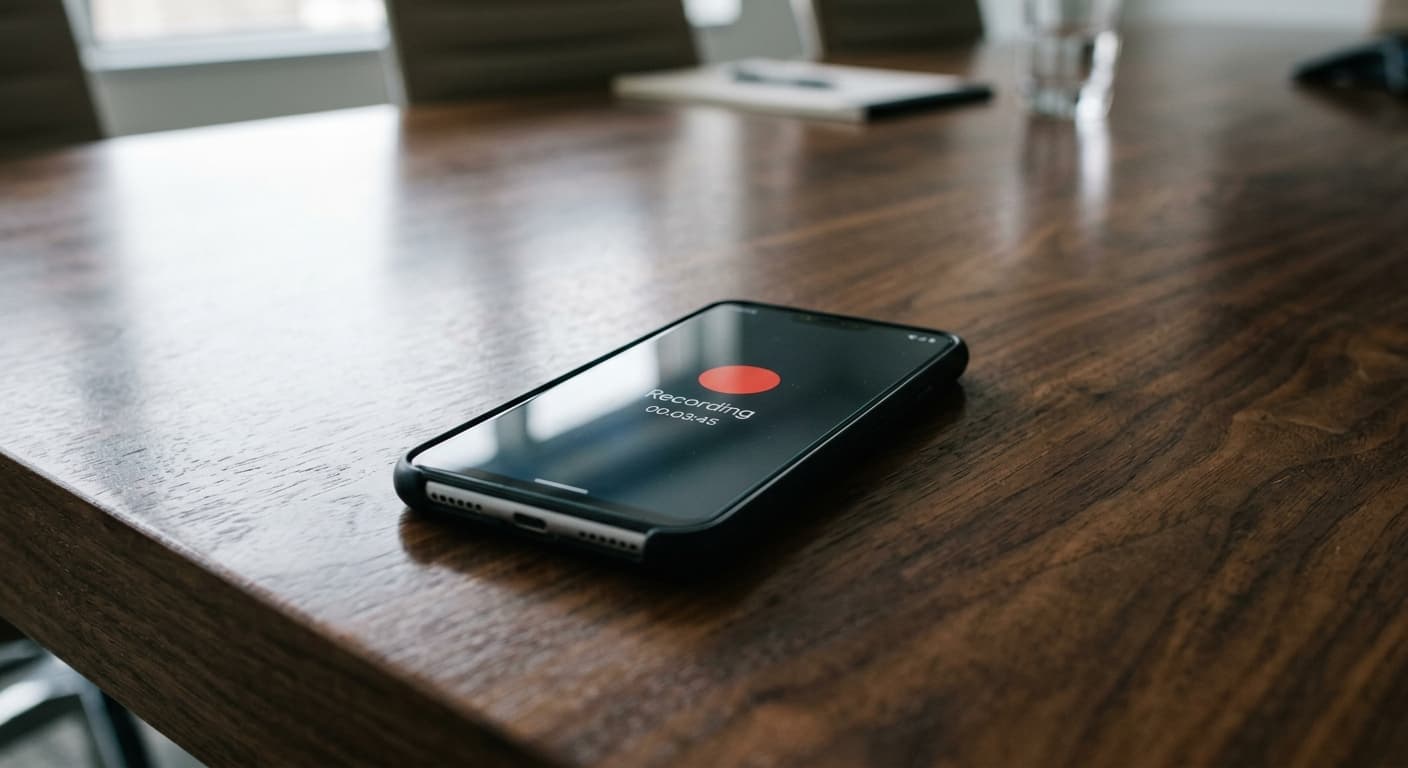
Under Colorado's one-party consent law, C.R.S. 18-9-303, an employee may record any workplace conversation they participate in without notifying coworkers or supervisors. Employers cannot criminalize that recording, but they may enforce internal no-recording policies and terminate employees who violate them under Colorado's at-will employment doctrine.
Quick Answer
Colorado employees can legally record workplace conversations they participate in. Under C.R.S. 18-9-303 and C.R.S. 18-9-304, Colorado's one-party consent framework allows any participant in a conversation to record it without notifying others. Employers also have surveillance rights in common work areas, but must comply with privacy statutes and the new biometric consent requirements under HB 24-1130.
Employee Rights: Recording at Work

Legal Basis for Employee Recording
Colorado's one-party consent law permits any employee who participates in a workplace conversation to record it. Under C.R.S. 18-9-303 (wiretapping) and C.R.S. 18-9-304 (eavesdropping), the person recording must be a "sender or intended receiver" of the communication or must be "visibly present" during an in-person conversation.
This legal right applies to:
- Meetings with supervisors and managers
- HR discussions, including disciplinary meetings and performance reviews
- Conversations with coworkers about workplace conditions
- Phone calls with clients, vendors, or business partners
- Exit interviews and termination meetings
- Training sessions and safety briefings
The critical requirement is that you must be an active participant in the conversation. An employee who leaves a recording device in a conference room to capture meetings they do not attend crosses the legal line into illegal eavesdropping under C.R.S. 18-9-304.
Documenting Workplace Issues
Employee recordings serve as important evidence in various employment disputes. Colorado employees commonly record workplace interactions to document:
- Sexual harassment or hostile work environment behavior
- Racial, gender, age, or disability discrimination
- Retaliation after filing complaints or whistleblower reports
- Verbal promises about pay, benefits, or working conditions
- Unsafe working conditions or OSHA violations
- Wage theft or unpaid overtime discussions
- Violations of the Colorado Anti-Discrimination Act (CADA)
Colorado courts generally admit lawfully made one-party consent recordings as evidence in employment litigation. The recording must be authenticated under Colorado Rules of Evidence Rule 901, but a participant in the recorded conversation can typically provide the necessary testimony.
The Company Policy Problem
While Colorado law permits employees to record workplace conversations, many employers maintain policies that prohibit recording on company premises. This creates tension between legal rights and employment consequences.
Colorado follows the at-will employment doctrine. An employer can terminate an employee for any reason that is not specifically prohibited by law. Violating a company no-recording policy provides a legitimate, non-discriminatory basis for termination, even though the recording itself does not violate any state or federal law.
Employees facing this tension should consider:
- Reviewing the employee handbook for recording policies before making recordings
- Weighing the value of the recording against the risk of discipline or termination
- Consulting with an employment attorney before recording sensitive conversations
- Understanding that a recording made in violation of company policy may still be admissible as evidence, even if the employee faces consequences for making it
Colorado-Specific Employment Protections
Colorado offers several employment protections that interact with workplace recording rights:
Colorado Whistleblower Act (C.R.S. 24-50.5-101 et seq.): Protects state employees who disclose information about waste, violations of law, or dangers to public health or safety. Recordings can serve as evidence supporting whistleblower claims.
Colorado Anti-Discrimination Act: Protects employees from discrimination and retaliation. Recordings of discriminatory conduct can support complaints filed with the Colorado Civil Rights Division.
Healthy Families and Workplaces Act: Provides paid sick leave protections. Recordings may document employer violations of leave requirements.
Employer Rights: Workplace Surveillance

Video Surveillance in Common Areas
Colorado employers have broad authority to install video surveillance cameras in common work areas where employees have no reasonable expectation of privacy. Permissible locations include:
- Office lobbies and reception areas
- Hallways, stairwells, and elevators
- Open-plan office floors
- Warehouses and loading docks
- Parking lots and exterior areas
- Retail sales floors and customer-facing areas
- Break rooms and cafeterias (with appropriate notice)
For video-only surveillance in these common areas, Colorado law does not require employee consent or written acknowledgment. However, providing notice is a widely recommended best practice.
Prohibited Surveillance Locations
C.R.S. 18-7-801 makes it a crime to knowingly observe or photograph another person's intimate parts without consent where that person has a reasonable expectation of privacy. In practice, that means employers should never install cameras in:
- Bathrooms and restrooms
- Locker rooms and changing areas
- Showers and personal hygiene facilities
- Private lactation rooms
- Any space where employees would reasonably expect to undress
A camera that captures someone's intimate parts without consent in one of these spaces exposes the employer to criminal prosecution under C.R.S. 18-7-801 (Class 2 misdemeanor) and civil liability for invasion of privacy. The statute targets the observation or recording itself, not merely the act of installing a camera, but a camera placed in these spaces will almost always capture intimate parts.
Audio Surveillance in the Workplace
When workplace surveillance systems capture audio in addition to video, the one-party consent requirement under C.R.S. 18-9-303 applies to the audio component. This creates important limitations:
- An employer can record audio in areas where management personnel are present and participating in conversations
- A surveillance system that records audio of employee-only conversations, where no authorized representative is participating, may violate C.R.S. 18-9-303
- The safest approach for employers is to provide clear written notice that audio recording occurs in designated areas
Silent video surveillance does not trigger the wiretapping statute, but adding audio changes the legal analysis significantly.
HB 24-1130: Biometric Data in the Workplace
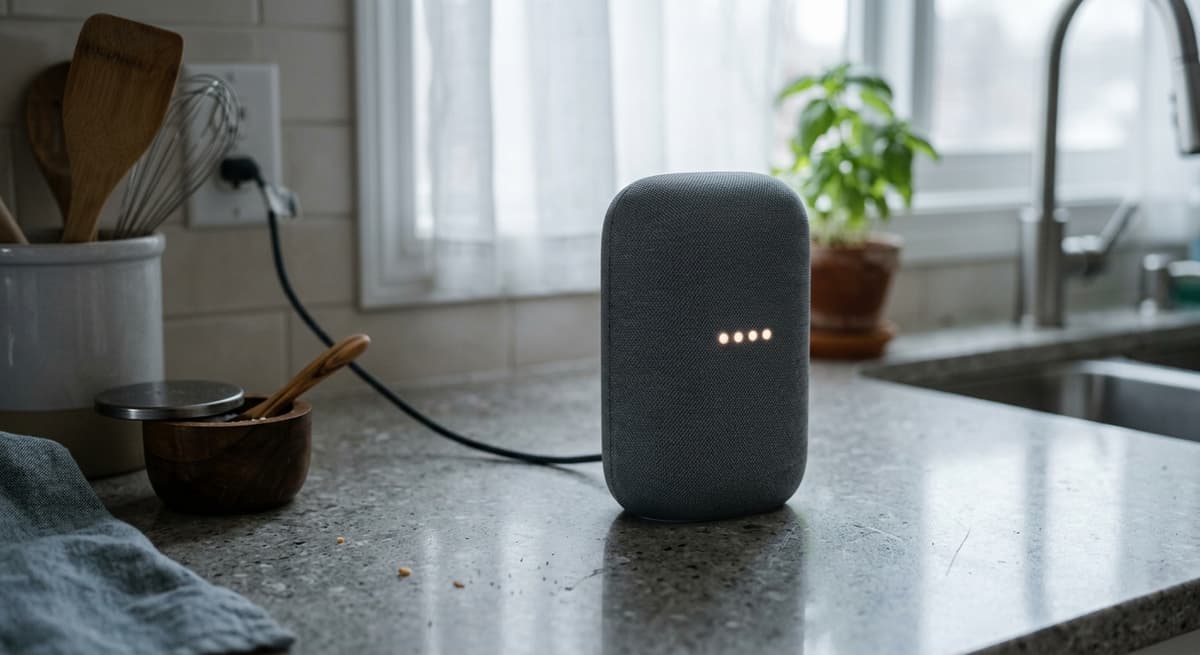
What the Law Requires
HB 24-1130 (effective July 1, 2025) amended the Colorado Privacy Act (C.R.S. 6-1-1301 et seq.) to impose strict requirements on the collection of biometric identifiers in the workplace. This law affects employers who use:
- Fingerprint scanners for building access or time clocks
- Facial recognition cameras for security or attendance
- Voiceprint analysis from recorded calls or meetings
- Iris or retina scanners for secure area access
- Hand geometry readers for time and attendance
- Gait analysis systems from video surveillance
Employer Consent Requirements
Before collecting any biometric identifier from an employee, the employer must:
- Provide written notice that identifies the specific biometric data being collected
- Explain the purpose of the collection
- Describe how the data will be stored, protected, and eventually destroyed
- Obtain the employee's separate, informed, written consent
This consent must be distinct from general employment agreements. A clause buried in an employee handbook does not satisfy the requirement.
Permitted Conditions of Employment
HB 24-1130 (codified at C.R.S. 6-1-1314(6)(a)) allows employers to require biometric consent as a condition of employment, but only for four specific purposes:
- Access control: Requiring fingerprint or facial recognition to enter secure physical locations or secure electronic hardware and software
- Time tracking: Using biometric systems to record the start and end of the employee's full work day, including meal and rest breaks over 30 minutes
- Safety monitoring: Employing biometric systems to improve or monitor workplace safety or security, or the safety of employees
- Public safety in an emergency: Improving or monitoring the safety or security of the public during an emergency or crisis situation
Outside these four purposes, employers cannot condition employment on biometric data consent. There is also a carve-out inside the access control purpose itself: an employer cannot use consent obtained for access control to also retain biometric data for tracking an employee's location or how much time the employee spends using a piece of hardware or software.
Smart Glasses and Wearable Devices
Smart glasses equipped with facial recognition software capture facial geometry, which qualifies as a biometric identifier under HB 24-1130. An employer that issues smart glasses to workers and processes facial geometry data without securing written consent violates this law.
Employers should establish a clear wearable recording device policy that addresses both audio recording and biometric data collection. The distinction between audio recording (governed by one-party consent) and biometric data collection (governed by HB 24-1130) is critical.
Enforcement
The Colorado Attorney General enforces HB 24-1130 violations under the Colorado Privacy Act. There is no private right of action for individual employees, but the Attorney General can bring enforcement actions that include:
- Injunctive relief requiring compliance
- Civil penalties
- Corrective measures
National Labor Relations Act Protections
Protected Concerted Activity
The National Labor Relations Act (NLRA) protects employees' right to engage in "concerted activity" related to their working conditions. The National Labor Relations Board (NLRB) has held that employee recording of workplace activities can constitute protected concerted activity when the recording relates to:
- Working conditions and workplace safety
- Wages, hours, and benefits discussions
- Union organizing and collective bargaining
- Documentation of employer misconduct affecting multiple employees
Blanket No-Recording Policies
Under the NLRB's current standard set in Stericycle, Inc., 372 NLRB No. 113 (2023), which overruled the prior Boeing Co. framework, employer work rules are evaluated from the perspective of an employee who is economically dependent on the employer and who would reasonably interpret a rule to prohibit protected concerted activity. Blanket employer policies prohibiting all workplace recording may violate employees' Section 7 rights under this standard if they would reasonably chill protected activity. A compliant recording policy typically:
- Does not apply to recording activity that would be protected under the NLRA
- Permits recording devices in non-work areas during non-work time
- Does not ban employees from having recording devices on company property
- Focuses restrictions on protecting confidential business information and trade secrets
Employers who maintain overly broad no-recording policies risk unfair labor practice charges before the NLRB.
Specific Workplace Recording Scenarios
Recording HR Meetings and Disciplinary Actions
An employee in Colorado can legally record HR meetings, disciplinary sessions, and performance reviews as a participant. However:
- Some HR professionals may end a meeting if they learn recording is occurring
- The employer may cite a no-recording policy as grounds for additional disciplinary action
- A recording that captures the employee making inappropriate statements could work against them
Recording Workplace Harassment
Employees experiencing workplace harassment can record incidents they are involved in to build evidence for Colorado Civil Rights Division complaints or federal EEOC charges. These recordings can be powerful evidence because they capture the exact language and tone of harassing behavior.
For more on recording harassment, see our guide on recording your boss harassing you.
Recording Safety Violations
Employees can record workplace safety violations for OSHA complaints or internal reporting. This type of recording is often protected under both Colorado law and the NLRA as concerted activity aimed at improving workplace safety.
Remote Work Recording
Colorado employees working remotely from home can record work calls and virtual meetings they participate in under the same one-party consent rules. The work-from-home setting does not change the legal analysis. VoIP calls through Zoom, Teams, or similar platforms fall under C.R.S. 18-9-303.
Penalties for Illegal Workplace Recording
Criminal Penalties
| Offense | Classification | Penalty |
|---|---|---|
| Illegal audio interception / wiretapping (C.R.S. 18-9-303) | Class 2 misdemeanor | Up to 120 days jail, up to $750 fine |
| Eavesdropping (C.R.S. 18-9-304) | Class 2 misdemeanor | Up to 120 days jail, up to $750 fine |
| Observing or recording someone's intimate parts without consent (C.R.S. 18-7-801) | Class 2 misdemeanor | Up to 120 days jail, up to $750 fine |
Civil Liability
Employers who violate workplace recording laws face civil liability including:
- Invasion of privacy tort claims
- Actual damages for emotional distress
- Punitive damages for willful conduct
- Attorney fees and court costs
- NLRB unfair labor practice remedies
More Colorado Recording Laws
Audio Recording | Video Recording | Voyeurism & Hidden Cameras | Workplace Recording | Recording Police | Phone Call Recording | Security Cameras | Recording in Public | Landlord-Tenant | Dashcam Laws | Schools | Medical Recording
Back to Colorado Recording Laws
More Colorado Recording Topics
More Colorado Laws
Frequently Asked Questions
Can an employee record conversations at work in Colorado?
Yes. Colorado is a one-party consent state under C.R.S. 18-9-303 and C.R.S. 18-9-304. An employee who participates in a workplace conversation can record it without informing anyone else. This applies to meetings, HR discussions, and conversations with coworkers. However, company policies may prohibit recording, and violating such policies can lead to termination.
Can an employer fire an employee for recording at work in Colorado?
Yes. While the recording itself is legal under Colorado law, Colorado follows at-will employment. An employer can terminate an employee for violating a no-recording policy. The exception is when the recording constitutes protected concerted activity under the National Labor Relations Act.
Does HB 24-1130 affect workplace fingerprint scanners in Colorado?
Yes. HB 24-1130 (effective July 1, 2025) requires employers to obtain separate written consent before collecting biometric identifiers including fingerprints. Employers may require biometric consent as a condition of employment only for four purposes: access control, time tracking, workplace safety, or public safety during an emergency or crisis.
Can employers put cameras in the break room in Colorado?
Yes. Employers can install video surveillance in break rooms and common areas where employees do not have a reasonable expectation of privacy. A camera that captures someone's intimate parts in a bathroom, locker room, or changing area risks criminal liability under C.R.S. 18-7-801. If cameras also capture audio, one-party consent rules apply.
Can I record my boss harassing me in Colorado?
Yes. As a participant in the conversation, you can legally record interactions with your boss under one-party consent. These recordings can serve as evidence in harassment complaints filed with the Colorado Civil Rights Division or the federal EEOC. Be aware that employer no-recording policies could lead to disciplinary action even though the recording is legal.
Updates
Corrected the number of purposes for which Colorado employers may condition employment on biometric consent under HB 24-1130 (four, not three, including a public-safety/emergency purpose), and clarified that C.R.S. 18-7-801 criminalizes recording someone's intimate parts without consent, not simply installing a camera in a sensitive location. Replaced a dead Colorado Department of Labor and Employment citation link.
Independently fact-checked against the cited primary sources; governing law re-checked for recent changes
Corrected C.R.S. 18-9-303 wiretapping from a Class 6 felony to a Class 2 misdemeanor in the penalties table, matching the statute's own penalty subsection.
Governing law re-checked for recent changes
Reviewed and approved by an editor
The Law Behind This Article
This article rests on the statutory provisions below, held in our own legal record and retrieved from the official source. Tap a section to read the operative text.
Colorado Revised Statutes, Title 18: Criminal Code
§ 18-9-304Eavesdropping prohibited - penaltyIn forcecited in 14 of our articles
(1) Any person not visibly present during a conversation or discussion commits eavesdropping if he: (a) Knowingly overhears or records such conversation or discussion without the consent of at least one of the principal parties thereto, or attempts to do so; or (b) Intentionally overhears or records such conversation or discussion for the purpose of committing, aiding, or abetting the commission of an unlawful act; or (c) Knowingly uses for any purpose, discloses, or attempts to use or disclose to any other person the contents of any such conversation or discussion while knowing or having reason to know the information was obtained in violation of this section; or (d) Knowingly aids, authorizes, agrees with, employs, permits, or intentionally conspires with any person to violate the provisions of this section. (2) Eavesdropping is a class 2 misdemeanor.
Official text (excerpt) · last checked 2026-08-31 · Read the full text in our law library · Verify at olls.info
Also relied on in: Colorado Security Camera Laws: Residential, Commercial, and Privacy Rules, Colorado Audio Recording Laws: One-Party Consent Rules and Penalties, Colorado Medical Recording Laws: Patient Rights, HIPAA, and Provider Rules
§ 18-7-801Criminal invasion of privacyIn forcecited in 11 of our articles
(1) A person who knowingly observes or takes a photograph of another person's intimate parts, as defined in section 18-3-401 (2), without that person's consent, in a situation where the person observed or photographed has a reasonable expectation of privacy, commits criminal invasion of privacy. (2) Criminal invasion of privacy is a class 2 misdemeanor. (3) For the purposes of this section, photograph includes a photograph, motion picture, videotape, live feed, print, negative, slide, or other mechanically, electronically, digitally, or chemically reproduced visual material.
Official text (excerpt) · last checked 2026-08-31 · Read the full text in our law library · Verify at olls.info
Also relied on in: Colorado Landlord-Tenant Recording Laws: Cameras, Privacy, and Rights, Colorado School Recording Laws: Classrooms, IEP Meetings, and Surveillance, Colorado Video Recording Laws: What Is Legal and What Is Not
§ 18-9-303Wiretapping prohibited - penaltyIn forcecited in 16 of our articles
(1) Any person not a sender or intended receiver of a telephone or telegraph communication commits wiretapping if he: (a) Knowingly overhears, reads, takes, copies, or records a telephone, telegraph, or electronic communication without the consent of either a sender or a receiver thereof or attempts to do so; or (b) Intentionally overhears, reads, takes, copies, or records a telephone, telegraph, or electronic communication for the purpose of committing or aiding or abetting the commission of an unlawful act; or (c) Knowingly uses for any purpose or discloses to any person the contents of any such communication, or attempts to do so, while knowing or having reason to know the information was obtained in violation of this section; or (d) Knowingly taps or makes any connection with any telephone or telegraph line, wire, cable, or instrument belonging to another or with any electronic, mechanical, or other device belonging to another or installs any device whether connected or not which permits the interception of messages; or (e) Repealed.
Official text (excerpt) · last checked 2026-08-28 · Read the full text in our law library · Verify at olls.info
Cited in 4 court opinions in our collectionLatest citing opinion in our collection: 2001
Opinions citing this section in our collection:
- Bartnicki v. Vopper (Supreme Court of the United States 2001, 532 U.S. 514)“…5-60-120 (1997); Cal. Penal Code Ann. §631 (West 1999); Colo. Rev. Stat. §18-9-303 (2000); Del. Code Ann., Tit. 11, § 133…”
- Boehner, John A. v. McDermott, James A. (Court of Appeals for the D.C. Circuit 1999, 191 F.3d 463)“…oncert with them); Cal.Penal Code §§ 631, 632 (West 1999); Colo. Rev. Stat. § 18-9-303 (1986 & Supp.1995); Conn. Gen. Stat. §…”
- Sequa Corp. v. Lititech, Inc. (District Court, D. Colorado 1992, 807 F. Supp. 653)“…Menaman. Defendants rely on Colorado’s wiretapping statute, C.R.S. § 18-9-303, which provides in relevant part:…”
Identified automatically from the court opinions citing this section — not a ranking of which case controls.
Also relied on in: Colorado Dashcam Laws: Legality, Mounting Rules, and Evidence Use, Colorado Laws on Recording Police: Rights, Protections, and Body Cameras, Colorado Laws on Recording in Public: Rights, Limits, and Exceptions
Explore the law
This article also draws on these acts and chapters (opening at their first section): Colorado Revised Statutes, Title 18: Criminal Code § 18-1.3-101 (Pretrial diversion - appropriation - repeal)
Related law for further reading — not part of this article’s citations.
Search our full record of US law — 2.1 million sections, every state + federal →
Sources and References
- C.R.S. 18-9-303 - Wiretapping Prohibited(law.justia.com)
- C.R.S. 18-9-304 - Eavesdropping Prohibited(law.justia.com)
- C.R.S. 18-7-801 - Criminal Invasion of Privacy(law.justia.com)
- HB 24-1130 - Biometric Identifiers(leg.colorado.gov).gov
- Colorado Civil Rights Division(ccrd.colorado.gov).gov
- NLRB - Employee Rights(nlrb.gov).gov
- Colorado DOLE - Wage and Hour Laws (incl. Paid Sick Leave/HFWA)(cdle.colorado.gov).gov
- Colorado Title 18 Criminal Code(content.leg.colorado.gov).gov