
Virginia
Virginia Workplace Recording Laws: Employee Rights and Employer Rules
Independently fact-checked against primary sources (last audited August 15, 2026). · Reviewed by the RecordingLaw editorial team. · Law checked current as of August 15, 2026. · 7 primary sources cited on this page. How we verify our legal content

Virginia employees may record workplace conversations they participate in without telling coworkers or managers. Under Va. Code 19.2-62, one-party consent means your participation alone authorizes the recording. Employer no-recording policies can still result in discipline or termination even when the recording is legal under state law.
Virginia's one-party consent law gives employees broad authority to record workplace conversations. Under Va. Code Ann. 19.2-62, any employee who participates in a conversation can record it without notifying coworkers, managers, or HR. At the same time, employers have their own surveillance rights in common work areas, and company policies can create workplace consequences for recording even when it is legal under state law.
This guide covers everything employees and employers need to know about recording in Virginia workplaces, including employee recording rights, employer surveillance limits, federal employee considerations for the Northern Virginia workforce, whistleblower protections, and how workplace recordings function as evidence.
Employee Recording Rights in Virginia
What You Can Record
As a one-party consent state, Virginia allows you to record any conversation you participate in at work. This includes:
- Meetings with your supervisor, manager, or HR representative
- Performance reviews and disciplinary conversations
- Phone calls with coworkers, clients, or business contacts
- In-person discussions in offices, hallways, break rooms, or conference rooms
- Video calls and virtual meetings you attend
- Exit interviews and termination meetings
You do not need to announce that you are recording. Your participation in the conversation satisfies the one-party consent requirement.
What You Cannot Record
Even under one-party consent, there are boundaries:
- You cannot plant a recording device and leave to capture conversations you are not part of
- You cannot intercept electronic communications (emails, chat messages) not addressed to you
- You cannot record in restrooms, locker rooms, or other areas where there is a reasonable expectation of privacy against observation
- You cannot use spyware to capture a coworker's phone calls that you are not participating in
Violating these limits can result in Class 6 felony charges under Va. Code 19.2-62 and civil liability under Va. Code Ann. 19.2-69.
Recording Devices at Work
Virginia law does not restrict the type of device you use. Legal recording tools include:
- Smartphone voice recorder apps
- Dedicated digital voice recorders
- AI-powered wearable recorders (like the Plaud NotePin)
- Smartwatch recording features
- Laptop or computer recording software for virtual meetings
The device does not change the legal analysis. Whether you use a visible recorder on the table or a device in your pocket, your participation in the conversation is what matters.
Company No-Recording Policies
The Legal vs. Policy Distinction
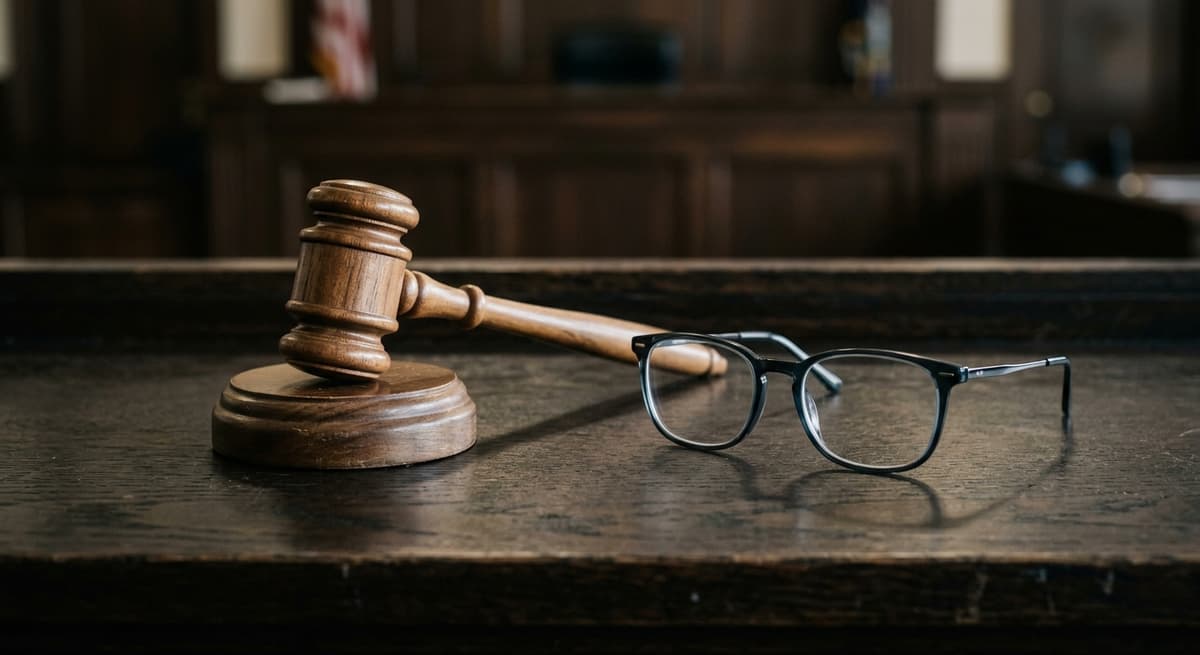
There is an important difference between what Virginia law permits and what your employer allows. While recording workplace conversations is legal under state law, your employer can maintain internal policies that prohibit recording. If you violate a company no-recording policy:
- Your employer can discipline you, up to and including termination
- The recording itself remains legally obtained under Virginia law
- The recording may still be admissible as evidence in legal proceedings
- Virginia is an at-will employment state, meaning employers can generally terminate employees for any non-discriminatory reason
Reviewing Your Employer's Policy
Before recording at work, consider:
- Checking your employee handbook for recording or electronic device policies
- Reviewing any confidentiality or non-disclosure agreements you signed
- Understanding whether your employer's policy specifically addresses audio recording
- Weighing the potential workplace consequences against the value of having the recording
When Policies May Be Unenforceable
In some circumstances, employer no-recording policies may be unenforceable or may not protect the employer from liability when the recording documents illegal activity. This is particularly relevant in whistleblower and NLRA contexts discussed below.
Employer Surveillance in Virginia Workplaces
Where Employers Can Place Cameras
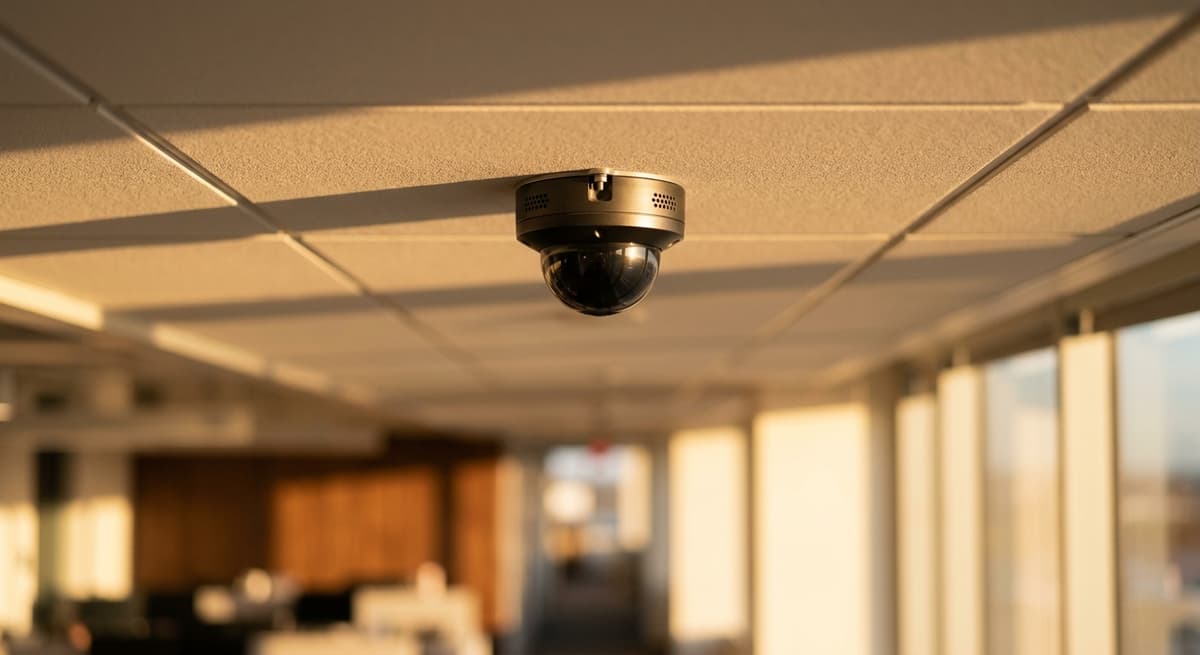
Virginia employers can install video surveillance cameras in common work areas where employees do not have a reasonable expectation of visual privacy:
- Entrances and exits
- Hallways and corridors
- Sales floors and customer service areas
- Warehouses, production floors, and loading docks
- Parking lots and exterior areas
- Reception areas and lobbies
- Conference rooms and meeting spaces
Where Cameras Are Prohibited
Under Va. Code Ann. 18.2-386.1, employers cannot place cameras in areas where employees have a reasonable expectation of privacy for disrobing:
- Bathrooms and restrooms
- Locker rooms and showers
- Changing areas and fitting rooms
- Private nursing or lactation rooms
Placing cameras in these areas is a criminal offense under Virginia's voyeurism statute.
Audio Recording by Employers
If employer surveillance cameras also capture audio, the wiretapping statute applies. Employers who record audio of employee conversations without being a party to those conversations and without consent from at least one participant could face criminal liability under Va. Code 19.2-62. Many Virginia employers disable audio on surveillance cameras or post prominent notices that audio recording is in progress to address this concern.
Virginia Has No Employer Notice Statute
Unlike New York (which requires written notice of electronic monitoring under Civil Rights Law 52-c), Virginia does not have a specific statute requiring employers to notify employees about workplace surveillance. There is no state-mandated notice requirement for video monitoring in common areas. However, many employers choose to provide notice as a best practice, and certain federal regulations may require notification in specific industries.
Northern Virginia Federal Employee Considerations

The Federal Workforce Factor
Northern Virginia is home to a large concentration of federal employees and contractors, particularly around the Pentagon, the Central Intelligence Agency, the National Security Agency, and numerous other federal agencies. Federal workplace recording policies often impose restrictions that go beyond Virginia state law.
Agency-Specific Policies
Federal agencies typically have their own recording policies that employees must follow. These may include:
- Classified facility restrictions - Recording devices may be entirely prohibited in Sensitive Compartmented Information Facilities (SCIFs) and other classified environments
- Security clearance implications - Unauthorized recording in federal facilities could affect security clearance status
- Agency-specific codes of conduct - Individual agencies may prohibit workplace recording regardless of state law
- Government-owned device restrictions - Recording on government-issued devices may be governed by separate policies
Federal Wiretap Law
Federal employees are also subject to 18 U.S.C. 2511, the federal wiretap statute. Federal law follows a one-party consent standard that aligns with Virginia law. However, federal agency policies can be more restrictive than what the statute requires.
Military Installations
Military installations in Virginia (Fort Belvoir, Joint Base Langley-Eustis, Naval Station Norfolk, Marine Corps Base Quantico) have their own regulations governing recording on base. Service members and civilian employees should consult their installation's policies and the Uniform Code of Military Justice for applicable restrictions.
NLRA Protections for Workplace Recording
Protected Concerted Activity
The National Labor Relations Act (NLRA) protects employees' rights to engage in "concerted activity" for mutual aid or protection under Section 7. The National Labor Relations Board (NLRB) has examined whether employer no-recording policies violate these protections.
Protected activities that may involve recording include:
- Documenting unsafe working conditions
- Recording evidence of unfair labor practices
- Gathering information to support workplace organizing efforts
- Capturing conversations about wages, benefits, and working conditions shared among coworkers
When No-Recording Policies May Violate the NLRA
Under the current NLRB standard set by Stericycle, Inc., 372 NLRB No. 113 (Aug. 2, 2023), which overruled the 2019 Boeing standard, a workplace rule is evaluated from the perspective of an economically dependent employee. If the rule could reasonably be read to restrict Section 7 rights, the burden shifts to the employer to show a legitimate business justification that outweighs the burden on protected activity. Blanket no-recording policies rarely survive this scrutiny when they sweep in protected concerted activity.
Employers can maintain narrowly tailored recording restrictions that serve legitimate business interests, such as:
- Protecting trade secrets and proprietary information
- Safeguarding patient or client privacy in healthcare and legal settings
- Preventing recording in areas with sensitive financial data
- Maintaining security protocols in certain industries
NLRA Limitations
NLRA protections apply primarily to private-sector employees. The following groups are generally not covered:
- Federal, state, and local government employees
- Agricultural laborers
- Domestic workers
- Independent contractors
- Supervisors (as defined by the NLRA)
Whistleblower Protections
Virginia Fraud Against Taxpayers Act
The Virginia Fraud Against Taxpayers Act (Va. Code 8.01-216.1 et seq.) protects employees who report fraud against the government. Recordings documenting fraudulent activity can support a whistleblower claim. The Act prohibits retaliation against employees who take lawful actions in furtherance of their claims.
Federal Whistleblower Protections
Federal employees in Virginia are protected by various federal whistleblower statutes, including:
- The Whistleblower Protection Act for federal employees
- Sarbanes-Oxley Act protections for employees of publicly traded companies
- OSHA whistleblower provisions for reporting workplace safety violations
Recordings made under one-party consent can serve as evidence in whistleblower proceedings, though federal workplace recording restrictions must also be considered.
Using Workplace Recordings as Evidence
Employment Lawsuits
Recordings made legally under Virginia's one-party consent law are generally admissible in employment lawsuits. They can support claims for:
- Wrongful termination
- Discrimination based on race, sex, age, disability, religion, or other protected characteristics
- Sexual harassment and hostile work environment
- Wage theft and overtime violations
- Retaliation for protected activity
The Civil Admissibility Limitation
If your workplace recording was made during a phone call and you plan to use it in a civil lawsuit, be aware of Va. Code 8.01-420.2. Recorded phone conversations are generally not admissible in Virginia civil proceedings unless all parties knew about the recording, or the recording contains admissions of criminal conduct. This limitation does not apply to in-person recordings.
EEOC and State Agency Proceedings
Workplace recordings can support complaints filed with the Equal Employment Opportunity Commission (EEOC) or the Virginia Division of Human Rights. These agencies may consider recordings as part of their investigation, even if the recordings would face admissibility challenges in a civil court trial.
Workers' Compensation
Recordings documenting unsafe working conditions or workplace injuries can be relevant in workers' compensation proceedings. The Virginia Workers' Compensation Commission may consider recordings as part of the evidentiary record.
Recording in Specific Workplace Situations
Harassment Documentation
Recording evidence of workplace harassment is one of the most common reasons Virginia employees record at work. You can record:
- A supervisor making inappropriate or discriminatory comments during a conversation you are part of
- Coworkers engaging in harassing behavior during interactions with you
- HR meetings where your complaint is being discussed with you present
- Conversations where you face threats or intimidation
Union Activities
Virginia is a right-to-work state under Va. Code Ann. 40.1-58 et seq., meaning employees cannot be required to join a union as a condition of employment. However, employees still have the right to organize under the NLRA, and recordings related to organizing efforts may be protected as concerted activity.
Remote Work
Virginia employees working remotely can record virtual meetings and phone calls they participate in. The one-party consent rule applies equally to virtual and in-person interactions. If remote meetings include participants from two-party consent states, the stricter law may apply regarding those participants.
Job Interviews
Both interviewers and candidates can record job interviews in Virginia under one-party consent. Interview recordings can document discriminatory questions, misrepresentations about job duties or compensation, and verbal promises not reflected in written offers.
More Virginia Recording Laws
Audio Recording | Video Recording | Voyeurism and Hidden Cameras | Workplace Recording | Recording Police | Phone Call Recording | Security Cameras | Recording in Public | Landlord-Tenant Recording | Dashcam Laws | School Recording | Medical Recording
Back to Virginia Recording Laws
More Virginia Recording Topics
More Virginia Laws
Frequently Asked Questions
Can I record my boss in Virginia without telling them?
Yes. Virginia is a one-party consent state under Va. Code 19.2-62. As a participant in the conversation, you can record interactions with your boss without informing them. However, your employer may have an internal policy against recording, and violating that policy could result in discipline or termination even though the recording is legal.
Can my employer put cameras in the workplace in Virginia?
Employers can install cameras in common work areas like hallways, lobbies, sales floors, and parking lots. They cannot place cameras in bathrooms, locker rooms, changing areas, or lactation rooms. Placing cameras in prohibited areas violates Va. Code 18.2-386.1.
Can I be fired for recording at work in Virginia?
Virginia is an at-will employment state. While recording workplace conversations is legal under state law, your employer can enforce internal no-recording policies through discipline or termination. However, the NLRA may protect recordings made as part of protected concerted activity, and whistleblower statutes may protect recordings that document illegal employer conduct.
Do federal employees in Northern Virginia have different recording rules?
Federal employees are subject to both Virginia state law and their agency's specific recording policies. Many federal agencies prohibit recording in the workplace, and recording devices are banned from classified facilities. Unauthorized recording could affect security clearance status. Always check your agency's code of conduct.
Can I use a workplace recording in a Virginia lawsuit?
In-person recordings made under one-party consent are generally admissible. However, phone call recordings face restrictions under Va. Code 8.01-420.2 in civil cases, which requires all parties to have known about the recording for admissibility (with limited exceptions for criminal conduct admissions).
Updates
Corrected the NLRA section: Stericycle, Inc. (2023) is the Board decision that set the current no-recording-policy standard, and we removed a chronologically impossible claim that a 2025 memo restored it (the memo is unrelated). Fixed the Virginia Fraud Against Taxpayers Act citation, which pointed to the wrong chapter of the Virginia Code, and replaced a dead federal whistleblower-protections link.
Independently fact-checked against the cited primary sources; governing law re-checked for recent changes
Governing law re-checked for recent changes
Governing law re-checked for recent changes
Reviewed and approved by an editor
The Law Behind This Article
This article rests on the statutory provisions below, held in our own legal record and retrieved from the official source. Tap a section to read the operative text.
Code of Virginia, Title 19.2: Criminal Procedure
§ 19.2-62Interception, disclosure, etc., of wire, electronic or oral communications unlawful; penalties; exceptionsIn forcecited in 21 of our articles
A. Except as otherwise specifically provided in this chapter any person who: 1. Intentionally intercepts, endeavors to intercept or procures any other person to intercept or endeavor to intercept, any wire, electronic or oral communication; 2. Intentionally uses, endeavors to use, or procures any other person to use or endeavor to use any electronic, mechanical or other device to intercept any oral communication; 3. Intentionally discloses, or endeavors to disclose, to any other person the contents of any wire, electronic or oral communication knowing or having reason to know that the information was obtained through the interception of a wire, electronic or oral communication; or 4. Intentionally uses, or endeavors to use, the contents of any wire, electronic or oral communication, knowing or having reason to know that the information was obtained through the interception of a wire, electronic or oral communication; shall be guilty of a Class 6 felony. B. 1.
Official text (excerpt) · last checked 2026-08-31 · Read the full text in our law library · Verify at law.lis.virginia.gov
Cited in 11 court opinions in our collectionLatest citing opinion in our collection: 2025
In the courts (editorial summary, independently checked):Courts read Section 19.2-62 in step with the federal wiretap act. Global Policy Partners, LLC v. Yessin (2009) held that accessing email stored on a destination server is not an intercept, and Wilks v. Commonwealth (1977) held a conversation police recorded through a cooperating coconspirator was not a protected oral communication.
Opinions citing this section in our collection:
- Belmer v. Commonwealth (Court of Appeals of Virginia 2001, 36 Va. App. 448)✓A juvenile arrested for robbery whispered to his mother's boyfriend in a police interview room while a detective listened in; the court found no reasonable expectation of privacy, so Chapter 6, which carries the Section 19.2-62 ban, did not bar the detective's testimony.
- Wilks v. Commonwealth (Supreme Court of Virginia 1977, 217 Va. 885)✓An arson conspirator agreed to be wired and drew the defendant into a taped shop-talk about the fires; the court held the defendant had no justifiable expectation of noninterception, so the talk was not an oral communication protected by Chapter 6 and the tape was admissible.
- Bartnicki v. Vopper (Supreme Court of the United States 2001, 532 U.S. 514)“…16.02 (Supp. 2001); Utah Code Ann. § 77 23a4 (1982); Va. Code Ann. § 19.2-62 (1995); W. Va. Code § 62 -1D-3 (2000)…”
Identified automatically from the court opinions citing this section — not a ranking of which case controls.
§ 19.2-69Civil action for unlawful interception, disclosure, or useIn forcecited in 9 of our articles
Any person whose wire, electronic, or oral communication is intercepted, disclosed, or used in violation of this chapter shall (i) have a civil cause of action against any person who intercepts, discloses, or uses, or procures any other person to intercept, disclose, or use, such communications and (ii) be entitled to recover from any such person: 1. Actual damages but not less than liquidated damages computed at the rate of $400 a day for each day of violation or $4,000, whichever is higher, provided that liquidated damages shall be computed at the rate of $800 a day for each day of violation or $8,000, whichever is higher, if the wire, electronic, or oral communication intercepted, disclosed, or used is between (i) persons married to each other; (ii) an attorney and client; (iii) a licensed practitioner of the healing arts and patient; (iv) a licensed professional counselor, licensed clinical social worker, licensed psychologist, or licensed marriage and family therapist and client; or (v) a clergy member and person seeking spiritual counsel or advice; 2. Punitive damages; and 3. A reasonable attorney fee and other litigation costs reasonably incurred.
Official text (excerpt) · last checked 2026-07-29 · Read the full text in our law library · Verify at law.lis.virginia.gov
Cited in 1 court opinions in our collectionLatest citing opinion in our collection: 2026
Opinions citing this section in our collection:
- Few (District Court, E.D. Virginia 2026)“…ing a civil claim for damages under Va. Code § 19.2-69. See Dkt. 1 at 1-3. Cc. Stat…”
Identified automatically from the court opinions citing this section — not a ranking of which case controls.
Code of Virginia, Title 18.2: Crimes and Offenses Generally
§ 18.2-386.1Unlawful creation of image of another; penaltyIn forcecited in 16 of our articles
A. It is unlawful for any person to knowingly and intentionally create any videographic or still image by any means whatsoever of any nonconsenting person if (i) that person is (a) totally nude; (b) clad in undergarments; (c) in a state of undress so as to expose the genitals, pubic area, buttocks, or female breast; or (d) not exposed to show the genitals, pubic area, buttocks, or female breast but such videographic or still image is obscene, as defined in § 18.2-372, when such nonconsenting person is in a restroom, dressing room, locker room, hotel room, motel room, tanning bed, tanning booth, bedroom, or other location; or (ii) the videographic or still image is created by placing the lens or image-gathering component of the recording device in a position directly beneath or between a person's legs for the purpose of capturing an image of the person's intimate parts or undergarments covering those intimate parts when the intimate parts or undergarments would not otherwise be visible to the general public; and when the circumstances set forth in clause (i) or (ii) are otherwise such that the person being recorded would have a reasonable expectation of privacy. B.
Official text (excerpt) · last checked 2026-08-31 · Read the full text in our law library · Verify at law.lis.virginia.gov
Code of Virginia, Title 40.1: Labor and Employment
§ 40.1-58Policy of articleIn forcecited in 2 of our articles
It is hereby declared to be the public policy of Virginia that the right of persons to work shall not be denied or abridged on account of membership or nonmembership in any labor union or labor organization.
Official text (excerpt) · last checked 2026-07-29 · Read the full text in our law library · Verify at law.lis.virginia.gov
Cited in 11 court opinions in our collectionLatest citing opinion in our collection: 2020
Opinions citing this section in our collection:
- King v. Gemini Food Services, Inc. (District Court, E.D. Virginia 1976, 438 F. Supp. 964)“…e of the criminal sanction of Virginia’s Right to Work Law (Va.Code Ann. § 40.1-58 et seq.), the civil and regulatory prov…”
- A. A. Webb v. Robert W. Bladen and Bricklayers Union No. 1 (Court of Appeals for the Fourth Circuit 1973, 480 F.2d 306)“…t V alleged violation of Virginia’s “right to work” laws, 6 Va.Code Ann. § 40.1-58 et seq. (1970). Webb averred that the d…”
- National Football League Players Association v. Pro Football, Inc., D/B/A Washington Redskins (Court of Appeals for the D.C. Circuit 1995, 56 F.3d 1525)“…C. § 164 (b). Virginia has enacted a right-to-work statute, Va.Code Ann. §§ 40.1-58 to 40.1-69, pursuant to that authority.…”
Identified automatically from the court opinions citing this section — not a ranking of which case controls.
Code of Virginia, Title 8.01: Civil Remedies and Procedure
§ 8.01-216.1CitationIn force
This article may be cited as the Virginia Fraud Against Taxpayers Act.
Official text (excerpt) · last checked 2026-07-29 · Read the full text in our law library · Verify at law.lis.virginia.gov
Cited in 9 court opinions in our collectionLatest citing opinion in our collection: 2026
Opinions citing this section in our collection:
- Commonwealth of Virginia, ex rel. Joshua M. Harman v. Trinity Industries, Inc. (Court of Appeals of Virginia 2026)“…or’s claim under the Virginia Fraud Against Taxpayers Act, Va. Code § 8.01-216.1 et seq., despite the presence of numer…”
- United States ex rel. Wood v. Allergan, Inc. (District Court, S.D. New York 2017, 246 F. Supp. 3d 772)“…not appear to allege any fraudulent conduct prior to 2003. Va. Code Ann. §§ 8.01-216.1 et seq. Finally, Allergan challeng…”
- United States Ex Rel. Rost v. Pfizer Inc. (District Court, D. Massachusetts 2006, 446 F. Supp. 2d 6)“…et seq.; Virginia Fraud Against Taxpayers Act, Va.Code Ann. §§ 8.01-216.1 et seq. 3…”
Identified automatically from the court opinions citing this section — not a ranking of which case controls.
§ 8.01-420.2Limitation on use of recorded conversations as evidenceIn forcecited in 13 of our articles
No mechanical recording, electronic or otherwise, of a telephone conversation shall be admitted into evidence in any civil proceeding unless (i) all parties to the conversation were aware the conversation was being recorded or (ii) the portion of the recording to be admitted contains admissions that, if true, would constitute criminal conduct which is the basis for the civil action, and one of the parties was aware of the recording and the proceeding is not one for divorce, separate maintenance or annulment of a marriage. The parties' knowledge of the recording pursuant to clause (i) shall be demonstrated by a declaration at the beginning of the recorded portion of the conversation to be admitted into evidence that the conversation is being recorded. This section shall not apply to emergency reporting systems operated by police and fire departments and by emergency medical services agencies, nor to any communications common carrier utilizing service observing or random monitoring pursuant to § 19.2-62.
Official text (excerpt) · last checked 2026-07-29 · Read the full text in our law library · Verify at law.lis.virginia.gov
Cited in 2 court opinions in our collectionLatest citing opinion in our collection: 1991
Opinions citing this section in our collection:
- Leitman v. McAusland (Court of Appeals for the Fourth Circuit 1991, 934 F.2d 46)“…transcript could not be admitted into evidence pursuant to Va.Code § 8.01-420.2. 5 A state evidentiary rule, such as…”
Identified automatically from the court opinions citing this section — not a ranking of which case controls.
United States Code Title 18
§ 2511Interception and disclosure of wire, oral, or electronic communications prohibitedIn forcecited in 418 of our articles
Except as otherwise specifically provided in this chapter any person who— intentionally intercepts, endeavors to intercept, or procures any other person to intercept or endeavor to intercept, any wire, oral, or electronic communication; intentionally uses, endeavors to use, or procures any other person to use or endeavor to use any electronic, mechanical, or other device to intercept any oral communication when— such device is affixed to, or otherwise transmits a signal through, a wire, cable, or other like connection used in wire communication; or such device transmits communications by radio, or interferes with the transmission of such communication; or such person knows, or has reason to know, that such device or any component thereof has been sent through the mail or transported in interstate or foreign commerce; or such use or endeavor to use (A) takes place on the premises of any business or other commercial establishment the operations of which affect interstate or foreign commerce; or (B) obtains or is for the purpose of obtaining information relating to the operations of any business or other commercial establishment the operations of which affect interstate or foreign…
Official text (excerpt) · last checked 2026-08-28 · Read the full text in our law library · Verify at uscode.house.gov
Cited in 2,045 court opinions in our collectionLatest citing opinion in our collection: 2026
In the courts (editorial summary, independently checked):Griggs-Ryan v. Smith (1990) applied the Section 2511(2)(d) prior-consent exception, treating a tenant repeatedly told that all incoming calls were taped as having impliedly consented. United States v. United States District Court (1972) read the then-current Section 2511(3) as conferring no presidential surveillance power.
Opinions citing this section in our collection:
- Mitchell v. Forsyth (Supreme Court of the United States 1985, 472 U.S. 511)✓The Attorney General authorized a warrantless 1970 national security wiretap that caught the plaintiff's calls; the Court held the since-repealed Section 2511(3) disclaimer left the tap lawful under Title III, and that Mitchell had qualified immunity.
- United States v. United States District Court for the Eastern District of Michigan (Supreme Court of the United States 1972, 407 U.S. 297)✓The Attorney General approved warrantless wiretaps on members of a domestic group accused of bombing a CIA office; the Court read Section 2511(3) as a congressional disclaimer conferring no surveillance power, then held the Fourth Amendment required prior judicial approval.
- Forsyth v. Barr (Court of Appeals for the Fifth Circuit 1994, 19 F.3d 1527)✓Dallas police used, in an internal affairs probe of an officer, calls private parties allegedly intercepted illegally; assuming that was unlawful, the Fifth Circuit held Section 2517(1) and (2) allowed the disclosure and use, defeating the Section 2511(1)(c) and (d) claims.
Identified automatically from the court opinions citing this section — not a ranking of which case controls.
Search our full record of US law — 2.1 million sections, every state + federal →
Sources and References
- Va. Code Ann. 19.2-62 - Interception of Wire, Electronic or Oral Communications(law.lis.virginia.gov).gov
- Va. Code Ann. 18.2-386.1 - Unlawful Creation of Image of Another(law.lis.virginia.gov).gov
- Va. Code Ann. 19.2-69 - Civil Action for Unlawful Interception(law.lis.virginia.gov).gov
- Va. Code Ann. 8.01-420.2 - Limitation on Recorded Conversations as Evidence(law.lis.virginia.gov).gov
- NLRB - Protected Concerted Activity(nlrb.gov).gov
- EEOC(eeoc.gov).gov
- Virginia Fraud Against Taxpayers Act(law.lis.virginia.gov).gov
- 18 U.S.C. 2511 - Federal Wiretap Act(law.cornell.edu)