
Vermont
Vermont Audio Recording Laws
Independently fact-checked against primary sources (last audited August 15, 2026). · Reviewed by the RecordingLaw editorial team. · Law checked current as of August 7, 2026. · 2 primary sources cited on this page. How we verify our legal content
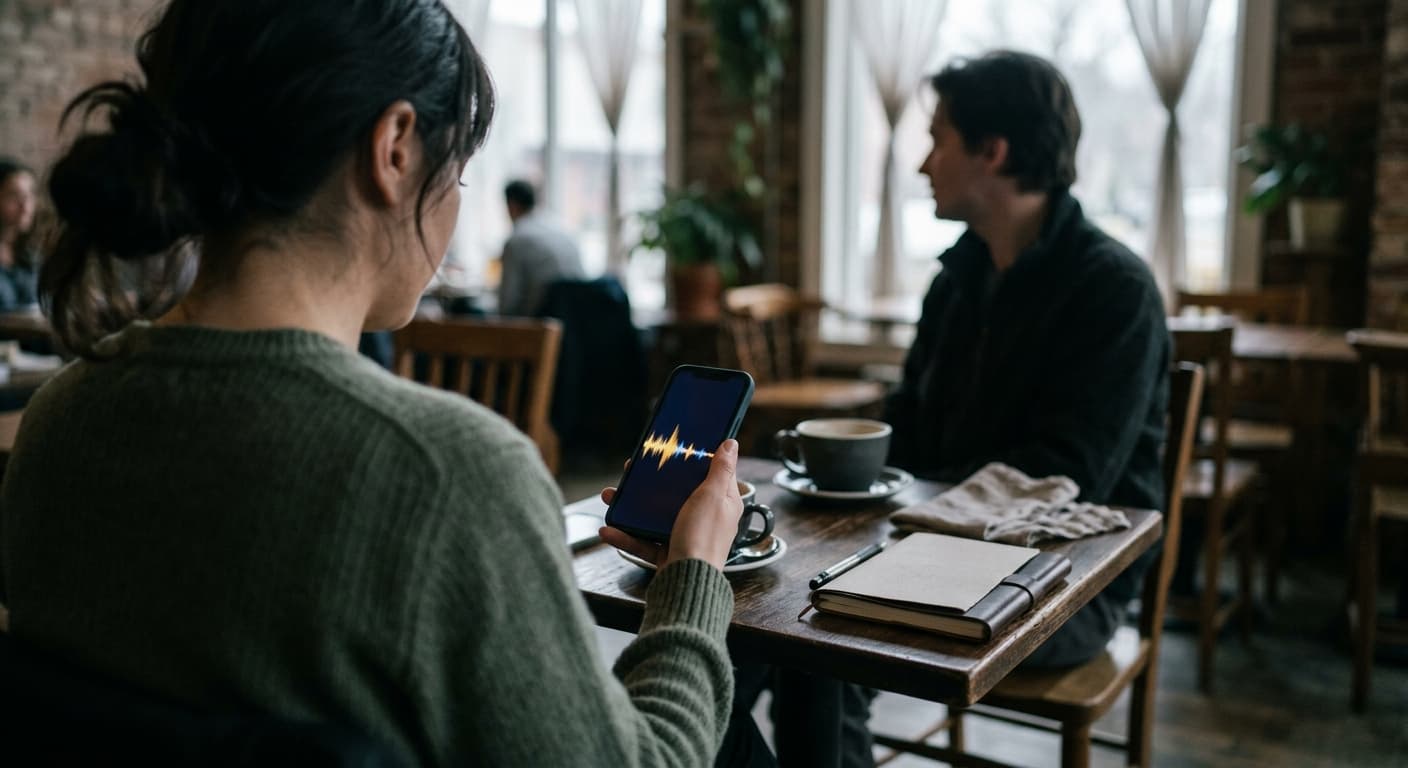
Vermont follows one-party consent for audio recording under federal law (18 U.S.C. 2511) because Vermont has no state wiretapping statute. As a participant, you may record a conversation without notifying others. Article 11 of the Vermont Constitution adds one significant limit on government action: the Vermont Supreme Court has held that police cannot secretly record a conversation inside a private home without a warrant, even when they were invited in as guests.
Vermont's Unique Legal Framework
No State Wiretapping Statute
Vermont stands alone among all 50 states because it has never enacted a dedicated wiretapping or electronic surveillance statute. Recording rights come from three sources:
- Federal wiretap law (18 U.S.C. 2511) provides the primary statutory authority
- Vermont Supreme Court case law defines privacy expectations
- Article 11 of the Vermont Constitution provides privacy protections
The Key Court Cases
State v. Blow (1991): The Vermont Supreme Court first held that warrantless electronic monitoring of a conversation inside a private home, carried out by police, offends the core values of Article 11. This established that the home gets heightened protection from secret government recording.
State v. Brooks (1991): Recording a conversation in a public parking lot was lawful because the location was open and accessible, so there was no reasonable expectation of privacy.
State v. Geraw (2002): Building on Blow, the court held that police detectives invited into a defendant's home could not secretly tape record the kitchen-table conversation without a warrant, even though they were lawfully present. This is a limit on government conduct under Article 11, not a general rule for private citizens. A private citizen who is a participant in a conversation, including one held inside someone else's home, remains covered by the ordinary one-party consent rule.
State v. Rheaume, 2005 VT 106, 179 Vt. 39, 889 A.2d 711 (2005): A hospital emergency room treatment area is not a private space, because it is freely accessible to staff, so a patient there does not have a reasonable expectation of privacy under Article 11. The case itself concerned a police officer's warrantless entry into the treatment area, but the same privacy standard governs whether a recording made there would violate Article 11.
One-Party Consent in Practice
One person in the conversation must know about and agree to the recording, and that person can be you. No announcement is required. If you are not a party to a conversation, you can still record it lawfully if at least one participant has consented, for example when a friend asks you to record their own phone call.
The consent exception has one limit under the federal statute that governs Vermont recordings: a recording is not protected if it is made for the purpose of committing a criminal or tortious act, such as blackmail or extortion, even if the person recording is a participant in the conversation (18 U.S.C. 2511(2)(d)).
Types of Audio Communications Covered
- Wire communications: phone calls, cell phones, VoIP
- Oral communications: in-person conversations with privacy expectations
- Electronic communications: texts, emails, video calls
Recording Phone Calls
You can record any call you participate in. This applies to cell phones, landlines, VoIP (Zoom, Teams, Meet), and messaging apps.
Interstate Calls
Vermont borders two all-party consent states:
- Massachusetts: all-party consent
- New Hampshire: all-party consent
For calls to these states, inform the other party or get consent. Other all-party consent states: California, Florida, Illinois, Maryland, Montana, Pennsylvania, Washington. Two more need a hedge rather than a flat listing: Connecticut is criminal one-party consent but imposes civil all-party liability for call recording under C.G.S. 52-570d, and Nevada is functionally all-party for phone calls under a fractured, four-opinion Nevada Supreme Court ruling (Lane v. Allstate Insurance Co.), though its in-person rule differs.
Recording In-Person Conversations

Legal when: you participate, the conversation is in a public place, or you have one party's consent, including inside someone else's home if you are a participant.
Illegal when: you are not a party to the conversation and have no participant's consent, such as leaving a hidden device to capture a conversation you are not part of. Law enforcement faces an additional restriction: under Blow and Geraw, police cannot secretly record a conversation inside a private home without a warrant, even when invited in as guests.
Privacy Expectations by Location
| Location | Privacy Expectation | Key Authority |
|---|---|---|
| Public parking lot | None | State v. Brooks |
| Hospital ER | None | State v. Rheaume (2005) |
| Public streets/parks | None | First Amendment |
| Private home (vs. government recording) | Yes | State v. Blow; State v. Geraw |
| Hotel room | Yes | Common law |
| Private office (closed door) | Yes | Common law |
Penalties
Federal Criminal Penalties
| Offense | Maximum Penalty |
|---|---|
| Illegal interception (18 U.S.C. 2511) | 5 years, fines |
| Illegal disclosure | 5 years, fines |
Civil Remedies (18 U.S.C. 2520)
- Actual damages, or statutory damages of whichever is greater between $100 a day for each day of violation or $10,000
- Punitive damages
- Attorney fees
Audio Recordings as Evidence
Lawfully recorded audio is generally admissible in Vermont courts. Illegally obtained recordings are typically inadmissible under Article 11. Standard authentication and relevance requirements apply.
More Vermont Recording Laws
Audio Recording | Video Recording | Voyeurism & Hidden Cameras | Workplace Recording | Recording Police | Phone Call Recording | Security Cameras | Recording in Public | Landlord-Tenant | Dashcam Laws | Schools | Medical Recording
Back to Vermont Recording Laws
More Vermont Recording Topics
More Vermont Laws
Frequently Asked Questions
Is it legal to audio record a conversation in Vermont without the other person knowing?
Yes. Vermont is a one-party consent state under federal law (18 U.S.C. 2511). As a conversation participant, you can record without telling others. Vermont has no state wiretapping statute.
Why does Vermont not have a wiretapping law?
Vermont is the only state that never enacted a comprehensive wiretapping statute. The legislature has considered such legislation but none has passed. Federal law (18 U.S.C. 2511) and state court decisions fill the gap.
Can I record a phone call with someone in Massachusetts from Vermont?
You should get consent first. Massachusetts requires all-party consent, and the stricter law typically applies to interstate calls.
What are the penalties for illegal audio recording in Vermont?
Federal law (18 U.S.C. 2511) provides up to 5 years imprisonment. Civil damages under 18 U.S.C. 2520 are actual damages, or statutory damages of whichever is greater between $100 a day for each day of violation or $10,000, plus punitive damages and attorney fees.
Can I place a hidden audio recorder in someone's home in Vermont?
It depends on whether you are a participant in the conversation. If you are, for example recording your own visit to someone else's house, Vermont's ordinary one-party consent rule applies and the recording is legal even without telling the homeowner. If you are not a party and have no participant's consent, planting a device to capture a conversation you are not part of is illegal interception. Law enforcement faces a separate, stricter rule: under State v. Geraw (2002), the Vermont Supreme Court held that police cannot secretly record inside a private home without a warrant, even when invited in as guests, because Article 11 of the Vermont Constitution limits government surveillance specifically.
Updates
Hedged the Connecticut and Nevada entries in the interstate all-party consent list instead of listing them flatly, restated the federal civil-damages formula under 18 U.S.C. 2520 as the greater of $100 a day of violation or $10,000 (was shown as a flat $10,000), and added a source citation and link for State v. Rheaume.
Independently fact-checked against the cited primary sources
Governing law re-checked for recent changes
Reviewed and approved by an editor
The Law Behind This Article
This article rests on the statutory provisions below, held in our own legal record and retrieved from the official source. Tap a section to read the operative text.
United States Code Title 18
§ 2511Interception and disclosure of wire, oral, or electronic communications prohibitedIn forcecited in 418 of our articles
Except as otherwise specifically provided in this chapter any person who— intentionally intercepts, endeavors to intercept, or procures any other person to intercept or endeavor to intercept, any wire, oral, or electronic communication; intentionally uses, endeavors to use, or procures any other person to use or endeavor to use any electronic, mechanical, or other device to intercept any oral communication when— such device is affixed to, or otherwise transmits a signal through, a wire, cable, or other like connection used in wire communication; or such device transmits communications by radio, or interferes with the transmission of such communication; or such person knows, or has reason to know, that such device or any component thereof has been sent through the mail or transported in interstate or foreign commerce; or such use or endeavor to use (A) takes place on the premises of any business or other commercial establishment the operations of which affect interstate or foreign commerce; or (B) obtains or is for the purpose of obtaining information relating to the operations of any business or other commercial establishment the operations of which affect interstate or foreign…
Official text (excerpt) · last checked 2026-08-28 · Read the full text in our law library · Verify at uscode.house.gov
Cited in 2,045 court opinions in our collectionLatest citing opinion in our collection: 2026
In the courts (editorial summary, independently checked):Griggs-Ryan v. Smith (1990) applied the Section 2511(2)(d) prior-consent exception, treating a tenant repeatedly told that all incoming calls were taped as having impliedly consented. United States v. United States District Court (1972) read the then-current Section 2511(3) as conferring no presidential surveillance power.
Opinions citing this section in our collection:
- Mitchell v. Forsyth (Supreme Court of the United States 1985, 472 U.S. 511)✓The Attorney General authorized a warrantless 1970 national security wiretap that caught the plaintiff's calls; the Court held the since-repealed Section 2511(3) disclaimer left the tap lawful under Title III, and that Mitchell had qualified immunity.
- United States v. United States District Court for the Eastern District of Michigan (Supreme Court of the United States 1972, 407 U.S. 297)✓The Attorney General approved warrantless wiretaps on members of a domestic group accused of bombing a CIA office; the Court read Section 2511(3) as a congressional disclaimer conferring no surveillance power, then held the Fourth Amendment required prior judicial approval.
- Forsyth v. Barr (Court of Appeals for the Fifth Circuit 1994, 19 F.3d 1527)✓Dallas police used, in an internal affairs probe of an officer, calls private parties allegedly intercepted illegally; assuming that was unlawful, the Fifth Circuit held Section 2517(1) and (2) allowed the disclosure and use, defeating the Section 2511(1)(c) and (d) claims.
Identified automatically from the court opinions citing this section — not a ranking of which case controls.
§ 2520Recovery of civil damages authorizedIn forcecited in 115 of our articles
Except as provided in section 2511(2)(a)(ii), any person whose wire, oral, or electronic communication is intercepted, disclosed, or intentionally used in violation of this chapter may in a civil action recover from the person or entity, other than the United States, which engaged in that violation such relief as may be appropriate. In an action under this section, appropriate relief includes— such preliminary and other equitable or declaratory relief as may be appropriate; damages under subsection (c) and punitive damages in appropriate cases; and a reasonable attorney’s fee and other litigation costs reasonably incurred.
Official text (excerpt) · last checked 2026-07-28 · Read the full text in our law library · Verify at uscode.house.gov
Cited in 860 court opinions in our collectionLatest citing opinion in our collection: 2026
In the courts (editorial summary, independently checked):Walker v. Darby (1990) held a 2520 plaintiff need not prove the contents of intercepted conversations, only interception and a justified expectation against it. Bartnicki v. Vopper (2001) barred 2520 damages against defendants who took no part in the interception, obtained the tape lawfully, and disclosed a matter of public concern.
Opinions citing this section in our collection:
- Jessie Walker v. Thomas E. Darby, Hugh L. Robinson, Jr., and Kenneth Day (Court of Appeals for the Eleventh Circuit 1990, 911 F.2d 1573)✓A postal letter carrier said three supervisors wired an intercom near his workstation to listen in. Reversing summary judgment, the Eleventh Circuit held a section 2520 plaintiff can show interception without proving the contents of specific conversations.
- Gelbard v. United States (Supreme Court of the United States 1972, 408 U.S. 41)“…disclosure, or use is entitled to recover civil damages, 18 U. S. C. § 2520 . Title III also bars the use as eviden…”
- DirecTV, Inc. v. Hoa Huynh (Court of Appeals for the Ninth Circuit 2007, 503 F.3d 847)“…7 U.S.C. § 605 (e)(4), or alternatively, for violations of 18 U.S.C. § 2520 (a), or alternatively, for violations o…”
Identified automatically from the court opinions citing this section — not a ranking of which case controls.
Search our full record of US law — 2.1 million sections, every state + federal →
Sources and References
- 18 U.S.C. 2511 -- Federal Wiretap Act(law.cornell.edu)
- 18 U.S.C. 2520 -- Civil Damages for Wiretap Violations(law.cornell.edu)
- Vermont Constitution -- Article 11(legislature.vermont.gov).gov
- FCC Guide on Recording Telephone Conversations(fcc.gov).gov
- Reporters Committee -- Vermont Recording Guide(rcfp.org)