
Kentucky
Kentucky Audio Recording Laws: One-Party Consent Rules and Penalties
Independently fact-checked against primary sources (last audited August 15, 2026). · Reviewed by the RecordingLaw editorial team. · Law checked current as of August 15, 2026. · 6 primary sources cited on this page. How we verify our legal content

Kentucky is a one-party consent state under KRS 526.020, meaning you can legally record any phone call or in-person conversation you participate in without notifying the other parties. Recordings made without the consent of at least one participant constitute eavesdropping, a Class D felony.
Kentucky permits audio recording under a one-party consent framework established by KRS 526.020. If you are a participant in a conversation, you can legally record the audio without informing the other parties. This applies to phone calls, face-to-face discussions, video calls, and any other form of oral or wire communication.
This guide covers the full scope of Kentucky audio recording law, including what types of recordings are legal, the criminal penalties for violations, how recordings function as evidence in court, and the specific statutes that govern each aspect of audio interception.
Kentucky One-Party Consent Framework
What the Statute Says
The core criminal provision is KRS 526.020, which makes it unlawful to intentionally use any device to eavesdrop, whether or not the person is present at the time. The critical companion statute is KRS 526.010, which defines "eavesdrop" as overhearing, recording, amplifying, or transmitting any part of a wire or oral communication of others without the consent of at least one party.
This definition is what establishes Kentucky as a one-party consent state. Because eavesdropping requires the absence of consent from all parties, any recording where at least one participant has consented is not eavesdropping under the statute.
Types of Audio Communications Covered
Kentucky law protects two primary categories of communications under the eavesdropping statutes:
| Communication Type | Definition | Examples |
|---|---|---|
| Wire communications | Transmissions through wire, cable, or similar connection | Landline calls, VoIP calls, cell phone calls |
| Oral communications | Spoken words uttered with a reasonable expectation of privacy | In-person conversations, meetings, private discussions |
Audio recording primarily involves wire communications (phone calls) and oral communications (in-person speech). The one-party consent framework applies equally to both categories.
What "Consent of at Least One Party" Means
The phrase "without the consent of at least one party" in KRS 526.010 is the foundation of Kentucky recording law. When you record a conversation you are part of, you are the consenting party. Your own knowledge and approval of the recording satisfies the statute. You do not need to announce that you are recording. You do not need a warrant. Your participation alone is sufficient.
If you are not a party to the conversation, you can still legally record it as long as at least one actual participant has given you consent before the recording begins.
When Audio Recording Is Legal in Kentucky
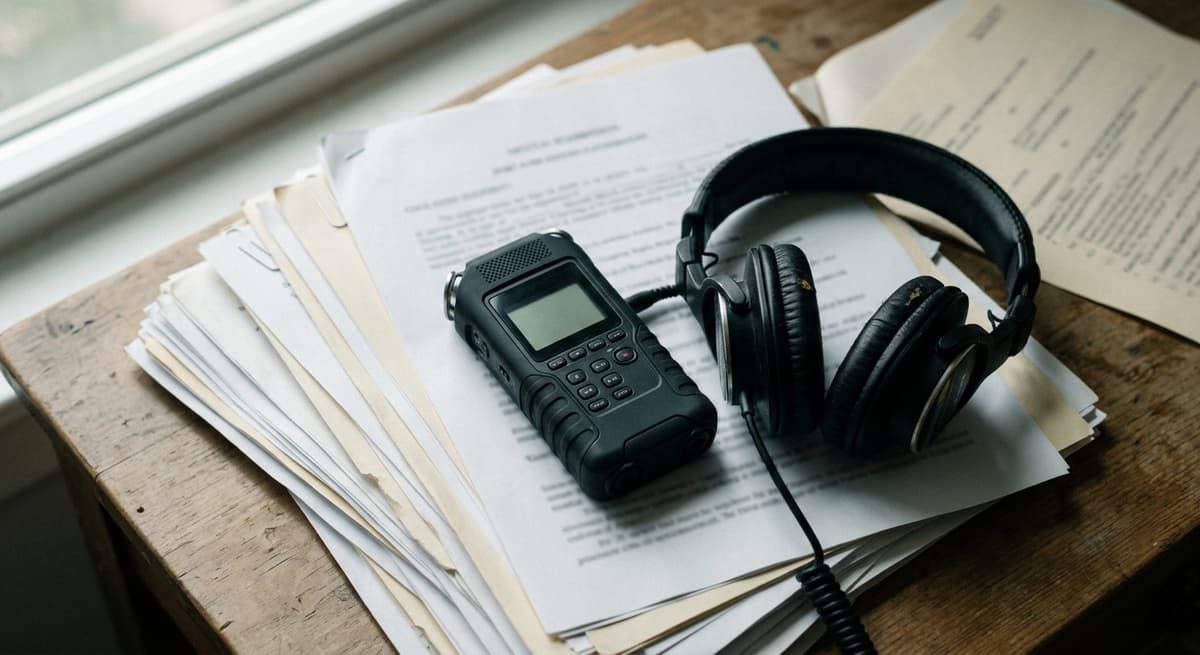
Recording Your Own Conversations
You can legally record audio of any conversation you participate in, including:
- Phone calls on landline, mobile, or VoIP platforms
- In-person meetings and one-on-one discussions
- Video calls where you are an active participant (Zoom, Teams, Google Meet)
- Conversations in your home, office, vehicle, or any other setting
- Business negotiations, transactions, and customer interactions
You do not need to provide any notice or disclosure. Your participation in the conversation is the only legal requirement under KRS 526.020.
Recording With Third-Party Authorization
If you are not a party to the conversation, you can still record it legally if at least one participant has given you prior consent. For example, if Person A is going to have a phone call with Person B, Person A can authorize you to listen in and record that call. Person B does not need to know.
This scenario commonly arises in workplace investigations, law enforcement operations, and family disputes where one party wants a witness to hear and preserve a conversation.
Recording in Public Spaces
Audio recording in genuinely public spaces where speakers have no reasonable expectation of privacy generally does not trigger Kentucky eavesdropping laws. You can record public speeches, street performances, protest chants, and other audio that occurs in openly accessible settings.
However, even in a public location, a private whispered conversation between two people who have taken deliberate steps to keep their discussion confidential may still carry a privacy expectation. The legal question always centers on whether the speaker reasonably expected the communication to be private.
When Audio Recording Is Illegal in Kentucky

Recording Without Being a Party or Having Consent
If you are not participating in a conversation and no participant has consented to your recording, you are committing eavesdropping under KRS 526.020. Common illegal scenarios include:
- Placing a hidden audio recorder in a room and leaving before the conversation begins
- Using a listening device to intercept a phone call between two other people
- Installing spyware or monitoring software on someone else's phone to capture their calls
- Hiding a recording device in a spouse's car, office, or personal belongings without being present for the conversations
Installing Eavesdropping Devices
KRS 526.030 creates a separate offense for installing an eavesdropping device. Even if you never actually record a conversation, the act of placing a hidden device for the purpose of eavesdropping is itself a Class D felony.
Possessing Eavesdropping Devices
KRS 526.040 makes it a Class A misdemeanor to possess any device designed or commonly used for eavesdropping under circumstances that indicate an intent to use it for illegal interception. Standard consumer electronics like smartphones and digital recorders are not targeted by this statute. It applies to devices whose primary design or adaptation is for covert interception.
Tampering With Private Communications
KRS 526.050 prohibits tampering with private communications. This statute covers unlawfully opening or reading a sealed letter or other sealed private communication without the sender's or receiver's consent, or improperly obtaining information about a communication from a common-carrier employee. It is a Class A misdemeanor. Kentucky's phone-tapping and digital-interception offenses are covered separately by KRS 526.010-.040.
Divulging Illegally Obtained Information
KRS 526.060 makes it a Class A misdemeanor to divulge or publish information that you know was obtained through illegal eavesdropping. Even if you did not personally make the illegal recording, sharing its contents is a separate criminal offense.
Criminal Penalties for Illegal Audio Recording
Eavesdropping (KRS 526.020) - Class D Felony
Under KRS 532.060 and KRS 534.030, the penalties for a Class D felony in Kentucky are:
| Penalty | Amount |
|---|---|
| Prison time | 1 to 5 years |
| Fine | $1,000 to $10,000 |
Full Penalty Table for Related Offenses
| Offense | Statute | Classification | Prison/Jail | Fine |
|---|---|---|---|---|
| Eavesdropping | KRS 526.020 | Class D felony | 1 to 5 years | $1,000 to $10,000 |
| Installing eavesdropping device | KRS 526.030 | Class D felony | 1 to 5 years | $1,000 to $10,000 |
| Possession of eavesdropping device | KRS 526.040 | Class A misdemeanor | Up to 12 months | Up to $500 |
| Tampering with private communications | KRS 526.050 | Class A misdemeanor | Up to 12 months | Up to $500 |
| Divulging illegally obtained info | KRS 526.060 | Class A misdemeanor | Up to 12 months | Up to $500 |
Felony Collateral Consequences
A Class D felony conviction in Kentucky carries consequences beyond the immediate sentence. A felony record can affect employment opportunities, professional licensing, firearm possession rights under both state and federal law, and voting rights during incarceration. Kentucky restored voting rights to certain nonviolent felons through executive action, but the process requires completion of the sentence and any probation or parole period.
Civil Liability for Illegal Audio Recording
Grounds for Civil Action
Kentucky victims of illegal audio recording can bring civil lawsuits against the person who made the recording. KRS Chapter 526 contains no private civil cause of action -- KRS 526.080 addresses forfeiture of devices only. Civil plaintiffs instead invoke two tracks: (1) the federal wiretap civil remedy under 18 U.S.C. 2520, which allows recovery of actual damages, statutory damages of $100 per day (minimum $10,000), punitive damages, and attorney fees; and (2) the Kentucky common-law tort of intrusion upon seclusion recognized in McCall v. Courier-Journal, 623 S.W.2d 882 (Ky. 1981). Available theories include:
- Federal ECPA civil remedy (18 U.S.C. 2520): Provides statutory damages, actual damages, punitive damages, and attorney fees against anyone who intentionally intercepts wire or oral communications without consent
- Invasion of privacy (intrusion upon seclusion): Kentucky courts recognize this tort under McCall v. Courier-Journal, requiring an intentional intrusion into a private matter highly offensive to a reasonable person
- Intentional infliction of emotional distress: When illegal recording causes severe emotional harm, this claim may apply
- Negligence per se: Violating a criminal statute (KRS 526.020) can establish the duty and breach elements of a negligence claim
Potential Damages
Civil remedies in Kentucky recording cases may include:
- Actual damages for harm suffered
- Compensatory damages for emotional distress
- Punitive damages when the conduct was willful or reckless
- Injunctive relief to stop ongoing violations
- Attorney fees and court costs
Audio Recording Admissibility in Kentucky Courts
Criminal Cases
Audio recordings made under one-party consent are generally admissible in Kentucky criminal proceedings. Under the Kentucky Rules of Evidence (KRE 901), the recording must be properly authenticated. The offering party must demonstrate that the recording is genuine and has not been altered.
Standard evidentiary considerations apply:
- Relevance (KRE 401/402): The recording must tend to make a fact of consequence more or less probable
- Prejudice vs. probative value (KRE 403): The court may exclude a recording if its probative value is substantially outweighed by the danger of unfair prejudice
- Hearsay (KRE 801/802): Statements on the recording may be subject to hearsay objections, though several exceptions commonly apply
- Best evidence rule (KRE 1002): The original recording is generally preferred over a transcript
Civil Cases
Legally obtained one-party consent recordings are also admissible in civil proceedings in Kentucky, subject to the same authentication and relevance requirements. Unlike Virginia, Kentucky does not impose a special statutory restriction on the use of recorded phone calls in civil cases.
Illegally Obtained Recordings
Recordings obtained in violation of KRS 526.020 face strong challenges to admissibility. In criminal cases, illegally obtained evidence may be suppressed. In both criminal and civil contexts, the party who made the illegal recording risks criminal prosecution and civil liability by introducing the evidence.
Tips for Preserving Audio Evidence
To maximize the evidentiary value of a legal recording:
- Do not edit, splice, or alter the recording in any way
- Maintain the original file in its native format
- Document the date, time, location, and participants of the recorded conversation
- Store copies in multiple secure locations
- Establish a clear chain of custody
Cross-State Audio Recording Issues
Bordering States and Their Consent Requirements
Kentucky borders seven states, each with its own recording consent laws. This is particularly important for phone calls where participants may be in different states.
| Bordering State | Consent Requirement |
|---|---|
| Illinois | Two-party consent |
| Indiana | One-party consent |
| Missouri | One-party consent |
| Ohio | One-party consent |
| Tennessee | One-party consent |
| Virginia | One-party consent |
| West Virginia | One-party consent |
Illinois is the critical concern. If you are in Kentucky recording a call with someone in Illinois, Illinois law requires all-party consent. Courts generally apply the stricter law when a call crosses state lines, which means you could face liability under Illinois law even though the recording is perfectly legal in Kentucky.
Federal Wiretapping Law
Federal law under 18 U.S.C. 2511 also follows a one-party consent standard. Since Kentucky law meets the federal standard, federal wiretapping law does not impose additional restrictions on recordings made entirely within Kentucky.
Kentucky residents who work for federal agencies or military installations (Fort Campbell, Fort Knox/Gold Vault, Blue Grass Army Depot) should be aware that federal workplace recording policies may impose restrictions beyond what state law requires.
Common Audio Recording Scenarios in Kentucky
Recording Business Calls
Kentucky businesses and individuals can record business calls they participate in without providing notice. Many businesses still choose to announce recording ("this call may be recorded for quality assurance") as a best practice and for compliance with other states' laws when calls cross borders. But under Kentucky law alone, no announcement is required.
Recording Personal Disputes
Recording conversations about personal disagreements, family conflicts, consumer complaints, or neighbor disputes is legal when you are a participant. These recordings can serve as documentation if the dispute escalates to legal proceedings.
Recording Threats or Harassment
Recording threatening or harassing communications directed at you is legal and often advisable. These recordings can serve as evidence for obtaining a protective order under KRS 403.740 (domestic violence) or KRS 456.060 (interpersonal protective orders), or for criminal prosecution.
Recording for Journalism
Journalists in Kentucky can record interviews and conversations they participate in without disclosing the recording. The Reporters Committee for Freedom of the Press confirms that Kentucky's one-party consent law allows reporters to record their own interviews without prior notice.
Audio Recording Devices and Technology
Legal Recording Tools
Kentucky law does not restrict the type of device used to record audio. Any recording device is permissible as long as the one-party consent requirement is met:
- Smartphone voice recorder apps
- Dedicated digital voice recorders
- AI-powered wearable recorders
- Smartwatch recording features
- Computer software for VoIP call recording
- Smart glasses with audio capture
Technology Does Not Change the Legal Standard
The recording device does not alter the legal analysis. Whether you use a hidden lapel microphone, a smartphone in your pocket, or professional-grade recording equipment, the one-party consent standard under KRS 526.020 remains the same. Your participation in the conversation satisfies the statute regardless of the hardware or software used.
More Kentucky Recording Laws
Audio Recording | Video Recording | Voyeurism and Hidden Cameras | Workplace Recording | Recording Police | Phone Call Recording | Security Cameras | Recording in Public | Landlord-Tenant Recording | Dashcam Laws | School Recording | Medical Recording
Back to Kentucky Recording Laws
More Kentucky Recording Topics
More Kentucky Laws
Frequently Asked Questions
Is it legal to record a conversation in Kentucky without telling the other person?
Yes. Kentucky is a one-party consent state under KRS 526.020. As long as you are a participant in the conversation, you can record it without notifying the other parties. This applies to phone calls, in-person conversations, and digital communications.
What is the penalty for illegally recording someone in Kentucky?
Eavesdropping is a Class D felony under KRS 526.020, punishable by 1 to 5 years in prison and fines of $1,000 to $10,000. Installing an eavesdropping device is a separate Class D felony under KRS 526.030 with the same penalties.
Can I record a phone call with someone in another state from Kentucky?
You can legally record the call under Kentucky law, but if the other person is in a two-party consent state like Illinois, the stricter law typically applies. You could face liability in the other state. When in doubt, inform the other party or get consent.
Are audio recordings admissible as evidence in Kentucky courts?
Yes, recordings made legally under one-party consent are generally admissible in both criminal and civil proceedings. The recording must be authenticated as genuine and unaltered, and standard rules of evidence regarding relevance and hearsay apply.
Can I sue someone for secretly recording me in Kentucky?
Only if the recording was illegal. If the person who recorded you was a participant in the conversation, the recording was legal under one-party consent. If they were not a participant and had no consent from any party, you may have grounds for a civil lawsuit for invasion of privacy.
Updates
Corrected six dead or misrouted statute-citation links in the penalties and civil-remedy sections (KRS 532.060, 534.030, 403.740, 456.060, and deep links for 526.030/526.050/526.060) so each now points to its actual statute text; the stated penalties and legal analysis were already accurate.
Independently fact-checked against the cited primary sources; governing law re-checked for recent changes
Corrected the description of KRS 526.050: it covers opening sealed letters and improperly obtaining information from a common-carrier employee, not phone-tapping or digital interception, which are covered by KRS 526.010-.040.
Governing law re-checked for recent changes
Corrected the criminal classification of KRS 526.050 (tampering with private communications) and KRS 526.060 (divulging illegally obtained information) from Class D felony to Class A misdemeanor, matching the statute text.
Governing law re-checked for recent changes
Reviewed and approved by an editor
The Law Behind This Article
This article rests on the statutory provisions below, held in our own legal record and retrieved from the official source. Tap a section to read the operative text.
Kentucky Revised Statutes, Chapter 526: EAVESDROPPING AND RELATED OFFENSES
§ 526.020EavesdroppingIn forcecited in 20 of our articles
(1) A person is guilty of eavesdropping when he intentionally uses any device to eavesdrop, whether or not he is present at the time. (2) Eavesdropping is a Class D felony.
Official text (excerpt) · last checked 2026-08-31 · Read the full text in our law library · Verify at apps.legislature.ky.gov
Cited in 8 court opinions in our collectionLatest citing opinion in our collection: 2023
In the courts (editorial summary, independently checked):Basham v. Commonwealth (1984) held wiretap evidence obtained under a valid federal order is admissible in Kentucky, though it noted no state law authorizes electronic surveillance by Kentucky police. Brock v. Commonwealth (1997) held the exclusionary rule reaches only constitutional violations, so a private recording was not suppressed.
Opinions citing this section in our collection:
- Springer v. Commonwealth (Kentucky Supreme Court 1999, 998 S.W.2d 439)✓A neighbor used a police scanner to tape cordless calls from the victim's home, and detectives played it to induce Eades to confess; the court held the federal wiretap act and Kentucky's eavesdropping statutes did not bar using it against someone who was not a party to the calls.
- Stringer v. Wal-Mart Stores, Inc. (Kentucky Supreme Court 2004, 151 S.W.3d 781)✓Wal-Mart secretly ran about forty hours of audio and video surveillance of employees in a store claims area; the court did not decide whether that violated KRS 526.020, holding instead that the employees' statutory claim failed for lack of damages caused by the recording itself.
- Brock v. Commonwealth (Kentucky Supreme Court 1997, 947 S.W.2d 24)✓Brock, claiming self-defense, was kept from using a private tape of the victim's mother saying her son had gone to kill him; the court held that even assuming the tape violated KRS 526.020, the exclusionary rule reaches only state action, so suppression was not required.
Identified automatically from the court opinions citing this section — not a ranking of which case controls.
§ 526.010DefinitionIn forcecited in 15 of our articles
The following definition applies in this chapter, unless the context otherwise requires: "Eavesdrop" means to overhear, record, amplify or transmit any part of a wire or oral communication of others without the consent of at least one (1) party thereto by means of any electronic, mechanical or other device.
Official text (excerpt) · last checked 2026-07-29 · Read the full text in our law library · Verify at apps.legislature.ky.gov
Cited in 9 court opinions in our collectionLatest citing opinion in our collection: 2024
Opinions citing this section in our collection:
- Major v. Commonwealth (Kentucky Supreme Court 2006, 177 S.W.3d 700)“…the activity was appropriate under Kentucky Criminal Law, KRS 526.010; thus not in violation of his Fourth Am…”
- Springer v. Commonwealth (Kentucky Supreme Court 1999, 998 S.W.2d 439)“…ions, is not precluded by 18 U.S.C. § 2510 , et seq. and KRS 526.010, et seq. Nor do these statutes have a…”
- Carrier v. Commonwealth (Court of Appeals of Kentucky 1980, 607 S.W.2d 115)“…ucky to depart from the federal norm. See also KRS 526.010, which defines “eavesdrop” as “to overh…”
Identified automatically from the court opinions citing this section — not a ranking of which case controls.
§ 526.030Installing eavesdropping deviceIn forcecited in 5 of our articles
(1) A person is guilty of installing an eavesdropping device when he intentionally installs or places such a device in any place with the knowledge that it is to be used for eavesdropping. (2) Installing an eavesdropping device is a Class D felony.
Official text (excerpt) · last checked 2026-07-29 · Read the full text in our law library · Verify at apps.legislature.ky.gov
Cited in 1 court opinions in our collectionLatest citing opinion in our collection: 2004
Opinions citing this section in our collection:
- Stringer v. Wal-Mart Stores, Inc. (Kentucky Supreme Court 2004, 151 S.W.3d 781)“…e that it was to be used for eavesdropping, in violation of KRS 526.030. 3. That the defendants, Wal-Mart Sto…”
Identified automatically from the court opinions citing this section — not a ranking of which case controls.
§ 526.040Possession of eavesdropping deviceIn forcecited in 5 of our articles
(1) A person is guilty of possession of an eavesdropping device when he possesses any electronic, mechanical or other device designed or commonly used for eavesdropping with intent to use that device to eavesdrop or knowing that another intends to use that device to eavesdrop. (2) Possession of an eavesdropping device is a Class A misdemeanor.
Official text (excerpt) · last checked 2026-07-29 · Read the full text in our law library · Verify at apps.legislature.ky.gov
§ 526.050Tampering with private communicationsIn forcecited in 4 of our articles
(1) A person is guilty of tampering with private communications when knowing that he does not have the consent of the sender or receiver, he unlawfully: (a) Opens or reads a sealed letter or other sealed private communication; or (b) Obtains in any manner from an employee, officer or representative of a communications common carrier information with respect to the contents or nature of a communication. (2) The provisions of this section do not apply to the censoring of sealed letters or sealed communications for security purposes in official detention or penal facilities. (3) Tampering with private communications is a Class A misdemeanor.
Official text (excerpt) · last checked 2026-07-29 · Read the full text in our law library · Verify at apps.legislature.ky.gov
§ 526.060Divulging illegally obtained informationIn forcecited in 4 of our articles
(1) A person is guilty of divulging illegally obtained information when he knowingly uses or divulges information obtained through eavesdropping or tampering with private communications or learned in the course of employment with a communications common carrier engaged in transmitting the message. (2) Divulging illegally obtained information is a Class A misdemeanor.
Official text (excerpt) · last checked 2026-07-29 · Read the full text in our law library · Verify at apps.legislature.ky.gov
Cited in 3 court opinions in our collectionLatest citing opinion in our collection: 2004
Opinions citing this section in our collection:
- Springer v. Commonwealth (Kentucky Supreme Court 1999, 998 S.W.2d 439)“…and state law. 18 U.S.C. § 2510 , et seq.; KRS 526.020; KRS 526.060. As with her "invocation of silence" ar…”
- Stringer v. Wal-Mart Stores, Inc. (Kentucky Supreme Court 2004, 151 S.W.3d 781)“…information obtained through eavesdropping in violation of KRS 526.060. 5. That the acts of the defendants,…”
- Bartnicki v. Vopper (Supreme Court of the United States 2001, 532 U.S. 514)“…Code § 808B.2 (1994); Kan. Stat. Ann. § 21-4002 (1995); Ky. Rev. Stat. Ann. § 526.060 (Michie 1999); La. Rev. Stat. Ann. § 1…”
Identified automatically from the court opinions citing this section — not a ranking of which case controls.
§ 526.080ForfeitureIn forcecited in 6 of our articles
Any electronic, mechanical or other device designed or commonly used for eavesdropping which is possessed or used in violation of this chapter, is forfeited to the state and shall be disposed of in accordance with KRS 500.090.
Official text (excerpt) · last checked 2026-07-29 · Read the full text in our law library · Verify at apps.legislature.ky.gov
Kentucky Revised Statutes, Chapter 403: DISSOLUTION OF MARRIAGE -- CHILD CUSTODY
§ 403.740Domestic violence order -- Restrictions -- Temporary child support -- Expiration and reissuanceIn forcecited in 2 of our articles
(1) Following a hearing ordered under KRS 403.730, if a court finds by a preponderance of the evidence that domestic violence and abuse has occurred and may again occur, the court may issue a domestic violence order: (a) Restraining the adverse party from: 1. Committing further acts of domestic violence and abuse; 2. Any unauthorized contact or communication with the petitioner or other person specified by the court; 3. Approaching the petitioner or other person specified by the court within a distance specified in the order, not to exceed five hundred (500) feet; 4. Going to or within a specified distance of a specifically described residence, school, or place of employment or area where such a place is located; and 5. Disposing of or damaging any of the property of the parties; (b) Authorizing, at the request of the petitioner: 1. Limited contact or communication between the parties that the court finds necessary; or 2. The parties to remain in a common area, which may necessitate them being closer than five hundred (500) feet under limited circumstances with specific parameters set forth by the court.
Official text (excerpt) · last checked 2026-09-08 · Read the full text in our law library · Verify at apps.legislature.ky.gov
Cited in 107 court opinions in our collectionLatest citing opinion in our collection: 2026
Opinions citing this section in our collection:
- Wright v. Wright (Court of Appeals of Kentucky 2005, 181 S.W.3d 49)“…t hold a hearing prior to entering the DVO, in violation of KRS 403.740 and 403.745, and made its decision base…”
- Daugherty v. TELEK (Kentucky Supreme Court 2012, 366 S.W.3d 463)“…uance of an emergency protective order (EPO) as required by KRS 403.740(4). Because we conclude that the Kenton…”
- Castle v. Castle (Court of Appeals of Kentucky 2019, 567 S.W.3d 908)“…tic violence and abuse has occurred and may again occur[.]" KRS 403.740(1). The preponderance of the evidence…”
Identified automatically from the court opinions citing this section — not a ranking of which case controls.
Kentucky Revised Statutes, Chapter 456: CIVIL ORDERS OF PROTECTION
§ 456.060Ruling on petition for interpersonal protective order -- Duration of orderIn forcecited in 3 of our articles
(1) Following a hearing ordered under KRS 456.040, if a court finds by a preponderance of the evidence that dating violence and abuse, sexual assault, or stalking has occurred and may again occur, the court may issue an interpersonal protective order: (a) Restraining the adverse party from: 1. Committing further acts of dating violence and abuse, stalking, or sexual assault; 2. Any unauthorized contact or communication with the petitioner or other person specified by the court; 3. Approaching the petitioner or other person specified by the court within a distance specified in the order, not to exceed five hundred (500) feet; 4. Going to or within a specified distance of a specifically described residence, school, or place of employment or area where such a place is located; and 5. Disposing of or damaging any of the property of the parties; (b) Authorizing, at the request of the petitioner: 1. Limited contact or communication between the parties that the court finds necessary; or 2. The parties to remain in a common area, which may necessitate them being closer than five hundred (500) feet under limited circumstances with specific parameters set forth by the court.
Official text (excerpt) · last checked 2026-07-29 · Read the full text in our law library · Verify at apps.legislature.ky.gov
Cited in 24 court opinions in our collectionLatest citing opinion in our collection: 2026
Opinions citing this section in our collection:
- Halloway v. Simmons (Court of Appeals of Kentucky 2017, 532 S.W.3d 158)“…ur, the court may issue an interpersonal protective order.” KRS 456.060(1). Under KRS 456.010(7), “ ‘[sjtalking…”
- Calhoun v. Wood (Court of Appeals of Kentucky 2017, 516 S.W.3d 357)“…ry to restrain Calhoun from further acts of stalking. See KRS 456.060(1). Based on our analysis of the proc…”
- Benson v. Lively (Court of Appeals of Kentucky 2018, 544 S.W.3d 159)“…However, similar to the DVO statute, the IPO statute, KRS 456.060, does allow a trial court to direct or…”
Identified automatically from the court opinions citing this section — not a ranking of which case controls.
Kentucky Revised Statutes, Chapter 532: CLASSIFICATION AND DESIGNATION OF OFFENSES -- AUTHORIZED DISPOSITION
§ 532.060Sentence of imprisonment for felony -- Postincarceration supervisionIn forcecited in 4 of our articles
(1) A sentence of imprisonment for a felony shall be an indeterminate sentence, the maximum of which shall be fixed within the limits provided by subsection (2) of this section, and subject to modification by the trial judge pursuant to KRS 532.070. (2) Unless otherwise provided by law, the authorized maximum terms of imprisonment for felonies are: (a) For a Class A felony, not less than twenty (20) years nor more than fifty (50) years, or life imprisonment; (b) For a Class B felony, not less than ten (10) years nor more than twenty (20) years; (c) For a Class C felony, not less than five (5) years nor more than ten (10) years; and (d) For a Class D felony, not less than one (1) year nor more than five (5) years. (3) For any felony specified in KRS Chapter 510 or KRS 529.100, 529.110, 530.020, 530.064(1)(a), 531.310, 531.320, 531.335, or 531.340, the sentence shall include an additional five (5) year period of postincarceration supervision which shall be added to the maximum sentence rendered for the offense.
Official text (excerpt) · last checked 2026-07-29 · Read the full text in our law library · Verify at apps.legislature.ky.gov
Cited in 163 court opinions in our collectionLatest citing opinion in our collection: 2026
Opinions citing this section in our collection:
- Commonwealth v. Reneer (Kentucky Supreme Court 1987, 734 S.W.2d 794)“…ediately after imposition of sentence." See Commentary to KRS 532.060. Although the Parole Board has promulga…”
- Dixon v. Commonwealth (Kentucky Supreme Court 2008, 263 S.W.3d 583)“…Blockburger test). 20 . Under KRS 532.060(2)(b), the punishment range for a Class…”
- Young v. Commonwealth (Kentucky Supreme Court 2000, 25 S.W.3d 66)“…of imprisonment for a felony is fixed by a jury pursuant to KRS 532.060 and the trial court, having regard to t…”
Identified automatically from the court opinions citing this section — not a ranking of which case controls.
Kentucky Revised Statutes, Chapter 534: FINES
§ 534.030Fines for feloniesIn forcecited in 3 of our articles
(1) Except as otherwise provided for an offense defined outside this code, a person who has been convicted of any felony shall, in addition to any other punishment imposed upon him, be sentenced to pay a fine in an amount not less than one thousand dollars ($1,000) and not greater than ten thousand dollars ($10,000) or double his gain from commission of the offense, whichever is the greater. (2) In determining the amount and method of paying a fine for commission of a felony, the court shall consider, among others, the following factors: (a) The defendant's ability to pay the amount of the fine; (b) The hardship likely to be imposed on the defendant's dependents by the amount of the fine and the time and method of paying it; (c) The impact the amount of the fine will have on the defendant's ability to make reparation or restitution to the victim; and (d) The amount of the defendant's gain, if any, derived from the commission of the offense.
Official text (excerpt) · last checked 2026-07-29 · Read the full text in our law library · Verify at apps.legislature.ky.gov
Cited in 26 court opinions in our collectionLatest citing opinion in our collection: 2026
Opinions citing this section in our collection:
- Jones v. Commonwealth (Kentucky Supreme Court 2011, 382 S.W.3d 22)“…the court costs and jail fee were assessed in violation of KRS 534.030(4) because he was before the court as a…”
- Simpson v. Commonwealth (Kentucky Supreme Court 1994, 889 S.W.2d 781)“…(1964). The statutes at issue are KRS 532.030(3) and KRS 534.030(1). The latter statute is more specific…”
- Commonwealth v. Reed (Kentucky Supreme Court 2012, 374 S.W.3d 298)“…eded, the imposition of a $1,000 fine on Reed was improper. KRS 534.030 states: (1) ... a person who has been…”
Identified automatically from the court opinions citing this section — not a ranking of which case controls.
United States Code Title 18
§ 2511Interception and disclosure of wire, oral, or electronic communications prohibitedIn forcecited in 418 of our articles
Except as otherwise specifically provided in this chapter any person who— intentionally intercepts, endeavors to intercept, or procures any other person to intercept or endeavor to intercept, any wire, oral, or electronic communication; intentionally uses, endeavors to use, or procures any other person to use or endeavor to use any electronic, mechanical, or other device to intercept any oral communication when— such device is affixed to, or otherwise transmits a signal through, a wire, cable, or other like connection used in wire communication; or such device transmits communications by radio, or interferes with the transmission of such communication; or such person knows, or has reason to know, that such device or any component thereof has been sent through the mail or transported in interstate or foreign commerce; or such use or endeavor to use (A) takes place on the premises of any business or other commercial establishment the operations of which affect interstate or foreign commerce; or (B) obtains or is for the purpose of obtaining information relating to the operations of any business or other commercial establishment the operations of which affect interstate or foreign…
Official text (excerpt) · last checked 2026-08-28 · Read the full text in our law library · Verify at uscode.house.gov
Cited in 2,045 court opinions in our collectionLatest citing opinion in our collection: 2026
In the courts (editorial summary, independently checked):Griggs-Ryan v. Smith (1990) applied the Section 2511(2)(d) prior-consent exception, treating a tenant repeatedly told that all incoming calls were taped as having impliedly consented. United States v. United States District Court (1972) read the then-current Section 2511(3) as conferring no presidential surveillance power.
Opinions citing this section in our collection:
- Mitchell v. Forsyth (Supreme Court of the United States 1985, 472 U.S. 511)✓The Attorney General authorized a warrantless 1970 national security wiretap that caught the plaintiff's calls; the Court held the since-repealed Section 2511(3) disclaimer left the tap lawful under Title III, and that Mitchell had qualified immunity.
- United States v. United States District Court for the Eastern District of Michigan (Supreme Court of the United States 1972, 407 U.S. 297)✓The Attorney General approved warrantless wiretaps on members of a domestic group accused of bombing a CIA office; the Court read Section 2511(3) as a congressional disclaimer conferring no surveillance power, then held the Fourth Amendment required prior judicial approval.
- Forsyth v. Barr (Court of Appeals for the Fifth Circuit 1994, 19 F.3d 1527)✓Dallas police used, in an internal affairs probe of an officer, calls private parties allegedly intercepted illegally; assuming that was unlawful, the Fifth Circuit held Section 2517(1) and (2) allowed the disclosure and use, defeating the Section 2511(1)(c) and (d) claims.
Identified automatically from the court opinions citing this section — not a ranking of which case controls.
§ 2520Recovery of civil damages authorizedIn forcecited in 115 of our articles
Except as provided in section 2511(2)(a)(ii), any person whose wire, oral, or electronic communication is intercepted, disclosed, or intentionally used in violation of this chapter may in a civil action recover from the person or entity, other than the United States, which engaged in that violation such relief as may be appropriate. In an action under this section, appropriate relief includes— such preliminary and other equitable or declaratory relief as may be appropriate; damages under subsection (c) and punitive damages in appropriate cases; and a reasonable attorney’s fee and other litigation costs reasonably incurred.
Official text (excerpt) · last checked 2026-07-28 · Read the full text in our law library · Verify at uscode.house.gov
Cited in 860 court opinions in our collectionLatest citing opinion in our collection: 2026
In the courts (editorial summary, independently checked):Walker v. Darby (1990) held a 2520 plaintiff need not prove the contents of intercepted conversations, only interception and a justified expectation against it. Bartnicki v. Vopper (2001) barred 2520 damages against defendants who took no part in the interception, obtained the tape lawfully, and disclosed a matter of public concern.
Opinions citing this section in our collection:
- Jessie Walker v. Thomas E. Darby, Hugh L. Robinson, Jr., and Kenneth Day (Court of Appeals for the Eleventh Circuit 1990, 911 F.2d 1573)✓A postal letter carrier said three supervisors wired an intercom near his workstation to listen in. Reversing summary judgment, the Eleventh Circuit held a section 2520 plaintiff can show interception without proving the contents of specific conversations.
- Gelbard v. United States (Supreme Court of the United States 1972, 408 U.S. 41)“…disclosure, or use is entitled to recover civil damages, 18 U. S. C. § 2520 . Title III also bars the use as eviden…”
- DirecTV, Inc. v. Hoa Huynh (Court of Appeals for the Ninth Circuit 2007, 503 F.3d 847)“…7 U.S.C. § 605 (e)(4), or alternatively, for violations of 18 U.S.C. § 2520 (a), or alternatively, for violations o…”
Identified automatically from the court opinions citing this section — not a ranking of which case controls.
Search our full record of US law — 2.1 million sections, every state + federal →
Sources and References
- KRS 526.010 - Definition of Eavesdrop(apps.legislature.ky.gov).gov
- KRS 526.020 - Eavesdropping(apps.legislature.ky.gov).gov
- KRS Chapter 526 - Eavesdropping and Related Offenses(apps.legislature.ky.gov).gov
- KRS 526.040 - Possession of Eavesdropping Device(apps.legislature.ky.gov).gov
- KRS 532.060 - Sentence of Imprisonment for Felony(apps.legislature.ky.gov).gov
- KRS 403.740 - Domestic Violence Protective Orders(apps.legislature.ky.gov).gov
- 18 U.S.C. 2511 - Federal Wiretap Act(law.cornell.edu)
- RCFP Reporters Recording Guide - Kentucky(rcfp.org)