
Alaska
Alaska Audio Recording Laws: One-Party Consent Rules and Penalties (2026)
Independently fact-checked against primary sources (last audited August 15, 2026). · Reviewed by the RecordingLaw editorial team. · Law checked current as of August 15, 2026. · 8 primary sources cited on this page. How we verify our legal content
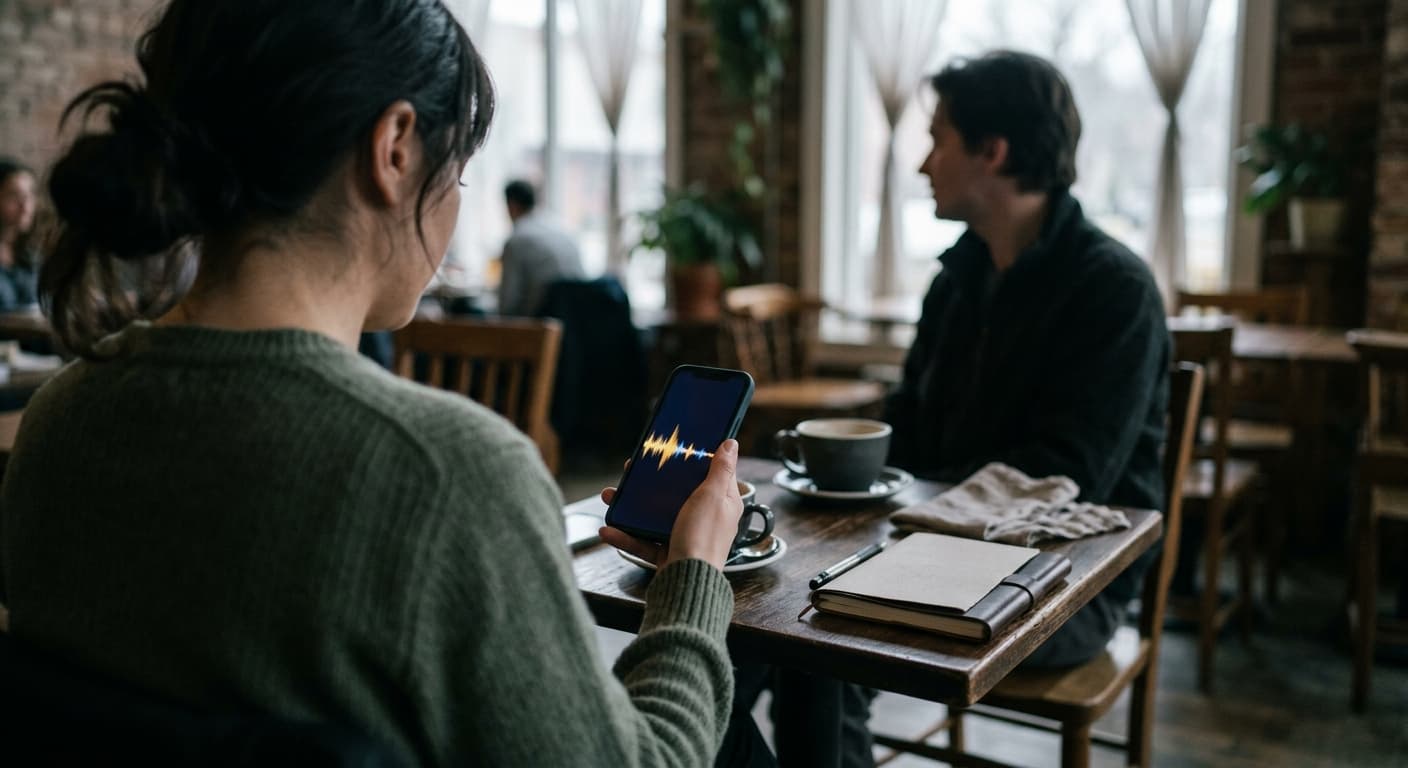
Alaska follows a one-party consent rule for audio recording under AS 42.20.310. Because courts interpret that statute to cover only non-participant interception, any person who takes part in a conversation may record it without notifying others. Violations by non-participants carry up to one year in jail and fines up to $25,000.
Alaska allows individuals to record their own conversations without telling other participants. Under AS 42.20.310, the state follows a one-party consent framework for audio recording, meaning only one person involved in the conversation needs to agree to the recording. That person can be you.
This page covers the specific rules governing audio recording in Alaska, including what types of recordings are legal, the penalties for violations, key exceptions, and how proposed legislation could change the current framework.
Alaska's One-Party Consent Standard for Audio
Alaska's wiretapping and eavesdropping laws are found in Alaska Statutes Title 42, Chapter 20, Article 4. The primary statute governing audio recording is AS 42.20.310, which prohibits the use of an "eavesdropping device" to hear or record any part of an oral conversation without the consent of a party to the conversation.
The phrase "consent of a party" is the foundation of Alaska's one-party consent rule. Because the law requires consent from only one participant, any person who is part of the conversation satisfies this requirement simply by choosing to record. You do not need to announce that you are recording or obtain permission from anyone else.
What Counts as an "Eavesdropping Device"?
AS 42.20.310 defines an "eavesdropping device" broadly as any device capable of hearing or recording an oral conversation, whether conducted in person, by telephone, or by any other means. This includes:
- Smartphones and their built-in recording apps
- Digital voice recorders
- Laptop and desktop microphones
- AI wearable recorders (such as Plaud or similar devices)
- Smart speakers with recording features
- Any software that captures audio on a computer or phone
The statute specifically excludes hearing aids and devices used by people with hearing impairments to restore normal hearing.
The Palmer v. State Precedent
The legal foundation for Alaska's one-party consent framework was established by the Alaska Supreme Court in Palmer v. State, 604 P.2d 1106, 1108 n.5 (Alaska 1979). In this footnote, the court construed AS 42.20.310 to reach only third-party interception of communications. Because a participant in a conversation is not a "third party," recording your own conversations does not violate the eavesdropping statute. This judicial construction is the basis for Alaska's de facto one-party consent rule. Notably, AS 42.20.310 sits inside Title 42 (Public Utilities) rather than the criminal code, a structural quirk dating back to its 1972 telephone-tampering origin.
This ruling remains the controlling authority on audio recording consent in Alaska. Courts continue to follow the principle that a conversation participant's decision to record is not "eavesdropping" under the statute.
The Glass Warrant Overlay for Police Recording
A separate Alaska constitutional rule applies when law enforcement is the recording party. In State v. Glass, 583 P.2d 872 (Alaska 1978), the Alaska Supreme Court held that Article I, sections 14 and 22 of the Alaska Constitution require police to obtain a judicial warrant (the "Glass warrant") before consensually monitoring or recording a target's conversation, even though federal Title III would allow one-party consent. The Alaska Court of Appeals reaffirmed this rule in Cleveland v. State (Alaska Ct. App. 2020). The Glass-warrant rule is the strongest deviation from the federal one-party baseline in Alaska law, but it constrains the state, not private citizens.
When Audio Recording Is Legal in Alaska
Recording Your Own Conversations
You can legally record any conversation you actively participate in. This applies to:
- Face-to-face conversations
- Phone calls (landline, cell, VoIP)
- Video calls with audio (Zoom, Teams, Google Meet)
- Group conversations where you are a participant
- Voice messages and voicemail
There is no requirement to provide notice, obtain written consent, or use any particular recording method. The only requirement is that you are a party to the conversation.
Recording with Consent from One Party
If you are not a participant in the conversation, you can still legally record if you have the consent of at least one party. For example, if a friend asks you to record their phone call for them, and that friend is a participant in the call, the recording is legal because one party (your friend) has consented.
Recording in Public Places
Audio recording in public spaces where there is no reasonable expectation of privacy is generally permitted. Public places include:
- Streets, sidewalks, and parks
- Government buildings open to the public
- Public transportation
- Stores and restaurants (though the business owner may set their own rules)
- Public meetings and government proceedings
In these settings, conversations can be overheard by anyone nearby, so there is typically no reasonable expectation of privacy.
When Audio Recording Is Illegal in Alaska
Third-Party Eavesdropping
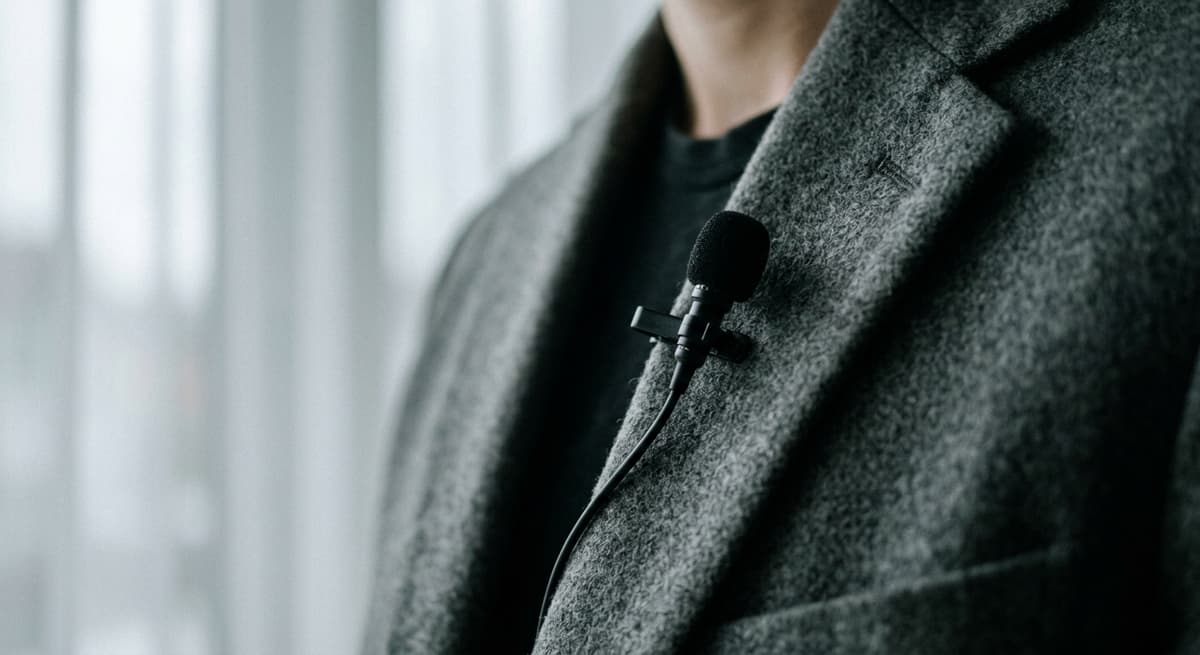
The primary prohibition under AS 42.20.310 targets third-party eavesdropping. It is illegal to use a recording device to capture a conversation between other people when none of the participants have consented. Examples of illegal recording include:
- Placing a hidden microphone in someone else's home to record their conversations
- Tapping a phone line to listen to calls between other people
- Using a directional microphone to record a private conversation from a distance
- Planting a recording device in a meeting room you will not be attending
Recording in Areas with a Reasonable Expectation of Privacy
Even if you could technically hear a conversation, recording in locations where people have a reasonable expectation of privacy may violate the law. Courts evaluate this on a case-by-case basis, but areas that typically carry a reasonable expectation of privacy include:
- Private homes (when you are not present)
- Hotel rooms
- Medical examination rooms (when you are not the patient)
- Attorney-client meeting spaces
- Restrooms and changing areas
Unauthorized Publication of Recorded Communications
AS 42.20.300 separately prohibits the unauthorized publication or use of communications obtained through illegal recording. Even if someone else made the illegal recording, knowingly using or distributing that recording can result in criminal liability.
Penalties for Illegal Audio Recording
Under AS 42.20.330, illegal eavesdropping is classified as a Class A misdemeanor in Alaska. AS 42.20.330 is the penalty provision only; it does not create a private civil cause of action. The maximum penalties come from the general sentencing provisions of AS 12.55.135(a) (jail) and AS 12.55.035(b)(5) (fine):
| Penalty | Maximum |
|---|---|
| Jail time | Up to 1 year |
| Fine | Up to $25,000 |
These penalties apply to each separate act of illegal recording, so multiple recordings can result in multiple charges.
Civil Liability
Alaska does not provide a state-law civil cause of action for eavesdropping (AS 42.20.330 is a penalty section, not a private right of action). Victims must instead rely on federal and common-law remedies, including:
- Common-law intrusion upon seclusion under Alaska tort law
- Intentional infliction of emotional distress if the recording caused severe emotional harm
- Federal Wiretap Act damages under 18 U.S.C. Section 2520, which provides for statutory damages, actual damages, punitive damages, and attorney's fees
- Injunctive relief to prevent further recording or distribution
Federal Law and Alaska Audio Recording

The federal Wiretap Act (18 U.S.C. Section 2511) also governs the interception of wire, oral, and electronic communications. Like Alaska law, the federal statute follows a one-party consent standard. Recording is permitted when one party to the communication consents, unless the recording is made for the purpose of committing a criminal or tortious act.
Because both Alaska state law and federal law follow one-party consent, there is no conflict between the two. Recordings made legally under Alaska law also comply with federal requirements.
Interstate Recording Considerations
When you record a conversation that crosses state lines, the laws of both states may apply. If you are in Alaska recording a call with someone in a two-party consent state such as California, Florida, or Washington, the stricter law may govern. States with all-party consent requirements include:
- California
- Connecticut
- Florida
- Illinois
- Maryland
- Massachusetts
- Montana
- New Hampshire
- Pennsylvania
- Washington
The safest approach for interstate calls is to inform all parties that the call is being recorded or to consult with an attorney about which state's law applies.
Proposed Change: Senate Bill 85
Senate Bill 85, pending in the 34th Alaska Legislature, would convert Alaska from a de facto one-party consent state to an all-party consent state. This is a material pending change that anyone who relies on Alaska's recording rules should track.
What SB 85 Would Change
If passed, SB 85 would:
- Change the consent standard from "a party" to "all parties to the communication"
- Make Alaska an all-party consent state for audio recording
- Require everyone in a conversation to agree before any recording can take place
Law Enforcement Exemption
SB 85 includes an exemption for law enforcement officers. Police would be permitted to record interactions with the public, gather evidence, and investigate crimes without obtaining consent from all parties. However, this exemption would not extend to members of the public recording police officers.
This asymmetric exemption has drawn criticism from civil liberties organizations and journalists who argue it would create an uneven playing field between law enforcement and the public.
Current Status
As of May 2026, SB 85 remains pending in the Senate Labor and Commerce Committee. It has not been enacted, and no committee hearings have been scheduled. Alaska remains a one-party consent state under current law, but anyone who regularly records conversations should monitor this bill's progress through the Alaska Legislature website.
Recording in Specific Situations

Workplace Audio Recording
Alaska's one-party consent law applies in the workplace. You can record conversations with coworkers, supervisors, HR representatives, or anyone else at work, provided you are participating in the conversation. This can be useful for documenting harassment, preserving verbal instructions, or creating a record of disciplinary meetings.
However, your employer may have internal policies that prohibit recording. Violating a company policy is not a criminal offense, but it could lead to disciplinary action or termination. Review your employee handbook before recording at work.
Recording Medical Appointments
You can record your own medical appointments in Alaska without informing your healthcare provider. This can help you remember complex medical instructions, share information with family caregivers, or document informed consent discussions. Note that healthcare facilities may have their own recording policies on their private property.
Recording Landlord Interactions
Tenants in Alaska can record conversations with landlords to document verbal agreements about repairs, lease terms, security deposits, or instances of harassment. As a participant in the conversation, you satisfy the one-party consent requirement.
Using Audio Recordings as Evidence in Alaska
Recordings made in compliance with Alaska's one-party consent law are generally admissible as evidence in Alaska courts. However, courts evaluate several factors before admitting a recording:
- Authentication: You must demonstrate the recording is genuine and has not been altered or edited
- Relevance: The recording must relate to the issues in the case
- Hearsay considerations: Recorded statements may face hearsay objections depending on the purpose for which they are offered
- Prejudicial vs. probative value: The court weighs whether the evidentiary value outweighs any unfair prejudice
Illegally obtained recordings are generally inadmissible in criminal cases and may also be excluded in civil proceedings. Making an illegal recording can expose you to both criminal charges and civil liability, regardless of what the recording contains.
Best Practices for Legal Audio Recording in Alaska
While Alaska's one-party consent law is straightforward, following these practices can help protect your recordings' legal value:
-
Always be a participant. The safest way to ensure your recording is legal is to be an active participant in the conversation you are recording.
-
Use reliable equipment. Choose a recording device or app that captures clear audio. Poor quality recordings lose evidentiary value.
-
Preserve the original file. Keep the unedited original recording. Courts may question recordings that appear to have been altered.
-
Note the date, time, and participants. Create a log entry for each recording with basic metadata.
-
Store recordings securely. Protect your recordings from unauthorized access. Use encrypted storage when possible.
-
Consider informing the other party. Even though Alaska does not require it, voluntarily disclosing that you are recording can prevent disputes about the recording's legality and may encourage more honest communication.
-
Consult an attorney for sensitive situations. If you plan to use a recording in legal proceedings, discuss your recording strategy with a lawyer before you begin.
Wearable Audio Recording Devices
Modern wearable devices like AI voice recorders (Plaud, Otter, and similar products) and smart glasses with microphones are increasingly common in Alaska workplaces and daily life. Under AS 42.20.310, these devices are treated the same as any other recording device. You can use them to record conversations you participate in without notifying others.
The National Labor Relations Act (NLRA) Section 7 provides additional federal protection for employees who use recording devices as part of concerted activity, such as documenting unsafe working conditions or gathering evidence of labor law violations.
If SB 85 were to pass and change Alaska to an all-party consent state, using wearable recorders without everyone's explicit permission would become illegal for audio capture.
More Alaska Recording Topics
More Alaska Recording Laws
More Alaska Laws
Frequently Asked Questions
Can I record a conversation in Alaska without telling the other person?
Yes. Alaska is a one-party consent state under AS 42.20.310. As a participant in the conversation, you satisfy the consent requirement by choosing to record. You do not need to notify or obtain permission from any other participant.
What happens if I record someone else's conversation in Alaska?
Recording a conversation between other people without the consent of any participant is illegal under AS 42.20.310. This third-party eavesdropping is a Class A misdemeanor, punishable by up to 1 year in jail and fines up to $25,000. You may also face civil liability for invasion of privacy.
Is it legal to use a voice recorder app on my phone in Alaska?
Yes, as long as you are a participant in the conversation being recorded. The statute applies to any device capable of recording oral conversation, including smartphone apps. The type of device does not matter; what matters is that at least one party to the conversation has consented.
Will Alaska become an all-party consent state?
Governor Dunleavy introduced Senate Bill 85 in February 2025, which would require all parties to consent before recording. As of early 2026, the bill has not advanced beyond its initial committee referral. Alaska remains a one-party consent state, but you should monitor the bill's progress on the Alaska Legislature website.
Can I record a phone call with someone in another state while I am in Alaska?
You can legally record the call under Alaska law, but the other state's law may also apply. If the other person is in a two-party consent state like California or Florida, the stricter law may govern. For interstate calls, the safest approach is to inform all parties that the call is being recorded.
Updates
Independently fact-checked against the cited primary sources; governing law re-checked for recent changes
Governing law re-checked for recent changes
Governing law re-checked for recent changes
Reviewed and approved by an editor
The Law Behind This Article
This article rests on the statutory provisions below, held in our own legal record and retrieved from the official source. Tap a section to read the operative text.
Alaska Statutes, Title 42. Public Utilities and Carriers and Energy Programs, Chapter 20. Telegraph and Telephone Systems and Cable Lines; Eavesdropping
§ 42.20.310EavesdroppingIn forcecited in 17 of our articles
(a) A person may not (1) use an eavesdropping device to hear or record all or any part of an oral conversation without the consent of a party to the conversation; (2) use or divulge any information which the person knows or reasonably should know was obtained through the illegal use of an eavesdropping device for personal benefit or another's benefit; (3) publish the existence, contents, substance, purport, effect, or meaning of any conversation the person has heard through the illegal use of an eavesdropping device; (4) divulge, or publish the existence, contents, substance, purport, effect, or meaning of any conversation the person has become acquainted with after the person knows or reasonably should know that the conversation and the information contained in the conversation was obtained through the illegal use of an eavesdropping device. (b) In this section eavesdropping device means any device capable of being used to hear or record oral conversation whether the conversation is conducted in person, by telephone, or by any other means; provided that this definition does not include devices used for the restoration of the deaf or hard-of-hearing to normal or partial hearing.
Official text (excerpt) · last checked 2026-08-31 · Read the full text in our law library · Verify at akleg.gov
§ 42.20.330PenaltyIn forcecited in 4 of our articles
A person who violates any of the provisions of AS 42.20.300 and 42.20.310 is guilty of a class A misdemeanor.
Official text (excerpt) · last checked 2026-07-31 · Read the full text in our law library · Verify at akleg.gov
United States Code Title 18
§ 2511Interception and disclosure of wire, oral, or electronic communications prohibitedIn forcecited in 418 of our articles
Except as otherwise specifically provided in this chapter any person who— intentionally intercepts, endeavors to intercept, or procures any other person to intercept or endeavor to intercept, any wire, oral, or electronic communication; intentionally uses, endeavors to use, or procures any other person to use or endeavor to use any electronic, mechanical, or other device to intercept any oral communication when— such device is affixed to, or otherwise transmits a signal through, a wire, cable, or other like connection used in wire communication; or such device transmits communications by radio, or interferes with the transmission of such communication; or such person knows, or has reason to know, that such device or any component thereof has been sent through the mail or transported in interstate or foreign commerce; or such use or endeavor to use (A) takes place on the premises of any business or other commercial establishment the operations of which affect interstate or foreign commerce; or (B) obtains or is for the purpose of obtaining information relating to the operations of any business or other commercial establishment the operations of which affect interstate or foreign…
Official text (excerpt) · last checked 2026-08-28 · Read the full text in our law library · Verify at uscode.house.gov
Cited in 2,045 court opinions in our collectionLatest citing opinion in our collection: 2026
In the courts (editorial summary, independently checked):Griggs-Ryan v. Smith (1990) applied the Section 2511(2)(d) prior-consent exception, treating a tenant repeatedly told that all incoming calls were taped as having impliedly consented. United States v. United States District Court (1972) read the then-current Section 2511(3) as conferring no presidential surveillance power.
Opinions citing this section in our collection:
- Mitchell v. Forsyth (Supreme Court of the United States 1985, 472 U.S. 511)✓The Attorney General authorized a warrantless 1970 national security wiretap that caught the plaintiff's calls; the Court held the since-repealed Section 2511(3) disclaimer left the tap lawful under Title III, and that Mitchell had qualified immunity.
- United States v. United States District Court for the Eastern District of Michigan (Supreme Court of the United States 1972, 407 U.S. 297)✓The Attorney General approved warrantless wiretaps on members of a domestic group accused of bombing a CIA office; the Court read Section 2511(3) as a congressional disclaimer conferring no surveillance power, then held the Fourth Amendment required prior judicial approval.
- Forsyth v. Barr (Court of Appeals for the Fifth Circuit 1994, 19 F.3d 1527)✓Dallas police used, in an internal affairs probe of an officer, calls private parties allegedly intercepted illegally; assuming that was unlawful, the Fifth Circuit held Section 2517(1) and (2) allowed the disclosure and use, defeating the Section 2511(1)(c) and (d) claims.
Identified automatically from the court opinions citing this section — not a ranking of which case controls.
Search our full record of US law — 2.1 million sections, every state + federal →
Sources and References
- Alaska Statutes Title 42, Chapter 20 - Eavesdropping and Wiretapping(akleg.gov).gov
- AS 42.20.310 - Eavesdropping (Full Statute Text)(akleg.gov).gov
- AS 42.20.330 - Penalty for Eavesdropping Violations(akleg.gov).gov
- Senate Bill 85 - 34th Alaska Legislature(akleg.gov).gov
- Alaska Court System - Criminal Case Background(courts.alaska.gov).gov
- 18 U.S.C. Section 2511 - Federal Wiretap Act(uscode.house.gov).gov
- Palmer v. State, 604 P.2d 1106, 1108 n.5 (Alaska 1979) (construing AS 42.20.310)(akleg.gov).gov
- NLRA Section 7 - Employee Rights(nlrb.gov).gov