Ring Doorbell Laws by State: Complete 2026 Legal Guide
Independently fact-checked against primary sources (last audited August 17, 2026). · Reviewed by the RecordingLaw editorial team. · Law checked current as of August 9, 2026. · 15 primary sources cited on this page. How we verify our legal content
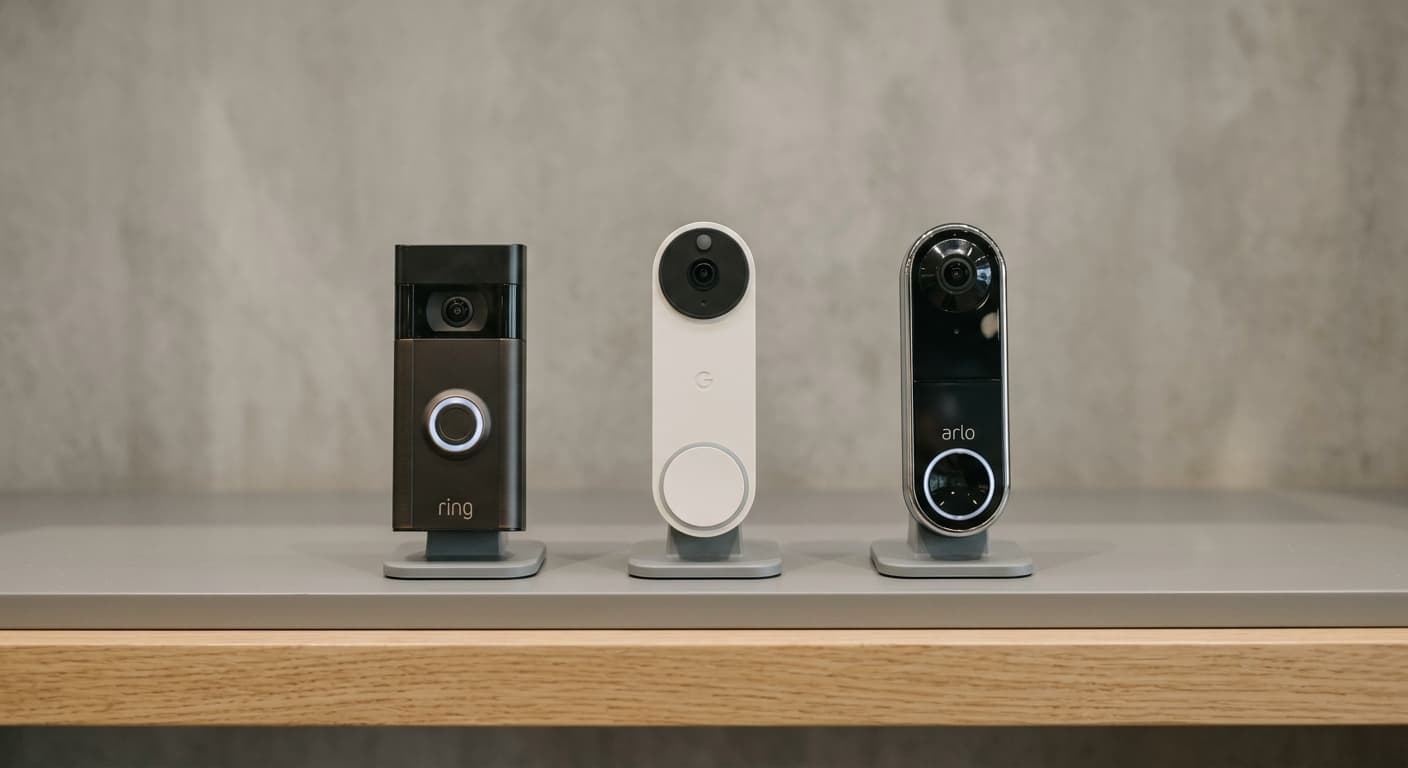
Over 10 million American households now have a Ring doorbell or similar video doorbell camera. These devices record video of anyone who approaches your front door, and most also capture audio through built-in microphones. While Ring doorbells are legal to own and install in every state, the laws governing how they record, especially audio, vary dramatically from state to state.
The core legal issue is not the camera itself. Video recording of public-facing areas like porches, driveways, and sidewalks is generally legal nationwide. The legal risk comes from Ring's always-on audio recording. Twelve states require all-party consent for audio recording, meaning every person captured by the microphone must agree to being recorded. In these states, a Ring doorbell recording a conversation on your porch without everyone's knowledge could be a felony.
Federal Law and Ring Doorbells
The Federal Wiretap Act (18 U.S.C. 2511) governs audio recording at the national level. It permits recording when at least one party to a conversation consents, known as one-party consent. Ring doorbell owners count as a consenting party when they actively participate in a conversation through the device's two-way audio feature.
The federal law only sets the floor. States can impose stricter requirements, and 12 states do exactly that by requiring all parties to consent before any audio recording occurs. Ring doorbells have microphones enabled by default, which means the device captures audio continuously, not just during two-way conversations.

The FTC took action against Ring in 2023 (Case No. 2023113), resulting in a $5.8 million penalty after finding that Ring gave employees and contractors unrestricted access to customer videos and failed to implement basic security safeguards. As of April 2026, Ring has also launched and then canceled a partnership with Flock Safety for law enforcement video sharing, following earlier cancellation of direct police access through the Neighbors app in January 2024.
All-Party Consent States: Highest Risk for Ring Audio
These states require all parties to consent to audio recording. Ring's always-on microphone creates significant legal exposure in these jurisdictions. Residents in these states face potential felony charges if their Ring doorbell captures audio of conversations without all parties' knowledge.
| State | Key Statute | Penalty |
|---|---|---|
| California | Cal. Penal Code 632 | Up to $2,500 fine, 1 year jail (first offense) |
| Connecticut | CGS 53a-189 | Up to 5 years, $5,000 fine |
| Florida | Fla. Stat. 934.03 | Third-degree felony: 5 years, $5,000 |
| Illinois | 720 ILCS 5/14-2 | Class 4 felony |
| Maryland | Md. Code, Cts. & Jud. Proc. 10-402 | Up to 5 years, $10,000 fine |
| Massachusetts | Mass. Gen. Laws ch. 272, § 99 | Up to 5 years, $10,000 fine |
| Montana | MCA 45-8-213 | Up to $10,000, 5 years (third offense) |
| Nevada | NRS 200.620 (wire only) | Category D felony |
| New Hampshire | RSA 570-A:2 | Class B felony: up to 7 years |
| Oregon | ORS 165.540 | Class A misdemeanor |
| Pennsylvania | 18 Pa.C.S. 5703 | Third-degree felony: up to 7 years, $15,000 |
| Washington | RCW 9.73.030 | Gross misdemeanor |
One-Party Consent States
In these states, Ring doorbell audio recording is legal when the device owner is a party to the conversation. The legal gray area arises when Ring captures conversations between third parties where the owner is not present or participating.
A - I
K - M
N - O
R - W
- Rhode Island
- South Carolina
- South Dakota
- Tennessee
- Texas
- Utah
- Vermont
- Virginia
- Washington DC
- West Virginia
- Wisconsin
- Wyoming
Biometric Privacy Laws and Ring Familiar Faces
Ring launched its Familiar Faces facial recognition feature in December 2025. The feature creates a catalog of up to 50 faces and sends personalized notifications when recognized individuals approach the door. Three jurisdictions have blocked Familiar Faces due to biometric privacy laws:
Illinois requires written consent before capturing facial geometry under the Biometric Information Privacy Act (740 ILCS 14). Violations carry $1,000 to $5,000 per scan in damages. The class action Wise v. Ring LLC survived a motion to dismiss in August 2025 and remains ongoing as of April 2026.
Texas requires informed consent before capturing biometric identifiers under the Capture or Use of Biometric Identifier Act (Tex. Bus. & Com. Code 503). The attorney general can pursue up to $25,000 per violation.
Portland, Oregon bans private-sector use of facial recognition technology in places of public accommodation under city ordinance Chapter 34.10. Individuals can sue for $1,000 per day or actual damages.
HOA and Landlord Rules
HOA authority over Ring doorbells varies significantly by state. Texas stands out with Property Code 202.023, which explicitly prohibits HOAs from banning security cameras. Most other states allow HOAs to regulate camera placement through CC&Rs and architectural guidelines.
For renters, the key question is whether installing a Ring doorbell constitutes a modification to the rental property. Battery-powered models with adhesive mounts generally avoid this issue. In Florida, arbitrators have ruled that Ring doorbell installation in condominiums constitutes a "material alteration" to common elements, requiring 75% owner approval under Fla. Stat. 718.113.
Law Enforcement Access to Ring Footage
As of April 2026, police can access Ring doorbell footage through several pathways:
- Voluntary sharing through Ring's partnership with Axon (active since October 2025)
- Subpoenas and court orders served directly to Amazon/Ring
- Search warrants based on probable cause
- Emergency disclosure when Amazon determines someone faces "danger of death or serious physical injury"
Ring canceled its controversial Flock Safety partnership in February 2026 after public backlash. End-to-end encryption is available but not enabled by default; enabling it prevents Amazon from accessing stored footage.
How to Use a Ring Doorbell Legally
Regardless of which state you live in, these practices reduce legal risk:
- Consider disabling audio recording in the Ring app, especially in all-party consent states
- Post visible signage near the doorbell stating that audio and video recording is in progress
- Aim the camera at your own property and minimize capture of neighboring properties
- Enable end-to-end encryption in Ring's settings to limit third-party access to footage
- Check your HOA's CC&Rs before installing, and request approval if required
- Review your lease if renting, and get written landlord permission for any modifications
This article provides general legal information, not legal advice. Laws change frequently, and their application depends on specific circumstances. Consult an attorney licensed in your state for advice specific to your situation.
Frequently Asked Questions
Is it legal to have a Ring doorbell in the United States?
Ring doorbells are legal to own and install in all 50 states and Washington DC. Video recording of public-facing areas like porches and driveways is generally legal nationwide. The legal complications arise from audio recording, which is governed by state wiretapping and eavesdropping laws that vary significantly.
Which states are riskiest for Ring doorbell audio recording?
The 12 all-party consent states pose the highest risk: California, Connecticut, Florida, Illinois, Maryland, Massachusetts, Montana, Nevada (wire communications), New Hampshire, Oregon, Pennsylvania, and Washington. In these states, recording audio without every party's consent can be a felony.
Can my neighbor's Ring doorbell legally record my property?
Video recording of areas visible from a public vantage point is generally legal, even if it captures portions of a neighbor's property. Courts have consistently held that there is no reasonable expectation of privacy in areas visible to the public. Audio recording of your private conversations, however, may violate state wiretapping laws.
Can police access my Ring doorbell footage without my permission?
Police can request footage voluntarily through Ring's Axon partnership, but participation is optional. Law enforcement can also obtain footage through subpoenas, court orders, or search warrants served to Amazon. Ring also allows emergency disclosure without user consent when Amazon determines someone faces imminent danger.
Can my HOA ban Ring doorbells?
In most states, HOAs can regulate camera placement through CC&Rs and architectural guidelines. Texas is the notable exception, with Property Code 202.023 explicitly prohibiting HOAs from banning security cameras. Check your state's specific HOA laws and your community's governing documents.
Does Ring's Familiar Faces facial recognition work everywhere?
Ring's Familiar Faces feature launched in December 2025 but is blocked in Illinois (BIPA), Texas (CUBI), and Portland, Oregon (city facial recognition ban). These jurisdictions have biometric privacy laws that require consent before capturing facial geometry data.
Do I need to post a sign if I have a Ring doorbell?
No state currently requires signage for residential doorbell cameras. However, posting a visible notice that audio and video recording is in progress is strongly recommended, especially in all-party consent states. Visible signage can help establish that visitors were informed of recording, which may satisfy notice requirements in some jurisdictions.
Updates
Independently fact-checked against the cited primary sources
Governing law re-checked for recent changes
Governing law re-checked for recent changes
Reviewed and approved by an editor
State-by-state comparison
Each state guide below is paired with the governing statute our editors adjudicated for it, held in our own legal record and verified against the official source.
Each statute shown is the same adjudicated anchor its state guide renders, independently verified against primary sources. A dash means not yet adjudicated in our record — never that no law exists.
The Law Behind This Article
This article rests on the statutory provisions below, held in our own legal record and retrieved from the official source. Tap a section to read the operative text.
California Penal Code
§ 632In forcecited in 40 of our articles
(a) A person who, intentionally and without the consent of all parties to a confidential communication, uses an electronic amplifying or recording device to eavesdrop upon or record the confidential communication, whether the communication is carried on among the parties in the presence of one another or by means of a telegraph, telephone, or other device, except a radio, shall be punished by a fine not exceeding two thousand five hundred dollars ($2,500) per violation, or imprisonment in a county jail not exceeding one year, or in the state prison, or by both that fine and imprisonment. If the person has previously been convicted of a violation of this section or Section 631, 632.5, 632.6, 632.7, or 636, the person shall be punished by a fine not exceeding ten thousand dollars ($10,000) per violation, by imprisonment in a county jail not exceeding one year, or in the state prison, or by both that fine and imprisonment.
Official text (excerpt) · last checked 2026-08-31 · Read the full text in our law library · Verify at leginfo.legislature.ca.gov
Cited in 267 court opinions in our collectionLatest citing opinion in our collection: 2026
In the courts (editorial summary, independently checked):Kimmel v. Goland (1990) held the section 47(2) litigation privilege does not bar a damages claim under Section 632 for recording confidential conversations without consent. Lieberman v. KCOP Television, Inc. (2003) held a Section 632 violation is complete the moment the recording is made, whether or not it is disclosed.
Opinions citing this section in our collection:
- Rubin v. Green (California Supreme Court 1993, 4 Cal. 4th 1187)“…f telephone conversations with defendants, an offense under Penal Code section 632. We noted that defendants alleged that…”
- Kimmel v. Goland (California Supreme Court 1990, 51 Cal. 3d 202)✓Mobilehome owners secretly taped phone calls with park management in anticipation of suing; the court held the section 47(2) litigation privilege did not bar the cross-complaint for damages under Penal Code section 632, since the injury came from recording, not publication.
- Shulman v. Group W Productions, Inc. (California Supreme Court 1998, 74 Cal. Rptr. 2d 843)✓A TV producer put a wireless microphone on the flight nurse treating a crash victim. No section 632 claim was before the court, but it called section 632 and the intrusion tort laws of general applicability and said the press may not eavesdrop in violation of section 632.
Identified automatically from the court opinions citing this section — not a ranking of which case controls.
Also relied on in: US Recording Laws by State (2026): All 50 States Explained, Can an Employer Record Conversations Without Consent? (2026), Can I Sue Someone for Recording Me on Private or Public Property?
Connecticut General Statutes, Title 53a (Penal Code), Chapter 952
§ 53a-189Eavesdropping: Class D felony.In forcecited in 16 of our articles
(a) A person is guilty of eavesdropping when he unlawfully engages in wiretapping or mechanical overhearing of a conversation. (b) Eavesdropping is a class D felony.
Official text (excerpt) · last checked 2026-08-31 · Read the full text in our law library · Verify at cga.ct.gov
Cited in 14 court opinions in our collectionLatest citing opinion in our collection: 2020
In the courts (editorial summary, independently checked):Washington v. Meachum (1996) held the eavesdropping statutes, section 53a-189 among them, are violated only when neither party to a call knows it is being monitored. State v. McLoughlin (1998), a trial court ruling on a scanner intercept, read 53a-189 to cover cordless calls, a question no Connecticut appellate court had decided.
Opinions citing this section in our collection:
- State v. McLoughlin (Connecticut Superior Court 1998, 45 Conn. Super. Ct. 497)“…on. Subsequently, the defendant was charged in violation of General Statutes § 53a-189, eavesdropping, which is a class D felo…”
- Rado v. Board of Education of the Borough of Naugatuck (Supreme Court of Connecticut 1990, 216 Conn. 541)✓A tenured teacher acquitted of eavesdropping was fired after a panel found he tampered with the school phone system to overhear staff calls; the court treated that conduct as proscribed by section 53a-189 and upheld the moral-misconduct finding.
- Washington v. Meachum (Supreme Court of Connecticut 1996, 238 Conn. 692)✓Inmates challenged prison rules allowing officials to monitor and record their nonprivileged phone calls; the Connecticut Supreme Court held the eavesdropping statutes are violated only when neither party knows the call is being monitored, so the noticed recording was lawful.
Identified automatically from the court opinions citing this section — not a ranking of which case controls.
Also relied on in: Connecticut Recording Laws (2026): Hybrid Consent Rules Explained, Connecticut Phone Call Recording Laws: All-Party Consent Rules and Penalties (2026), Connecticut Audio Recording Laws: Mixed Consent Rules and Penalties (2026)
Florida Statutes
§ 718.113Maintenance; limitation upon improvement; display of flag; hurricane protection; display of religious decorations.In forcecited in 2 of our articles
(1) Maintenance of the common elements is the responsibility of the association, except for any maintenance responsibility for limited common elements assigned to the unit owner by the declaration. The association shall provide for the maintenance, repair, and replacement of the condominium property for which it bears responsibility pursuant to the declaration of condominium. After turnover of control of the association to the unit owners, the association must perform any required maintenance identified by the developer pursuant to s. 718.301(4)(p) and (q) until the association obtains new maintenance protocols from a licensed professional engineer or architect or a person certified as a reserve specialist or professional reserve analyst by the Community Associations Institute or the Association of Professional Reserve Analysts. The declaration may provide that certain limited common elements shall be maintained by those entitled to use the limited common elements or that the association shall provide the maintenance, either as a common expense or with the cost shared only by those entitled to use the limited common elements.
Official text (excerpt) · last checked 2026-07-28 · Read the full text in our law library · Verify at leg.state.fl.us
Cited in 2 court opinions in our collectionLatest citing opinion in our collection: 2016
Opinions citing this section in our collection:
- Escadote I Corp. v. Ocean Three Limited Partnership (District Court of Appeal of Florida 2016, 211 So. 3d 1059)“…ciation’s duty to maintain and repair common elements under section 718.113, Florida Statutes (2007).…”
- Colony Beach & Tennis Club, Ltd. v. Colony Beach & Tennis Club Ass'n (District Court, M.D. Florida 2011, 456 B.R. 545)“…ransactions, § 190.20[2][c] (2010); see Fla. Stat. § 718.113 (1). Under the Condominium Act, an asso…”
Identified automatically from the court opinions citing this section — not a ranking of which case controls.
§ 934.03Interception and disclosure of wire, oral, or electronic communications prohibited.In forcecited in 51 of our articles
(1) Except as otherwise specifically provided in this chapter, any person who:(a) Intentionally intercepts, endeavors to intercept, or procures any other person to intercept or endeavor to intercept any wire, oral, or electronic communication; (b) Intentionally uses, endeavors to use, or procures any other person to use or endeavor to use any electronic, mechanical, or other device to intercept any oral communication when:1. Such device is affixed to, or otherwise transmits a signal through, a wire, cable, or other like connection used in wire communication; or 2.
Official text (excerpt) · last checked 2026-08-31 · Read the full text in our law library · Verify at leg.state.fl.us
Cited in 74 court opinions in our collectionLatest citing opinion in our collection: 2026
In the courts (editorial summary, independently checked):State v. Walls (1978) held that recording an in-home oral communication without the consent of all parties violated section 934.03 and required suppression, and State v. Inciarrano (1985) held the statute protects only communications uttered with a reasonable expectation of privacy.
Opinions citing this section in our collection:
- State v. Walls (Supreme Court of Florida 1978, 356 So. 2d 294)✓An extortion victim secretly recorded threats made to him in his own home; the court held that was a protected oral communication, that recording it without every party's consent violated Section 934.03, and that Section 934.06 barred using the tape as evidence.
- SHARRON TASHA FORD v. CITY OF BOYNTON BEACH (District Court of Appeal of Florida 2021)“…ng oral communications in violation of the wiretap statute, section 934.03, Florida Statutes (2009), and for obstructing without vio…”
- State v. Calhoun (Circuit Court for the Judicial Circuits of Florida 1984, 7 Fla. Supp. 2d 3)“…hall not be violated” . . . (emphasis mine) Furthermore, section 934.03, Florida Statutes, makes it unlawful for *6 any person (…”
Identified automatically from the court opinions citing this section — not a ranking of which case controls.
Also relied on in: Federal Wiretap Act and ECPA: The Complete Guide (2026), Is It Illegal to Video Record Someone Without Their Consent? (2026), Is Plaud HIPAA Compliant? Kind Of. Here's What to Know (2026)
Maryland Code, Courts and Judicial Proceedings Article
§ 10-402In forcecited in 26 of our articles
§10–402. (a) Except as otherwise specifically provided in this subtitle it is unlawful for any person to: (1) Willfully intercept, endeavor to intercept, or procure any other person to intercept or endeavor to intercept, any wire, oral, or electronic communication; (2) Willfully disclose, or endeavor to disclose, to any other person the contents of any wire, oral, or electronic communication, knowing or having reason to know that the information was obtained through the interception of a wire, oral, or electronic communication in violation of this subtitle; or (3) Willfully use, or endeavor to use, the contents of any wire, oral, or electronic communication, knowing or having reason to know that the information was obtained through the interception of a wire, oral, or electronic communication in violation of this subtitle. (b) Any person who violates subsection (a) of this section is guilty of a felony and is subject to imprisonment for not more than 5 years or a fine of not more than $10,000, or both.
Official text (excerpt) · last checked 2026-08-31 · Read the full text in our law library · Verify at mgaleg.maryland.gov
Cited in 12 court opinions in our collectionLatest citing opinion in our collection: 2026
In the courts (editorial summary, independently checked):Applying section 10-402, Fearnow v. Chesapeake & Potomac Telephone Co. (1995) held that liability under the Maryland Wiretap Act requires proof the defendant acted willfully, an intentional violation or reckless disregard of a known legal duty; an employee's failure to check for a court order was only a jury factor on willfulness.
Opinions citing this section in our collection:
- Fearnow v. Chesapeake & Potomac Telephone Co. (Court of Special Appeals of Maryland 1995, 104 Md. App. 1)✓Police hid a tape recorder on an officer's headquarters phone line with a phone company employee's help and no court order; the court held a section 10-402(a) claim requires proof of willful interception, and failing to ask about a court order went only to willfulness.
- Maryland Attorney General Opinion 110OAG60 (Maryland Attorney General Reports 2025)“…or wire communications without the consent of all parties. Md. Code Ann., Cts. & Jud. Proc. § 10-402(a). However, the Wiretap Act contains e…”
- Boehner, John A. v. McDermott, James A. (Court of Appeals for the D.C. Circuit 1999, 191 F.3d 463)“…1992); Me.Rev.Stat. Ann. tit. 15, §§ 710, 711 (West 1998); Md.Code Ann., Cts & Jud. Proc. § 10-402 (1998); Mass. Gen. Laws Ann. ch. 272,…”
Identified automatically from the court opinions citing this section — not a ranking of which case controls.
Also relied on in: Maryland Audio Recording Laws: Two-Party Consent Rules and Penalties (2026), Maryland Medical Recording Laws: Patient Rights, HIPAA, and Consent (2026), Maryland Laws on Recording Police: Your Rights and Limits (2026)
Montana Code Annotated, Title 45
§ 45-8-213Privacy In CommunicationsIn forcecited in 23 of our articles
45-8-213. Privacy in communications. (1) Except as provided in 69-6-104, a person commits the offense of violating privacy in communications if the person knowingly or purposely: (a) with the purpose to terrify, intimidate, threaten, harass, or injure, communicates with a person by electronic communication and threatens to inflict injury or physical harm to the person or property of the person or makes repeated use of obscene, lewd, or profane language or repeated lewd or lascivious suggestions; (b) uses an electronic communication to attempt to extort money or any other thing of value from a person or to disturb by repeated communications the peace, quiet, or right of privacy of a person at the place where the communications are received; (c) records or causes to be recorded a conversation by use of a hidden electronic or mechanical device that reproduces a human conversation without the knowledge of all parties to the conversation; (d) with the purpose to terrify, intimidate, threaten, harass, or injure or to obtain money or other valuable consideration, publishes, distributes, or discloses real or digitally fabricated printed or electronic photographs, pictures, images, or…
Official text (excerpt) · last checked 2026-08-31 · Read the full text in our law library · Verify at mca.legmt.gov
Cited in 23 court opinions in our collectionLatest citing opinion in our collection: 2025
In the courts (editorial summary, independently checked):State v. Dugan (2013) struck the statute's prima facie intent clause as overbroad. State v. Brown (1988) noted the statute still bars recording without all participants' permission and rejected an overbreadth attack on its public-official exception. State v. DuBray (2003) found no violation where the defendant knew of the recording.
Opinions citing this section in our collection:
- State v. Smith (Montana Supreme Court 2004, 322 Mont. 206)✓A man who phoned threats to kill his estranged wife's boyfriend argued he should have been charged under section 45-8-213(1)(a) instead of assault with a weapon. The court held the two statutes punish different conduct, so the charge was within prosecutorial discretion.
- State v. Dugan (Montana Supreme Court 2013, 369 Mont. 39)“…rbroad, the Court today strikes the prima facie language in § 45-8-213, MCA. However, a narrow application would be…”
- In re C.S. (Montana Supreme Court 1984, 210 Mont. 144)“…n of privacy in communication, a misdemeanor as provided in Section 45-8-213, MCA. The facts underlying the offense were…”
Identified automatically from the court opinions citing this section — not a ranking of which case controls.
Also relied on in: Montana Recording Laws (2026): Announcement Exception and Penalties, Montana Video Recording Laws: Consent Rules, Surveillance, and Penalties (2026), Montana Smart Glasses Recording Laws (MCA 45-8-213)
New Hampshire Revised Statutes Annotated, TITLE LVIII PUBLIC JUSTICE, CHAPTER 570-A WIRETAPPING AND EAVESDROPPING
§ 570-A:2Interception and Disclosure of Telecommunication or Oral Communications Prohibited.In forcecited in 23 of our articles
I. A person is guilty of a class B felony if, except as otherwise specifically provided in this chapter or without the consent of all parties to the communication, the person: (a) Wilfully intercepts, endeavors to intercept, or procures any other person to intercept or endeavor to intercept, any telecommunication or oral communication; (b) Wilfully uses, endeavors to use, or procures any other person to use or endeavor to use any electronic, mechanical, or other device to intercept any oral communication when: (1) Such device is affixed to, or otherwise transmits a signal through, a wire, cable, or other like connection used in telecommunication, or (2) Such device transmits communications by radio, or interferes with the transmission of such communication, or (3) Such use or endeavor to use (A) takes place on premises of any business or other commercial establishment, or (B) obtains or is for the purpose of obtaining information relating to the operations of any business or other commercial establishment; or (c) Wilfully discloses, or endeavors to disclose, to any other person the contents of any telecommunication or oral communication, knowing or having reason to know that…
Official text (excerpt) · last checked 2026-08-31 · Read the full text in our law library · Verify at gc.nh.gov
Cited in 35 court opinions in our collectionLatest citing opinion in our collection: 2025
In the courts (editorial summary, independently checked):New Hampshire courts read the felony offense in RSA 570-A:2, I as requiring more than intent to record. Fischer v. Hooper (1999) held wilfully means intentional or reckless disregard for the lawfulness of the conduct, so a good faith belief is a defense. State of New Hampshire v. Adam Mueller (2014) reversed on that mens rea.
Opinions citing this section in our collection:
- State v. Kilgus (Supreme Court of New Hampshire 1986, 128 N.H. 577)✓A murder-for-hire middleman agreed to wear a hidden recorder and got the defendant to confirm paying $1,000 to have a man killed; the court held the taping was lawful under RSA 570-A:2, II(d) because one party consented and homicide is an enumerated offense.
- Fischer v. Hooper (Supreme Court of New Hampshire 1999, 143 N.H. 585)✓A father secretly taped his ex-wife's calls with their daughter though a guardian ad litem had said both parents must agree; the court held wilfully in RSA 570-A:2, I requires intentional or reckless disregard for the lawfulness of the conduct, and reversed for a new trial.
- State of New Hampshire v. Adam Mueller (Supreme Court of New Hampshire 2014, 166 N.H. 65)✓A police-accountability activist recorded three phone calls with a police captain and two school officials without telling them; the court held that instructing the jury on purposely rather than the statute's wilfully was plain error and reversed his wiretapping convictions.
Identified automatically from the court opinions citing this section — not a ranking of which case controls.
Also relied on in: New Hampshire Audio Recording Laws
Revised Code of Washington
§ 9.73.030Intercepting, recording, or divulging private communication—Consent required—Exceptions.In forcecited in 41 of our articles
(1) Except as otherwise provided in this chapter, it shall be unlawful for any individual, partnership, corporation, association, or the state of Washington, its agencies, and political subdivisions to intercept, or record any: (a) Private communication transmitted by telephone, telegraph, radio, or other device between two or more individuals between points within or without the state by any device electronic or otherwise designed to record and/or transmit said communication regardless how such device is powered or actuated, without first obtaining the consent of all the participants in the communication; (b) Private conversation, by any device electronic or otherwise designed to record or transmit such conversation regardless how the device is powered or actuated without first obtaining the consent of all the persons engaged in the conversation.
Official text (excerpt) · last checked 2026-08-31 · Read the full text in our law library · Verify at app.leg.wa.gov
Cited in 221 court opinions in our collectionLatest citing opinion in our collection: 2026
In the courts (editorial summary, independently checked):Washington courts have policed what counts as a private communication under Sec. 9.73.030: State v. Gunwall (1986) concluded a pen register intercept comes within a private communication transmitted by telephone, while State v. Riley (1993) held a line trap that reveals only the calling number does not record one.
Opinions citing this section in our collection:
- State v. Salinas (Washington Supreme Court 1992, 119 Wash. 2d 192)“…alties for divulging a telegram or opening a sealed letter. RCW 9.73.030-.070, making it unlawful to intercept,…”
- State v. Gunwall (Washington Supreme Court 1986, 106 Wash. 2d 54)✓Everett police pulled a suspected cocaine dealer's toll records and put a pen register on her line without valid legal process; the court held a pen register intercept is a private communication transmitted by telephone, installable only under the eavesdropping statutes.
- State v. Brown (Washington Supreme Court 1997, 132 Wash. 2d 529)✓Palm Springs officers secretly recorded a Washington murder suspect's statements after his arrest; the court treated RCW 9.73.090, not 9.73.030, as the provision reaching recordings of arrested persons, and held the Privacy Act did not require suppressing that recording.
Identified automatically from the court opinions citing this section — not a ranking of which case controls.
Also relied on in: Washington Recording Laws (2026): All-Party Consent Rules, Oregon Phone Call Recording Laws: Split Consent Rules and Penalties, Washington Voyeurism and Hidden Camera Laws: Penalties and Protections (2026)
United States Code Title 18
§ 2511Interception and disclosure of wire, oral, or electronic communications prohibitedIn forcecited in 415 of our articles
Except as otherwise specifically provided in this chapter any person who— intentionally intercepts, endeavors to intercept, or procures any other person to intercept or endeavor to intercept, any wire, oral, or electronic communication; intentionally uses, endeavors to use, or procures any other person to use or endeavor to use any electronic, mechanical, or other device to intercept any oral communication when— such device is affixed to, or otherwise transmits a signal through, a wire, cable, or other like connection used in wire communication; or such device transmits communications by radio, or interferes with the transmission of such communication; or such person knows, or has reason to know, that such device or any component thereof has been sent through the mail or transported in interstate or foreign commerce; or such use or endeavor to use (A) takes place on the premises of any business or other commercial establishment the operations of which affect interstate or foreign commerce; or (B) obtains or is for the purpose of obtaining information relating to the operations of any business or other commercial establishment the operations of which affect interstate or foreign…
Official text (excerpt) · last checked 2026-08-28 · Read the full text in our law library · Verify at uscode.house.gov
Cited in 2,045 court opinions in our collectionLatest citing opinion in our collection: 2026
In the courts (editorial summary, independently checked):Griggs-Ryan v. Smith (1990) applied the Section 2511(2)(d) prior-consent exception, treating a tenant repeatedly told that all incoming calls were taped as having impliedly consented. United States v. United States District Court (1972) read the then-current Section 2511(3) as conferring no presidential surveillance power.
Opinions citing this section in our collection:
- Mitchell v. Forsyth (Supreme Court of the United States 1985, 472 U.S. 511)✓The Attorney General authorized a warrantless 1970 national security wiretap that caught the plaintiff's calls; the Court held the since-repealed Section 2511(3) disclaimer left the tap lawful under Title III, and that Mitchell had qualified immunity.
- United States v. United States District Court for the Eastern District of Michigan (Supreme Court of the United States 1972, 407 U.S. 297)✓The Attorney General approved warrantless wiretaps on members of a domestic group accused of bombing a CIA office; the Court read Section 2511(3) as a congressional disclaimer conferring no surveillance power, then held the Fourth Amendment required prior judicial approval.
- Forsyth v. Barr (Court of Appeals for the Fifth Circuit 1994, 19 F.3d 1527)✓Dallas police used, in an internal affairs probe of an officer, calls private parties allegedly intercepted illegally; assuming that was unlawful, the Fifth Circuit held Section 2517(1) and (2) allowed the disclosure and use, defeating the Section 2511(1)(c) and (d) claims.
Identified automatically from the court opinions citing this section — not a ranking of which case controls.
Also relied on in: Oregon Recording Laws (2026): Hybrid One-Party and All-Party Rules, Hawaii Recording Laws (2026): Hybrid Consent State Rules, Louisiana Recording Laws (2026): One-Party Consent Rules
Search our full record of US law — 2.1 million sections, every state + federal →
Sources and References
- 18 U.S.C. 2511 - Federal Wiretap Act(law.cornell.edu)
- FTC v. Ring LLC Settlement (2023)(ftc.gov).gov
- Cal. Penal Code 632(leginfo.legislature.ca.gov).gov
- 740 ILCS 14 - Biometric Information Privacy Act(ilga.gov).gov
- 18 Pa.C.S. 5703 - Interception of Communications(legis.state.pa.us).gov
- RCW 9.73.030 - Washington Privacy Act(app.leg.wa.gov).gov
- Tex. Bus. & Com. Code 503 - CUBI(statutes.capitol.texas.gov).gov
- Fla. Stat. 934.03 - Interception of Communications(flsenate.gov).gov
- Mass. Gen. Laws ch. 272 § 99(malegislature.gov).gov
- Senator Markey on Ring-Flock Partnership(markey.senate.gov).gov
- Conn. Gen. Stat. 53a-189 - Eavesdropping(cga.ct.gov).gov
- Md. Code, Cts. & Jud. Proc. 10-402 - Interception of communications(mgaleg.maryland.gov).gov
- Mont. Code Ann. 45-8-213 - Privacy in communications(mca.legmt.gov).gov
- Nev. Rev. Stat. 200.620 - Interception of wire communications(leg.state.nv.us).gov
- N.H. Rev. Stat. Ann. 570-A:2 - Interception of communications(gc.nh.gov).gov
- 720 ILCS 5/14-2 - Eavesdropping elements(ilga.gov).gov