Surveillance Camera Laws by State (2026 Guide)
Independently fact-checked against primary sources (last audited September 12, 2026). · Reviewed by the RecordingLaw editorial team. · Law checked current as of August 7, 2026. · 3 primary sources cited on this page. How we verify our legal content
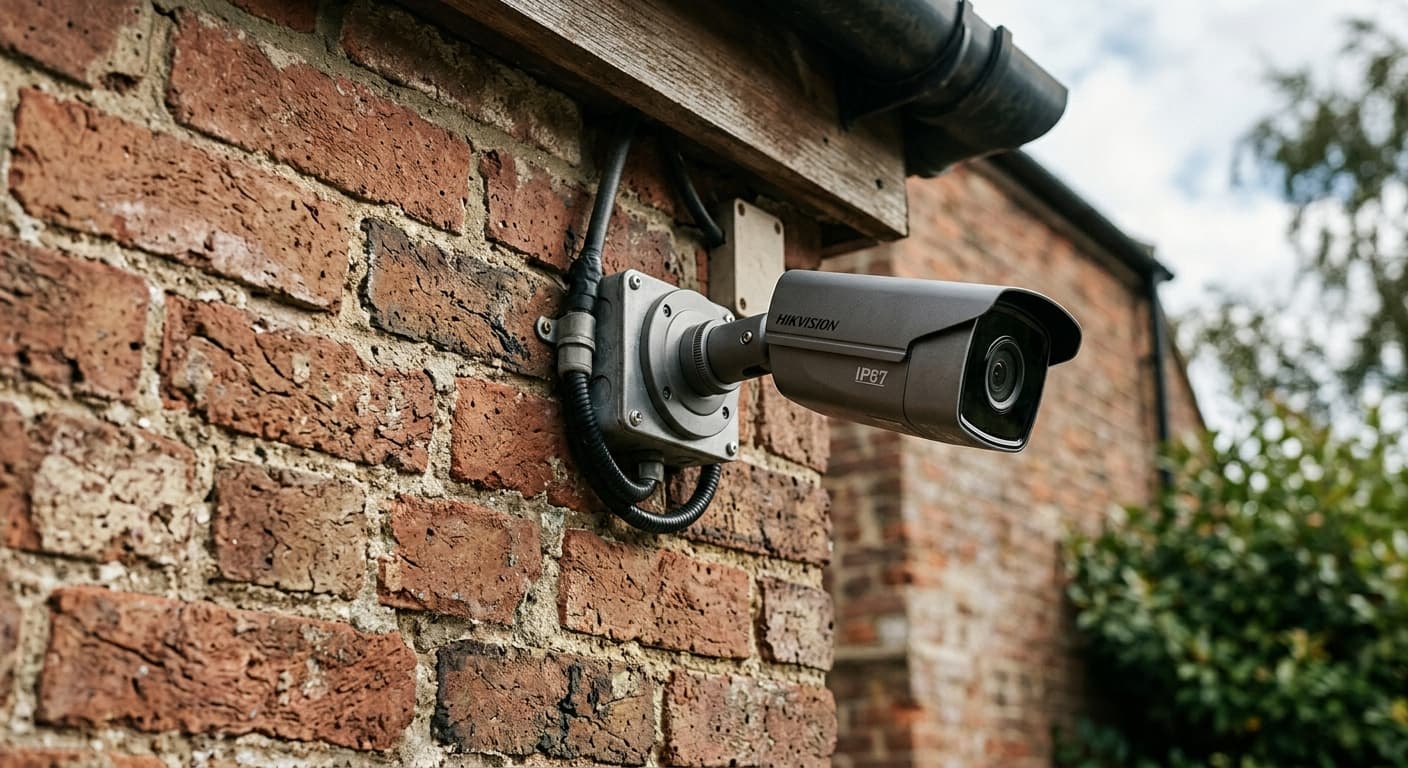
Camera rules change with what a device captures, where it is aimed, why it is being used, and which jurisdiction applies. A silent video feed, a microphone that acquires a conversation, and a camera pointed into a private changing area can raise different legal questions. Start with those facts, then use the state or situation guide that matches the recording.
For a comparison of notice requirements and links to every state guide, see security camera sign laws by state.
Jurisdiction scope: This guide explains federal audio rules and uses California workplace law as a specific example. Use the linked state and situation guides to identify the law that applies to your recording.
What Changes the Legal Analysis: Video, Audio, and Private Areas
Audio and video do not share one legal test. Before drawing a conclusion, identify exactly what the device records and the physical setting in which it operates.
Federal interception law illustrates why a microphone deserves separate attention. Under 18 U.S.C. § 2510, an “oral communication” covered by the statute involves a speaker who exhibits an expectation that the communication is not subject to interception, in circumstances that justify that expectation. The same section defines “intercept” as acquiring the contents of a communication through an electronic, mechanical, or other device.
18 U.S.C. § 2511 generally prohibits intentional interception. It also contains a private-party exception when the person is a party to the communication or a party has given prior consent, unless the interception is undertaken to commit a criminal or tortious act. That framework does not mean every locally recorded video is an intercepted electronic communication, and it does not resolve whether a particular camera microphone captured a protected conversation. State law may impose additional requirements.
| Fact to identify | Why it changes the analysis | Next place to look |
|---|---|---|
| Video only or video plus audio | A microphone may implicate interception and consent rules that silent images do not | The recording-consent law for the relevant state |
| Exact field of view | A porch, shared hallway, workstation, bedroom, and restroom involve different facts | The state guide and the matching situation guide |
| Who installed and uses it | Homeowners, employers, landlords, tenants, HOAs, and caregivers may face different rules | The guide for that relationship |
| Purpose and notice | Purpose and notice may matter under a particular statute, but neither supplies a universal answer | The text of the controlling law |
Private-area restrictions can also be highly specific. California Labor Code § 435 bars an employer from causing audio or video recording of an employee in a restroom, locker room, or room the employer designates for changing clothes, unless a court order authorizes it. The statute also bars use of a recording made in violation. This is a California employer rule, not a national rule for every camera or a rule about every homeowner installation.
The practical lesson is to separate the issues. Ask whether the device records sound, whether a conversation qualifies for legal protection, where the lens and microphone reach, who controls the camera, and what state law governs. A broad statement that “security cameras are legal” or “hidden cameras are illegal” skips facts that may decide the result.
Surveillance Camera Laws by State
Choose the state where the recording occurred and open its guide. Each state and the District of Columbia has a separate entry below so you can find the rules relevant to that location.
The state page is the starting point, not the end of the inquiry. A state may address sound interception, voyeurism, employment, housing, or civil privacy through different provisions. Read the provision tied to the actual conduct instead of treating a state label as a complete answer.
When an event crosses state lines, record the connection to each place before choosing a guide. The camera may be installed in one state, the account owner may view clips from another, and the people speaking may be somewhere else. This hub does not decide which jurisdiction’s law controls that combination. It gives readers stable destinations from which to identify the relevant statutes and any stated geographic reach.
Dates matter too. Device settings can change, legislatures can amend statutes, and a page may describe the law as of a stated verification date. Compare the date of the recording with the effective version of the cited authority. If a state guide discusses several legal theories, focus on the one that matches the feature and conduct at issue rather than combining separate rules into a broader prohibition.
How to Use the State Guides
Begin with the device. Check its settings, not only its product name. A camera sold as a video doorbell or security camera may include a microphone, two-way talk, cloud clips, motion-triggered recording, and controls that can disable some features. The legal analysis should reflect what was enabled and acquired during the event.
Next, describe the location precisely. “At home” could mean a camera facing a public approach, a shared hallway, a guest room, or a bathroom. “At work” could mean a public sales floor, a private office, or an employer-designated changing room. Those details matter more than the general label.
Then identify the people and jurisdiction. Note who installed the camera, who controlled the account, who appeared or spoke in the recording, and where the capture occurred. For audio, the federal definitions and prohibition in 18 U.S.C. §§ 2510 and 2511 provide part of the framework, but the relevant state guide is needed to evaluate state consent and privacy rules.
Finally, separate legal requirements from privacy precautions. Adjusting a field of view, disabling unnecessary audio, limiting access to clips, or posting notice may reduce conflict. Those steps do not prove that a specific statute requires them or that the recording becomes lawful. Use the official authority cited in the state or situation guide for the legal rule.
A short fact sheet can make the next review more productive. It can identify the camera model, enabled features, dates and times, mounting point, field of view, audio setting, retention period, account access, notices, and the states connected to the event. Keep the original clip and device information if a dispute may turn on what was actually captured. This is an information-gathering step, not a conclusion that a recording is admissible or that keeping it is legally required.
Also distinguish live viewing from recording and storage. A device may display a live feed, save event clips, continuously record, or allow two-way speech. Each function creates a different factual record. The federal provisions cited here concern acquisition of communication contents through a device; they do not support treating every camera feature as legally identical.
Does Notice or a Sign Change the Answer?
Notice can be relevant, but a sign does not settle every camera issue. A sign may tell people that an area is monitored, while a separate law may focus on audio interception, a protected location, the installer’s role, or another required fact.
Consent also requires careful reading. The private-party exception in 18 U.S.C. § 2511(2)(d) refers to a person who is a party to the communication or to prior consent from one of the parties, subject to the exception’s stated limitation. A general camera sign is not automatically the same thing as proving every statutory element of consent for every captured conversation.
Treat signage as one fact in the record. Preserve the wording and placement of a sign, determine whether audio was enabled, and consult the state-specific authority.
Camera Laws by Situation
The relationship between the installer, the people recorded, and the property often determines which body of law needs attention. Use the route that best matches the dispute.
- HOA Security Camera Rules covers when a homeowners association can restrict your camera or video doorbell.
- Neighbor Security Camera Laws explains what to do when a neighbor's camera records your property.
- Nanny Cam Laws covers recording a caregiver at home and the audio and private-area limits.
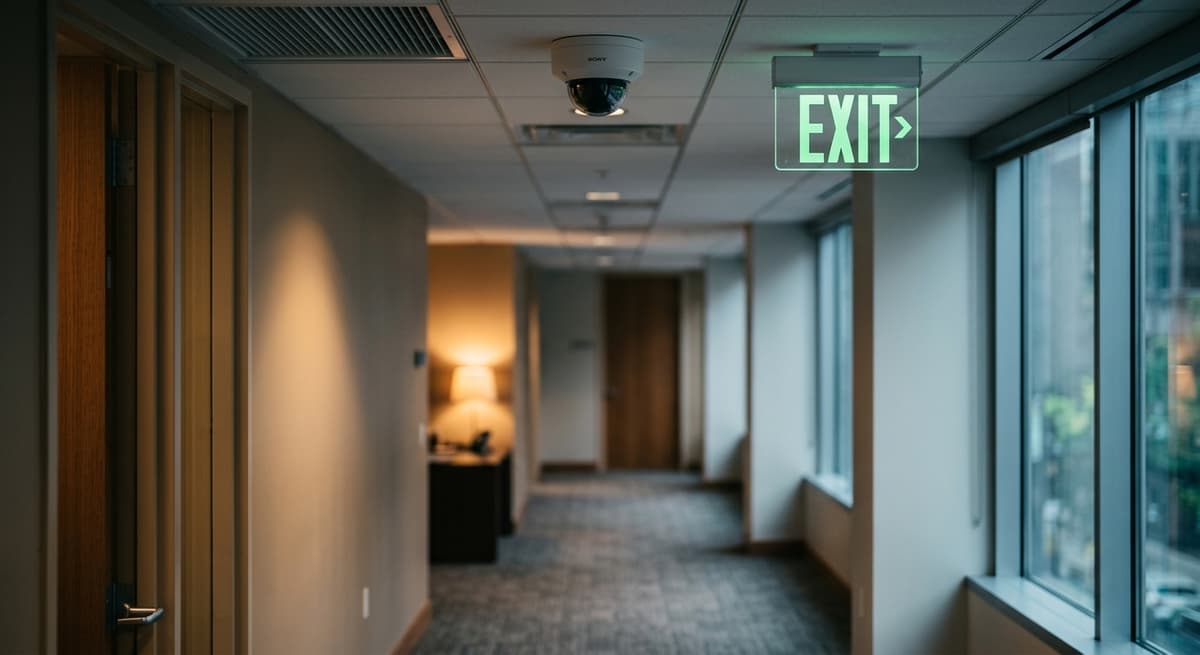
- Workplace Surveillance Camera Laws explains when your employer can record you at work.
- Landlord Security Camera Laws covers what cameras a landlord may install in a rental.
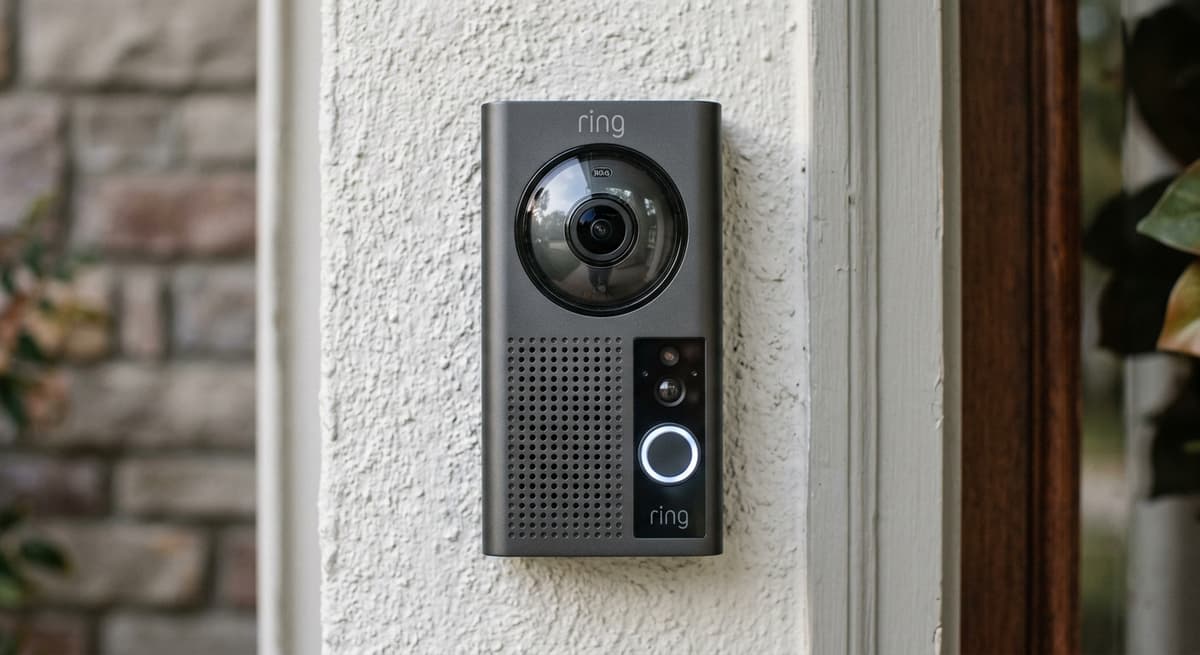
- Ring Doorbell Laws focuses on video doorbells, including their field of view and audio features.
These pages organize the facts around a recurring setting. They still require the correct jurisdiction and device details. For example, the California workplace restriction in Labor Code § 435 addresses an employer’s recording of an employee in specified private rooms; it should not be generalized into a rule for a neighbor’s exterior camera.
Choose the most specific route first. A tenant concerned about a landlord-installed hallway camera will usually get more useful orientation from the landlord page than from a general home-camera discussion. A homeowner disputing a neighbor’s field of view should begin with the neighbor page, while an HOA restriction on the homeowner’s own device belongs in the HOA guide. If the device is a doorbell with an active microphone, the doorbell page and the applicable state recording guide may both be relevant.
Some disputes overlap. A nanny camera may raise an in-home placement question and a separate audio question. A workplace camera may involve a private location as well as microphone capture. Keep those issues separate as you follow the links, because one rule may address who records, another may address where, and another may address what the device acquired.
This national guide explains a framework and routes readers to jurisdiction-specific material. It does not establish that a camera is lawful or unlawful in a particular state or setting and is general legal information, not legal advice. Consult an attorney for advice specific to your situation.
Statutes cited reflect their in-force version as of 2026-09-11.
Last updated: 2026-09-11.
Frequently Asked Questions
Does a security camera recording audio follow the same rules as video?
Not necessarily. Federal law defines and regulates the interception of qualifying oral communications in 18 U.S.C. §§ 2510 and 2511, while state law may add consent requirements. Check whether the microphone was enabled and use the guide for the state where the capture occurred.
Does posting a camera sign make every recording lawful?
No universal rule in the sources reviewed makes every recording lawful because a sign is posted. Notice is one fact; audio, location, purpose, the people involved, and the governing statute may still change the analysis.
Which state camera law should I check?
Start with the law of the state where the recording occurred, then identify any other jurisdiction connected to the conduct. Use the state directory above and the situation guide that matches the workplace, home, rental, HOA, neighbor, caregiver, or doorbell setting.
Are workplace cameras governed by one national rule?
No single rule in this guide decides every workplace camera. California Labor Code § 435 is one state-specific example covering employer recording in specified private rooms, while audio can require a separate federal and state analysis.
Updates
Independently fact-checked against the cited primary sources
Rebuilt the guide around video, audio, location, and purpose; preserved the state and situation directories; and removed unsupported nationwide conclusions.
Corrected the FAQ's all-party-consent state count and list (it said 11 states, contradicting the article's own count of 12) to match the intro and add the necessary hedges for Connecticut, Nevada, and Michigan.
Independently fact-checked against the cited primary sources
Governing law re-checked for recent changes
Reviewed and approved by an editor
State-by-state comparison
Each state guide below is paired with the governing statute our editors adjudicated for it, held in our own legal record and verified against the official source.
Each statute shown is the same adjudicated anchor its state guide renders, independently verified against primary sources. A dash means not yet adjudicated in our record — never that no law exists.
The Law Behind This Article
This article rests on the statutory provisions below, held in our own legal record and retrieved from the official source. Tap a section to read the operative text.
California Penal Code
§ 630In forcecited in 2 of our articles
The Legislature hereby declares that advances in science and technology have led to the development of new devices and techniques for the purpose of eavesdropping upon private communications and that the invasion of privacy resulting from the continual and increasing use of such devices and techniques has created a serious threat to the free exercise of personal liberties and cannot be tolerated in a free and civilized society. The Legislature by this chapter intends to protect the right of privacy of the people of this state. The Legislature recognizes that law enforcement agencies have a legitimate need to employ modern listening devices and techniques in the investigation of criminal conduct and the apprehension of lawbreakers. Therefore, it is not the intent of the Legislature to place greater restraints on the use of listening devices and techniques by law enforcement agencies than existed prior to the effective date of this chapter.
Official text (excerpt) · last checked 2026-07-28 · Read the full text in our law library · Verify at leginfo.legislature.ca.gov
Cited in 203 court opinions in our collectionLatest citing opinion in our collection: 2026
Opinions citing this section in our collection:
- Ribas v. Clark (California Supreme Court 1985, 38 Cal. 3d 355)“…s wife constituted a breach of the Invasion of Privacy Act (Pen. Code, §§ 630-637.2, hereafter Privacy Act), vesting…”
- North v. Superior Court (California Supreme Court 1972, 8 Cal. 3d 301)“…ions of privacy through eavesdropping and wiretapping. (See Pen. Code, § 630 et seq.) For example, section 632 forbi…”
- Warden v. Kahn (California Court of Appeal 1979, 99 Cal. App. 3d 805)“…hn under certain provisions of the Invasion of Privacy Act, Penal Code section 630 et seq., and should not have been dismi…”
Identified automatically from the court opinions citing this section — not a ranking of which case controls.
United States Code Title 18
§ 2511Interception and disclosure of wire, oral, or electronic communications prohibitedIn forcecited in 415 of our articles
Except as otherwise specifically provided in this chapter any person who— intentionally intercepts, endeavors to intercept, or procures any other person to intercept or endeavor to intercept, any wire, oral, or electronic communication; intentionally uses, endeavors to use, or procures any other person to use or endeavor to use any electronic, mechanical, or other device to intercept any oral communication when— such device is affixed to, or otherwise transmits a signal through, a wire, cable, or other like connection used in wire communication; or such device transmits communications by radio, or interferes with the transmission of such communication; or such person knows, or has reason to know, that such device or any component thereof has been sent through the mail or transported in interstate or foreign commerce; or such use or endeavor to use (A) takes place on the premises of any business or other commercial establishment the operations of which affect interstate or foreign commerce; or (B) obtains or is for the purpose of obtaining information relating to the operations of any business or other commercial establishment the operations of which affect interstate or foreign…
Official text (excerpt) · last checked 2026-08-28 · Read the full text in our law library · Verify at uscode.house.gov
Cited in 2,045 court opinions in our collectionLatest citing opinion in our collection: 2026
In the courts (editorial summary, independently checked):Griggs-Ryan v. Smith (1990) applied the Section 2511(2)(d) prior-consent exception, treating a tenant repeatedly told that all incoming calls were taped as having impliedly consented. United States v. United States District Court (1972) read the then-current Section 2511(3) as conferring no presidential surveillance power.
Opinions citing this section in our collection:
- Mitchell v. Forsyth (Supreme Court of the United States 1985, 472 U.S. 511)✓The Attorney General authorized a warrantless 1970 national security wiretap that caught the plaintiff's calls; the Court held the since-repealed Section 2511(3) disclaimer left the tap lawful under Title III, and that Mitchell had qualified immunity.
- United States v. United States District Court for the Eastern District of Michigan (Supreme Court of the United States 1972, 407 U.S. 297)✓The Attorney General approved warrantless wiretaps on members of a domestic group accused of bombing a CIA office; the Court read Section 2511(3) as a congressional disclaimer conferring no surveillance power, then held the Fourth Amendment required prior judicial approval.
- Forsyth v. Barr (Court of Appeals for the Fifth Circuit 1994, 19 F.3d 1527)✓Dallas police used, in an internal affairs probe of an officer, calls private parties allegedly intercepted illegally; assuming that was unlawful, the Fifth Circuit held Section 2517(1) and (2) allowed the disclosure and use, defeating the Section 2511(1)(c) and (d) claims.
Identified automatically from the court opinions citing this section — not a ranking of which case controls.
Search our full record of US law — 2.1 million sections, every state + federal →
Sources and References
- 18 U.S.C. § 2510 - Definitions(uscode.house.gov).gov
- 18 U.S.C. § 2511 - Interception and disclosure prohibited(uscode.house.gov).gov
- California Labor Code § 435 - Employee recording in private areas(leginfo.legislature.ca.gov).gov