
Wisconsin
Wisconsin Audio Recording Laws: One-Party Consent Rules and Penalties (2026)
Independently fact-checked against primary sources (last audited August 15, 2026). · Reviewed by the RecordingLaw editorial team. · Law checked current as of August 15, 2026. · 7 primary sources cited on this page. How we verify our legal content
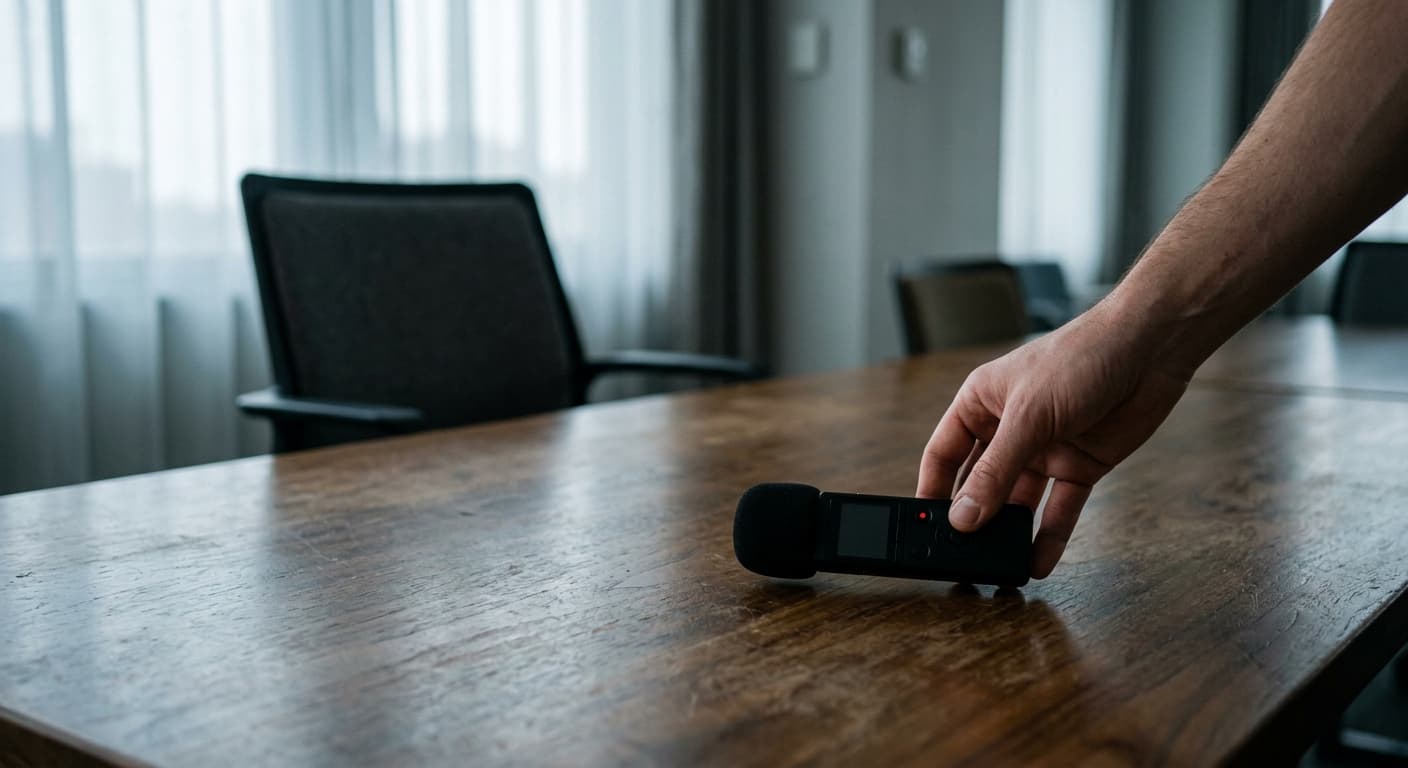
Wisconsin follows one-party consent for audio recording under Wis. Stat. 968.31, meaning any participant in a conversation may record it without informing the other parties. This rule covers phone calls, in-person conversations, and electronic communications. Recording for a criminal or tortious purpose remains illegal even when you are a participant.
Wisconsin is a one-party consent state for audio recording. Under Wis. Stat. 968.31, you can legally record any phone call, in-person conversation, or electronic communication you participate in without notifying or getting permission from other participants. This protection covers wire, oral, and electronic communications.
This guide explains how Wisconsin's audio recording laws work in practice, what activities cross the line into criminal conduct, and what penalties apply to illegal interception. Whether you want to record a business call, preserve evidence for a legal dispute, or document a conversation with a government agency, understanding these rules will help you stay within the law.
How Wisconsin's One-Party Consent Law Works
The Statutory Framework
Wisconsin's wiretapping and electronic surveillance laws are found in Chapter 968 of the Wisconsin Statutes, titled "Commencement of Criminal Proceedings." The central statute is Wis. Stat. 968.31, which prohibits the interception and disclosure of wire, electronic, or oral communications.
The statute makes it unlawful to intentionally intercept, attempt to intercept, or procure any other person to intercept any wire, electronic, or oral communication. However, an exception exists under Wis. Stat. 968.31(2)(c) for situations where one party to the communication consents to the interception. This is the one-party consent exception that allows you to record your own conversations.
What "One-Party Consent" Means in Practice
One-party consent means that exactly one person involved in the communication must know about and agree to the recording. That person is usually the one pressing the record button. You do not need to announce "this call is being recorded." You do not need a verbal or written agreement from the other participants.
Here are common scenarios where one-party consent protects you:
- Recording a phone call you are on. Whether it is a landline, cell phone, or VoIP call through Zoom, Teams, or Google Meet, you can record the audio without telling the other person.
- Recording an in-person conversation you participate in. If you are having a face-to-face discussion with someone, you can use your phone or a voice recorder to capture it.
- Authorizing someone else to record on your behalf. If you ask a colleague to record a meeting you will attend, their recording is lawful because you (a party to the conversation) gave prior consent.
What One-Party Consent Does NOT Allow
The one-party consent exception has clear boundaries. You cannot:
- Record a conversation you are not part of and have no party's consent for. Placing a hidden recorder in a room to capture other people's private conversations is illegal wiretapping.
- Intercept communications between two other people without either person's knowledge. Tapping a phone line or using software to capture someone else's calls violates the statute.
- Record for a criminal or tortious purpose. Even if you are a participant, Wisconsin law prohibits recording when your intent is to commit a crime or tort.
The Criminal or Tortious Purpose Exception
Why This Exception Matters
Wisconsin's one-party consent law includes an important limitation that distinguishes it from many other one-party consent states. Under Wis. Stat. 968.31(2)(c), the consent exception does not apply if the communication is intercepted for the purpose of committing any criminal or tortious act in violation of the constitution or laws of the United States or any state.
This means that even when you are a party to the conversation, your recording is illegal if your purpose is unlawful. Courts examine the intent behind the recording to determine whether this exception applies.
Examples of Criminal or Tortious Purpose
- Recording for blackmail or extortion is illegal because the intent is criminal.
- Recording to facilitate fraud is illegal because fraud is both criminal and tortious.
- Recording with intent to harass may be illegal if it rises to the level of criminal harassment under Wis. Stat. 947.013.
- Recording to gather trade secrets could be illegal if it involves misappropriation under Wisconsin's Uniform Trade Secrets Act.
Legitimate Purposes That Are Protected
- Documenting workplace harassment or discrimination
- Recording performance reviews for your personal records
- Preserving evidence of verbal agreements or promises
- Keeping a record of medical instructions
- Documenting threatening or abusive behavior for a protective order
- Recording conversations with government officials about your case
Courts look at the totality of the circumstances when evaluating intent. If you have a lawful reason for recording, such as protecting your own interests or documenting important information, your recording is protected.
Types of Audio Communications Covered
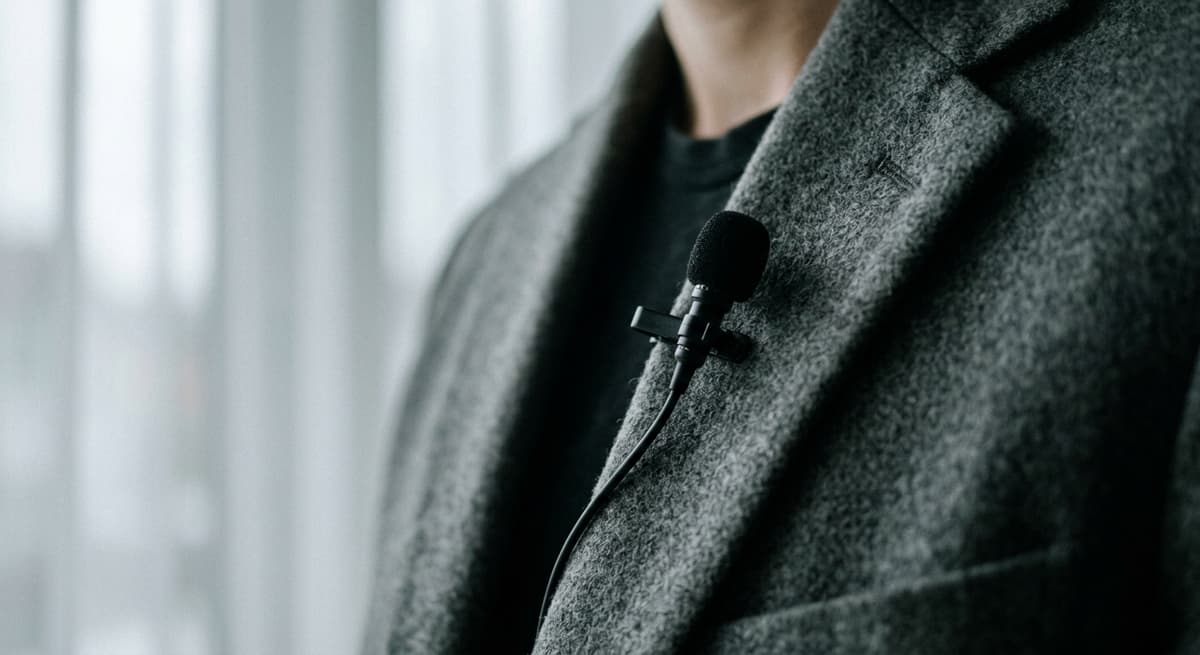
Wire Communications
Wire communications include traditional telephone calls, cell phone calls, and any communication that travels over a wire or cable at some point during transmission. Under Wis. Stat. 968.27(17), a wire communication is any aural transfer made in whole or in part through the use of facilities for the transmission of communications by wire, cable, or other like connection. Wisconsin's one-party consent rule covers all wire communications.
Oral Communications
Oral communications are face-to-face spoken conversations where the speaker has a reasonable expectation that the conversation is not being intercepted. Under Wis. Stat. 968.27(12), an oral communication is one uttered by a person exhibiting an expectation that the communication is not subject to interception under circumstances justifying that expectation.
Conversations in public places where people can overhear you generally do not carry a reasonable expectation of privacy. Conversations in your home, office, or other private settings do carry that expectation.
Electronic Communications
Electronic communications include emails, text messages, instant messages, and data transmissions. Under Wis. Stat. 968.27(4), an electronic communication is any transfer of signs, signals, writing, images, sounds, data, or intelligence transmitted in whole or in part by wire, radio, electromagnetic, photoelectronic, or photo-optical system.
Recording Phone Calls Under Wisconsin Law
Personal Phone Calls
You can record any personal phone call you participate in. This applies to:
- Calls made from or received on your cell phone
- Landline calls
- VoIP calls through services like Skype, WhatsApp, or Signal
- Video call audio through Zoom, Microsoft Teams, or Google Meet
You do not need to play a beep tone, announce the recording, or get permission. Simply being a party to the call satisfies the one-party consent requirement.
Business Phone Calls
Wisconsin businesses can record calls for quality assurance, training, compliance, and dispute resolution purposes. The one-party consent rule means a business employee who participates in the call provides the necessary consent. Many businesses still announce recording as a best practice, using phrases like "This call may be recorded for quality assurance purposes."
The Wisconsin Department of Workforce Development has confirmed that electronic recording of conversations is permissible under state law when at least one party consents.
Interstate Phone Calls
When you call someone in another state, the recording laws of both states may apply. If you are in Wisconsin calling someone in a two-party consent state, the stricter law generally controls.
This is especially important for Wisconsin residents because the state borders Illinois, which is an all-party consent state. States requiring all-party consent include:
- Illinois (Wisconsin's neighbor)
- California
- Connecticut (criminal wiretap law is one-party consent, but Conn. Gen. Stat. 52-570d imposes civil liability for recording a phone call unless all parties consent, verbal notice is given at the start, or an audible warning tone is used)
- Florida
- Maryland
- Massachusetts
- Montana
- New Hampshire
- Pennsylvania
- Washington
If you regularly record calls with people in these states, the safest approach is to inform all parties before recording begins.
Recording In-Person Conversations
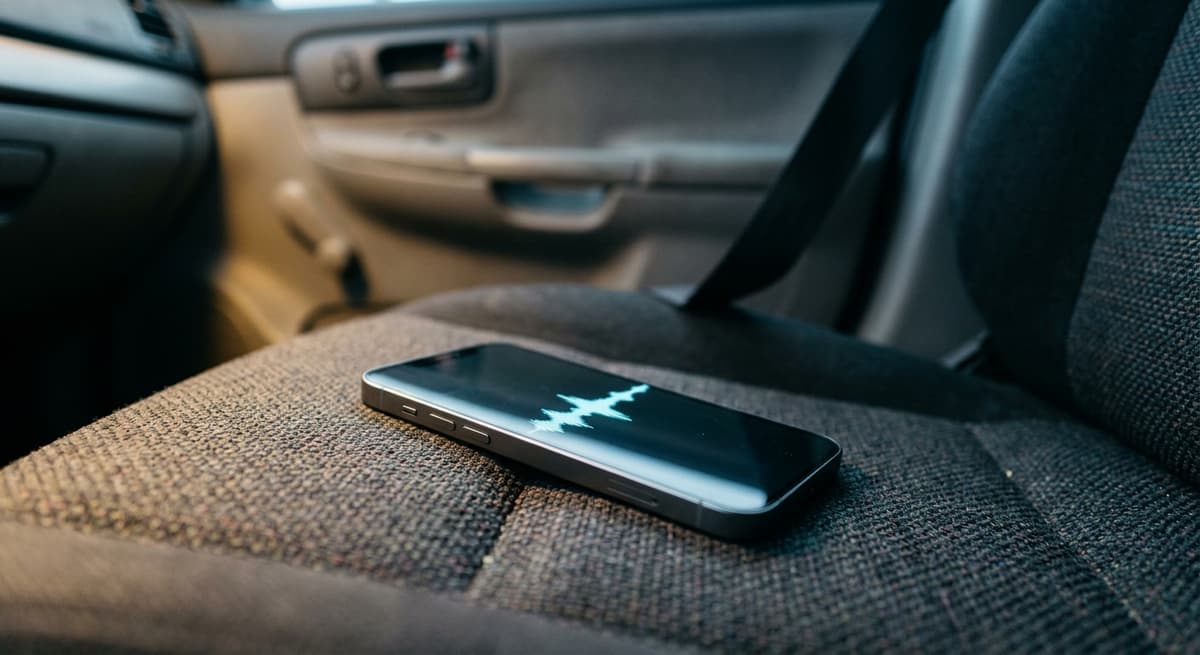
When Audio Recording Is Legal
Wisconsin law permits audio recording of in-person conversations when:
- You are a direct participant in the conversation
- You are in a public place where no reasonable expectation of privacy exists
- One of the parties to the conversation has given you prior consent to record
- The recording is not for criminal or tortious purposes
Public spaces like sidewalks, parks, government buildings, and retail stores generally carry no expectation of privacy for conversations held at normal volume.
When Audio Recording Is Illegal
Recording becomes illegal when:
- You are not a party to the conversation and have no participant's consent
- You use a hidden device to capture conversations in a clandestine manner from a private place
- You place a recording device in someone else's home, office, or vehicle without any party's knowledge
- Your purpose for recording is criminal or tortious
The Reasonable Expectation of Privacy Standard
Wisconsin courts evaluate whether someone had a reasonable expectation that their conversation was private. Factors include:
- The location of the conversation (private home vs. public street)
- The volume at which people were speaking
- Precautions taken to ensure privacy (closing a door, stepping away from others)
- The nature of the relationship between the parties
- Whether others could overhear the conversation
A whispered conversation in a crowded restaurant may carry more expectation of privacy than a loud conversation on a public sidewalk, even though both occur in semi-public settings.
Penalties for Illegal Audio Recording
Criminal Penalties Under Wis. Stat. 968.31
Violating Wisconsin's wiretapping laws is a Class H felony. Under Wis. Stat. 939.50(3)(h), a Class H felony carries:
| Offense | Classification | Potential Penalty |
|---|---|---|
| Illegal interception of communications | Class H Felony | Up to 6 years imprisonment, up to $10,000 fine |
| Disclosing intercepted communications | Class H Felony | Up to 6 years imprisonment, up to $10,000 fine |
| Using illegally obtained communications | Class H Felony | Up to 6 years imprisonment, up to $10,000 fine |
| Manufacturing or possessing interception devices | Class H Felony | Up to 6 years imprisonment, up to $10,000 fine |
A felony conviction carries lasting consequences including a permanent criminal record, loss of voting rights while incarcerated or on supervision, firearm ownership restrictions, and difficulty finding employment.
Civil Liability Under Wis. Stat. 968.31(2m)
Wisconsin provides civil remedies for victims of illegal recording. Under Wis. Stat. 968.31(2m), any person whose communication is intercepted, disclosed, or used in violation of the wiretapping statutes can sue for:
- Actual damages, but not less than $100 per day for each day of violation or $1,000, whichever is higher
- Punitive damages for willful or egregious violations
- Reasonable attorney fees and other litigation costs
Victims may also pursue claims under the federal Wiretap Act (18 U.S.C. 2520), which provides an additional avenue for recovery with a minimum of $10,000 in statutory damages.
Good Faith Defense
A complete defense exists under Wis. Stat. 968.31(3) if the defendant relied in good faith on a court order authorizing the interception or on the provisions of Wis. Stat. 968.30(7), which governs the recording, custody, and court-ordered sealing of communications intercepted under such an order.
Using Audio Recordings as Evidence in Wisconsin

Authentication Requirements
For a lawfully obtained audio recording to be admissible in Wisconsin courts, you must authenticate it. Under Wisconsin's rules of evidence, authentication typically requires:
- Testimony from a person with knowledge that the recording is what it claims to be
- Evidence that the recording device was working properly
- Proof that the recording has not been altered or edited
- Chain of custody documentation showing how the recording was preserved
Admissibility in Different Court Settings
- Criminal cases: Illegally obtained recordings are inadmissible under exclusionary rules and may result in separate criminal charges.
- Civil cases: Rules can be more flexible, but illegally obtained evidence may still be excluded.
- Family court: Wisconsin family courts frequently admit legally obtained recordings in custody, divorce, and domestic abuse cases.
- Administrative hearings: Agencies like the Wisconsin Equal Rights Division may accept recordings as evidence in discrimination and harassment complaints.
Best Practices for Preserving Recordings
- Use a reliable recording device or app. Smartphone voice memo apps, dedicated digital recorders, and call recording apps all work.
- Do not edit the recording. Preserve the original file in its entirety.
- Back up the recording immediately. Save copies to cloud storage and a separate device.
- Note the date, time, location, and participants. Write this information down as soon as possible after the recording.
- Store the recording securely. Protect it from accidental deletion or unauthorized access.
Wisconsin Bar Ethics Opinion on Attorney Recording
In February 2024, the State Bar of Wisconsin issued Formal Ethics Opinion EF-24-01, which addresses when attorneys may record conversations without disclosure. Key findings include:
- Recording clients without their knowledge or consent is prohibited under Wisconsin Supreme Court Rules 20:1.4(b) and 20:8.4(c)
- Recording judges and court personnel without permission is not permitted
- Recording opposing counsel is not ordinarily prohibited by disciplinary rules, but the committee cautions attorneys to carefully consider the risks
- Recording third parties is generally permissible unless the third party is represented by counsel
This opinion replaced the earlier Ethics Opinion E-94-5 and reflects the practical reality of recording in a one-party consent state.
Federal Law and Wisconsin Audio Recording
The federal Wiretap Act (18 U.S.C. 2511) also follows a one-party consent standard. This means Wisconsin residents face consistent rules under both state and federal law. Federal law prohibits interception of wire, oral, or electronic communications except where one party to the communication consents.
Federal penalties for wiretapping violations include up to five years in prison and fines. Federal civil remedies under 18 U.S.C. 2520 provide statutory damages of $10,000 per violation, actual damages, punitive damages, and attorney fees.
Recent Developments
As of early 2026, Wisconsin's core recording and wiretapping statute (Wis. Stat. 968.31) has not been amended. Wisconsin remains a one-party consent state.
- Wisconsin Bar Ethics Opinion EF-24-01 (February 2024): Updated guidance on attorney recording replaced the 1994 opinion.
- Government Surveillance Reform (AB 252/SB 260): A bill introduced in the 2023-2024 session would have restricted government agencies from intercepting oral communications in buildings they own without a two-thirds vote. The bill did not pass and has not been reintroduced.
- NLRB Workplace Recording Guidance: The National Labor Relations Board has continued to scrutinize employer no-recording policies, reinforcing that blanket bans may violate employee rights under the National Labor Relations Act.
More Wisconsin Recording Laws
Audio Recording | Video Recording | Voyeurism & Hidden Cameras | Workplace Recording | Recording Police | Phone Call Recording | Security Cameras | Recording in Public | Landlord-Tenant | Dashcam Laws | Schools | Medical Recording
Back to Wisconsin Recording Laws
More Wisconsin Recording Topics
More Wisconsin Laws
Frequently Asked Questions
Is it legal to record a conversation in Wisconsin without the other person knowing?
Yes. Wisconsin is a one-party consent state under Wis. Stat. 968.31. As long as you are a participant in the conversation, you can record without telling the other person. The only restriction is that you cannot record for the purpose of committing a criminal or tortious act.
What are the penalties for illegal audio recording in Wisconsin?
Illegal wiretapping in Wisconsin is a Class H felony punishable by up to 6 years in prison and a fine of up to $10,000. Victims can also sue civilly under Wis. Stat. 968.31(2m) for actual damages (minimum $100 per day or $1,000), punitive damages, and attorney fees.
Can I record a phone call in Wisconsin?
Yes. You can record any phone call you participate in, including landline calls, cell phone calls, and VoIP calls. You do not need to inform the other party. However, if you are calling someone in a two-party consent state like Illinois, the stricter law may apply.
Does Wisconsin's one-party consent law apply to electronic communications?
Yes. Wis. Stat. 968.31 covers wire, oral, and electronic communications. This includes phone calls, in-person conversations, text messages, emails, and video call audio. The one-party consent exception applies to all three categories.
Can a recording be used as evidence in Wisconsin court?
Yes. Recordings made legally under Wisconsin's one-party consent law are generally admissible as evidence in criminal, civil, and family court proceedings. The recording must be authenticated as genuine and unaltered. Illegally obtained recordings are typically excluded and may result in separate criminal charges.
Updates
Clarified that Connecticut's criminal wiretap law is one-party consent; the all-party rule readers may have heard about is a separate civil statute (Conn. Gen. Stat. 52-570d) that also allows verbal notice or a warning tone instead of consent.
Independently fact-checked against the cited primary sources; governing law re-checked for recent changes
Corrected the description of Wis. Stat. 968.30(7) in the good-faith-defense section: it governs recordkeeping and sealing of intercepted communications, not the authorization of law enforcement wiretapping.
Governing law re-checked for recent changes
Corrected several mis-cited subsection numbers in Wisconsin's wiretapping statutes: the one-party-consent exception is 968.31(2)(c) (not (2)(b), which covers law enforcement), the wire/oral/electronic communication definitions are at 968.27(17)/(12)/(4) respectively, and the good-faith defense is at 968.31(3) (not (2m), which is the civil-damages provision).
Governing law re-checked for recent changes
Reviewed and approved by an editor
The Law Behind This Article
This article rests on the statutory provisions below, held in our own legal record and retrieved from the official source. Tap a section to read the operative text.
Wisconsin Statutes, Chapter 968: Commencement Of Criminal Proceedings
§ 968.31Interception and disclosure of wire, electronic or oral communications prohibited.In forcecited in 22 of our articles
(1) Except as otherwise specifically provided in ss. 196.63 or 968.28 to 968.30, whoever commits any of the acts enumerated in this section is guilty of a Class H felony: (a) Intentionally intercepts, attempts to intercept or procures any other person to intercept or attempt to intercept, any wire, electronic or oral communication. (b) Intentionally uses, attempts to use or procures any other person to use or attempt to use any electronic, mechanical or other device to intercept any oral communication. (c) Discloses, or attempts to disclose, to any other person the contents of any wire, electronic or oral communication, knowing or having reason to know that the information was obtained through the interception of a wire, electronic or oral communication in violation of this section or under circumstances constituting violation of this section. (d) Uses, or attempts to use, the contents of any wire, electronic or oral communication, knowing or having reason to know that the information was obtained through the interception of a wire, electronic or oral communication in violation of this section or under circumstances constituting violation of this section.
Official text (excerpt) · last checked 2026-08-31 · Read the full text in our law library · Verify at docs.legis.wisconsin.gov
Cited in 23 court opinions in our collectionLatest citing opinion in our collection: 2026
In the courts (editorial summary, independently checked):State v. Maloney held recordings made with one party's prior consent fall under Section 968.31(2)(b) and (c), and that aiding a police sting is not an "injurious act." State v. Gilmore pointed to 968.31(2m) damages and 968.31(1)(e) penalties, reserving suppression for illegal interceptions.
Opinions citing this section in our collection:
- State v. Maloney (Wisconsin Supreme Court 2005, 281 Wis. 2d 595)✓A homicide suspect's girlfriend let police record her hotel room conversations with him in Las Vegas; the court held the videotapes lawful under 968.31(2)(b) and (c) because she was a consenting party, and that helping a lawful sting is not an injurious act.
- State v. Popenhagen (Wisconsin Supreme Court 2008, 309 Wis. 2d 601)“…Arnold, 51 Wis.2d at 442 , 187 N.W.2d 354 (citing Wis. Stat. § 968.31 (2)(b)). However, in considering all th…”
- State v. Gilmore (Wisconsin Supreme Court 1996, 201 Wis. 2d 820)✓Prosecutors filed a public complaint quoting 27 pages of lawfully wiretapped calls; the court held the unsealed filing violated the surveillance law but refused suppression, pointing to the civil action in 968.31(2m) and the criminal penalty in 968.31(1)(e) as the remedies.
Identified automatically from the court opinions citing this section — not a ranking of which case controls.
§ 968.27Definitions.In forcecited in 4 of our articles
In ss. 968.28 to 968.375: (1) “Aggrieved person” means a person who was a party to any intercepted wire, electronic or oral communication or a person against whom the interception was directed. (2) “Aural transfer” means a transfer containing the human voice at any point from the point of origin to the point of reception. (3) “Contents,” when used with respect to any wire, electronic, or oral communication, includes any information concerning the substance, purport, or meaning of that communication. (4) “Electronic communication” means any transfer of signs, signals, writing, images, sounds, data or intelligence of any nature wholly or partially transmitted by a wire, radio, electromagnetic, photoelectronic or photooptical system. “Electronic communication” does not include any of the following: (a) The radio portion of a cordless telephone communication that is transmitted between the cordless telephone handset and the base unit. (b) Any wire or oral communication. (c) Any communication made through a tone-only paging device. (d) Any communication from a tracking device.
Official text (excerpt) · last checked 2026-07-29 · Read the full text in our law library · Verify at docs.legis.wisconsin.gov
Cited in 19 court opinions in our collectionLatest citing opinion in our collection: 2024
Opinions citing this section in our collection:
- State v. Nicolas Subdiaz-Osorio (Wisconsin Supreme Court 2014, 357 Wis. 2d 41)“…serious physical injury 11 According to Wis. Stat. § 968.27(13) (2009-10), "Pen regist…”
- State v. Gilmore (Wisconsin Supreme Court 1996, 201 Wis. 2d 820)“…the Wisconsin Electronic Surveillance Control Law (WESCL), Wis. Stat. §§ 968.27-968.37 . We hold that while WESC…”
- State v. Sveum (Court of Appeals of Wisconsin 2009, 319 Wis. 2d 498)“…See Wisconsin's Electronic Surveillance Control Law, Wis. Stat. §§ 968.27 -.33 (2007-08). 7 B…”
Identified automatically from the court opinions citing this section — not a ranking of which case controls.
§ 968.30Procedure for interception of wire, electronic or oral communications.In forcecited in 3 of our articles
(1) Each application for an order authorizing or approving the interception of a wire, electronic or oral communication shall be made in writing upon oath or affirmation to the court and shall state the applicant’s authority to make the application and may be upon personal knowledge or information and belief. Each application shall include the following information: (a) The identity of the investigative or law enforcement officer making the application, and the officers authorizing the application. (b) A full and complete statement of the facts and circumstances relied upon by the applicant, to justify the applicant’s belief that an order should be issued, including: 1. Details of the particular offense that has been, is being, or is about to be committed; 2. A particular description of the nature and location of the facilities from which or the place where the communication is to be intercepted; 3. A particular description of the type of communications sought to be intercepted; and 4. The identity of the person, if known, committing the offense and whose communications are to be intercepted.
Official text (excerpt) · last checked 2026-07-29 · Read the full text in our law library · Verify at docs.legis.wisconsin.gov
Cited in 14 court opinions in our collectionLatest citing opinion in our collection: 2020
Opinions citing this section in our collection:
- State v. Popenhagen (Wisconsin Supreme Court 2008, 309 Wis. 2d 601)“…tly would have prevailed on his motion to suppress because Wis. Stat. § 968.30 (9)(a) provides that "[a]ny aggrieved p…”
- State Ex Rel. Two Unnamed v. Peterson (Wisconsin Supreme Court 2015, 363 Wis. 2d 1)“…d 30 days in duration without specific judicial extension. Wis. Stat. § 968.30 (5). These statutory limitations and…”
- State v. House (Wisconsin Supreme Court 2007, 302 Wis. 2d 1)“…ul because they failed to conform to the requirement under Wis. Stat. §§ 968.30 and 968.28 that applications for exten…”
Identified automatically from the court opinions citing this section — not a ranking of which case controls.
Wisconsin Statutes, Chapter 939: Crimes
§ 939.50Classification of felonies.In forcecited in 8 of our articles
(1) Felonies in the statutes are classified as follows: (a) Class A felony. (b) Class B felony. (c) Class C felony. (d) Class D felony. (e) Class E felony. (f) Class F felony. (g) Class G felony. (h) Class H felony. (i) Class I felony. (2) A felony is a Class A, B, C, D, E, F, G, H, or I felony when it is so specified in the statutes. (3) Penalties for felonies are as follows: (a) For a Class A felony, life imprisonment. (b) For a Class B felony, imprisonment not to exceed 60 years. (c) For a Class C felony, a fine not to exceed $100,000 or imprisonment not to exceed 40 years, or both. (d) For a Class D felony, a fine not to exceed $100,000 or imprisonment not to exceed 25 years, or both. (e) For a Class E felony, a fine not to exceed $50,000 or imprisonment not to exceed 15 years, or both. (f) For a Class F felony, a fine not to exceed $25,000 or imprisonment not to exceed 12 years and 6 months, or both. (g) For a Class G felony, a fine not to exceed $25,000 or imprisonment not to exceed 10 years, or both. (h) For a Class H felony, a fine not to exceed $10,000 or imprisonment not to exceed 6 years, or both.
Official text (excerpt) · last checked 2026-07-29 · Read the full text in our law library · Verify at docs.legis.wisconsin.gov
Cited in 95 court opinions in our collectionLatest citing opinion in our collection: 2026
Opinions citing this section in our collection:
- State v. Lechner (Wisconsin Supreme Court 1998, 217 Wis. 2d 392)“…ce to the penalty structure the legislature established in Wis. Stat. §§ 939.50 through 939.52. "While the word 'serio…”
- State v. Gerald D. Taylor (Wisconsin Supreme Court 2013, 347 Wis. 2d 30)“…mum term of imprisonment for a Class H felony is six years. Wis. Stat. § 939.50(3)(h)——(i).…”
- State v. Head (Wisconsin Supreme Court 2002, 255 Wis. 2d 194)“…s two-element offense was punishable by life imprisonment. Wis. Stat. § 939.50 (3)(a) (1985-86). ¶ 56. Section 940.0…”
Identified automatically from the court opinions citing this section — not a ranking of which case controls.
Wisconsin Statutes, Chapter 947: Crimes Against Public Peace, Order And Other Interests
§ 947.013Harassment.In forcecited in 3 of our articles
(1) In this section: (a) “Course of conduct” means a pattern of conduct composed of a series of acts over a period of time, however short, evidencing a continuity of purpose. (b) “Credible threat” means a threat made with the intent and apparent ability to carry out the threat. (c) “Personally identifiable information” has the meaning given in s. 19.62 (5). (d) “Record” has the meaning given in s. 19.32 (2). (1m) Whoever, with intent to harass or intimidate another person, does any of the following is subject to a Class B forfeiture: (a) Strikes, shoves, kicks or otherwise subjects the person to physical contact or attempts or threatens to do the same. (b) Engages in a course of conduct or repeatedly commits acts which harass or intimidate the person and which serve no legitimate purpose. (1r) Whoever violates sub. (1m) under all of the following circumstances is guilty of a Class A misdemeanor: (a) The act is accompanied by a credible threat that places the victim in reasonable fear of death or great bodily harm. (b) The act occurs while the actor is subject to an order or injunction under s.
Official text (excerpt) · last checked 2026-07-29 · Read the full text in our law library · Verify at docs.legis.wisconsin.gov
Cited in 9 court opinions in our collectionLatest citing opinion in our collection: 2024
Opinions citing this section in our collection:
- Welytok v. Ziolkowski (Court of Appeals of Wisconsin 2008, 312 Wis. 2d 435)“…ose and that his conduct did harass Jill. See Wis. Stat. § 947.013 (lm)(b) (2005-06). 3 Ziolk…”
- State v. Schwebke (Wisconsin Supreme Court 2002, 253 Wis. 2d 1)“…could have sought a civil forfeiture for harassment under Wis. Stat. § 947.013 . A harassment conviction would have su…”
- State v. Sveum (Court of Appeals of Wisconsin 2002, 254 Wis. 2d 868)“…32 (2m) (1995-96); 1 harassment, contrary to Wis. Stat. § 947.013 (lr); violating a harassment injunction…”
Identified automatically from the court opinions citing this section — not a ranking of which case controls.
United States Code Title 18
§ 2511Interception and disclosure of wire, oral, or electronic communications prohibitedIn forcecited in 418 of our articles
Except as otherwise specifically provided in this chapter any person who— intentionally intercepts, endeavors to intercept, or procures any other person to intercept or endeavor to intercept, any wire, oral, or electronic communication; intentionally uses, endeavors to use, or procures any other person to use or endeavor to use any electronic, mechanical, or other device to intercept any oral communication when— such device is affixed to, or otherwise transmits a signal through, a wire, cable, or other like connection used in wire communication; or such device transmits communications by radio, or interferes with the transmission of such communication; or such person knows, or has reason to know, that such device or any component thereof has been sent through the mail or transported in interstate or foreign commerce; or such use or endeavor to use (A) takes place on the premises of any business or other commercial establishment the operations of which affect interstate or foreign commerce; or (B) obtains or is for the purpose of obtaining information relating to the operations of any business or other commercial establishment the operations of which affect interstate or foreign…
Official text (excerpt) · last checked 2026-08-28 · Read the full text in our law library · Verify at uscode.house.gov
Cited in 2,045 court opinions in our collectionLatest citing opinion in our collection: 2026
In the courts (editorial summary, independently checked):Griggs-Ryan v. Smith (1990) applied the Section 2511(2)(d) prior-consent exception, treating a tenant repeatedly told that all incoming calls were taped as having impliedly consented. United States v. United States District Court (1972) read the then-current Section 2511(3) as conferring no presidential surveillance power.
Opinions citing this section in our collection:
- Mitchell v. Forsyth (Supreme Court of the United States 1985, 472 U.S. 511)✓The Attorney General authorized a warrantless 1970 national security wiretap that caught the plaintiff's calls; the Court held the since-repealed Section 2511(3) disclaimer left the tap lawful under Title III, and that Mitchell had qualified immunity.
- United States v. United States District Court for the Eastern District of Michigan (Supreme Court of the United States 1972, 407 U.S. 297)✓The Attorney General approved warrantless wiretaps on members of a domestic group accused of bombing a CIA office; the Court read Section 2511(3) as a congressional disclaimer conferring no surveillance power, then held the Fourth Amendment required prior judicial approval.
- Forsyth v. Barr (Court of Appeals for the Fifth Circuit 1994, 19 F.3d 1527)✓Dallas police used, in an internal affairs probe of an officer, calls private parties allegedly intercepted illegally; assuming that was unlawful, the Fifth Circuit held Section 2517(1) and (2) allowed the disclosure and use, defeating the Section 2511(1)(c) and (d) claims.
Identified automatically from the court opinions citing this section — not a ranking of which case controls.
§ 2520Recovery of civil damages authorizedIn forcecited in 115 of our articles
Except as provided in section 2511(2)(a)(ii), any person whose wire, oral, or electronic communication is intercepted, disclosed, or intentionally used in violation of this chapter may in a civil action recover from the person or entity, other than the United States, which engaged in that violation such relief as may be appropriate. In an action under this section, appropriate relief includes— such preliminary and other equitable or declaratory relief as may be appropriate; damages under subsection (c) and punitive damages in appropriate cases; and a reasonable attorney’s fee and other litigation costs reasonably incurred.
Official text (excerpt) · last checked 2026-07-28 · Read the full text in our law library · Verify at uscode.house.gov
Cited in 860 court opinions in our collectionLatest citing opinion in our collection: 2026
In the courts (editorial summary, independently checked):Walker v. Darby (1990) held a 2520 plaintiff need not prove the contents of intercepted conversations, only interception and a justified expectation against it. Bartnicki v. Vopper (2001) barred 2520 damages against defendants who took no part in the interception, obtained the tape lawfully, and disclosed a matter of public concern.
Opinions citing this section in our collection:
- Jessie Walker v. Thomas E. Darby, Hugh L. Robinson, Jr., and Kenneth Day (Court of Appeals for the Eleventh Circuit 1990, 911 F.2d 1573)✓A postal letter carrier said three supervisors wired an intercom near his workstation to listen in. Reversing summary judgment, the Eleventh Circuit held a section 2520 plaintiff can show interception without proving the contents of specific conversations.
- Gelbard v. United States (Supreme Court of the United States 1972, 408 U.S. 41)“…disclosure, or use is entitled to recover civil damages, 18 U. S. C. § 2520 . Title III also bars the use as eviden…”
- DirecTV, Inc. v. Hoa Huynh (Court of Appeals for the Ninth Circuit 2007, 503 F.3d 847)“…7 U.S.C. § 605 (e)(4), or alternatively, for violations of 18 U.S.C. § 2520 (a), or alternatively, for violations o…”
Identified automatically from the court opinions citing this section — not a ranking of which case controls.
Search our full record of US law — 2.1 million sections, every state + federal →
Sources and References
- Wis. Stat. 968.31 - Interception and Disclosure Prohibited(docs.legis.wisconsin.gov).gov
- Wis. Stat. 968.31(2m) - Civil Remedies(docs.legis.wisconsin.gov).gov
- Wis. Stat. 968.27 - Definitions(docs.legis.wisconsin.gov).gov
- Wis. Stat. 939.50 - Classification of Felonies(docs.legis.wisconsin.gov).gov
- Wisconsin State Law Library - Wiretapping(wilawlibrary.gov).gov
- Wisconsin DWD - Recording Conversations(dwd.wisconsin.gov).gov
- 18 U.S.C. 2511 - Federal Wiretap Act(law.cornell.edu)
- 18 U.S.C. 2520 - Civil Damages(law.cornell.edu)
- State Bar of Wisconsin - Ethics Opinion EF-24-01(wisbar.org)
- NLRB - Protected Concerted Activity(nlrb.gov).gov