
New Hampshire
New Hampshire Workplace Recording Laws
Independently fact-checked against primary sources (last audited August 22, 2026). · Reviewed by the RecordingLaw editorial team. · Law checked current as of August 22, 2026. · 10 primary sources cited on this page. How we verify our legal content

New Hampshire requires all-party consent for workplace recordings under RSA 570-A:2. An employee who secretly records a conversation they are part of commits a misdemeanor, while intercepting a conversation they are not part of is a Class B felony. Consent from every participant is required before recording any workplace meeting or call.
New Hampshire's strict all-party consent requirement creates significant limitations on recording in the workplace. Under RSA 570-A:2, both employers and employees must navigate a legal landscape where secretly recording conversations, meetings, or phone calls at work can result in criminal charges ranging from a misdemeanor to a Class B felony.
This guide covers what employees and employers need to know about workplace recording in New Hampshire, including the legal boundaries for employee self-help recordings, employer monitoring programs, union considerations, and alternative methods for documenting workplace issues.
The All-Party Consent Rule at Work
How RSA 570-A:2 Applies to Employment Settings
New Hampshire's wiretapping statute does not contain a workplace exception. The all-party consent requirement applies with equal force whether a conversation takes place in a private home, on a public street, or in an office building. This means:
- Employees cannot secretly record conversations with coworkers, supervisors, HR representatives, or clients
- Employers cannot secretly monitor employee phone calls, meetings, or in-person conversations through audio recording
- Third parties (such as IT departments monitoring calls) cannot intercept workplace communications without consent from all parties
- Video surveillance with audio in the workplace triggers the full consent requirement for any captured conversations
The statute covers all forms of communication that occur in the employment context, including phone calls, VoIP meetings, in-person discussions, and electronic communications.
Employee Recording: Two Tiers of Liability
When an employee records a workplace conversation without consent, New Hampshire law distinguishes between two levels of criminal exposure:
Misdemeanor (RSA 570-A:2, I-a): An employee who knowingly records a conversation they participate in without consent from other parties commits a misdemeanor. This is the typical scenario where a worker records a meeting with their boss or a call with a client. The maximum penalty is 1 year in jail and a $2,000 fine.
Class B Felony (RSA 570-A:2, I): An employee who willfully intercepts communications they are not a party to commits a Class B felony. Planting a recording device in a conference room or tapping into a coworker's phone line falls into this category. The maximum penalty is 7 years in state prison and a $4,000 fine under RSA 651:2.
Both tiers of liability also carry civil exposure. Under RSA 570-A:11, the person whose communication was illegally recorded may sue for damages of $100 per day of violation or $1,000 minimum, plus punitive damages and attorney fees.
What Employees Can and Cannot Record
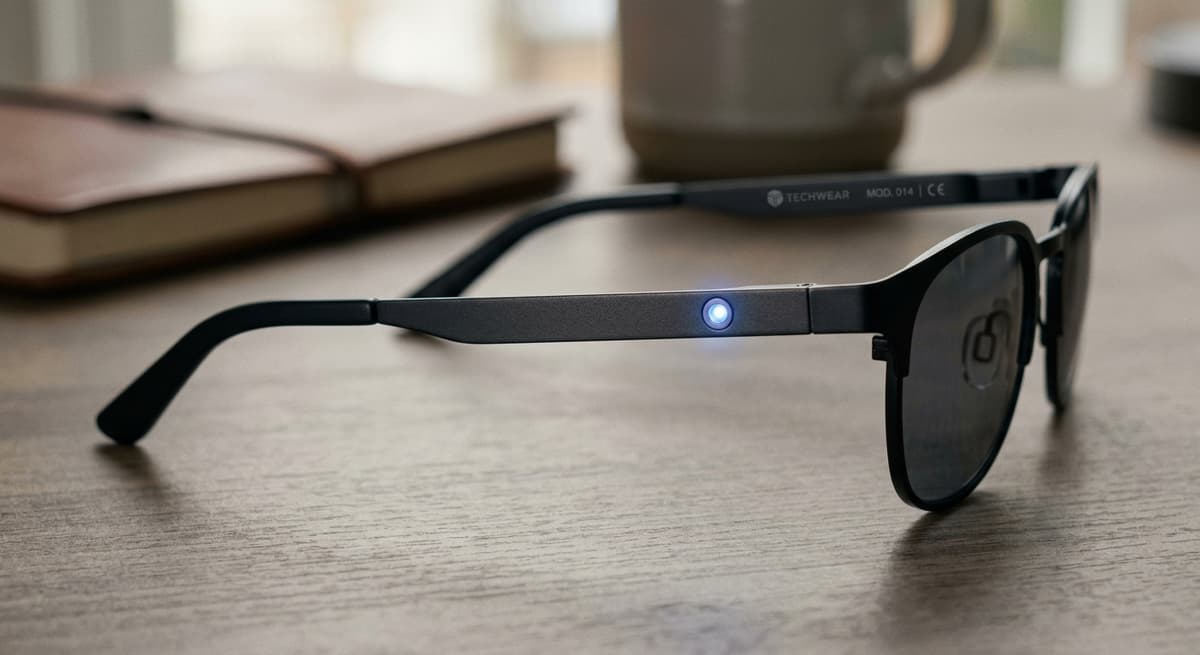
Prohibited Workplace Recording
Under New Hampshire law, employees may not:
- Secretly record a conversation with their boss, even to document harassment or discrimination
- Record performance reviews, disciplinary meetings, or termination conversations without consent from all participants
- Use a phone app to record team meetings without informing and getting agreement from every attendee
- Place a recording device in a shared workspace to capture conversations they are not present for
- Record phone calls with customers, vendors, or business partners without all-party consent
- Use screen recording software that captures audio from virtual meetings without notifying all participants
Legal Workplace Recording
Employees may legally record in the workplace when:
- All parties expressly consent to the recording before it begins
- The recording occurs at a public meeting covered by the Right-to-Know Law (RSA 91-A), such as a municipal board meeting for government employees
- The conversation takes place in a setting where no speaker has a reasonable expectation of privacy, such as a public area of a government building
- Silent video only (no audio) is captured in common areas where video surveillance is permitted
The Consent Process at Work
If you want to record a workplace conversation legally, follow these steps:
- Inform every participant before the meeting or call begins that you would like to record
- Request explicit verbal or written consent from each person
- If anyone declines, do not record the conversation
- Document consent on the recording itself by having participants verbally confirm their agreement
- Follow any company policies regarding recording that may impose additional requirements
Employer Monitoring and Surveillance

Employer Audio Monitoring
New Hampshire employers who wish to monitor employee audio communications must comply with the all-party consent requirement. Lawful employer audio monitoring requires:
- Clear, written disclosure to all employees about the nature, scope, and methods of monitoring
- Explicit consent from employees, typically obtained through signed acknowledgment forms or employment agreements
- Documentation of monitoring policies in employee handbooks or policy manuals
- Consistent application of monitoring across all affected employees
- A legitimate business purpose for the monitoring activity
Employers should have their legal counsel review monitoring programs to ensure compliance with both state wiretapping law and federal regulations.
Employer Video Surveillance
Employer video surveillance without audio in the workplace is subject to different rules:
- Silent cameras in common areas (lobbies, hallways, warehouse floors, retail floors) are generally permissible
- Cameras in private areas such as bathrooms, changing rooms, or locker rooms are prohibited under RSA 644:9
- Cameras with audio recording capability trigger the all-party consent requirement under RSA 570-A:2
- Notice to employees about video surveillance is a best practice and may be legally required depending on camera placement
Call Recording in Business Settings
Businesses that record customer phone calls must follow strict protocols:
- Automated announcements stating "this call may be recorded" must play before any conversation begins
- Callers must have the opportunity to decline or end the call if they do not consent
- Employee phone calls that are monitored or recorded require the employee's prior consent
- Recording policies should specify which calls are recorded, how long recordings are retained, and who has access
- The federal Telephone Consumer Protection Act and FCC regulations impose additional requirements for certain types of business calls
New Hampshire Privacy Act Impact on Workplace Recording
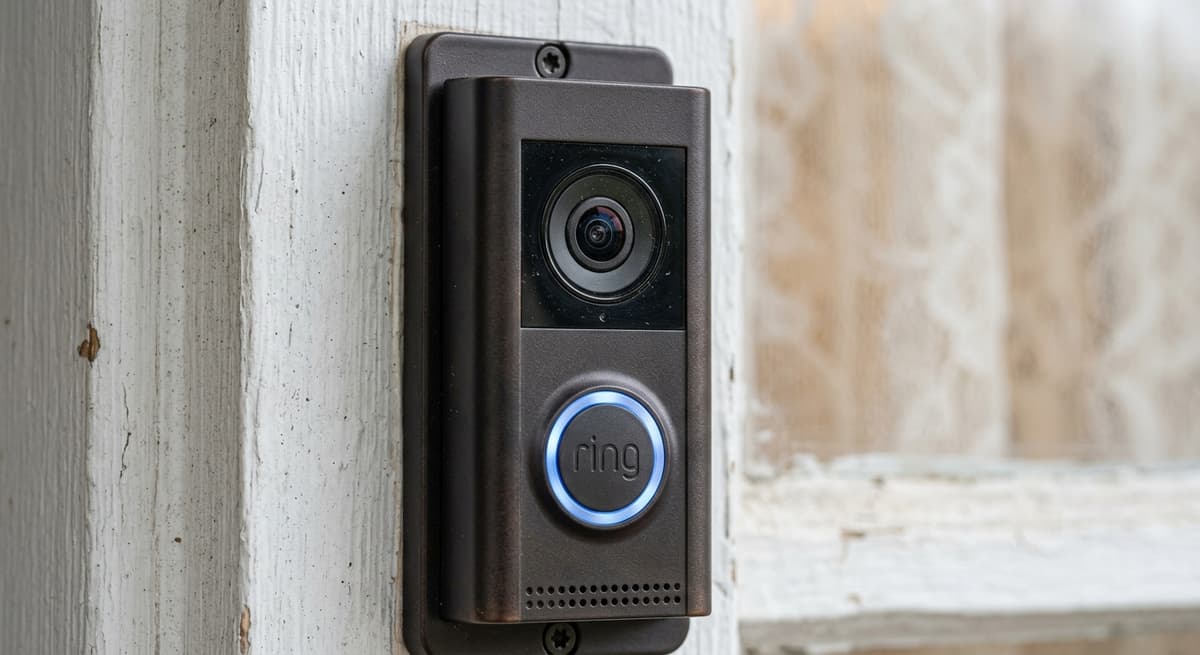
SB 255 Consumer Privacy Protections
New Hampshire's Privacy Act (SB 255), codified at RSA 507-H and effective January 1, 2025, established new consumer data privacy protections. While primarily focused on commercial data collection, the law has implications for workplace recording:
- Recorded conversations may constitute personal data subject to the law's data minimization and purpose limitation requirements
- Employers who record customer interactions must consider data retention limits and consumer access rights
- The law may affect how employers store, share, and delete recorded workplace data
- Employers should update their privacy policies to address recording-related data collection
This law does not override the existing all-party consent requirement under RSA 570-A:2 but adds an additional layer of data governance obligations.
Alternatives to Recording in the Workplace
Whistleblower Protections
New Hampshire provides legal protenues for employees who witness illegal activity or unsafe conditions without resorting to secret recording:
- New Hampshire whistleblower protection laws protect employees who report violations of law or rules to a public body
- Employees cannot be fired, demoted, or retaliated against for reporting employer misconduct in good faith
- Federal whistleblower protections under the Occupational Safety and Health Act and other federal statutes provide additional layers of protection
Documentation Without Recording
Employees who need to document workplace issues in New Hampshire can use these lawful alternatives:
- Written notes: Take detailed contemporaneous notes immediately after conversations, meetings, and incidents
- Email follow-ups: Send emails summarizing what was discussed, creating a written record that the other party can correct or confirm
- Written requests: Ask for important decisions, instructions, or commitments in writing via email or memo
- Witness statements: Ask trusted colleagues who were present during a conversation to provide written statements
- Formal complaints: File written complaints through HR, compliance departments, or external agencies such as the New Hampshire Commission for Human Rights or the federal EEOC
- Attorney consultation: Speak with an employment attorney about legal options for preserving evidence
OSHA and Safety Concerns
Employees who witness workplace safety violations should contact the New Hampshire Department of Labor or file a complaint with OSHA. These agencies have investigative authority and can address safety concerns without requiring employees to make secret recordings.
Union and Collective Bargaining Considerations
National Labor Relations Act
In Stericycle, Inc. and Teamsters Local 628, 372 NLRB No. 113 (Aug. 2, 2023), the NLRB established that facially neutral workplace rules, including no-recording policies, are presumptively unlawful if they have a reasonable tendency to chill employees from exercising their Section 7 rights under the NLRA. To survive scrutiny, employer recording bans must be narrowly drawn with a legitimate and substantial business justification, for example limited to protecting trade secrets or confidential client information.
NLRB Acting General Counsel William B. Cowen issued GC Memo 25-07 (June 25, 2025) directing regional offices to treat the surreptitious recording of collective bargaining sessions as a per se violation of the duty to bargain in good faith under NLRA Sections 8(a)(5) and 8(b)(3). GC Memo 25-07 is prosecutorial guidance and is not a Board decision or binding court precedent. Stericycle (372 NLRB No. 113) remains the binding NLRB standard on workplace recording policies.
In New Hampshire, the interplay between federal labor law and the state's all-party consent requirement means that even if the NLRB protects certain recording activity under federal law, RSA 570-A still applies. Employees should seek legal advice before recording based on asserted NLRB rights.
Weingarten Rights
Unionized employees in New Hampshire have the right to union representation during investigatory interviews that could lead to discipline (known as Weingarten rights). While this does not create a right to record, it provides an alternative form of protection by ensuring a witness is present during important workplace meetings.
2024-2025 Court Rulings on RSA 570-A
In State v. Clark, 2024 N.H. 64 (N.H. Nov. 13, 2024), the New Hampshire Supreme Court held that the suppression remedy under RSA 570-A:6 applies only to felony violations of RSA 570-A:2, I, not to misdemeanor participant recordings under RSA 570-A:2, I-a. In State v. Hersom, No. 2023-0352 (N.H. Jan. 24, 2025), the court held that the State must prove NH jurisdiction and willful mental state before the suppression framework applies. Both decisions are relevant to workplace recording disputes where recordings were made by participants to conversations.
Penalties for Illegal Workplace Recording
Criminal Penalties
| Offense | Classification | Maximum Prison | Maximum Fine |
|---|---|---|---|
| Employee secretly records own meeting (RSA 570-A:2, I-a) | Misdemeanor | 1 year | $2,000 |
| Employee plants hidden recorder (RSA 570-A:2, I) | Class B Felony | 7 years | $4,000 |
| Employer monitors without consent (RSA 570-A:2, I) | Class B Felony | 7 years | $4,000 |
| Hidden camera in workplace bathroom (RSA 644:9) | Class A Misdemeanor | 1 year | $2,000 |
Civil Liability
Under RSA 570-A:11, any person whose workplace communication is illegally recorded may sue for:
- $100 per day of the violation or $1,000 minimum, whichever is greater
- Actual damages if they exceed the statutory minimum
- Punitive damages for egregious conduct
- Attorney fees and litigation costs
Employment Consequences
Beyond criminal and civil liability, illegal workplace recording can result in:
- Immediate termination for violating company policies
- Loss of unemployment benefits if terminated for cause
- Professional license issues for regulated professions
- Difficulty finding future employment due to a criminal record
Employer Best Practices
Developing a Compliant Recording Policy
New Hampshire employers should implement clear recording policies that:
- State the company's position on audio and video recording in the workplace
- Explain the all-party consent requirement under New Hampshire law
- Detail any employer monitoring programs including scope, methods, and purposes
- Require employee acknowledgment through signed forms at hire and annually
- Address virtual meeting recording through platforms like Zoom, Teams, and Google Meet
- Specify data retention and access policies for any recorded material
- Include consequences for policy violations
- Be reviewed by legal counsel to ensure compliance with state and federal law
Virtual Meeting Recording
With the increase in remote work, employers must address virtual meeting recording:
- Establish clear policies about when virtual meetings may be recorded
- Use platform features that notify all participants when recording begins
- Require affirmative consent from all meeting participants before recording
- Train employees on proper procedures for recording virtual meetings
- Address whether employees may record meetings using personal devices in addition to platform recording tools
More New Hampshire Recording Laws
Audio Recording | Video Recording | Voyeurism | Workplace Recording | Recording Police | Phone Call Recording | Security Cameras | Recording in Public | Landlord-Tenant | Dashcam Laws | Schools | Medical Recording
Back to New Hampshire Recording Laws
More New Hampshire Recording Topics
More New Hampshire Laws
Frequently Asked Questions
Can I secretly record my boss in New Hampshire?
No. New Hampshire is an all-party consent state under RSA 570-A:2. Secretly recording a conversation with your boss without their consent is a criminal offense. If you are a participant in the conversation, it is a misdemeanor (up to 1 year in jail, $2,000 fine). If you plant a hidden device, it could be a Class B felony (up to 7 years, $4,000 fine).
Can my employer record me at work in New Hampshire?
Only with your knowledge and consent. New Hampshire law requires all-party consent for audio recording. Employers must clearly disclose monitoring programs and obtain consent, typically through written employment agreements or handbook acknowledgments. Silent video surveillance in common areas is generally permitted, but cameras in bathrooms or private areas violate RSA 644:9.
Can I record a meeting at work to document harassment in New Hampshire?
Not without consent from all participants. Even if you are experiencing workplace harassment, secretly recording conversations is still a criminal offense under New Hampshire law. Instead, take detailed written notes, send email summaries, file formal complaints through HR or the NH Commission for Human Rights, and consult an employment attorney.
Does New Hampshire have whistleblower protections for employees?
Yes. New Hampshire whistleblower laws protect employees who report violations of law or rules to a public body. Employees cannot be fired, demoted, or retaliated against for good-faith reporting. Federal protections under OSHA and other statutes add additional layers of protection. These provide legal alternatives to secret recording.
Can an employer have a no-recording policy in New Hampshire?
Yes. Employers can implement no-recording policies in the workplace. Because New Hampshire already requires all-party consent, such policies reinforce state law. However, blanket recording bans should be carefully drafted to avoid infringing on employee rights under the National Labor Relations Act. Consult legal counsel when developing these policies.
Updates
Corrected New Hampshire's privacy law citation from a wrong, dead-linked bill/chapter (SB 225 / RSA 359-C) to the correct SB 255 / RSA 507-H, and fixed the TAKE IT DOWN Act's signing date to May 19, 2025.
Independently fact-checked against the cited primary sources; governing law re-checked for recent changes
Governing law re-checked for recent changes
Governing law re-checked for recent changes
Propagated State v. Clark (2024 N.H. 64, Nov. 13, 2024) and State v. Hersom (No. 2023-0352, Jan. 24, 2025) two-tier suppression framework from parent hub; confirmed RSA 570-A:2, I-a misdemeanor framing; updated federal overlay (NLRB GC Memo 25-07, [TAKE IT DOWN Act](/us-laws/take-it-down-act) May 19 2025); RSA 105-D body cam reference added where applicable.
Reviewed and approved by an editor
The Law Behind This Article
This article rests on the statutory provisions below, held in our own legal record and retrieved from the official source. Tap a section to read the operative text.
New Hampshire Revised Statutes Annotated, TITLE LVIII PUBLIC JUSTICE, CHAPTER 570-A WIRETAPPING AND EAVESDROPPING
§ 570-A:2Interception and Disclosure of Telecommunication or Oral Communications Prohibited.In forcecited in 25 of our articles
I. A person is guilty of a class B felony if, except as otherwise specifically provided in this chapter or without the consent of all parties to the communication, the person: (a) Wilfully intercepts, endeavors to intercept, or procures any other person to intercept or endeavor to intercept, any telecommunication or oral communication; (b) Wilfully uses, endeavors to use, or procures any other person to use or endeavor to use any electronic, mechanical, or other device to intercept any oral communication when: (1) Such device is affixed to, or otherwise transmits a signal through, a wire, cable, or other like connection used in telecommunication, or (2) Such device transmits communications by radio, or interferes with the transmission of such communication, or (3) Such use or endeavor to use (A) takes place on premises of any business or other commercial establishment, or (B) obtains or is for the purpose of obtaining information relating to the operations of any business or other commercial establishment; or (c) Wilfully discloses, or endeavors to disclose, to any other person the contents of any telecommunication or oral communication, knowing or having reason to know that…
Official text (excerpt) · last checked 2026-08-31 · Read the full text in our law library · Verify at gc.nh.gov
Cited in 35 court opinions in our collectionLatest citing opinion in our collection: 2025
In the courts (editorial summary, independently checked):New Hampshire courts read the felony offense in RSA 570-A:2, I as requiring more than intent to record. Fischer v. Hooper (1999) held wilfully means intentional or reckless disregard for the lawfulness of the conduct, so a good faith belief is a defense. State of New Hampshire v. Adam Mueller (2014) reversed on that mens rea.
Opinions citing this section in our collection:
- State v. Kilgus (Supreme Court of New Hampshire 1986, 128 N.H. 577)✓A murder-for-hire middleman agreed to wear a hidden recorder and got the defendant to confirm paying $1,000 to have a man killed; the court held the taping was lawful under RSA 570-A:2, II(d) because one party consented and homicide is an enumerated offense.
- Fischer v. Hooper (Supreme Court of New Hampshire 1999, 143 N.H. 585)✓A father secretly taped his ex-wife's calls with their daughter though a guardian ad litem had said both parents must agree; the court held wilfully in RSA 570-A:2, I requires intentional or reckless disregard for the lawfulness of the conduct, and reversed for a new trial.
- State of New Hampshire v. Adam Mueller (Supreme Court of New Hampshire 2014, 166 N.H. 65)✓A police-accountability activist recorded three phone calls with a police captain and two school officials without telling them; the court held that instructing the jury on purposely rather than the statute's wilfully was plain error and reversed his wiretapping convictions.
Identified automatically from the court opinions citing this section — not a ranking of which case controls.
Also relied on in: New Hampshire Security Camera Laws, New Hampshire Video Recording Laws, New Hampshire Voyeurism Laws
§ 570-A:11Recovery of Civil Damages Authorized.In forcecited in 14 of our articles
Any person whose telecommunication or oral communication is intercepted, disclosed, or used in violation of this chapter shall have a civil cause of action against any person who intercepts, discloses, or uses, or procures any other person to intercept, disclose or use such communications, and be entitled to recover from any such person: (a) actual damages but not less than liquidated damages computed at the rate of $100 a day for each day of violation or $1,000, whichever is higher; (b) punitive damages; and (c) a reasonable attorney's fee and other litigation costs reasonably incurred. Good faith reliance on a court order or on a representation made by the attorney general, deputy attorney general or a county attorney shall constitute a complete defense to any civil or criminal action brought under this chapter.
Official text (excerpt) · last checked 2026-07-29 · Read the full text in our law library · Verify at gc.nh.gov
Cited in 6 court opinions in our collectionLatest citing opinion in our collection: 2021
In the courts (editorial summary, independently checked):Courts have applied RSA 570-A:11 as the chapter's private damages remedy. Desilets v. Wal-Mart Stores (1997) awarded fees and costs under 570-A:11(c) after a jury found statutory damages for secret workplace recording; Lath v. Manchester PD, et al. (2017) entered judgment for the defendant where no interception was shown.
Opinions citing this section in our collection:
- Karen Warrington, individually, and as m/n/f of J.W. v. P John Edward Warrington (District Court, D. New Hampshire 2021, 2021 DNH 070)✓A father secretly recorded a call with his son at a New Hampshire boarding school and later used it in divorce proceedings; the court dismissed the mother's 570-A:11 damages claim because the complaint never alleged he was in New Hampshire when he recorded.
- Sanjeev Lath v. Oak Brook Condominium Owners’ Association, Gerard Dufresne, and Betty Mullen (District Court, D. New Hampshire 2018, 2018 DNH 013)“…upport dogs. Count 9: an eavesdropping claim under RSA 570-A:11 against Mullen, for installing came…”
- Lath v. Manchester PD, et al. (District Court, D. New Hampshire 2017, 2017 DNH 164)✓A condominium owner claimed a neighbor drilled holes in their shared wall and installed listening devices in his unit; on her unrebutted affidavit denying it, the court granted summary judgment against his 570-A:11 eavesdropping claim.
Identified automatically from the court opinions citing this section — not a ranking of which case controls.
Also relied on in: New Hampshire Audio Recording Laws, New Hampshire Dashcam Laws, New Hampshire Landlord-Tenant Recording Laws
New Hampshire Revised Statutes Annotated, TITLE LXII CRIMINAL CODE, CHAPTER 644 BREACHES OF THE PEACE AND RELATED OFFENSES
§ 644:9Violation of Privacy.In forcecited in 12 of our articles
I. A person is guilty of a class A misdemeanor if such person unlawfully and without the consent of the persons entitled to privacy therein, installs or uses: (a) Any device for the purpose of observing, photographing, recording, amplifying, broadcasting, or in any way transmitting images or sounds of the private body parts of a person including the genitalia, buttocks, or female breasts, or a person's body underneath that person's clothing; or (b) In any private place, any device for the purpose of observing, photographing, recording, amplifying or broadcasting, or in any way transmitting images or sounds in such place; or (c) Outside a private place, any device for the purpose of hearing, recording, amplifying, broadcasting, observing, or in any way transmitting images, location, movement, or sounds originating in such place which would not ordinarily be audible, visible, or comprehensible outside such place. II.
Official text (excerpt) · last checked 2026-08-31 · Read the full text in our law library · Verify at gc.nh.gov
Cited in 4 court opinions in our collectionLatest citing opinion in our collection: 2023
Opinions citing this section in our collection:
- State v. McLellan (Supreme Court of New Hampshire 1999, 144 N.H. 602)“…pposite. Finally, we reject the defendant’s argument that RSA 644:9 (1996) supports his claim that he had a…”
- State of New Hampshire v. Justin M. Lamontagne (Supreme Court of New Hampshire 2023)“…assault and a case involving dissemination of an image. See RSA 644:9- a, II(c). We fail to see such a distin…”
- State v. Richard Lucas (Supreme Court of New Hampshire 2018)“…(1) an intent to commit a violation of privacy pursuant to RSA 644:9, III-a or IV (2016) does not satisfy th…”
Identified automatically from the court opinions citing this section — not a ranking of which case controls.
Also relied on in: New Hampshire Medical Recording Laws, New Hampshire Laws on Recording in Public, New Hampshire School Recording Laws
New Hampshire Revised Statutes Annotated, TITLE LXII CRIMINAL CODE, CHAPTER 651 SENTENCES
§ 651:2Sentences and Limitations.In forcecited in 14 of our articles
I. A person convicted of a felony or a Class A misdemeanor may be sentenced to imprisonment, probation, conditional or unconditional discharge, or a fine. II. If a sentence of imprisonment is imposed, the court shall fix the maximum thereof which is not to exceed: (a) Fifteen years for a class A felony, (b) Seven years for a class B felony, (c) One year for a class A misdemeanor, (d) Life imprisonment for murder in the second degree, and, in the case of a felony only, a minimum which is not to exceed 1/2 of the maximum, or if the maximum is life imprisonment, such minimum term as the court may order. II-a. A person convicted of murder in the first degree shall be sentenced as provided in RSA 630:1-a. II-b. A person convicted of a second or subsequent offense for the felonious use of a firearm, as provided in RSA 650-A:1, shall, in addition to any punishment provided for the underlying felony, be given a minimum mandatory sentence of 3 years imprisonment.
Official text (excerpt) · last checked 2026-07-29 · Read the full text in our law library · Verify at gc.nh.gov
Cited in 147 court opinions in our collectionLatest citing opinion in our collection: 2025
In the courts (editorial summary, independently checked):State v. Russell (2009) found plain error where the jury was never asked whether the deadly weapon was a firearm, as RSA 651:2, II-g requires, but affirmed the extended term because that evidence was overwhelming. State v. Elbert (1984) held the minimum and maximum term rule of RSA 651:2, II applies only if a defendant is parole eligible.
Opinions citing this section in our collection:
- State v. Kousounadis (Supreme Court of New Hampshire 2009, 159 N.H. 413)“…rder, see RSA 173-B:9, III (2002). He was sentenced under RSA 651:2, II-g (2007). We affirm in part, revers…”
- State v. Russell (Supreme Court of New Hampshire 2009, 159 N.H. 475)✓A jury convicted Russell of armed robbery but was never instructed it had to find the deadly weapon was a firearm; the court called the resulting RSA 651:2, II-g enhanced sentence plain error yet declined to disturb it given overwhelming, undisputed firearm evidence.
- Duquette v. Warden, New Hampshire State Prison (Supreme Court of New Hampshire 2007, 154 N.H. 737)✓A prisoner serving consecutive sexual assault terms argued no statute allowed them; the court found RSA 651:2 silent on consecutive sentences except its firearm provision in II-b, but held trial courts retain common law authority to impose them and rejected a vagueness challenge.
Identified automatically from the court opinions citing this section — not a ranking of which case controls.
Also relied on in: New Hampshire Phone Call Recording Laws, New Hampshire Laws on Recording Police, New Hampshire Ring Doorbell Laws: What You Need to Know in 2026
Search our full record of US law — 2.1 million sections, every state + federal →
Sources and References
- RSA 570-A:2 - Interception Prohibited(gc.nh.gov).gov
- RSA 570-A:11 - Civil Damages(gencourt.state.nh.us).gov
- RSA 644:9 - Violation of Privacy(gc.nh.gov).gov
- RSA 651:2 - Sentences and Limitations(gc.nh.gov).gov
- RSA 91-A - Right-to-Know Law(gc.nh.gov).gov
- RSA 507-H - Expectation of Privacy (NH Privacy Act, SB 255)(gc.nh.gov).gov
- FCC Recording Guide(fcc.gov).gov
- OSHA Complaints(osha.gov).gov
- NH Department of Labor(nh.gov).gov
- NH Commission for Human Rights(nh.gov).gov