
North Carolina
North Carolina Audio Recording Laws: One-Party Consent Rules
Independently fact-checked against primary sources (last audited August 15, 2026). · Reviewed by the RecordingLaw editorial team. · Law checked current as of August 15, 2026. · 11 primary sources cited on this page. How we verify our legal content
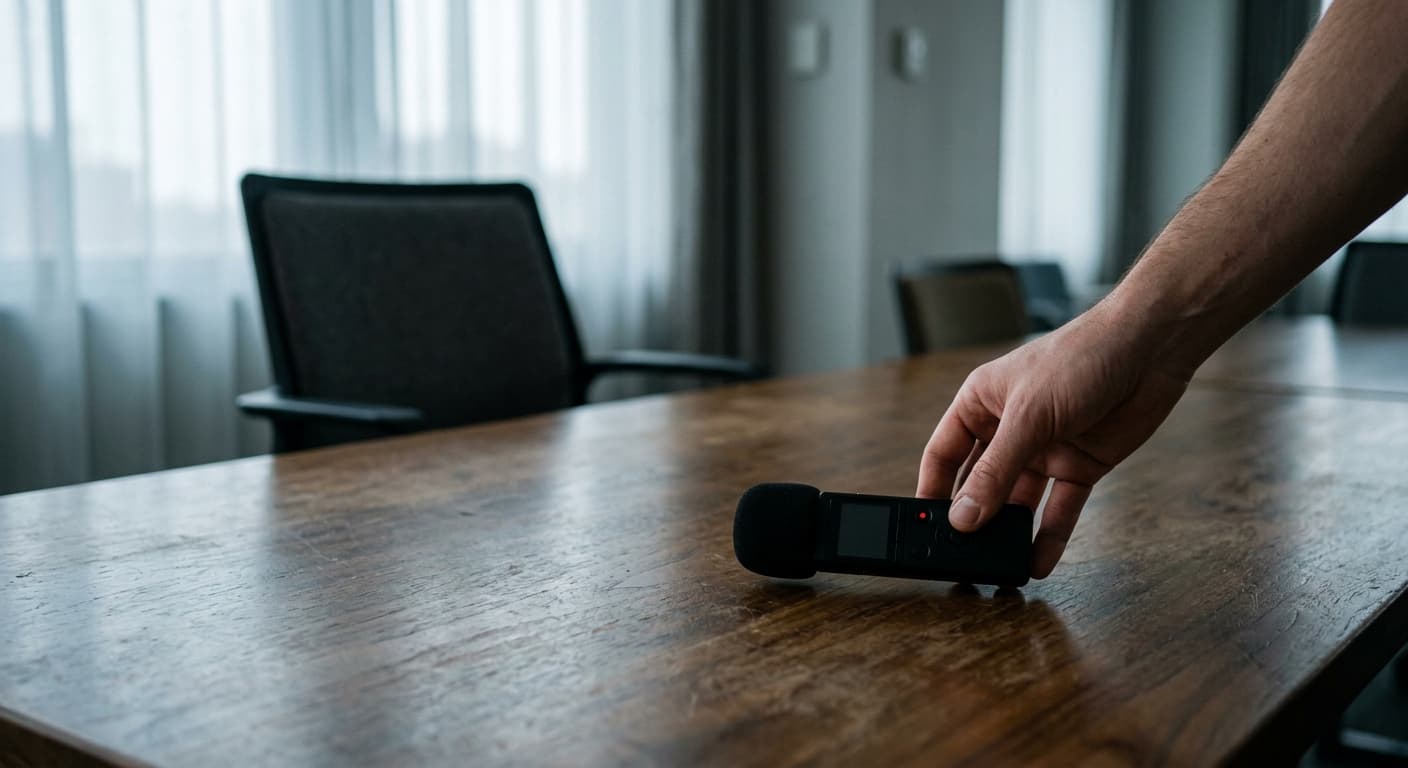
North Carolina is a one-party consent state under N.C. Gen. Stat. 15A-287, which means any participant in a conversation may record it without notifying the other parties. This rule applies to in-person exchanges, phone calls, and digital communications where the recording party is present.
North Carolina's one-party consent framework makes it legal for you to record any conversation you participate in, whether that conversation happens on the phone, in person, or through a digital platform. Under N.C. Gen. Stat. 15A-287, the state prohibits intercepting wire, oral, or electronic communications only when no party to the communication has given consent. Because your own participation counts as consent, you have broad rights to capture audio in North Carolina.
This guide covers the full scope of North Carolina's audio recording laws, including how they apply to in-person conversations, what devices you can use, how the reasonable expectation of privacy standard works, and what penalties apply when someone records illegally.
The Legal Framework for Audio Recording in North Carolina
N.C. Gen. Stat. 15A-287: The Core Prohibition
Chapter 15A, Article 16 of the North Carolina General Statutes governs electronic surveillance in the state. The centerpiece statute, N.C. Gen. Stat. 15A-287, establishes three categories of prohibited conduct:
- Interception: Willfully intercepting, endeavoring to intercept, or procuring another person to intercept any wire, oral, or electronic communication without one-party consent
- Disclosure: Willfully disclosing the contents of any illegally intercepted communication
- Use: Willfully using the contents of any illegally intercepted communication
Each of these violations constitutes a Class H felony under North Carolina law.
Key Definitions Under N.C. Gen. Stat. 15A-286
Understanding the law requires knowing how North Carolina defines its key terms. Under N.C. Gen. Stat. 15A-286:
- "Wire communication" means any aural transfer made through the use of facilities for the transmission of communications by wire, cable, or other similar connection
- "Oral communication" means any oral communication uttered by a person exhibiting an expectation that such communication is not subject to interception, under circumstances justifying such expectation
- "Electronic communication" means any transfer of signs, signals, writing, images, sounds, data, or intelligence transmitted by a wire, radio, electromagnetic, photoelectronic, or photo-optical system
- "Intercept" means the aural or other acquisition of the contents of any wire, oral, or electronic communication through the use of any electronic, mechanical, or other device
The definition of "oral communication" is particularly important because it builds in the reasonable expectation of privacy test. If a person is speaking in circumstances where they cannot reasonably expect privacy, their words may not qualify as a protected "oral communication" under the statute.
One-Party Consent: What It Means in Practice
Recording Conversations You Participate In
As a participant in any conversation in North Carolina, you can legally record the entire exchange without informing anyone else involved. This applies to:
- Face-to-face conversations in private or public settings
- Phone calls on any platform or device
- Video calls where audio is captured
- Group conversations and meetings where you are present
- Conversations with family members, coworkers, business associates, or strangers
Your participation in the conversation is the only consent required. You do not need to announce that you are recording, display a recording device, or obtain agreement from other participants.
Recording Conversations You Are Not Part Of
If you are not a party to a conversation, you need consent from at least one participant before you can legally record it. Without that consent, recording the conversation violates N.C. Gen. Stat. 15A-287 and constitutes a Class H felony.
Common scenarios where this becomes an issue include:
- Placing a recording device in a room and leaving before a conversation takes place
- Using a baby monitor or similar device to listen to and record other people's conversations
- Intercepting phone calls between two other people
- Using software to capture someone else's VoIP calls or voice messages
Third-Party Consent Recording
North Carolina law allows recording with the consent of at least one party, even if that consenting party is not the person doing the recording. For example, if Person A asks Person B to record a conversation between Person B and Person C, this is legal because Person B (a participant) consents to the recording. Person C does not need to know about or agree to the recording.
This third-party consent framework is often used in investigations, where law enforcement asks a cooperating witness to wear a recording device during a conversation with a suspect.
Reasonable Expectation of Privacy

How Courts Evaluate Privacy Expectations
The reasonable expectation of privacy standard plays a central role in North Carolina audio recording law, particularly for in-person conversations. The statute protects "oral communications" only when the speaker exhibits an expectation that the communication is not subject to interception, and that expectation is justified by the circumstances.
North Carolina courts evaluate several factors when determining whether a reasonable expectation of privacy exists:
- Location: Conversations in private homes, closed offices, and hotel rooms carry stronger privacy expectations than conversations in public parks or restaurants
- Volume of speech: Whispering or speaking quietly suggests an expectation of privacy; shouting does not
- Presence of others: Speaking in front of strangers or in a crowded area weakens any privacy claim
- Steps taken to ensure privacy: Closing doors, checking for eavesdroppers, or choosing a secluded location strengthens the expectation
- Nature of the relationship: Conversations between attorney and client, doctor and patient, or spouses may carry heightened privacy expectations based on the context
Public vs. Private Conversations
In public spaces where anyone could overhear a conversation, the speaker generally does not have a reasonable expectation of privacy. This means recording someone's audible words in a park, on a sidewalk, at a public event, or in a busy retail store may not violate the wiretapping statute, even if you are not a party to the conversation.
However, the analysis becomes more nuanced in semi-public spaces. A quiet conversation in a corner booth of a restaurant, conducted at low volume, might carry a reasonable expectation of privacy even though the restaurant is open to the public. The surrounding circumstances, not just the location, determine whether the expectation is justified.
Private Settings
In clearly private settings, such as someone's home, a private office, or a closed meeting room, the expectation of privacy is typically strong. Recording a conversation in these settings without being a party to it and without consent from at least one participant will generally violate the law.
Audio Recording Devices and Technology

Smartphones and Apps
Smartphones are the most commonly used audio recording devices. North Carolina law does not restrict the type of device you use to record. You can use your phone's built-in voice recorder app, a third-party recording app, or the call recording function to capture any conversation you participate in.
Popular recording apps like Voice Memos (iPhone), Samsung Voice Recorder (Android), Rev Voice Recorder, and Otter.ai are all legal to use in North Carolina, provided you are a party to the conversation being recorded.
Dedicated Voice Recorders
Standalone digital voice recorders remain popular for situations where using a phone might be impractical or conspicuous. Devices from manufacturers like Sony, Olympus, and Zoom are legal to carry and use in North Carolina for recording conversations you participate in.
AI Voice Recorders and Wearable Devices
Newer AI-powered recording devices like the Plaud NotePin and similar products that automatically record, transcribe, and summarize conversations are treated the same as traditional recorders under North Carolina law. The technology behind the recording does not change the legal analysis. If you are a party to the conversation, you can use any device to capture it.
Wearable recording devices such as smartwatches with recording capabilities, body-worn cameras, and smart glasses like Meta Ray-Bans also follow the same one-party consent rules for audio. However, smart glasses and similar devices that capture both audio and video raise additional concerns under North Carolina's voyeurism laws (N.C. Gen. Stat. 14-202), particularly in settings where people have a reasonable expectation of privacy.
Hidden Recording Devices
Placing a hidden recording device (such as a bug or a concealed microphone) is legal in North Carolina only if you are present and participating in the conversations being recorded. If you hide a device and leave the room, any recordings captured in your absence would be illegal because you are no longer a party to those conversations.
Audio Recording in Specific Contexts
Recording at Home
You can record conversations in your own home when you are a participant. This includes recording conversations with family members, visitors, roommates, and service providers. You cannot plant a recording device in your home to capture conversations between other household members when you are not present.
Recording in Public
Audio recording in public spaces in North Carolina is broadly permissible because speakers in public generally lack a reasonable expectation of privacy. You can record street performers, public speeches, protests, and other public events. However, deliberately targeting someone's private conversation using a directional microphone or similar amplification device could cross the line into illegal interception.
Recording Government Interactions
You can record your interactions with government employees, including employees at the DMV, Social Services offices, and other state agencies. Government employees performing their official duties in public-facing roles generally have a reduced expectation of privacy during those interactions.
North Carolina's Open Meetings Law (N.C. Gen. Stat. 143-318.10 et seq.) specifically guarantees the right to record government meetings that are required to be open to the public.
Penalties for Illegal Audio Recording
Criminal Penalties
Violating N.C. Gen. Stat. 15A-287 through illegal audio recording is a Class H felony. Under the state's structured sentencing guidelines, the minimum sentence ranges from 4 to 25 months (with a corresponding maximum term of up to 39 months) depending on the defendant's prior record level.
Knowingly and willfully disclosing information from a lawfully intercepted communication to hinder a criminal investigation is a more serious Class G felony.
Negligently divulging the existence or contents of an electronic surveillance order in a way likely to hinder an investigation is a Class 1 misdemeanor.
Civil Liability
Under N.C. Gen. Stat. 15A-296, any person whose communications were illegally intercepted can file a civil lawsuit seeking:
- Actual damages caused by the illegal recording
- Statutory minimum damages of $100 per day of violation or $1,000 (whichever is greater)
- Punitive damages for willful violations
- Reasonable attorney fees and costs of litigation
Exclusionary Rule
Evidence obtained through illegal recording is generally inadmissible in North Carolina courts. This means that even if an illegally recorded conversation contains valuable evidence, a court will likely exclude it from proceedings. The person who made the illegal recording could also face separate criminal prosecution.
Exceptions to the Recording Prohibition
Law Enforcement Exception
Law enforcement officers can intercept communications with proper authorization. Under N.C. Gen. Stat. 15A-290, a court may authorize electronic surveillance when there is probable cause to believe an individual is committing certain serious offenses, including drug trafficking; murder, kidnapping, hostage-taking, robbery, extortion, bribery, rape, or another sexual offense; felonies against minors; obstruction of a criminal investigation; witness or juror intimidation; assaults on government officers; or weapons-of-mass-destruction offenses.
Service Provider Exception
Operators of communication services can intercept communications in the normal course of their employment when the interception is a necessary incident to providing the service or protecting the provider's rights or property. This exception applies to telephone companies, internet service providers, and similar entities.
Consent of All Parties
While only one-party consent is required in North Carolina, obtaining consent from all parties eliminates any legal risk entirely. Many businesses and organizations choose to get explicit consent from everyone involved, particularly in situations that may be recorded for use in legal proceedings.
Audio Recording and Digital Communications
Text Messages and Emails
North Carolina's wiretapping statute covers "electronic communications," which includes emails, text messages, and other digital messages while they are in transit. However, once a message has been received and stored on a device, accessing it typically falls under computer trespass laws rather than wiretapping laws.
Forwarding or sharing text messages or emails that were sent to you is generally not considered "interception" because you received the communication as an intended recipient.
Voice Messages and Voicemail
Listening to and saving voice messages left for you is legal. However, accessing someone else's voicemail without authorization could violate both state wiretapping laws and federal laws under the Stored Communications Act (18 U.S.C. 2701).
North Carolina Recording Laws by Topic
Phone Call Recording | Audio Recording | Video Recording | Workplace Recording | Recording Police | Security Cameras | Recording in Public | Landlord-Tenant | Dashcam Laws | Schools | Medical Recording | Voyeurism & Hidden Cameras
Back to North Carolina Recording Laws
More North Carolina Recording Topics
More North Carolina Laws
Frequently Asked Questions
Can I record a conversation in North Carolina without the other person knowing?
Yes. North Carolina is a one-party consent state under N.C. Gen. Stat. 15A-287. As long as you are a participant in the conversation, you can record it without informing or getting permission from anyone else involved. This applies to in-person conversations, phone calls, and video calls.
Is it legal to use a hidden audio recorder in North Carolina?
You can use a hidden audio recorder to capture conversations you participate in. However, you cannot place a hidden recorder in a room and leave to capture conversations between other people. The recorder only captures legal audio when you are present and actively participating in the conversation.
Does North Carolina's recording law apply to public conversations?
The wiretapping statute protects oral communications only when the speaker has a reasonable expectation of privacy. In public spaces where conversations can be easily overheard, speakers generally lack that expectation. Recording audible public conversations is typically permissible even if you are not a participant.
Can I use an AI voice recorder like Plaud NotePin in North Carolina?
Yes. AI-powered recording devices are treated the same as any other recording tool under North Carolina law. If you are a party to the conversation, you can use an AI recorder to capture, transcribe, and summarize it. The technology does not change the one-party consent legal analysis.
What happens if I illegally record someone in North Carolina?
Illegal recording is a Class H felony under N.C. Gen. Stat. 15A-287, with a minimum sentence of 4 to 25 months in prison depending on your prior record level and a corresponding maximum term of up to 39 months. The victim can also sue you under N.C. Gen. Stat. 15A-296 for actual damages, statutory minimum damages of $100 per day or $1,000, punitive damages, and attorney fees.
Updates
Corrected the Class H felony sentencing description (the minimum-sentence range is 4 to 25 months across Prior Record Levels, with maximum terms up to 39 months, not a 4-to-39-month minimum range), and fixed the Law Enforcement Exception section, which linked to the wrong statute section and listed offense categories ('organized crime,' 'terrorism') that do not appear in N.C. Gen. Stat. 15A-290.
Independently fact-checked against the cited primary sources; governing law re-checked for recent changes
Governing law re-checked for recent changes
Corrected Class H felony sentence range: the minimum-sentence grid runs 4 to 25 months across Prior Record Levels I-VI under N.C. Gen. Stat. § 15A-1340.17(c), with corresponding maximum terms of up to 39 months under subsection (d). Fixed ncleg.net URLs to ncleg.gov.
Reviewed and approved by an editor
The Law Behind This Article
This article rests on the statutory provisions below, held in our own legal record and retrieved from the official source. Tap a section to read the operative text.
North Carolina General Statutes, Chapter 15A: Criminal Procedure Act.
§ 15A-287Interception and disclosure of wire, oral, or electronic communications prohibitedIn forcecited in 18 of our articles
(a) Except as otherwise specifically provided in this Article, a person is guilty of a Class H felony if, without the consent of at least one party to the communication, the person: (1) Willfully intercepts, endeavors to intercept, or procures any other person to intercept or endeavor to intercept, any wire, oral, or electronic communication. (2) Willfully uses, endeavors to use, or procures any other person to use or endeavor to use any electronic, mechanical, or other device to intercept any oral communication when: a. The device is affixed to, or otherwise transmits a signal through, a wire, cable, or other like connection used in wire communications; or b. The device transmits communications by radio, or interferes with the transmission of such communications.
Official text (excerpt) · last checked 2026-07-29 · Read the full text in our law library · Verify at ncleg.gov
Cited in 12 court opinions in our collectionLatest citing opinion in our collection: 2026
In the courts (editorial summary, independently checked):North Carolina courts apply Section 15A-287 to private recording. Kroh v. Kroh (2002) held it reaches one spouse's nonconsensual audio recording of the other in the family home, not video without sound, and adopted vicarious consent by a custodial parent. State v. McGriff (2002) held interception is not willful absent a bad purpose.
Opinions citing this section in our collection:
- State v. McGriff (Court of Appeals of North Carolina 2002, 151 N.C. App. 631)✓A neighbor's cordless phone picked up a call in which a girl said McGriff had tried to force oral sex on her, and she listened about an hour; the court held listening out of concern for a minor was not willful interception under Section 15A-287(a)(1), so the evidence came in.
- Wright v. TOWN OF ZEBULON (Court of Appeals of North Carolina 2010, 202 N.C. App. 540)✓A police chief hid a transmitter under a sergeant's patrol car seat to test whether he tipped off drug dealers; the court affirmed summary judgment on his Section 15A-287(a)(1) claim, finding the public safety purpose meant the interception was not willful.
- Kroh v. Kroh (Court of Appeals of North Carolina 2002, 152 N.C. App. 347)“…rs to intercept, . . . any . . . oral . . . communication.” G.S. § 15A-287(a)(l). An “oral communication” includes…”
Identified automatically from the court opinions citing this section — not a ranking of which case controls.
Also relied on in: North Carolina Smart Glasses Recording Laws 2026, North Carolina Video Recording Laws: Public, Private, and Voyeurism Rules, North Carolina Recording Laws (2026): One-Party Consent Rules
§ 15A-286DefinitionsIn forcecited in 3 of our articles
As used in this Article, unless the context requires otherwise: (1) "Aggrieved person" means a person who was a party to any intercepted wire, oral, or electronic communication or a person against whom the interception was directed. (2) "Attorney General" means the Attorney General of the State of North Carolina, unless otherwise specified. (3) "Aural transfer" means a transfer containing the human voice at any point between and including the point of origin and the point of reception. (4) "Chapter 119 of the United States Code" means Chapter 119 of Part I of Title 18, United States Code, being Public Law 90-351, the Omnibus Crime Control and Safe Streets Act of 1968, as amended by the Electronic Communications Privacy Act of 1986. (5) "Communications common carrier" shall have the same meaning which is given the term "common carrier" by section 153(h) of Title 47 of the United States Code. (6) "Contents" when used with respect to any wire, oral, or electronic communication means and includes any information concerning the substance, purport, or meaning of that communication.
Official text (excerpt) · last checked 2026-07-29 · Read the full text in our law library · Verify at ncleg.gov
Cited in 9 court opinions in our collectionLatest citing opinion in our collection: 2025
Opinions citing this section in our collection:
- Wright v. TOWN OF ZEBULON (Court of Appeals of North Carolina 2010, 202 N.C. App. 540)“…ts violated the North Carolina Electronic Surveillance Act, N.C. Gen. Stat. §§ 15A-286 to -298 (2009) (“NCESA”), by willfully…”
- Kroh v. Kroh (Court of Appeals of North Carolina 2002, 152 N.C. App. 347)“…llance Act, Art. 16 of Chapter 15A of the General Statutes (N.C. Gen. Stat. §§ 15A-286 et seq. (2001)), and (4) i…”
- State v. McGriff (Court of Appeals of North Carolina 2002, 151 N.C. App. 631)“…he use of any electronic, mechanical, or other device.” N.C.G.S. § 15A-286(13) (2001). The key to our analy…”
Identified automatically from the court opinions citing this section — not a ranking of which case controls.
Also relied on in: North Carolina Phone Call Recording Laws: What You Need to Know, North Carolina Surveillance Camera Laws (2026 Guide)
§ 15A-296Recovery of civil damages authorizedIn forcecited in 8 of our articles
(a) Any person whose wire, oral, or electronic communication is intercepted, disclosed, or used in violation of this Article, has a civil cause of action against any person who intercepts, discloses, uses, or procures any other person to intercept, disclose, or use such communications, and is entitled to recover from any other person: (1) Actual damages, but not less than liquidated damages, computed at the rate of one hundred dollars ($100.00) a day for each day of violation or one thousand dollars ($1,000), whichever is higher; (2) Punitive damages; and (3) A reasonable attorneys' fee and other litigation costs reasonably incurred. (b) Good faith reliance on a court order or on a representation made by the Attorney General or a district attorney is a complete defense to any civil or criminal action brought under this Article.
Official text (excerpt) · last checked 2026-07-29 · Read the full text in our law library · Verify at ncleg.gov
Cited in 4 court opinions in our collectionLatest citing opinion in our collection: 2026
Opinions citing this section in our collection:
- Kroh v. Kroh (Court of Appeals of North Carolina 2002, 152 N.C. App. 347)“…nce Act and awarded $1,000.00 in compensatory damages under G.S. § 15A-296. Following a bench trial on the remaini…”
- Riddick v. Gates Cnty. (Court of Appeals of North Carolina 2026)“…in the Board of Elections.” Plaintiff sues pursuant to N.C.G.S. § 15A-296, which creates a civil cause of action…”
- Wright v. TOWN OF ZEBULON (Court of Appeals of North Carolina 2010, 202 N.C. App. 540)“…damages, attorney’s fees, and associated litigation costs. N.C. Gen. Stat. § 15A-296(a) (2009); Kroh v. Kroh,…”
Identified automatically from the court opinions citing this section — not a ranking of which case controls.
Also relied on in: North Carolina Workplace Recording Laws: Employee and Employer Rights, North Carolina Ring Doorbell Laws: What You Need to Know in 2026
North Carolina General Statutes, Chapter 14: Criminal Law.
§ 14-202Secretly peeping into room occupied by another personIn forcecited in 12 of our articles
(a) Any person who shall peep secretly into any room occupied by another person shall be guilty of a Class 1 misdemeanor. (a1) Unless covered by another provision of law providing greater punishment, any person who secretly or surreptitiously peeps underneath or through the clothing being worn by another person, through the use of a mirror or other device, for the purpose of viewing the body of, or the undergarments worn by, that other person without their consent shall be guilty of a Class 1 misdemeanor. (b) The following definitions apply in this section: (1) Photographic image. - Any photograph or photographic reproduction, still or moving, or any videotape, motion picture, or live television transmission, or any digital image of any individual. (2) Private area of an individual. - The naked or undergarment clad genitals, pubic area, buttocks, or female breast of that individual. (3) Room. - Includes, but is not limited to, a bedroom, a rest room, a bathroom, a shower, a dressing room, a dressing stall, a cubicle, or other similar area designed to provide privacy. (4) Under circumstances in which that individual has a reasonable expectation of privacy.
Official text (excerpt) · last checked 2026-07-29 · Read the full text in our law library · Verify at ncleg.gov
Cited in 17 court opinions in our collectionLatest citing opinion in our collection: 2026
In the courts (editorial summary, independently checked):In Matter of Banks (1978) the North Carolina Supreme Court upheld G.S. 14-202 against vagueness and overbreadth challenges, reading secret peeping to require spying intended to invade the occupant's privacy. State v. Pell (2011) applied its sex offender registration provision and reversed an order unsupported by evidence.
Opinions citing this section in our collection:
- Matter of Banks (Supreme Court of North Carolina 1978, 295 N.C. 236)✓A trial judge held the secret peeping statute unconstitutional. The court reversed, construing the statute to reach only spying done with the wrongful purpose of invading the occupant's privacy, and held it was neither impermissibly vague nor overbroad on that reading.
- State v. Breathette (Court of Appeals of North Carolina 2010, 202 N.C. App. 697)“…any child of either sex under the age of 16 years. N.C. Gen. Stat. § 14-202 .l(a)(l)-(2). The statute is unambiguou…”
- State v. Pell (Court of Appeals of North Carolina 2011, 211 N.C. App. 376)✓A man pleaded guilty to eight counts of felony secret peeping and was ordered onto the sex-offender registry. The court held the danger-to-the-community standard in this section is not vague, but reversed the registration order because the risk evidence did not support it.
Identified automatically from the court opinions citing this section — not a ranking of which case controls.
Also relied on in: North Carolina Landlord-Tenant Recording Laws: Cameras and Consent, North Carolina School Recording Laws: Student, Parent, and Campus Rules, North Carolina Security Camera Laws: Home, Business, and HOA Rules
North Carolina General Statutes, Chapter 143: State Departments, Institutions, and Commissions
§ 143-318.10All official meetings of public bodies open to the publicIn force
(a) Except as provided in G.S. 143-318.11, 143-318.14A, and 143-318.18, each official meeting of a public body shall be open to the public, and any person is entitled to attend such a meeting. Remote meetings conducted in accordance with G.S. 166A-19.24 shall comply with this subsection even if all members of the public body are participating remotely. (b) As used in this Article, "public body" means any elected or appointed authority, board, commission, committee, council, or other body of the State, or of one or more counties, cities, school administrative units, constituent institutions of The University of North Carolina, or other political subdivisions or public corporations in the State that (i) is composed of two or more members and (ii) exercises or is authorized to exercise a legislative, policy-making, quasi-judicial, administrative, or advisory function. In addition, "public body" means the following: (1) The governing board of a "public hospital" as defined in G.S. 159-39. (2) The governing board of any nonprofit corporation to which a hospital facility has been sold or conveyed pursuant to G.S.
Official text (excerpt) · last checked 2026-07-29 · Read the full text in our law library · Verify at ncleg.gov
Cited in 31 court opinions in our collectionLatest citing opinion in our collection: 2024
Opinions citing this section in our collection:
- Maready v. City of Winston-Salem (Supreme Court of North Carolina 1996, 342 N.C. 708)“…ration was ready to “go public” with the information. N.C.G.S. § 143-318.10(a) provides that “each official meeting…”
- Boney Publishers, Inc. v. Burlington City Council (Court of Appeals of North Carolina 2002, 151 N.C. App. 651)“…ndants”), had violated North Carolina’s Open Meetings Law, N.C. Gen. Stat. § 143-318.10 et seq., and Public Recor…”
- DTH Publishing Corp. v. University of North Carolina at Chapel Hill (Court of Appeals of North Carolina 1998, 128 N.C. App. 534)“…asi-judicial, administrative, or advisory function. N.C. Gen. Stat. § 143-318.10 (1996). Defendants contend the Undergr…”
Identified automatically from the court opinions citing this section — not a ranking of which case controls.
United States Code Title 18
§ 2701Unlawful access to stored communicationsIn forcecited in 19 of our articles
Except as provided in subsection (c) of this section whoever— intentionally accesses without authorization a facility through which an electronic communication service is provided; or intentionally exceeds an authorization to access that facility; and thereby obtains, alters, or prevents authorized access to a wire or electronic communication while it is in electronic storage in such system shall be punished as provided in subsection (b) of this section. The punishment for an offense under subsection (a) of this section is— if the offense is committed for purposes of commercial advantage, malicious destruction or damage, or private commercial gain, or in furtherance of any criminal or tortious act in violation of the Constitution or laws of the United States or any State— a fine under this title or imprisonment for not more than 5 years, or both, in the case of a first offense under this subparagraph; and a fine under this title or imprisonment for not more than 10 years, or both, for any subsequent offense under this subparagraph; and in any other case— a fine under this title or imprisonment for not more than 1 year or both, in the case of a first offense under this paragraph;…
Official text (excerpt) · last checked 2026-07-28 · Read the full text in our law library · Verify at uscode.house.gov
Cited in 724 court opinions in our collectionLatest citing opinion in our collection: 2026
Opinions citing this section in our collection:
- United States v. Warshak (Court of Appeals for the Sixth Circuit 2010, 631 F.3d 266)“…ied in good faith on the Stored Communications Act (“SCA”), 18 U.S.C. §§ 2701 et seq., a statute that allows the gove…”
- Guest v. Leis (Court of Appeals for the Sixth Circuit 2001, 255 F.3d 325)“…7 *340 In their brief, plaintiffs mention in passing 18 U.S.C. § 2701 , which prohibits intentional unlawful…”
- City of Ontario v. Quon (Supreme Court of the United States 2010, 560 U.S. 746)“…Raising claims under Rev. Stat. §1979, 42 U. S. C. §1983; 18 U. S. C. §2701 et seq., popularly known as the Stored…”
Identified automatically from the court opinions citing this section — not a ranking of which case controls.
Also relied on in: Hawaii Audio Recording Laws: One-Party Consent Rules and Penalties, Idaho Audio Recording Laws: One-Party Consent Rules and Penalties (2026), Iowa Audio Recording Laws: One-Party Consent Rules and Penalties (2026)
Explore the law
This article also draws on these acts and chapters (opening at their first section): North Carolina General Statutes, Chapter 15A: Criminal Procedure Act. § 15A-101 (Definitions)
Related law for further reading — not part of this article’s citations.
Search our full record of US law — 2.1 million sections, every state + federal →
Sources and References
- N.C. Gen. Stat. Chapter 15A, Article 16 - Electronic Surveillance(ncleg.gov).gov
- N.C. Gen. Stat. 15A-287 - Interception and Disclosure Prohibited(ncleg.net).gov
- N.C. Gen. Stat. 15A-286 - Definitions for Electronic Surveillance(ncleg.gov).gov
- N.C. Gen. Stat. 15A-296 - Civil Remedies for Illegal Interception(ncleg.net).gov
- N.C. Gen. Stat. 14-202 - Secretly Peeping into Room(ncleg.net).gov
- NC Open Meetings Law - N.C. Gen. Stat. 143-318.10 et seq.(ncleg.net).gov
- NC Courts Structured Sentencing Punishment Grids(nccourts.gov).gov
- N.C. Gen. Stat. 15A-287 - Interception and Disclosure Prohibited(ncleg.gov).gov
- N.C. Gen. Stat. 15A-296 - Civil Remedies for Illegal Interception(ncleg.gov).gov
- N.C. Gen. Stat. 14-202 - Secretly Peeping into Room(ncleg.gov).gov
- NC Open Meetings Law - N.C. Gen. Stat. 143-318.10 et seq.(ncleg.gov).gov