
Massachusetts
Massachusetts Audio Recording Laws
Independently fact-checked against primary sources (last audited August 22, 2026). · Reviewed by the RecordingLaw editorial team. · Law checked current as of August 22, 2026. · 4 primary sources cited on this page. How we verify our legal content

Massachusetts bans secret audio recording under Mass. Gen. Laws ch. 272, Section 99. You may record any conversation as long as all parties know the recording is taking place. Secretly recording even a single conversation is a felony, punishable by up to 5 years in prison and a $10,000 fine.
Massachusetts has one of the strictest audio recording laws in the United States. Under Mass. Gen. Laws ch. 272, Section 99, secretly recording any oral or wire communication is a felony punishable by up to 5 years in state prison and a $10,000 fine. Unlike nearly every other state, Massachusetts offers no misdemeanor option for the core interception offense itself, which is always prosecuted as a felony. Related offenses, such as disclosing or possessing an illegally intercepted recording, carry a lesser house-of-correction penalty.
This guide covers what the Massachusetts audio recording law actually says, how it applies to in-person conversations and electronic communications, the penalties for violations, and the limited exceptions that exist.
Understanding the Massachusetts Audio Recording Statute
What Section 99 Prohibits
The Massachusetts wiretap statute, codified in Mass. Gen. Laws ch. 272, Section 99, makes it a crime to:
- Secretly intercept any wire or oral communication
- Attempt to secretly intercept communications
- Possess a device with the intent to secretly intercept communications
- Disclose the contents of any illegally intercepted communication
- Use the contents of any illegally intercepted communication
The statute defines "oral communication" as speech, not including radio broadcasts or other transmissions over public airwaves. "Wire communication" covers any aural transfer made through wire, cable, or similar connection. Together, these definitions encompass virtually every form of spoken communication.
The "Secrecy" Standard
Massachusetts law does not use the phrase "two-party consent." Instead, it prohibits "secret" recording. This distinction has real legal consequences.
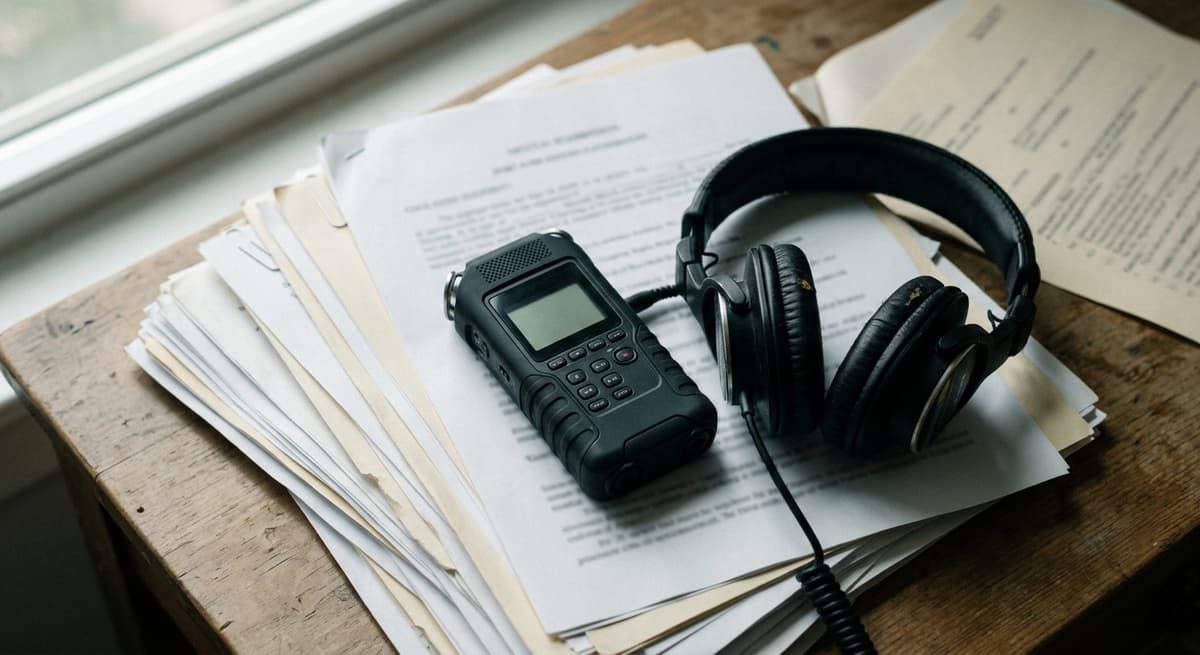
If all parties to a conversation are aware that recording is happening, the recording is legal. The other parties do not need to agree or give affirmative consent. They simply need to know about it. If you place a voice recorder on a table in plain view during a meeting and announce that you are recording, the statute is satisfied even if someone at the table protests.
Conversely, if you hide a recording device in your pocket, bag, or clothing and capture a conversation without anyone knowing, you have committed a felony. Your intentions do not matter. Recording someone secretly "for your own protection" or "to document harassment" is still a criminal act under Massachusetts law.
Key Definitions in the Statute
Understanding the statute requires knowing its specific terms:
- Interception (Section 99 B.4): Secretly hearing, secretly recording, or aiding another person to secretly hear or record any wire or oral communication
- Wire communication (Section 99 B.1): Any aural transfer through wire, cable, or similar connection furnished by a common carrier
- Oral communication (Section 99 B.2): Speech, except such speech as is transmitted over the public air waves by radio or other similar device. Courts have read a reasonable-expectation-of-privacy gloss into this element, but that gloss comes from case law, not the statutory text itself
- Intercepting device (Section 99 B.3): Any device capable of intercepting wire or oral communications, not including hearing aids or telephone instruments
Recording In-Person Conversations
When Audio Recording Is Legal
You can legally make an audio recording of an in-person conversation in Massachusetts when:
- All participants know the recording is taking place
- Recording equipment is visible and obviously in use, such as a recorder placed on a table
- You are at a public event where recording is clearly occurring, such as a press conference, rally, or public hearing
- You are recording police officers performing official duties in public (protected by the First Amendment)
- A court order authorizes the recording for law enforcement purposes
When Audio Recording Is Illegal
Audio recording crosses into felony territory when:
- The recording is secret or hidden from any party to the conversation
- You use a concealed device such as a hidden phone, body recorder, or wearable device without informing others
- You record a conversation between other people without their knowledge, even if you are physically present
- You possess recording equipment with the specific intent to use it for secret recording
Practical Scenarios
Legal: You tell your landlord during an in-person meeting, "I am going to record this conversation." You place your phone on the table with the recording app visible. Even if the landlord says "I would rather you did not record," the recording is legal because the landlord knows about it.
Illegal: You keep your phone in your jacket pocket with a voice memo app running during the same meeting. Even though the conversation is identical, the hidden nature of the recording makes it a felony.
Legal: You attend a town hall meeting where cameras and microphones are visibly present. Everyone in attendance can see the recording equipment.
Illegal: You place a small audio recorder under a conference table before a meeting to capture what colleagues say when you leave the room.
Wearable Devices and AI Audio Recorders

Smart Devices Under Massachusetts Law
Wearable recording devices present particular challenges under Massachusetts law because they can record continuously without visible indicators. The following devices all fall under Section 99 when they capture audio:
- Smartwatches running voice memo or recording applications
- AI wearable pins (such as Humane AI Pin or similar devices) that transcribe conversations
- Smart glasses with built-in microphones (such as Ray-Ban Meta glasses)
- Body cameras worn by private citizens or employees
- Fitness trackers with microphone capabilities
- Smart earbuds with recording or transcription features
Why Wearables Are Especially Risky
The fundamental problem with wearable audio recorders in Massachusetts is that other people cannot tell when the device is recording. A smartwatch on your wrist looks the same whether it is tracking your steps or recording every word spoken around you. Smart glasses look like regular eyewear. An AI pin looks like an accessory.
Under Massachusetts law, the person wearing the device must affirmatively inform every party in the conversation that audio recording is taking place. Simply wearing the device in plain sight does not satisfy the statute because the recording function is not apparent to others.
Smart Speakers and Home Assistants
Devices like Amazon Echo, Google Home, and Apple HomePod listen continuously for wake words. While passive listening for a wake word is generally not considered "interception" under the statute, several considerations apply:
- If a smart speaker records a conversation in your home where guests are present and the guests do not know about the recording capability, the statute could be implicated
- Always-on recording features (as opposed to wake-word activation) present greater legal risk
- The safest practice is to inform guests that voice-activated devices are present and capable of capturing audio
Criminal Penalties for Illegal Audio Recording

Felony Charges for Every Violation
Massachusetts imposes felony-level penalties for secretly intercepting a communication, with no reduced charge available for that offense. Disclosure, use, and possession-with-intent are lesser, house-of-correction-only offenses:
| Offense | Maximum Prison Term | Maximum Fine |
|---|---|---|
| Secret interception of oral communication | 5 years (state prison) | $10,000 |
| Secret interception of wire communication | 5 years (state prison) | $10,000 |
| Possession with intent to secretly intercept | 2 years (house of correction) | $5,000 |
| Disclosure of illegally intercepted communication | 2 years (house of correction) | $5,000 |
| Use of illegally intercepted communication | 2 years (house of correction) | $5,000 |
A first-time offender with no prior criminal record faces the same felony classification as a repeat offender. The statute draws no distinction based on the offender's history or the severity of the violation.
Comparison With Other States
To understand how extreme Massachusetts penalties are, consider this comparison:
| State | First Offense Classification | Maximum Penalty |
|---|---|---|
| Massachusetts | Felony | 5 years prison, $10,000 fine |
| California | Misdemeanor (first offense) | 1 year jail, $2,500 fine |
| Florida | Felony (third degree) | 5 years prison, $5,000 fine |
| Pennsylvania | Felony (third degree) | 7 years prison |
| Maryland | Felony | 5 years prison, $10,000 fine |
Massachusetts is unusual in that the core secret-interception offense is automatically a felony with no misdemeanor alternative regardless of circumstances, though related offenses like disclosure and possession-with-intent carry a lesser house-of-correction penalty.
Civil Liability
In addition to criminal penalties, victims of illegal audio recording can pursue civil damages under Section 99 Q:
- Liquidated damages of $100 per day of violation, or $1,000 minimum
- Actual damages if they exceed the liquidated amount
- Reasonable attorney fees and court costs
- Punitive damages for willful violations
The per-day calculation can produce large damage awards for ongoing violations. An employer who secretly records audio in a workplace for 90 days, for example, could face $9,000 in liquidated damages per affected employee before actual damages and attorney fees are added.
Exceptions to the Audio Recording Law
Lawful Exceptions
The following situations are exceptions to the general prohibition on secret audio recording:
- Law enforcement with a court order: Police may secretly record when authorized by a warrant issued for investigation of designated offenses under Section 99 F through Section 99 R
- Recording police in public: Protected by the First Amendment under Project Veritas Action Fund v. Rollins, 982 F.3d 813 (1st Cir. 2020)
- Non-secret recording: When all parties know about the recording, Section 99 is not triggered
- Communication service providers: Telephone companies and similar carriers in the ordinary course of business
- Intercom systems: Employers may use office intercom systems in the ordinary course of business
What Is NOT an Exception
These common beliefs are wrong under Massachusetts law:
- Being a participant does not excuse secret recording. Even if you are part of the conversation, secretly recording it is a felony.
- Public places do not create an audio recording exception. Being in a park, restaurant, or sidewalk does not allow you to secretly record conversations.
- Good intentions are not a defense. Recording someone secretly to document abuse, threats, or fraud is still a felony. Senate Bill S.1215, pending in the legislature, would create a narrow defense for domestic violence victims, but it has not yet passed.
- Journalistic purpose is not an exception. Media professionals are subject to the same rules as everyone else, though recording police in public is protected.
Audio Recording and Evidence
Admissibility in Court
Legally recorded audio is admissible in Massachusetts courts when properly authenticated. To introduce an audio recording as evidence:
- Establish that all parties knew about the recording at the time
- Provide testimony identifying the voices on the recording
- Show the recording is genuine and has not been altered
- Demonstrate the recording is relevant to the case
- Maintain chain of custody documentation
The Criminal vs. Civil Distinction
Illegally obtained audio recordings are inadmissible in criminal proceedings under the explicit terms of Section 99. Prosecutors cannot use wiretap evidence gathered without proper authorization.
However, a 2025 Massachusetts Superior Court ruling in Simpson v. Boston Public Health Commission held that illegally obtained recordings may be admissible in civil cases. The court found that the statute's exclusionary rule applies only to criminal proceedings. This means a secretly recorded conversation could potentially be used in a civil lawsuit, even though making the recording was a felony.
Recent Legal Developments
Commonwealth v. Du (2024)
In Commonwealth v. Du, 495 Mass. 103 (2024), the Massachusetts Supreme Judicial Court ruled that cell phone video and audio recorded during an undercover drug investigation without a warrant violated Section 99. The court ordered suppression of both the video and audio components, reinforcing that even law enforcement must comply with the wiretap statute's warrant requirements.
Vita v. New England Baptist Hospital (2024)
The Supreme Judicial Court held that website tracking technologies like Google Analytics and Meta Pixel do not violate the wiretap statute. The court reasoned that Section 99 was designed to protect person-to-person communications and does not extend to automated data collection through web browsing.
Senate Bill S.1215 (2025-2026)
Senate Bill S.1215 would create a defense for individuals who secretly record threats or harassment, particularly in domestic violence situations. The bill remains pending before the Joint Committee on the Judiciary as of early 2026.
Massachusetts Recording Laws by Topic
Phone Call Recording | Audio Recording | Video Recording | Workplace Recording | Recording Police | Security Cameras | Recording in Public | Landlord-Tenant | Dashcam Laws | Schools | Medical Recording | Voyeurism & Hidden Cameras
Back to Massachusetts Recording Laws
More Massachusetts Recording Topics
More Massachusetts Laws
Frequently Asked Questions
Is it legal to audio record a conversation in Massachusetts?
Yes, but only if all parties know the recording is happening. Massachusetts law under Mass. Gen. Laws ch. 272, Section 99 prohibits secret audio recording. You must inform everyone present that you are recording. Secretly recording any conversation is a felony carrying up to 5 years in prison and a $10,000 fine.
Can I use a wearable device to record conversations in Massachusetts?
Only if you tell everyone present that the device is recording audio. Smartwatches, AI pins, smart glasses, and similar wearable devices fall under the same wiretap statute. Using any of these to secretly capture a conversation is a felony. Simply wearing the device in plain sight does not satisfy the law because the recording function is not obvious to others.
What is the penalty for secretly recording someone in Massachusetts?
Secret audio recording is a felony punishable by up to 5 years in state prison and a $10,000 fine. Massachusetts has no misdemeanor option for secretly recording the conversation itself, though disclosure and possession-with-intent are lesser, misdemeanor-level offenses. You also face civil liability of $100 per day of violation or $1,000 minimum, plus attorney fees.
Is Massachusetts the strictest state for audio recording laws?
Yes, for the core interception offense. Massachusetts is the only state where secretly recording a conversation is automatically a felony with no misdemeanor alternative, while most other two-party consent states like California and Florida classify first offenses as misdemeanors. Related Massachusetts offenses, such as disclosure and possession-with-intent, carry a lesser house-of-correction penalty rather than felony state-prison time.
Can I record someone if I am in a public place in Massachusetts?
Being in a public place does not create an exception for secret audio recording in Massachusetts. You can record openly if all parties know about it, and you can record police performing duties in public under First Amendment protections. But secretly recording a private conversation in a public location is still a felony.
Updates
Corrected the statutory text quoted for 'oral communication,' fixed the possession-with-intent and disclosure/use penalty figures, scoped the 'no misdemeanor option' claim to the core secret-interception offense, and corrected Florida's and Maryland's felony classifications in the state-comparison table.
Independently fact-checked against the cited primary sources; governing law re-checked for recent changes
Reviewed and approved by an editor
The Law Behind This Article
This article rests on the statutory provisions below, held in our own legal record and retrieved from the official source. Tap a section to read the operative text.
Massachusetts General Laws, Chapter 272
§ 99Interception of wire and oral communicationsIn forcecited in 19 of our articles
Section 99. Interception of wire and oral communications.— A. Preamble. The general court finds that organized crime exists within the commonwealth and that the increasing activities of organized crime constitute a grave danger to the public welfare and safety. Organized crime, as it exists in the commonwealth today, consists of a continuing conspiracy among highly organized and disciplined groups to engage in supplying illegal goods and services. In supplying these goods and services organized crime commits unlawful acts and employs brutal and violent tactics. Organized crime is infiltrating legitimate business activities and depriving honest businessmen of the right to make a living. The general court further finds that because organized crime carries on its activities through layers of insulation and behind a wall of secrecy, government has been unsuccessful in curtailing and eliminating it. Normal investigative procedures are not effective in the investigation of illegal acts committed by organized crime.
Official text (excerpt) · last checked 2026-08-31 · Read the full text in our law library · Verify at malegislature.gov
Cited in 271 court opinions in our collectionLatest citing opinion in our collection: 2026
In the courts (editorial summary, independently checked):Commonwealth v. Blood (1987) read Section 99 as generally proscribing secret recording of oral communications without all parties' consent, and suppressed under art. 14 a warrantless police recording made with one party's consent. Commonwealth v. Vitello (1975) held Section 99 substantially complies with federal Title III.
Opinions citing this section in our collection:
- Commonwealth v. Vitello (Massachusetts Supreme Judicial Court 1975, 367 Mass. 224)✓In a gaming prosecution built on wiretapped phone calls, the SJC gave chapter 272 section 99 its first full review and held the state wiretap statute substantially complies with federal Title III and that the warrants issued under it met both standards.
- Commonwealth v. Blood (Massachusetts Supreme Judicial Court 1987, 400 Mass. 61)✓Police wired an informant who recorded conversations in private homes about a planned break-in; the SJC held the recordings fell within section 99's one-party-consent exception but that article 14 nonetheless required a warrant, and reversed the convictions.
- Commonwealth v. D'Amour (Massachusetts Supreme Judicial Court 1999, 428 Mass. 725)✓The SJC upheld a section 99 wiretap of a widow suspected of arranging her husband's murder for insurance money, holding the district attorney's written designation of an assistant satisfied Vitello and that probable cause supported the organized crime connection.
Identified automatically from the court opinions citing this section — not a ranking of which case controls.
Also relied on in: Massachusetts Recording Laws (2026): Two-Party Consent Rules, Massachusetts Landlord-Tenant Recording Laws, Massachusetts Nursing Home Camera Laws: All-Party Consent Risks
Search our full record of US law — 2.1 million sections, every state + federal →
Sources and References
- Mass. Gen. Laws ch. 272, Section 99 - Wiretapping Statute(malegislature.gov).gov
- Project Veritas Action Fund v. Rollins, 982 F.3d 813 (1st Cir. 2020)(law.justia.com)
- Senate Bill S.1215 - Defense for Recording Threats (194th General Court)(malegislature.gov).gov
- Massachusetts Jury Instructions: Wiretapping (February 2024)(mass.gov).gov
- Massachusetts Law About Employee Privacy(mass.gov).gov