
Illinois
Illinois Audio Recording Laws: All-Party Consent Rules and Penalties (2026)
Independently fact-checked against primary sources (last audited August 22, 2026). · Reviewed by the RecordingLaw editorial team. · Law checked current as of August 22, 2026. · 7 primary sources cited on this page. How we verify our legal content
Illinois requires all-party consent to audio record any private conversation under 720 ILCS 5/14-2. Every participant must agree before recording takes place. A first-offense violation is a Class 4 felony carrying one to three years in prison and fines up to $25,000; a subsequent offense is a Class 3 felony carrying two to five years. The law applies to smartphones, AI transcription tools, and all other recording devices.
Illinois has some of the most consequential audio recording laws in the United States. As an all-party consent state, Illinois requires every participant in a private conversation to agree before any audio recording takes place. The primary statute governing audio recording is 720 ILCS 5/14-2, which falls within Article 14 of the Illinois Criminal Code of 2012.
Understanding these rules is critical for individuals, businesses, journalists, and anyone who uses recording devices in Illinois. Violations carry felony-level criminal penalties and open the door to civil lawsuits for damages.
What Is 720 ILCS 5/14-2?
The Illinois eavesdropping statute, 720 ILCS 5/14-2, makes it illegal to knowingly and intentionally use an eavesdropping device to record all or any part of a private conversation to which you are not a party, or to record a private conversation to which you are a party without the consent of all other parties. The law also prohibits intercepting, retaining, or transcribing private electronic communications without authorization.
The statute applies to any audio recording device, including smartphones, dedicated voice recorders, AI-powered transcription tools, and wearable recording devices. The form factor of the device does not change the legal analysis.
What Makes a Conversation "Private"?
The definition of a "private conversation" is the threshold question for every audio recording scenario in Illinois. Under 720 ILCS 5/14-1, a conversation is private when:
- At least one party intended the conversation to remain private
- The circumstances reasonably justified that expectation of privacy
This definition was significantly clarified after the Illinois Supreme Court struck down the previous, broader eavesdropping statute in People v. Clark (2014). The old law had criminalized recording any conversation without consent, even conversations in public spaces with no privacy interest. The Court held that this overbroad approach violated the First Amendment.
Governor Pat Quinn signed the replacement statute (Senate Bill 1342, Public Act 098-1142) in December 2014. The new law narrowed the scope to protect only private conversations while keeping the all-party consent requirement intact.
How Courts Evaluate Privacy Expectations
Illinois courts look at the totality of the circumstances when determining whether a conversation was private. Factors include:
- The physical location (closed office vs. open sidewalk)
- The volume and manner of speaking (whispered vs. shouted)
- Whether third parties could reasonably overhear
- Whether the parties took steps to ensure privacy (closing doors, moving to a secluded area)
- The nature of the relationship between the parties
A conversation between two coworkers in a closed conference room carries a strong expectation of privacy. The same conversation held at normal volume in a busy public park does not.
Criminal Penalties for Illegal Audio Recording
Violating the Illinois eavesdropping statute carries serious criminal consequences. Under 720 ILCS 5/14-4, penalties escalate based on the offense history and the identity of the person recorded.
Penalty Structure
| Offense | Classification | Prison Sentence | Maximum Fine |
|---|---|---|---|
| Basic eavesdropping offense (first offense) | Class 4 Felony | 1 to 3 years | $25,000 |
| Basic eavesdropping offense (subsequent offense) | Class 3 Felony | 2 to 5 years | $25,000 |
| Eavesdropping on law enforcement (first offense) | Class 3 Felony | 2 to 5 years | $25,000 |
| Eavesdropping on law enforcement (subsequent) | Class 2 Felony | 3 to 7 years | $25,000 |
| Corporate defendant | Any applicable class | Same prison terms | up to $50,000 |
Corporate defendants face fines up to $50,000. Courts may also impose probation or conditional discharge as alternatives to imprisonment in some cases.
What Qualifies as an "Eavesdropping Device"?
The statute defines an eavesdropping device broadly under 720 ILCS 5/14-1. It includes any device capable of being used to hear or record oral conversations, whether the conversation is conducted in person, by telephone, or by any other means. This encompasses:
- Smartphones and tablets
- Dedicated voice recorders (Plaud, Omi, and similar devices)
- Computers with microphones
- Smart speakers and home assistants
- Wearable devices with microphones (smart glasses, smartwatches)
- AI-powered meeting transcription tools
The statute does not distinguish between analog and digital recording methods. Any technology that captures audio of a private conversation triggers the consent requirement.
Civil Remedies for Illegal Audio Recording
Beyond criminal prosecution, Illinois provides civil remedies for victims of illegal audio recording under 720 ILCS 5/14-6. Any party to an illegally recorded conversation may file a civil lawsuit seeking:
- Injunctive relief to stop ongoing eavesdropping
- Actual damages for harm suffered
- Punitive damages as the court or jury determines appropriate
- Landlord and carrier liability against any landlord, building operator, or common carrier who aided or knowingly permitted the eavesdropping
These civil remedies exist independently of criminal prosecution. A victim can pursue both a criminal complaint and a civil damages action for the same illegal recording.
Exceptions to the All-Party Consent Requirement
Illinois law carves out several important exceptions under 720 ILCS 5/14-3 where audio recording without full consent is permitted.
The Fear of Crime Exception
The most commonly invoked exception is the "fear of crime" provision under 720 ILCS 5/14-3(i). This allows a person who is a party to a conversation to record it without consent from all other parties when:
- The person has a reasonable suspicion that another party is committing, is about to commit, or has committed a criminal offense against them or a member of their immediate household
- There is reason to believe that evidence of the criminal offense may be obtained through the recording
- The person making the recording is not a law enforcement officer or agent of law enforcement
This exception requires both a subjective belief and an objective reasonableness standard. Courts have upheld recordings made under this exception in cases involving threats, harassment, stalking, and domestic violence.
Law Enforcement Authorization
Law enforcement officers may record conversations with proper authorization under Articles 108A and 108B of the Illinois Code of Criminal Procedure. This covers court-authorized wiretaps, consensual overhears, and recordings made during lawful investigations.
Public Conversations
Conversations where no party has a reasonable expectation of privacy do not trigger the eavesdropping statute at all. Public speeches, statements at open government meetings, loud arguments on sidewalks, and other communications in settings where others can freely overhear are not protected.
Recording Public Officials
Under the 2014 statutory reform, recording police officers, judges, prosecutors, and other government officials performing their public duties is explicitly legal. This exception applies when the official is performing public duties, you are in a place where you have a right to be, and you do not interfere with their duties.
Emergency Communications
Recordings of 911 calls and other emergency communications are exempt from the consent requirement.
Audio Recording Across State Lines

When an audio recording involves parties in different states, Illinois courts apply the stricter consent requirement. If you are in Illinois recording a call with someone in a one-party consent state, Illinois's all-party consent law still governs your conduct. If the other party is in a state with stricter rules, you should comply with both states' requirements.
The safest approach for interstate calls is to obtain consent from all parties regardless of their location. This eliminates any ambiguity about which state's law applies.
Federal Law Comparison
Federal wiretap law under 18 U.S.C. Section 2511 follows a one-party consent model. Illinois's all-party consent requirement is stricter than the federal baseline. Federal law sets a floor for privacy protections, not a ceiling, so Illinois is free to impose greater restrictions. A recording that is legal under federal law can still be a felony under Illinois law.
Business Audio Recording Requirements
Illinois businesses that record phone calls, meetings, or customer interactions must comply with the all-party consent requirement.
Proper Consent Methods
Businesses can satisfy the consent requirement through:
- Automated announcements: Playing a pre-recorded message at the start of calls stating the call will be recorded. Continued participation after the announcement is generally treated as implied consent.
- Verbal disclosure: Having employees verbally inform all parties that recording is taking place and obtaining agreement.
- Written consent: Obtaining advance written agreement through contracts, employment agreements, or terms of service.
Call Center Compliance
Illinois-based call centers and businesses receiving calls from Illinois residents should:
- Provide clear notification at the start of every recorded call
- Give callers the option to decline recording
- Train employees on proper disclosure protocols
- Maintain written policies documenting recording practices
- Retain consent records for potential legal challenges
AI Transcription in Business Settings
Businesses using AI-powered call analytics, automated transcription services, or AI customer service tools face heightened compliance obligations in Illinois. These tools constitute eavesdropping devices under the statute when they capture audio of private conversations. The all-party consent requirement applies to AI tools just as it applies to traditional recording equipment.
In 2025, federal courts in Illinois began addressing lawsuits alleging that companies using AI to analyze customer calls without consent violated both federal wiretap law and the Illinois eavesdropping statute. The safest practice is to disclose AI transcription at the start of any recorded interaction and obtain explicit consent from all parties.
AI Voice Recorders and Illinois Law
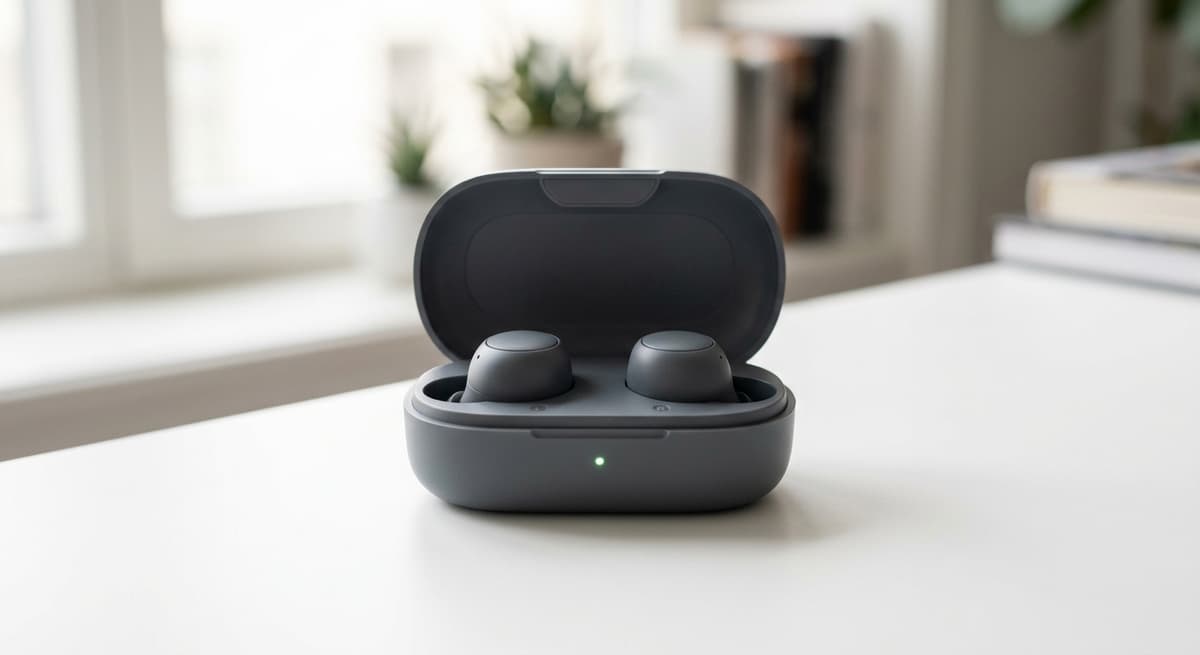
The proliferation of AI voice recorders like Plaud and Omi has created new compliance challenges under the Illinois eavesdropping statute. These devices continuously capture and transcribe conversations, often running in the background without obvious visual indicators.
Legal Risks
Using an AI voice recorder to capture a private conversation in Illinois without consent from all parties is a Class 4 felony for a first offense (Class 3 for a subsequent offense). The device's small size or discreet design does not create any exception to the consent requirement. Key risk factors include:
- Continuous recording mode: Devices that record all ambient audio may capture private conversations the user did not intend to record
- Automatic transcription: AI processing of recorded audio does not change the legal analysis, as the initial capture triggers the statute
- Cloud storage: Uploading recorded private conversations to third-party servers may create additional liability
Voiceprints and BIPA
AI voice recorders that create voiceprints or other biometric identifiers from recorded audio may also trigger the Biometric Information Privacy Act (740 ILCS 14). BIPA requires informed written consent before collecting biometric identifiers and provides statutory damages of $1,000 per negligent violation and $5,000 per intentional or reckless violation. The combination of eavesdropping law and BIPA creates dual liability exposure that is unique to Illinois.
Using Audio Recordings as Evidence
Audio recordings made in compliance with Illinois law are generally admissible as evidence in court proceedings. Recordings made in violation of the eavesdropping statute are typically inadmissible.
Admissibility Requirements
To use an audio recording as evidence in an Illinois court, you must demonstrate:
- All-party consent was obtained, or a statutory exemption applies
- The recording is authentic and has not been altered
- A proper chain of custody has been maintained
- The recording is relevant to the matter at hand
Recordings Under the Fear of Crime Exception
Recordings made under the fear of crime exception in 720 ILCS 5/14-3(i) are admissible when the requirements of the exception are satisfied. The recording party must be able to demonstrate their reasonable suspicion of criminal activity at the time the recording was made.
Family Law and Domestic Proceedings
Audio recordings frequently arise in Illinois family law cases involving custody disputes, domestic violence allegations, and divorce proceedings. Courts apply the same consent and admissibility rules to these recordings. The fear of crime exception is often relevant in domestic violence contexts, where a victim may record threatening behavior to preserve evidence.
People v. Clark and the 2014 Reform
The 2014 reform of the Illinois eavesdropping statute was one of the most significant changes to state recording law in recent decades. Understanding this history is essential for applying the current statute correctly.
The Old Law
Before 2014, the Illinois eavesdropping statute criminalized recording any conversation without the consent of all parties, with no requirement that the conversation be private. This meant that recording a public speech, a street protest, or a police officer making an arrest could be prosecuted as a felony.
People v. Clark (2014)
The Illinois Supreme Court struck down the old statute in People v. Clark, holding that it was unconstitutionally overbroad. The Court found that the law swept too broadly by criminalizing the recording of conversations with no privacy interest. The First Amendment protects the right to gather information about matters of public concern, and a blanket prohibition on recording violated that right.
The Current Statute
The replacement statute, enacted through Senate Bill 1342 (Public Act 098-1142) in December 2014, addressed the constitutional concerns by:
- Limiting the eavesdropping offense to private conversations where parties have a reasonable expectation of privacy
- Explicitly legalizing the recording of public officials performing public duties
- Exempting public conversations from the consent requirement
- Maintaining the all-party consent requirement for genuinely private communications
This reform brought Illinois law into line with First Amendment requirements while preserving robust privacy protections for private conversations.
Practical Guidelines for Legal Audio Recording
When You Can Record Without Consent
- Public conversations where no party has a reasonable expectation of privacy
- Police officers and government officials performing public duties
- Open government meetings covered by the Illinois Open Meetings Act (5 ILCS 120)
- When you reasonably suspect the other party is committing a crime against you (fear of crime exception)
- Emergency 911 communications
When You Must Get Consent
- Private in-person conversations in homes, offices, or secluded locations
- Phone calls (generally considered private)
- Video calls and virtual meetings with audio
- Any setting where parties have taken steps to ensure privacy
Best Practices
- Always announce that you are recording at the start of any conversation you wish to capture
- Get verbal acknowledgment from all participants
- If anyone objects, stop recording immediately
- Store recordings securely and limit access
- Consult an Illinois attorney before recording in ambiguous situations
More Illinois Recording Laws
Audio Recording | Video Recording | Voyeurism & Hidden Cameras | Workplace Recording | Recording Police | Phone Call Recording | Security Cameras | Recording in Public | Landlord-Tenant | Dashcam Laws | Schools | Medical Recording
Back to Illinois Recording Laws
More Illinois Recording Topics
More Illinois Laws
Frequently Asked Questions
Is Illinois a one-party consent state for audio recording?
No. Illinois is an all-party consent state. Under 720 ILCS 5/14-2, you must get consent from every party to a private conversation before recording it. The 2014 reform following People v. Clark narrowed the scope to private conversations only, but the all-party consent requirement remains in effect.
What are the penalties for illegal audio recording in Illinois?
A first offense is a Class 4 felony carrying one to three years in prison and up to $25,000 in fines; a subsequent offense is a Class 3 felony (two to five years). Recording law enforcement without authorization carries Class 3 felony penalties (two to five years) for a first offense and Class 2 felony penalties (three to seven years) for a subsequent offense.
Can I use an AI voice recorder in Illinois without telling others?
No. AI voice recorders like Plaud and Omi are eavesdropping devices under Illinois law. Using them to record a private conversation without consent from all parties is a Class 4 felony for a first offense (Class 3 for a subsequent offense). If the device creates voiceprints or biometric identifiers, it may also trigger liability under BIPA (740 ILCS 14) with statutory damages of $1,000 to $5,000 per violation.
What is the fear of crime exception for audio recording in Illinois?
Under 720 ILCS 5/14-3(i), you may record a private conversation without consent if you reasonably suspect another party is committing, about to commit, or has committed a crime against you or your immediate household, and you believe the recording will capture evidence of that crime. You cannot be a law enforcement officer to use this exception.
Can a business record phone calls in Illinois?
Yes, but only with consent from all parties. Businesses typically satisfy this requirement through automated announcements at the start of calls, verbal disclosure by employees, or advance written consent. Continued participation after a clear recording notification is generally treated as implied consent by Illinois courts.
Updates
Corrected the basic eavesdropping penalty, which the page stated as a flat Class 2 felony in six places: it is actually a Class 4 felony for a first offense (1 to 3 years) and Class 3 felony for a subsequent offense (2 to 5 years) under 720 ILCS 5/14-4. Also fixed the fear-of-crime exception citation from the unrelated 720 ILCS 5/14-3(h) to the correct 720 ILCS 5/14-3(i) in three places, and corrected a prior changelog entry that had documented these errors as if they were the fix.
Independently fact-checked against the cited primary sources; governing law re-checked for recent changes
Corrected the penalty for eavesdropping on a law enforcement officer or official: it is a Class 3 felony (2 to 5 years) for a first offense and Class 2 felony (3 to 7 years) for a subsequent offense, not a Class 1 felony (4 to 15 years) as previously stated in the penalty table and FAQ.
Governing law re-checked for recent changes
Spoke propagation refresh. Corrected eavesdropping penalty from Class 4 to Class 2 felony (up to 5 years) per 720 ILCS 5/14-4 and parent hub audit. Corrected law enforcement eavesdropping penalty from Class 3 to Class 1 felony (4 to 15 years). Corrected fear-of-crime exception from 14-3(i) to 14-3(h) where misattributed. Fixed SourcesList prop (sources to citations). Updated More Illinois Laws anchor text. Added People v. Clark and ACLU v. Alvarez citations where missing.
Spoke propagation refresh (2026-05-15) introduced two errors this pass corrects: basic eavesdropping is a Class 4 felony (1 to 3 years) for a first offense and Class 3 felony (2 to 5 years) for a subsequent offense per 720 ILCS 5/14-4, not a flat Class 2; and the fear-of-crime exception is 720 ILCS 5/14-3(i), not 14-3(h).
Reviewed and approved by an editor
The Law Behind This Article
This article rests on the statutory provisions below, held in our own legal record and retrieved from the official source. Tap a section to read the operative text.
Illinois Compiled Statutes Chapter 720, Act 5 (Criminal Code of 2012)
§ 14-2Elements of the offense; affirmative defenseIn forcecited in 13 of our articles
(a) A person commits eavesdropping when he or she knowingly and intentionally: (1) Uses an eavesdropping device, in a surreptitious manner, for the purpose of overhearing, transmitting, or recording all or any part of any private conversation to which he or she is not a party unless he or she does so with the consent of all of the parties to the private conversation; (2) Uses an eavesdropping device, in a surreptitious manner, for the purpose of transmitting or recording all or any part of any private conversation to which he or she is a party unless he or she does so with the consent of all other parties to the private conversation; (3) Intercepts, records, or transcribes, in a surreptitious manner, any private electronic communication to which he or she is not a party unless he or she does so with the consent of all parties to the private electronic communication; (4) Manufactures, assembles, distributes, or possesses any electronic, mechanical, eavesdropping, or other device knowing that or having reason to know that the design of the device renders it primarily useful for the purpose of the surreptitious overhearing, transmitting, or recording of private conversations or the…
Official text (excerpt) · last checked 2026-08-31 · Read the full text in our law library · Verify at ilga.gov
Also relied on in: Illinois Recording Laws (2026): All-Party Consent Rules, Illinois Security Camera Laws: BIPA, Audio Rules, and Placement (2026), Illinois AI Meeting Recording Laws (2026)
United States Code Title 18
§ 2511Interception and disclosure of wire, oral, or electronic communications prohibitedIn forcecited in 422 of our articles
Except as otherwise specifically provided in this chapter any person who— intentionally intercepts, endeavors to intercept, or procures any other person to intercept or endeavor to intercept, any wire, oral, or electronic communication; intentionally uses, endeavors to use, or procures any other person to use or endeavor to use any electronic, mechanical, or other device to intercept any oral communication when— such device is affixed to, or otherwise transmits a signal through, a wire, cable, or other like connection used in wire communication; or such device transmits communications by radio, or interferes with the transmission of such communication; or such person knows, or has reason to know, that such device or any component thereof has been sent through the mail or transported in interstate or foreign commerce; or such use or endeavor to use (A) takes place on the premises of any business or other commercial establishment the operations of which affect interstate or foreign commerce; or (B) obtains or is for the purpose of obtaining information relating to the operations of any business or other commercial establishment the operations of which affect interstate or foreign…
Official text (excerpt) · last checked 2026-08-28 · Read the full text in our law library · Verify at uscode.house.gov
Cited in 2,045 court opinions in our collectionLatest citing opinion in our collection: 2026
In the courts (editorial summary, independently checked):Griggs-Ryan v. Smith (1990) applied the Section 2511(2)(d) prior-consent exception, treating a tenant repeatedly told that all incoming calls were taped as having impliedly consented. United States v. United States District Court (1972) read the then-current Section 2511(3) as conferring no presidential surveillance power.
Opinions citing this section in our collection:
- Mitchell v. Forsyth (Supreme Court of the United States 1985, 472 U.S. 511)✓The Attorney General authorized a warrantless 1970 national security wiretap that caught the plaintiff's calls; the Court held the since-repealed Section 2511(3) disclaimer left the tap lawful under Title III, and that Mitchell had qualified immunity.
- United States v. United States District Court for the Eastern District of Michigan (Supreme Court of the United States 1972, 407 U.S. 297)✓The Attorney General approved warrantless wiretaps on members of a domestic group accused of bombing a CIA office; the Court read Section 2511(3) as a congressional disclaimer conferring no surveillance power, then held the Fourth Amendment required prior judicial approval.
- Forsyth v. Barr (Court of Appeals for the Fifth Circuit 1994, 19 F.3d 1527)✓Dallas police used, in an internal affairs probe of an officer, calls private parties allegedly intercepted illegally; assuming that was unlawful, the Fifth Circuit held Section 2517(1) and (2) allowed the disclosure and use, defeating the Section 2511(1)(c) and (d) claims.
Identified automatically from the court opinions citing this section — not a ranking of which case controls.
Also relied on in: Connecticut Recording Laws (2026): Hybrid Consent Rules Explained, Oregon Recording Laws (2026): Hybrid One-Party and All-Party Rules, US Recording Laws by State (2026): All 50 States Explained
Search our full record of US law — 2.1 million sections, every state + federal →
Sources and References
- 720 ILCS 5/14-2 - Elements of Eavesdropping Offense(ilga.gov).gov
- 720 ILCS 5/14-1 - Definitions(ilga.gov).gov
- 720 ILCS 5/14-3 - Exemptions(ilga.gov).gov
- 720 ILCS 5/14-4 - Penalties(ilga.gov).gov
- 720 ILCS 5/14-6 - Civil Remedies(ilga.gov).gov
- 740 ILCS 14 - Biometric Information Privacy Act (BIPA)(ilga.gov).gov
- Illinois Open Meetings Act (5 ILCS 120)(ilga.gov).gov
- 18 U.S.C. Section 2511 - Federal Wiretap Act(law.cornell.edu)