
Arizona
Arizona Audio Recording Laws: Complete Guide to Consent Rules
Independently fact-checked against primary sources (last audited August 15, 2026). · Reviewed by the RecordingLaw editorial team. · Law checked current as of August 15, 2026. · 6 primary sources cited on this page. How we verify our legal content
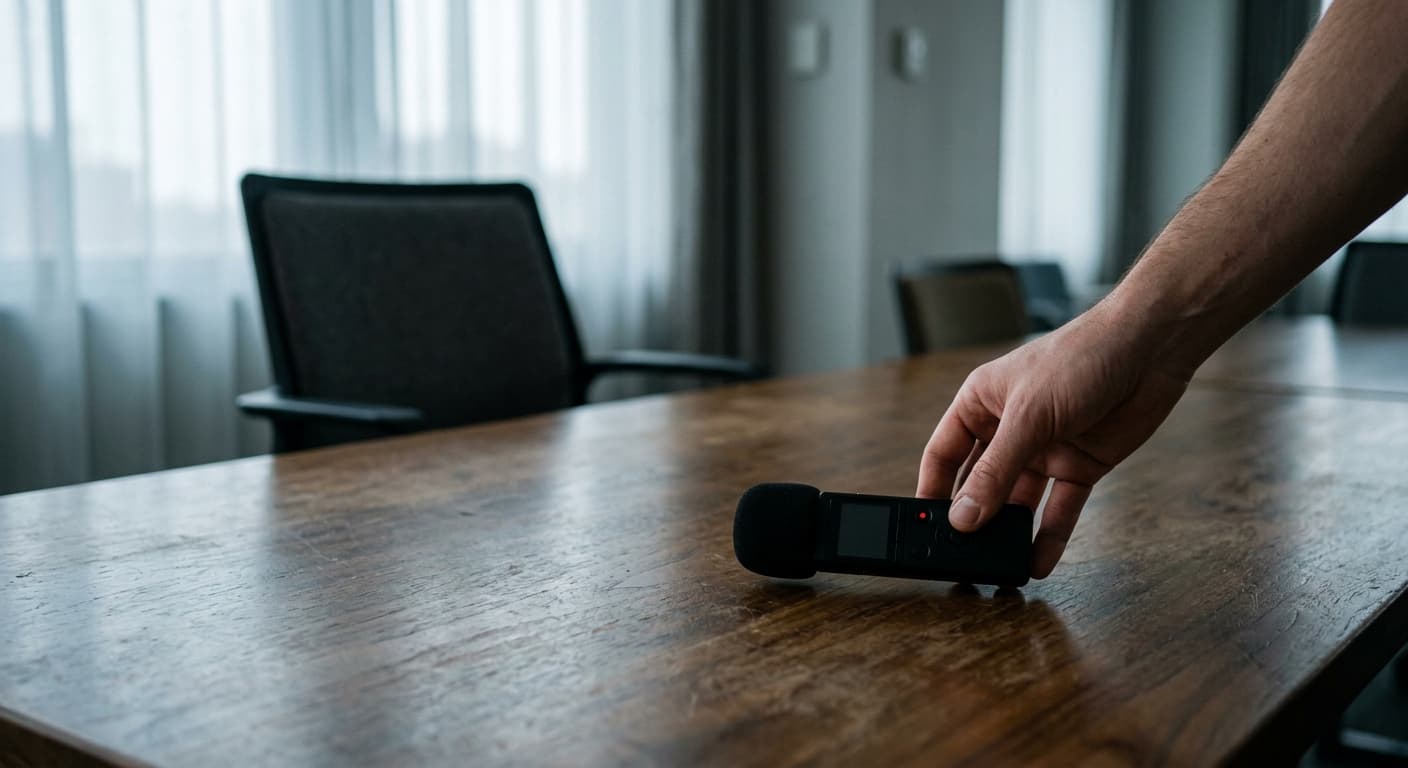
Arizona is a one-party consent state under A.R.S. 13-3005, which means you can legally record any in-person audio conversation you participate in without notifying the other parties. Your own consent as a participant satisfies the law, and no disclosure to others is required.
Arizona allows you to record in-person conversations and other audio without telling anyone, as long as you are a participant. Under ARS 13-3005, Arizona follows a one-party consent framework for intercepting wire, oral, and electronic communications. This means your own knowledge and consent to the recording is all the law requires.
This guide covers Arizona's audio recording laws in detail, including what types of recording are legal, where the legal boundaries are, how the reasonable expectation of privacy standard works, and what penalties apply for violations.
What Arizona Law Says About Audio Recording
The Core Statute: ARS 13-3005
Arizona's wiretapping and eavesdropping laws are found in Title 13, Chapter 30 of the Arizona Revised Statutes. The primary statute, ARS 13-3005, prohibits the intentional interception of wire or electronic communications without consent from at least one party. It also prohibits intercepting oral communications at which the interceptor is not present, unless one party consents.
For audio recording purposes, "oral communication" is the key term. Under ARS 13-3001, an oral communication is defined as any communication uttered by a person who has "an expectation that the communication is not subject to interception under circumstances justifying the expectation." This reasonable expectation of privacy standard determines which conversations the law protects.
One-Party Consent Explained
In a one-party consent state like Arizona, only one person in the conversation needs to know about and agree to the recording. That one person can be you. If you are having a face-to-face discussion, a meeting, or any other conversation, you can record it without telling the other participants.
This stands in contrast to two-party (or all-party) consent states like California, Florida, and Washington, where every participant must agree before recording is lawful.
When Audio Recording Is Legal in Arizona

Recording Conversations You Participate In
The most straightforward legal scenario: you are part of the conversation. Under one-party consent, you may:
- Record a one-on-one discussion with another person
- Record a group meeting or conversation you attend
- Use a hidden recorder or your smartphone to capture audio
- Record without giving any notice to the other participants
- Record in any setting, whether public or private
There are no restrictions on the type of recording device you use. A smartphone, a dedicated digital voice recorder, a smartwatch, or any other device is equally legal.
Recording in Public Places
Conversations in public places generally carry no reasonable expectation of privacy under Arizona law. This means anyone can record audio in:
- Public streets, sidewalks, and parks
- Restaurants, coffee shops, and retail stores (common areas)
- Government buildings and public meeting spaces
- Public transit vehicles and stations
- Outdoor events and gatherings
Because there is no reasonable expectation of privacy in these locations, the one-party consent requirement does not even apply. You can record conversations happening around you in public, even if you are not a participant.
Recording with Consent from One Party
If you are not part of a conversation but have consent from at least one participant, you can legally record it. For example, if a friend asks you to record their conversation with someone else using your phone, and your friend is aware of and consents to the recording, that recording is legal.
This is often relevant in situations where someone wants documentation of an interaction but wants a third party to handle the recording equipment.
When Audio Recording Is Illegal in Arizona

Recording Private Conversations Without Consent
It is a felony to record a private conversation when:
- You are not present at the conversation
- No participant has given you consent to record
- The speakers have a reasonable expectation of privacy
This covers classic eavesdropping scenarios like planting a hidden microphone in someone's home, office, or car to record their conversations while you are not there.
Prohibited Recording Locations
Regardless of consent, certain locations carry strict recording prohibitions under Arizona law:
- Jury deliberation rooms: ARS 13-3005 explicitly prohibits recording jury deliberations
- Bathrooms and restrooms: Recording in these spaces violates ARS 13-3019 (surreptitious recording)
- Locker rooms and changing areas: Protected under the same surreptitious recording statute
- Private bedrooms: Recording intimate activities without consent violates ARS 13-3019, which covers bedrooms with no purpose element required, and also ARS 13-1424 (voyeurism) if the recording is made for the purpose of sexual stimulation
Recording Without Being Present
A common misconception is that you can plant a recorder and leave. If you place an audio recording device in a private location and leave it to capture conversations you are not part of, you are violating Arizona law unless you have consent from at least one participant. Your one-party consent only applies when you are actually present and participating.
The Reasonable Expectation of Privacy Standard
How Arizona Courts Apply the Standard
The reasonable expectation of privacy test determines whether a conversation is protected by the wiretapping statute. Arizona courts consider several factors:
- Location: Was the conversation in a public or private setting?
- Volume: Were the speakers talking loudly enough for passersby to overhear?
- Precautions: Did the speakers take steps to keep the conversation private (closing a door, whispering, moving away from others)?
- Context: Would a reasonable person in the speaker's position expect the conversation to be private?
Examples of Protected Conversations
The following conversations typically carry a reasonable expectation of privacy:
- A conversation in a closed office with the door shut
- A phone call taken in a private room
- A discussion between spouses in their home
- A meeting in a conference room with the door closed
- A conversation in a private vehicle with windows up
Examples of Unprotected Conversations
These conversations typically do not carry a reasonable expectation of privacy:
- A conversation on a public sidewalk
- Talking loudly in a restaurant
- Speaking at a public meeting or hearing
- Having a conversation in a shared office space with others present
- Discussing matters in a common hallway
Hidden Audio Recorders in Arizona
Are Hidden Recorders Legal?
Yes, with conditions. Arizona law does not prohibit the use of concealed recording devices. You can use a hidden recorder as long as:
- You are a participant in the conversation being recorded, OR
- You have consent from at least one participant, OR
- The conversation takes place in a public setting with no expectation of privacy
There is no requirement in Arizona law that recording equipment be visible. Concealed body recorders, hidden smartphone recording apps, and other covert devices are all lawful when used under one-party consent.
When Hidden Recorders Become Illegal
Hidden recorders cross the legal line when:
- They are placed in private locations to record people without any participant's consent
- They capture conversations in bathrooms, locker rooms, or changing areas under ARS 13-3019
- They are used for voyeuristic purposes under ARS 13-1424
- They record jury deliberations
Using Audio Recordings as Evidence in Arizona
Admissibility Standards
Audio recordings made in compliance with Arizona's one-party consent law are generally admissible in court. To admit a recording, you must establish:
- Authentication: Prove the recording is genuine and has not been tampered with
- Relevance: Show the recording relates to an issue in the case
- Foundation: Provide testimony from someone who can identify the voices and confirm the circumstances of the recording
- Chain of custody: Demonstrate proper handling and storage of the recording since it was made
Under Arizona Rule of Evidence 901, a rule of the Arizona Supreme Court, authentication can be accomplished through testimony from a witness with knowledge that the recording is what it purports to be.
Illegally Obtained Recordings
Recordings made in violation of ARS 13-3005 are generally inadmissible in Arizona criminal proceedings. Arizona's wiretapping chapter does not contain a specific evidentiary-suppression provision; ARS 13-3012 instead lists exemptions from the chapter's prohibitions (such as recordings made with a party's or a present person's consent), not a suppression rule. Additionally, the person who made the illegal recording faces their own criminal charges.
In civil cases, Arizona courts have more discretion, but illegally obtained recordings are still subject to exclusion. Presenting an illegally obtained recording may also expose you to civil liability for invasion of privacy.
Tips for Preserving Recording Evidence
- Save the original file in its native format without any editing
- Make backup copies and store them in separate secure locations
- Document the date, time, location, and participants immediately after recording
- Do not share the recording on social media or with unnecessary parties before litigation
- Consider having a forensic audio expert verify the recording's integrity if it will be used in a significant legal matter
Penalties for Illegal Audio Recording in Arizona
Criminal Penalties
Illegal interception of oral communications is a Class 5 felony under ARS 13-3005. Under ARS 13-702, sentencing for first-time offenders follows this schedule:
| Category | Sentence |
|---|---|
| Mitigated | 0.5 years |
| Presumptive | 1.5 years |
| Aggravated | 2.5 years |
| Maximum fine | $150,000 |
Repeat offenders face enhanced sentences of up to 7.5 years in prison. Installing pen registers or trap-and-trace devices without authorization is a separate Class 6 felony under ARS 13-3005.
Civil Liability
Victims of illegal audio recording can pursue civil remedies including:
- Actual damages suffered as a result of the illegal recording
- Statutory damages under federal law (18 U.S.C. 2520)
- Punitive damages for willful violations
- Attorney fees and litigation costs
Additional Charges
Depending on the circumstances, illegal audio recording may lead to additional criminal charges:
- ARS 13-3019: Surreptitious photographing, videotaping, or filming (Class 5 felony baseline; Class 6 felony only if no device was used; Class 4 felony for distribution where the person is recognizable)
- ARS 13-1424: Voyeurism (Class 5 or Class 4 felony)
- ARS 13-2916: Harassment, if the recording is used to harass
Audio Recording and Arizona's Surreptitious Recording Law
ARS 13-3019: Surreptitious Photographing, Videotaping, Filming, or Recording
While ARS 13-3005 governs the interception of communications, ARS 13-3019 addresses surreptitious visual and audio recording in private spaces. This statute makes it a crime to knowingly photograph, videotape, film, digitally record, or by any other means secretly view another person without that person's consent in certain private locations.
The statute specifically protects against recordings in:
- Restrooms and bathrooms
- Locker rooms
- Bedrooms
- Any other location where a person has a reasonable expectation of privacy and has not consented to observation
A violation of ARS 13-3019 is a Class 5 felony as the baseline (up to 2.5 years). It is a Class 6 felony only when no device was used (up to 2 years), and a Class 4 felony when the recording is distributed and the person is recognizable (up to 3.75 years).
Arizona Recording Laws by Topic
Phone Call Recording | Audio Recording | Video Recording | Workplace Recording | Recording Police | Security Cameras | Recording in Public | Landlord-Tenant | Dashcam Laws | Schools | Medical Recording | Voyeurism & Hidden Cameras
Back to Arizona Recording Laws
More Arizona Recording Topics
More Arizona Laws
Frequently Asked Questions
Can I secretly record a conversation in Arizona?
Yes, if you are a participant in the conversation. Arizona is a one-party consent state under ARS 13-3005. You can use a hidden recorder to capture any conversation you are part of without telling the other participants. If you are not part of the conversation, you need consent from at least one participant.
Is it legal to use a hidden audio recorder in Arizona?
Yes, as long as you are a participant in the conversation being recorded or have consent from at least one participant. Arizona has no law requiring recording equipment to be visible. However, you cannot place hidden recorders in bathrooms, locker rooms, or other locations protected by ARS 13-3019.
Can I plant a recorder in a room and leave in Arizona?
No. If you place a recording device in a private location and leave it to capture conversations you are not part of, you are violating ARS 13-3005 unless at least one participant in the recorded conversation has consented. Your one-party consent only counts when you are actually present and participating.
What is the penalty for illegal audio recording in Arizona?
Illegal audio recording is a Class 5 felony under ARS 13-3005, carrying a presumptive sentence of 1.5 years in prison (ranging from 0.5 to 2.5 years for first-time offenders) and fines up to $150,000. Repeat offenders can face up to 7.5 years. You may also face civil liability for invasion of privacy.
Can I record conversations in public places in Arizona?
Yes. Conversations in public places like streets, parks, restaurants, and government buildings generally carry no reasonable expectation of privacy. You can record audio in public spaces without anyone's consent. The one-party consent requirement only applies to conversations where speakers have a justified privacy expectation.
Updates
Corrected the ARS 13-3019 penalty description (it is a Class 5 felony as the baseline, not just Class 6 or Class 4, in both places it appeared on the page), corrected bedroom hidden-camera recording to cite ARS 13-3019 (which requires no sexual-motive element) rather than only the narrower voyeurism statute, and replaced a dead, mislabeled Rules-of-Evidence citation with a link to the Arizona Supreme Court's rules portal.
Independently fact-checked against the cited primary sources; governing law re-checked for recent changes
Corrected the illegally-obtained-recordings section: ARS 13-3012 is the chapter's exemptions list, not an evidentiary-suppression provision.
Relabeled the ARS 13-3012 Sources-box entry from 'Admissibility of Intercepted Communications' to 'Exemptions', matching the corrected body-text description and the corpus's own section title.
Governing law re-checked for recent changes
Reviewed and approved by an editor
The Law Behind This Article
This article rests on the statutory provisions below, held in our own legal record and retrieved from the official source. Tap a section to read the operative text.
Arizona Revised Statutes, Title 13 (Criminal Code), Chapter 30 (EAVESDROPPING AND COMMUNICATIONS)
§ 13-3005Interception of wire, electronic and oral communications; installation of pen register or trap and trace device; classification; exceptionsIn forcecited in 19 of our articles
A. Except as provided in this section and section 13-3012, a person is guilty of a class 5 felony who either: 1. Intentionally intercepts a wire or electronic communication to which he is not a party, or aids, authorizes, employs, procures or permits another to so do, without the consent of either a sender or receiver thereof. 2. Intentionally intercepts a conversation or discussion at which he is not present, or aids, authorizes, employs, procures or permits another to so do, without the consent of a party to such conversation or discussion. 3. Intentionally intercepts the deliberations of a jury or aids, authorizes, employs, procures or permits another to so do. B. Except as provided in sections 13-3012 and 13-3017, a person who intentionally and without lawful authority installs or uses a pen register or trap and trace device on the telephone lines or communications facilities of another person which are utilized for wire or electronic communication is guilty of a class 6 felony.
Official text (excerpt) · last checked 2026-08-31 · Read the full text in our law library · Verify at azleg.gov
Cited in 7 court opinions in our collectionLatest citing opinion in our collection: 2025
In the courts (editorial summary, independently checked):State v. Morrison (2002) held that 13-3005 criminalizes unlawful interception but provides no exclusionary remedy, so a recording made in violation of it is not automatically inadmissible. State v. Hauss (1984) held the section inapplicable to a police station interview room talk where no reasonable expectation of privacy existed.
Opinions citing this section in our collection:
- State v. Morrison (Court of Appeals of Arizona 2002, 203 Ariz. 489)“…ause it was made without his or her consent in violation of A.R.S. § 13-3005 and 18 U.S.C. § 2511 and was, therefo…”
- State v. Hauss (Court of Appeals of Arizona 1984, 142 Ariz. 159)✓Police secretly recorded an arrested suspect's talk with his girlfriend in a station interview room, after telling her the room was being monitored; the court held there was no reasonable expectation of privacy in that setting, so section 13-3005 did not apply.
- State v. Allgood (Court of Appeals of Arizona 1992, 171 Ariz. 522)“…communication.” (Emphasis added.) See also A.R.S. § 13-3005. (penalizing as a class 5 felony interc…”
Identified automatically from the court opinions citing this section — not a ranking of which case controls.
Also relied on in: Arizona Recording Laws (2026): One-Party Consent Rules, One-Party Consent States: Complete 2026 Guide, Arizona Phone Call Recording Laws: What You Need to Know
§ 13-3001DefinitionsIn forcecited in 4 of our articles
In this chapter, unless the context otherwise requires: 1. "Aural transfer" means a communication containing the human voice at any point between and including the point of origin and the point of reception. 2. "Child monitoring device" means a device that is capable of transmitting an audio or audiovisual signal and that is installed or used in a residence for child supervision or safety monitoring by any parent, guardian or other responsible person in the person's own residence. 3. "Communication service provider" means any person who is engaged in providing a service that allows its users to send or receive oral, wire or electronic communications or computer services. 4. "Electronic communication" means any transfer of signs, signals, writing, images, sounds, data or intelligence of any nature that is transmitted in whole or in part by a wire, radio, electromagnetic, photoelectronic or photooptical system but that does not include any of the following: (a) Any wire or oral communication. (b) Any communication made through a tone-only paging device. (c) Any communication from a tracking device. 5.
Official text (excerpt) · last checked 2026-08-04 · Read the full text in our law library · Verify at azleg.gov
Cited in 7 court opinions in our collectionLatest citing opinion in our collection: 2025
Opinions citing this section in our collection:
- State v. Ring (Arizona Supreme Court 2001, 200 Ariz. 267)“…ce ¶ 14 The collection of wiretap evidence is governed by A.R.S. §§ 13-3001 13-3019. Defendant argues that, becaus…”
- State v. Politte (Court of Appeals of Arizona 1982, 136 Ariz. 117)“…ve” than the federal law. He contends the Arizona statutes, A.R.S. §§ 13-3001, et seq., principally § 13-3010, are le…”
- State of Arizona v. Usef Latrice Simmons II (Court of Appeals of Arizona 2015, 238 Ariz. 503)“…een the point of origin and the point of reception . . . .” A.R.S. § 13-3001(14). 5“‘Electronic communication…”
Identified automatically from the court opinions citing this section — not a ranking of which case controls.
Also relied on in: Arizona Surveillance Camera Laws (2026 Guide)
§ 13-3012ExemptionsIn forcecited in 5 of our articles
The following are exempt from the provisions of this chapter: 1. The interception of wire, electronic or oral communications, the installation and operation of a pen register or trap and trace device, the providing of information, facilities or technical assistance to an investigative or law enforcement officer pursuant to a subpoena or an ex parte order granted pursuant to sections 13-3010, 13-3015, 13-3016, 13-3017 and 13-3018 or an emergency interception made in good faith pursuant to section 13-3015, including any of the foregoing acts by a communication service provider or its officers, agents or employees. 2. The normal use of services, equipment and facilities that are provided by a communication service provider pursuant to tariffs that are on file with the Arizona corporation commission or the federal communications commission and the normal functions of any operator of a switchboard. 3.
Official text (excerpt) · last checked 2026-08-04 · Read the full text in our law library · Verify at azleg.gov
Cited in 11 court opinions in our collectionLatest citing opinion in our collection: 2023
Opinions citing this section in our collection:
- State v. Walker (Court of Appeals of Arizona 1995, 185 Ariz. 228)“…ith the consent of one of the participants—is authorized by AR.S. section 13-3012(9) (Supp.1995). In State v. Allg…”
- State v. Morrison (Court of Appeals of Arizona 2002, 203 Ariz. 489)“…onsent to such interception ....” See also A.R.S. § 13-3012(9) (1997) (exempting from A.R.S. § 13-3…”
- State v. Pecina (Court of Appeals of Arizona 1995, 184 Ariz. 238)“…751 , 91 S.Ct. 1122, 1126 , 28 L.Ed.2d 453 (1971); A.R.S. § 13-3012(7). The state bears the burden of provi…”
Identified automatically from the court opinions citing this section — not a ranking of which case controls.
Also relied on in: Arizona Smart Glasses Recording Laws (2026)
§ 13-3019Surreptitious photographing, videotaping, filming or digitally recording or viewing; exemptions; classification; definitionsIn forcecited in 14 of our articles
A. It is unlawful for any person to knowingly photograph, videotape, film, digitally record or by any other means secretly view, with or without a device, another person without that person's consent under either of the following circumstances: 1. In a restroom, bathroom, locker room, bedroom or other location where the person has a reasonable expectation of privacy and the person is urinating, defecating, dressing, undressing, nude or involved in sexual intercourse or sexual contact. 2. In a manner that directly or indirectly captures or allows the viewing of the person's genitalia, buttock or female breast, whether clothed or unclothed, that is not otherwise visible to the public. B. It is unlawful to disclose, display, distribute or publish a photograph, videotape, film or digital recording made in violation of subsection A of this section without the consent or knowledge of the person depicted. C. This section does not apply to: 1.
Official text (excerpt) · last checked 2026-08-31 · Read the full text in our law library · Verify at azleg.gov
Cited in 8 court opinions in our collectionLatest citing opinion in our collection: 2026
In the courts (editorial summary, independently checked):State of Arizona v. Whytte Dragun Duncan (2024) found a hidden bathroom camera established a fair probability of surreptitious recording under 13-3019, supporting a search warrant. State of Arizona v. Agustin Gonzalez Gongora (2014) contrasted the section with the voyeurism statute, which adds a sexual stimulation element.
Opinions citing this section in our collection:
- State of Arizona v. Agustin Gonzalez Gongora (Court of Appeals of Arizona 2014, 235 Ariz. 178)✓A man crouched behind a shopper in a store and looked up her dress; convicted under the separate voyeurism statute, he argued a 2006 draft amendment made upskirt viewing only a section 13-3019 offense, and the court rejected that reading of the two statutes.
- Tucson Unified School District v. Borek (Court of Appeals of Arizona 2014, 234 Ariz. 364)“…g or recording another person without their consent.” See A.R.S. § 13-3019(A), (D).…”
- State of Arizona v. Whytte Dragun Duncan (Court of Appeals of Arizona 2024, 548 P.3d 1128)✓A foster parent hid a camera inside a USB charger in the bathroom and recorded teenage girls showering and undressing; the court held that even with the unlawfully searched SD card excised, the affidavit showed a fair probability of a section 13-3019 offense.
Identified automatically from the court opinions citing this section — not a ranking of which case controls.
Also relied on in: Arizona Landlord-Tenant Recording Laws: Rights for Renters and Property Owners, Arizona Medical Recording Laws: Patient Rights and HIPAA Rules, Arizona Laws on Recording in Public: What You Can and Cannot Film
Arizona Revised Statutes, Title 13 (Criminal Code), Chapter 14 (SEXUAL OFFENSES)
§ 13-1424Voyeurism; classificationIn forcecited in 8 of our articles
A. It is unlawful to knowingly invade the privacy of another person without the knowledge of the other person for the purpose of sexual stimulation. B. It is unlawful for a person to disclose, display, distribute or publish a photograph, videotape, film or digital recording that is made in violation of subsection A of this section without the consent or knowledge of the person depicted. C. For the purposes of this section, a person's privacy is invaded if both of the following apply: 1. The person has a reasonable expectation that the person will not be photographed, videotaped, filmed, digitally recorded or otherwise viewed or recorded. 2. The person is photographed, videotaped, filmed, digitally recorded or otherwise viewed, with or without a device, either: (a) While the person is in a state of undress or partial dress. (b) While the person is engaged in sexual intercourse or sexual contact. (c) While the person is urinating or defecating. (d) In a manner that directly or indirectly captures or allows the viewing of the person's genitalia, buttock or female breast, whether clothed or unclothed, that is not otherwise visible to the public. D.
Official text (excerpt) · last checked 2026-08-04 · Read the full text in our law library · Verify at azleg.gov
Cited in 15 court opinions in our collectionLatest citing opinion in our collection: 2026
Opinions citing this section in our collection:
- State v. Blazak (Arizona Supreme Court 1977, 114 Ariz. 199)“…timony and not to the admissibility of the evidence. A.R.S. § 13-1424 permits a peace officer to apply to a m…”
- State v. Grijalva (Arizona Supreme Court 1975, 111 Ariz. 476)“…fense sought to suppress certain evidence taken pursuant to ARS § 13-1424, including photographs of the defendant…”
- Long v. Garrett (Court of Appeals of Arizona 1974, 22 Ariz. App. 397)“…tioner's special action challenges the constitutionality of A.R.S. § 13-1424, both on its face and as construed and…”
Identified automatically from the court opinions citing this section — not a ranking of which case controls.
Also relied on in: Arizona Security Camera Laws: Rules for Homes and Businesses, Arizona Video Recording Laws: Rules for Cameras and Filming, Arizona Surreptitious Recording & Voyeurism Laws: ARS 13-3019 Penalties (2026)
Arizona Revised Statutes, Title 13 (Criminal Code), Chapter 7 (SENTENCING AND IMPRISONMENT)
§ 13-702First time felony offenders; sentencing; definitionIn forcecited in 10 of our articles
A. Unless a specific sentence is otherwise provided, the term of imprisonment for a first felony offense shall be the presumptive sentence determined pursuant to subsection D of this section. Except for those felonies involving a dangerous offense or if a specific sentence is otherwise provided, the court may increase or reduce the presumptive sentence within the ranges set by subsection D of this section. Any reduction or increase shall be based on the aggravating and mitigating circumstances listed in section 13-701, subsections D and E and shall be within the ranges prescribed in subsection D of this section. B.
Official text (excerpt) · last checked 2026-08-04 · Read the full text in our law library · Verify at azleg.gov
Cited in 446 court opinions in our collectionLatest citing opinion in our collection: 2026
Opinions citing this section in our collection:
- State v. Shattuck (Arizona Supreme Court 1984, 140 Ariz. 582)“…ly under the authority of the language in what is currently A.R.S. § 13-702(D)(11) [formerly A.R.S. 13-702(D)(9)] —…”
- State v. Henderson (Arizona Supreme Court 2005, 210 Ariz. 561)“…t fit within the list of statutory aggravators codified in A.R.S. § 13-702.C: infliction or thr…”
- State v. Walton (Arizona Supreme Court 1989, 159 Ariz. 571)“…he Arizona death penalty statute. Under the provisions of A.R.S. § 13-702(D), which applies to noncapital sentenc…”
Identified automatically from the court opinions citing this section — not a ranking of which case controls.
Also relied on in: Arizona Hit and Run Laws: Penalties and What to Do, Arizona AI Meeting Recording Laws (2026), Arizona GPS Tracking Laws: Is It Legal to Put a Tracker on a Car? (2026)
United States Code Title 18
§ 2520Recovery of civil damages authorizedIn forcecited in 115 of our articles
Except as provided in section 2511(2)(a)(ii), any person whose wire, oral, or electronic communication is intercepted, disclosed, or intentionally used in violation of this chapter may in a civil action recover from the person or entity, other than the United States, which engaged in that violation such relief as may be appropriate. In an action under this section, appropriate relief includes— such preliminary and other equitable or declaratory relief as may be appropriate; damages under subsection (c) and punitive damages in appropriate cases; and a reasonable attorney’s fee and other litigation costs reasonably incurred.
Official text (excerpt) · last checked 2026-07-28 · Read the full text in our law library · Verify at uscode.house.gov
Cited in 860 court opinions in our collectionLatest citing opinion in our collection: 2026
In the courts (editorial summary, independently checked):Walker v. Darby (1990) held a 2520 plaintiff need not prove the contents of intercepted conversations, only interception and a justified expectation against it. Bartnicki v. Vopper (2001) barred 2520 damages against defendants who took no part in the interception, obtained the tape lawfully, and disclosed a matter of public concern.
Opinions citing this section in our collection:
- Jessie Walker v. Thomas E. Darby, Hugh L. Robinson, Jr., and Kenneth Day (Court of Appeals for the Eleventh Circuit 1990, 911 F.2d 1573)✓A postal letter carrier said three supervisors wired an intercom near his workstation to listen in. Reversing summary judgment, the Eleventh Circuit held a section 2520 plaintiff can show interception without proving the contents of specific conversations.
- Gelbard v. United States (Supreme Court of the United States 1972, 408 U.S. 41)“…disclosure, or use is entitled to recover civil damages, 18 U. S. C. § 2520 . Title III also bars the use as eviden…”
- DirecTV, Inc. v. Hoa Huynh (Court of Appeals for the Ninth Circuit 2007, 503 F.3d 847)“…7 U.S.C. § 605 (e)(4), or alternatively, for violations of 18 U.S.C. § 2520 (a), or alternatively, for violations o…”
Identified automatically from the court opinions citing this section — not a ranking of which case controls.
Also relied on in: US Recording Laws by State (2026): All 50 States Explained, Alabama Audio Recording Laws: Consent Rules and Penalties, Alabama Phone Call Recording Laws: What You Need to Know
Search our full record of US law — 2.1 million sections, every state + federal →
Sources and References
- Arizona Revised Statutes 13-3005 - Interception of Communications(azleg.gov).gov
- Arizona Revised Statutes 13-3001 - Definitions for Wiretapping(azleg.gov).gov
- Arizona Revised Statutes 13-3019 - Surreptitious Photographing and Recording(azleg.gov).gov
- Arizona Revised Statutes 13-1424 - Voyeurism Classification(azleg.gov).gov
- Arizona Revised Statutes 13-702 - First Time Felony Offenders Sentencing(azleg.gov).gov
- Arizona Revised Statutes 13-3012 - Exemptions(azleg.gov).gov
- Federal Wiretap Act - 18 U.S.C. 2520(law.cornell.edu)