Nebraska
Nebraska Workplace Recording Laws: Employee and Employer Rights (2026)
Independently fact-checked against primary sources (last audited August 15, 2026). · Reviewed by the RecordingLaw editorial team. · Law checked current as of August 15, 2026. · 8 primary sources cited on this page. How we verify our legal content
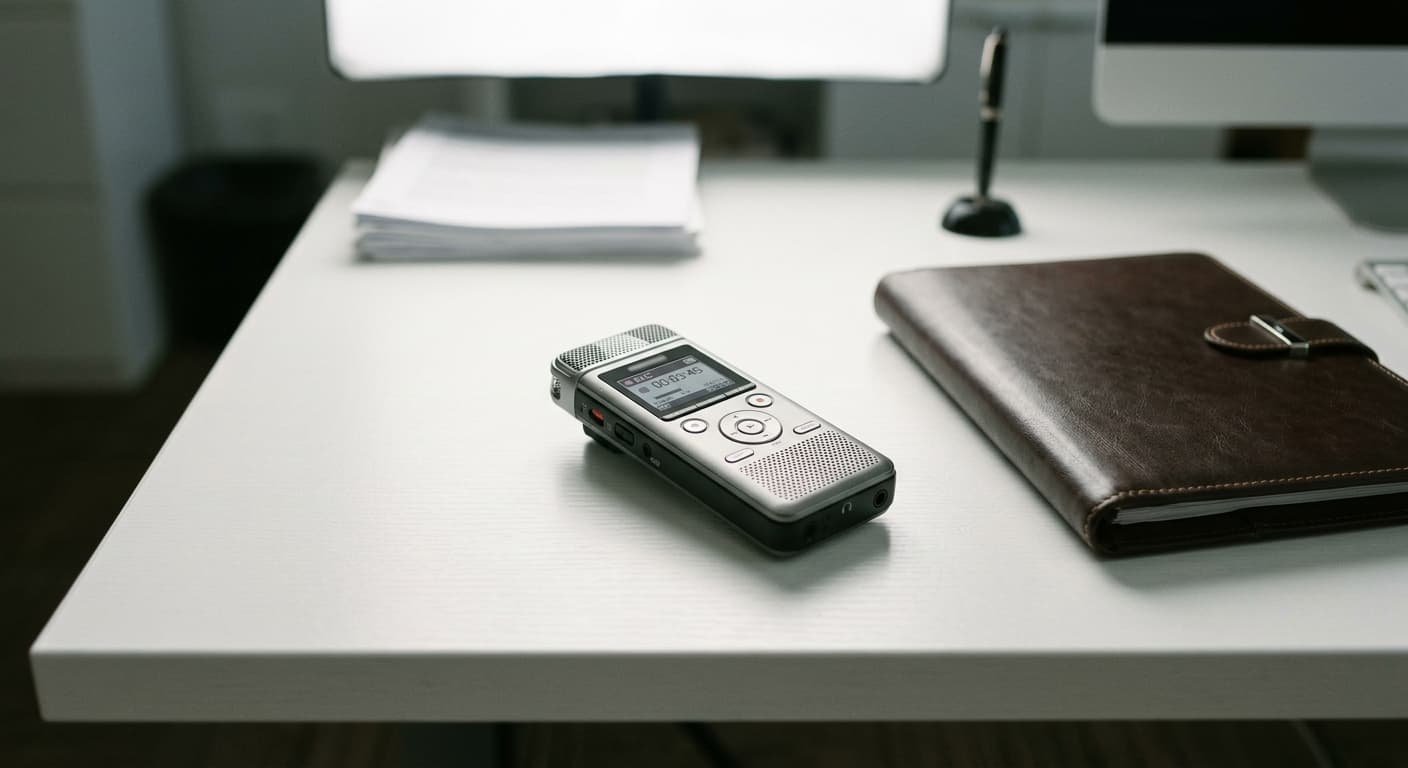
Nebraska employees can legally record any workplace conversation they participate in without notifying coworkers or supervisors. Under Neb. Rev. Stat. 86-290, the state's one-party consent rule applies fully at work, and employers may also monitor communications in the normal course of business on their premises.
Quick Answer
Nebraska's one-party consent law allows both employees and employers to record workplace conversations under certain conditions. Employees can record any conversation they are part of without notifying coworkers or supervisors, as long as the recording is not made for a criminal or tortious purpose. Employers have a specific statutory exception under Neb. Rev. Stat. 86-290 that permits monitoring in the normal course of business on their premises. However, both employees and employers face limits when it comes to recording in private areas and collecting biometric data.
| Detail | Answer |
|---|---|
| Can employees record at work? | Yes, with one-party consent |
| Can employers monitor calls? | Yes, in the normal course of business |
| Recording in bathrooms/locker rooms | Illegal for everyone |
| Primary statute | Neb. Rev. Stat. 86-290 |
| Privacy statute | Neb. Rev. Stat. 28-311.08 |
| Biometric data law | None enacted (LB204 indefinitely postponed Apr 17, 2026) |
Employee Rights: Recording at Work

The One-Party Consent Foundation
As a one-party consent state, Nebraska allows any participant in a conversation to record it without notifying the other parties. This right extends fully into the workplace. Under Neb. Rev. Stat. 86-290, you can record:
- Conversations with your supervisor or manager
- Meetings with HR representatives
- Discussions with coworkers
- Performance reviews and disciplinary meetings
- Phone calls with clients, vendors, or other business contacts
- Job interviews (if you are the interviewee)
The legal requirement is straightforward: you must be a participant in the conversation, and the recording cannot be made for a criminal or tortious purpose.
Why Employees Record at Work
Common legitimate reasons for workplace recording include:
- Documenting harassment or discrimination -- Recordings can provide powerful evidence of verbal harassment, discriminatory statements, or hostile work environment conditions
- Preserving instructions and agreements -- Complex or verbal-only instructions can be captured for later reference
- Protecting against retaliation -- Employees who report safety violations, fraud, or other misconduct may record interactions to document retaliatory behavior
- Supporting wage and hour claims -- Recordings of conversations about pay, overtime, or work schedules can support claims under the Fair Labor Standards Act
- Performance review documentation -- Having a record of what was actually said during a performance evaluation
The Criminal or Tortious Purpose Limitation
Even though you can record workplace conversations you participate in, the recording must not be made for an illegal purpose. Examples of recordings that would not be protected:
- Recording to blackmail or extort a coworker or supervisor
- Recording specifically to harass or intimidate someone
- Recording trade secrets or confidential business information for the purpose of sharing it with a competitor (which could constitute trade secret misappropriation)
Courts examine the intent behind the recording. Documenting harassment for a potential legal claim is a legitimate purpose. Recording someone to humiliate them publicly is not.
Company Policy vs. State Law
This is one of the most important distinctions in workplace recording law. Nebraska state law permits you to record workplace conversations you participate in. However, your employer's internal policies may prohibit recording.
If your employer has a written no-recording policy and you violate it:
- You will not face criminal charges (the recording is legal under state law)
- You may face disciplinary action, up to and including termination
- Nebraska is an at-will employment state, meaning employers can terminate employees for any reason not prohibited by law
- Some courts and the NLRB have scrutinized blanket no-recording policies, but enforcement varies
Best practice: Before recording at work, review your employee handbook and any applicable policies. If you are recording to document potential legal violations (harassment, discrimination, safety hazards), consult with an employment attorney about the best approach.
National Labor Relations Act Considerations
The National Labor Relations Board (NLRB) has addressed employer no-recording policies in the context of employees' rights under Section 7 of the National Labor Relations Act. The NLRB has found that overly broad no-recording policies can violate employees' rights to engage in protected concerted activity, such as recording evidence of unsafe working conditions or unfair labor practices.
However, the NLRB has also recognized that employers may maintain no-recording policies that are tailored to legitimate business justifications, such as protecting trade secrets, patient privacy in healthcare settings, or client confidentiality.
Employer Rights: Workplace Monitoring
The Employer Exception in Section 86-290
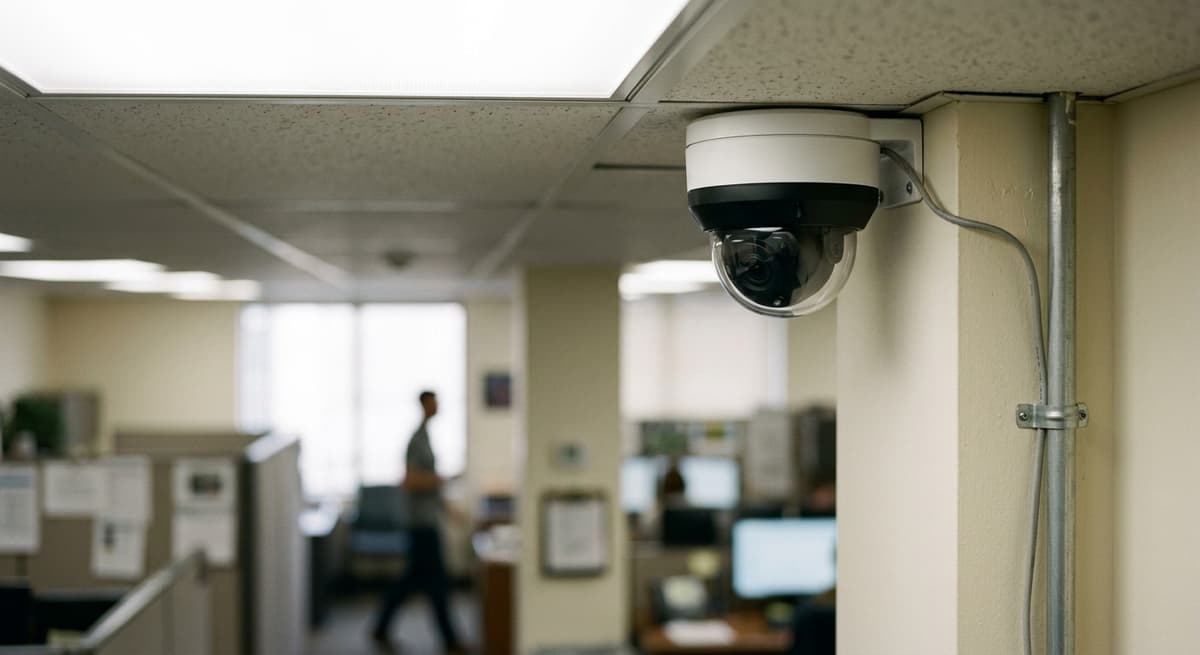
Nebraska law provides a specific exception for employer monitoring. Under Neb. Rev. Stat. 86-290, it is not unlawful for an employer on their business premises, an operator of a switchboard, or an officer, employee, or agent of a communications provider to intercept, disclose, or use communications in the normal course of employment.
This exception allows employers to:
- Record customer service and sales calls for quality assurance and training
- Monitor employee phone calls made on company equipment
- Use call recording software integrated into business phone systems
Section 86-290(2)(a)'s employer exception is written specifically for wire (telephone) communications on the employer's own system. It does not, by its text, extend to email or messaging platforms. An employer's ability to monitor company email and messaging generally rests on other legal grounds, such as owning the system, being a party to the communication, or a signed acceptable-use policy, not this specific wiretap-statute carve-out.
"Normal Course of Business" Requirement
The employer exception is limited to monitoring that occurs in the normal course of business. This means:
- The monitoring must serve a legitimate business purpose (quality assurance, compliance, training, security)
- The monitoring should be conducted on the employer's premises or using employer-owned systems
- The scope of monitoring should be proportionate to the business need
Monitoring that goes beyond normal business purposes may lose the protection of the employer exception. For example, recording an employee's personal phone calls on their personal device during break time would likely not qualify as monitoring in the normal course of business.
Notice and Transparency
Nebraska law requires notice for one specific type of monitoring, and strongly favors it for the rest. Under Neb. Rev. Stat. 86-290(2)(a), an employer that uses service observing or random monitoring for mechanical, service quality, or performance control checks must give employees reasonable notice of that monitoring policy, or the exception does not apply. For other forms of monitoring, Nebraska law does not explicitly require notice, but providing it is strongly recommended for several reasons:
- It reduces legal risk by eliminating claims that employees had a reasonable expectation of privacy
- It demonstrates good faith and helps maintain employee trust
- Federal law and court precedent generally favor transparency in employer monitoring
The Nebraska Data Privacy Act (LB1074) does not create a separate notice requirement here: its definition of "consumer" excludes an individual acting in a commercial or employment context (Neb. Rev. Stat. 87-1102(7)(b)), so the Act's transparency and access rights do not extend to employee monitoring data.
Common methods of providing notice include:
- Written policies in employee handbooks
- Signage in monitored areas ("These premises are under video surveillance")
- Login banners on company computers ("Use of this system may be monitored")
- Verbal or recorded announcements before recorded phone calls
Video Surveillance in the Workplace
Employers may use video surveillance cameras in common work areas where employees do not have a reasonable expectation of privacy. Acceptable locations generally include:
- Entrances and exits
- Parking lots
- Loading docks and warehouses
- Sales floors and reception areas
- Production areas and assembly lines
- Break rooms (though this is more contested)
Where Employers Cannot Record
Nebraska law strictly prohibits recording in certain workplace locations. Under Neb. Rev. Stat. 28-311.08, the following areas are protected as places of solitude or seclusion:
- Bathrooms and restrooms -- No cameras or recording devices permitted
- Locker rooms -- Athletic, employee, and any other locker facilities
- Shower rooms -- Any shower facilities provided by the employer
- Changing areas -- Designated areas for employees to change clothing
- Nursing rooms -- Spaces provided for nursing mothers
Installing recording devices in any of these locations is a criminal offense, regardless of the employer's stated purpose.
LB204: Indefinitely Postponed

LB204 (the Biometric Autonomy Liberty Law) was indefinitely postponed by the Nebraska Legislature on April 17, 2026 and did not become law. Nebraska has no enacted biometric privacy statute. Employers are not subject to a Nebraska written-consent requirement before collecting employee fingerprints, voiceprints, or facial geometry at this time. Employers should still ensure compliance with any applicable federal requirements (such as ADA, HIPAA for healthcare, and Title VII) when implementing biometric systems.
Recording Meetings and Conference Calls
In-Person Meetings
Nebraska's one-party consent rule applies to workplace meetings. If you attend a meeting, you can record it without informing the other participants. This includes:
- Team meetings and stand-ups
- One-on-one meetings with supervisors
- Department or company-wide meetings
- Client meetings you participate in
- Union meetings (subject to additional NLRA considerations)
Virtual Meetings and Video Conferences
The same one-party consent principle applies to virtual meetings conducted through platforms like Zoom, Microsoft Teams, or Google Meet. If you are a participant, you can record the meeting under Nebraska law.
However, be aware that:
- The recording platform may display a notification to all participants when recording begins (many platforms do this by default)
- If other participants are in two-party consent states, the stricter law of those states may apply to them
- Company policies may restrict recording of virtual meetings
- Some meeting platforms' terms of service require notification before recording
Multi-State Workforce Considerations
For businesses with employees in multiple states, the intersection of different recording consent laws creates complexity. If a Nebraska-based employee records a conference call that includes participants in two-party consent states like California, Florida, or Pennsylvania, the stricter consent requirements of those states may apply to the participants located there.
The safest approach for multi-state meetings is to announce the recording at the beginning and give all participants the opportunity to object or disconnect.
Whistleblower Protections
Nebraska Whistleblower Laws
Nebraska provides some protections for employees who report illegal activity. Recording conversations to document workplace violations may be protected under whistleblower statutes, particularly when the recording captures evidence of:
- Fraud or embezzlement
- Safety violations
- Environmental violations
- Public health hazards
- Government contract fraud
Nebraska's whistleblower protections for public employees are found in the State Government Effectiveness Act, Neb. Rev. Stat. 81-2701 through 81-2710. Private sector employees have more limited protections, primarily through federal laws like the Sarbanes-Oxley Act and specific industry regulations.
Documentation Best Practices
If you are recording at work to document potential legal violations:
- Record only conversations you participate in
- Store recordings securely and privately
- Do not share recordings on social media or with unauthorized persons
- Consult with an attorney before using recordings in legal proceedings
- Preserve the original, unedited recording file with its metadata intact
Using Workplace Recordings as Evidence
Employment Lawsuits
Recordings made in compliance with Nebraska's one-party consent law are generally admissible in employment-related legal proceedings, including:
- Discrimination and harassment claims filed with the Nebraska Equal Opportunity Commission or the EEOC
- Wrongful termination lawsuits
- Wage and hour disputes
- Workers' compensation proceedings
- Unemployment benefit hearings
Workers' Compensation Proceedings
In Nebraska workers' compensation cases, recordings may be used to document:
- Statements made by supervisors about workplace safety
- Conversations about the circumstances of a workplace injury
- Instructions or pressure to return to work before medical clearance
- Discussions about accommodations or modified duty
Unemployment Hearings
Recordings can be particularly valuable in unemployment benefit disputes, where the key question is often whether the employee was terminated for cause. A recording that captures the employer's stated reason for termination can directly contradict a later claim that the termination was for a different reason.
Nebraska Data Privacy Act and Workplace Monitoring
The Nebraska Data Privacy Act (LB1074), effective January 1, 2025, requires businesses that process personal data of Nebraska residents to provide transparency about their data practices. The Act's definition of "consumer" expressly excludes an individual acting in a commercial or employment context (Neb. Rev. Stat. 87-1102(7)(b)), so its transparency, access, minimization, and security requirements do not apply to employee monitoring data. Any notice, access, or data-minimization practice an employer follows for monitoring data is a business choice, not an NDPA requirement.
More Nebraska Recording Laws
Audio Recording | Video Recording | Voyeurism & Hidden Cameras | Workplace Recording | Recording Police | Phone Call Recording | Security Cameras | Recording in Public | Landlord-Tenant | Dashcam Laws | Schools | Medical Recording
Back to Nebraska Recording Laws
More Nebraska Recording Topics
More Nebraska Laws
Frequently Asked Questions
Can I record my boss in Nebraska?
Yes. Nebraska is a one-party consent state, so you can legally record any conversation with your boss as long as you are a participant. The recording cannot be made for a criminal or tortious purpose. However, check your employer's internal policies, as violating a no-recording policy could result in disciplinary action even though the recording itself is legal under state law.
Can my employer record me at work in Nebraska?
Yes, with limitations. Employers can monitor communications in the normal course of business on their premises under Neb. Rev. Stat. 86-290. They can also use video surveillance in common work areas. However, employers cannot install recording devices in bathrooms, locker rooms, changing areas, or other places of solitude or seclusion under Neb. Rev. Stat. 28-311.08.
Can my employer require my fingerprint for a time clock in Nebraska?
Your employer can request it. LB204 (Biometric Autonomy Liberty Law) was indefinitely postponed on April 17, 2026 and did not become law, so Nebraska currently has no state statute requiring written consent before employers collect fingerprints or other biometric data. Review your employment agreement and any relevant federal requirements that may apply to your industry.
Can I be fired for recording at work in Nebraska?
Potentially, yes. While your recording is legal under Nebraska's one-party consent law, Nebraska is an at-will employment state. If your employer has a no-recording policy and you violate it, you can be disciplined or terminated for the policy violation. However, if you are recording protected concerted activity under the National Labor Relations Act, a blanket no-recording policy may not be enforceable.
Can I use a workplace recording as evidence in a lawsuit?
Yes. Recordings made in compliance with Nebraska's one-party consent law are generally admissible in employment-related proceedings, including discrimination claims, wrongful termination suits, wage disputes, workers' compensation cases, and unemployment hearings. The recording must be authenticated and relevant to the issues in the case.
Updates
Corrected an overstated claim that Nebraska's Data Privacy Act creates notice and access rights for employee monitoring data (it excludes employment-context individuals by definition), narrowed an overstated claim that employers can monitor email and messaging under the same wiretap-law carve-out that applies to phone calls, added the statute's actual notice requirement for service-observing and random monitoring, and corrected the name of the state whistleblower-protection statute.
Independently fact-checked against the cited primary sources; governing law re-checked for recent changes
Governing law re-checked for recent changes
Reviewed and approved by an editor
The Law Behind This Article
This article rests on the statutory provisions below, held in our own legal record and retrieved from the official source. Tap a section to read the operative text.
Nebraska Revised Statutes, Chapter 86: TELECOMMUNICATIONS AND TECHNOLOGY
§ 86-290Unlawful acts; penaltyIn forcecited in 18 of our articles
(1) Except as otherwise specifically provided in sections 86-271 to 86-295, it is unlawful to: (a) Intentionally intercept, endeavor to intercept, or procure any other person to intercept or endeavor to intercept any wire, electronic, or oral communication; (b) Intentionally use, endeavor to use, or procure any other person to use or endeavor to use any electronic, mechanical, or other device to intercept any oral communication when (i) such device is affixed to, or otherwise transmits a signal through, a wire, cable, or other like connection used in wire communication or (ii) such device transmits communications by radio or interferes with the transmission of such communication; (c) Intentionally disclose or endeavor to disclose to any other person the contents of any wire, electronic, or oral communication, knowing or having reason to know that the information was obtained through the interception of a wire, electronic, or oral communication in violation of this subsection; (d) Intentionally use or endeavor to use the contents of any wire, electronic, or oral communication, knowing or having reason to know that the information was obtained through the interception of a wire,…
Official text (excerpt) · last checked 2026-08-31 · Read the full text in our law library · Verify at nebraskalegislature.gov
Cited in 3 court opinions in our collectionLatest citing opinion in our collection: 2022
Opinions citing this section in our collection:
- Hays v. Hays (Nebraska Court of Appeals 2022)“…to her. We address these arguments, in turn. Under Neb. Rev. Stat. § 86-290(2)(c) (Reissue 2016), “it is not unlawf…”
- Ades v. Omni Hotels Management Corp. (District Court, C.D. California 2014, 46 F. Supp. 3d 999)“…f the carrier or provider of such communication services.”' Neb.Rev.Stat. § 86-290(2)(a). Based on this provision, Omni co…”
- Lewton Ex Rel. Lewton v. Divingnzzo (District Court, D. Nebraska 2011, 772 F. Supp. 2d 1046)“…7) to exclude the recordings as illegally intercepted under Neb.Rev.Stat. § 86-290(a) (see Doc. 137-16 at p.…”
Identified automatically from the court opinions citing this section — not a ranking of which case controls.
Also relied on in: Nebraska Recording Laws (2026): One-Party Consent Rules, Nebraska Audio Recording Laws: One-Party Consent Rules and Penalties (2026), Nebraska Dashcam Laws: Mounting Rules, Audio Recording, and Evidence (2026)
Nebraska Revised Statutes, Chapter 28: CRIMES AND PUNISHMENTS
§ 28-311.08Unlawful intrusion; photograph, film, or record image or video of intimate area; distribute or make public; penalty; court; duties; registration under Sex Offender Registration Act; statute of limitationsIn forcecited in 16 of our articles
(1) It shall be unlawful for any person to knowingly intrude upon any other person without his or her consent in a place of solitude or seclusion. Violation of this subsection is a Class I misdemeanor. A second or subsequent violation of this subsection is a Class IV felony. (2) It shall be unlawful for any person to knowingly and intentionally photograph, film, or otherwise record an image or video of the intimate area of any other person without his or her knowledge and consent when his or her intimate area would not be generally visible to the public regardless of whether such other person is located in a public or private place. Violation of this subsection is a Class IV felony. (3) It shall be unlawful for any person to knowingly and intentionally distribute or otherwise make public an image or video of another person recorded in violation of subsection (2) of this section without that person's consent. A first or second violation of this subsection is a Class IIA felony. A third or subsequent violation of this subsection is a Class II felony.
Official text (excerpt) · last checked 2026-08-31 · Read the full text in our law library · Verify at nebraskalegislature.gov
Cited in 4 court opinions in our collectionLatest citing opinion in our collection: 2024
Opinions citing this section in our collection:
- State v. McGovern (Nebraska Supreme Court 2022, 311 Neb. 705)“…62 See Riley v. California, supra note 5. 63 See Neb. Rev. Stat. § 28-311.08 (Reissue 2016 & Cum. Supp. 2020).…”
- State v. Zitterkopf (Nebraska Supreme Court 2024, 317 Neb. 312)“…unlawful distribution of an intimate image in violation of Neb. Rev. Stat. § 28-311.08(3) (Cum. Supp. 2022). Zitterkopf claims…”
- In Re Interest of Dustin S. (Nebraska Supreme Court 2008, 276 Neb. 635)“…le undressing would constitute a Class II misdemeanor under Neb. Rev.Stat. § 28-311.08 (Cum.Supp.2006). Therefore, Dustin is a…”
Identified automatically from the court opinions citing this section — not a ranking of which case controls.
Also relied on in: Nebraska Medical Recording Laws: Patient Rights, HIPAA, and Consent (2026), Nebraska Public Recording Laws: Filming in Public Spaces and Government Meetings (2026), Nebraska Security Camera Laws: Rules for Homes, Businesses, and HOAs (2026)
Nebraska Revised Statutes, Chapter 81: STATE ADMINISTRATIVE DEPARTMENTS
§ 81-2701Act, how citedIn force
Sections 81-2701 to 81-2711 shall be known and may be cited as the State Government Effectiveness Act.
Official text (excerpt) · last checked 2026-07-29 · Read the full text in our law library · Verify at nebraskalegislature.gov
Cited in 4 court opinions in our collectionLatest citing opinion in our collection: 2004
Opinions citing this section in our collection:
- State Ex Rel. Shepherd v. Nebraska Equal Opportunity Commission (Nebraska Supreme Court 1997, 251 Neb. 517)“…the State Government Effectiveness Act (Whistleblower Act), Neb.Rev.Stat. §§ 81-2701 through 81-2710 (Reissue 1994 & Cum.Sup…”
- Riggs v. County of Banner (District Court, D. Nebraska 2001, 159 F. Supp. 2d 1158)“…wing” safeguards of the State Government Effectiveness Act, Neb.Rev. Stat. Ann. §§ 81-2701 to 81-2710 (Lexis 1999). This argument…”
- Biby v. Board of Regents of University of Nebraska (District Court, D. Nebraska 2004, 340 F. Supp. 2d 1031)“…ate Government Effectiveness Act (the “Whistleblower Act”), Neb.Rev.Stat. § 81-2701 et seq. Specifically, plai…”
Identified automatically from the court opinions citing this section — not a ranking of which case controls.
Nebraska Revised Statutes, Chapter 87: TRADE PRACTICES
§ 87-1102Terms, definedIn forcecited in 5 of our articles
For purposes of the Data Privacy Act: (1) Affiliate means a legal entity that controls, is controlled by, or is under common control with another legal entity or shares common branding with another legal entity. For purposes of this subdivision, control or controlled means: (a) The ownership of, or power to vote, more than fifty percent of the outstanding shares of any class of voting security of a company; (b) The control in any manner over the election of a majority of the directors or of individuals exercising similar functions; or (c) The power to exercise controlling influence over the management of a company; (2) Authenticate means to verify through reasonable means that the consumer who is entitled to exercise the consumer's rights under sections 87-1107 to 87-1111, or a person on behalf of such consumer, is the same consumer exercising those consumer rights with respect to the personal data at issue; (3)(a) Biometric data means data that is generated to identify a specific individual through an automatic measurement of a biological characteristic of such individual and includes any: (i) Fingerprint; (ii) Voice print; (iii) Retina image; (iv) Iris image; or (v)…
Official text (excerpt) · last checked 2026-07-29 · Read the full text in our law library · Verify at nebraskalegislature.gov
Also relied on in: Nebraska Biometric Privacy Laws: Collection, Consent & Penalties (2026), NDPA Consumer Rights: Nebraska Data Privacy (2026), What Is the NDPA? Nebraska Data Privacy Law (2026)
Search our full record of US law — 2.1 million sections, every state + federal →
Sources and References
- Neb. Rev. Stat. 86-290 -- Interception of communications; lawful and unlawful conduct(nebraskalegislature.gov).gov
- Neb. Rev. Stat. 28-311.08 -- Unlawful intrusion and intimate image recording(nebraskalegislature.gov).gov
- LB204 -- Biometric Autonomy Liberty Law(nebraskalegislature.gov).gov
- LB1074 -- Nebraska Data Privacy Act(nebraskalegislature.gov).gov
- Neb. Rev. Stat. 81-2701 -- State Government Effectiveness Act (public-employee whistleblower/wrongdoing-reporting framework)(nebraskalegislature.gov).gov
- Fair Labor Standards Act -- U.S. Department of Labor(dol.gov).gov
- National Labor Relations Act -- Section 7 Rights(nlrb.gov).gov
- Neb. Rev. Stat. 87-1102 - Nebraska Data Privacy Act: Definitions(nebraskalegislature.gov).gov