
Hawaii
Hawaii Audio Recording Laws: One-Party Consent Rules and Penalties
Independently fact-checked against primary sources (last audited August 15, 2026). · Reviewed by the RecordingLaw editorial team. · Law checked current as of August 15, 2026. · 7 primary sources cited on this page. How we verify our legal content
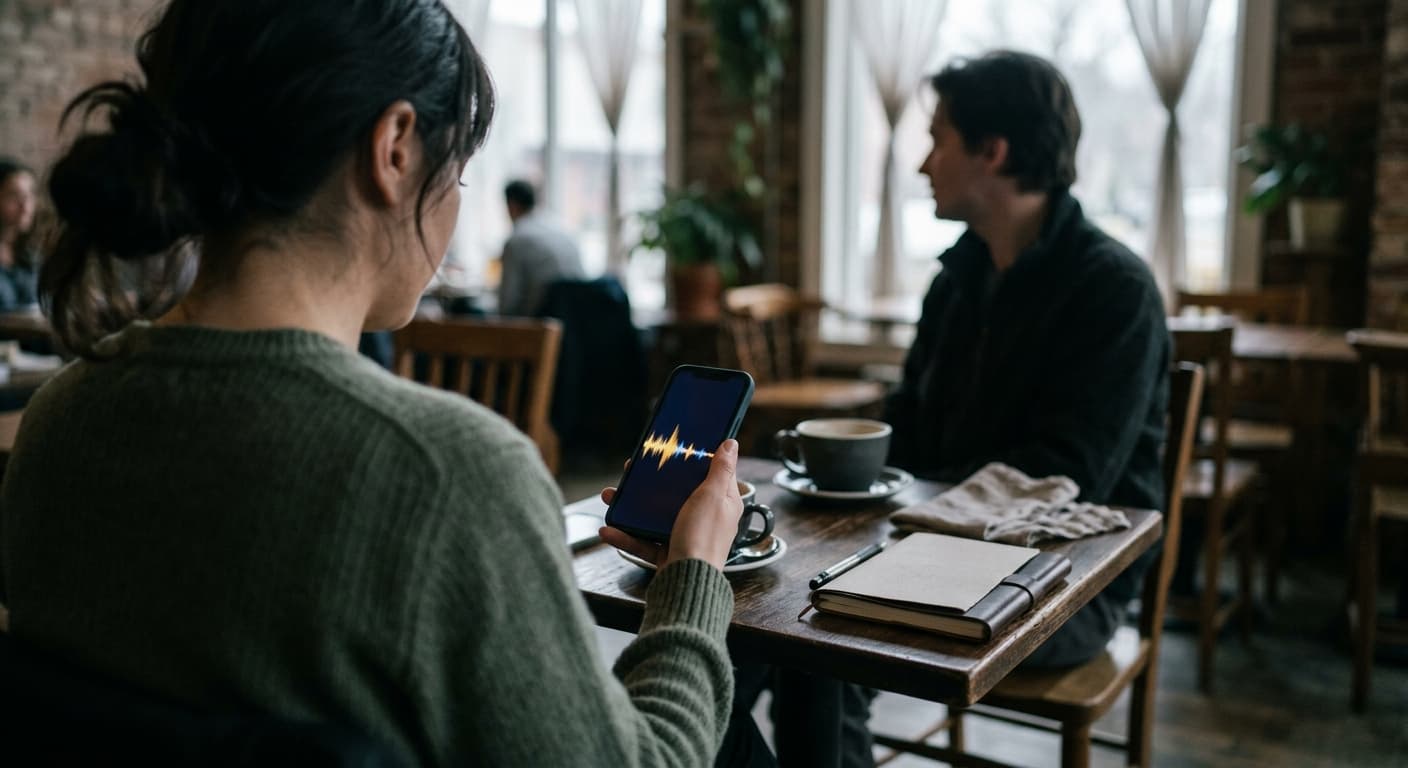
Hawaii follows a one-party consent rule under HRS 803-42, allowing participants to record phone calls and in-person conversations without notifying other parties. A separate statute, HRS 711-1111, requires all-party consent for recordings made in private places where people hold a reasonable expectation of privacy.
Hawaii permits audio recording of conversations under a one-party consent framework. Under HRS 803-42, you can legally record any phone call or in-person conversation as long as you are a party to the communication or have obtained consent from at least one participant. You do not need to inform the other parties that a recording is taking place.
However, Hawaii has a unique wrinkle that sets it apart from many other one-party consent states. A separate privacy statute, HRS 711-1111, requires all-party consent for recording in "private places." This means the consent rules shift depending on where the recording takes place.
This guide covers the specific statutes that govern audio recording in Hawaii, the private places exception, criminal and civil penalties for violations, how recordings are treated as evidence, and practical guidance for staying on the right side of the law.
Hawaii One-Party Consent Law Explained
The Core Statute: HRS 803-42
Hawaii's audio recording framework is built on HRS 803-42, which prohibits the intentional interception, use, or disclosure of wire, oral, or electronic communications. The statute makes it a criminal offense to intercept communications without authorization.
The critical exception is found in subsection (b)(4), which states that it is not unlawful for "a person acting under color of law to intercept a wire, oral, or electronic communication, where such person is a party to the communication or one of the parties to the communication has given prior consent to such interception." The broader exception that lets ordinary private citizens record their own conversations is subsection (b)(3)(A), which covers a person NOT acting under color of law who is a party to the communication or has the prior consent of a party, unless the communication is intercepted for the purpose of committing a criminal or tortious act.
This means that if you are a participant in a conversation, your own knowledge that you are recording satisfies the consent requirement. You do not need to announce the recording or obtain permission from anyone else.
What One-Party Consent Means in Practice
Under Hawaii's one-party consent rule, your own awareness of the recording constitutes sufficient consent. This means:
- You can record any phone call you are part of without telling the other person
- You can record in-person conversations you participate in without announcing the recording
- You can use a voice recorder, smartphone app, or any other device to capture conversations you are involved in
- A third party can record a conversation if at least one participant has given prior consent
The law draws a clear line between recording your own conversations (legal) and secretly recording other people's private conversations that you are not part of (illegal interception).
How Hawaii Defines "Consent"
Hawaii's statute does not require written or verbal consent from a specific party. The consent of one party to the communication is sufficient. When you record a conversation you are participating in, your own awareness of the recording constitutes consent. No additional notice, disclosure, or agreement from the other parties is necessary under the wiretapping statute. The Hawaii Supreme Court confirmed this one-party framework in State v. Okubo, 67 Haw. 197, 682 P.2d 79 (1984).
This is different from two-party consent states like California, Florida, and Pennsylvania, where every participant must agree before a recording can begin.
The Private Places Exception: HRS 711-1111
What Makes Hawaii Different
Hawaii has a separate privacy statute that creates an important exception to the one-party consent rule. HRS 711-1111 addresses "violation of privacy in the second degree" and imposes stricter requirements for recordings made in private places.
Under this statute, a person commits the offense of violation of privacy in the second degree if that person "installs or uses, or both, in any private place, without consent of the person or persons entitled to privacy therein, any device for observing, recording, amplifying, or broadcasting sounds or events in that place."
What Qualifies as a "Private Place"
The statute defines a private place as "a place where one may reasonably expect to be safe from casual or hostile intrusion or surveillance." However, this does not include "a place to which the public or a substantial group of the public has access."
Examples of private places under Hawaii law include:
- Private residences and homes
- Hotel rooms and rental accommodations
- Private offices with closed doors
- Bathrooms, locker rooms, and changing areas
- Medical examination rooms
- Any enclosed area where a person has a reasonable expectation of privacy
Examples of locations that are generally not private places:
- Public streets, sidewalks, and parks
- Public beaches
- Open-plan offices and common work areas
- Retail stores and restaurants
- Government buildings open to the public
- Public meeting rooms
All-Party Consent Required in Private Places
The key distinction is this: while HRS 803-42 requires only one-party consent for audio recording generally, HRS 711-1111 requires the consent of all persons entitled to privacy in a private place before any recording device can be installed or used there.
This means that in a private place, you cannot simply rely on your own participation in a conversation to justify recording. You need the consent of everyone present who has a privacy interest in that location.
Penalties for Violating the Private Places Rule
Violation of privacy in the second degree under HRS 711-1111 is a misdemeanor. Under Hawaii's sentencing guidelines in HRS 706-663, a misdemeanor conviction can result in:
- Up to 1 year in jail
- Fines up to $2,000
- Probation
- A court order to destroy the recording
Types of Audio Recording Covered
In-Person Conversations
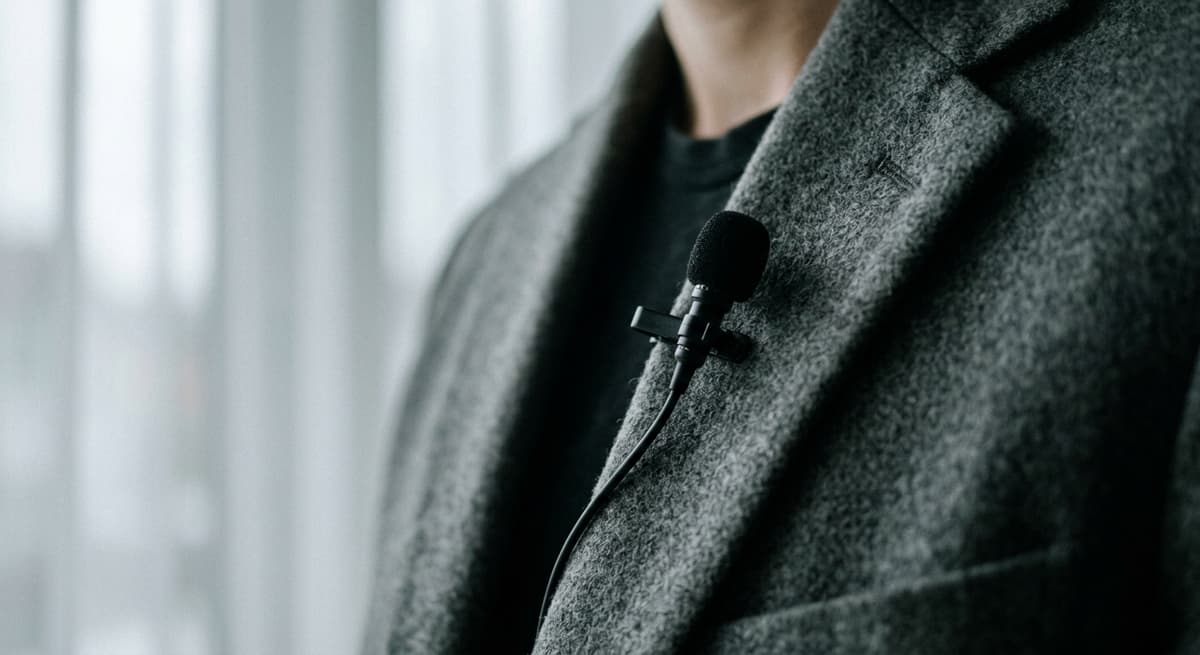
HRS 803-42 covers "oral communications," which are defined as any oral communication uttered by a person exhibiting an expectation that the communication is not subject to interception, under circumstances justifying that expectation. You can legally record face-to-face conversations in Hawaii when:
- You are an active participant in the conversation
- The conversation takes place in a public or semi-public setting
- At least one participant has consented to the recording
You cannot legally record in-person conversations when:
- You are not a participant and no participant has consented
- You are recording in a private place without the consent of all persons entitled to privacy there
- You are recording with criminal or tortious intent
Telephone and VoIP Calls
The "wire communication" definition in HRS 803-42 covers telephone communications, which includes any aural transfer made through the use of facilities for the transmission of communications by wire, cable, or other similar connection. Under one-party consent, you can record:
- Landline phone calls you participate in
- Cell phone calls you are part of
- VoIP calls through platforms like Zoom, Microsoft Teams, Google Meet, and Skype
- Video calls with audio components
The same one-party consent rule applies: as a participant in the call, your knowledge of the recording satisfies the consent requirement.
Electronic Communications
HRS 803-42 also covers electronic communications, defined as any transfer of signs, signals, writing, images, sounds, data, or intelligence transmitted in whole or in part by a wire, radio, electromagnetic, photoelectronic, or photo-optical system. The interception of electronic communications without the consent of any party falls under the wiretapping statute.
Voicemail and Stored Communications
Accessing someone else's voicemail or stored audio messages without authorization may violate both state and federal law. The federal Stored Communications Act (18 U.S.C. 2701) prohibits unauthorized access to stored electronic communications and works alongside Hawaii's state provisions.
Criminal Penalties for Illegal Audio Recording
Hawaii treats illegal audio recording as a serious criminal matter. The penalties vary depending on which statute is violated.
Illegal Interception: Class C Felony (HRS 803-42)
Under HRS 803-42, the intentional interception, use, or disclosure of wire, oral, or electronic communications without authorization is a Class C felony. Under Hawaii's sentencing guidelines in HRS 706-660 and HRS 706-640:
- Imprisonment for an indeterminate term of up to 5 years under HRS 706-660
- Fines up to $10,000 under HRS 706-640
- Probation may be imposed in lieu of imprisonment
Privacy Violation in Private Places: Misdemeanor (HRS 711-1111)
Recording in a private place without the consent of all persons entitled to privacy there is a misdemeanor under HRS 711-1111:
- Up to 1 year in jail
- Fines up to $2,000
- Court-ordered destruction of the recording
Privacy Violation in the First Degree: Class C Felony (HRS 711-1110.9)
If the recording involves intimate images or is made in certain aggravated circumstances, the charge can be elevated to violation of privacy in the first degree under HRS 711-1110.9, which is a Class C felony:
- Up to 5 years in prison
- Fines up to $10,000
Penalty Summary Table
| Offense | Statute | Classification | Maximum Penalty |
|---|---|---|---|
| Illegal interception of communications | HRS 803-42 | Class C Felony | Up to 5 years in prison, $10,000 fine |
| Recording in a private place without consent | HRS 711-1111 | Misdemeanor | Up to 1 year in jail, $2,000 fine |
| Intimate image recording violations | HRS 711-1110.9 | Class C Felony | Up to 5 years in prison, $10,000 fine |
Civil Liability for Illegal Audio Recording
Statutory Civil Remedies: HRS 803-48
Beyond criminal prosecution, victims of illegal audio recording in Hawaii can pursue civil remedies under HRS 803-48. A person whose communication was illegally intercepted may recover:
- The greater of (a) actual damages suffered as a result of the violation plus any profits the violator made from the illegal recording, or (b) statutory damages of the greater of $100 per day of violation or $10,000
- Equitable or declaratory relief as the court deems appropriate
- Reasonable attorney fees and litigation costs
A good faith reliance on a court order or other statutory authorization is a complete defense to civil claims under this statute.
Additional Civil Claims
In addition to the statutory remedy, victims may also pursue:
- Invasion of privacy tort claims under Hawaii common law
- Intentional infliction of emotional distress where the recording caused severe emotional harm
- Negligence claims in some circumstances
Audio Recordings as Evidence in Hawaii Courts
General Admissibility
Audio recordings made legally under Hawaii's one-party consent law are generally admissible as evidence in court proceedings. To admit a recording, the offering party must establish:
- Authentication: Proof that the recording is genuine and has not been tampered with or altered
- Relevance: The recording must relate to a matter at issue in the case
- Identification of speakers: The voices on the recording must be identified, either by the recording party or through other testimony
- Completeness: Courts may require that the full recording be made available
Under the Hawaii Rules of Evidence, Rule 901, authentication requires evidence sufficient to support a finding that the matter in question is what its proponent claims it to be.
Illegally Obtained Recordings
Recordings obtained in violation of HRS 803-42 face significant admissibility challenges. An aggrieved person may move to suppress the contents of an intercepted communication, or evidence derived from it, on the grounds that it was unlawfully intercepted.
Criminal vs. Civil Cases
- Criminal cases: Illegally obtained recordings are typically inadmissible and may result in felony charges against the person who made the recording
- Civil cases: Courts have more discretion, but illegally obtained evidence may still be excluded and could expose the recording party to civil liability under HRS 803-48
The Criminal or Tortious Purpose Exception

How It Works
Hawaii's one-party consent exception includes an important limitation. The consent exception under HRS 803-42 does not apply if the communication is intercepted "for the purpose of committing any criminal or tortious act in violation of the Constitution or laws of the United States or of this State."
This means you cannot use one-party consent as a shield if your purpose in recording is to:
- Commit blackmail or extortion
- Harass or intimidate someone
- Facilitate fraud or deception
- Further any other criminal objective
Proving Tortious Purpose
The burden of proving criminal or tortious purpose generally falls on the party seeking to challenge the recording. Simply recording a conversation that captures unflattering information about someone does not constitute a tortious purpose. The intent behind the recording must be to further an independent criminal or tortious act.
Federal Law and Hawaii Audio Recording
The Federal Wiretap Act
The federal Wiretap Act (18 U.S.C. 2511) follows a one-party consent model that aligns with Hawaii's approach under HRS 803-42. Under federal law, recording a conversation is legal as long as at least one party consents. Since Hawaii's one-party consent standard matches the federal baseline, recordings that comply with HRS 803-42 are also legal under federal law.
The Stored Communications Act
The federal Stored Communications Act (18 U.S.C. 2701) prohibits unauthorized access to stored electronic communications. This statute applies when someone accesses another person's voicemail, saved audio files, or cloud-stored recordings without permission.
When Federal and State Law Interact
Federal wiretap law sets a floor for privacy protections. States can impose stricter requirements but cannot allow less protection than the federal standard. Hawaii's private places exception under HRS 711-1111 is an example of a state imposing stricter requirements in specific circumstances.
Recording Across State Lines
Interstate Call Recording
Hawaii's geographic isolation as an island state means most interstate calls involve significant distance. When you are in Hawaii and calling someone in another state, you need to consider both Hawaii law and the law of the other state.
If you call someone in a two-party consent state, the stricter law typically applies. States requiring all-party consent include:
- California
- Connecticut
- Florida
- Illinois
- Maryland
- Massachusetts
- Montana
- New Hampshire
- Pennsylvania
- Washington
Best Practices for Interstate Recording
When recording calls with people in other states from Hawaii:
- Determine where the other party is located before recording
- If the other party is in a two-party consent state, inform them that the call is being recorded
- Get explicit verbal consent at the start of the call when in doubt
- Document the consent on the recording itself
AI Recording and Transcription Tools
Legal Status of AI Tools in Hawaii
Because Hawaii follows one-party consent under HRS 803-42, you can use AI-powered recording and transcription tools to capture conversations you participate in. This includes:
- AI meeting assistants that join video calls
- Smartphone apps that record and transcribe calls
- Wearable AI voice recorders like Plaud
- Built-in transcription features in Zoom, Microsoft Teams, and Google Meet
Wearable Recording Devices
Hawaii's one-party consent law permits the use of wearable recording devices like AI voice recorders and smart glasses to capture audio in most settings. However, the private places exception under HRS 711-1111 still applies. Using a wearable recorder in a private place without all-party consent could result in misdemeanor charges.
Practical Considerations
- Data security matters. AI services may store recordings on third-party servers. Understand where your audio data goes and who has access.
- Review transcripts for accuracy. AI transcription is not perfect. Errors in automated transcripts could be problematic if used as evidence.
- Private places still require all-party consent. The convenience of wearable technology does not override HRS 711-1111.
Common Scenarios and Legal Analysis
Can I Record a Conversation With My Lawyer?
Yes. As a participant in the conversation, you can record discussions with your attorney under one-party consent. The attorney-client privilege protects the contents of the conversation regardless of whether it is recorded. However, your lawyer may object on ethical grounds.
Can I Record Customer Service Calls?
Yes. When you call a business and they play a message stating "this call may be recorded," that is the business exercising its one-party consent right. You have the same right as the other party on the call. You can record any customer service call you participate in.
Can I Record a Conversation at a Restaurant or Beach?
Public spaces like restaurants and beaches are generally not "private places" under HRS 711-1111. Recording your own conversations in these settings is legal under one-party consent. Hawaii's famous beaches, parks, and outdoor spaces are public areas where privacy expectations are limited.
Can I Record My Ex-Spouse or Co-Parent?
Yes, during conversations you are part of. This is common in custody disputes. However, do not record your children's private conversations without being present, and do not use children to secretly record the other parent.
Federal Deepfake Developments
Hawaii's election deepfake law, Act 191 SLH 2024, was permanently enjoined as facially unconstitutional in Babylon Bee LLC v. Lopez, No. 1:25-cv-00234 (D. Haw. Jan. 30, 2026) (Park, J.). The federal TAKE IT DOWN Act (effective May 19, 2026) imposes 48-hour platform takedown obligations for non-consensual intimate images, including AI-generated deepfakes. These developments do not change Hawaii's core one-party consent rules for audio recording but are relevant context for how recorded content may be lawfully shared or distributed.
More Hawaii Recording Laws
Audio Recording | Video Recording | Voyeurism and Hidden Cameras | Workplace Recording | Recording Police | Phone Call Recording | Security Cameras | Recording in Public | Landlord-Tenant Recording | Dashcam Laws | School Recording | Medical Recording
More Hawaii Recording Topics
More Hawaii Laws
Frequently Asked Questions
Is it legal to audio record a conversation in Hawaii without telling the other person?
Yes. Hawaii is a one-party consent state under HRS 803-42. As a participant in the conversation, your own knowledge of the recording satisfies the consent requirement. You do not need to inform or get permission from the other person. However, if the conversation takes place in a private place as defined by HRS 711-1111, all parties must consent.
What is the private places exception in Hawaii recording law?
HRS 711-1111 requires all-party consent for recording in private places, which are locations where someone may reasonably expect to be safe from casual or hostile intrusion or surveillance. This includes private homes, hotel rooms, and closed offices. Public spaces and areas accessible to a substantial group of the public are not considered private places.
What are the penalties for illegally recording audio in Hawaii?
Illegal interception under HRS 803-42 is a Class C felony carrying up to 5 years in prison and fines up to $10,000. Recording in a private place without consent under HRS 711-1111 is a misdemeanor with up to 1 year in jail and fines up to $2,000. Victims can also sue for civil damages of at least $10,000 under HRS 803-48.
Can I use an AI voice recorder in Hawaii?
Yes, in most settings. Hawaii one-party consent law permits the use of AI voice recorders and wearable recording devices to capture conversations you participate in. However, the private places exception under HRS 711-1111 still applies, so you need all-party consent when recording in private locations like closed offices or private homes.
Can an illegally recorded conversation be used as evidence in Hawaii?
Generally, no. An aggrieved person can move to suppress the contents of an unlawfully intercepted communication, or evidence derived from it. Illegally obtained recordings face significant admissibility challenges in both criminal and civil proceedings.
Updates
Independently fact-checked against the cited primary sources; governing law re-checked for recent changes
Fixed five sourcing errors: removed a fabricated HRS 803-47 suppression-motion cite (803-47 is actually the annual wiretap-reporting statute); swapped the (b)(3)/(b)(4) subsections, which had the private-citizen and law-enforcement exceptions backwards; corrected HRS 803-48 civil damages from cumulative to the statute's actual 'greater of' alternative structure; and re-attributed the $10,000 fine to HRS 706-640 (706-660 sets only the prison term).
Governing law re-checked for recent changes
Governing law re-checked for recent changes
Reviewed and approved by an editor
The Law Behind This Article
This article rests on the statutory provisions below, held in our own legal record and retrieved from the official source. Tap a section to read the operative text.
Hawaii Revised Statutes, Chapter 803: ARRESTS, SEARCHES, SEARCH WARRANTS
§ 803-42Interception, access, and disclosure of wire, oral, or electronic communications, use of pen register, trap and trace device, and mobile tracking device prohibitedIn forcecited in 20 of our articles
(a) Except as otherwise specifically provided in this part, any person who: (1) Intentionally intercepts, endeavors to intercept, or procures any other person to intercept or endeavor to intercept, any wire, oral, or electronic communication; (2) Intentionally uses, endeavors to use, or procures any other person to use or endeavor to use any electronic, mechanical, or other device to intercept any wire, oral, or electronic communication when: (A) Such a device is affixed to, or otherwise transmits a signal through, a wire, cable, or other similar connection used in wire communication; or (B) Such a device transmits communications by radio, or interferes with the transmission of such communication; (3) Intentionally discloses, or endeavors to disclose, to any other person the contents of any wire, oral, or electronic communication, knowing or having reason to know that the information was obtained through the interception of a wire, oral, or electronic communication in violation of this part; (4) Intentionally uses, or endeavors to use, the contents of any wire, oral, or electronic communication, knowing or having reason to know that the information was obtained through the…
Official text (excerpt) · last checked 2026-08-28 · Read the full text in our law library · Verify at capitol.hawaii.gov
Cited in 14 court opinions in our collectionLatest citing opinion in our collection: 2026
In the courts (editorial summary, independently checked):State v. Lo (1983) held HRS 803-42(b)(3) barred police from secretly installing recording devices in a hotel room even though one participant consented, and suppressed the evidence. State v. Lee (1984) held a recorder worn by a consenting participant is not an installation in a private place, so no violation.
Opinions citing this section in our collection:
- State v. Lo (Hawaii Supreme Court 1983, 66 Haw. 653)✓Agents wired a hotel room and recorded a doctor lured there by a cooperating patient; the Hawaii Supreme Court held the statute bars installing a recording device in any private place without the consent of those entitled to privacy, and affirmed suppression.
- State v. Okubo (Hawaii Supreme Court 1984, 67 Haw. 197)✓Police recorded roughly forty bribery conversations using body recorders and phone taps with the participating officers' consent; the Hawaii Supreme Court found the consensual monitoring valid under the statute and the state constitution.
- State v. Lee (Hawaii Supreme Court 1984, 67 Haw. 307)✓An officer posing as a patient wore a recorder into a doctor's private office; the Hawaii Supreme Court held a device worn on a participant's body is not an installation in a private place, so the statute was not violated, distinguishing Lo.
Identified automatically from the court opinions citing this section — not a ranking of which case controls.
§ 803-48Recovery of civil damages authorizedIn forcecited in 13 of our articles
Any person whose wire, oral, or electronic communication is accessed, intercepted, disclosed, or used in violation of this part shall[:] (1) Have a civil cause of action against any person who accesses, intercepts, discloses, or uses, or procures any other person to access, intercept, disclose, or use the communications[;] and (2) Be entitled to recover from any such person: (A) The greater of[:] (i) The sum of the actual damages suffered by the plaintiff and any profits made by the violator as a result of the violation[;] or (ii) Statutory damages of the greater of $100 a day for each day of violation or $10,000; (B) Punitive damages, where appropriate; and (C) A reasonable attorney's fee and other litigation costs reasonably incurred. The aggrieved person may also seek and be awarded such preliminary, and other equitable or declaratory relief as may be appropriate. A good faith reliance on a court order shall constitute a complete defense to any civil action brought under this part. [L 1978, c 218, pt of §2; am L 1986, c 303, §8; am L 1989, c 164, §10; am L 2006, c 200, pt of §4]
Official text (excerpt) · last checked 2026-07-30 · Read the full text in our law library · Verify at capitol.hawaii.gov
Hawaii Revised Statutes, Chapter 706: DISPOSITION OF CONVICTED DEFENDANTS
§ 706-640Authorized finesIn forcecited in 2 of our articles
(1) A person who has been convicted of an offense may be sentenced to pay a fine not exceeding: (a) $50,000, when the conviction is of a class A felony, murder in the first or second degree, or attempted murder in the first or second degree; (b) $25,000, when the conviction is of a class B felony; (c) $10,000, when the conviction is of a class C felony; (d) $2,000, when the conviction is of a misdemeanor; (e) $1,000, when the conviction is of a petty misdemeanor or a violation; (f) Any higher amount equal to double the pecuniary gain derived from the offense by the defendant; (g) Any higher or lower amount specifically authorized by statute. (2) Notwithstanding section 706-641, the court shall impose a mandatory fine upon any defendant convicted of theft in the first or second degree committed by receiving stolen property as set forth in section 708-830(7). The fine imposed shall be the greater of double the value of the stolen property received or $25,000 in the case of a conviction for theft in the first degree; or the greater of double the value of the stolen property received or $10,000 in the case of a conviction for theft in the second degree.
Official text (excerpt) · last checked 2026-07-30 · Read the full text in our law library · Verify at capitol.hawaii.gov
Cited in 21 court opinions in our collectionLatest citing opinion in our collection: 2025
Opinions citing this section in our collection:
- State v. Yong Shik Won (Hawaii Supreme Court 2015, 137 Haw. 330)“…y days.” HRS § 701-107(4) (Supp. 2005). 8 HRS § 706-640(1)(e). 9 HRS § 706-60…”
- Adams v. State (Hawaii Supreme Court 2003, 103 Haw. 214)“…ssibility of suspension of sentence or parole.” Pursuant to HRS § 706-640 (Supp.1997), the maximum possible fine…”
- State v. Silva (Hawaii Intermediate Court of Appeals 1999, 91 Haw. 111)“…n or upon premises. (2) Simple trespass is a violation. HRS § 706-640 (Supp.1998) provides that a person conv…”
Identified automatically from the court opinions citing this section — not a ranking of which case controls.
§ 706-660Sentence of imprisonment for class B and C felonies; ordinary terms; discretionary termsIn forcecited in 5 of our articles
(1) Except as provided in subsection (2), a person who has been convicted of a class B or class C felony may be sentenced to an indeterminate term of imprisonment except as provided for in section 706-660.1 relating to the use of firearms in certain felony offenses and section 706-606.5 relating to repeat offenders. When ordering such a sentence, the court shall impose the maximum length of imprisonment which shall be as follows: (a) For a class B felony--ten years; and (b) For a class C felony--five years. The minimum length of imprisonment shall be determined by the Hawaii paroling authority in accordance with section 706-669. (2) A person who has been convicted of a class B or class C felony for any offense under part IV of chapter 712 may be sentenced to an indeterminate term of imprisonment; provided that this subsection shall not apply to sentences imposed under sections 706-606.5, 706-660.1, 712-1240.5, 712-1240.8 as that section was in effect prior to July 1, 2016, 712-1242, 712-1245, 712-1249.5, 712‑1249.6, 712-1249.7, and 712-1257.
Official text (excerpt) · last checked 2026-07-30 · Read the full text in our law library · Verify at capitol.hawaii.gov
Cited in 78 court opinions in our collectionLatest citing opinion in our collection: 2026
Opinions citing this section in our collection:
- State v. Gaylord (Hawaii Supreme Court 1995, 78 Haw. 127)“…r alia, by an indeterminate ten-year term of imprisonment. HRS § 706-660(1) (Supp.1992). . We recognize th…”
- State v. Soto (Hawaii Supreme Court 1997, 84 Haw. 229)“…murder was a class B felony and was punishable pursuant to HRS § 706-660 (1985), 21 “which delineat…”
- State v. Rivera (Hawaii Supreme Court 2004, 106 Haw. 146)“…to the amendments made by Act 102 (1965), the commentary to HRS § 706-660 (1976) states, inter alia: In 1965…”
Identified automatically from the court opinions citing this section — not a ranking of which case controls.
Hawaii Revised Statutes, Chapter 711: OFFENSES AGAINST PUBLIC ORDER
§ 711-1110.9Violation of privacy in the first degreeIn forcecited in 16 of our articles
(1) A person commits the offense of violation of privacy in the first degree if, except in the execution of a public duty or as authorized by law: (a) The person intentionally or knowingly installs or uses, or both, in any private place, without consent of the person or persons entitled to privacy therein, any device for observing, recording, amplifying, or broadcasting another person in a stage of undress or sexual activity in that place; (b) The person knowingly discloses or threatens to disclose an image or video of another identifiable person either in the nude, as defined in section 712‑1210, or engaging in sexual conduct, as defined in section 712-1210, without the consent of the depicted person, with intent to harm substantially the depicted person with respect to that person's health, safety, business, calling, career, education, financial condition, reputation, or personal relationships or as an act of revenge or retribution; or (c) The person intentionally creates or discloses or threatens to disclose an image or video of a composite fictitious person depicted in the nude as defined in section 712-1210, or engaged in sexual conduct as defined in section 712-1210, that…
Official text (excerpt) · last checked 2026-09-03 · Read the full text in our law library · Verify at capitol.hawaii.gov
Cited in 7 court opinions in our collectionLatest citing opinion in our collection: 2026
In the courts (editorial summary, independently checked):Hawaii courts have construed HRS 711-1110.9 in the Kaakimaka litigation. State v. Kaakimaka (2026) held subsection (1)(a) requires the device, or the person using it, to be inside the private place, and reversed a conviction where the phone stayed outside. A 2025 Kaakimaka opinion upheld the charge as drawn.
Opinions citing this section in our collection:
- State v. Kaakimaka (Hawaii Supreme Court 2026)✓A man stood outside a vacation home and aimed his phone at a bathroom window where a 15-year-old was showering; the court held the statute requires the device or the person using it to be inside the private place, found the evidence insufficient, and reversed the conviction.
- State v. Kaakimaka. ICA s.d.o., filed 01/31/2025 [ada], 155 Haw. 297. Opinion by Hiraoka, J. Concurring in Part and Dissenting in Part. Opinion by Guidry J. Concurring in Part and Dissenting in Part. Application for Writ of Certiorari, filed 05/16/2025. S.Ct. Order Accepting Application for Writ of Certiorari, filed 06/23/2025. S.Ct. Amended Order Accepting Application for Writ of Certiorari, filed 06/23/2025 [ada]. (Hawaii Supreme Court 2025)✓Charged with recording a girl showering, the defendant argued his indictment was defective because it did not define "private place"; the court held that term is an attendant circumstance whose statutory definition need not be alleged, and upheld the charge.
- State v. Olive (Hawaii Intermediate Court of Appeals 2025)“…and (b). These offenses are classified as Class C felonies. HRS § 711-1110.9(2) (2014 & 2018 Supp.). HR…”
Identified automatically from the court opinions citing this section — not a ranking of which case controls.
§ 711-1111Violation of privacy in the second degreeIn forcecited in 19 of our articles
(1) A person commits the offense of violation of privacy in the second degree if, except in the execution of a public duty or as authorized by law, the person intentionally: (a) Trespasses on property for the purpose of subjecting anyone to eavesdropping or other surveillance in a private place; (b) Peers or peeps into a window or other opening of a dwelling or other structure adapted for sojourn or overnight accommodations for the purpose of spying on the occupant thereof or invading the privacy of another person with a lewd or unlawful purpose, under circumstances in which a reasonable person in the dwelling or other structure would not expect to be observed; (c) Trespasses on property for the sexual gratification of the actor; (d) Installs or uses, or both, in any private place, without consent of the person or persons entitled to privacy therein, any means or device for observing, recording, amplifying, or broadcasting sounds or events in that place other than another person in a stage of undress or sexual activity; provided that this paragraph shall not prohibit a person from making a video or audio recording or taking a photograph of a law enforcement officer while the…
Official text (excerpt) · last checked 2026-08-31 · Read the full text in our law library · Verify at capitol.hawaii.gov
Cited in 10 court opinions in our collectionLatest citing opinion in our collection: 2026
In the courts (editorial summary, independently checked):Hawaii decisions have construed HRS 711-1111 mainly alongside neighboring statutes. State v. Kaakimaka (2026) read subsections (1)(d) and (1)(e) as an inside and outside pair while construing the first-degree offense. State v. Lee (1984) treated 711-1111(1) as drawn from Model Penal Code 250.12 in reading the wiretap statute.
Opinions citing this section in our collection:
- State v. Lee (Hawaii Supreme Court 1984, 67 Haw. 307)✓An undercover officer wearing a recorder taped conversations in a doctor's private office; construing the wiretap consent provision drawn from HRS 711-1111(1)(b) and (c), the court held a body-worn device is not an "installation" in a private place, so the tapes were admissible.
- State v. Kaakimaka (Hawaii Supreme Court 2026)“…711-1110.9 and second degree violation of privacy under HRS § 711-1111 (2014 & Supp. 2025) convinces me that…”
- State v. Lester (Hawaii Supreme Court 1982, 64 Haw. 659)“…The Code provision covering wiretapping and eavesdropping, HRS § 711-1111, permits "consensual eavesdropping".…”
Identified automatically from the court opinions citing this section — not a ranking of which case controls.
United States Code Title 18
§ 2511Interception and disclosure of wire, oral, or electronic communications prohibitedIn forcecited in 418 of our articles
Except as otherwise specifically provided in this chapter any person who— intentionally intercepts, endeavors to intercept, or procures any other person to intercept or endeavor to intercept, any wire, oral, or electronic communication; intentionally uses, endeavors to use, or procures any other person to use or endeavor to use any electronic, mechanical, or other device to intercept any oral communication when— such device is affixed to, or otherwise transmits a signal through, a wire, cable, or other like connection used in wire communication; or such device transmits communications by radio, or interferes with the transmission of such communication; or such person knows, or has reason to know, that such device or any component thereof has been sent through the mail or transported in interstate or foreign commerce; or such use or endeavor to use (A) takes place on the premises of any business or other commercial establishment the operations of which affect interstate or foreign commerce; or (B) obtains or is for the purpose of obtaining information relating to the operations of any business or other commercial establishment the operations of which affect interstate or foreign…
Official text (excerpt) · last checked 2026-08-28 · Read the full text in our law library · Verify at uscode.house.gov
Cited in 2,045 court opinions in our collectionLatest citing opinion in our collection: 2026
In the courts (editorial summary, independently checked):Griggs-Ryan v. Smith (1990) applied the Section 2511(2)(d) prior-consent exception, treating a tenant repeatedly told that all incoming calls were taped as having impliedly consented. United States v. United States District Court (1972) read the then-current Section 2511(3) as conferring no presidential surveillance power.
Opinions citing this section in our collection:
- Mitchell v. Forsyth (Supreme Court of the United States 1985, 472 U.S. 511)✓The Attorney General authorized a warrantless 1970 national security wiretap that caught the plaintiff's calls; the Court held the since-repealed Section 2511(3) disclaimer left the tap lawful under Title III, and that Mitchell had qualified immunity.
- United States v. United States District Court for the Eastern District of Michigan (Supreme Court of the United States 1972, 407 U.S. 297)✓The Attorney General approved warrantless wiretaps on members of a domestic group accused of bombing a CIA office; the Court read Section 2511(3) as a congressional disclaimer conferring no surveillance power, then held the Fourth Amendment required prior judicial approval.
- Forsyth v. Barr (Court of Appeals for the Fifth Circuit 1994, 19 F.3d 1527)✓Dallas police used, in an internal affairs probe of an officer, calls private parties allegedly intercepted illegally; assuming that was unlawful, the Fifth Circuit held Section 2517(1) and (2) allowed the disclosure and use, defeating the Section 2511(1)(c) and (d) claims.
Identified automatically from the court opinions citing this section — not a ranking of which case controls.
§ 2701Unlawful access to stored communicationsIn forcecited in 19 of our articles
Except as provided in subsection (c) of this section whoever— intentionally accesses without authorization a facility through which an electronic communication service is provided; or intentionally exceeds an authorization to access that facility; and thereby obtains, alters, or prevents authorized access to a wire or electronic communication while it is in electronic storage in such system shall be punished as provided in subsection (b) of this section. The punishment for an offense under subsection (a) of this section is— if the offense is committed for purposes of commercial advantage, malicious destruction or damage, or private commercial gain, or in furtherance of any criminal or tortious act in violation of the Constitution or laws of the United States or any State— a fine under this title or imprisonment for not more than 5 years, or both, in the case of a first offense under this subparagraph; and a fine under this title or imprisonment for not more than 10 years, or both, for any subsequent offense under this subparagraph; and in any other case— a fine under this title or imprisonment for not more than 1 year or both, in the case of a first offense under this paragraph;…
Official text (excerpt) · last checked 2026-07-28 · Read the full text in our law library · Verify at uscode.house.gov
Cited in 724 court opinions in our collectionLatest citing opinion in our collection: 2026
Opinions citing this section in our collection:
- United States v. Warshak (Court of Appeals for the Sixth Circuit 2010, 631 F.3d 266)“…ied in good faith on the Stored Communications Act (“SCA”), 18 U.S.C. §§ 2701 et seq., a statute that allows the gove…”
- Guest v. Leis (Court of Appeals for the Sixth Circuit 2001, 255 F.3d 325)“…7 *340 In their brief, plaintiffs mention in passing 18 U.S.C. § 2701 , which prohibits intentional unlawful…”
- City of Ontario v. Quon (Supreme Court of the United States 2010, 560 U.S. 746)“…Raising claims under Rev. Stat. §1979, 42 U. S. C. §1983; 18 U. S. C. §2701 et seq., popularly known as the Stored…”
Identified automatically from the court opinions citing this section — not a ranking of which case controls.
Search our full record of US law — 2.1 million sections, every state + federal →
Sources and References
- Hawaii Revised Statutes 803-42 - Interception of Wire, Oral, or Electronic Communications(capitol.hawaii.gov).gov
- Hawaii Revised Statutes 803-48 - Recovery of Civil Damages Authorized(capitol.hawaii.gov).gov
- Hawaii Revised Statutes 711-1111 - Violation of Privacy in the Second Degree(capitol.hawaii.gov).gov
- Hawaii Revised Statutes 711-1110.9 - Violation of Privacy in the First Degree(capitol.hawaii.gov).gov
- Hawaii Revised Statutes 706-660 - Sentence of Imprisonment for Class B and C Felonies(capitol.hawaii.gov).gov
- Hawaii Rules of Evidence Rule 901 - Authentication(capitol.hawaii.gov).gov
- 18 U.S.C. 2511 - Federal Wiretap Act(law.cornell.edu)
- 18 U.S.C. 2701 - Federal Stored Communications Act(law.cornell.edu)
- Hawaii Revised Statutes 706-640 - Fines for Class C Felonies(capitol.hawaii.gov).gov