
Maine
Maine Audio Recording Laws: One-Party Consent Rules and Penalties (2026)
Independently fact-checked against primary sources (last audited August 15, 2026). · Reviewed by the RecordingLaw editorial team. · Law checked current as of August 15, 2026. · 7 primary sources cited on this page. How we verify our legal content
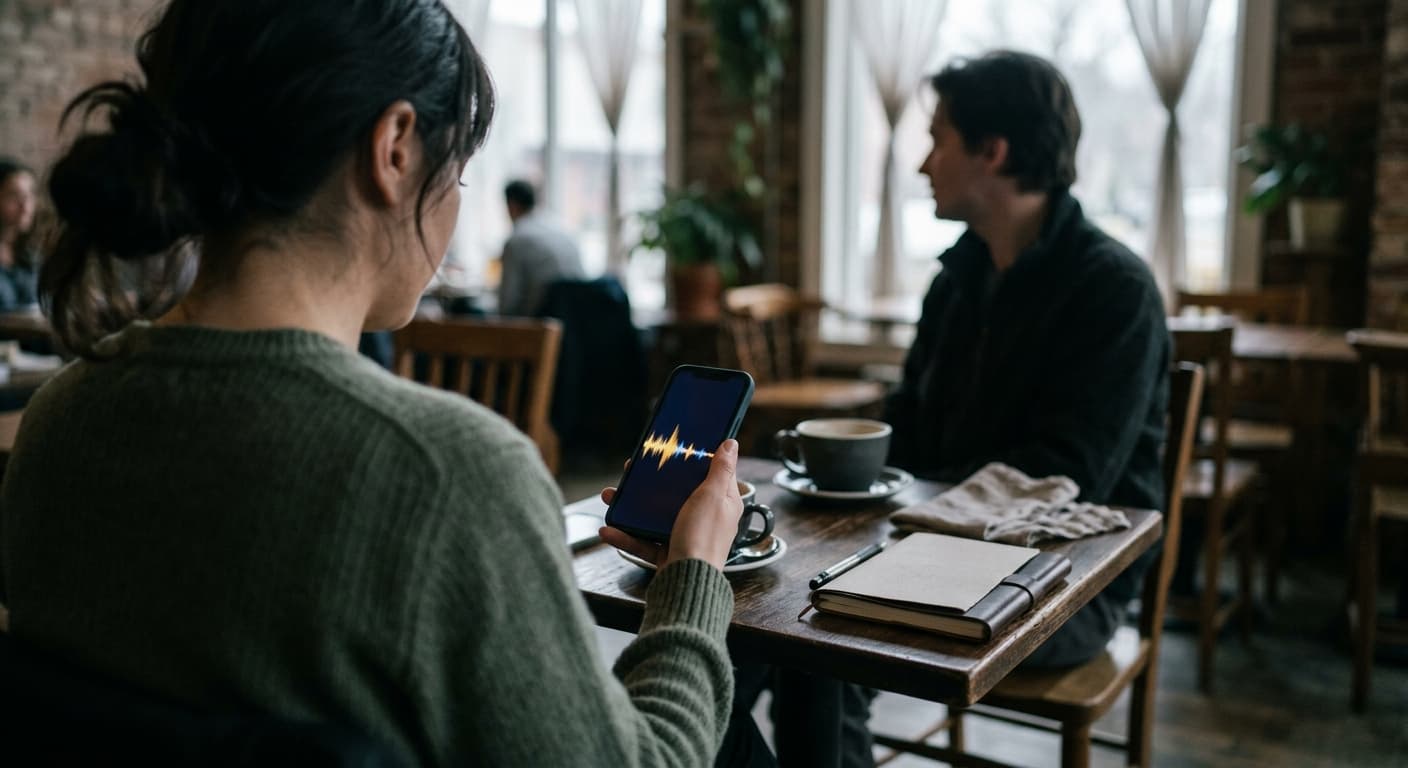
Maine is a one-party consent state for audio recording. Under 15 M.R.S. 709(4) and 710, any participant in a phone call or in-person conversation may record it without notifying other parties. Recording in private places such as bathrooms and locker rooms requires all-party consent under a separate statute.
Maine is a one-party consent state for audio recording. Under 15 M.R.S.A. § 710, you can legally record any phone call, in-person conversation, or electronic communication you participate in without notifying or getting permission from other participants. The law requires only that the person doing the recording is a party to the communication, or that one party has given prior consent.
This guide covers everything you need to know about audio recording laws in Maine, including when you can record, what happens when you call someone in another state, the private places exception that overrides the general consent rule, and the criminal and civil penalties for violations.
How Maine's One-Party Consent Law Works
The Statutory Framework
Maine's audio recording rules are found in Title 15, Chapter 102 of the Maine Revised Statutes Annotated. Three statutes form the core framework:
- 15 M.R.S.A. § 710 establishes criminal offenses for intercepting wire and oral communications without authorization.
- 15 M.R.S.A. § 709(4) defines 'intercept' to exclude the sender or receiver of the communication and anyone given prior authority by the sender or receiver, which is the source of the one-party consent exception.
- 15 M.R.S.A. § 711 creates a civil cause of action for victims of illegal interception.
Under § 710, it is a Class C crime to intentionally intercept, endeavor to intercept, or procure any other person to intercept any wire or oral communication. However, § 709(4) defines 'intercept' to exclude the sender or receiver of the communication, so a participant in the conversation who records it has not intercepted anything and is not violating the law. Section 709(4) also excludes 'a person given prior authority by the sender or receiver,' which is why a third party can lawfully record on a participant's behalf.
These statutes are current through the 132nd Maine Legislature (2025), with no amendments to the core audio recording consent provisions.
What "One-Party Consent" Means in Practice
One-party consent means that exactly one person involved in the communication must know about and agree to the recording. That person is typically you, the one pressing the record button. You do not need to announce "this call is being recorded." You do not need a verbal or written agreement from the other parties.
Here are common scenarios where one-party consent protects you:
- Recording a phone call you are on. Whether you use a landline, cell phone, or VoIP service like Zoom, Teams, or Google Meet, you can record the audio without telling the other person.
- Recording an in-person conversation you participate in. If you are having a face-to-face discussion, you can use your phone or a voice recorder to capture it.
- Authorizing someone else to record on your behalf. If you ask a friend to record a meeting you will attend, that recording is lawful because you, a party to the conversation, gave prior consent.
What One-Party Consent Does NOT Allow
The one-party consent exception has clear boundaries. You cannot:
- Record a conversation you are not part of and have no party's consent for. Placing a hidden recorder in a room to capture other people's private conversations without any participant's knowledge is illegal wiretapping.
- Intercept communications between two other people. Tapping a phone line or using software to capture someone else's calls without their knowledge violates the statute.
- Record in a private place without all-party consent. Maine's separate "private places" law (17-A M.R.S.A. § 511) overrides the one-party consent rule in specific locations.
The Private Places Exception
How 17-A M.R.S.A. § 511 Changes the Rules
Maine has a critical exception to the general one-party consent rule. Under 17-A M.R.S.A. § 511, it is a Class D crime to install or use any device in a "private place" to observe, photograph, film, record, amplify, or broadcast sounds or events occurring in that location without the knowledge and consent of all persons entitled to privacy there.
"Private places" under Maine law include:
- Bathrooms
- Locker rooms
- Changing rooms and dressing rooms
- Hotel rooms and bedrooms
- Any location where a person has a reasonable expectation of complete privacy
This means that the general one-party consent rule does not apply in these locations. Even if you are a participant in a conversation taking place in a bathroom or locker room, you need consent from every person present before recording audio.
Why This Matters for Audio Recording
The private places exception catches many people off guard because it creates a two-tier consent system in Maine:
| Location | Consent Required | Statute |
|---|---|---|
| Public sidewalk | One-party (or none) | 15 M.R.S.A. § 709(4)/710 |
| Office or workplace common area | One-party | 15 M.R.S.A. § 709(4)/710 |
| Restaurant or store | One-party | 15 M.R.S.A. § 709(4)/710 |
| Bathroom or locker room | All-party | 17-A M.R.S.A. § 511 |
| Hotel room or bedroom | All-party | 17-A M.R.S.A. § 511 |
| Changing room or dressing room | All-party | 17-A M.R.S.A. § 511 |
Violating the private places rule is a Class D crime, punishable by up to 364 days in jail and a $2,000 fine.
Recording Phone Calls in Maine
Personal Phone Calls
You can record any personal phone call you participate in under Maine's one-party consent rule. This applies to:
- Cell phone calls
- Landline calls
- VoIP calls through Zoom, Microsoft Teams, Google Meet, or similar platforms
- Video call audio (FaceTime, WhatsApp video, etc.)
- Calls made through messaging apps like Signal or Telegram
You do not need to play a beep tone, announce the recording, or get permission. Simply being a party to the call satisfies the consent requirement.
Business Phone Calls
Maine businesses can record calls for quality assurance, training, compliance, and dispute resolution. An employee who participates in the call provides the necessary one-party consent. Many businesses still announce recording as a best practice, using phrases like "This call may be recorded for quality assurance purposes."
The federal Telephone Consumer Protection Act and FCC regulations also apply to business call recording, particularly for telemarketing calls and calls to consumers.
Maine's Online Data Privacy Act (LD 1822), effective July 1, 2026, introduces consumer data protections that may affect how businesses store and manage recorded call data. Businesses that retain recorded call data may face new obligations around data minimization, consumer access requests, and deletion rights.
Interstate Phone Calls
When you are in Maine calling someone in another state, the recording laws of both states may apply. If the other person is in a two-party consent state, the stricter law typically controls. This is especially important for calls to neighboring states.
Neighboring states with stricter rules:
- Massachusetts requires all-party consent
- New Hampshire requires all-party consent
Other all-party consent states to watch for:
- California, Connecticut, Florida, Illinois, Maryland, Montana, Pennsylvania, and Washington
If you regularly record calls with people in Massachusetts or New Hampshire, the safest approach is to inform all parties or get explicit consent before recording.
Recording In-Person Conversations
When Audio Recording Is Legal
You can record in-person conversations in Maine when:
- You are a direct participant in the conversation
- You are in a public place where no reasonable expectation of privacy exists
- One of the parties to the conversation has given you prior consent to record
- The conversation is not taking place in a "private place" as defined by 17-A M.R.S.A. § 511
Public spaces like sidewalks, parks, government buildings, retail stores, and restaurants generally carry no expectation of privacy for conversations held at normal volume.
When Audio Recording Is Illegal
Recording becomes illegal when:
- You are not a party to the conversation and have no participant's consent
- You are recording in a "private place" without all-party consent
- You are planting a hidden device and leaving the room to capture others' conversations
- You are using intercepted communications for blackmail or extortion
Recording Conversations in Your Own Home
You can record conversations in your own home if you are participating. However, the private places exception still applies. You cannot:
- Record guests in your bathroom or bedroom without all-party consent
- Plant a hidden recorder and leave to capture conversations between guests
- Record intimate activities without consent from all participants
Types of Audio Communications Covered
Wire Communications
Wire communications include traditional telephone calls, cell phone calls, and any communication that travels over a wire, cable, or similar connection at some point during transmission. Maine's one-party consent rule under 15 M.R.S.A. § 709(4) covers all wire communications.
Oral Communications
Oral communications are face-to-face, spoken conversations. Under 15 M.R.S.A. § 710, it is unlawful to intercept oral communications without authorization. The one-party consent exception in § 709(4) permits recording when you are a participant.
The Maine Legislature Law Library provides a helpful summary confirming that Maine's consent requirement extends to oral communications and explaining the interplay between the wiretapping statute and the private places statute.
Electronic Communications
Electronic communications include emails, text messages, instant messages, and data transmissions. While Maine's wiretapping statute primarily targets real-time interception, the federal Electronic Communications Privacy Act (18 U.S.C. § 2511) provides a parallel framework. Maine's one-party consent rule aligns with the federal standard.
Penalties for Illegal Audio Recording in Maine
Criminal Penalties Under 15 M.R.S.A. § 710
Illegal interception of audio communications is a serious offense in Maine:
| Offense | Class | Maximum Prison | Maximum Fine |
|---|---|---|---|
| Intercepting communications | Class C | 5 years | $5,000 |
| Disclosing intercepted communications | Class C | 5 years | $5,000 |
| Possessing interception devices | Class C | 5 years | $5,000 |
| Selling interception devices | Class B | 10 years | $20,000 |
Class C crimes in Maine are felonies. A conviction carries a permanent criminal record and potential collateral consequences including loss of professional licenses and firearm rights.
Private Places Violation Penalties
Violating the private places rule under 17-A M.R.S.A. § 511 is a Class D crime:
| Offense | Class | Maximum Prison | Maximum Fine |
|---|---|---|---|
| Recording in private places without all-party consent | Class D | 364 days | $2,000 |
Separately, Maine's sex offender registry (34-A M.R.S.A. section 11203(6)) lists a conviction under 17-A M.R.S.A. section 511(1)(D) -- covertly using equipment in a public place to view or photograph a person's intimate body parts concealed by clothing -- as a registerable sex offense when the victim was under 18. That registration trigger is tied to the public covert-surveillance offense in paragraph (D), not to the private-places violation (recording in a bathroom or locker room) described above, even where the minor-victim or sexual-gratification enhancements in section 511(1)(E)-(F) apply.
Civil Liability Under 15 M.R.S.A. § 711
Victims of illegal audio recording can sue under 15 M.R.S.A. § 711 for:
- Actual damages, but not less than liquidated damages computed at $100 per day for each day of violation
- Reasonable attorney fees and litigation costs
Section 711 does not include a punitive-damages provision; Maine common-law punitive doctrine could apply separately only where independent malice is shown.
The federal Wiretap Act (18 U.S.C. § 2520) also provides a parallel civil remedy: the greater of (1) actual damages plus the violator's profits, or (2) statutory damages of the greater of $100 per day of violation or $10,000, plus punitive damages in appropriate cases and attorney fees.
Using Audio Recordings as Evidence in Maine
Admissibility Standards
Recordings made lawfully under Maine's one-party consent law are generally admissible as evidence in both criminal and civil courts. However, the court will evaluate:
- Authentication: Can you prove the recording is genuine and unaltered?
- Relevance: Does the recording relate to an issue in the case?
- Hearsay rules: Some statements may be excluded under the Maine Rules of Evidence.
- Prejudicial vs. probative value: Does the recording's value outweigh any unfair prejudice?
Best Practices for Preserving Recordings
To maximize the evidentiary value of your audio recordings:
- Use a reliable recording device or app. Smartphone voice memo apps and dedicated digital recorders both work well.
- Do not edit the recording. Preserve the original file in its entirety.
- Back up the recording immediately. Save copies to cloud storage and a separate device.
- Note the date, time, location, and participants. Write this information down as soon as possible after recording.
- Store the recording securely. Protect it from accidental deletion or unauthorized access.
Illegally Obtained Recordings
Recordings made in violation of Maine's wiretapping law are generally inadmissible in court. Using an illegally obtained recording can also expose you to criminal prosecution and civil liability, regardless of what the recording reveals.
Common Audio Recording Scenarios
Can I Record a Conversation With My Landlord?
Yes. If you are participating in a face-to-face or phone conversation with your landlord, Maine's one-party consent law permits you to record the audio. This is useful for documenting verbal agreements about repairs, lease disputes, or instances of harassment.
Can I Record My Doctor?
Yes. As a participant in the conversation, you can audio record your medical appointment. Many patients find this helpful for remembering complex treatment instructions or documenting informed consent discussions.
Can I Record My Boss at Work?
Yes. Under one-party consent, you can record workplace conversations you participate in, including meetings with your supervisor, HR representatives, or coworkers. Be aware that employer policies may prohibit recording, and violating those policies could result in termination even though the recording itself is legal.
Can I Record a Government Official?
Yes. You can audio record conversations with government employees you participate in. Maine's Freedom of Access Act (1 M.R.S.A. §§ 400-414) also permits recording of public government meetings.
Can I Record My Ex-Spouse or Co-Parent?
Yes, during conversations you are part of. This is common in custody disputes. However, do not record your children's private conversations without being present, and do not use children to secretly record the other parent.
Maine's Interception Device Laws
Maine law goes beyond the act of recording itself. Under 15 M.R.S.A. § 710, it is also illegal to:
- Possess interception devices designed or commonly used for intercepting wire or oral communications (Class C crime)
- Sell, exchange, or furnish interception devices with intent to sell (Class B crime, up to 10 years and $20,000 fine)
These provisions do not apply to law enforcement officers acting under proper authorization, communication company employees acting in the normal course of employment, or Department of Corrections employees authorized to exercise law enforcement powers.
More Maine Recording Laws
Audio Recording | Video Recording | Voyeurism & Hidden Cameras | Workplace Recording | Recording Police | Phone Call Recording | Security Cameras | Recording in Public | Landlord-Tenant | Dashcam Laws | Schools | Medical Recording
More Maine Recording Topics
More Maine Laws
Frequently Asked Questions
Is it legal to audio record a conversation in Maine without the other person knowing?
Yes. Maine is a one-party consent state under 15 M.R.S.A. § 709(4) read with § 710. As long as you are a participant in the conversation, you can record the audio without telling or getting permission from other parties. The only exception is in private places like bathrooms and locker rooms, where all-party consent is required under 17-A M.R.S.A. § 511.
Can I record a phone call in Maine?
Yes. You can record any phone call you participate in, including landline, cell phone, and VoIP calls. You do not need to announce the recording or get the other person's permission. For interstate calls to two-party consent states like Massachusetts or New Hampshire, the stricter law typically applies, so you should get all-party consent.
What is the penalty for illegal audio recording in Maine?
Illegal interception of audio communications is a Class C crime under 15 M.R.S.A. section 710, carrying up to 5 years in prison and a $5,000 fine. Selling interception devices is a Class B crime with up to 10 years in prison and a $20,000 fine. Victims can also sue for $100 per day in damages plus attorney fees under 15 M.R.S.A. § 711.
Does Maine's one-party consent rule apply in bathrooms and locker rooms?
No. Maine has a separate private places statute (17-A M.R.S.A. § 511) that requires all-party consent for recording in bathrooms, locker rooms, changing rooms, and similar private locations. This overrides the general one-party consent rule. Violating this law is a Class D crime with up to 364 days in jail.
Can audio recordings be used as evidence in Maine courts?
Yes. Audio recordings made lawfully under Maine's one-party consent law are generally admissible as evidence in both criminal and civil cases. The recording must be authenticated as genuine and unaltered. Illegally obtained recordings are typically inadmissible and could result in criminal charges against the person who made them.
Updates
Corrected the statutory citation for Maine's one-party phone and audio consent rule: the page had repeatedly cited 15 M.R.S. § 712 (a narrow carrier/corrections exceptions provision) as the source, when the actual source is § 709(4)'s definition of 'intercept.' Also fixed the federal civil-damages formula under 18 U.S.C. § 2520.
Independently fact-checked against the cited primary sources; governing law re-checked for recent changes
Corrected the list of civil remedies under 15 M.R.S.A. section 711 to remove punitive damages, which the statute does not provide; it authorizes only actual/liquidated damages and attorney fees.
Corrected an overstated sex-offender-registration claim: Maine's registry statute (34-A M.R.S.A. section 11203(6)) ties registration specifically to a section 511(1)(D) conviction (public covert surveillance of concealed body parts, victim under 18) -- not generally to the private-places recording violation described in this section, even with the under-16/sexual-gratification enhancements.
Governing law re-checked for recent changes
Corrected KeyTakeaway classification: illegal audio interception is a Class C crime (not Class C felony) under 15 M.R.S. section 710 -- Class C in Maine is a felony-level offense but the statute uses the term crime. Fixed FAQ answer accordingly. Added note that the First Circuit extended Glik (open recording) to secret recording of public officials in Project Veritas Action Fund v. Rollins, 982 F.3d 813 (1st Cir. 2020).
Reviewed and approved by an editor
The Law Behind This Article
This article rests on the statutory provisions below, held in our own legal record and retrieved from the official source. Tap a section to read the operative text.
Maine Revised Statutes, Title 15: COURT PROCEDURE -- CRIMINAL, Part 2: PROCEEDINGS BEFORE TRIAL, Chapter 102: INTERCEPTION OF WIRE AND ORAL COMMUNICATIONS
§ 710OffensesIn forcecited in 17 of our articles
1. Interception, oral communications prohibited. Any person, other than an employee of a communication common carrier, a law enforcement officer, an investigative officer, another employee of the Department of Corrections authorized to exercise law enforcement powers as described in Title 34‑A, section 3011 or a jail investigative officer or a jail employee acting at the direction of a jail investigative officer, carrying out practices otherwise permitted by this chapter, who intentionally or knowingly intercepts, attempts to intercept or procures any other person to intercept or attempt to intercept any wire or oral communication is guilty of a Class C crime. 2. Editing of tape recordings in judicial proceedings prohibited. Any person who knowingly or intentionally edits, alters or tampers with any tape, transcription or other sound recording, or knows of such editing, altering or tampering, and presents that recording in any judicial proceeding or proceeding under oath, without fully indicating the nature of the changes made and the original state of the recording, is guilty of a Class C crime. 3. Disclosure or use of wire or oral communications prohibited.
Official text (excerpt) · last checked 2026-08-28 · Read the full text in our law library · Verify at legislature.maine.gov
Cited in 5 court opinions in our collectionLatest citing opinion in our collection: 2022
In the courts (editorial summary, independently checked):Williams v. Poulos (1993) affirmed section 710(1) liability for intercepting employee calls and held section 710(3)(A) and (B) require only knowledge the information came through interception. Glenn A. Griffin v. Cristie J. Griffin (2014) allowed a parent's vicarious consent for a young child only on a good faith best-interest belief.
Opinions citing this section in our collection:
- Glenn A. Griffin v. Cristie J. Griffin (Supreme Judicial Court of Maine 2014, 92 A.3d 1144)✓A father recorded his six-year-old daughter's nightly calls with her mother after overhearing abusive remarks; the court held a parent with a good faith, objectively reasonable best-interest belief may vicariously consent under section 709(4)(C), so section 710 was not violated.
- Archer v. Androscoggin County (Superior Court of Maine 2022)✓An attorney sought recordings of another inmate's jail calls under Maine's public records law; the court applied the wiretap chapter that makes interception a crime under section 710 and held a court-appointed defense lawyer is not within the section 712(4) disclosure exception.
- Williams v. Poulos (Court of Appeals for the First Circuit 1993)✓Company owners secretly recorded employee phone calls using alligator clips wired to a VCR, and their lawyers then used the tapes; the First Circuit affirmed liability under section 710, holding subsection 3 requires only knowledge that the material came from an interception.
Identified automatically from the court opinions citing this section — not a ranking of which case controls.
§ 709DefinitionsIn forcecited in 10 of our articles
The following words and phrases as used in this chapter, unless the context otherwise indicates, shall have the following meanings. [PL 1973, c. 561 (NEW).] 1. Communication common carrier. "Communication common carrier" means any telephone or telegraph company. 1-A. Administration of criminal justice. 1-B. Administration of juvenile criminal justice. 1-C. Administration of juvenile justice. "Administration of juvenile justice" has the same meaning as in section 3003, subsection 1‑A. 2. Contents. "Contents," when used with respect to any wire or oral communication, means any information concerning the identity of the parties to such communication or the existence, contents, substance, purport or meaning of that communication. 3. Intercepting device. "Intercepting device" means any device or apparatus which can be used to intercept a wire or oral communication other than: A. Any telephone or telegraph instrument, equipment or facility or any component thereof being used by a communication common carrier in the ordinary course of its business or extension telephones used by a subscriber to telephone service; or [PL 1973, c. 561 (NEW).] B.
Official text (excerpt) · last checked 2026-07-30 · Read the full text in our law library · Verify at legislature.maine.gov
Cited in 8 court opinions in our collectionLatest citing opinion in our collection: 2021
Opinions citing this section in our collection:
- Glenn A. Griffin v. Cristie J. Griffin (Supreme Judicial Court of Maine 2014, 92 A.3d 1144)“…nterception of Wire and Oral Communications Act (the Act), 15 M.R.S. §§ 709-713 (2012),1 and (2) whether the court…”
- State v. Kehling (Supreme Judicial Court of Maine 1991, 601 A.2d 620)“…e Maine’s Interception of Wire and Oral Communications Act, 15 M.R.S.A. §§ 709-713 (Supp.1991). As to the sentence, we…”
- State v. Cyran (Supreme Judicial Court of Maine 1991, 586 A.2d 1238)“…versations. Nevertheless, both Maine’s wiretap regulations, 15 M.R.S.A. §§ 709-712, and the applicable federal provisi…”
Identified automatically from the court opinions citing this section — not a ranking of which case controls.
§ 711Civil remedyIn forcecited in 8 of our articles
Any party to a conversation intercepted, disclosed or used in violation of this chapter shall have a civil cause of action against any person who intercepts, discloses or uses such communications and shall be entitled to recover from any such persons: [PL 1973, c. 561 (NEW).] 1. Damages. Actual damages, but not less than liquidated damages, computed at the rate of $100 per day for each day of violation; and 2. Attorney's fee. A reasonable attorney's fee and other litigation disbursements reasonably incurred.
Official text (excerpt) · last checked 2026-07-30 · Read the full text in our law library · Verify at legislature.maine.gov
Cited in 1 court opinions in our collectionLatest citing opinion in our collection: 2009
Opinions citing this section in our collection:
- Simpson v. Cumberland County (Superior Court of Maine 2009)“…additional claims, including: (1) an alleged violation of 15 M.R.S. § 711 - which provides a civil damages remedy…”
Identified automatically from the court opinions citing this section — not a ranking of which case controls.
§ 712ExceptionsIn forcecited in 8 of our articles
1. Switchboard operators, communication common carrier agent. It is not a violation of this chapter for an operator of a switchboard or an officer, employee or agent of any communication common carrier, as defined in this chapter, to intercept, disclose or use that communication in the normal course of employment while engaged in any activity which is a necessary incident to the rendition of service or to the protection of the rights or property of the carrier of the communication, provided that the communication common carriers shall not utilize service for observing or random monitoring, except for mechanical or service quality control checks, nor shall any such officer, employee or agent use or disclose to another the contents as defined in this chapter of the communication so intercepted. 2. Investigative officers.
Official text (excerpt) · last checked 2026-07-30 · Read the full text in our law library · Verify at legislature.maine.gov
Cited in 4 court opinions in our collectionLatest citing opinion in our collection: 2014
Opinions citing this section in our collection:
- State v. Desjardins (Supreme Judicial Court of Maine 1979, 401 A.2d 165)“…nd under the circumstances was subject to the provisions of 15 M.R.S.A. § 712, which specifically proscribe the use o…”
- Glenn A. Griffin v. Cristie J. Griffin (Supreme Judicial Court of Maine 2014, 92 A.3d 1144)“…sent of either party to the call, and that no exception to 15 M.R.S. § 712 applied to allow Glenn to consent vica…”
- State v. Cyran (Supreme Judicial Court of Maine 1991, 586 A.2d 1238)“…federal guidelines apply here, he specifically argues that 15 M.R.S.A. § 712 (Supp.1990) should be interpreted as pr…”
Identified automatically from the court opinions citing this section — not a ranking of which case controls.
Maine Revised Statutes, Title 17-A: MAINE CRIMINAL CODE, Part 2: SUBSTANTIVE OFFENSES, Chapter 21: OFFENSES AGAINST PUBLIC ORDER
§ 511Violation of privacyIn forcecited in 15 of our articles
1. A person is guilty of violation of privacy if, except in the execution of a public duty or as authorized by law, that person intentionally: A. Commits a civil trespass on property with the intent to overhear or observe any person in a private place; [PL 1997, c. 467, §1 (AMD).] B. Installs or uses in a private place without the consent of the person or persons entitled to privacy in that place, any device for observing, photographing, recording, amplifying or broadcasting sounds or events in that place; [PL 1997, c. 467, §1 (AMD).] C. Installs or uses outside a private place without the consent of the person or persons entitled to privacy therein any device for observing, photographing, hearing, recording, amplifying or broadcasting images or sounds originating in that place that would not ordinarily be visible, audible or comprehensible outside that place; [PL 2023, c. 227, §1 (AMD).] D.
Official text (excerpt) · last checked 2026-08-31 · Read the full text in our law library · Verify at legislature.maine.gov
Cited in 6 court opinions in our collectionLatest citing opinion in our collection: 2026
In the courts (editorial summary, independently checked):In State of Maine v. Mark W. Strong Sr. (2013) the Maine Supreme Judicial Court read section 511(1)(B) to require an objectively reasonable expectation of being safe from surveillance, and held that people who entered a place solely to engage a prostitute were not persons entitled to privacy there.
Opinions citing this section in our collection:
- State of Maine v. Mark W. Strong Sr. (Supreme Judicial Court of Maine 2013, 60 A.3d 1286)✓A man faced 45 counts of violation of privacy for recording the clients of a Kennebunk prostitute; the Law Court held that people present solely to engage a prostitute were not 'persons entitled to privacy' there, so the indictment failed to charge the offense.
- Friedman v. Public Utilities Commission (Supreme Judicial Court of Maine 2012, 48 A.3d 794)“…statutes: 17-A M.R.S. § 402(1) (2011) (criminal trespass), 17-A M.R.S. § 511 (2011) (criminal violation of privacy),…”
- Cuso Mortgage Corp. v. Gauthier (Superior Court of Maine 2012)“…e counts of criminal invasion of privacy, presumably under 17-A M.R.S. § 511(1)(B), for allegedly filming sexual act…”
Identified automatically from the court opinions citing this section — not a ranking of which case controls.
United States Code Title 18
§ 2511Interception and disclosure of wire, oral, or electronic communications prohibitedIn forcecited in 418 of our articles
Except as otherwise specifically provided in this chapter any person who— intentionally intercepts, endeavors to intercept, or procures any other person to intercept or endeavor to intercept, any wire, oral, or electronic communication; intentionally uses, endeavors to use, or procures any other person to use or endeavor to use any electronic, mechanical, or other device to intercept any oral communication when— such device is affixed to, or otherwise transmits a signal through, a wire, cable, or other like connection used in wire communication; or such device transmits communications by radio, or interferes with the transmission of such communication; or such person knows, or has reason to know, that such device or any component thereof has been sent through the mail or transported in interstate or foreign commerce; or such use or endeavor to use (A) takes place on the premises of any business or other commercial establishment the operations of which affect interstate or foreign commerce; or (B) obtains or is for the purpose of obtaining information relating to the operations of any business or other commercial establishment the operations of which affect interstate or foreign…
Official text (excerpt) · last checked 2026-08-28 · Read the full text in our law library · Verify at uscode.house.gov
Cited in 2,045 court opinions in our collectionLatest citing opinion in our collection: 2026
In the courts (editorial summary, independently checked):Griggs-Ryan v. Smith (1990) applied the Section 2511(2)(d) prior-consent exception, treating a tenant repeatedly told that all incoming calls were taped as having impliedly consented. United States v. United States District Court (1972) read the then-current Section 2511(3) as conferring no presidential surveillance power.
Opinions citing this section in our collection:
- Mitchell v. Forsyth (Supreme Court of the United States 1985, 472 U.S. 511)✓The Attorney General authorized a warrantless 1970 national security wiretap that caught the plaintiff's calls; the Court held the since-repealed Section 2511(3) disclaimer left the tap lawful under Title III, and that Mitchell had qualified immunity.
- United States v. United States District Court for the Eastern District of Michigan (Supreme Court of the United States 1972, 407 U.S. 297)✓The Attorney General approved warrantless wiretaps on members of a domestic group accused of bombing a CIA office; the Court read Section 2511(3) as a congressional disclaimer conferring no surveillance power, then held the Fourth Amendment required prior judicial approval.
- Forsyth v. Barr (Court of Appeals for the Fifth Circuit 1994, 19 F.3d 1527)✓Dallas police used, in an internal affairs probe of an officer, calls private parties allegedly intercepted illegally; assuming that was unlawful, the Fifth Circuit held Section 2517(1) and (2) allowed the disclosure and use, defeating the Section 2511(1)(c) and (d) claims.
Identified automatically from the court opinions citing this section — not a ranking of which case controls.
§ 2520Recovery of civil damages authorizedIn forcecited in 115 of our articles
Except as provided in section 2511(2)(a)(ii), any person whose wire, oral, or electronic communication is intercepted, disclosed, or intentionally used in violation of this chapter may in a civil action recover from the person or entity, other than the United States, which engaged in that violation such relief as may be appropriate. In an action under this section, appropriate relief includes— such preliminary and other equitable or declaratory relief as may be appropriate; damages under subsection (c) and punitive damages in appropriate cases; and a reasonable attorney’s fee and other litigation costs reasonably incurred.
Official text (excerpt) · last checked 2026-07-28 · Read the full text in our law library · Verify at uscode.house.gov
Cited in 860 court opinions in our collectionLatest citing opinion in our collection: 2026
In the courts (editorial summary, independently checked):Walker v. Darby (1990) held a 2520 plaintiff need not prove the contents of intercepted conversations, only interception and a justified expectation against it. Bartnicki v. Vopper (2001) barred 2520 damages against defendants who took no part in the interception, obtained the tape lawfully, and disclosed a matter of public concern.
Opinions citing this section in our collection:
- Jessie Walker v. Thomas E. Darby, Hugh L. Robinson, Jr., and Kenneth Day (Court of Appeals for the Eleventh Circuit 1990, 911 F.2d 1573)✓A postal letter carrier said three supervisors wired an intercom near his workstation to listen in. Reversing summary judgment, the Eleventh Circuit held a section 2520 plaintiff can show interception without proving the contents of specific conversations.
- Gelbard v. United States (Supreme Court of the United States 1972, 408 U.S. 41)“…disclosure, or use is entitled to recover civil damages, 18 U. S. C. § 2520 . Title III also bars the use as eviden…”
- DirecTV, Inc. v. Hoa Huynh (Court of Appeals for the Ninth Circuit 2007, 503 F.3d 847)“…7 U.S.C. § 605 (e)(4), or alternatively, for violations of 18 U.S.C. § 2520 (a), or alternatively, for violations o…”
Identified automatically from the court opinions citing this section — not a ranking of which case controls.
Search our full record of US law — 2.1 million sections, every state + federal →
Sources and References
- Maine Revised Statutes Title 15 § 710 - Criminal Offenses(legislature.maine.gov).gov
- Maine Revised Statutes Title 15 § 711 - Civil Remedy(legislature.maine.gov).gov
- Maine Revised Statutes Title 15 § 712 - Exceptions(legislature.maine.gov).gov
- 17-A M.R.S.A. § 511 - Violation of Privacy(legislature.maine.gov).gov
- Maine Legislature Law Library - Recording and Surveillance(legislature.maine.gov).gov
- FCC Guide on Recording Telephone Conversations(fcc.gov).gov
- 18 U.S.C. § 2511 - Federal Wiretap Act(law.cornell.edu)
- RCFP - Maine Recording Guide(rcfp.org)
- 18 U.S.C. § 2520 - Recovery of Civil Damages for Federal Wiretap Violations(law.cornell.edu)
- 15 M.R.S.A. § 709 - Definitions (source of one-party consent via the 'intercept' exclusion)(legislature.maine.gov).gov