
Indiana
Indiana Audio Recording Laws: One-Party Consent Rules and Penalties
Independently fact-checked against primary sources (last audited August 15, 2026). · Reviewed by the RecordingLaw editorial team. · Law checked current as of August 9, 2026. · 4 primary sources cited on this page. How we verify our legal content
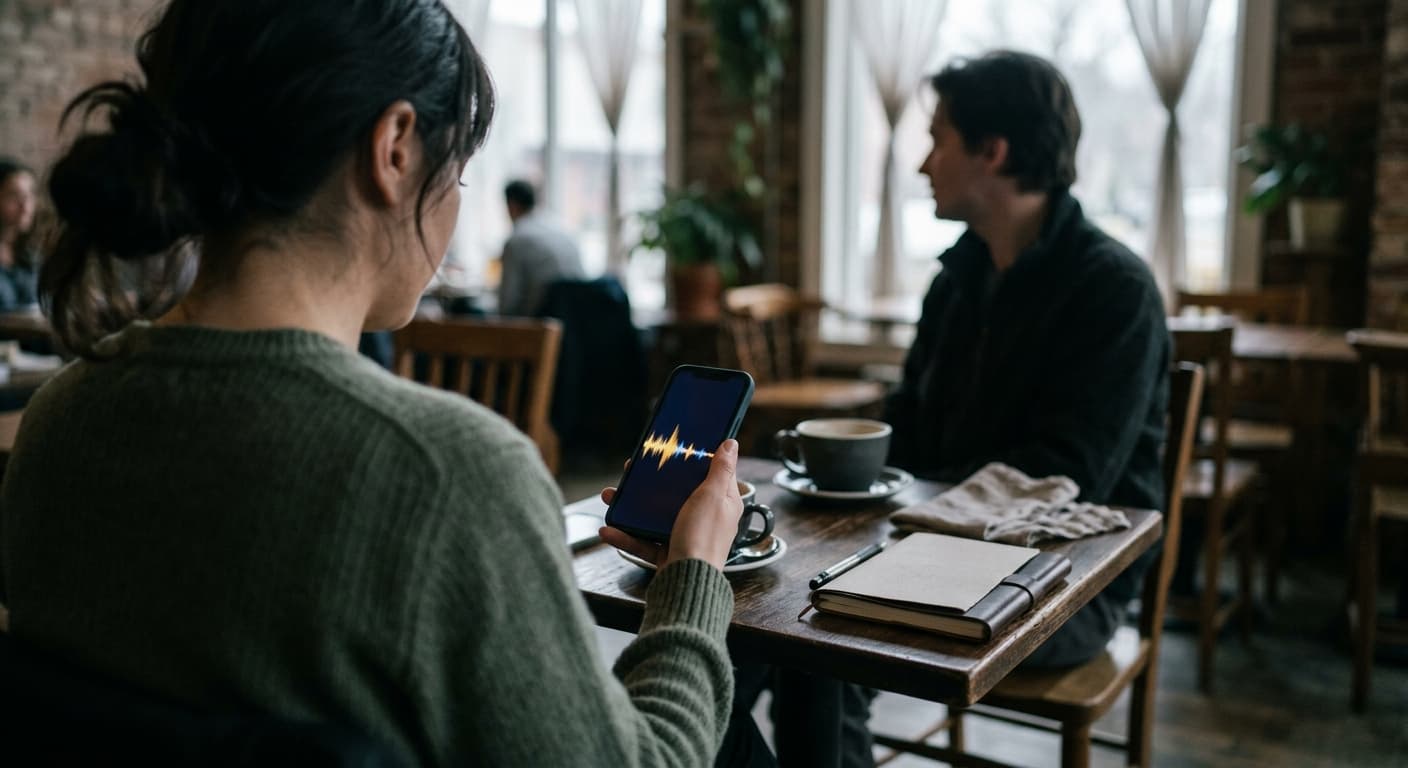
Indiana is a one-party consent state: under Ind. Code 35-33.5-5-5, you may record any phone call or electronic communication you participate in without notifying other parties. Recording a conversation you are not part of and have no consent for is a Level 5 felony carrying up to six years in prison.
Indiana's audio recording laws follow a one-party consent framework under IC 35-33.5-5. For phone calls, VoIP, and other transmitted electronic communications, you may record any conversation you participate in without notifying the other parties. Indiana's wiretap chapter expressly excludes pure in-person oral conversation from coverage under IC 35-31.5-2-110, so face-to-face speech falls outside the wiretap statute entirely. This guide covers everything you need to know about legally recording audio in Indiana, including what the law says, how it works in practice, when recording crosses into criminal territory, and what penalties apply.
The Legal Foundation of Indiana Audio Recording Law
IC 35-33.5-5: The Core Statute
Indiana's wiretapping and eavesdropping laws are codified in Title 35, Article 33.5, Chapter 5 of the Indiana Code. The key provision is IC 35-33.5-5-5, which makes it unlawful to intentionally intercept or attempt to intercept any wire or electronic communication without the consent of at least one party to the communication.
The statute creates a clear one-party consent exception. If you are a party to the communication, your own participation satisfies the consent requirement. You do not need to announce that you are recording, play a notification tone, or obtain verbal or written permission from anyone else on the call or in the conversation.
What "Interception" Means Under Indiana Law
The definition of "interception" under IC 35-31.5-2-176 is important for understanding the scope of the law. Interception means the intentional recording or acquisition of the contents of an electronic communication by a person who is not the sender or receiver, and who does not have consent from the sender or receiver.
This definition means that:
- If you are a sender or receiver (a participant), recording is not interception at all
- If someone else authorized you to record, you have consent and the recording is lawful
- If you are not a participant and have no consent from any party, you are committing unlawful interception
How Indiana Compares to Federal Law
Indiana's one-party consent standard aligns with the federal Wiretap Act (18 U.S.C. 2511). The federal law also permits recording when one party consents, meaning Indiana residents face consistent rules under both state and federal jurisdiction. There is no conflict between the two standards.
Types of Audio Recording Covered

Phone Call Recording
Indiana's one-party consent rule covers all forms of telephone communication. You can legally record:
- Landline calls from home or office phones
- Cell phone calls on any carrier or device
- VoIP calls through platforms like Skype, WhatsApp, Signal, or Google Voice
- Conference calls with multiple participants, as long as you are one of them
For a detailed breakdown of phone-specific rules, including interstate call complications and business recording practices, see our guide on Indiana phone call recording laws.
In-Person Conversation Recording
Indiana's wiretap chapter does not cover in-person oral conversation. The definition of "electronic communication" at IC 35-31.5-2-110 lists oral communication as covered content, but only when it is transmitted by a wire, a radio, or an electromagnetic, photoelectronic, or photo-optical system. That transmission requirement, not a carve-out of the term "oral communication," is why purely face-to-face speech is outside the wiretap statute entirely. Recording an in-person conversation as a participant is not a wiretap offense, though other statutes such as civil invasion-of-privacy torts or IC 35-45-4-5 (voyeurism, if applicable) may apply depending on context.
If you are physically present and participating in a conversation, you can record it without triggering the wiretap statute. This applies to:
- Private conversations in homes or offices
- Meetings with employers, landlords, or service providers
- Discussions with family members or friends
- Interactions with government employees or officials
Digital and Virtual Communication
The audio component of virtual meetings falls under Indiana's one-party consent framework. If you participate in a Zoom call, Microsoft Teams meeting, Google Meet session, or FaceTime call, you can record the audio without informing other participants.
Keep in mind that the video portion of these calls may raise separate privacy concerns under Indiana's voyeurism statute (IC 35-45-4-5) if participants are in private locations. For more on the video side, see our guide on Indiana video recording laws.
Voicemail and Recorded Messages
Leaving a voicemail or recorded message is generally considered a communication where the sender knows or should know that a recording is being made. Saving, forwarding, or replaying voicemails does not violate Indiana's wiretapping law because the sender implicitly consented to the recording by leaving the message on a recording system.
What You Can and Cannot Do

Lawful Audio Recording in Indiana
You can legally record audio in Indiana when:
- You are a participant. Your own presence in the conversation provides the necessary consent.
- A participant authorized you. If someone on the call or in the room gives you prior consent to record, the recording is lawful even if you are not directly participating.
- You are in a public space. There is no reasonable expectation of privacy in public areas like sidewalks, parks, government buildings, or retail stores. Recording conversations you overhear in public is generally not treated as unlawful interception.
Unlawful Audio Recording in Indiana
Audio recording becomes illegal when:
- You are not a party and have no consent. Planting a recording device to capture conversations you are not part of is unlawful interception.
- You use a hidden device to record others without being present. Leaving a voice recorder in a room and walking away to capture other people's conversations violates the statute.
- You intercept communications through electronic means. Using software to tap phone lines, hack into VoIP systems, or intercept digital communications without consent is a felony.
The Third-Party Recording Problem
One common question is whether a third party (someone not on the call) can record a conversation. Under Indiana law, a third party can record only if at least one participant has given them prior consent. Without that consent, the third party is committing unlawful interception regardless of their intent.
For example, a private investigator cannot legally tap a phone line to record calls between two other people unless one of those people has authorized the recording. Similarly, a family member cannot plant a recorder in a room to capture conversations between other family members.
Audio Recording Devices and Technology

Wearable Recording Devices
Indiana's one-party consent framework allows the use of wearable audio recording devices like AI voice recorders (such as Plaud) and smart glasses (such as Meta Ray-Bans) to record conversations you participate in. The person wearing the device satisfies the one-party consent requirement.
These devices are increasingly used for documenting workplace interactions, medical appointments, and legal consultations. For more on how wearable devices interact with workplace policies, see our guide on Indiana workplace recording laws.
Smartphone Recording Apps
Several smartphone apps can record phone calls and in-person conversations:
- Built-in features. Some Android devices include native call recording. Apple's iOS does not offer built-in call recording for phone calls.
- Third-party apps. Apps like Rev Call Recorder, TapeACall, and Cube ACR provide call recording functionality.
- Voice memo apps. The built-in voice recorder on most smartphones can capture in-person conversations.
All of these are lawful in Indiana as long as you are a participant in the recorded conversation.
Dedicated Recording Equipment
External voice recorders, lavalier microphones, and phone recording adapters are all legal to use in Indiana when you are a party to the conversation. There is no restriction on the type of equipment you use, only on whether you have consent.
Interstate Audio Recording Considerations
The Two-State Problem
When you record a conversation involving someone in another state, both states' laws may apply. If the other person is in a two-party consent state, the stricter standard generally controls.
This is particularly relevant for Indiana residents who communicate with people in neighboring states. Illinois, for example, requires all-party consent for most recordings. A call between an Indiana resident and an Illinois resident may require all parties' consent under Illinois law.
Two-Party Consent States to Watch
| State | Consent Standard |
|---|---|
| California | All-party |
| Connecticut | All-party |
| Florida | All-party |
| Illinois | All-party |
| Maryland | All-party |
| Massachusetts | All-party |
| Montana | All-party |
| New Hampshire | All-party |
| Pennsylvania | All-party |
| Washington | All-party |
Best Practices for Interstate Recordings
- Know where the other party is located. Consent requirements depend on physical location, not area code.
- When in doubt, inform all parties. A simple statement like "I am recording this call for my records" satisfies even the strictest all-party consent states.
- Document the other party's location if possible. This helps determine which state's law applies if a dispute arises.
- Businesses should default to all-party notice. Companies making calls across state lines benefit from routinely announcing recording.
Using Audio Recordings as Evidence in Indiana
Admissibility in Court
Audio recordings made legally under Indiana's one-party consent law are generally admissible as evidence in both civil and criminal proceedings. However, courts evaluate each recording based on several factors:
- Authentication. You must prove the recording is genuine and has not been altered. Keeping the original file with metadata intact strengthens authentication.
- Relevance. The recording must be relevant to the issues in the case.
- Hearsay rules. Some statements captured on a recording may be excluded under the Indiana Rules of Evidence hearsay provisions, though many exceptions apply.
- Prejudicial vs. probative value. A judge may exclude a recording if its potential to unfairly prejudice the jury substantially outweighs its probative value.
Best Practices for Evidentiary Recordings
If you are recording with the intent to use the audio as evidence:
- Preserve the original file without editing
- Note the date, time, location, and participants for each recording
- Back up files to multiple locations
- Do not selectively edit or truncate recordings
- Store recordings securely to prevent unauthorized access or tampering
Criminal Cases vs. Civil Cases
In criminal cases, illegally obtained audio recordings are typically inadmissible under exclusionary rules. The person who made the illegal recording may also face felony charges.
In civil cases, rules are somewhat more flexible, but courts still disfavor illegally obtained evidence. A recording that captures proof of wrongdoing will likely be excluded if you obtained it through unlawful interception.
Penalties for Illegal Audio Recording in Indiana
Criminal Penalties
Unlawful interception of wire or electronic communications under IC 35-33.5-5-5 is a Level 5 felony in Indiana. Under IC 35-50-2-6, Level 5 felony sentencing includes:
| Penalty | Range |
|---|---|
| Prison time | 1 to 6 years |
| Advisory sentence | 3 years |
| Fine | Up to $10,000 |
Additionally, a person who uses or discloses the contents of an illegally intercepted communication while working in the criminal justice system also commits a Level 5 felony.
Civil Liability
Victims of illegal audio recording have a private right of action under IC 35-33.5-5-4. A successful civil lawsuit may result in:
- Liquidated damages of $100 per day for each day of the violation, or $1,000, whichever is greater
- Actual damages suffered as a result of the illegal recording
- Punitive damages at the court's discretion
- Attorney fees and court costs
The statute of limitations for civil claims is two years from the date the interception, disclosure, or use first occurred.
A good faith reliance on a court-issued warrant is a complete defense to civil liability.
Federal Penalties
Illegal audio recording may also violate the federal Wiretap Act (18 U.S.C. 2511), which carries penalties of up to five years in federal prison and fines. Victims can also pursue civil remedies under 18 U.S.C. 2520, which provides for statutory damages of $10,000 per violation or actual damages, whichever is greater.
Common Scenarios
Can I Record My Boss at Work?
Yes. As a one-party consent state, Indiana law allows you to record any workplace conversation you participate in. This includes meetings with supervisors, HR discussions, performance reviews, and conversations with coworkers. However, your employer may have internal policies prohibiting recording, and violating those policies could result in disciplinary action or termination even though the recording itself is legal. For more details, see Indiana workplace recording laws.
Can I Record My Landlord?
Yes. You can record conversations with your landlord as long as you are participating. This can help document verbal agreements about repairs, lease disputes, harassment, or illegal entry. For more, see Indiana landlord-tenant recording laws.
Can I Record My Doctor?
Yes. Indiana's one-party consent law allows you to record your own medical appointments. This can help you remember complex medical instructions, document informed consent discussions, or share information with family caregivers. Healthcare providers may have their own policies about recording, and some may ask you to stop. For more, see Indiana medical recording laws.
Can I Record Police Officers?
Yes. The First Amendment protects your right to record law enforcement officers performing their duties in public. Indiana's one-party consent law also applies to your direct interactions with police. For more on recording police, including the 25-foot buffer law and its current legal status, see Indiana laws on recording police.
More Indiana Recording Laws
Audio Recording | Video Recording | Voyeurism & Hidden Cameras | Workplace Recording | Recording Police | Phone Call Recording | Security Cameras | Recording in Public | Landlord-Tenant | Dashcam Laws | Schools | Medical Recording
Back to Indiana Recording Laws
More Indiana Recording Topics
More Indiana Laws
Frequently Asked Questions
Is it legal to record a conversation in Indiana without the other person knowing?
Yes. Indiana is a one-party consent state under IC 35-33.5-5. As long as you are a participant in the conversation, you can record it without telling the other person. This applies to phone calls, in-person conversations, and virtual meetings.
Can I record someone in Indiana if I am not part of the conversation?
No. If you are not a party to the conversation and do not have consent from at least one participant, recording is unlawful interception under Indiana law. This is a Level 5 felony punishable by 1 to 6 years in prison and up to $10,000 in fines.
Does Indiana require me to announce that I am recording?
No. Indiana law does not require you to announce, disclose, or signal that you are recording a conversation you are part of. However, if you are recording someone in a two-party consent state, you may need to inform all parties.
Can I use a voice recorder app on my phone in Indiana?
Yes. There are no restrictions on the type of recording device or app you use in Indiana. Smartphone voice recorder apps, dedicated recording devices, and third-party call recording apps are all legal as long as you are a participant in the recorded conversation.
Are audio recordings admissible in Indiana courts?
Yes, if the recording was made legally under Indiana one-party consent law. Courts evaluate recordings for authenticity, relevance, hearsay, and whether the probative value outweighs any prejudicial effect. Illegally obtained recordings are generally inadmissible and may result in criminal charges against the person who made them.
What is the penalty for illegally recording someone in Indiana?
Illegal audio recording is a Level 5 felony in Indiana, carrying 1 to 6 years in prison (3-year advisory sentence) and fines up to $10,000. Victims can also sue for civil damages including $100 per day of the violation or $1,000 minimum, plus punitive damages and attorney fees.
Updates
Corrected the claim that Indiana's electronic-communication definition (IC 35-31.5-2-110) excludes oral communication as a term; the statute actually lists oral communication as covered content and excludes unmediated in-person speech only because it is not transmitted by wire, radio, or an electromagnetic/photo-optical system.
Independently fact-checked against the cited primary sources
Governing law re-checked for recent changes
Governing law re-checked for recent changes
Reviewed and approved by an editor
The Law Behind This Article
This article rests on the statutory provisions below, held in our own legal record and retrieved from the official source. Tap a section to read the operative text.
Indiana Code, TITLE 35. CRIMINAL LAW AND PROCEDURE
§ 35-33.5-5-5Nonapplicability to interceptions authorized under federal law; classification of offensesIn forcecited in 13 of our articles
Sec. 5. (a) This section does not apply to a person who makes an interception authorized under federal law. (b) A person who knowingly or intentionally intercepts a communication in violation of this article commits unlawful interception, a Level 5 felony. (c) A person who, by virtue of the person's employment or official capacity in the criminal justice system, knowingly or intentionally uses or discloses the contents of an interception in violation of this article commits unlawful use or disclosure of an interception, a Level 5 felony.
Official text (excerpt) · last checked 2026-08-28 · Read the full text in our law library · Verify at iga.in.gov
Cited in 2 court opinions in our collectionLatest citing opinion in our collection: 2007
Opinions citing this section in our collection:
- Edwards v. State (Indiana Court of Appeals 2007, 862 N.E.2d 1254)“…or disclosure of an interception, a Class C felony. I.C. § 35-33.5-5-5. The Indiana Wiretap Act defines interc…”
- State of Indiana v. John Lombardo (Indiana Supreme Court 2000)“…disclosure of an interception, a Class C felony. Ind. Code § 35-33.5-5-5 (1993) (emphases added). The statute…”
Identified automatically from the court opinions citing this section — not a ranking of which case controls.
§ 35-31.5-2-176"Interception"In forcecited in 2 of our articles
Sec. 176. "Interception", for purposes of IC 35-33.5, means the intentional recording or acquisition of the contents of an electronic communication by a person other than a sender or receiver of that communication, without the consent of the sender or receiver, by means of any instrument, device, or equipment under this article. This term includes the intentional recording or acquisition of communication through the use of a computer or a fax (facsimile transmission) machine. The term does not include recording or acquiring the contents of a radio transmission that is not: (1) scrambled or encrypted; (2) transmitted using modulation techniques whose essential parameters have been withheld from the public with the intention of preserving the privacy of the communication; (3) carried on a subcarrier or other signal subsidiary to a radio transmission; (4) transmitted over a communication system provided by a common carrier, unless the communication is a tone only paging system communication; or (5) transmitted on frequencies allocated under part 25, subpart D, E, or F of part 74, or part 94 of the Rules of the Federal Communications Commission, unless, in the case of…
Official text (excerpt) · last checked 2026-07-29 · Read the full text in our law library · Verify at iga.in.gov
Cited in 1 court opinions in our collectionLatest citing opinion in our collection: 2019
Opinions citing this section in our collection:
- Edward Gaeta v. The Huntington National Bank (mem. dec.) (Indiana Court of Appeals 2019)“…App. 2005) (citing Ind. Code § 35-33.5-1-5 (now codified at Ind. Code § 35-31.5-2-176)), trans. denied; see also Wynne…”
Identified automatically from the court opinions citing this section — not a ranking of which case controls.
§ 35-45-4-5Voyeurism; public voyeurism; aerial voyeurismIn forcecited in 14 of our articles
Sec. 5. (a) The following definitions apply throughout this section: (1) "Camera" means a camera, a video camera, a device that captures a digital image, or any other type of video recording device. (2) "Peep" means: (A) any looking of a clandestine, surreptitious, prying, or secretive nature; or (B) using a concealed camera with the intent of capturing an intimate image (as defined by IC 34-21.5-2-1). (3) "Private area" means the naked or undergarment clad genitals, pubic area, or buttocks of an individual. (b) A person: (1) who knowingly or intentionally: (A) peeps; or (B) goes upon the land of another with the intent to peep; into an occupied dwelling of another person; or (2) who knowingly or intentionally peeps in or into an area where an occupant of the area reasonably can be expected to disrobe or is actually expected to disrobe, including: (A) restrooms; (B) baths; (C) showers; and (D) dressing rooms; without the consent of the other person, commits voyeurism, a Class B misdemeanor.
Official text (excerpt) · last checked 2026-07-29 · Read the full text in our law library · Verify at iga.in.gov
Cited in 19 court opinions in our collectionLatest citing opinion in our collection: 2026
In the courts (editorial summary, independently checked):Casady v. State (2010) held restrooms and showers are areas where occupants reasonably can be expected to disrobe under 35-45-4-5, whether or not they actually did. Steven M. Sandleben v. State of Indiana (2014) read the public voyeurism definition of private area disjunctively, covering undergarment-clad or naked areas.
Opinions citing this section in our collection:
- Casady v. State (Indiana Court of Appeals 2010, 934 N.E.2d 1181)✓A man videotaped men at urinals and in a shower while hiding in a stall and a doorway; the court affirmed his voyeurism convictions, holding the filming was a clandestine peep and that restrooms are listed places where occupants can reasonably be expected to disrobe.
- Steven M. Sandleben v. State of Indiana (Indiana Court of Appeals 2014, 22 N.E.3d 782)✓A man put a camera under a four-year-old's skort in a store and filmed two girls underwater at a pool; the court upheld his public voyeurism convictions, holding the statute reaches naked or undergarment clad areas and was not vague as applied to him.
- David Delagrange v. State of Indiana (Indiana Court of Appeals 2013, 981 N.E.2d 1227)“…e other person, commits voyeurism, a Class B misdemeanor. Ind.Code § 35-45-4-5(a) (2005). After Delagrange committed t…”
Identified automatically from the court opinions citing this section — not a ranking of which case controls.
§ 35-50-2-6Class C felony; Level 5 felony; commission of nonsupport of child as Class D felonyIn forcecited in 3 of our articles
Sec. 6. (a) A person who commits a Class C felony (for a crime committed before July 1, 2014) shall be imprisoned for a fixed term of between two (2) and eight (8) years, with the advisory sentence being four (4) years. In addition, the person may be fined not more than ten thousand dollars ($10,000). (b) A person who commits a Level 5 felony (for a crime committed after June 30, 2014) shall be imprisoned for a fixed term of between one (1) and six (6) years, with the advisory sentence being three (3) years. In addition, the person may be fined not more than ten thousand dollars ($10,000).
Official text (excerpt) · last checked 2026-07-29 · Read the full text in our law library · Verify at iga.in.gov
Cited in 592 court opinions in our collectionLatest citing opinion in our collection: 2026
Opinions citing this section in our collection:
- Darryl Calvin v. State of Indiana (Indiana Supreme Court 2017, 87 N.E.3d 474)“…slature used the full “Level 6 felony conviction” term. See I.C. §§ 35-50-2-6(c), -7(d), (f) (2014); In re ITT Deriva…”
- Sutton v. State (Indiana Court of Appeals 1990, 562 N.E.2d 1310)“…ndant received eight years (the maximum sentence allowed by Ind. Code 35-50-2-6), along with credit for the 352 days he…”
- Bresson v. State (Indiana Court of Appeals 1986, 498 N.E.2d 91)“…s Code Ed.Repl.1985). Conviction of a class C felony, under I.C. 35-50-2-6 (Burns Code Ed.Rep1.1985), calls for a…”
Identified automatically from the court opinions citing this section — not a ranking of which case controls.
United States Code Title 18
§ 2511Interception and disclosure of wire, oral, or electronic communications prohibitedIn forcecited in 418 of our articles
Except as otherwise specifically provided in this chapter any person who— intentionally intercepts, endeavors to intercept, or procures any other person to intercept or endeavor to intercept, any wire, oral, or electronic communication; intentionally uses, endeavors to use, or procures any other person to use or endeavor to use any electronic, mechanical, or other device to intercept any oral communication when— such device is affixed to, or otherwise transmits a signal through, a wire, cable, or other like connection used in wire communication; or such device transmits communications by radio, or interferes with the transmission of such communication; or such person knows, or has reason to know, that such device or any component thereof has been sent through the mail or transported in interstate or foreign commerce; or such use or endeavor to use (A) takes place on the premises of any business or other commercial establishment the operations of which affect interstate or foreign commerce; or (B) obtains or is for the purpose of obtaining information relating to the operations of any business or other commercial establishment the operations of which affect interstate or foreign…
Official text (excerpt) · last checked 2026-08-28 · Read the full text in our law library · Verify at uscode.house.gov
Cited in 2,045 court opinions in our collectionLatest citing opinion in our collection: 2026
In the courts (editorial summary, independently checked):Griggs-Ryan v. Smith (1990) applied the Section 2511(2)(d) prior-consent exception, treating a tenant repeatedly told that all incoming calls were taped as having impliedly consented. United States v. United States District Court (1972) read the then-current Section 2511(3) as conferring no presidential surveillance power.
Opinions citing this section in our collection:
- Mitchell v. Forsyth (Supreme Court of the United States 1985, 472 U.S. 511)✓The Attorney General authorized a warrantless 1970 national security wiretap that caught the plaintiff's calls; the Court held the since-repealed Section 2511(3) disclaimer left the tap lawful under Title III, and that Mitchell had qualified immunity.
- United States v. United States District Court for the Eastern District of Michigan (Supreme Court of the United States 1972, 407 U.S. 297)✓The Attorney General approved warrantless wiretaps on members of a domestic group accused of bombing a CIA office; the Court read Section 2511(3) as a congressional disclaimer conferring no surveillance power, then held the Fourth Amendment required prior judicial approval.
- Forsyth v. Barr (Court of Appeals for the Fifth Circuit 1994, 19 F.3d 1527)✓Dallas police used, in an internal affairs probe of an officer, calls private parties allegedly intercepted illegally; assuming that was unlawful, the Fifth Circuit held Section 2517(1) and (2) allowed the disclosure and use, defeating the Section 2511(1)(c) and (d) claims.
Identified automatically from the court opinions citing this section — not a ranking of which case controls.
§ 2520Recovery of civil damages authorizedIn forcecited in 115 of our articles
Except as provided in section 2511(2)(a)(ii), any person whose wire, oral, or electronic communication is intercepted, disclosed, or intentionally used in violation of this chapter may in a civil action recover from the person or entity, other than the United States, which engaged in that violation such relief as may be appropriate. In an action under this section, appropriate relief includes— such preliminary and other equitable or declaratory relief as may be appropriate; damages under subsection (c) and punitive damages in appropriate cases; and a reasonable attorney’s fee and other litigation costs reasonably incurred.
Official text (excerpt) · last checked 2026-07-28 · Read the full text in our law library · Verify at uscode.house.gov
Cited in 860 court opinions in our collectionLatest citing opinion in our collection: 2026
In the courts (editorial summary, independently checked):Walker v. Darby (1990) held a 2520 plaintiff need not prove the contents of intercepted conversations, only interception and a justified expectation against it. Bartnicki v. Vopper (2001) barred 2520 damages against defendants who took no part in the interception, obtained the tape lawfully, and disclosed a matter of public concern.
Opinions citing this section in our collection:
- Jessie Walker v. Thomas E. Darby, Hugh L. Robinson, Jr., and Kenneth Day (Court of Appeals for the Eleventh Circuit 1990, 911 F.2d 1573)✓A postal letter carrier said three supervisors wired an intercom near his workstation to listen in. Reversing summary judgment, the Eleventh Circuit held a section 2520 plaintiff can show interception without proving the contents of specific conversations.
- Gelbard v. United States (Supreme Court of the United States 1972, 408 U.S. 41)“…disclosure, or use is entitled to recover civil damages, 18 U. S. C. § 2520 . Title III also bars the use as eviden…”
- DirecTV, Inc. v. Hoa Huynh (Court of Appeals for the Ninth Circuit 2007, 503 F.3d 847)“…7 U.S.C. § 605 (e)(4), or alternatively, for violations of 18 U.S.C. § 2520 (a), or alternatively, for violations o…”
Identified automatically from the court opinions citing this section — not a ranking of which case controls.
Search our full record of US law — 2.1 million sections, every state + federal →
Sources and References
- Indiana Code IC 35-33.5-5 - Interception of Telephonic or Telegraphic Communications(iga.in.gov).gov
- Indiana Code IC 35-31.5-2-176 - Definition of Interception(iga.in.gov).gov
- Indiana Code IC 35-50-2-6 - Level 5 Felony Sentencing(iga.in.gov).gov
- 18 U.S.C. 2511 - Federal Wiretap Act(law.cornell.edu)
- Indiana Code IC 35-45-4-5 - Voyeurism(iga.in.gov).gov
- 18 U.S.C. 2520 - Recovery of Civil Damages Under Federal Wiretap Act(law.cornell.edu)
- Reporters Committee for Freedom of the Press - Indiana Recording Guide(rcfp.org)