
California
California Workplace Recording Laws: Employee Rights and Employer Rules (2026)
Independently fact-checked against primary sources (last audited August 22, 2026). · Reviewed by the RecordingLaw editorial team. · Law checked current as of August 22, 2026. · 12 primary sources cited on this page. How we verify our legal content
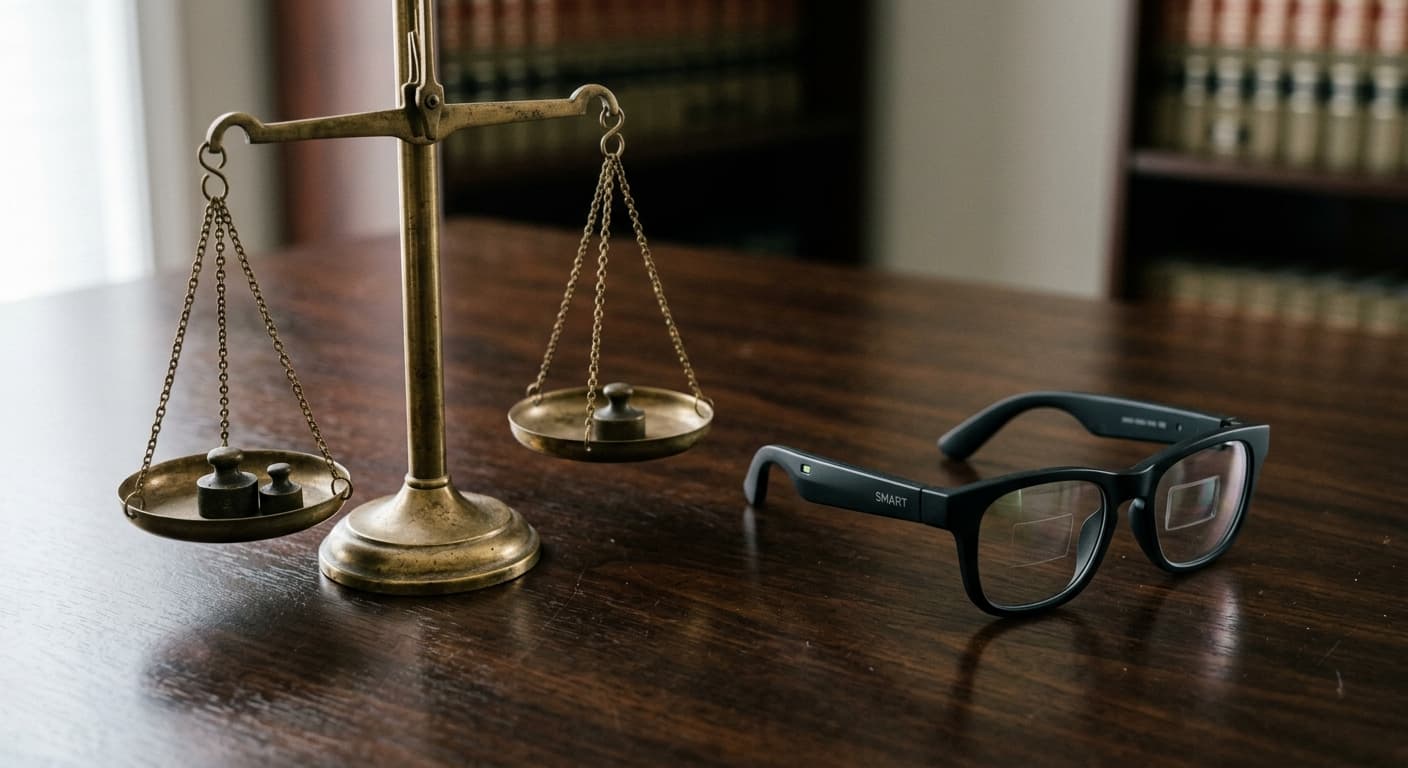
California requires the consent of all parties before anyone records a confidential workplace conversation, under Penal Code 632. Violating that rule is a criminal offense carrying fines up to $2,500 per violation and up to three years in state prison. Employees and employers both face liability when recordings happen without full consent.
California has some of the strictest workplace recording laws in the United States. Whether you are an employee wondering if you can record a conversation with your boss, or an employer setting up surveillance cameras, the rules are complex and the penalties are steep. California's two-party consent law applies fully in the workplace, meaning that every person involved in a confidential conversation must consent before it can be recorded.
This guide covers everything you need to know about recording in California workplaces in 2026, including your rights as an employee, your obligations as an employer, exceptions for documenting harassment and illegal activity, and the emerging legal risks around AI meeting tools and wearable recording devices. If you are dealing with a specific situation where you want to record your boss harassing you, we cover that in detail below.
Penal Code 632: The Foundation of California Workplace Recording Law
Every workplace recording question in California starts with Penal Code Section 632. This statute makes it illegal to intentionally record or eavesdrop on any confidential communication without the consent of all parties involved. It applies whether the communication happens face-to-face in a private office, over the phone, or through a video conferencing platform.
The statute specifically targets anyone who "intentionally and without the consent of all parties to a confidential communication, uses an electronic amplifying or recording device to eavesdrop upon or record the confidential communication." This covers smartphones, dedicated recording devices, voice recorders, laptops, and any other electronic device capable of capturing audio.
What Makes a Workplace Conversation "Confidential"?
Not every conversation at work qualifies as "confidential" under Penal Code 632. The statute defines a confidential communication as one "carried on in circumstances as may reasonably indicate that any party to the communication desires it to be confined to the parties thereto."
In practical workplace terms, this means:
- A private meeting in a closed-door office between an employee and their manager is almost certainly confidential.
- A conversation in an HR conference room about a disciplinary issue is confidential.
- A discussion in a large open-plan office where coworkers can easily overhear the conversation is generally not confidential.
- A conversation in a shared break room with other employees present is typically not confidential.
The California Supreme Court addressed this distinction in Flanagan v. Flanagan, 27 Cal.4th 766 (2002), holding that the focus should be on whether the parties reasonably expected their conversation would remain private. If a conversation takes place in an area where it can easily be overheard by others, it may not qualify as confidential, and recording it may not violate Penal Code 632.
This is an important nuance for open-office workplaces. Conversations held in cubicles within earshot of coworkers have been found by California courts to fall outside the definition of "confidential communication" because the parties could not reasonably expect privacy in that setting.
Criminal Penalties for Illegal Workplace Recording
Violating Penal Code 632 is a "wobbler" offense in California, meaning prosecutors can charge it as either a misdemeanor or a felony depending on the circumstances.
First offense penalties include:
- A fine of up to $2,500 per violation
- Up to one year in county jail (misdemeanor)
- Up to 16 months, two years, or three years in state prison (felony)
- Or both a fine and imprisonment
Repeat offense penalties include:
- A fine of up to $10,000 per violation
- Up to one year in county jail (misdemeanor)
- Up to 16 months, two years, or three years in state prison (felony)
- Or both a fine and imprisonment
Civil Liability Under Penal Code 637.2
Beyond criminal penalties, victims of illegal recording can file a civil lawsuit under Penal Code 637.2. The victim can recover the greater of $5,000 per violation or three times their actual damages. In a workplace context, this means a single illegally recorded meeting could expose the recorder to thousands of dollars in liability.
Evidence obtained through an illegal recording is also inadmissible in any judicial, administrative, legislative, or other proceeding, except as proof in an action for violation of the recording statute itself. This means that even if your illegally recorded conversation contains proof of wrongdoing, a court may refuse to consider it.
When Employees Can Legally Record at Work
Despite the strict two-party consent requirement, there are several situations where California employees can legally record workplace conversations.
The Crime-Evidence Exception (Penal Code 633.5)
Penal Code 633.5 provides the most important exception for employees who want to record evidence of workplace crimes. Under this statute, a person may record a confidential communication without all-party consent when they reasonably believe the recording will capture evidence of:
- Extortion
- Kidnapping
- Bribery
- Any felony involving violence against a person (including human trafficking)
- Domestic violence
- Violations of Penal Code 653m (threatening or harassing phone calls)
This exception is narrowly tailored. It does not cover general workplace disputes, disagreements about pay, or even many forms of harassment that do not rise to the level of a qualifying crime. Your subjective belief that a crime is occurring must align with objective circumstances. Simply claiming you believed crimes were happening is not sufficient if no reasonable basis supports that belief.
For employees experiencing physical threats, sexual assault, or stalking in the workplace, this exception may apply. However, verbal harassment, discrimination, or hostile work environment claims that do not involve one of the listed crimes generally do not qualify.
Recording Non-Confidential Communications
Because Penal Code 632 only protects "confidential" communications, employees are generally free to record conversations that take place in settings where no one has a reasonable expectation of privacy. This includes:
- Conversations in common areas like hallways, cafeterias, or open office floors
- Public meetings, company-wide town halls, or group presentations
- Any conversation where the participants know or should know they can be overheard
If your workplace interaction takes place in a shared space where others can hear what is being said, recording it typically does not violate Penal Code 632.
Consent-Based Recording
The simplest legal path to recording any workplace conversation is to get consent from all participants. Consent does not have to be written. It can be verbal, and it can even be implied by the circumstances. For example, if you tell your manager "I would like to record this meeting for my notes" and they continue the conversation without objecting, their continued participation may constitute implied consent.
However, implied consent is harder to prove than explicit consent. Best practice is to get clear verbal agreement on the recording before the conversation starts, ideally while the recording device is already capturing the exchange so you have proof of consent.
Employer Surveillance and Monitoring Rules

California employers face their own set of rules when it comes to workplace surveillance and employee monitoring.
Video Surveillance (Without Audio)
Employers can install video-only surveillance cameras in the workplace, but they must follow specific rules:
- Written notice is a best practice, not a fixed statutory mandate. No enacted California statute currently imposes a general advance-notice period for deploying video monitoring; pending AB 1221 would require 30 days' notice for covered workplace surveillance tools if it becomes law. Until then, providing clear written notice of what is being recorded and why remains the safest practice.
- Signage must be posted. Visible signs in monitored areas help remove any expectation of privacy and provide an additional layer of legal protection.
- Certain areas are strictly off-limits. Cameras cannot be placed in restrooms, locker rooms, changing rooms, or lactation spaces, regardless of the business justification.
- Employee handbook policies should document the surveillance program and explain its scope, purpose, and the types of recordings that may be made.
The California Supreme Court established key guidelines for workplace surveillance in Hernandez v. Hillsides, Inc., 47 Cal.4th 272 (2009). In that case, the Court recognized that employees may have some expectation of privacy in a closed-door office, but it ultimately ruled for the employer: the hidden camera, installed to investigate a specific security concern, was disabled and never activated while the plaintiffs occupied the office, and the Court held that a narrowly tailored, unactivated camera did not amount to an intrusion "highly offensive to a reasonable person."
Audio Surveillance
Audio recording in the workplace follows the same two-party consent rules as any other recording under Penal Code 632. This means employers cannot record audio in the workplace without the consent of all parties being recorded. Even if a video surveillance camera has audio capability, enabling that audio function subjects the employer to the same criminal and civil penalties as any other illegal recording.
Violations carry civil penalties of $5,000 per violation under Penal Code 637.2, plus potential criminal prosecution.
Pending Legislation: AB 1331 (Workplace Surveillance)
California legislators have introduced AB 1331, the Workplace Surveillance bill, which would impose additional restrictions on employer monitoring. Key provisions include:
- Prohibiting surveillance in employee-only off-duty areas including break rooms, designated smoking areas, employee cafeterias, and lounges
- Allowing non-audio video in break areas only with posted signage, no AI processing, and limited access to footage
- Giving workers the right to leave surveillance tools behind during off-duty hours
- Civil penalties of $500 per employee for each violation
As of August 2026, AB 1331 is active: after being placed on the inactive file in September 2025, it was removed from the inactive file and amended on August 21, 2026, and is now moving through the Senate.
Employer No-Recording Policies and the NLRA
Many California employers maintain policies that prohibit employees from recording conversations in the workplace. These policies create a tension between state privacy law and federal labor law that employees and employers alike need to understand.
Can Employers Ban All Recording?
California employers can implement no-recording policies, and violation of such a policy can be grounds for discipline or termination, even if the recording itself was legal under state law. California is an at-will employment state, so an employer can generally fire an employee for any reason that is not specifically prohibited by law.
However, blanket no-recording policies face a significant challenge from federal labor law.
NLRA Section 7 Protections
Section 7 of the National Labor Relations Act protects employees' rights to engage in "protected concerted activity," which includes actions taken together with other workers to address workplace conditions, organize, or document labor violations.
The National Labor Relations Board (NLRB) has consistently held that blanket no-recording policies can violate Section 7 and Section 8(a)(1) of the NLRA when they are so broad that they would reasonably chill employees from exercising their protected rights. Photography, audio recording, and video recording in the workplace can all be protected activities under Section 7 if employees are acting in concert for their mutual aid and protection.
The current controlling standard comes from Stericycle, Inc., 372 NLRB No. 113 (Aug. 2, 2023), which held that a work rule, including a no-recording policy, violates the NLRA if it has a reasonable tendency to chill employees in the exercise of Section 7 rights. Under Stericycle, the burden shifts to the employer to show the rule advances a legitimate and substantial business interest that cannot be achieved through a more narrowly tailored rule. NLRB General Counsel Memorandum GC 25-05 (Feb. 2025) confirmed that GC 21-03 (the Boeing-era guidance) is rescinded, and Stericycle remains the governing standard. A blanket prohibition on recording in all workplace settings, with no exceptions for protected concerted activity, is presumptively unlawful under this framework.
The California Complication
The intersection of the NLRA and California's two-party consent law creates a uniquely complex situation. The NLRB has suggested that the NLRA can preempt state recording consent laws when protected concerted activity is involved. However, courts have also recognized that surreptitious recording that violates state law may be considered "sufficiently egregious" conduct that loses NLRA protection.
The practical takeaway: a narrowly tailored no-recording policy that includes exceptions for legally protected activities is much safer than a blanket ban. Employers should consult with legal counsel to draft policies that respect both California privacy law and federal labor rights.
Recording Harassment and Discrimination at Work

One of the most common questions employees ask is whether they can record evidence of workplace harassment or discrimination. The answer depends on the type of misconduct and the circumstances.
When PC 633.5 Applies
If the harassment involves physical threats, sexual assault, stalking, or other conduct that constitutes a violent felony, the crime-evidence exception under Penal Code 633.5 may allow one-party recording. Your belief that the communication involves evidence of a qualifying crime must be objectively reasonable.
When PC 633.5 Does Not Apply
Verbal harassment, discriminatory comments, hostile work environment conduct, and most forms of workplace bullying do not qualify under the crime-evidence exception unless they involve one of the specifically listed offenses. In these situations, recording a private conversation without consent would violate Penal Code 632.
Alternative Documentation Strategies
When you cannot legally record, other methods of documenting harassment are available and often effective:
- Write detailed contemporaneous notes immediately after each incident, including the date, time, location, what was said, and who was present
- Save emails, text messages, and other written communications
- Identify potential witnesses who can corroborate your account
- Report the conduct to HR in writing so there is a paper trail
- File a complaint with the California Civil Rights Department (formerly DFEH)
FEHA Anti-Retaliation Protections
The Fair Employment and Housing Act (FEHA) prohibits employers from retaliating against employees who oppose workplace harassment or discrimination, file complaints, or participate in investigations. Under Government Code Section 12940(h), firing an employee for reporting harassment is illegal retaliation.
To prove retaliation, you must show that you engaged in a protected activity, your employer took an adverse employment action against you, and there is a causal connection between the two. Documentation, including any legally obtained recordings, is critical evidence in these claims.
Whistleblower Protections and Recording
California provides robust protections for employees who report illegal activity, but these protections interact with recording laws in important ways.
Labor Code 1102.5
California Labor Code Section 1102.5 is the state's primary whistleblower protection statute. It prohibits employers from retaliating against employees who:
- Disclose information to a government or law enforcement agency about a violation of state or federal law
- Provide information to a supervisor or other person with authority over the employee about a suspected violation
- Refuse to participate in activity that would violate state or federal law
Under Section 1102.6, if a whistleblower can demonstrate by a preponderance of the evidence that retaliation was a contributing factor in an adverse employment action, the burden shifts to the employer to prove by clear and convincing evidence that it would have taken the same action regardless.
Recording as Whistleblower Evidence
Labor Code 1102.5 does not create an exception to Penal Code 632's recording consent requirements. Even if you are gathering evidence of an employer's illegal conduct, you still need to follow California's recording laws. An illegally obtained recording may be inadmissible in court proceedings, which would undermine its value as whistleblower evidence.
However, if the illegal conduct you are documenting involves one of the qualifying crimes under Penal Code 633.5, you may be able to record without consent. The safest approach is to gather evidence through legally permissible means: written documentation, emails, photographs of non-private areas, and recordings of non-confidential conversations.
Remote Work, Zoom, and Virtual Meeting Recording

The shift toward remote and hybrid work has introduced new recording challenges for California workplaces.
California's Two-Party Consent Applies to Virtual Meetings
Penal Code 632 applies to virtual meetings conducted through platforms like Zoom, Microsoft Teams, Google Meet, and other video conferencing tools. If even one participant in a virtual meeting is located in California, the entire conversation is subject to California's two-party consent requirement.
This means that a California-based employee cannot secretly record a Zoom meeting with their manager, even if the manager is located in a one-party consent state. The California participant's presence triggers the stricter standard.
Zoom's Built-In Consent Features
Zoom and most other major video conferencing platforms offer a recording notification feature that alerts all participants when a recording starts. Attendees receive a pop-up notice and can choose to consent by remaining in the meeting or decline by leaving. Using this feature creates a clear record of consent (or lack thereof).
However, relying solely on the platform notification may not be sufficient in all cases. Best practice is to verbally announce the recording at the start of the meeting and confirm that all participants consent.
Employer Obligations for Monitoring Remote Workers
California employers who monitor remote employees through screen-capture software, keystroke logging, webcam monitoring, or other tools must comply with the same privacy laws that apply in the physical office. This includes providing written notice about what is being monitored and how the data will be used.
AI Meeting Tools: Otter.ai, Fireflies, and Legal Risk
AI-powered meeting transcription tools like Otter.ai, Fireflies.ai, and similar products have become common in California workplaces, but they carry significant legal risks under the state's recording and privacy laws.
How AI Notetakers Violate California Law
Many AI meeting tools work by joining virtual meetings as a participant (often appearing as a "bot" with a name like "Otter.ai Notetaker"), recording the audio, and using AI to transcribe and summarize the conversation. This process constitutes recording under California law.
The legal problems arise because:
- These tools often obtain consent only from the meeting host, not from all participants, which violates California's all-party consent requirement
- Some tools, like Otter.ai's auto-join feature, can join meetings by default without the host actively choosing to record
- Participants may not realize they are being recorded even when a bot is visible in the participant list
- The recorded data is often transmitted to third-party servers and may be used to train AI models, raising additional privacy concerns
Active Litigation
In August 2025, Otter.ai was hit with a federal class action lawsuit in California alleging that the company secretly recorded private conversations and used them to train machine learning models without proper consent. The lawsuit highlights that Otter's auto-join feature was enabled by default and only offered the option to notify non-user attendees with its most expensive "Enterprise" plan.
Fireflies.ai has also faced litigation involving allegations of unauthorized recording and biometric data collection.
California Invasion of Privacy Act (CIPA) Risks
The California Invasion of Privacy Act (CIPA) prohibits "reading, attempting to read, or learning" the contents of communications without consent. Even if an AI tool claims it does not store audio recordings, the act of transcribing the conversation involves "learning" its contents, which may independently violate CIPA.
Best Practices for AI Meeting Tools
- Obtain explicit consent from all meeting participants before activating any AI recording or transcription tool
- Do not rely on the tool's default notification settings; announce the recording verbally
- Disable auto-join features that record meetings without active host approval
- Review the tool's data retention and usage policies to ensure recorded data is not used for purposes beyond what participants consented to
- Consider whether your organization needs a formal policy governing AI meeting tool usage
Wearable Recording Devices at Work: SB 1130
The rise of smart glasses, body cameras, and other wearable technology has prompted California legislators to propose specific rules for these devices in the workplace.
What SB 1130 Proposes
Senator Eloise Gomez Reyes introduced SB 1130, the Wearable Device Privacy Protection Act, on February 17, 2026. The bill would add new Section 632.8 to the California Penal Code.
Key provisions include:
- Prohibiting the use of wearable recording devices to capture sound or video of any person in an area where they have a reasonable expectation of privacy within a place of business, unless the person being recorded gives explicit consent
- Banning the disabling of any light or indicator on a wearable device that shows it is actively recording
- Prohibiting the manufacture, sale, or purchase of technology designed to disable recording indicator lights on wearable devices
Implications for the Workplace
If SB 1130 becomes law, employees and visitors wearing smart glasses, body cameras, or similar wearable devices would need explicit consent from every person they encounter in private workplace areas before recording. Employers would also need to update their workplace policies to address wearable devices and ensure compliance.
The bill specifically targets the use of devices like Meta's Ray-Ban smart glasses, which can record video and audio discreetly, raising concerns about secret recordings in workplaces, stores, and other places of business.
CCPA/CPRA Employer Monitoring Obligations
California's consumer privacy laws now apply to employee data, adding another layer of obligation for employers who conduct workplace monitoring.
Employee Rights Under the CPRA
Since January 1, 2023, the California Privacy Rights Act (CPRA) has granted employees, job applicants, contractors, and board members the same privacy rights previously available only to consumers. These include:
- Right to know: Employees can request information about what personal data their employer collects, including recordings, surveillance footage, keystrokes, and location data
- Right to delete: Employees can request deletion of personal information that is no longer necessary for the disclosed business purpose
- Right to correct: Employees can request correction of inaccurate personal information
- Right to opt out: Employees can opt out of the sale or sharing of their personal information
Privacy Risk Assessments
Starting January 1, 2026, new CCPA regulations require employers doing business in California to conduct privacy risk assessments before engaging in activities that involve significant use of employee personal data. Employers who initiated covered activities before this date have until December 31, 2027, to complete their initial risk assessments, and must renew and update them every three years.
Automated Decision-Making Technology (ADMT)
Employers that use automated decision-making technology, including AI-powered monitoring tools, to make "significant decisions" about employees must provide clear pre-use notices, allow employees to opt out where applicable, and respond to access requests with meaningful information about the logic and likely outcomes of automated processes.
Cal/OSHA Inspections and Recording
California workers have specific rights during workplace safety inspections conducted by the Division of Occupational Safety and Health (Cal/OSHA).
Employees have the right to accompany Cal/OSHA inspectors during workplace inspections and to speak with inspectors privately during investigations. Workers can report injuries, illnesses, or unsafe conditions without fear of retaliation or discrimination, regardless of immigration status.
Employees also have the right to access safety records, including hazard exposure monitoring data, Safety Data Sheets for hazardous chemicals, and their own safety and medical records. Employers must provide access to these records within a reasonable timeframe, typically seven days.
While Cal/OSHA regulations do not specifically address employee recording during inspections, the general rules under Penal Code 632 apply. Conversations conducted in open areas of a workplace during an inspection may not be "confidential" and could potentially be recorded, but private interviews between inspectors and individual employees would likely qualify as confidential communications.
Practical Tips for Employees
Navigating California workplace recording laws requires careful attention to the specific circumstances of each situation.
Before recording any workplace conversation:
-
Determine whether the conversation is "confidential" under Penal Code 632. If it takes place in a private office with the door closed, it almost certainly is. If it takes place in an open common area, it may not be.
-
Check whether an exception applies. Does the conversation involve evidence of a qualifying crime under Penal Code 633.5? If so, one-party recording may be permitted.
-
Consider getting consent. The safest approach is always to inform all participants that you intend to record and obtain their agreement.
-
Review your employer's recording policy. Even if your recording would be legal under state law, violating a company policy can still result in termination.
-
Consult an attorney before recording in any ambiguous situation. The potential criminal and civil consequences of getting it wrong are severe.
If you are being harassed or witnessing illegal activity:
- Document everything in writing immediately after it occurs
- Report the conduct to HR in writing
- File complaints with the California Civil Rights Department or other appropriate agencies
- Preserve all emails, text messages, and other written evidence
- Only record if you are confident a legal exception applies
Practical Tips for Employers
To maintain a legally compliant workplace recording and surveillance program:
-
Draft a clear, narrowly tailored recording policy that explains what recording is and is not permitted, includes exceptions for legally protected activities, and outlines the consequences for violations.
-
Provide clear written notice before implementing any new surveillance or monitoring system (no enacted California statute currently fixes a specific notice period for video surveillance, though pending AB 1221 would require 30 days for covered tools if enacted).
-
Post visible signage in all areas where video surveillance is in use.
-
Never install cameras or recording devices in restrooms, locker rooms, changing areas, or lactation rooms.
-
Keep audio recording separate from video surveillance. If your cameras have microphones, disable the audio function unless you have obtained all-party consent.
-
Conduct privacy risk assessments as required by the CPRA before deploying new monitoring technologies.
-
Train managers on recording laws so they understand both the company's policy and the legal framework.
-
Establish a clear policy for AI meeting tools, specifying which tools are approved, how consent must be obtained, and how recorded data will be stored and used.
More California Recording Laws
Audio Recording | Video Recording | Voyeurism & Hidden Cameras | Workplace Recording | Recording Police | Phone Call Recording | Security Cameras | Recording in Public | Landlord-Tenant | Dashcam Laws | Schools | Medical Recording
Back to California Recording Laws
More California Recording Topics
More California Laws
Frequently Asked Questions
Can I secretly record my boss in California?
Generally, no. California Penal Code 632 requires the consent of all parties to a confidential communication before it can be recorded. Secretly recording a private conversation with your boss without their consent is a criminal offense that can result in fines up to $2,500 (or $10,000 for repeat offenses), up to one year in jail as a misdemeanor, or up to three years in state prison as a felony. However, if you have a reasonable belief the conversation involves evidence of a violent felony, extortion, kidnapping, or domestic violence, Penal Code 633.5 may allow one-party recording.
Can my employer record me at work without telling me?
Your employer can use video-only surveillance cameras in common work areas, and while no statute imposes a blanket written-notice mandate, clear notice and visible signage are the standard practice employers follow. Cameras are prohibited in restrooms, locker rooms, changing areas, and lactation spaces. Audio recording follows the stricter rules of Penal Code 632 and requires the consent of all parties, so your employer cannot record your conversations without your knowledge and agreement. The California Supreme Court's decision in Hernandez v. Hillsides (2009) actually favored the employer: while employees may have some expectation of privacy in a closed-door office, the Court held that the employer's hidden camera, which was never activated while employees were present, was narrowly tailored enough that it did not amount to an actionable invasion of privacy.
Can I be fired for recording a conversation at work in California?
Yes. California is an at-will employment state, and your employer can terminate you for violating a company no-recording policy, even if the recording itself was legal under state law. However, there are important exceptions. The NLRB has ruled that blanket no-recording policies can violate Section 7 of the National Labor Relations Act if they interfere with protected concerted activity. Additionally, FEHA and Labor Code 1102.5 prohibit retaliation for reporting harassment, discrimination, or illegal activity. If you were fired for recording evidence of workplace misconduct, consult an employment attorney about potential wrongful termination claims.
Are AI meeting tools like Otter.ai legal to use in California workplaces?
AI meeting tools are legal to use in California only if all meeting participants consent to the recording and transcription. Using an AI notetaker that records without all-party consent violates Penal Code 632. In August 2025, Otter.ai faced a federal class action lawsuit in California for allegedly recording conversations without proper consent and using the data to train AI models. To use these tools legally, you must obtain explicit consent from every participant, not just the meeting host, and you should verbally announce the recording rather than relying solely on automated notifications.
Does California law protect me if I record evidence of workplace safety violations?
California Labor Code 1102.5 protects whistleblowers from retaliation for reporting workplace safety violations to government agencies or supervisors, but it does not create an exception to the two-party consent recording requirement under Penal Code 632. You must still follow California recording laws when gathering evidence. The safest approach is to document safety violations through written notes, photographs of non-private areas, emails, and reports to Cal/OSHA. If you face retaliation for reporting safety concerns, you have legal protections under both state whistleblower law and Cal/OSHA anti-retaliation provisions.
Updates
Corrected six defects on the California workplace recording page: Hernandez v. Hillsides actually favored the employer (not employees), the Stericycle NLRB citation pointed to the wrong case number (fixed to 04-CA-137660), a fabricated 14-day surveillance-notice requirement was removed, SB 1130 adds only one new Penal Code section (632.8, not 632.9), AB 1331's bill status was updated to reflect it is now active, and a Government Code 12940 citation was repointed to the actual statute text.
Independently fact-checked against the cited primary sources; governing law re-checked for recent changes
Governing law re-checked for recent changes
Reviewed and approved by an editor
The Law Behind This Article
This article rests on the statutory provisions below, held in our own legal record and retrieved from the official source. Tap a section to read the operative text.
California Penal Code
§ 632In forcecited in 39 of our articles
(a) A person who, intentionally and without the consent of all parties to a confidential communication, uses an electronic amplifying or recording device to eavesdrop upon or record the confidential communication, whether the communication is carried on among the parties in the presence of one another or by means of a telegraph, telephone, or other device, except a radio, shall be punished by a fine not exceeding two thousand five hundred dollars ($2,500) per violation, or imprisonment in a county jail not exceeding one year, or in the state prison, or by both that fine and imprisonment. If the person has previously been convicted of a violation of this section or Section 631, 632.5, 632.6, 632.7, or 636, the person shall be punished by a fine not exceeding ten thousand dollars ($10,000) per violation, by imprisonment in a county jail not exceeding one year, or in the state prison, or by both that fine and imprisonment.
Official text (excerpt) · last checked 2026-08-31 · Read the full text in our law library · Verify at leginfo.legislature.ca.gov
Cited in 267 court opinions in our collectionLatest citing opinion in our collection: 2026
In the courts (editorial summary, independently checked):Kimmel v. Goland (1990) held the section 47(2) litigation privilege does not bar a damages claim under Section 632 for recording confidential conversations without consent. Lieberman v. KCOP Television, Inc. (2003) held a Section 632 violation is complete the moment the recording is made, whether or not it is disclosed.
Opinions citing this section in our collection:
- Rubin v. Green (California Supreme Court 1993, 4 Cal. 4th 1187)“…f telephone conversations with defendants, an offense under Penal Code section 632. We noted that defendants alleged that…”
- Kimmel v. Goland (California Supreme Court 1990, 51 Cal. 3d 202)✓Mobilehome owners secretly taped phone calls with park management in anticipation of suing; the court held the section 47(2) litigation privilege did not bar the cross-complaint for damages under Penal Code section 632, since the injury came from recording, not publication.
- Shulman v. Group W Productions, Inc. (California Supreme Court 1998, 74 Cal. Rptr. 2d 843)✓A TV producer put a wireless microphone on the flight nurse treating a crash victim. No section 632 claim was before the court, but it called section 632 and the intrusion tort laws of general applicability and said the press may not eavesdrop in violation of section 632.
Identified automatically from the court opinions citing this section — not a ranking of which case controls.
Also relied on in: California Recording Laws (2026): All-Party Consent Rules, US Recording Laws by State (2026): All 50 States Explained, Can an Employer Record Conversations Without Consent? (2026)
§ 633.5In forcecited in 8 of our articles
Sections 631, 632, 632.5, 632.6, and 632.7 do not prohibit one party to a confidential communication from recording the communication for the purpose of obtaining evidence reasonably believed to relate to the commission by another party to the communication of the crime of extortion, kidnapping, bribery, any felony involving violence against the person, including, but not limited to, human trafficking, as defined in Section 236.1, or a violation of Section 653m, or domestic violence as defined in Section 13700. Sections 631, 632, 632.5, 632.6, and 632.7 do not render any evidence so obtained inadmissible in a prosecution for extortion, kidnapping, bribery, any felony involving violence against the person, including, but not limited to, human trafficking, as defined in Section 236.1, a violation of Section 653m, or domestic violence as defined in Section 13700, or any crime in connection therewith.
Official text (excerpt) · last checked 2026-07-28 · Read the full text in our law library · Verify at leginfo.legislature.ca.gov
Cited in 21 court opinions in our collectionLatest citing opinion in our collection: 2026
Opinions citing this section in our collection:
- People v. Baker (California Court of Appeal 1978, 88 Cal. App. 3d 115)“…ction 632. 3 . Appellant has overlooked Penal Code section 633.5, 4 which is dispositive of…”
- Malinowski v. Martin (California Court of Appeal 2024)“…se permitted under statutory exceptions to the Privacy Act (Pen. Code, §§ 633.5 and 633.6). In the published port…”
- Geragos v. Abelyan (California Court of Appeal 2023)“…matter pleaded.”].) The Geragos Parties next contend Penal Code section 633.5 exempts Kazarian’s recording from exclu…”
Identified automatically from the court opinions citing this section — not a ranking of which case controls.
Also relied on in: Can I Record My Boss Harassing Me? State-by-State Legal Guide (2026), California Audio Recording Laws: Two-Party Consent Rules and Penalties (2026), California Landlord-Tenant Recording and Surveillance Laws (2026)
§ 637.2In forcecited in 20 of our articles
(a) Any person who has been injured by a violation of this chapter may bring an action against the person who committed the violation for the greater of the following amounts: (1) Five thousand dollars ($5,000) per violation. (2) Three times the amount of actual damages, if any, sustained by the plaintiff. (b) Any person may, in accordance with Chapter 3 (commencing with Section 525) of Title 7 of Part 2 of the Code of Civil Procedure, bring an action to enjoin and restrain any violation of this chapter, and may in the same action seek damages as provided by subdivision (a). (c) It is not a necessary prerequisite to an action pursuant to this section that the plaintiff has suffered, or be threatened with, actual damages. (d) This section shall not be construed to affect Title 4 (commencing with Section 3425.1) of Part 1 of Division 4 of the Civil Code.
Official text (excerpt) · last checked 2026-07-28 · Read the full text in our law library · Verify at leginfo.legislature.ca.gov
Cited in 103 court opinions in our collectionLatest citing opinion in our collection: 2026
In the courts (editorial summary, independently checked):Ribas v. Clark (1985) held the section 637.2 award accrues at the moment of the Privacy Act violation, so the Civil Code section 47 litigation privilege does not bar it, though damages flowing solely from privileged testimony fail. Kimmel v. Goland (1990) applied that reasoning to recordings made in anticipation of litigation.
Opinions citing this section in our collection:
- Rubin v. Green (California Supreme Court 1993, 4 Cal. 4th 1187)“…asion of privacy and related torts as well as damages under Penal Code section 637.2, granting persons injured by eavesdropp…”
- Ribas v. Clark (California Supreme Court 1985, 38 Cal. 3d 355)✓A wife asked a third party to listen on an extension phone while she called her husband, and that listener later testified about it; the court held the judicial privilege barred damages from the testimony but not Section 637.2's fixed award, which accrues at the violation.
- Kimmel v. Goland (California Supreme Court 1990, 51 Cal. 3d 202)✓Mobilehome residents secretly taped calls with park management to gather evidence for a planned lawsuit; the court held the litigation privilege did not bar management's Section 637.2 claim, because the injury came from the recording itself and not from any publication.
Identified automatically from the court opinions citing this section — not a ranking of which case controls.
Also relied on in: Can I Sue Someone for Recording Me on Private or Public Property?, How to Detect and Block Listening Devices in Your Home (2026), Is It Illegal to Video Record Someone Without Their Consent? (2026)
California Government Code
§ 12940In forcecited in 3 of our articles
It is an unlawful employment practice, unless based upon a bona fide occupational qualification, or, except where based upon applicable security regulations established by the United States or the State of California: (a) For an employer, because of the race, religious creed, color, national origin, ancestry, physical disability, mental disability, reproductive health decisionmaking, medical condition, genetic information, marital status, sex, gender, gender identity, gender expression, age, sexual orientation, or veteran or military status of any person, to refuse to hire or employ the person or to refuse to select the person for a training program leading to employment, or to bar or to discharge the person from employment or from a training program leading to employment, or to discriminate against the person in compensation or in terms, conditions, or privileges of employment.
Official text (excerpt) · last checked 2026-07-28 · Read the full text in our law library · Verify at leginfo.legislature.ca.gov
Cited in 1,507 court opinions in our collectionLatest citing opinion in our collection: 2026
Opinions citing this section in our collection:
- Yanowitz v. L'OREAL USA, INC. (California Supreme Court 2005, 32 Cal. Rptr. 3d 436)“…uted unlawful retaliation in violation of the provisions of Government Code section 12940, subdivision (h) (section 12940(h)), wh…”
- Schifando v. City of Los Angeles (California Supreme Court 2003, 6 Cal. Rptr. 3d 457)“…Gov.Code, § 12920) and is an unlawful employment practice. (Gov.Code, § 12940.) The legislative scheme created two ad…”
- Hughes v. Pair (California Supreme Court 2009, 46 Cal. 4th 1035)“…al harassment in the workplace. Originally enacted in 1980, Government Code section 12940 is part of the FEHA. (See Gov. Code, §…”
Identified automatically from the court opinions citing this section — not a ranking of which case controls.
Also relied on in: California Whistleblower Laws: Protections and How to Report, California At-Will Employment Laws: Exceptions and Your Rights
California Labor Code
§ 1102.5In forcecited in 4 of our articles
(a) An employer, or any person acting on behalf of the employer, shall not make, adopt, or enforce any rule, regulation, or policy preventing an employee from disclosing information to a government or law enforcement agency, to a person with authority over the employee, or to another employee who has authority to investigate, discover, or correct the violation or noncompliance, or from providing information to, or testifying before, any public body conducting an investigation, hearing, or inquiry, if the employee has reasonable cause to believe that the information discloses a violation of state or federal statute, or a violation of or noncompliance with a local, state, or federal rule or regulation, regardless of whether disclosing the information is part of the employee’s job duties.
Official text (excerpt) · last checked 2026-09-09 · Read the full text in our law library · Verify at leginfo.legislature.ca.gov
Cited in 905 court opinions in our collectionLatest citing opinion in our collection: 2026
Opinions citing this section in our collection:
- Foley v. Interactive Data Corp. (California Supreme Court 1988, 47 Cal. 3d 654)“…e, and therefore covered by the public policy rule. Under Labor Code section 1102.5, subdivision (b), an employer is prohib…”
- Soukup v. Law Offices of Herbert Hafif (California Supreme Court 2006, 46 Cal. Rptr. 3d 638)“…action violated state and federal labor laws, specifically Labor Code section 1102.5 and 29 United States Code section 1140…”
- Green v. Ralee Engineering Co. (California Supreme Court 1998, 78 Cal. Rptr. 2d 16)“…b. Code, §§ 132a, 923; see also Gov. Code, § 12900 et seq.; Lab. Code, § 1102.5.) The court’s observations further refl…”
Identified automatically from the court opinions citing this section — not a ranking of which case controls.
Also relied on in: Ameris Bank Hit With $79.5M Whistleblower-Retaliation Judgment
Search our full record of US law — 2.1 million sections, every state + federal →
Sources and References
- California Penal Code Section 632 - Eavesdropping on Confidential Communications(leginfo.legislature.ca.gov).gov
- California Penal Code Section 633.5 - Crime-Evidence Recording Exception(leginfo.legislature.ca.gov).gov
- California Penal Code Section 637.2 - Civil Remedies for Privacy Violations(leginfo.legislature.ca.gov).gov
- California Labor Code Section 1102.5 - Whistleblower Protections(leginfo.legislature.ca.gov).gov
- California Government Code Section 12940 - FEHA Unlawful Employment Practices(leginfo.legislature.ca.gov).gov
- California Privacy Rights Act (CPRA)(leginfo.legislature.ca.gov).gov
- SB 1130 - Wearable Device Privacy Protection Act (2025-2026)(leginfo.legislature.ca.gov).gov
- AB 1331 - Workplace Surveillance (2025-2026)(leginfo.legislature.ca.gov).gov
- Cal/OSHA Employer Responsibilities(dir.ca.gov).gov
- California Civil Rights Department - Complaint Process(calcivilrights.ca.gov).gov
- NLRB - Employee Rights Under the NLRA(nlrb.gov).gov
- Hernandez v. Hillsides, Inc., 47 Cal.4th 272 (2009)(scocal.stanford.edu)
- Flanagan v. Flanagan, 27 Cal.4th 766 (2002)(law.justia.com)
- Stericycle, Inc., 372 NLRB No. 113 (Aug. 2, 2023)(nlrb.gov).gov