
Massachusetts
Massachusetts Workplace Recording Laws
Independently fact-checked against primary sources (last audited August 22, 2026). · Reviewed by the RecordingLaw editorial team. · Law checked current as of August 22, 2026. · 6 primary sources cited on this page. How we verify our legal content

Massachusetts workplace recording law requires that all parties know a recording is happening. Secret recording at work is a felony under Mass. Gen. Laws ch. 272, Section 99, punishable by up to five years in state prison and a $10,000 fine; only the statute's lesser disclosure and possession offenses carry misdemeanor-tier house of correction terms.
Massachusetts workplace recording law is among the harshest in the country. Under Mass. Gen. Laws ch. 272, Section 99, any secret recording in the workplace is a felony. Employees who secretly record meetings with supervisors face the same criminal charges as someone who wiretaps a phone line. Employers who secretly monitor employee conversations face the same penalties. Secretly recording a workplace conversation carries up to 5 years in state prison and a $10,000 fine, with no misdemeanor alternative for that offense. Related offenses like disclosure and possession-with-intent carry a lesser house-of-correction penalty.
This guide covers what employees and employers need to know about recording in Massachusetts workplaces in 2026, including the rules for monitoring, the recent court rulings that affect workplace recordings, and the interaction between state wiretap law and federal labor protections.
The Core Rule: No Secret Workplace Recording
What the Law Says
Section 99 of the Massachusetts wiretap statute makes it a crime to secretly record any wire or oral communication. The word "secretly" is the operative term. If all parties to a workplace conversation know that recording is happening, the recording is legal. If the recording is hidden from any participant, it is a felony.
This applies equally to:
- Employees who record without telling their supervisors or coworkers
- **Employers** who record without telling their employees
- Third parties such as contractors, consultants, or visitors who record without disclosure
What Employees Cannot Do
Massachusetts employees cannot legally:
- Secretly record a meeting with a supervisor, HR representative, or manager
- Hide a phone or recorder in a pocket, bag, or desk drawer to capture workplace conversations
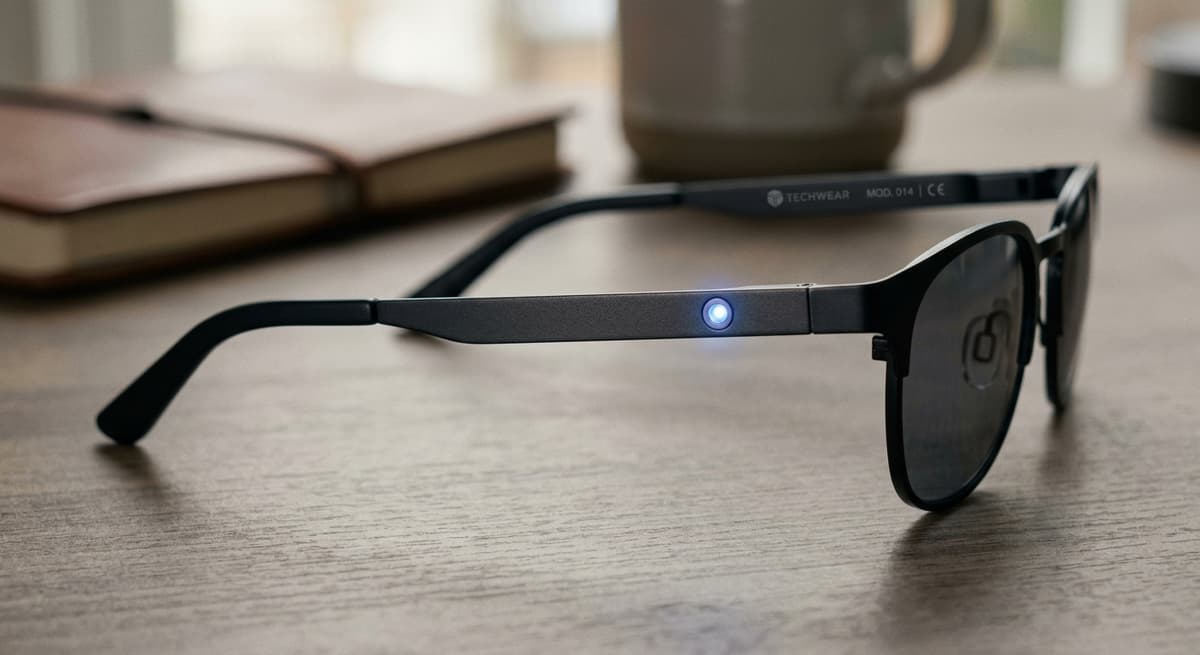
- Use a wearable device (smartwatch, AI pin, smart glasses) to secretly record interactions
- Record coworkers without their knowledge, even to document alleged misconduct
- Record phone calls with clients, customers, or business partners without disclosure
Each of these actions is a felony. It does not matter that the employee may have had good reasons for making the recording. The statute contains no exception for employees documenting harassment, discrimination, or unsafe conditions through secret recording.
What Employers Cannot Do
Massachusetts employers face the same restrictions:
- Secretly monitoring employee phone calls violates Section 99
- Hidden audio recording devices in offices, break rooms, or common areas violate the statute
- Covert audio surveillance of employee conversations is a felony
- Secret recording of job interviews or termination meetings violates the law
Employers may monitor and record employee activity, but only when employees are informed that monitoring is occurring. The monitoring cannot be secret.
How to Legally Record in the Workplace
Open Recording by Employees
An employee who wants to record a workplace conversation must follow these steps:
- Announce the recording before any substantive conversation begins. A clear statement like "I am going to record this meeting" is sufficient.
- Place the recording device in plain view so all participants can see it.
- Allow participants the opportunity to object. Under Massachusetts law, they do not need to consent, but they must be aware. If someone objects, they can choose to leave the conversation.
- Do not start recording before the announcement. Even a few seconds of recording before disclosure can violate the statute.
The other party does not need to agree to the recording. Massachusetts law targets secrecy, not consent. If a supervisor tells an employee "I do not want you to record this meeting," but the employee records openly anyway, the recording does not violate Section 99. However, the employee may face separate disciplinary consequences for violating a workplace policy.
Employer Monitoring Programs
Employers who want to monitor employee communications must:
- Provide written notice to employees about monitoring practices, ideally in the employee handbook
- Post visible signage near monitored areas indicating that recording or monitoring is occurring
- Include monitoring disclosures in employment agreements
- Limit audio monitoring to business-related purposes when possible
- Never secretly record employee conversations in break rooms, restrooms, or private areas
Video surveillance without audio is subject to less stringent requirements than audio monitoring. An employer can install visible security cameras that record only video without triggering Section 99. However, the moment those cameras capture audio of employee conversations, the wiretap statute applies.
The 2025 Simpson Ruling: A Game-Changer for Workplace Cases
What the Court Decided

In Simpson v. Boston Public Health Commission (2025), a Massachusetts Superior Court judge issued a ruling with significant implications for workplace recording disputes. The court held that recordings obtained in violation of the wiretap statute may be admissible as evidence in civil cases.
The judge reasoned that while Section 99 explicitly bars illegally obtained recordings from criminal trials, the statute contains no equivalent prohibition for civil proceedings. This means that in employment disputes such as discrimination, harassment, or wrongful termination lawsuits, a secretly recorded conversation could potentially be introduced as evidence even though making the recording was a felony.
What This Means for Employees
The Simpson ruling creates a paradox for Massachusetts employees:
- Making a secret workplace recording is still a felony carrying up to 5 years in prison
- The criminal penalties and civil liability under Section 99 still apply
- But the recording itself might be admissible in a civil employment lawsuit
Employment attorneys continue to advise against making unauthorized workplace recordings. The criminal and civil risks far outweigh the potential evidentiary benefit. An employee who secretly records a supervisor making discriminatory statements faces felony charges for the recording, even if the recording could theoretically be used in a discrimination lawsuit.
What This Means for Employers
For employers, the Simpson ruling underscores the importance of proper conduct in all workplace interactions. Even if an employee makes an illegal recording, the contents of that recording could surface in civil litigation. Employers should:
- Train managers and supervisors to conduct themselves professionally in every interaction
- Assume that any workplace conversation could be documented, whether legally or not
- Address employee complaints promptly through proper channels to reduce the motivation for secret recording
Federal Labor Law and Recording Policies
The NLRA and No-Recording Policies
The National Labor Relations Act (NLRA) protects employees' rights to engage in "protected concerted activity," which includes discussing wages, working conditions, and organizing with coworkers. The National Labor Relations Board (NLRB) has addressed the intersection of recording policies and labor rights in several key decisions.
The NLRB's current standard, established in Stericycle, Inc., 372 NLRB No. 113 (2023), requires the Board to evaluate whether a facially neutral workplace rule, including a no-recording policy, would tend to chill employees' exercise of Section 7 rights. Under this framework, an employer must demonstrate a legitimate and substantial business justification that outweighs the burden on employees' rights. A blanket prohibition on all workplace recording is difficult to justify under this standard because it would deter employees from documenting wage violations, unsafe conditions, or other matters that are the core of protected concerted activity.
NLRB General Counsel Memo 25-05 (Feb. 14, 2025) rescinded roughly thirty prior General Counsel memoranda, including GC 23-02 on electronic monitoring of employees, signaling that the General Counsel's office will pursue fewer cases against such policies. A GC memo cannot itself overturn Board precedent, so Stericycle remains the controlling legal standard for evaluating no-recording policies until the Board revisits it, but GC 25-05 is a substantive enforcement-priority shift, not mere housekeeping.
Lawful Employer Recording Policies
An employer recording policy in Massachusetts should:
- Reference the Massachusetts wiretap statute and explain that secret recording is a felony
- Clarify that open recording (where all parties are aware) is not prohibited by state law, though the employer may restrict it as a matter of company policy
- Avoid language so broad that it could be interpreted as prohibiting protected concerted activity
- Explain the employer's own monitoring practices with specificity
- Be reviewed by legal counsel familiar with both Massachusetts wiretap law and NLRA requirements
Whistleblower Protections
Massachusetts has whistleblower protections under Mass. Gen. Laws ch. 149, Section 185. Employees who report illegal activity by their employer are protected from retaliation. However, the whistleblower statute does not override the wiretap statute. An employee cannot claim whistleblower protection as a defense to felony wiretap charges for making a secret recording.
The proper channel for documenting workplace misconduct is through the Massachusetts Attorney General's Office or other appropriate agencies, not through secret recording.
Workplace Video Surveillance
Employer Security Cameras
Massachusetts employers commonly use video surveillance for security purposes. The rules depend on whether the cameras capture audio:
- Silent video cameras in common areas (lobbies, hallways, parking lots) are generally permitted
- Video cameras with audio must comply with Section 99. Employees must know about the audio recording.
- Cameras in private areas such as restrooms, changing rooms, and lactation rooms are prohibited regardless of whether they capture audio
- Cameras aimed at union activity or protected concerted activity may violate the NLRA
Employers should post visible signage wherever security cameras are installed, indicating the presence of video surveillance. If cameras capture audio, the signage should specifically note that audio is being recorded.
Employee Use of Body Cameras and Wearables
Some employers issue body cameras or wearable recording devices to employees. In Massachusetts, these devices trigger Section 99 whenever they capture audio of conversations. Employers who issue such devices must:
- Train employees on when and how to disclose that the device is recording
- Build disclosure procedures into standard operating protocols
- Ensure customers, clients, and other non-employees are informed when audio recording occurs
- Maintain records of disclosure practices for compliance purposes
Remote Work and Virtual Meeting Recording
Recording Remote Work Communications
The shift to remote and hybrid work has introduced new recording considerations. Massachusetts employees working from home are still subject to Section 99 when recording work-related calls and video conferences. The rules apply regardless of the employee's physical location within Massachusetts.
Employers who implement call recording for remote teams must:
- Notify all participants before recording begins
- Use platform features that alert participants to recording (such as Zoom's recording notification)
- Establish written policies about when and why remote calls will be recorded
- Ensure recording policies apply equally to in-office and remote workers
AI Meeting Assistants in the Workplace
AI transcription tools are increasingly common in Massachusetts workplaces. Tools like Otter.ai, Fireflies.ai, and Microsoft Copilot can automatically record and transcribe meetings. Under Massachusetts law:
- Employees must inform all meeting participants before activating AI transcription
- Employers who deploy AI recording tools organization-wide must notify all employees
- The AI tool's automated notification (such as a bot joining the call) does not substitute for verbal disclosure
- Employers should establish clear policies about AI recording tool usage and data retention
Penalties for Illegal Workplace Recording
Criminal Consequences
| Offense | Maximum Prison Term | Maximum Fine |
|---|---|---|
| Employee secretly recording a workplace conversation | 5 years (state prison) | $10,000 |
| Employer secretly monitoring employee calls | 5 years (state prison) | $10,000 |
| Possession of device with intent to secretly record at work | 2 years (house of correction) | $5,000 |
| Disclosing contents of illegally recorded workplace communication | 2 years (house of correction) | $5,000 |
Secretly recording a workplace conversation is always a felony with no misdemeanor plea option. Possession-with-intent and disclosure are lesser offenses under the statute, punishable only by a house of correction term.
Civil Liability
Under Section 99 Q, victims of illegal workplace recording can pursue:
- Liquidated damages of $100 per day or $1,000 minimum
- Actual damages if they exceed the liquidated amount
- Reasonable attorney fees and litigation costs
For ongoing workplace surveillance violations, the per-day calculation can produce significant damage awards. An employer who secretly records audio in a break room for six months could face $18,000 in liquidated damages per affected employee.
Massachusetts Recording Laws by Topic
Phone Call Recording | Audio Recording | Video Recording | Workplace Recording | Recording Police | Security Cameras | Recording in Public | Landlord-Tenant | Dashcam Laws | Schools | Medical Recording | Voyeurism & Hidden Cameras
Back to Massachusetts Recording Laws
More Massachusetts Recording Topics
More Massachusetts Laws
Frequently Asked Questions
Can I secretly record my boss in Massachusetts?
No. Secretly recording any workplace conversation in Massachusetts is a felony under Mass. Gen. Laws ch. 272, Section 99. Penalties include up to 5 years in state prison and a $10,000 fine; only the statute's lesser disclosure and possession offenses carry misdemeanor-tier penalties. If you want to record a meeting with your boss, you must announce that you are recording before the conversation begins.
Can my employer record me at work in Massachusetts?
Your employer can record you only if you know about it. Employers must provide notice of any audio monitoring or recording. Silent video surveillance in common areas is generally permitted. But secretly recording employee conversations, whether through hidden microphones, monitored phone lines, or covert audio devices, violates Section 99 and is a felony.
Can I be fired for recording at work in Massachusetts?
Even if you record openly and legally under the wiretap statute, your employer can discipline or terminate you for violating a company no-recording policy. However, the NLRB has ruled that overly broad no-recording policies may violate the National Labor Relations Act when they chill protected concerted activity like documenting wage violations or unsafe conditions.
Can a secretly recorded conversation be used in an employment lawsuit?
Possibly yes. In Simpson v. Boston Public Health Commission (2025), a Massachusetts Superior Court ruled that illegally obtained recordings may be admissible in civil cases. However, making the recording is still a felony. The criminal penalties and civil liability under Section 99 apply regardless of how the evidence is later used.
Can my employer use AI to transcribe my work calls without telling me?
No. AI transcription tools that capture audio fall under the same wiretap statute as any other recording device. Employers must inform employees before activating AI recording or transcription on any call or meeting. Secret use of AI transcription in the workplace is a felony.
Updates
Corrected the description of NLRB GC Memo 25-05 from a mischaracterized 'housekeeping rescission' to its actual substantive effect (reinstating a more employer-permissive standard for no-recording policies), and fixed a transposed-digit NLRB docket citation for the Stericycle case.
Independently fact-checked against the cited primary sources; governing law re-checked for recent changes
Reviewed and approved by an editor
The Law Behind This Article
This article rests on the statutory provisions below, held in our own legal record and retrieved from the official source. Tap a section to read the operative text.
Massachusetts General Laws, Chapter 272
§ 99Interception of wire and oral communicationsIn forcecited in 21 of our articles
Section 99. Interception of wire and oral communications.— A. Preamble. The general court finds that organized crime exists within the commonwealth and that the increasing activities of organized crime constitute a grave danger to the public welfare and safety. Organized crime, as it exists in the commonwealth today, consists of a continuing conspiracy among highly organized and disciplined groups to engage in supplying illegal goods and services. In supplying these goods and services organized crime commits unlawful acts and employs brutal and violent tactics. Organized crime is infiltrating legitimate business activities and depriving honest businessmen of the right to make a living. The general court further finds that because organized crime carries on its activities through layers of insulation and behind a wall of secrecy, government has been unsuccessful in curtailing and eliminating it. Normal investigative procedures are not effective in the investigation of illegal acts committed by organized crime.
Official text (excerpt) · last checked 2026-08-31 · Read the full text in our law library · Verify at malegislature.gov
Cited in 271 court opinions in our collectionLatest citing opinion in our collection: 2026
In the courts (editorial summary, independently checked):Commonwealth v. Blood (1987) read Section 99 as generally proscribing secret recording of oral communications without all parties' consent, and suppressed under art. 14 a warrantless police recording made with one party's consent. Commonwealth v. Vitello (1975) held Section 99 substantially complies with federal Title III.
Opinions citing this section in our collection:
- Commonwealth v. Vitello (Massachusetts Supreme Judicial Court 1975, 367 Mass. 224)✓In a gaming prosecution built on wiretapped phone calls, the SJC gave chapter 272 section 99 its first full review and held the state wiretap statute substantially complies with federal Title III and that the warrants issued under it met both standards.
- Commonwealth v. Blood (Massachusetts Supreme Judicial Court 1987, 400 Mass. 61)✓Police wired an informant who recorded conversations in private homes about a planned break-in; the SJC held the recordings fell within section 99's one-party-consent exception but that article 14 nonetheless required a warrant, and reversed the convictions.
- Commonwealth v. D'Amour (Massachusetts Supreme Judicial Court 1999, 428 Mass. 725)✓The SJC upheld a section 99 wiretap of a widow suspected of arranging her husband's murder for insurance money, holding the district attorney's written designation of an assistant satisfied Vitello and that probable cause supported the organized crime connection.
Identified automatically from the court opinions citing this section — not a ranking of which case controls.
Also relied on in: Massachusetts Recording Laws (2026): Two-Party Consent Rules, Massachusetts Landlord-Tenant Recording Laws, Massachusetts Nursing Home Camera Laws: All-Party Consent Risks
Massachusetts General Laws, Chapter 149
§ 185Retaliation against employees reporting violations of law or risks to public health, safety or environment; remediesIn forcecited in 2 of our articles
Section 185. (a) As used in this section, the following words shall have the following meanings:— (1) ''Employee'', any individual who performs services for and under the control and direction of an employer or public utility employer for wages or other remuneration. (2) ''Employer'', the commonwealth, and its agencies or political subdivisions, including, but not limited to, cities, towns, counties and regional school districts, or any authority, commission, board or instrumentality thereof. (3) ''Public body'', (A) the United States Congress, any state legislature, including the general court, or any popularly elected local government body, or any member or employee thereof; (B) any federal, state or local judiciary, or any member or employee thereof, or any grand or petit jury; (C) any federal, state or local regulatory, administrative or public agency or authority, or instrumentality thereof; (D) any federal, state or local law enforcement agency, prosecutorial office, or police or peace officer; or (E) any division, board, bureau, office, committee or commission of any of the public bodies described in the above paragraphs of this subsection.
Official text (excerpt) · last checked 2026-07-29 · Read the full text in our law library · Verify at malegislature.gov
Cited in 111 court opinions in our collectionLatest citing opinion in our collection: 2025
Opinions citing this section in our collection:
- Romero v. UHS of Westwood Pembroke, Inc. (Massachusetts Appeals Court 2008, 72 Mass. App. Ct. 539)“…v. Boston, 180 F.3d 1, 17 (1st Cir. 1999) (construing G. L. c. 149, § 185). The plaintiff’s personal views on the…”
- Quazi v. Barnstable County (Massachusetts Appeals Court 2007, 70 Mass. App. Ct. 780)“…t complaint alleging retaliatory discharge, in violation of G. L. c. 149, § 185 (count I), and failure to pay overtime…”
- Trychon v. Massachusetts Bay Transportation Authority (Massachusetts Appeals Court 2016, 90 Mass. App. Ct. 250)“…tts Bay Transportation Authority (MBTA) with violations of G. L. c. 149, § 185, the Massachusetts public employee whi…”
Identified automatically from the court opinions citing this section — not a ranking of which case controls.
Also relied on in: Massachusetts Whistleblower Laws: Protections and How to Report
Search our full record of US law — 2.1 million sections, every state + federal →
Sources and References
- Mass. Gen. Laws ch. 272, Section 99 - Wiretapping Statute(malegislature.gov).gov
- Massachusetts Law About Employee Privacy(mass.gov).gov
- National Labor Relations Act(nlrb.gov).gov
- Mass. Gen. Laws ch. 149, Section 185 - Whistleblower Protections(malegislature.gov).gov
- Massachusetts Attorney General's Office(mass.gov).gov
- Stericycle, Inc., 372 NLRB No. 113 (2023) - Workplace Rule Standard(nlrb.gov).gov