
Nevada
Nevada Workplace Recording Laws: Employee and Employer Rights (2026)
Independently fact-checked against primary sources (last audited August 15, 2026). · Reviewed by the RecordingLaw editorial team. · Law checked current as of August 15, 2026. · 8 primary sources cited on this page. How we verify our legal content
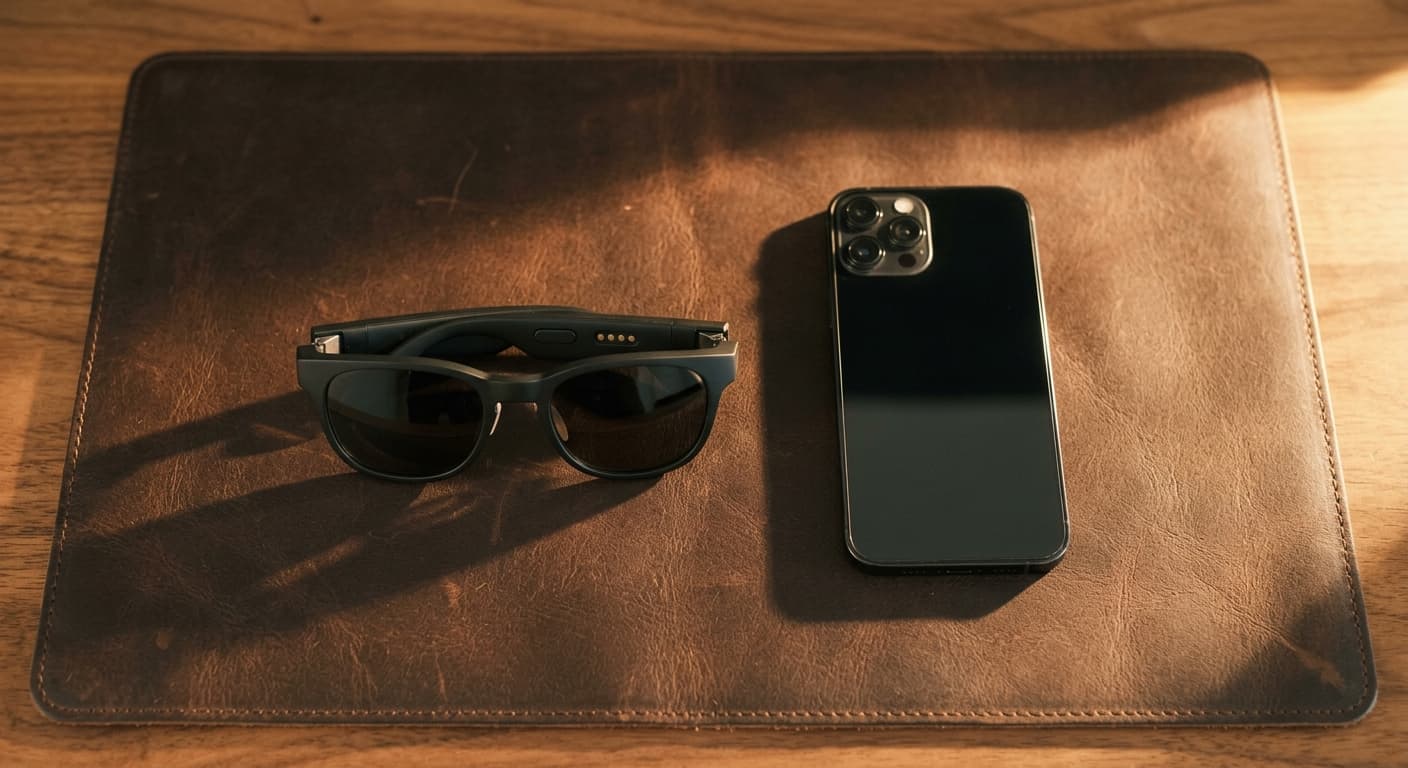
Nevada workplace recording follows a split rule: in-person conversations you participate in are legal to record under one-party consent (NRS 200.650), while phone calls and video meetings require every participant's consent under NRS 200.620.
Nevada's split consent recording framework creates a two-track system for workplace recording that both employers and employees need to understand. In-person workplace conversations follow one-party consent under NRS 200.650, meaning you can record meetings, discussions with managers, and conversations with coworkers as long as you participate. Workplace phone calls are treated as requiring all-party consent under NRS 200.620, so the safe practice is to get every person on the call to agree before recording starts, even though the statute's own wording and Nevada case law leave its exact scope unsettled (see below).
This guide covers employee recording rights, employer surveillance rules, company policy implications, and the federal protections that may override state-level restrictions.
Employee Recording Rights in Nevada
In-Person Conversations: One-Party Consent
Under NRS 200.650, you can record any in-person workplace conversation you actively participate in. Your own consent is sufficient. You do not need to inform your coworkers, supervisor, or HR department.
This covers:
- One-on-one meetings with your manager
- HR meetings and disciplinary hearings
- Conversations with coworkers at your desk or in common areas
- Performance reviews and evaluations
- Safety discussions and incident reports
- Break room conversations you are part of
The critical requirement is participation. You must be an active participant in the conversation, not simply within earshot. Placing a recording device in a conference room and leaving is illegal eavesdropping, not one-party consent recording.
Phone Calls: All-Party Consent Required
Nevada treats phone calls at work as requiring all-party consent under NRS 200.620, and the safest approach is to assume every participant must agree before you record. This includes:
- Calls between employees on office landlines
- Cell phone calls about work matters
- Conference calls and client calls
- Zoom, Teams, Google Meet, and other video conference calls
- VOIP calls through any platform
Recording a workplace phone call without every participant's consent can be prosecuted as a Category D felony under NRS 200.690, punishable by 1 to 4 years in prison and fines up to $5,000, since a conviction requires the violation to be willful and knowing.
That consent rule is not as settled as it sounds. NRS 200.620's own text only creates a safe harbor for an interception made with one party's consent plus an emergency where getting a court order first is impractical. In the Nevada Supreme Court's leading case on this exact question, Lane v. Allstate Ins. Co., 969 P.2d 938 (Nev. 1998), an Allstate employee's own workplace call recording, the justices split into four separate opinions with no majority agreement on what the statute requires. One justice wrote that the court could not even agree on the statute's meaning, let alone hold the employee criminally responsible for violating it. Because that question has never been resolved, treat all-party consent as the safe, prudent rule for a workplace phone call, not as an automatic felony conviction.
Quick Reference: Workplace Recording Legality
| Situation | Legal? | Consent Rule | Statute |
|---|---|---|---|
| Recording an in-person meeting you attend | Yes | One-party | NRS 200.650 |
| Recording a phone call with everyone's consent | Yes | All-party | NRS 200.620 |
| Recording a phone call without everyone's consent | No (felony) | All-party | NRS 200.620 |
| Recording a Zoom meeting | Only with all-party consent | All-party | NRS 200.620 |
| Recording coworkers' conversation you are not part of | No (felony) | N/A | NRS 200.650 |
| Employer video surveillance in common areas | Yes | No audio consent needed | No specific statute |
| Employer camera in bathroom or locker room | No | N/A | NRS 200.604 |
The felony outcomes shown above for phone-call recording reflect the cautious, generally followed reading of NRS 200.620. The Nevada Supreme Court's own ruling in Lane v. Allstate Ins. Co., 969 P.2d 938 (Nev. 1998), produced four separate opinions and no majority agreement on what the statute actually requires, so treat all-party consent as the safe assumption rather than a settled certainty.
Employer Surveillance Rights
Video Surveillance
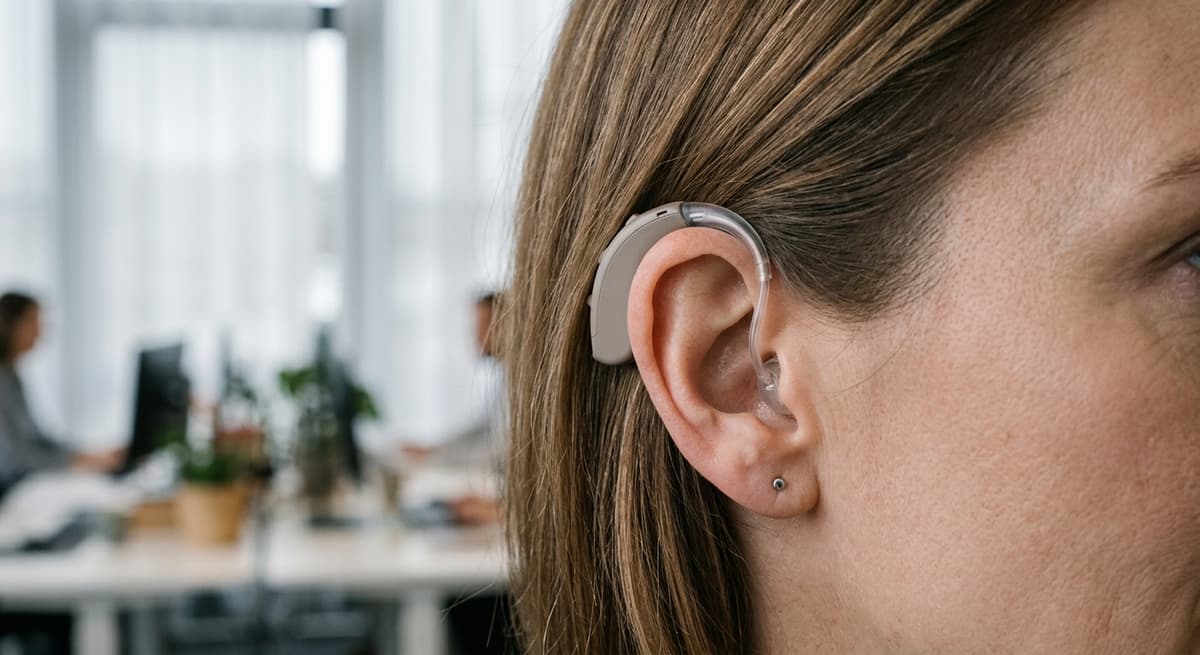
Nevada employers can install video-only surveillance cameras in areas where employees do not have a reasonable expectation of privacy. Permissible locations include:
- Sales floors and retail areas
- Lobbies and reception areas
- Hallways and corridors
- Parking lots and garages
- Warehouse and production areas
- Loading docks
Nevada does not require employers to post signs notifying employees of video surveillance, though many do as a matter of policy and to serve as a deterrent against theft and misconduct.
Prohibited Camera Locations
Cameras are strictly prohibited in locations where employees have a reasonable expectation of privacy:
- Bathrooms and restrooms
- Locker rooms and changing areas
- Nursing and lactation rooms
- Break rooms with closed doors (context-dependent)
- Private offices with closed doors (context-dependent)
Installing cameras in these areas violates NRS 200.604 and can result in gross misdemeanor or felony charges.
Audio Surveillance by Employers
If an employer's surveillance system captures audio, the recording consent requirements apply. For in-person conversations captured by a microphone in a common area, the employer would need to be a participant in the conversation to rely on one-party consent under NRS 200.650. An ambient microphone that records all conversations in a room without any party's consent may violate the statute.
For employer monitoring of employee phone calls, NRS 200.620's all-party consent requirement applies. Employers who record business phone calls must either obtain consent from all parties or limit monitoring to call metadata (duration, number dialed) rather than content.
Company No-Recording Policies

At-Will Employment and Policy Enforcement
Nevada is an at-will employment state under its common law. This means employers can generally terminate employees for any reason that is not specifically prohibited by law, including violating a company no-recording policy.
Even though recording an in-person conversation is legal under NRS 200.650, an employer can:
- Prohibit all recording devices in the workplace
- Require employees to sign no-recording agreements
- Terminate employees who violate the policy
- Discipline employees for recording without permission
The recording itself is not illegal, but the employee's job is not protected from termination for policy violations.
Limits on No-Recording Policies
Employer no-recording policies are not absolute. Federal labor law provides important exceptions.
National Labor Relations Act Protections
The National Labor Relations Act (NLRA) protects employees who engage in "concerted activity" for mutual aid or protection under Section 7. The National Labor Relations Board (NLRB) has found that blanket no-recording policies can violate the NLRA when they interfere with employees' rights to:
- Document unsafe working conditions
- Gather evidence of labor law violations
- Communicate with union representatives
- Record conversations related to wages, hours, or working conditions
In Stericycle, Inc., 372 NLRB No. 113 (2023), the NLRB overruled the prior Boeing Co. standard and returned to a worker-protective scrutiny for employer workplace rules. Under Stericycle, an employer's rule is presumptively unlawful if it could reasonably be interpreted to interfere with Section 7 rights; the employer must show a legitimate business justification outweighing the potential chilling effect. No-recording policies that are overbroad -- banning all recording regardless of purpose -- are the clearest candidates for challenge under this standard.
An employer can maintain a narrowly tailored no-recording policy tied to a demonstrated confidentiality or safety interest, but a blanket ban on all workplace recording may be unenforceable under the NLRA as interpreted in Stericycle.
Whistleblower Protections
Nevada's whistleblower protection statute (NRS 281.641) protects state employees who report improper governmental action. If a state employee records a conversation to document government waste, fraud, or abuse, terminating them for the recording could violate whistleblower protections.
The federal Occupational Safety and Health Act also protects employees who document unsafe working conditions, which may include recording evidence of safety violations.
Recording to Document Workplace Harassment
Legal Framework
Employees who experience workplace harassment often want to record evidence. In Nevada:
- In-person harassment: You can legally record in-person incidents of harassment you experience under one-party consent (NRS 200.650). This includes verbal abuse, discriminatory comments, and hostile interactions.
- Phone harassment: You cannot secretly record harassing phone calls. You must get the harasser's consent or notify them that the call is being recorded.
Practical Considerations
While recording in-person harassment is legal, employees should be aware that:
- The recording may be useful as evidence in an Equal Employment Opportunity Commission (EEOC) complaint or lawsuit
- The employer may still terminate the employee for violating a no-recording policy
- A wrongful termination claim could argue the recording was protected activity
- The recording must be preserved in its original, unedited form to be useful as evidence
Using Recordings in Legal Proceedings
Audio recordings of workplace harassment made under one-party consent are generally admissible in Nevada courts and in EEOC proceedings. The recording must be:
- Made lawfully (participant recording under NRS 200.650)
- Authenticated as genuine and unaltered
- Relevant to the claims being made
- Not overly prejudicial compared to its probative value
Employer Call Recording and Customer Notification
Business Phone Recording
Many Nevada employers record customer service calls for quality assurance, training, and dispute resolution purposes. Under NRS 200.620's all-party consent requirement, businesses must notify callers that the conversation is being recorded.
Common compliance methods include:
- Playing an automated message at the start of the call ("This call may be recorded for quality assurance purposes")
- Having the agent verbally notify the caller
- Stating recording practices in terms of service that the customer has agreed to
If a customer objects to recording, the business must stop recording or end the call.
Call Center Operations
Nevada call centers must ensure all-party consent for every recorded call. This is especially important for call centers that serve customers in multiple states, as Nevada's all-party requirement is stricter than many other states' one-party rules.
Remote Work and Workplace Recording
Recording Remote Meetings
Remote employees in Nevada who participate in video conference calls must follow NRS 200.620's all-party consent requirement. This applies whether the employee is working from home in Las Vegas, Reno, or anywhere in the state.
Platforms like Zoom and Microsoft Teams have built-in recording notifications that inform all participants when recording starts. Using these built-in features provides a mechanism for implied consent: participants who remain on the call after being notified have implicitly consented.
Using a separate recording tool (like screen recording software or an external audio recorder) to capture a video call without notification violates NRS 200.620.
Employer Monitoring of Remote Workers
Nevada employers may use monitoring software on company-owned devices, but any feature that records audio conversations must comply with NRS 200.620 and NRS 200.650. Screen recording software that captures video of the employee's screen (without audio) is not directly regulated by Nevada's recording statutes, but may raise privacy concerns.
Penalties for Illegal Workplace Recording
Criminal Penalties
| Offense | Classification | Penalty |
|---|---|---|
| Recording a phone call without all-party consent | Category D felony | 1-4 years prison, up to $5,000 fine |
| Eavesdropping on a conversation you are not part of | Category D felony | 1-4 years prison, up to $5,000 fine |
| Hidden camera in bathroom/locker room | Gross misdemeanor (first offense) | Up to 364 days jail, $2,000 fine |
Civil Liability
Under NRS 200.690, victims of illegal workplace recording can sue for:
- Liquidated damages of $100 per day of violation, minimum $1,000
- Actual damages
- Punitive damages
- Attorney fees and court costs
More Nevada Recording Laws
Audio Recording | Video Recording | Voyeurism & Hidden Cameras | Workplace Recording | Recording Police | Phone Call Recording | Security Cameras | Recording in Public | Landlord-Tenant | Dashcam Laws | Schools | Medical Recording
More Nevada Recording Topics
More Nevada Laws
Frequently Asked Questions
Can I record my boss in Nevada without telling them?
Yes, for in-person conversations. Under NRS 200.650, Nevada follows one-party consent for face-to-face discussions. You can record meetings, performance reviews, and conversations with your boss without notifying them. However, recording a phone call with your boss requires their consent under NRS 200.620. Your employer may also terminate you for violating a company no-recording policy.
Can my employer record me at work in Nevada?
Your employer can use video-only surveillance cameras in common areas like hallways, lobbies, and sales floors. Cameras are prohibited in bathrooms, locker rooms, and changing areas under NRS 200.604. If surveillance captures audio, consent requirements under NRS 200.650 (in-person) or NRS 200.620 (phone) apply.
Can I be fired for recording a conversation at work in Nevada?
Yes. Nevada is an at-will employment state. Even though recording an in-person conversation is legal under NRS 200.650, your employer can terminate you for violating a no-recording policy. However, the National Labor Relations Act may protect recordings made as part of concerted activity like documenting unsafe conditions or labor violations.
Can I record a Zoom meeting at work in Nevada?
Only with every participant's consent, as the safest approach. Zoom meetings are wire communications under NRS 200.620, which Nevada treats as requiring all-party consent, though the state's own courts have never agreed on exactly what the statute demands. Using Zoom's built-in recording feature notifies participants. Using external recording software without notification can expose you to a Category D felony charge under NRS 200.690.
Can I record evidence of workplace harassment in Nevada?
You can legally record in-person harassment you experience under NRS 200.650's one-party consent rule. You cannot secretly record harassing phone calls without everyone's consent under NRS 200.620. Lawfully made recordings are generally admissible as evidence in EEOC complaints and court proceedings.
Updates
Added disclosure that Nevada's own courts have never fully agreed on what NRS 200.620 requires for phone-call recording (the fractured 1998 Lane v. Allstate ruling), so the felony consequence for recording a work call without everyone's consent is now presented as a serious practical risk rather than an unqualified certainty.
Independently fact-checked against the cited primary sources; governing law re-checked for recent changes
Removed a mislinked citation: NRS 613.010 criminalizes fraudulently inducing workers to relocate for a job; it does not establish at-will employment, which is a Nevada common-law doctrine.
Governing law re-checked for recent changes
Reviewed and approved by an editor
The Law Behind This Article
This article rests on the statutory provisions below, held in our own legal record and retrieved from the official source. Tap a section to read the operative text.
Nevada Revised Statutes, Chapter 200: CRIMES AGAINST THE PERSON
§ 200.650Unauthorized, surreptitious intrusion of privacy by listening device prohibited.In forcecited in 19 of our articles
Except as otherwise provided in NRS 179.410 to 179.515, inclusive, and 704.195, a person shall not intrude upon the privacy of other persons by surreptitiously listening to, monitoring or recording, or attempting to listen to, monitor or record, by means of any mechanical, electronic or other listening device, any private conversation engaged in by the other persons, or disclose the existence, content, substance, purport, effect or meaning of any conversation so listened to, monitored or recorded, unless authorized to do so by one of the persons engaging in the conversation.
Official text (excerpt) · last checked 2026-08-26 · Read the full text in our law library · Verify at leg.state.nv.us
Cited in 13 court opinions in our collectionLatest citing opinion in our collection: 2025
In the courts (editorial summary, independently checked):Nevada courts read NRS 200.650 to permit a recording authorized by a participant. Summers v. State (1986) upheld a body-wire recording because the informant taking part in the conversation authorized it. Abid v. Abid (2017) held the section carries no suppression rule, so a custody expert could consider recordings made in violation of it.
Opinions citing this section in our collection:
- Lane v. Allstate Insurance (Nevada Supreme Court 1998, 114 Nev. 1176)✓A former employee secretly taped hundreds of phone calls with company personnel; the court read NRS 200.650 as allowing in-person private conversations to be recorded when one participant authorizes it, and contrasted that in holding NRS 200.620 bars one-party taping of calls.
- Summers v. State (Nevada Supreme Court 1986, 102 Nev. 195)✓Police taped a transmitter to an informant, who recorded his conversation with Summers about the murder guns; the court held such a recording needs no court order so long as the authorization requirement of NRS 200.650 is met, and the informant had authorized it.
- ABID VS. ABID (CHILD CUSTODY) (Nevada Supreme Court 2017, 2017 NV 94)“…to this recording, the father's actions likely violated NRS 200.650, which prohibits the…”
Identified automatically from the court opinions citing this section — not a ranking of which case controls.
Also relied on in: Nevada Recording Laws (2026): Hybrid One-Party/All-Party Consent, Nevada Windshield Mounting Laws (2026 Guide), Nevada Dashcam Laws: Legal Rules for Dashboard Cameras (2026)
§ 200.604Capturing image of private area of another person; distributing, disclosing, displaying, transmitting or publishing image of private area of another person; penalties; exceptions; confidentiality of image.In forcecited in 12 of our articles
1. Except as otherwise provided in subsection 4, a person shall not knowingly and intentionally capture an image of the private area of another person: (a) Without the consent of the other person; and (b) Under circumstances in which the other person has a reasonable expectation of privacy. 2. Except as otherwise provided in subsection 4, a person shall not distribute, disclose, display, transmit or publish an image that the person knows or has reason to know was made in violation of subsection 1. 3. Unless a greater penalty is provided pursuant to NRS 200.780 or 212.188, a person who violates this section: (a) For a first offense, is guilty of a gross misdemeanor. (b) For a second or subsequent offense, is guilty of a category E felony and shall be punished as provided in NRS 193.130. 4. This section does not prohibit any lawful law enforcement or correctional activity, including, without limitation, capturing, distributing, disclosing, displaying, transmitting or publishing an image for the purpose of investigating or prosecuting a violation of this section.
Official text (excerpt) · last checked 2026-07-29 · Read the full text in our law library · Verify at leg.state.nv.us
Cited in 4 court opinions in our collectionLatest citing opinion in our collection: 2018
Opinions citing this section in our collection:
- Coleman v. State (Nevada Supreme Court 2018, 416 P.3d 238)“…By the Court, PICKERING, J.: NRS 200.604 prohibits a person from knowingly and i…”
- COLEMAN (SOLOMON) VS. STATE (Nevada Supreme Court 2018, 2018 NV 28)“…y the Court, PICKERING, J.: NRS 200.604 prohibits a person from knowingly and…”
- Brian Olsen v. City of Henderson (Court of Appeals for the Ninth Circuit 2016, 648 F. App'x 628)“…amily. Nichols reasonably believed that Olsen had violated Nev. Rev. Stat. § 200.604 by capturing and publishing to his per…”
Identified automatically from the court opinions citing this section — not a ranking of which case controls.
Also relied on in: Nevada Smart Glasses Recording Laws 2026, Nevada Landlord-Tenant Recording Laws: Rights for Renters and Property Owners (2026), Nevada Medical Recording Laws: Patient Rights and Healthcare Privacy (2026)
§ 200.620Interception and attempted interception of wire communication prohibited; exceptions.In forcecited in 18 of our articles
1. Except as otherwise provided in subsection 5 and NRS 179.410 to 179.515, inclusive, 209.419 and 704.195, it is unlawful for any person to intercept or attempt to intercept any wire communication unless: (a) The interception or attempted interception is made with the prior consent of one of the parties to the communication; and (b) An emergency situation exists and it is impractical to obtain a court order as required by NRS 179.410 to 179.515, inclusive, before the interception, in which event the interception is subject to the requirements of subsection 3. If the application for ratification is denied, any use or disclosure of the information so intercepted is unlawful, and the person who made the interception shall notify the sender and the receiver of the communication that: (1) The communication was intercepted; and (2) Upon application to the court, ratification of the interception was denied.
Official text (excerpt) · last checked 2026-08-28 · Read the full text in our law library · Verify at leg.state.nv.us
Cited in 18 court opinions in our collectionLatest citing opinion in our collection: 2025
In the courts (editorial summary, independently checked):Nevada reads NRS 200.620 as an all-party consent rule for phone recording, with a territorial limit. Lane v. Allstate Insurance held a participant who taped his own calls without the other parties' consent violated it; DITECH FINANCIAL, LLC VS. BUCKLES held it does not reach calls recorded from outside Nevada.
Opinions citing this section in our collection:
- Lane v. Allstate Insurance (Nevada Supreme Court 1998, 114 Nev. 1176)✓A former employee secretly taped hundreds of his own phone calls with his ex-employer's staff to build his suit; the court held NRS 200.620 bars recording a call without every party's consent, so the tapes were excluded and the dismissal of his suit was reversed.
- State v. Reyes (Nevada Supreme Court 1991, 107 Nev. 191)✓Police had an interpreter listen on a station extension phone while an informant set up a drug buy; the court held that officers' use of regularly installed telephone equipment in the ordinary course of their duties is not an interception under NRS 200.620.
- ABID VS. ABID (CHILD CUSTODY) (Nevada Supreme Court 2017, 2017 NV 94)“…corded phone conversations in violation of NRS 200.620 to obtain evidence to support tort…”
Identified automatically from the court opinions citing this section — not a ranking of which case controls.
Also relied on in: Nevada Audio Recording Laws: Split Consent Rules and Penalties (2026), Nevada Laws on Recording Police: Your Rights Under NRS 171.1233 (2026), Nevada Laws on Recording in Public: Rights and Restrictions (2026)
§ 200.690Penalties.In forcecited in 13 of our articles
1. A person who willfully and knowingly violates NRS 200.620 to 200.650, inclusive: (a) Shall be punished for a category D felony as provided in NRS 193.130. (b) Is liable to a person whose wire or oral communication is intercepted without his or her consent for: (1) Actual damages or liquidated damages of $100 per day of violation but not less than $1,000, whichever is greater; (2) Punitive damages; and (3) His or her costs reasonably incurred in the action, including a reasonable attorney’s fee, Ê all of which may be recovered by civil action. 2. A good faith reliance by a public utility on a written request for interception by one party to a conversation is a complete defense to any civil or criminal action brought against the public utility on account of the interception.
Official text (excerpt) · last checked 2026-07-29 · Read the full text in our law library · Verify at leg.state.nv.us
Cited in 5 court opinions in our collectionLatest citing opinion in our collection: 2023
Opinions citing this section in our collection:
- Lane v. Allstate Insurance (Nevada Supreme Court 1998, 114 Nev. 1176)“…shable as “a category D felony as provided in NRS 193.130.” NRS 200.690(l)(a). In addition, the violator is lia…”
- ABID VS. ABID (CHILD CUSTODY) (Nevada Supreme Court 2017, 2017 NV 94)“…regarding evidence and admissibility. See NRS 200.690(1) (enforcing NRS 200.650 exclusively…”
- DITECH FINANCIAL, LLC VS. BUCKLES (Nevada Supreme Court 2017, 2017 NV 64)“…ons without Buckles's consent.' 1 NRS 200.690(1)(b) provides a private right of actio…”
Identified automatically from the court opinions citing this section — not a ranking of which case controls.
Also relied on in: Nevada Phone Call Recording Laws: All-Party Consent Required (2026), Nevada School Recording Laws: Rules for Students, Parents, and Teachers (2026), Nevada Security Camera Laws: Installation Rules and Privacy Limits (2026)
Search our full record of US law — 2.1 million sections, every state + federal →
Sources and References
- NRS 200.650 - Surreptitious Intrusion of Privacy(leg.state.nv.us).gov
- NRS 200.620 - Interception of Wire Communications(leg.state.nv.us).gov
- NRS 200.690 - Penalties(leg.state.nv.us).gov
- NRS 200.604 - Capturing Image of Private Area(leg.state.nv.us).gov
- National Labor Relations Act(nlrb.gov).gov
- EEOC(eeoc.gov).gov
- OSHA Workers Rights(osha.gov).gov
- NLRB - Employee Rights Under Section 7(nlrb.gov).gov