Texas Workplace Recording Laws: Employee and Employer Rights
Independently fact-checked against primary sources (last audited August 15, 2026). · Reviewed by the RecordingLaw editorial team. · Law checked current as of August 15, 2026. · 9 primary sources cited on this page. How we verify our legal content

Texas follows a one-party consent rule for workplace recording under Tex. Penal Code Section 16.02, meaning any employee who participates in a conversation can record it without notifying coworkers or supervisors. Company policies may still prohibit recording, and violating such a policy can result in termination under Texas at-will employment law.
Overview of Texas Workplace Recording Laws
Texas follows a one-party consent framework for audio recording under Tex. Penal Code Section 16.02. This means any participant in a workplace conversation can record it without notifying the other parties. The rules for video surveillance in the workplace involve separate statutes and practical considerations.
Workplace recording in Texas sits at the intersection of state wiretapping law, federal labor law, and employer policy. Employees and employers both have rights and limitations that depend on the type of recording, the location, and the purpose.
The Texas Workforce Commission provides guidance on video surveillance in employment settings, and the Texas State Law Library offers resources on audio recording statutes.
Employee Rights: Recording at Work
Legal Basis for Employee Recording
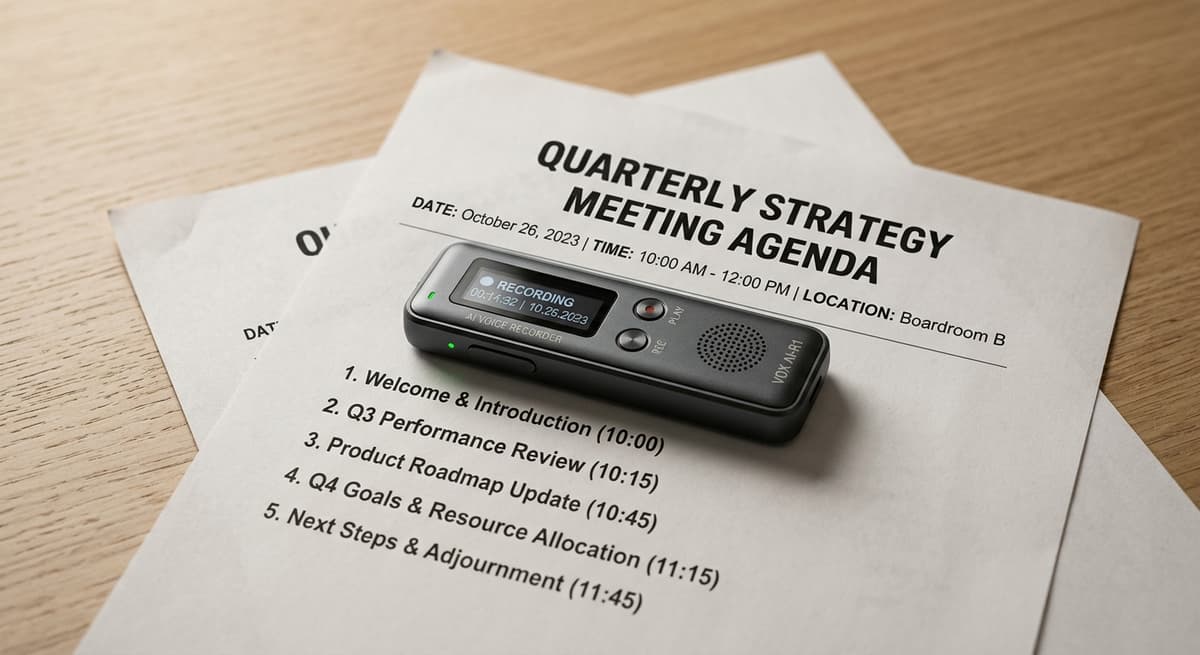
Under Tex. Penal Code Section 16.02, an employee who participates in a workplace conversation can record it without informing anyone else. This applies to:
- Meetings with supervisors and managers
- HR discussions, including disciplinary meetings and performance reviews
- Conversations with coworkers about workplace conditions
- Phone calls with clients, vendors, or business partners
- Exit interviews and termination meetings
The key legal requirement is that the employee recording must be an active participant in the conversation. An employee who leaves a recording device in a conference room to capture meetings they do not attend crosses the legal line into illegal interception.
Documenting Workplace Issues
Employee recordings serve as important evidence in various employment disputes. Texas employees commonly record workplace interactions to document:
- Sexual harassment or hostile work environment behavior
- Racial, gender, or age discrimination
- Retaliation after filing complaints or whistleblower reports
- Verbal promises about pay, benefits, or working conditions
- Unsafe working conditions or OSHA violations
- Wage theft or unpaid overtime discussions
Texas courts generally admit lawfully made one-party consent recordings as evidence in employment litigation. The recording must be authenticated under Texas Rules of Evidence Rule 901, but a participant in the recorded conversation can typically provide the necessary testimony.
The Company Policy Problem
While Texas law permits employees to record workplace conversations, many employers maintain policies that prohibit recording on company premises. This creates a tension between legal rights and employment consequences.
Texas is an at-will employment state. An employer can terminate an employee for any reason that is not specifically prohibited by law. Violating a company no-recording policy provides a legitimate, non-discriminatory basis for termination, even though the recording itself does not violate any state or federal law.
Employees facing this tension should consider:
- Reviewing the employee handbook for recording policies before making recordings
- Weighing the value of the recording against the risk of termination
- Consulting with an employment attorney before recording sensitive conversations
- Understanding that a recording made in violation of company policy may still be admissible as evidence, even if the employee faces consequences for making it
Employer Rights: Workplace Surveillance
Video Surveillance in Common Areas
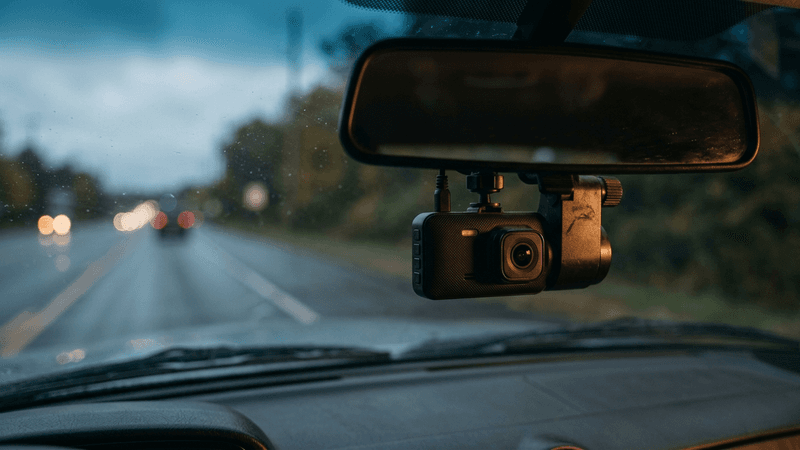
Texas employers have broad authority to install video surveillance cameras in common work areas where employees have no reasonable expectation of privacy. Permissible locations for employer video surveillance include:
- Office lobbies and reception areas
- Hallways, stairwells, and elevators
- Open-plan office floors
- Warehouses and loading docks
- Parking lots and exterior areas
- Retail sales floors and customer-facing areas
- Break rooms and cafeterias (with appropriate notice)
For video-only surveillance in these areas, Texas law does not require employee consent or written acknowledgment, although providing notice is a widely recommended best practice.
Prohibited Surveillance Locations
Tex. Penal Code Section 21.15 prohibits video recording in locations where individuals have a reasonable expectation of privacy. In the workplace, this means employers cannot install cameras in:
- Bathrooms and restrooms
- Locker rooms and changing areas
- Showers and personal hygiene facilities
- Private lactation rooms
- Any space where employees would reasonably expect to undress
An employer who installs cameras in these prohibited locations without consent and with intent to invade privacy faces criminal prosecution under Section 21.15 (a state jail felony) and civil liability for invasion of privacy. Incidental or unintentional camera placement, without that intent, is not automatically criminal under this section.
Audio Surveillance Requirements
When workplace surveillance systems capture audio in addition to video, the one-party consent requirement under Tex. Penal Code Section 16.02 applies to the audio component. This creates important limitations:
- An employer can record audio in areas where management personnel are present and participating in conversations, because a party to the conversation has consented
- A surveillance system that records audio of employee-only conversations, where no manager or authorized representative is participating, may violate Section 16.02
- The safest approach for employers is to provide clear written notice that audio recording occurs in designated areas, obtaining employee acknowledgment as part of onboarding
Silent video surveillance does not trigger the wiretapping statute, but adding audio changes the legal analysis significantly.
National Labor Relations Act Protections

Protected Concerted Activity
The National Labor Relations Act (NLRA) protects employees' right to engage in "concerted activity" related to their working conditions. This includes the right to discuss wages, safety concerns, and other terms and conditions of employment with coworkers.
The National Labor Relations Board (NLRB) has held that employee recording of workplace activities can constitute protected concerted activity when the recording relates to working conditions, safety, or other labor concerns.
Blanket No-Recording Policies: Stericycle Standard
The Fifth Circuit Court of Appeals, which covers Texas, has addressed employer no-recording policies in the context of the NLRA. Blanket policies that prohibit all workplace recording may violate employees' Section 7 rights under the NLRB's current standard. Under Stericycle, Inc. and Teamsters Local 628, 372 NLRB No. 113 (Aug. 2, 2023), a workplace rule is presumptively unlawful if a reasonable employee, economically dependent on the employer and contemplating Section 7 protected concerted activity, could interpret it to chill those rights. The employer must rebut the presumption by proving a legitimate, substantial business interest that cannot be achieved with a more narrowly tailored rule. NLRB Acting General Counsel Memorandum GC 25-05 (Feb. 14, 2025) rescinded various Biden-era GC memoranda as housekeeping but did not rescind Stericycle. Stericycle therefore remains the controlling standard for workplace handbook rules including no-recording policies.
The NLRB has provided guidance indicating that narrowly tailored recording policies are more likely to survive legal challenge. A compliant policy typically:
- Does not apply to recording activity that would be protected under the NLRA
- Permits the use of recording devices in non-work areas and during non-work time
- Does not ban employees from having recording devices on company property
- Focuses restrictions on protecting confidential business information, trade secrets, and patient or client privacy
Employers who maintain overly broad no-recording policies risk unfair labor practice charges before the NLRB, even if those policies are otherwise lawful under Texas state recording law.
Interaction Between State Law and Federal Labor Law
The NLRB has taken the position that the NLRA preempts state recording consent laws when employees are engaged in protected concerted activity. This means that even in states with stricter recording consent requirements, employees recording workplace conditions for the purpose of mutual aid or protection may be shielded by federal labor law.
In Texas, this interaction is less contentious because state law already permits one-party consent recording. However, the NLRA protection becomes relevant when an employer tries to enforce a no-recording policy against an employee who recorded protected concerted activity.
Specific Workplace Recording Scenarios
Recording HR Meetings and Disciplinary Actions
An employee in Texas can legally record HR meetings, disciplinary sessions, and performance reviews. These recordings can preserve a precise record of what was said during emotionally charged or legally significant conversations.
However, employees should be aware that:
- Some HR professionals may end a meeting if they learn recording is occurring
- The employer may cite a no-recording policy as grounds for additional disciplinary action
- A recording that captures the employee making inappropriate statements could also work against them
Recording for Whistleblower Protection
Texas employees who witness illegal activity, safety violations, or regulatory noncompliance in the workplace can record evidence to support whistleblower complaints. The Texas Whistleblower Act (Tex. Gov't Code Chapter 554) protects public employees who report violations of law in good faith. Private sector whistleblower protections may apply under specific federal statutes like OSHA, the Sarbanes-Oxley Act, or the False Claims Act.
Recordings made by whistleblowers are subject to the same one-party consent requirement. The employee must be a participant in the recorded conversation.
Recording Union Activities
Union organizing activities and collective bargaining discussions receive specific protection under the NLRA. Employees recording union-related discussions, organizing meetings, or conversations about working conditions engage in activity that the NLRB has recognized as protected.
Employers who discipline employees for recording union-related activity may face unfair labor practice charges, regardless of any no-recording policy.
Employer Best Practices for Workplace Surveillance
Written Surveillance Policies
Texas employers who implement workplace surveillance systems should develop clear written policies that:
- Identify the specific areas where video surveillance operates
- Disclose whether audio recording is included
- Explain the purpose of the surveillance (security, safety, loss prevention)
- Describe who has access to surveillance footage
- Specify how long footage is retained and how it is secured
- Address employee rights under the NLRA regarding recording
Notice and Signage
While Texas law does not require employers to provide notice of video-only surveillance in common areas, posting signage serves several purposes:
- Deters theft and misconduct
- Reduces employee privacy concerns
- Strengthens the legal position that no reasonable expectation of privacy exists
- Demonstrates good faith in workplace monitoring practices
Data Protection Considerations
The Texas Data Privacy and Security Act (TDPSA), effective July 2024, established requirements for businesses processing sensitive personal data. Workplace surveillance systems that incorporate biometric technology (facial recognition, gait analysis) must comply with the TDPSA's consent and data protection requirements.
The Capture or Use of Biometric Identifier Act (Tex. Bus. & Com. Code Section 503.001) also applies to workplace biometric data collection. Employers using surveillance systems that capture fingerprints, voiceprints, iris scans, or facial geometry must comply with this statute's notice and consent requirements.
2025 Federal Updates: TAKE IT DOWN Act and GC 25-07
The federal TAKE IT DOWN Act, S. 146, 119th Cong. (signed May 19, 2025) criminalizes knowing publication of nonconsensual intimate visual depictions and digital deepfakes via interactive computer service. Platforms were required to establish a notice-and-removal process by May 19, 2026, a deadline that has now passed. In a workplace context, employers and HR departments who become aware that employees are non-consensually distributing intimate images or deepfakes of coworkers should treat this as a TAKE IT DOWN Act issue in addition to any internal harassment policy violation.
NLRB Acting General Counsel William Cowen also issued GC 25-07 on June 25, 2025, arguing that surreptitious recording of collective-bargaining sessions by either employer or union is a per se NLRA violation. GC 25-07 is narrower than Stericycle and does not undo employees' one-party-consent right to record supervisor or HR conversations under Texas law.
Penalties for Illegal Workplace Recording
Criminal Penalties
Violations of the workplace recording laws carry the same penalties as other recording offenses under Texas law:
| Offense | Classification | Penalty |
|---|---|---|
| Illegal audio interception (Sec. 16.02) | Second-Degree Felony | 2 to 20 years, up to $10,000 fine |
| Camera in bathroom/locker room (Sec. 21.15) | State Jail Felony | 180 days to 2 years, up to $10,000 fine |
Civil Liability
Employers who violate workplace recording laws face civil liability including:
- $10,000 statutory damages per violation under Tex. Civ. Prac. & Rem. Code Chapter 123
- Actual damages for emotional distress and other harms
- Punitive damages for willful conduct
- Attorney fees and court costs
- Potential NLRB unfair labor practice remedies
Employees who illegally record non-participating coworkers' private conversations face the same criminal and civil exposure.
More Texas Recording Laws
Audio Recording | Video Recording | Voyeurism & Hidden Cameras | Workplace Recording | Recording Police | Phone Call Recording | Security Cameras | Recording in Public | Landlord-Tenant | Dashcam Laws | Schools | Medical Recording
← Back to Texas Recording Laws
More Texas Recording Topics
More Texas Laws
Frequently Asked Questions
Can an employee record conversations at work in Texas?
Yes. Texas is a one-party consent state under Penal Code Section 16.02. An employee who participates in a workplace conversation can record it without informing anyone else. This applies to meetings with supervisors, HR discussions, and conversations with coworkers. However, company policies may prohibit recording, and violating such policies can result in termination.
Can an employer fire an employee for recording at work in Texas?
Yes. While the recording itself is legal under Texas law, Texas is an at-will employment state. An employer can terminate an employee for violating a company no-recording policy, even though the recording does not violate state or federal wiretapping law. The exception is when the recording constitutes protected concerted activity under the National Labor Relations Act.
Can employers put cameras in the break room in Texas?
Yes. Employers can install video surveillance cameras in break rooms and other common areas where employees do not have a reasonable expectation of privacy. However, cameras in bathrooms, locker rooms, and changing areas are prohibited under Tex. Penal Code Section 21.15. If the cameras also capture audio, one-party consent rules apply.
Does the NLRA protect employees who record at work?
In some circumstances, yes. The National Labor Relations Board has held that employee recording of workplace conditions related to wages, safety, or other working conditions can constitute protected concerted activity under Section 7 of the NLRA. Employers who discipline employees for this type of recording may face unfair labor practice charges.
Can an employer record audio of employee conversations in Texas?
Only if at least one party to the conversation consents. Under Tex. Penal Code Section 16.02, audio recording requires one-party consent. An employer surveillance system that records audio of employee-only conversations, where no management representative is participating, may violate the wiretapping statute. Video-only surveillance does not require consent.
Updates
Fixed a dead Texas Rules of Evidence citation link, clarified that criminal exposure under Penal Code Section 21.15 for a hidden workplace camera requires intent to invade privacy (not just camera placement), and updated the TAKE IT DOWN Act platform-compliance date to reflect that the May 19, 2026 deadline has passed.
Independently fact-checked against the cited primary sources; governing law re-checked for recent changes
Governing law re-checked for recent changes
Added Stericycle, Inc., 372 NLRB No. 113 (2023) as the controlling NLRA standard for no-recording handbook rules, replacing the generic NLRB rights-we-protect citation. Added NLRB GC 25-05 (Feb. 14, 2025) housekeeping clarification confirming Stericycle not rescinded. Added NLRB GC 25-07 (June 25, 2025) note on surreptitious recording of collective-bargaining sessions. Added TAKE IT DOWN Act section (signed May 19, 2025; platform compliance May 19, 2026). Updated KeyTakeaway for NLRA to reference Stericycle by name.
Reviewed and approved by an editor
The Law Behind This Article
This article rests on the statutory provisions below, held in our own legal record and retrieved from the official source. Tap a section to read the operative text.
Texas Penal Code
§ 16.02UNLAWFUL INTERCEPTION, USE, OR DISCLOSURE OF WIRE, ORAL, OR ELECTRONIC COMMUNICATIONSIn forcecited in 17 of our articles
(a) In this section: (1) "Communication common carrier," "computer trespasser," "contents," "covert entry," "electronic communication," "intercept," "interception device," "investigative or law enforcement officer," "oral communication," "protected computer," and "wire communication" have the meanings assigned by Article 18A.001, Code of Criminal Procedure. (2) "Immediate life-threatening situation" and "member of a law enforcement unit specially trained to respond to and deal with life-threatening situations" have the meanings assigned by Article 18A.201, Code of Criminal Procedure.
Official text (excerpt) · last checked 2026-08-31 · Read the full text in our law library · Verify at statutes.capitol.texas.gov
Cited in 39 court opinions in our collectionLatest citing opinion in our collection: 2026
In the courts (editorial summary, independently checked):Texas courts have applied Section 16.02 to contested recordings. Long v. State (2017) held the oral communication definition carries a reasonable expectation of privacy test, sustaining a conviction over a covert locker room recording. Banargent v. State (2007) held a jail inmate impliedly consented, so no Section 16.02 violation.
Opinions citing this section in our collection:
- Banargent v. State (Texas Court of Appeals, 14th District (Houston) 2007, 228 S.W.3d 393)✓Jail phone prompts and posted notices warned that calls could be recorded, and a recorded call captured the defendant admitting he stabbed the victim; the court held he impliedly consented, so the recording did not violate Section 16.02.
- Long v. State (Court of Criminal Appeals of Texas 2017, 535 S.W.3d 511)✓A school board member had her daughter hide a phone in a visiting locker room to record the coach's halftime speech and sent it to the board; the court held Section 16.02's 'oral communication' incorporates the expectation of privacy test, which the coach met.
- Siddiq v. State (Court of Appeals of Texas 2016, 502 S.W.3d 387)✓Police automatically recorded a DWI arrestee's call to his father from the jail book-in desk, capturing him saying he was drunk; the court applied the law enforcement exception to hold the recording did not violate Section 16.02, so admitting it was not error.
Identified automatically from the court opinions citing this section — not a ranking of which case controls.
Also relied on in: Texas Recording Laws (2026): One-Party Consent Rules, One-Party Consent States: Complete 2026 Guide, Texas Security Camera Laws: Residential, Commercial, and Privacy Rules
§ 21.15INVASIVE VISUAL RECORDINGIn forcecited in 13 of our articles
(a) In this section: (1) "Female breast" means any portion of the female breast below the top of the areola. (2) "Intimate area" means the naked or clothed genitals, pubic area, anus, buttocks, or female breast of a person. (3) "Changing room" means a room or portioned area provided for or primarily used for the changing of clothing and includes dressing rooms, locker rooms, and swimwear changing areas. (3-a) "Place in which a person has a reasonable expectation of privacy" means a place in which a reasonable person would believe that the person could disrobe in privacy, without being concerned that the act of undressing would be photographed or visually recorded by another or that a visual image of the person undressing would be broadcasted or transmitted by another. The term includes a bathroom, bedroom, and changing room. (4) "Promote" has the meaning assigned by Section 43.21.
Official text (excerpt) · last checked 2026-08-31 · Read the full text in our law library · Verify at statutes.capitol.texas.gov
Cited in 44 court opinions in our collectionLatest citing opinion in our collection: 2025
In the courts (editorial summary, independently checked):The Court of Criminal Appeals struck down the 2007 improper photography provision at Penal Code 21.15(b)(1), and Ex parte Shay (2016) set aside a conviction under it. The Legislature re-enacted the section in 2015, and Ex Parte Kamilah a Hamilton (2020) held the current subsection (b)(1) survives strict scrutiny and is not overbroad.
Opinions citing this section in our collection:
- Ex Parte Nyabwa (Texas Court of Appeals, 14th District (Houston) 2011, 366 S.W.3d 719)✓Charged with improper photography, Nyabwa attacked section 21.15(b)(1) by pretrial habeas; the court of appeals held the 2007 subsection regulated the photographer's intent rather than speech and was neither overbroad nor vague. Ex parte Thompson struck it down in 2014.
- Ex parte Shay (Court of Criminal Appeals of Texas 2016, 507 S.W.3d 731)✓Shay pleaded guilty under section 21.15(b)(1) before Ex parte Thompson struck that subsection down; the Court of Criminal Appeals held his favorable plea bargain did not estop habeas relief, set aside the conviction, and remanded to dismiss the indictment.
- Ex Parte Kamilah a Hamilton (Texas Court of Appeals, 14th District (Houston) 2020)✓Indicted under the 2015 version of section 21.15(b)(1) for broadcasting an image of a complainant's intimate area, Hamilton claimed facial overbreadth; the court held the rewritten subsection survives strict scrutiny, is not overbroad, and affirmed denial of relief.
Identified automatically from the court opinions citing this section — not a ranking of which case controls.
Also relied on in: Texas Landlord-Tenant Recording Laws: Cameras, Privacy, and Rights, Texas Laws on Recording in Public: Rights, Limits, and Exceptions, Texas School Recording Laws: Classrooms, Cameras, and Student Privacy
Search our full record of US law — 2.1 million sections, every state + federal →
Sources and References
- Tex. Penal Code Section 16.02(statutes.capitol.texas.gov).gov
- Tex. Penal Code Section 21.15(statutes.capitol.texas.gov).gov
- Texas Whistleblower Act(statutes.capitol.texas.gov).gov
- CUBI Act - Biometric Identifiers(statutes.capitol.texas.gov).gov
- Texas Workforce Commission - Video Surveillance(efte.twc.texas.gov).gov
- NLRB - Employee Rights(nlrb.gov).gov
- Texas State Law Library - Audio Recording(guides.sll.texas.gov).gov
- Civil Liability Chapter 123(statutes.capitol.texas.gov).gov
- Stericycle, Inc. and Teamsters Local 628, 372 NLRB No. 113 (Aug. 2, 2023) - handbook rule standard(nlrb.gov).gov