
Michigan
Michigan Audio Recording Laws: Consent Rules, Statutes, and Penalties (2026)
Independently fact-checked against primary sources (last audited August 15, 2026). · Reviewed by the RecordingLaw editorial team. · Law checked current as of August 7, 2026. · 8 primary sources cited on this page. How we verify our legal content
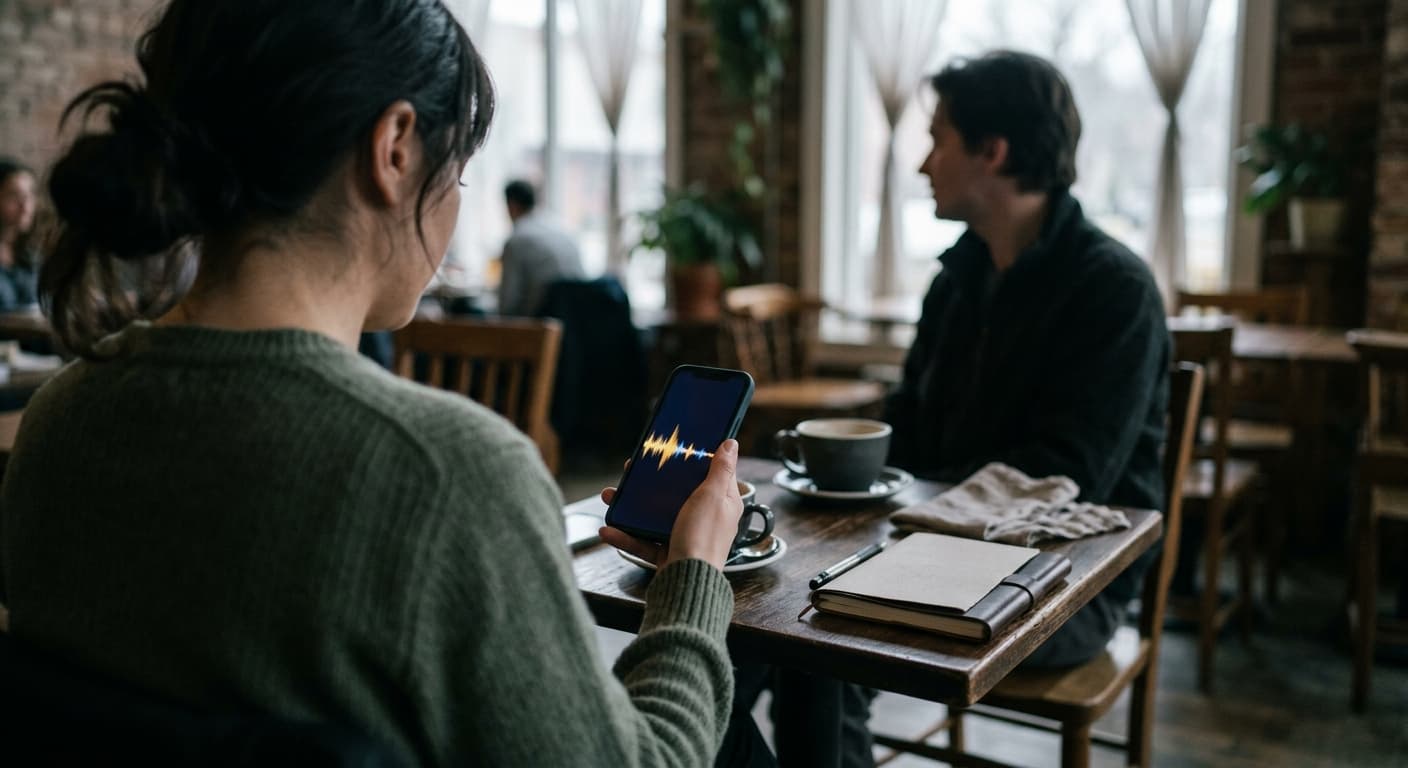
Michigan audio recording law permits participants to record any conversation they are part of without notifying the other parties. Although MCL 750.539c requires consent from all parties on its face, courts interpret "eavesdrop" to exclude a participant's own conversation. Recording a conversation you are not part of remains a felony.
Michigan has one of the most frequently misunderstood audio recording laws in the country. The statute technically requires consent from all parties to a private conversation. However, every Michigan appellate court and federal court to address the question has concluded that a participant in a conversation may record it without obtaining consent from the other parties.
This guide covers the full scope of Michigan audio recording law, including the key statutes, the participant exception, criminal penalties for violations, civil remedies, and how the law applies to different recording scenarios.
Michigan's Core Audio Recording Statute: MCL 750.539c
MCL 750.539c is the primary statute governing audio recording in Michigan. It states that any person who willfully uses any device to eavesdrop upon a private conversation without the consent of all parties is guilty of a felony.
On its surface, this language appears to make Michigan an all-party consent state. However, the statute must be read together with the definitions section, MCL 750.539a, which fundamentally changes how the law operates in practice.
The Definition That Changes Everything
MCL 750.539a(2) defines "eavesdrop" as "to overhear, record, amplify or transmit any part of the private discourse of others without the permission of all persons engaged in the discourse."
The word "others" is the key. Michigan courts have consistently held that when you participate in a conversation, the discourse is not solely that of "others." It is also your own. Because of this interpretation, a participant who records their own conversation is not "eavesdropping" under the statutory definition.
What "Private Discourse" Means
Not every conversation qualifies as "private discourse" under the statute. MCL 750.539a defines "private place" as a location where a person may reasonably expect to be safe from casual or hostile intrusion or surveillance. A place that the public or a substantial group of the public can access does not qualify as a private place.
The same logic applies to conversations. A loud discussion in a busy restaurant or a conversation held in a public park may not constitute "private discourse" because the participants cannot reasonably expect that no one will overhear them. A conversation in a closed office, a private home, or a phone call between two individuals generally does qualify.
The Participant Exception: Sullivan v. Gray
The foundational case establishing Michigan's participant exception is Sullivan v. Gray, 117 Mich. App. 476, 324 N.W.2d 58 (1982). The Michigan Court of Appeals examined the statutory language and held that the definition of "eavesdrop" references "the private discourse of others," which by its plain meaning excludes a participant's own conversations.
The court reasoned that unless a person explicitly states that a conversation is "off the record," any participant may reasonably repeat or record what was said. The recording is simply a more precise way of preserving the conversation.
Why This Has Not Been Overturned
Sullivan v. Gray has stood for over 40 years. The Michigan Supreme Court was asked to revisit it when it accepted a certified question in the AFT Michigan litigation but declined to answer in 2021, leaving Sullivan as controlling Court of Appeals authority. The Michigan Legislature has never amended the statute to eliminate the participant exception. Multiple subsequent Michigan Court of Appeals decisions have reaffirmed it.
The district court's own ruling in that same litigation, AFT Michigan v. Project Veritas, No. 4:17-cv-13292 (E.D. Mich.), tells a similar story of the exception holding up under direct challenge: the court first ruled the opposite way in 2019, then reversed itself on reconsideration on November 8, 2021, holding that participant recording does not violate MCL 750.539c. That reconsideration order, 2021 U.S. Dist. LEXIS 215090 (E.D. Mich. Nov. 8, 2021), is the ruling the Sixth Circuit relied on in Fisher v. Perron.
Fisher v. Perron (2022): Federal Confirmation
The most recent and authoritative ruling came from the U.S. Sixth Circuit Court of Appeals in Fisher v. Perron, 30 F.4th 289 (6th Cir. 2022). The Sixth Circuit held that a participant does not violate Michigan's eavesdropping statute by recording a conversation without the consent of other participants.
This decision is binding on all federal courts in the Sixth Circuit, which covers Michigan, Ohio, Kentucky, and Tennessee. Combined with the consistent state court precedent, it means both state and federal courts in Michigan now recognize the participant exception.
What Audio Recording Is Legal in Michigan
Understanding when you can and cannot record audio in Michigan requires applying the participant exception to specific scenarios.
Recording Your Own Conversations
If you are actively participating in a conversation, you can record it. This applies to:
- In-person conversations where you are one of the speakers
- Phone calls that you are a party to, whether on a landline, cell phone, or VoIP platform
- Video calls on platforms like Zoom, FaceTime, Teams, or Google Meet where you are a participant
- Text-to-speech and voice messages that you are sending or receiving in real time
You do not need to announce that you are recording. You do not need to obtain verbal or written consent from the other participants. Your own participation satisfies the consent requirement.
Recording in Public Spaces
Conversations that take place in public areas where people have no reasonable expectation of privacy generally fall outside the statute entirely. You can record audio in:
- Public parks and sidewalks
- Retail stores open to the public
- Government buildings during public meetings
- Outdoor events and gatherings
The Michigan Open Meetings Act (MCL 15.263) explicitly protects the right to tape-record, videotape, broadcast, and telecast proceedings of any public body at a public meeting. This right does not require prior approval.
When All Parties Consent
When every participant in a conversation agrees to recording, the recording is always legal regardless of context. Written consent is the safest approach but is not legally required. Verbal consent or even implied consent (such as continuing a conversation after being told it is being recorded) can satisfy the statute.
What Audio Recording Is Illegal in Michigan
Third-Party Eavesdropping
If you are not a participant in the conversation, recording it without the consent of all parties is a felony. This applies to:
- Placing a hidden recording device in a room where others will have a private conversation
- Using electronic equipment to intercept phone calls you are not part of
- Positioning a microphone to capture conversations between other people
- Hiring or directing someone else to eavesdrop on your behalf
MCL 750.539c specifically states that anyone who "knowingly aids, employs or procures another person" to eavesdrop is equally guilty.
Installing Recording Devices in Private Places
MCL 750.539d separately prohibits installing, placing, or using any device for recording or eavesdropping in a private place without the consent of the person entitled to privacy there. This covers hidden microphones, bugs, and covert recording equipment placed in homes, offices, hotel rooms, or other private locations.
Distributing Illegally Obtained Recordings
MCL 750.539e makes it a separate felony to divulge, disclose, or distribute information obtained through illegal eavesdropping. Even if you did not perform the illegal recording yourself, knowingly sharing the contents of an illegally obtained recording is a crime.
Criminal Penalties for Illegal Audio Recording
Michigan treats eavesdropping violations as serious criminal offenses. All violations are classified as felonies.
| Offense | Statute | Maximum Prison | Maximum Fine |
|---|---|---|---|
| Eavesdropping on private conversation | MCL 750.539c | 2 years | $2,000 |
| Installing recording device in private place | MCL 750.539d | 2 years (first offense) | $2,000 |
| Repeat offense of installing device | MCL 750.539d | 5 years | $5,000 |
| Divulging illegally obtained information | MCL 750.539e | 2 years | $2,000 |
| Distributing recordings from hidden cameras | MCL 750.539d | 5 years | $5,000 |
These penalties reflect the seriousness with which Michigan treats privacy violations. A felony conviction also carries collateral consequences including potential loss of professional licenses, difficulty finding employment, and loss of voting rights while incarcerated.
Civil Remedies for Victims
MCL 750.539h provides victims of illegal eavesdropping with the right to file a civil lawsuit. Available remedies include:
- Injunctive relief to stop ongoing eavesdropping
- Actual damages for any harm suffered as a result of the illegal recording
- Punitive damages as determined by the court or jury
Michigan's statute does not set a minimum statutory damage amount. Victims must demonstrate actual harm to recover compensatory damages. However, punitive damages may be awarded at the court's discretion to punish particularly egregious conduct and deter future violations.
Federal Liability
Illegal audio recordings may also violate the federal Wiretap Act, 18 U.S.C. 2511, which carries criminal penalties of up to 5 years imprisonment. The Act's civil remedy is a separate provision, 18 U.S.C. 2520: a private right of action with statutory damages of the greater of actual damages or $100 per day of violation, with a $10,000 minimum.
Interstate and Cross-Border Calls
When recording a phone call between Michigan and another state, the stricter state's law generally applies. Michigan's participant exception means Michigan residents can freely record calls they participate in. However, if the person on the other end of the line is in an all-party consent state, that state's law may govern.
States that require all-party consent include California, Connecticut, Florida, Illinois, Maryland, Massachusetts, Montana, New Hampshire, Oregon, Pennsylvania, and Washington. If you are calling someone in one of these states, consider disclosing that you are recording to avoid potential liability under the other state's law.
For calls between Michigan and Canada, Canadian federal law under the Criminal Code of Canada generally allows one-party consent recording. However, provincial privacy laws may impose additional restrictions.
Audio Recording as Evidence in Michigan Courts
Recordings made legally under the participant exception are generally admissible as evidence in Michigan courts. Courts evaluate recorded evidence under the Michigan Rules of Evidence, considering factors including:
- Whether the recording was obtained legally
- Whether the recording is authentic and has not been altered
- Whether the recording is relevant to the case
Recordings obtained through illegal eavesdropping are typically inadmissible. Michigan courts may suppress evidence gathered in violation of MCL 750.539c, and the party who made the illegal recording may face criminal prosecution and civil liability.
Recordings in Family Law Cases
Audio recordings frequently appear in Michigan divorce, custody, and domestic relations cases. A parent who records their own phone conversations with the other parent is generally acting within the participant exception. However, recording a child's conversations with the other parent when the recording parent is not present raises third-party eavesdropping concerns.
Michigan courts have addressed this issue with mixed results. The safest approach is to only record conversations in which you are a direct participant.
Practical Tips for Legal Audio Recording in Michigan
-
Always be a participant. The participant exception only protects people who are actively part of the conversation. Do not record conversations you are not involved in.
-
Understand the limits of "participant." You cannot authorize a third party to record on your behalf. The exception requires your own direct participation.
-
Consider cross-state implications. If the other party is in an all-party consent state, their state's law may apply. When in doubt, disclose that you are recording.
-
Know your employer's policy. Even though recording your own workplace conversations is legal, violating an employer's no-recording policy can result in termination.
-
Preserve recordings carefully. If you plan to use a recording as evidence, keep the original file unedited and note the date, time, and participants.
-
Consult an attorney for sensitive situations. If you are considering recording conversations related to legal proceedings, criminal activity, or family disputes, get legal advice first.
Related Michigan Recording Laws
Audio Recording | Video Recording | Voyeurism & Hidden Cameras | Workplace Recording | Recording Police | Phone Call Recording | Security Cameras | Recording in Public | Landlord-Tenant | Dashcam Laws | Schools | Medical Recording
← Back to Michigan Recording Laws
More Michigan Recording Topics
More Michigan Laws
Frequently Asked Questions
Is Michigan a one-party or two-party consent state for audio recording?
Michigan's statute (MCL 750.539c) technically requires all-party consent. However, every Michigan appellate court and federal court to address the issue has recognized a participant exception. If you are part of the conversation, you can record it without the other participants' consent. Third parties who are not part of the conversation cannot record without everyone's consent.
Can I secretly record a conversation I am part of in Michigan?
Yes. Under the participant exception established in Sullivan v. Gray (1982) and affirmed by the Sixth Circuit in Fisher v. Perron (2022), you may record your own conversations without telling the other participants. You do not need to announce or disclose the recording.
What are the penalties for illegal audio recording in Michigan?
Illegal eavesdropping under MCL 750.539c is a felony punishable by up to 2 years in prison and a $2,000 fine. Distributing illegally obtained recordings carries up to 5 years in prison and a $5,000 fine under MCL 750.539d. Victims can also sue for actual and punitive damages under MCL 750.539h.
Can I use a recorded conversation as evidence in a Michigan court?
Recordings made legally under the participant exception are generally admissible in Michigan courts, subject to the Michigan Rules of Evidence. The recording must be authentic, unaltered, and relevant. Recordings obtained through illegal eavesdropping are typically inadmissible and may expose the recorder to criminal charges.
Does Michigan's audio recording law apply to phone calls with people in other states?
Michigan's participant exception allows you to record your own phone calls. However, if the person on the other end is in an all-party consent state like California, Florida, or Pennsylvania, that state's stricter law may also apply. To avoid legal risk on interstate calls, consider disclosing that you are recording.
Updates
Corrected a fabricated 2026 federal court ruling in AFT Michigan v. Project Veritas; the real case reached its participant-exception holding via a November 8, 2021 reconsideration order after an initial 2019 ruling the other way. Also corrected the federal civil-damages citation from 18 U.S.C. 2511 (the criminal provision) to 18 U.S.C. 2520 (the civil-remedy provision).
Independently fact-checked against the cited primary sources
Corrected the statute citation for the 5-year/$5,000 penalty on distributing recordings from hidden cameras: it comes from MCL 750.539d(3)(b), not MCL 750.539e.
Governing law re-checked for recent changes
Reviewed and approved by an editor
The Law Behind This Article
This article rests on the statutory provisions below, held in our own legal record and retrieved from the official source. Tap a section to read the operative text.
Michigan Compiled Laws
§ 750.539cEavesdropping upon private conversationIn forcecited in 42 of our articles
Any person who is present or who is not present during a private conversation and who wilfully uses any device to eavesdrop upon the conversation without the consent of all parties thereto, or who knowingly aids, employs or procures another person to do the same in violation of this section, is guilty of a felony punishable by imprisonment in a state prison for not more than 2 years or by a fine of not more than $2,000.00, or both.
Official text (excerpt) · last checked 2026-08-28 · Read the full text in our law library · Verify at legislature.mi.gov
Cited in 32 court opinions in our collectionLatest citing opinion in our collection: 2025
In the courts (editorial summary, independently checked):Michigan courts read MCL 750.539c to reach third-party eavesdropping only. Sullivan v. Gray (1982) held the statutory phrase "private discourse of others" excludes recording by a participant in the conversation; People v. Lucas (1991) held an officer who answered an arrestee's ringing car phone did not violate the section.
Opinions citing this section in our collection:
- People v. Lucas (Michigan Court of Appeals 1991, 188 Mich. App. 554)✓Police answering the arrested defendant's ringing car phone took drug-purchase calls and testified to them; the court held the officer was not an eavesdropper because there was no private discourse between the sender and some other receiver, so MCL 750.539c was not violated.
- Sullivan v. Gray (Michigan Court of Appeals 1982, 117 Mich. App. 476)✓A party to a phone call about a failed car dealership sale secretly taped it and the transcript was used in later litigation; reading the statute to reach only the private discourse of others, the court held participant recording is not eavesdropping under MCL 750.539c.
- People v. Warner (Michigan Supreme Court 1977, 401 Mich. 186)✓A motel switchboard operator deliberately listened in on a guest's call and reported it to police; the court held her willful eavesdropping violated MCL 750.539c, but the defendant, not shown to be a party to the call, had no standing to suppress the resulting evidence.
Identified automatically from the court opinions citing this section — not a ranking of which case controls.
§ 15.263Meetings, decisions, and deliberations of public body; requirements; attending or addressing meeting of public body; COVID-19 safety measures; tape-recording, videotaping, broadcasting, and telecasting proceedings; accommodation of absent members; remote attendance; rules; exclusion from meeting; exemptionsIn forcecited in 10 of our articles
(1) All meetings of a public body must be open to the public and must be held in a place available to the general public. All persons must be permitted to attend any meeting except as otherwise provided in this act. The right of a person to attend a meeting of a public body includes the right to tape-record, to videotape, to broadcast live on radio, and to telecast live on television the proceedings of a public body at a public meeting. The exercise of this right does not depend on the prior approval of the public body. However, a public body may establish reasonable rules and regulations in order to minimize the possibility of disrupting the meeting. For a meeting of a public body held in person before April 1, 2021, the public body shall do both of the following: (a) To the extent feasible under the circumstances, ensure adherence to social distancing and mitigation measures recommended by the Centers for Disease Control and Prevention for purposes of preventing the spread of COVID-19, including the measure that an individual remain at least 6 feet from anyone from outside the individual's household.
Official text (excerpt) · last checked 2026-07-30 · Read the full text in our law library · Verify at legislature.mi.gov
Cited in 94 court opinions in our collectionLatest citing opinion in our collection: 2026
Opinions citing this section in our collection:
- Booth Newspapers, Inc v. University of Michigan Board of Regents (Michigan Supreme Court 1993, 444 Mich. 211)“…ing violated the act by not taking place in a public forum. MCL 15.263(2); MSA 4.1800(13)(2). See also OAG 197…”
- Herald Co. v. City of Bay City (Michigan Supreme Court 2000, 463 Mich. 111)“…mbers shall take place at a meeting open to the public.... [MCL 15.263; MSA 4.1800(13).] The statute strictl…”
- Speicher v. Columbia Township Board of Trustees (Michigan Supreme Court 2014, 497 Mich. 125)“…o, J. MCL 15.261 et seq. MCR 7.215(J). MCL 15.263(2) requires that “[a]ll decisions of a…”
Identified automatically from the court opinions citing this section — not a ranking of which case controls.
§ 750.539aDefinitionsIn forcecited in 30 of our articles
As used in sections 539a to 539i: (1) "Private place" means a place where one may reasonably expect to be safe from casual or hostile intrusion or surveillance but does not include a place to which the public or substantial group of the public has access. (2) "Eavesdrop" or "eavesdropping" means to overhear, record, amplify or transmit any part of the private discourse of others without the permission of all persons engaged in the discourse. Neither this definition or any other provision of this act shall modify or affect any law or regulation concerning interception, divulgence or recording of messages transmitted by communications common carriers. (3) "Surveillance" means to secretly observe the activities of another person for the purpose of spying upon and invading the privacy of the person observed. (4) "Person" means any individual, partnership, corporation or association.
Official text (excerpt) · last checked 2026-07-30 · Read the full text in our law library · Verify at legislature.mi.gov
Cited in 26 court opinions in our collectionLatest citing opinion in our collection: 2026
Opinions citing this section in our collection:
- Lewis v. LeGrow (Michigan Court of Appeals 2003, 258 Mich. App. 175)“…such unauthorized installation, is guilty of a felony.... MCL 750.539a provides the definitions of phrases use…”
- People v. Stone (Michigan Supreme Court 2001, 463 Mich. 558)“…permission of all persons engaged in the discourse.” MCL 750.539a(2); MSA 28.807(1)(2). In…”
- People v. Lucas (Michigan Court of Appeals 1991, 188 Mich. App. 554)“…e Commander Turner, in answering the mobile phone, violated MCL 750.539a et seq.; MSA 28.807(1)…”
Identified automatically from the court opinions citing this section — not a ranking of which case controls.
§ 750.539dInstallation, placement, or use of device for observing, recording, transmitting, photographing or eavesdropping in private placeIn forcecited in 30 of our articles
(1) Except as otherwise provided in this section, a person shall not do either of the following: (a) Install, place, or use in any private place, without the consent of the person or persons entitled to privacy in that place, any device for observing, recording, transmitting, photographing, or eavesdropping upon the sounds or events in that place. (b) Distribute, disseminate, or transmit for access by any other person a recording, photograph, or visual image the person knows or has reason to know was obtained in violation of this section. (2) This section does not prohibit security monitoring in a residence if conducted by or at the direction of the owner or principal occupant of that residence unless conducted for a lewd or lascivious purpose. (3) A person who violates or attempts to violate this section is guilty of a crime as follows: (a) For a violation or attempted violation of subsection (1)(a): (i) Except as provided in subparagraph (ii), the person is guilty of a felony punishable by imprisonment for not more than 2 years or a fine of not more than $2,000.00, or both.
Official text (excerpt) · last checked 2026-08-31 · Read the full text in our law library · Verify at legislature.mi.gov
Cited in 24 court opinions in our collectionLatest citing opinion in our collection: 2026
In the courts (editorial summary, independently checked):Lewis v. LeGrow held a bedroom in a private home is a "private place" under MCL 750.539d and that consenting to sex does not consent to being secretly videotaped there, sustaining civil awards. People v. Wilkens affirmed convictions including one under the section for a camera hidden in a shower used by tenants.
Opinions citing this section in our collection:
- Lewis v. LeGrow (Michigan Court of Appeals 2003, 258 Mich. App. 175)✓A man hid a video camera in his own bedroom and taped three women having sex with him; the court held the bedroom was a private place under 539d and that consenting to sex did not mean consenting to be taped, so the jury verdicts against him stood.
- People v. Wilkens (Michigan Court of Appeals 2005, 267 Mich. App. 728)“…ne count of eavesdropping through installation of a camera, MCL 750.539d. [1] The trial court sentenced defenda…”
- People v. Waltonen (Michigan Court of Appeals 2007, 272 Mich. App. 678)“…drug house, MCL 333.7405(l)(d); one count of eavesdropping, MCL 750.539d; and four counts of engaging the servic…”
Identified automatically from the court opinions citing this section — not a ranking of which case controls.
§ 750.539eUse or divulgence of information unlawfully obtainedIn forcecited in 10 of our articles
Any person who uses or divulges any information which he knows or reasonably should know was obtained in violation of sections 539b, 539c or 539d is guilty of a felony, punishable by imprisonment in a state prison not more than 2 years, or by a fine of not more than $2,000.00.
Official text (excerpt) · last checked 2026-07-30 · Read the full text in our law library · Verify at legislature.mi.gov
Cited in 10 court opinions in our collectionLatest citing opinion in our collection: 2025
Opinions citing this section in our collection:
- People v. Warner (Michigan Supreme Court 1977, 401 Mich. 186)“…Auslander overheard `I've got drugs' accidentally and that MCLA 750.539e; MSA 28.807(5) did not bar the admissio…”
- Dickerson v. Raphael (Michigan Court of Appeals 1997, 222 Mich. App. 185)“…ore than 2 years, or by a fine of not more than $2,000.00. [MCL 750.539e; MSA 28.807(5).] Additionally, M…”
- People v. Livingston (Michigan Court of Appeals 1975, 64 Mich. App. 247)“…sections 539b, 539c or 539d is guilty of a felony * * * .” MCLA 750.539e; MSA 28.807(5). "This act shall…”
Identified automatically from the court opinions citing this section — not a ranking of which case controls.
§ 750.539hCivil remediesIn forcecited in 22 of our articles
Any parties to any conversation upon which eavesdropping is practiced contrary to this act shall be entitled to the following civil remedies: (a) An injunction by a court of record prohibiting further eavesdropping. (b) All actual damages against the person who eavesdrops. (c) Punitive damages as determined by the court or by a jury.
Official text (excerpt) · last checked 2026-07-30 · Read the full text in our law library · Verify at legislature.mi.gov
Cited in 13 court opinions in our collectionLatest citing opinion in our collection: 2026
Opinions citing this section in our collection:
- McAuley v. General Motors Corp. (Michigan Supreme Court 1998, 457 Mich. 513)“…MSA 4.1801(10)(7), MCL 600.2911(2)(b); MSA 27A.2911(2)(b), MCL 750.539h(c); MSA 28.807(8)(c). In additio…”
- Eide v. Kelsey-Hayes Co. (Michigan Supreme Court 1988, 431 Mich. 26)“…violation); MCL 600.2911; MSA 27A.2911 (libel or slander); MCL 750.539h; MSA 28.807(8) (eavesdropping, allowing…”
- Anzaldua v. Band (Michigan Supreme Court 1998, 457 Mich. 530)“…this act, the court or jury who shall try the same); and MCL 750.539h(c); MSA 28.807(8)(c) (any party to a co…”
Identified automatically from the court opinions citing this section — not a ranking of which case controls.
United States Code Title 18
§ 2511Interception and disclosure of wire, oral, or electronic communications prohibitedIn forcecited in 418 of our articles
Except as otherwise specifically provided in this chapter any person who— intentionally intercepts, endeavors to intercept, or procures any other person to intercept or endeavor to intercept, any wire, oral, or electronic communication; intentionally uses, endeavors to use, or procures any other person to use or endeavor to use any electronic, mechanical, or other device to intercept any oral communication when— such device is affixed to, or otherwise transmits a signal through, a wire, cable, or other like connection used in wire communication; or such device transmits communications by radio, or interferes with the transmission of such communication; or such person knows, or has reason to know, that such device or any component thereof has been sent through the mail or transported in interstate or foreign commerce; or such use or endeavor to use (A) takes place on the premises of any business or other commercial establishment the operations of which affect interstate or foreign commerce; or (B) obtains or is for the purpose of obtaining information relating to the operations of any business or other commercial establishment the operations of which affect interstate or foreign…
Official text (excerpt) · last checked 2026-08-28 · Read the full text in our law library · Verify at uscode.house.gov
Cited in 2,045 court opinions in our collectionLatest citing opinion in our collection: 2026
In the courts (editorial summary, independently checked):Griggs-Ryan v. Smith (1990) applied the Section 2511(2)(d) prior-consent exception, treating a tenant repeatedly told that all incoming calls were taped as having impliedly consented. United States v. United States District Court (1972) read the then-current Section 2511(3) as conferring no presidential surveillance power.
Opinions citing this section in our collection:
- Mitchell v. Forsyth (Supreme Court of the United States 1985, 472 U.S. 511)✓The Attorney General authorized a warrantless 1970 national security wiretap that caught the plaintiff's calls; the Court held the since-repealed Section 2511(3) disclaimer left the tap lawful under Title III, and that Mitchell had qualified immunity.
- United States v. United States District Court for the Eastern District of Michigan (Supreme Court of the United States 1972, 407 U.S. 297)✓The Attorney General approved warrantless wiretaps on members of a domestic group accused of bombing a CIA office; the Court read Section 2511(3) as a congressional disclaimer conferring no surveillance power, then held the Fourth Amendment required prior judicial approval.
- Forsyth v. Barr (Court of Appeals for the Fifth Circuit 1994, 19 F.3d 1527)✓Dallas police used, in an internal affairs probe of an officer, calls private parties allegedly intercepted illegally; assuming that was unlawful, the Fifth Circuit held Section 2517(1) and (2) allowed the disclosure and use, defeating the Section 2511(1)(c) and (d) claims.
Identified automatically from the court opinions citing this section — not a ranking of which case controls.
§ 2520Recovery of civil damages authorizedIn forcecited in 115 of our articles
Except as provided in section 2511(2)(a)(ii), any person whose wire, oral, or electronic communication is intercepted, disclosed, or intentionally used in violation of this chapter may in a civil action recover from the person or entity, other than the United States, which engaged in that violation such relief as may be appropriate. In an action under this section, appropriate relief includes— such preliminary and other equitable or declaratory relief as may be appropriate; damages under subsection (c) and punitive damages in appropriate cases; and a reasonable attorney’s fee and other litigation costs reasonably incurred.
Official text (excerpt) · last checked 2026-07-28 · Read the full text in our law library · Verify at uscode.house.gov
Cited in 860 court opinions in our collectionLatest citing opinion in our collection: 2026
In the courts (editorial summary, independently checked):Walker v. Darby (1990) held a 2520 plaintiff need not prove the contents of intercepted conversations, only interception and a justified expectation against it. Bartnicki v. Vopper (2001) barred 2520 damages against defendants who took no part in the interception, obtained the tape lawfully, and disclosed a matter of public concern.
Opinions citing this section in our collection:
- Jessie Walker v. Thomas E. Darby, Hugh L. Robinson, Jr., and Kenneth Day (Court of Appeals for the Eleventh Circuit 1990, 911 F.2d 1573)✓A postal letter carrier said three supervisors wired an intercom near his workstation to listen in. Reversing summary judgment, the Eleventh Circuit held a section 2520 plaintiff can show interception without proving the contents of specific conversations.
- Gelbard v. United States (Supreme Court of the United States 1972, 408 U.S. 41)“…disclosure, or use is entitled to recover civil damages, 18 U. S. C. § 2520 . Title III also bars the use as eviden…”
- DirecTV, Inc. v. Hoa Huynh (Court of Appeals for the Ninth Circuit 2007, 503 F.3d 847)“…7 U.S.C. § 605 (e)(4), or alternatively, for violations of 18 U.S.C. § 2520 (a), or alternatively, for violations o…”
Identified automatically from the court opinions citing this section — not a ranking of which case controls.
Search our full record of US law — 2.1 million sections, every state + federal →
Sources and References
- Michigan Legislature - MCL 750.539c (Eavesdropping Prohibition)(legislature.mi.gov).gov
- Michigan Legislature - MCL 750.539a (Definitions)(legislature.mi.gov).gov
- Michigan Legislature - MCL 750.539d (Surveillance Devices)(legislature.mi.gov).gov
- Michigan Legislature - MCL 750.539e (Divulging Information)(legislature.mi.gov).gov
- Michigan Legislature - MCL 750.539h (Civil Remedies)(legislature.mi.gov).gov
- Michigan Legislature - MCL 15.263 (Open Meetings Act)(legislature.mi.gov).gov
- Fisher v. Perron, 30 F.4th 289 (6th Cir. 2022)(law.justia.com)
- 18 U.S.C. Section 2511 - Federal Wiretap Act(law.cornell.edu)
- AFT Michigan v. Project Veritas, No. 4:17-cv-13292 (E.D. Mich., reconsideration order Nov. 8, 2021)(courtlistener.com).gov
- 18 U.S.C. Section 2520 - Civil Action for Unauthorized Interception(law.cornell.edu).gov