
New Jersey
New Jersey Audio Recording Laws: One-Party Consent Rules and Penalties
Independently fact-checked against primary sources (last audited August 15, 2026). · Reviewed by the RecordingLaw editorial team. · Law checked current as of August 15, 2026. · 3 primary sources cited on this page. How we verify our legal content
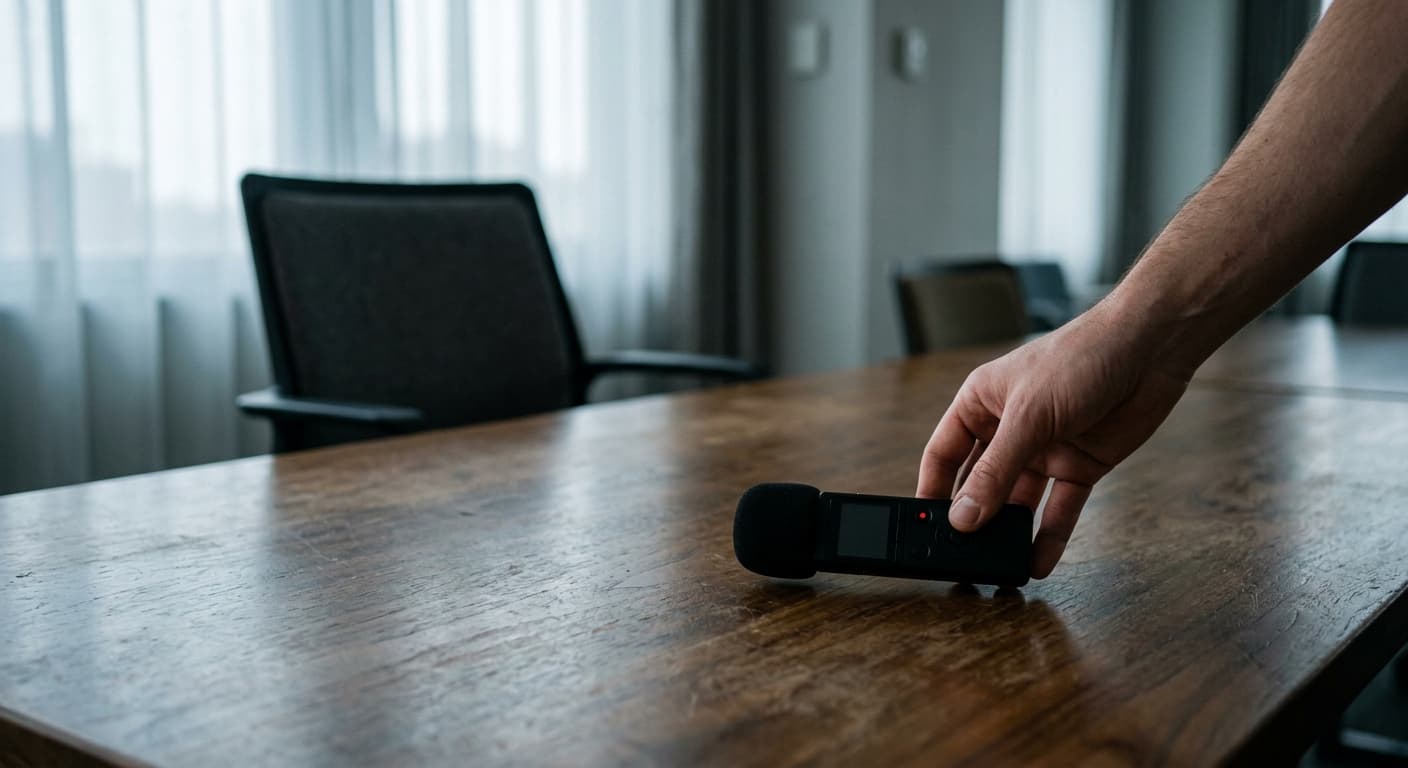
New Jersey is a one-party consent state: as a participant in any conversation, you may audio record without notifying others, under N.J.S.A. 2A:156A-4. The law covers phone calls, in-person exchanges, and electronic communications. Recording a conversation you are not part of, without a consenting participant, is a third-degree crime.
New Jersey allows you to audio record conversations you participate in without notifying the other parties. Under N.J. Stat. Ann. 2A:156A-4, the state follows a one-party consent framework that applies to all audio recordings of wire, oral, and electronic communications.
This guide explains everything you need to know about audio recording laws in New Jersey in 2026, covering the legal framework, what types of audio recording are permitted, the criminal or tortious purpose exception, penalties for violations, and how the 2025 deepfake law affects AI-generated audio.
The Legal Framework for Audio Recording in New Jersey
The New Jersey Wiretapping and Electronic Surveillance Control Act
New Jersey's audio recording laws are governed by the New Jersey Wiretapping and Electronic Surveillance Control Act, found in Title 2A, Chapter 156A of the New Jersey Statutes Annotated. The legislature enacted this law in 1968, and it took effect on January 1, 1969.
The Act was modeled after Title III of the federal Omnibus Crime Control and Safe Streets Act of 1968. It establishes a comprehensive framework for regulating the interception of communications in New Jersey, balancing privacy rights against legitimate needs for recording.
Key Statutes Explained
Three statutes form the core of New Jersey's audio recording law:
N.J. Stat. Ann. 2A:156A-3 makes it illegal to purposely intercept, endeavor to intercept, or procure any other person to intercept any wire, electronic, or oral communication. This is the prohibition statute that defines what is illegal.
N.J. Stat. Ann. 2A:156A-4 sets out the exceptions to the prohibition, including the one-party consent rule. Under this section, a person not acting under color of law may intercept a communication where that person is a party to the communication, or where one of the parties has given prior consent. This is the authorization statute that defines what is legal.
N.J. Stat. Ann. 2A:156A-2 provides definitions for key terms used throughout the Act, including "intercept," "wire communication," "oral communication," and "electronic communication."
Types of Audio Communications Covered
New Jersey law categorizes audio communications into three types, each with specific legal definitions:
Wire communications include any aural transfer made in whole or in part through the use of facilities for the transmission of communications by wire, cable, or other like connection. This covers traditional phone calls, cell phone calls, and VoIP calls.
Oral communications include any oral communication uttered by a person exhibiting an expectation that the communication is not subject to interception, under circumstances justifying that expectation. This covers in-person conversations where the speaker has a reasonable expectation of privacy.
Electronic communications include any transfer of signs, signals, writing, images, sounds, data, or intelligence transmitted in whole or in part by a wire, radio, electromagnetic, photoelectronic, or photooptical system. This covers digital communications such as text messages and emails while in transit.
One-Party Consent: What You Can Legally Record
Recording Your Own Conversations
As a participant in a conversation, you can legally audio record without notifying others. This applies to:
- In-person conversations where you are physically present and participating
- Phone calls you are actively on
- Video calls where audio is being captured
- Group conversations where you are one of the participants
- Business meetings you attend
You do not need to announce that you are recording. You do not need written or verbal consent from anyone else. Your own participation in the conversation satisfies the one-party consent requirement.
Recording With Another Party's Consent
The statute also permits recording when "one of the parties to the communication has given prior consent." This means a third party can record a conversation if at least one participant has agreed to the recording ahead of time.
For example, if your friend asks you to record their conversation with a contractor, and your friend consents to you recording, the recording is legal even though you are not a participant in the conversation. The contractor's consent is not needed because your friend's prior consent satisfies the one-party requirement.
Audio Recording Devices
New Jersey law does not restrict the type of device used for lawful recording. You can use:
- Smartphone recording apps built into your phone or downloaded from app stores
- Dedicated digital voice recorders such as the Plaud Note or Sony ICD series
- AI wearable recorders like the Plaud NotePin that continuously capture audio
- Computer software for recording VoIP calls and video conferences
- Smart glasses like Meta Ray-Bans for capturing audio in conversations you participate in
- Smartwatches with microphone and recording capabilities
The legal analysis focuses on whether you have consent, not on the recording technology used.
The Criminal or Tortious Purpose Exception

What This Exception Means
New Jersey's one-party consent rule comes with a critical limitation found in N.J. Stat. Ann. 2A:156A-4. Even when you are a party to the conversation, a recording is unlawful if it is made "for the purpose of committing any criminal or tortious act in violation of the Constitution or laws of the United States or the State of New Jersey."
This means the legality of your recording depends partly on your intent. Recording a conversation to document legitimate concerns is lawful. Recording a conversation to further an illegal scheme is not.
Examples of Lawful Purpose
Courts have found the following recording purposes to be legitimate under New Jersey law:
- Documenting workplace harassment or discrimination
- Preserving evidence of a contractual agreement
- Recording threats for personal safety
- Gathering evidence of fraud or illegal activity
- Documenting a landlord's refusal to make repairs
- Recording medical instructions for personal reference
Examples of Unlawful Purpose
Recording with any of the following intentions could strip away your one-party consent protection:
- Extortion or blackmail: Recording someone to threaten release of embarrassing information
- Harassment: Recording repeatedly to intimidate or distress someone
- Fraud: Recording to create false evidence or support a deceptive scheme
- Stalking: Recording as part of a pattern of threatening behavior
- Tortious interference: Recording to disrupt someone's business relationships
How Courts Evaluate Intent
New Jersey courts look at the totality of the circumstances when evaluating whether a recording was made for a criminal or tortious purpose. Factors include:
- What did the person do with the recording after making it?
- Was there a pattern of threatening or harassing behavior?
- Did the person have a legitimate reason for wanting a record of the conversation?
- Was the recording used or intended to be used to commit a specific crime or tort?
The burden of proving criminal or tortious purpose typically falls on the party challenging the recording.
Audio Recording in Specific Settings
In Your Home
You can audio record conversations in your home when you are participating. Your home provides a strong basis for lawful recording because you control the environment. However, there are limits:
- You cannot plant recording devices to capture conversations when you are not present
- You cannot record guests in bathrooms or other areas where they have heightened privacy expectations
- Recording intimate activities without the other person's knowledge or consent could violate N.J. Stat. Ann. 2C:14-9 (invasion of privacy)
In Public Places
Audio recording in public places raises different legal questions. The wiretapping statute protects "oral communications" only when the speaker has a reasonable expectation of privacy. In many public settings, conversations lack this expectation.
You can generally audio record:
- Conversations on public streets and sidewalks
- Discussions at public events and rallies
- Interactions in stores, restaurants, and other open businesses
- Your own conversations with others in any public location
However, even in public, a conversation conducted in hushed tones in a secluded area may carry a reasonable expectation of privacy. Context matters.
In Vehicles
You can audio record conversations in your own vehicle. This is relevant for rideshare drivers, delivery workers, and anyone who wants to document interactions during traffic stops. New Jersey law treats your vehicle similarly to other semi-private spaces where you have a right to record conversations you participate in.
New Jersey's 2025 Deepfake Law and Audio Recordings
Governor Phil Murphy signed a new law on April 2, 2025 (P.L. 2025, c. 40) that establishes civil and criminal penalties for deceptive AI-generated media, including audio recordings. Under this law:
- A deepfake is defined as any audio or visual recording that appears to realistically depict someone doing or saying something they did not actually do or say
- Creating or distributing a deceptive AI-generated audio recording with intent to harm is a crime of the third degree, punishable by 3 to 5 years imprisonment and a fine of up to $30,000
- Victims can pursue civil lawsuits for damages
- The law includes First Amendment protections for satire, parody, commentary, news reporting, teaching, scholarship, and research
This law creates a separate offense from the wiretapping statute. It targets fabricated audio, not legitimate recordings. Using AI to transcribe or summarize a lawfully recorded conversation does not violate this statute.
Penalties for Illegal Audio Recording in New Jersey
Criminal Penalties
Illegally recording audio in New Jersey is a crime of the third degree under N.J. Stat. Ann. 2A:156A-3:
| Offense | Classification | Penalty |
|---|---|---|
| Unlawful interception | Crime of the Third Degree | 3 to 5 years imprisonment, up to $15,000 fine |
| Unlawful disclosure of intercepted communication | Crime of the Third Degree | 3 to 5 years imprisonment, up to $15,000 fine |
| Unlawful use of intercepted communication | Crime of the Third Degree | 3 to 5 years imprisonment, up to $15,000 fine |
Each act of interception, disclosure, and use constitutes a separate offense. A person who illegally records a conversation and then shares it could face multiple charges.
Civil Liability
Under N.J. Stat. Ann. 2A:156A-24, victims of illegal audio recording may file a civil lawsuit and recover:
- Actual damages suffered as a result of the violation
- Liquidated damages of $100 per day of violation, with a minimum of $1,000 (whichever is greater)
- Punitive damages for willful or intentional violations
- Reasonable attorney's fees and costs of litigation
- Equitable relief including injunctions against further recording or distribution
Suppression of Evidence
Audio recordings obtained in violation of New Jersey's wiretapping statute are generally inadmissible in court proceedings. A party who seeks to introduce an illegally obtained recording will face a motion to suppress, and the court will exclude the evidence if it was obtained through unlawful interception.
Best Practices for Audio Recording in New Jersey
Protecting Yourself Legally
Even though New Jersey's one-party consent law is permissive, following best practices can help avoid legal complications:
- Record only conversations you participate in unless you have prior consent from at least one party
- Do not record for an unlawful purpose such as harassment, blackmail, or extortion
- Be aware of interstate issues when communicating with people in two-party consent states, especially neighboring Pennsylvania
- Keep original recordings unedited to preserve their evidentiary value
- Store recordings securely and limit who has access to them
- Document the context of each recording (date, time, participants, purpose)
When to Notify
While New Jersey law does not require notification, there are situations where informing others about a recording is the better approach:
- When the other party is in a two-party consent state
- During business calls where customer trust matters
- In professional settings where transparency builds credibility
- When you want the recording to have maximum evidentiary impact
New Jersey Recording Laws by Topic
Phone Call Recording | Audio Recording | Video Recording | Workplace Recording | Recording Police | Security Cameras | Recording in Public | Landlord-Tenant | Dashcam Laws | Schools | Medical Recording | Voyeurism & Hidden Cameras
Back to New Jersey Recording Laws
More New Jersey Recording Topics
More New Jersey Laws
Frequently Asked Questions
Can I audio record a conversation without the other person knowing in New Jersey?
Yes. New Jersey is a one-party consent state under N.J. Stat. Ann. 2A:156A-4. You can audio record any conversation you participate in without informing or getting permission from other participants. The only restriction is that you cannot record for the purpose of committing a criminal or tortious act.
Is it illegal to audio record someone in New Jersey without their consent?
It depends on your role. If you are a participant in the conversation, you can record without the other person's consent. If you are not a participant and no participant has consented to your recording, then recording is illegal and constitutes a crime of the third degree.
Can I use a hidden audio recorder in New Jersey?
Yes, as long as you are a party to the conversation being recorded. New Jersey law does not restrict the type of recording device used. Hidden recorders, smartphone apps, wearable devices, and dedicated voice recorders are all legal when used by a participant in the conversation.
What is the penalty for illegal audio recording in New Jersey?
Illegal audio recording is a crime of the third degree under N.J. Stat. Ann. 2A:156A-3, carrying 3 to 5 years imprisonment and up to $15,000 in fines. Victims can also file civil lawsuits under N.J. Stat. Ann. 2A:156A-24 for minimum damages of $1,000 plus attorney fees and punitive damages.
Does New Jersey's deepfake law affect audio recording?
The 2025 deepfake law (P.L. 2025, c. 40) targets AI-generated fabricated audio, not legitimate recordings. Creating a deceptive AI-generated audio recording that falsely depicts someone saying something they never said is a crime of the third degree. Using AI to transcribe or summarize a lawful recording is not affected.
Updates
Independently fact-checked against the cited primary sources; governing law re-checked for recent changes
Governing law re-checked for recent changes
Reviewed and approved by an editor
The Law Behind This Article
This article rests on the statutory provisions below, held in our own legal record and retrieved from the official source. Tap a section to read the operative text.
New Jersey Statutes (Unannotated)
§ 2A:156A-3Interception, disclosure, use of wire, electronic, oral communication; violationIn forcecited in 12 of our articles
3. Except as otherwise specifically provided in this act, any person who: a. Purposely intercepts, endeavors to intercept, or procures any other person to intercept or endeavor to intercept any wire, electronic or oral communication; or b. Purposely discloses or endeavors to disclose to any other person the contents of any wire, electronic or oral communication, or evidence derived therefrom, knowing or having reason to know that the information was obtained through the interception of a wire, electronic or oral communication; or c. Purposely uses or endeavors to use the contents of any wire, electronic or oral communication, or evidence derived therefrom, knowing or having reason to know, that the information was obtained through the interception of a wire, electronic or oral communication; shall be guilty of a crime of the third degree. Subsections b. and c. of this section shall not apply to the contents of any wire, electronic or oral communication, or evidence derived therefrom, that has become common knowledge or public information.
Official text (excerpt) · last checked 2026-08-28 · Read the full text in our law library · Verify at lis.njleg.state.nj.us
United States Code Title 18
§ 2511Interception and disclosure of wire, oral, or electronic communications prohibitedIn forcecited in 418 of our articles
Except as otherwise specifically provided in this chapter any person who— intentionally intercepts, endeavors to intercept, or procures any other person to intercept or endeavor to intercept, any wire, oral, or electronic communication; intentionally uses, endeavors to use, or procures any other person to use or endeavor to use any electronic, mechanical, or other device to intercept any oral communication when— such device is affixed to, or otherwise transmits a signal through, a wire, cable, or other like connection used in wire communication; or such device transmits communications by radio, or interferes with the transmission of such communication; or such person knows, or has reason to know, that such device or any component thereof has been sent through the mail or transported in interstate or foreign commerce; or such use or endeavor to use (A) takes place on the premises of any business or other commercial establishment the operations of which affect interstate or foreign commerce; or (B) obtains or is for the purpose of obtaining information relating to the operations of any business or other commercial establishment the operations of which affect interstate or foreign…
Official text (excerpt) · last checked 2026-08-28 · Read the full text in our law library · Verify at uscode.house.gov
Cited in 2,045 court opinions in our collectionLatest citing opinion in our collection: 2026
In the courts (editorial summary, independently checked):Griggs-Ryan v. Smith (1990) applied the Section 2511(2)(d) prior-consent exception, treating a tenant repeatedly told that all incoming calls were taped as having impliedly consented. United States v. United States District Court (1972) read the then-current Section 2511(3) as conferring no presidential surveillance power.
Opinions citing this section in our collection:
- Mitchell v. Forsyth (Supreme Court of the United States 1985, 472 U.S. 511)✓The Attorney General authorized a warrantless 1970 national security wiretap that caught the plaintiff's calls; the Court held the since-repealed Section 2511(3) disclaimer left the tap lawful under Title III, and that Mitchell had qualified immunity.
- United States v. United States District Court for the Eastern District of Michigan (Supreme Court of the United States 1972, 407 U.S. 297)✓The Attorney General approved warrantless wiretaps on members of a domestic group accused of bombing a CIA office; the Court read Section 2511(3) as a congressional disclaimer conferring no surveillance power, then held the Fourth Amendment required prior judicial approval.
- Forsyth v. Barr (Court of Appeals for the Fifth Circuit 1994, 19 F.3d 1527)✓Dallas police used, in an internal affairs probe of an officer, calls private parties allegedly intercepted illegally; assuming that was unlawful, the Fifth Circuit held Section 2517(1) and (2) allowed the disclosure and use, defeating the Section 2511(1)(c) and (d) claims.
Identified automatically from the court opinions citing this section — not a ranking of which case controls.
Search our full record of US law — 2.1 million sections, every state + federal →
Sources and References
- N.J. Stat. Ann. 2A:156A-4 - Lawful Interception Activities(law.justia.com)
- N.J. Stat. Ann. 2A:156A-3 - Prohibited Interception of Communications(law.justia.com)
- N.J. Stat. Ann. 2A:156A-2 - Definitions(law.justia.com)
- N.J. Stat. Ann. 2A:156A-24 - Civil Liability for Violations(law.justia.com)
- Governor Murphy Signs Deepfake Legislation (P.L. 2025, c. 40)(nj.gov).gov
- Federal Wiretap Act - 18 U.S.C. 2511(law.cornell.edu)
- New Jersey Legislature - Title 2A Chapter 156A(njleg.state.nj.us).gov
- New Jersey Attorney General - Division on Civil Rights(nj.gov).gov
- N.J. Stat. Ann. 2C:14-9 - Invasion of Privacy(law.justia.com)