
Connecticut
Connecticut Workplace Recording Laws: Employee Rights and Employer Rules (2026)
Independently fact-checked against primary sources (last audited August 22, 2026). · Reviewed by the RecordingLaw editorial team. · Law checked current as of August 22, 2026. · 9 primary sources cited on this page. How we verify our legal content
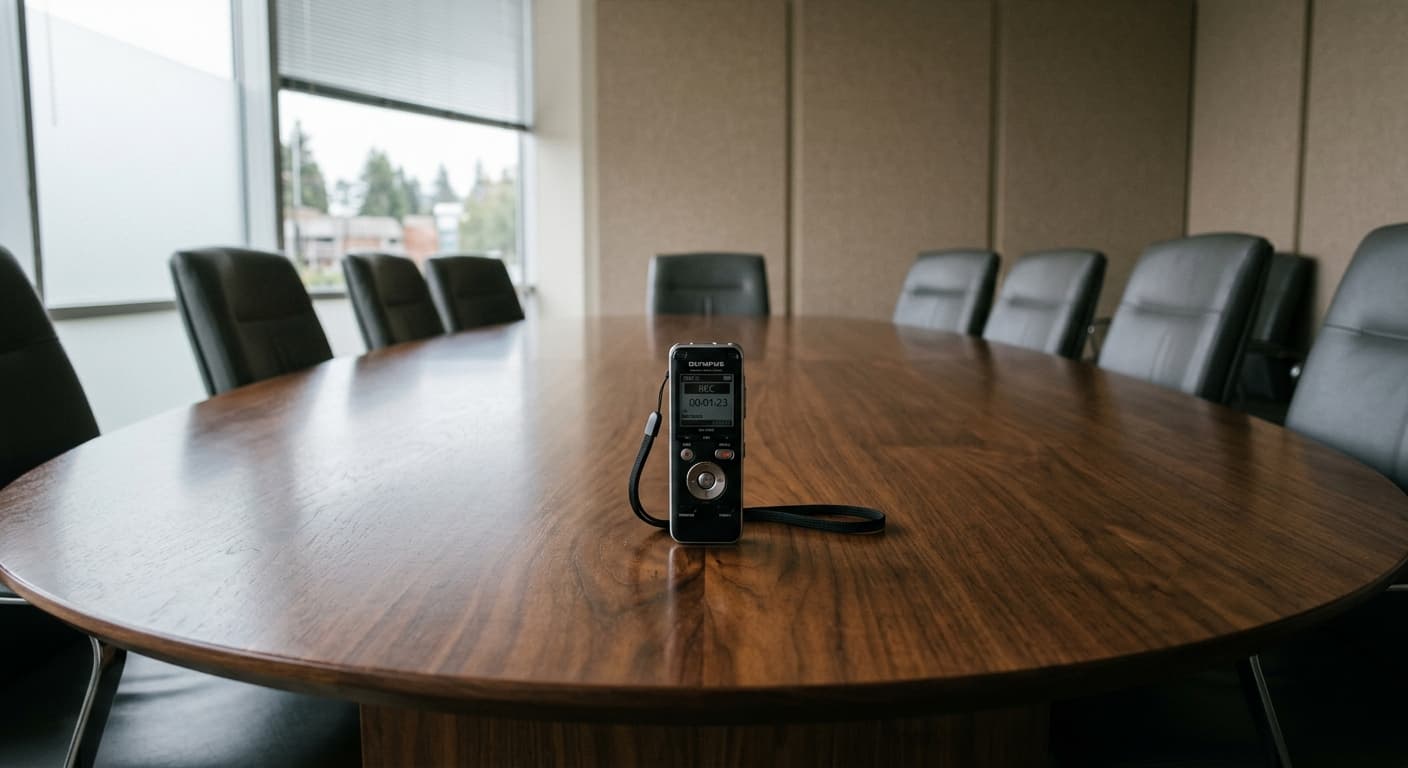
Connecticut employees may record in-person workplace conversations they participate in without notifying coworkers or managers, because a present participant falls outside the state's criminal eavesdropping offense (CGS 53a-189, which incorporates the definitions in CGS 53a-187). Recording workplace phone calls is different: CGS 52-570d requires either the consent of all parties, a recorded verbal notice, or an automatic warning tone. Employers must give written notice before any electronic monitoring under CGS 31-48d.
Connecticut has some of the most detailed workplace recording and monitoring laws in the United States. The state is one of only a handful that requires employers to give employees advance written notice before conducting electronic surveillance of any kind. At the same time, employees have their own recording rights that vary depending on whether the communication happens in person or over the phone.
This guide covers everything you need to know about recording in Connecticut workplaces in 2026, including employee recording rights, employer monitoring obligations under CGS 31-48d and 31-48b, penalties for violations, and how federal labor law intersects with Connecticut's rules.
Employee Recording Rights in the Workplace
In-Person Conversations: One-Party Consent
Connecticut's criminal eavesdropping offense, CGS 53a-189, reaches only wiretapping or "mechanical overhearing of a conversation" as defined in CGS 53a-187, and that definition excludes a recorder who is present. This lets employees record face-to-face workplace conversations they participate in without notifying other parties. This means you can legally:
- Record a meeting with your supervisor using your smartphone
- Record a disciplinary discussion you are part of
- Record a conversation with a coworker about workplace conditions
- Record an interaction with HR during a complaint process
Your own participation in the conversation satisfies the one-party consent requirement. You do not need to tell your manager, coworkers, or anyone else that you are recording, as far as state law is concerned.
Phone Calls at Work: All-Party Consent
The rules change for telephone conversations. Under CGS 52-570d, recording any phone call requires either the consent of all parties, a recorded verbal notification given at the start of the call, or an automatic tone that repeats roughly every 15 seconds while recording. This applies regardless of whether the call involves business or personal matters.
If you are on a work-related phone call with a client, vendor, or colleague and want to record it, you must either get consent from everyone on the call, play a recorded verbal notice at the start, or use an automatic tone warning device. The same rule applies to video calls conducted through Zoom, Microsoft Teams, and other platforms.
Company Policy vs. State Law
Even though Connecticut law permits employees to record in-person conversations, employers can implement company policies that prohibit recording in the workplace. Violating a company no-recording policy can result in disciplinary action, including termination, even if the recording itself was legal under state law.
Connecticut is an at-will employment state, meaning employers can generally terminate employees for any reason not specifically prohibited by law. If your employer has a no-recording policy and you violate it, the company may fire you regardless of whether the recording was legal.
However, blanket no-recording policies face potential challenges under federal labor law, discussed later in this guide.
CGS 31-48d: Employer Electronic Monitoring Requirements
The Notice Requirement
CGS 31-48d is Connecticut's employer electronic monitoring statute. It is one of the most comprehensive state laws governing workplace surveillance in the country. The statute requires that employers:
Provide prior written notice to each employee before engaging in any form of electronic monitoring. The statute does not tie this notice to a specific point like hiring; it simply requires the notice precede the monitoring. The written notice should describe:
- The types of electronic monitoring that the employer may conduct
- The methods of monitoring
- How the monitoring data will be used
Post a notice in a conspicuous location visible to all affected employees, describing the types of monitoring that may occur. The statute's own text states that this posting constitutes the required prior written notice, so posting satisfies the single notice duty rather than adding a second, separate obligation.
What Counts as "Electronic Monitoring"
CGS 31-48d defines electronic monitoring broadly. It covers:
- Telephone call monitoring and recording: Listening to or recording employee phone conversations
- Email monitoring: Reading, copying, or analyzing employee email communications
- Internet monitoring: Tracking employee web browsing, downloads, and online activity
- Video surveillance: Using cameras to observe employees in the workplace
- Computer monitoring: Keystroke logging, screen capture, and software that tracks computer usage
- GPS and location tracking: Monitoring employee location through company devices or vehicles
This broad definition means that virtually any form of technology-based surveillance an employer might use is covered by the notice requirement.
The Investigation Exception
CGS 31-48d includes a critical exception. An employer may conduct electronic monitoring without prior written notice when the employer has reasonable grounds to believe that employees are engaged in conduct that:
- Violates the law
- Violates the legal rights of the employer or other employees
- Creates a hostile work environment
This exception allows employers to conduct covert investigations in specific circumstances. However, the exception is narrow. The employer must have a documented, good-faith basis for believing that wrongdoing is occurring. A vague suspicion or desire to generally monitor employees does not satisfy this standard.
The employer should document the specific facts and circumstances that gave rise to the reasonable belief before beginning covert monitoring. This documentation protects the employer if the monitoring is later challenged.
CGS 31-48b: Prohibited Monitoring Areas

Absolute Prohibition in Personal Comfort Areas
CGS 31-48b establishes an absolute prohibition on electronic monitoring in areas designated for employee health or personal comfort. The statute's own examples are:
- Restrooms
- Locker rooms
- Lounges designated for personal comfort
No exception exists for these areas. Even with employee consent and prior written notice, employers cannot conduct electronic monitoring in these spaces. The investigation exception under CGS 31-48d does not override this prohibition. Connecticut protects lactation spaces separately, under CGS 31-40w's break-time and private-space requirement, not under 31-48b's camera prohibition.
CGS 31-48b separately bars an employer or an employee from intentionally recording a conversation about employment contract negotiations between the two of them without the consent of all parties; violating that rule carries its own penalty of a $1,000 fine, up to one year imprisonment, or both.
Why This Matters
This absolute prohibition provides Connecticut employees with strong privacy protections that employees in most other states do not have. In states without a statute like CGS 31-48b, employees must rely on general privacy principles and common law to challenge monitoring in personal areas. Connecticut employees have a clear statutory right.
Penalties for Employer Monitoring Violations
CGS 31-48d Penalty Structure
Employers who fail to comply with the monitoring notice requirements face escalating penalties:
| Violation | Penalty |
|---|---|
| First offense | $500 |
| Second offense | $1,000 |
| Each subsequent offense | $3,000 |
Placing a camera or other monitoring device in a CGS 31-48b prohibited area is a separate violation with its own, harsher penalty: $500 for a first offense, $1,000 for a second, and $1,000 plus 30 days imprisonment for a third or subsequent offense.
These penalties are assessed per violation. An employer who fails to notify 50 employees about monitoring could face substantial aggregate fines if each failure is treated as a separate violation.
Enforcement
The Connecticut Department of Labor oversees enforcement of employer monitoring statutes. Employees who believe their employer is conducting unauthorized monitoring can file a complaint with the department.
Additional Liability
Beyond the statutory penalties, employers who conduct monitoring without proper notice may face additional claims:
- Common law invasion of privacy claims if the monitoring intrudes on a reasonable expectation of privacy
- Wrongful termination claims if an employee is fired based on information obtained through unauthorized monitoring
- Federal labor law violations if the monitoring interferes with protected concerted activity under the NLRA
Employer Video Surveillance in the Workplace
Notice and Placement Requirements
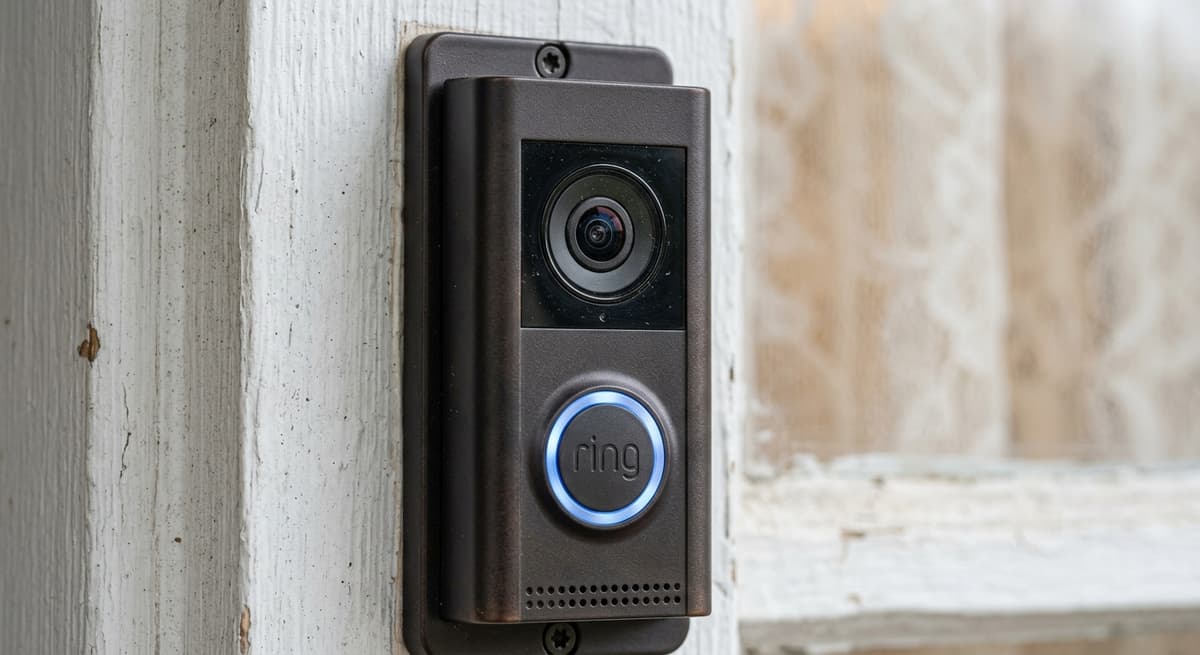
Employers may install video surveillance cameras in workplace common areas such as entrances, hallways, production floors, and parking lots, provided they comply with the CGS 31-48d notice requirements. Before activating cameras, employers must:
- Provide written notice to all employees describing the video monitoring
- Post conspicuous signage in monitored areas
- Ensure cameras are not placed in prohibited areas under CGS 31-48b
Audio on Workplace Cameras
If workplace cameras have audio capability, enabling the microphone triggers Connecticut's recording consent rules. Since the camera is not a "party" to any conversation, audio capture by a workplace camera could constitute illegal mechanical overhearing of a conversation under Connecticut's eavesdropping law, CGS 53a-189 (built on the "mechanical overhearing" definition in CGS 53a-187), unless at least one participant in the recorded conversation is present and consents.
The safest practice for employers is to disable audio recording on workplace surveillance cameras or implement clear policies notifying employees that audio may be captured and obtaining their written consent.
Employer Phone Call Monitoring
Notice Plus Consent
Employers who monitor or record employee phone calls face two overlapping requirements:
- CGS 31-48d: Provide prior written notice to employees about phone monitoring
- CGS 52-570d: Obtain all-party consent, use a recorded verbal notice, or use an automatic warning tone when recording telephone conversations
Satisfying CGS 31-48d (notice to employees) does not by itself satisfy CGS 52-570d. Recording a call with an external party, such as a customer or client, requires either that party's consent, a recorded verbal notification played at the start of the call, or an automatic tone warning device. Businesses typically satisfy CGS 52-570d through an automated announcement at the beginning of recorded calls, which functions as the statute's verbal-notification alternative to consent.
Personal Calls
When employees make personal phone calls from work, the same CGS 52-570d requirement applies: all-party consent, a recorded verbal notice, or an automatic warning tone. Employers who monitor business lines should implement systems that allow employees to make unmonitored personal calls, or clearly communicate that all calls on business lines are subject to recording.
Federal Labor Law and Workplace Recording
NLRA Section 7 Protections
Section 7 of the National Labor Relations Act protects employees' rights to engage in "protected concerted activity," which includes actions taken together with other workers to address workplace conditions, organize, or document labor violations.
The National Labor Relations Board (NLRB) has held that blanket employer no-recording policies can violate Section 7 and Section 8(a)(1) of the NLRA when they are broad enough to reasonably chill employees from exercising protected rights. Recording can be a form of protected concerted activity when employees document workplace conditions, safety issues, or unfair labor practices.
The Connecticut Balance
Connecticut's dual consent system creates a nuanced interaction with federal labor law. An employee recording an in-person meeting about union organizing is exercising both their state law right (one-party consent) and their federal right (protected concerted activity). An employee recording a phone call about the same topic needs all-party consent under state law, even if the recording might constitute protected activity under federal law.
The safest approach for employers is to draft narrowly tailored recording policies that include explicit exceptions for legally protected activities, rather than imposing blanket bans on all workplace recording.
Recording Harassment at Work
In-Person Harassment Documentation
If you are experiencing harassment at work, Connecticut's one-party consent rule allows you to record in-person harassing interactions you are part of. This can provide powerful evidence for a complaint to your employer's HR department, the Connecticut Commission on Human Rights and Opportunities (CHRO), or a court.
Phone-Based Harassment
If harassment occurs over the phone, CGS 52-570d requires the harasser's consent, a recorded verbal notice at the start of the call, or an automatic warning tone to record it. This creates a practical challenge, since a harasser is unlikely to consent to being recorded. Alternative documentation strategies include:
- Writing detailed notes immediately after each harassing call
- Saving text messages and emails related to the harassment
- Reporting each incident to HR in writing to create a paper trail
- Filing a formal complaint with the CHRO
Whistleblower Protections
Connecticut's whistleblower protection statute, CGS 31-51m, prohibits employers from retaliating against employees who report violations of state or federal law, report unsafe working conditions, or testify in proceedings related to such reports. While this statute protects whistleblowers from retaliation, it does not create an exception to the telephone recording consent requirement.
AI Meeting Tools and Wearable Devices
AI Transcription in the Workplace
AI-powered meeting tools like Otter.ai and Fireflies.ai that record and transcribe conversations are subject to Connecticut's recording laws. For in-person meetings, one-party consent applies if the tool user is a participant. For phone and video calls, CGS 52-570d requires all-party consent, a recorded verbal notice, or an automatic warning tone.
Employers who deploy AI transcription tools must also comply with CGS 31-48d notice requirements, since these tools constitute a form of electronic monitoring.
Wearable Recording Devices
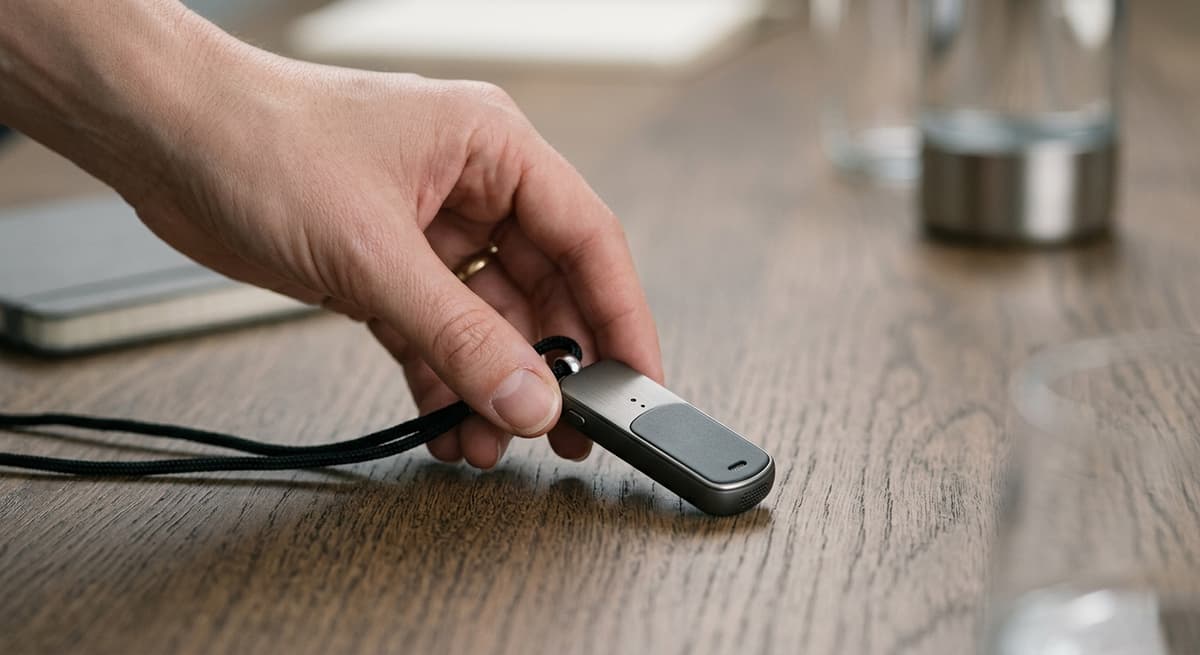
Employees using wearable recording devices at work, including smart glasses, body cameras, and AI voice recorders, can legally record in-person conversations they participate in under the one-party consent rule. However:
- Recording phone calls with wearable devices still requires all-party consent, a recorded verbal notice, or an automatic warning tone
- Employers who issue wearable devices must provide CGS 31-48d notice
- Wearable devices are prohibited in areas covered by CGS 31-48b (restrooms, locker rooms, lounges)
- Employers who violate monitoring notice requirements face fines of $500/$1,000/$3,000
Employers considering wearable technology should develop a comprehensive employer wearable recording device policy that addresses Connecticut's dual consent framework and monitoring requirements.
Practical Tips for Employees
Before recording at work:
-
Determine whether the conversation is in person or over the phone. In-person recording requires only your own consent. Phone recording requires everyone's consent, a recorded verbal notice, or an automatic warning tone.
-
Check your employer's recording policy. Even legal recordings can lead to termination if they violate company policy.
-
Consider whether the recording involves protected concerted activity under the NLRA, which may provide additional protections.
-
Document harassment and discrimination through multiple methods, not just recordings, including written notes, saved communications, and formal complaints.
-
Consult an employment attorney if you are unsure about the legality of recording in your specific situation.
Practical Tips for Employers
To maintain a legally compliant monitoring program:
-
Provide written notice to every employee describing all forms of electronic monitoring before monitoring begins.
-
Post conspicuous notices in monitored areas.
-
Never install cameras, microphones, or other monitoring equipment in restrooms, locker rooms, or lounges (CGS 31-48b); Connecticut protects lactation spaces separately under CGS 31-40w.
-
Keep audio and video separate on surveillance systems. Disable audio on cameras unless all-party consent procedures are in place.
-
Implement separate consent procedures for phone call recording that cover both employees and external callers.
-
Draft recording policies that include exceptions for legally protected activities under the NLRA.
-
Document the factual basis before conducting any monitoring under the investigation exception.
-
Train managers on both CGS 31-48d requirements and the distinction between in-person and telephone consent rules.
More Connecticut Recording Topics
- Connecticut Recording Laws
- Connecticut Audio Recording
- Connecticut Video Recording
- Connecticut Medical Recording
- Connecticut Schools Recording
- Connecticut Police Recording
- Connecticut Phone Calls Recording
- Connecticut Security Cameras Recording
- Connecticut Voyeurism Recording
- Connecticut Landlord Tenant Recording
- Connecticut Public Recording Recording
- Connecticut Biometric Privacy Laws
- Surveillance Camera Laws
More Connecticut Recording Laws
- Employee Monitoring Laws by State
- Connecticut Smart Glasses Recording Laws
- Connecticut Whistleblower Laws: Protections and How to Report
More Connecticut Laws
Frequently Asked Questions
Can I record a meeting with my boss in Connecticut?
For in-person meetings, yes. A present participant falls outside Connecticut's criminal eavesdropping offense (CGS 53a-189, incorporating the definitions in CGS 53a-187), so you can record face-to-face conversations you participate in without notifying anyone else. However, if the meeting takes place over the phone or a video call, CGS 52-570d requires consent from all participants, a recorded verbal notice, or an automatic warning tone. Also check your employer's recording policy, as violating a company no-recording rule can result in termination even if the recording is legal.
Does my employer have to tell me about workplace surveillance in Connecticut?
Yes. CGS 31-48d requires employers to provide prior written notice to employees before engaging in any form of electronic monitoring, including video cameras, phone recording, email monitoring, and internet tracking. Employers must also post a notice in a conspicuous location describing the types of monitoring. Failure to provide this notice can result in fines of $500 for the first offense, $1,000 for the second, and $3,000 for each subsequent offense.
Can my employer put cameras in the break room in Connecticut?
It depends on the type of break area. CGS 31-48b prohibits electronic monitoring in areas designated for employee health or personal comfort, which includes lounges. If the break room qualifies as a designated comfort area, cameras are prohibited, and a repeat violation carries its own penalty under 31-48b of up to a $1,000 fine plus 30 days imprisonment. If the area is a general common space not specifically designated for personal comfort, cameras may be permissible with proper notice under CGS 31-48d.
Can my employer record my phone calls without telling me in Connecticut?
No. Employers must provide prior written notice under CGS 31-48d before monitoring employee phone calls. Additionally, CGS 52-570d requires either the consent of every party on the call, a recorded verbal notification at the start of the call, or an automatic tone warning device throughout the recording. The only exception to the CGS 31-48d notice requirement is when the employer has reasonable grounds to believe employees are engaged in conduct that violates the law or the employer's legal rights.
What are the penalties if my employer monitors me without notice in Connecticut?
Under CGS 31-48d, employers face fines of $500 for the first offense, $1,000 for the second offense, and $3,000 for each subsequent offense. Employers may also face common law invasion of privacy claims, wrongful termination liability if employees are fired based on unlawfully obtained information, and potential NLRA violations if the monitoring chills protected concerted activity.
Updates
Corrected the citation for Connecticut's in-person workplace-recording rule (the eavesdropping offense is CGS 53a-189, not the definitions-only CGS 53a-187), removed a fabricated 'lactation rooms' entry and a fabricated 'notice at time of hiring' requirement from the employer-monitoring sections, and added two real CGS 31-48b consequences the page omitted: the escalating fine-plus-imprisonment penalty for cameras in prohibited areas, and the separate all-party-consent rule for recording employment contract negotiations.
Independently fact-checked against the cited primary sources; governing law re-checked for recent changes
Corrected repeated overstatements of Connecticut's phone-call recording statute (CGS 52-570d): the law offers a recorded verbal notice or a periodic audible tone as alternatives to obtaining every participant's actual consent, which is the mechanism most call centers actually use.
Corrected 9 remaining restatements that described CGS 52-570d as requiring all-party consent only; the statute also allows a recorded verbal notice or a periodic warning tone as compliance alternatives.
Governing law re-checked for recent changes
Reviewed and approved by an editor
The Law Behind This Article
This article rests on the statutory provisions below, held in our own legal record and retrieved from the official source. Tap a section to read the operative text.
Connecticut General Statutes, Title 31 (Labor), Chapter 557
§ 31-48dEmployers engaged in electronic monitoring required to give prior notice to employees. Exceptions. Civil penalty.In forcecited in 20 of our articles
(a) As used in this section: (1) “Employer” means any person, firm or corporation, including the state and any political subdivision of the state which has employees; (2) “Employee” means any person who performs services for an employer in a business of the employer, if the employer has the right to control and direct the person as to (A) the result to be accomplished by the services, and (B) the details and means by which such result is accomplished; and (3) “Electronic monitoring” means the collection of information on an employer's premises concerning employees' activities or communications by any means other than direct observation, including the use of a computer, telephone, wire, radio, camera, electromagnetic, photoelectronic or photo-optical systems, but not including the collection of information (A) for security purposes in common areas of the employer's premises which are held out for use by the public, or (B) which is prohibited under state or federal law.
Official text (excerpt) · last checked 2026-08-31 · Read the full text in our law library · Verify at cga.ct.gov
Cited in 4 court opinions in our collectionLatest citing opinion in our collection: 2021
In the courts (editorial summary, independently checked):Gerardi v. City of Bridgeport (2010) held that section 31-48d creates no private right of action, reading subsection (c) to delegate all enforcement of the electronic monitoring notice duty to the labor commissioner. J.P. Alexandre, LLC v. Egbuna (2012) cited that reading when rejecting an implied right of action under a tax statute.
Opinions citing this section in our collection:
- Gerardi v. City of Bridgeport (Supreme Court of Connecticut 2010, 294 Conn. 461)✓Bridgeport put GPS units in fire inspectors' city vehicles without telling them, then disciplined them; the Connecticut Supreme Court held section 31-48d creates no private right of action because subsection (c) leaves enforcement to the labor commissioner.
- Borelli v. Renaldi (Supreme Court of Connecticut 2020, 336 Conn. 1)“…(2010) (comparing electronic monitoring statute, General Statutes § 31-48d, to other employment statutes…”
- J.P. Alexandre, LLC v. Egbuna (Connecticut Appellate Court 2012, 137 Conn. App. 340)“…idgeport, supra, 294 Conn. 472 (rejecting claim that General Statutes § 31-48d [c] provided private right of action wh…”
Identified automatically from the court opinions citing this section — not a ranking of which case controls.
Also relied on in: Employer Guide to Wearable Recording Device Policies (2026), Connecticut Audio Recording Laws: Mixed Consent Rules and Penalties (2026), Connecticut Dashcam Laws: Mounting Rules, Audio Recording, and Evidence (2026)
§ 31-40wBreastfeeding in the workplace.In forcecited in 3 of our articles
(a) Any employee may, at her discretion, express breast milk or breastfeed on site at her workplace during her meal or break period. (b) An employer shall make reasonable efforts to provide a room or other location, in close proximity to the work area, other than a toilet stall, where the employee can express her milk in private, and provided there is no undue hardship, such room or other location shall (1) be free from intrusion and shielded from the public while such employee expresses breast milk, (2) include or be situated near a refrigerator or employee-provided portable cold storage device in which the employee can store her breast milk, and (3) include access to an electrical outlet. (c) An employer shall not discriminate against, discipline or take any adverse employment action against any employee because such employee has elected to exercise her rights under subsection (a) of this section.
Official text (excerpt) · last checked 2026-07-29 · Read the full text in our law library · Verify at cga.ct.gov
Cited in 1 court opinions in our collectionLatest citing opinion in our collection: 2015
Opinions citing this section in our collection:
- Katherine Frederick v. NH (District Court, D. New Hampshire 2015, 2015 DNH 187)“…me to employees who need “to breastfeed or express milk”); Conn. Gen. Stat. § 31-40w (providing that an “employee may . . .…”
Identified automatically from the court opinions citing this section — not a ranking of which case controls.
Also relied on in: Connecticut Security Camera Laws: Home, Business, and Workplace Rules (2026), Connecticut Video Recording Laws: Consent, Surveillance, and Privacy Rules (2026)
§ 31-48bUse of electronic surveillance devices by employers limited. Prohibition on recording negotiations between employers and employees.In forcecited in 4 of our articles
(a) For purposes of this section, “employer” means the owner or owners in the case of an unincorporated business, the partners in the case of a partnership, the officers in the case of a corporation or in the case of the state, any town, city or borough, or district, local or regional board of education, or housing authority or district department of health, the chief executive officer thereof. (b) No employer or agent or representative of an employer shall operate any electronic surveillance device or system, including but not limited to the recording of sound or voice or a closed circuit television system, or any combination thereof, for the purpose of recording or monitoring the activities of his employees in areas designed for the health or personal comfort of the employees or for safeguarding of their possessions, such as rest rooms, locker rooms or lounges. (c) Any employer who violates any provision of subsection (b) of this section shall, for the first offense, be fined five hundred dollars, for the second offense, be fined one thousand dollars and, for the third and any subsequent offense, be fined one thousand dollars and imprisoned thirty days.
Official text (excerpt) · last checked 2026-07-29 · Read the full text in our law library · Verify at cga.ct.gov
Cited in 5 court opinions in our collectionLatest citing opinion in our collection: 2010
Opinions citing this section in our collection:
- Cotto v. United Technologies Corp. (Supreme Court of Connecticut 1999, 251 Conn. 1)“…g information about toxic substances used at the workplace; General Statutes § 31-48b, which provides criminal sanctions agai…”
- Gerardi v. City of Bridgeport (Supreme Court of Connecticut 2010, 294 Conn. 461)“…he plaintiffs also alleged that the defendants had violated General Statutes § 31-48b (b) regarding the prohibition of monito…”
- Saloomey v. a Child's Garden, Inc., No. 324092 (Apr. 24, 1996) (Connecticut Superior Court 1996, 1996 Conn. Super. Ct. 3220)“…s §§ 31-71c , 31-76k (wage statutes), and a violation of General Statutes § 31-48b (d) (electronic surveillance). 1 T…”
Identified automatically from the court opinions citing this section — not a ranking of which case controls.
Also relied on in: Connecticut Voyeurism and Hidden Camera Laws: Penalties and Protections (2026)
§ 31-51mProtection of employee who discloses employer's illegal activities or unethical practices or reports a suspected incident of child abuse or neglect. Civil action.In forcecited in 2 of our articles
(a) As used in this section: (1) “Person” means one or more individuals, partnerships, associations, corporations, limited liability companies, business trusts, legal representatives or any organized group of persons; (2) “Employer” means a person engaged in business who has employees, including the state and any political subdivision of the state; (3) “Employee” means any person engaged in service to an employer in a business of his employer; (4) “Public body” means (A) any public agency, as defined in subdivision (1) of section 1-200, or any employee, member or officer thereof, or (B) any federal agency or any employee, member or officer thereof.
Official text (excerpt) · last checked 2026-09-09 · Read the full text in our law library · Verify at cga.ct.gov
Cited in 104 court opinions in our collectionLatest citing opinion in our collection: 2026
Opinions citing this section in our collection:
- Schoonmaker v. Lawrence Brunoli, Inc. (Supreme Court of Connecticut 2003, 265 Conn. 210)“…gful discharge actions alleged that the defendants violated General Statutes §§ 31-51m, 9 31-51q 10 *220 and 31-69b. 11…”
- Campbell v. Town of Plymouth (Connecticut Appellate Court 2002, 74 Conn. App. 67)“…ent as to count one, which alleged wrongful discharge under General Statutes § 31-51m, and (3) denied the plaintiffs motion t…”
- Young v. City of Bridgeport (Connecticut Appellate Court 2012, 135 Conn. App. 699)“…nt alleging claims of retaliatory discharge in violation of General Statutes §§ 31-51m 2 and 31-51q. 3…”
Identified automatically from the court opinions citing this section — not a ranking of which case controls.
Also relied on in: Connecticut Whistleblower Laws: Protections and How to Report
Connecticut General Statutes, Title 52 (Civil Actions), Chapter 925
§ 52-570dAction for illegal recording of private telephonic communications.In forcecited in 21 of our articles
(a) No person shall use any instrument, device or equipment to record an oral private telephonic communication unless the use of such instrument, device or equipment (1) is preceded by consent of all parties to the communication and such prior consent either is obtained in writing or is part of, and obtained at the start of, the recording, or (2) is preceded by verbal notification which is recorded at the beginning and is part of the communication by the recording party, or (3) is accompanied by an automatic tone warning device which automatically produces a distinct signal that is repeated at intervals of approximately fifteen seconds during the communication while such instrument, device or equipment is in use.
Official text (excerpt) · last checked 2026-08-28 · Read the full text in our law library · Verify at cga.ct.gov
Cited in 22 court opinions in our collectionLatest citing opinion in our collection: 2024
In the courts (editorial summary, independently checked):Holler v. Buckley Broadcasting Corp. (1998) held section 52-570d creates a cause of action unknown at common law that is strictly construed, and does not reach a third party's rerecording of an already illegal tape. Jezouit v. Malloy (2019) held the statute does not waive the state's sovereign immunity from suit.
Opinions citing this section in our collection:
- Holler v. Buckley Broadcasting Corp. (Connecticut Appellate Court 1998, 47 Conn. App. 764)✓A girlfriend secretly taped a radio employee's call, and a coworker re-recorded that tape and used it to get him fired. The court held section 52-570d, strictly construed, bars taping a private call but not a third party's re-recording of an already illegal tape.
- Jezouit v. Malloy (Connecticut Appellate Court 2019, 193 Conn. App. 576)“…his complaint because (1) he brought his claim pursuant to General Statutes § 52-570d, which he contends waives sovereign imm…”
- State v. Skok (Supreme Court of Connecticut 2015)“…on without the consent of all parties to the communication. General Statutes § 52-570d (a) prohibits the use of ‘‘any instrume…”
Identified automatically from the court opinions citing this section — not a ranking of which case controls.
Also relied on in: Can I Sue Someone for Recording Me on Private or Public Property?, Connecticut Landlord-Tenant Recording and Surveillance Laws (2026), Connecticut Medical Recording Laws: Patients, Doctors, and HIPAA Rules (2026)
Connecticut General Statutes, Title 53a (Penal Code), Chapter 952
§ 53a-187Definitions. Applicability.In forcecited in 18 of our articles
(a) The following definitions are applicable to sections 53a-188 and 53a-189: (1) “Wiretapping” means the intentional overhearing or recording of a telephonic or telegraphic communication or a communication made by cellular radio telephone by a person other than a sender or receiver thereof, without the consent of either the sender or receiver, by means of any instrument, device or equipment. The normal operation of a telephone or telegraph corporation and the normal use of the services and facilities furnished by such corporation pursuant to its tariffs shall not be deemed “wiretapping”. (2) “Mechanical overhearing of a conversation” means the intentional overhearing or recording of a conversation or discussion, without the consent of at least one party thereto, by a person not present thereat, by means of any instrument, device or equipment. (3) “Unlawfully” means not specifically authorized by law. For purposes of this section, “cellular radio telephone” means a wireless telephone authorized by the Federal Communications Commission to operate in the frequency bandwidth reserved for cellular radio telephones.
Official text (excerpt) · last checked 2026-07-29 · Read the full text in our law library · Verify at cga.ct.gov
Cited in 12 court opinions in our collectionLatest citing opinion in our collection: 2021
In the courts (editorial summary, independently checked):Connecticut courts read section 53a-187's definitions to reach only surreptitious, nonconsensual monitoring. State v. Grullon (1989) applied it to place one-party-consent recordings outside the eavesdropping statutes, and Washington v. Meachum (1996) held those statutes are violated only when neither party knows the call is monitored.
Opinions citing this section in our collection:
- State v. Grullon (Supreme Court of Connecticut 1989, 212 Conn. 195)✓Police recorded the defendant's calls with his brother, who consented; the court held that replacing the older wiretap penal statute with section 53a-187, which reaches recording only when no party consents, gave no reason to exclude the transcripts.
- Washington v. Meachum (Supreme Court of Connecticut 1996, 238 Conn. 692)✓Inmates challenged prison rules allowing nonprivileged collect calls to be monitored after posted signs, signed forms and a recurring tone; reading section 53a-187's consent-based definitions, the court held the eavesdropping statutes are violated only when neither party knows.
- State v. McVeigh (Supreme Court of Connecticut 1993, 224 Conn. 593)✓Police used a scanner in a neighbor's apartment to record a couple's cordless phone calls; the court rejected the State's argument that a 1989 amendment adding cellular phones to section 53a-187's wiretapping definition left cordless calls unprotected, and ordered suppression.
Identified automatically from the court opinions citing this section — not a ranking of which case controls.
Also relied on in: Connecticut Phone Call Recording Laws: All-Party Consent Rules and Penalties (2026), Connecticut Laws on Recording Police: Your Rights and Limits (2026), Connecticut Laws on Recording in Public: What Is Legal (2026)
§ 53a-189Eavesdropping: Class D felony.In forcecited in 16 of our articles
(a) A person is guilty of eavesdropping when he unlawfully engages in wiretapping or mechanical overhearing of a conversation. (b) Eavesdropping is a class D felony.
Official text (excerpt) · last checked 2026-08-31 · Read the full text in our law library · Verify at cga.ct.gov
Cited in 14 court opinions in our collectionLatest citing opinion in our collection: 2020
In the courts (editorial summary, independently checked):Washington v. Meachum (1996) held the eavesdropping statutes, section 53a-189 among them, are violated only when neither party to a call knows it is being monitored. State v. McLoughlin (1998), a trial court ruling on a scanner intercept, read 53a-189 to cover cordless calls, a question no Connecticut appellate court had decided.
Opinions citing this section in our collection:
- State v. McLoughlin (Connecticut Superior Court 1998, 45 Conn. Super. Ct. 497)“…on. Subsequently, the defendant was charged in violation of General Statutes § 53a-189, eavesdropping, which is a class D felo…”
- Rado v. Board of Education of the Borough of Naugatuck (Supreme Court of Connecticut 1990, 216 Conn. 541)✓A tenured teacher acquitted of eavesdropping was fired after a panel found he tampered with the school phone system to overhear staff calls; the court treated that conduct as proscribed by section 53a-189 and upheld the moral-misconduct finding.
- Washington v. Meachum (Supreme Court of Connecticut 1996, 238 Conn. 692)✓Inmates challenged prison rules allowing officials to monitor and record their nonprivileged phone calls; the Connecticut Supreme Court held the eavesdropping statutes are violated only when neither party knows the call is being monitored, so the noticed recording was lawful.
Identified automatically from the court opinions citing this section — not a ranking of which case controls.
Also relied on in: Connecticut Recording Laws (2026): Hybrid Consent Rules Explained, Connecticut AI Meeting Recording Laws (2026), Connecticut Ring Doorbell Laws: What You Need to Know in 2026
Search our full record of US law — 2.1 million sections, every state + federal →
Sources and References
- Conn. Gen. Stat. 31-48d - Employer Electronic Monitoring(cga.ct.gov).gov
- Conn. Gen. Stat. 31-48b - Restrictions on Employer Monitoring(cga.ct.gov).gov
- Conn. Gen. Stat. 53a-187 - Eavesdropping Definitions(cga.ct.gov).gov
- Conn. Gen. Stat. 52-570d - Recording of Telephone Communications(cga.ct.gov).gov
- Conn. Gen. Stat. 31-51m - Whistleblower Protection(cga.ct.gov).gov
- Connecticut Commission on Human Rights and Opportunities(portal.ct.gov).gov
- NLRB - Employee Rights Under the NLRA(nlrb.gov).gov
- Conn. Gen. Stat. 53a-189 - Eavesdropping: Class D Felony(cga.ct.gov).gov
- Conn. Gen. Stat. 31-40w - Breastfeeding in the Workplace(cga.ct.gov).gov