Minnesota Audio Recording Laws: One-Party Consent Rules and Penalties
Independently fact-checked against primary sources (last audited August 15, 2026). · Reviewed by the RecordingLaw editorial team. · Law checked current as of August 15, 2026. · 7 primary sources cited on this page. How we verify our legal content
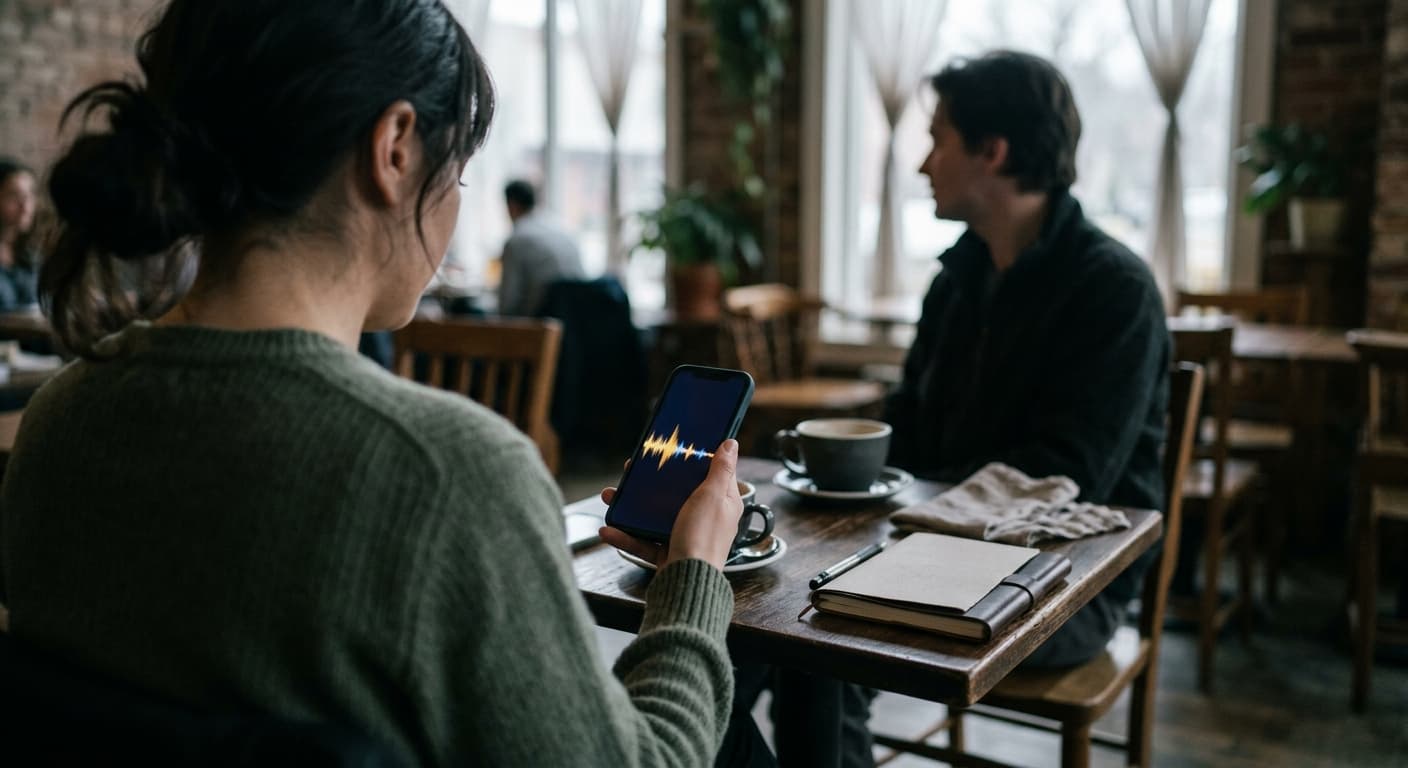
Minnesota is a one-party consent state for audio recording under Minn. Stat. 626A.02, meaning any participant in a conversation may record it without notifying the other parties. This rule covers phone calls, in-person discussions, and electronic communications. Recording is unlawful only when done to commit a criminal or tortious act.
Overview of Minnesota Audio Recording Laws
Minnesota is a one-party consent state for audio recording. Under Minn. Stat. Section 626A.02, a person can legally record any wire, oral, or electronic communication as long as at least one party to the conversation consents. That consenting party can be the person making the recording.
This means that in Minnesota, anyone who participates in a conversation can record it without telling the other people involved. The law applies equally to phone calls, face-to-face conversations, video calls, and other electronic communications. No announcement or notification is required.
Minnesota's wiretapping statute is modeled after the federal Wiretap Act (18 U.S.C. Sections 2510-2522) and follows the same one-party consent framework. The statute was originally enacted as part of Minnesota's adoption of comprehensive electronic surveillance regulations and has been periodically updated to cover new technologies.
The Legal Framework: Minn. Stat. Section 626A.02
What the Statute Prohibits
Minn. Stat. Section 626A.02 makes it a criminal offense to intentionally intercept, endeavor to intercept, or procure any other person to intercept or endeavor to intercept any wire, oral, or electronic communication. The law also prohibits the intentional disclosure or use of the contents of any intercepted communication when the person knows or has reason to know the information was obtained through illegal interception.
The statute defines three categories of protected communications:
- Wire communications cover any transfer of the human voice made through telephone lines, cellular networks, VoIP services, or similar systems. This includes landline calls, cell phone calls, Zoom audio, Microsoft Teams calls, and FaceTime conversations.
- Oral communications are spoken words uttered by a person who has a reasonable expectation that the conversation is not being intercepted. This category covers face-to-face discussions in private settings.
- Electronic communications include email, text messages, instant messages, and data transfers that carry human communication.
The One-Party Consent Exception
The critical exception in Section 626A.02, Subdivision 2(d) states that it is lawful for a person who is a party to the communication, or who has obtained prior consent from one of the parties, to intercept the communication. This exception applies only when the recording is not made for the purpose of committing any criminal or tortious act.
This exception is what makes Minnesota a one-party consent state. If a person is directly participating in a conversation, that person has the legal right to record it. The other participants do not need to be informed.
The "no criminal or tortious purpose" requirement is important. You cannot use one-party consent as a shield for recording that is done to facilitate blackmail, extortion, fraud, harassment, or any other illegal or civilly wrongful conduct. If a court determines that your recording was motivated by a criminal or tortious purpose, the one-party consent exception does not apply and you face both criminal and civil liability.
Federal Law Alignment
Minnesota law aligns with the federal standard set by 18 U.S.C. Section 2511, part of the Electronic Communications Privacy Act (ECPA). The federal wiretap statute also follows a one-party consent framework. Under federal law, it is not unlawful for a person who is a party to a communication to intercept it, unless the interception is done for the purpose of committing a criminal or tortious act.
Because both Minnesota and federal law use the same one-party consent standard, recordings made within Minnesota generally comply with both state and federal wiretapping statutes simultaneously.
Types of Audio Communications Covered
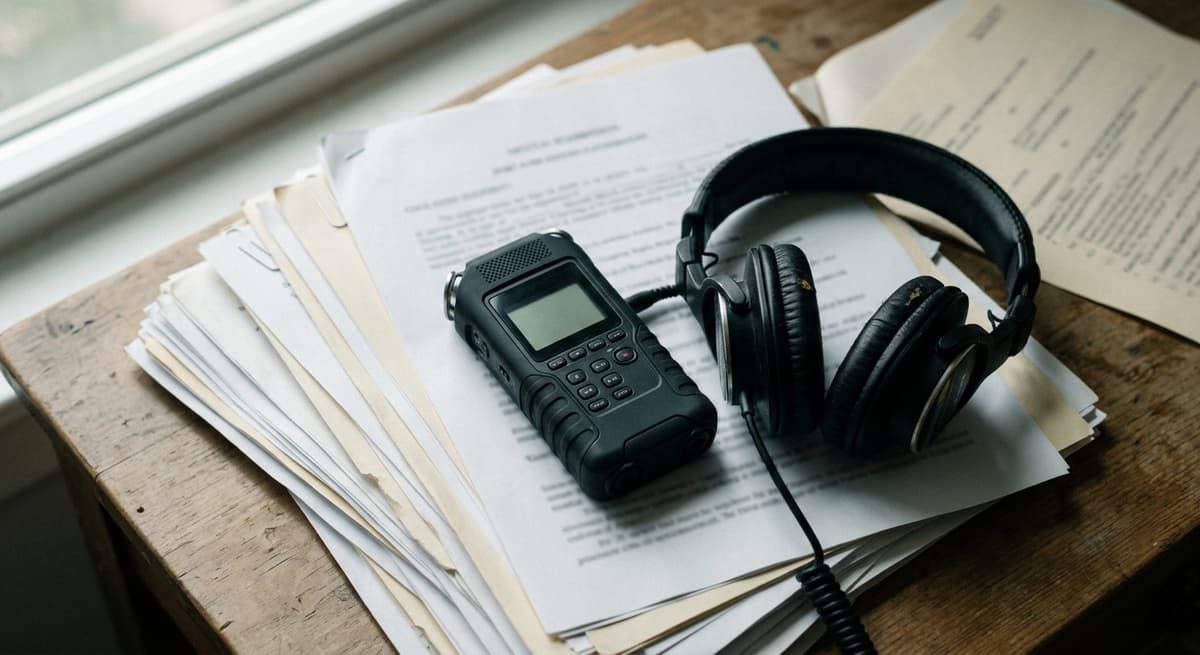
Phone Calls and Landline Conversations
Any person who participates in a phone call in Minnesota can record that call without informing the other party. This applies to:
- Landline telephone calls
- Cell phone conversations
- Satellite phone calls
- Calls made through internet-based phone services
The recording device can be a standalone voice recorder, a phone app, a computer program, or any other device capable of capturing audio. Minnesota law does not restrict the type of recording equipment used.
VoIP and Video Call Audio
Audio captured during video calls and VoIP communications falls under the same one-party consent rules. Platforms like Zoom, Microsoft Teams, Google Meet, Skype, and FaceTime all transmit wire or electronic communications as defined by Section 626A.02. A participant in these calls can record the audio without notifying other participants.
Many of these platforms display a recording notification to all participants when the built-in recording feature is activated. Using an external recording device avoids this automatic notification, and Minnesota law does not require any notification.
In-Person Conversations
Face-to-face conversations in Minnesota fall under the "oral communications" category of Section 626A.02. These are protected only when the speaker has a reasonable expectation of privacy. If you are a participant in a private conversation, you can record it under the one-party consent rule.
Conversations in public places where there is no reasonable expectation of privacy are generally not protected by the wiretapping statute at all. This means anyone can record conversations happening in public settings, even without being a participant.
Digital and Electronic Messages
While primarily associated with voice recordings, Section 626A.02 also covers "electronic communications," which can include certain forms of digital messaging. However, the practical application of audio recording laws centers on voice-based communications rather than text-based ones.
Recording as a Journalist in Minnesota
Minnesota does not have a separate news-reporting exception inside the wiretapping statute. Minn. Stat. Section 626A.02, Subdivision 2(d) is the same general one-party consent exception described above -- it applies to any participant in a conversation, or anyone with a participant's consent, and is not limited to journalists or to recordings made for news-reporting purposes.
A journalist who is a party to a conversation can record it under that same one-party consent rule that applies to everyone else. Journalists' added legal protection in Minnesota instead comes from a separate law: the Minnesota Free Flow of Information Act (Minn. Stat. Section 595.024), a shield law that protects reporters from being compelled to disclose sources and unpublished information.
Law Enforcement Audio Recording
Police Body Cameras and Recording Systems
Minnesota law enforcement agencies operate body-worn cameras and portable recording systems under authority granted by Minn. Stat. Section 626.8473. This statute requires every law enforcement agency using portable recording systems to establish and enforce a written policy governing their use, provide for public comment and input before adopting the policy, and post the policy on the agency's website.
Body camera footage is classified under Minn. Stat. Section 13.825, Minnesota's Government Data Practices Act. Members of the public can request body camera footage through a formal data request, though certain footage may be classified as private or confidential.
Authorized Wiretapping by Law Enforcement
Minn. Stat. Chapter 626A provides a framework for law enforcement interception of communications. Officers must obtain a court order before intercepting wire, oral, or electronic communications. Each interception order must specify the communications to be intercepted, minimize the capture of unrelated communications, and comply with strict procedural requirements.
Emergency exceptions exist for situations involving immediate danger of death or serious physical injury, conspiratorial activities threatening national security, or conspiratorial activities characteristic of organized crime. In these cases, law enforcement may begin interception before obtaining a court order, subject to later judicial review within 48 hours.
Pen Registers and Trap and Trace Devices
Minn. Stat. Section 626A.35 governs the use of pen registers and trap and trace devices by law enforcement. These devices record the numbers dialed from a phone or the numbers of incoming calls, but they do not capture the actual content of communications. Law enforcement must obtain a court order before installing these devices.
Criminal Penalties for Illegal Audio Recording
Offense Classifications
Violations of Minn. Stat. Section 626A.02 and Section 626A.03 carry serious criminal penalties. Unlawful interception of communications is classified as a felony in Minnesota:
| Offense | Statute | Classification | Maximum Prison Term | Maximum Fine |
|---|---|---|---|---|
| Illegal interception of communications | Minn. Stat. Section 626A.02 | Felony | 5 years | $20,000 |
| Disclosure of illegally intercepted communications | Minn. Stat. Section 626A.02 | Felony | 5 years | $20,000 |
| Use of illegally obtained communications | Minn. Stat. Section 626A.02 | Felony | 5 years | $20,000 |
| Possession of interception devices | Minn. Stat. Section 626A.03 | Felony | 5 years | $20,000 |
A felony conviction in Minnesota carries lasting consequences beyond prison time, including a permanent criminal record, loss of certain professional licenses, difficulty finding employment, and restrictions on firearm possession.
Comparison with Federal Penalties
Federal wiretapping violations under 18 U.S.C. Section 2511 carry up to five years in federal prison and fines up to $250,000. A single act of illegal recording in Minnesota could result in prosecution under both state and federal law, though dual prosecution is uncommon for cases involving only private individuals.
Civil Liability for Illegal Audio Recording
Minn. Stat. Section 626A.13
Beyond criminal penalties, victims of illegal audio recording in Minnesota can pursue civil damages under Minn. Stat. Section 626A.13. This statute provides several categories of recovery:
- Injunctive relief to stop ongoing violations
- Two-prong damages (whichever is greater): treble actual damages plus any profits the violator made from the illegal recording, OR statutory damages of the greater of $100 per day or $10,000
- Punitive damages at the court's discretion
- Attorney fees and litigation costs awarded to the prevailing plaintiff
The two-prong structure matters: the plaintiff recovers whichever of the two prongs produces the higher figure. The statutory floor ensures that even a single incident of unlawful interception carries real financial consequences. The minimum $10,000 ensures that even a single incident of unlawful interception carries real financial consequences for the violator.
Statute of Limitations
Civil claims under Section 626A.13 must be filed within two years after the date the claimant first has a reasonable opportunity to discover the violation. This discovery rule can extend the filing window well beyond the date the recording was made, particularly in cases where the victim learns about the recording long after the fact.
Good Faith Defense
A defendant who acted in good faith reliance on a court order or statutory authorization has a complete defense against both civil and criminal liability under Minnesota law. This defense protects law enforcement officers and others who reasonably relied on what they believed to be valid legal authority.
Using Audio Recordings as Evidence in Minnesota
Authentication Requirements
Legally obtained audio recordings are generally admissible in Minnesota courts, but the party offering the recording must first authenticate it under the Minnesota Rules of Evidence, Rule 901. Authentication requires sufficient evidence to support a finding that the recording is what its proponent claims it to be.
Minnesota courts typically consider several factors when evaluating audio recordings:
- The recording device was capable of capturing the conversation
- The operator of the device was competent to use it
- The recording is authentic and has not been altered
- The recording was properly preserved
- The speakers on the recording are identified
- The conversation was voluntary and occurred naturally
Digital metadata, such as timestamps and file creation data, can also support authentication.
Admissibility in Criminal vs. Civil Cases
In criminal proceedings, illegally obtained recordings are generally inadmissible. The person who made the illegal recording may also face separate criminal charges.
In civil cases, Minnesota judges have more discretion regarding the admission of recordings. However, recordings obtained in violation of Section 626A.02 are typically excluded, and their use may expose the offering party to counterclaims under Section 626A.13.
Under Minnesota Rules of Evidence, Rule 403, a court can exclude otherwise admissible evidence if its probative value is substantially outweighed by the danger of unfair prejudice, confusion of the issues, or misleading the jury.
Family Law Applications
Audio recordings frequently appear in Minnesota family law cases, including divorce proceedings, custody disputes, and protective order hearings. Minnesota family courts accept lawfully made recordings as evidence of:
- Verbal agreements about property or custody arrangements
- Threatening or harassing behavior
- Parental alienation or interference with custody
- Substance abuse or neglect
However, recordings that capture conversations between a child and the other parent, made without either party's consent, may violate Section 626A.02 and could be excluded.
Practical Considerations for Audio Recording in Minnesota
Choosing Recording Equipment
Minnesota law does not regulate the type of device used to make lawful recordings. Common options include:
- Smartphone voice recording apps (built-in or third-party)
- Dedicated digital voice recorders
- Computer-based recording software for calls and meetings
- Smart home devices with audio recording capabilities
- Wearable recording devices
For recordings intended as court evidence, higher-quality devices produce clearer audio and are easier to authenticate. Digital recordings with embedded metadata (timestamps, file format information) offer stronger authentication support than analog recordings.
Storage and Preservation
Maintaining the integrity of audio recordings is essential, particularly for those intended as evidence. Best practices include:
- Saving the original file without editing, trimming, or converting
- Creating backup copies on a separate device or cloud storage
- Documenting the date, time, location, and participants of each recording
- Keeping the recording device and its metadata intact
- Avoiding sharing the recording widely before it is needed in legal proceedings
Altering a recording, even by editing out irrelevant portions, can undermine authentication and raise questions about the recording's integrity.
Cross-State Recording Considerations
When a Minnesota resident calls someone in another state, the recording laws of both states may apply. This creates complexity when the other state follows a stricter two-party (all-party) consent standard.
Minnesota borders several states with varying recording laws. Iowa, North Dakota, South Dakota, and Wisconsin are all one-party consent states, making cross-border calls with those states straightforward. However, calls to states like California, Florida, Illinois, Maryland, Massachusetts, Pennsylvania, or Washington require extra caution because those states require all-party consent.
The safest approach for interstate calls is to inform all parties of the recording. This satisfies both one-party and all-party consent requirements across all jurisdictions.
Recent Developments in Minnesota Audio Recording Law
Minnesota Consumer Data Privacy Act (MCDPA)
The Minnesota Consumer Data Privacy Act, which took effect on July 31, 2025, adds new considerations for audio recordings that involve biometric data. If audio recordings are used for voice recognition, voiceprint analysis, or biometric identification, the MCDPA requires consumer consent before processing that sensitive data.
This law is particularly relevant for businesses that use automated systems to analyze customer call recordings for voice biometrics or identity verification purposes.
No Changes to Core Wiretapping Statute
The core wiretapping and electronic surveillance provisions in Minn. Stat. Chapter 626A have not undergone significant amendment to the one-party consent framework. The fundamental rule allowing a participant to record their own conversations remains unchanged as of March 2026.
AI and Deepfake Audio Concerns
Minnesota has enacted Minn. Stat. Section 609.771, which prohibits using deepfake audio or video to influence elections within 90 days of Election Day. While this statute does not directly modify the wiretapping law, it creates additional criminal liability for anyone who records a conversation and then uses AI to manipulate the audio for election interference purposes.
More Minnesota Recording Laws
Audio Recording | Video Recording | Voyeurism & Hidden Cameras | Workplace Recording | Recording Police | Phone Call Recording | Security Cameras | Recording in Public | Landlord-Tenant | Dashcam Laws | Schools | Medical Recording
Back to Minnesota Recording Laws
More Minnesota Recording Topics
More Minnesota Laws
Frequently Asked Questions
Can I record a conversation in Minnesota without telling the other person?
Yes. Minnesota is a one-party consent state under Minn. Stat. Section 626A.02. As a participant in the conversation, recording without notifying the other person is legal. This applies to phone calls, in-person conversations, and electronic communications. The only restriction is that the recording cannot be made for the purpose of committing a criminal or tortious act.
What are the penalties for illegally recording someone in Minnesota?
Illegal interception of audio communications is a felony in Minnesota, punishable by up to 5 years in prison and a $20,000 fine under Minn. Stat. Section 626A.02. The victim can also file a civil lawsuit seeking the greater of (1) treble actual damages plus violator profits, or (2) statutory damages of the greater of $100 per day or $10,000, plus punitive damages and attorney fees under Section 626A.13 subd. 3(b).
Can I record a phone call with someone in another state from Minnesota?
Recording the call is legal under Minnesota law if at least one party consents. However, if the other person is in an all-party consent state like California, Florida, or Illinois, recording without their knowledge may violate that state's law. The safest approach for interstate calls is to inform all parties of the recording.
Are audio recordings admissible as evidence in Minnesota courts?
Yes, recordings made lawfully under the one-party consent rule are generally admissible in both civil and criminal cases. The recording must be authenticated under Minnesota Rules of Evidence Rule 901, which requires showing the device was capable, the recording is genuine and unaltered, and the speakers are identified.
Can I place a hidden audio recorder in a room to capture other people's conversations in Minnesota?
No. The one-party consent exception requires that the person making the recording be a participant in the conversation. Planting a hidden recorder to capture conversations between other people, without consent from any participant, violates Minn. Stat. Section 626A.02 and can result in felony charges and civil liability.
Updates
Removed an unsourced claim about a December 2024 Minnesota Supreme Court ruling involving Unicorn Riot journalists; no matching case could be found, and the page's shield-law discussion now rests on the text of Minn. Stat. Section 595.024 alone.
Independently fact-checked against the cited primary sources; governing law re-checked for recent changes
Corrected the penalty table's statute attribution: possession of interception devices is a separate offense under Minn. Stat. Section 626A.03, not part of Section 626A.02's offense list (both carry the same 5-year/$20,000 penalty, confirmed against the official statute text).
Governing law re-checked for recent changes
Corrected a fabricated 'news reporting exception': Minn. Stat. 626A.02, Subdivision 2(d) verified against revisor.mn.gov is the same general one-party consent exception (applies to any participant, not journalists specifically) and contains no news-reporting language. Journalists' actual added protection comes from the separate Free Flow of Information Act shield law (Section 595.024), not from a distinct carve-out inside the wiretapping statute.
Governing law re-checked for recent changes
Corrected § 626A.13 subd. 3(b) damages to the two-prong structure (treble actual plus profits OR statutory greater of $100/day or $10,000, whichever prong is greater); added Copeland v. Hubbard Broadcasting (Minn. Ct. App. 1995) citation; updated [TAKE IT DOWN Act](/us-laws/take-it-down-act) (signed May 19, 2026) cross-reference.
Reviewed and approved by an editor
The Law Behind This Article
This article rests on the statutory provisions below, held in our own legal record and retrieved from the official source. Tap a section to read the operative text.
Minnesota Statutes, Chapter 626A: WIRE, ELECTRONIC, OR ORAL COMMUNICATIONS; INTERCEPTION
§ 626A.02INTERCEPTION AND DISCLOSURE OF WIRE, ELECTRONIC, OR ORAL COMMUNICATIONS PROHIBITEDIn forcecited in 18 of our articles
Subdivision 1. Offenses. Except as otherwise specifically provided in this chapter any person who: (1) intentionally intercepts, endeavors to intercept, or procures any other person to intercept or endeavor to intercept, any wire, electronic, or oral communication; (2) intentionally uses, endeavors to use, or procures any other person to use or endeavor to use any electronic, mechanical, or other device to intercept any oral communication when: (i) such device is affixed to, or otherwise transmits a signal through, a wire, cable, or other like connection used in wire communication; or (ii) such device transmits communications by radio, or interferes with the transmission of such communication; (3) intentionally discloses, or endeavors to disclose, to any other person the contents of any wire, electronic, or oral communication, knowing or having reason to know that the information was obtained through the interception of a wire, electronic, or oral communication in violation of this subdivision; or (4) intentionally uses, or endeavors to use, the contents of any wire, electronic, or oral communication, knowing or having reason to know that the information was obtained through the…
Official text (excerpt) · last checked 2026-08-31 · Read the full text in our law library · Verify at revisor.mn.gov
Cited in 20 court opinions in our collectionLatest citing opinion in our collection: 2025
In the courts (editorial summary, independently checked):Copeland v. Hubbard Broadcasting, Inc. (1995) applied the 626A.02 party exemption, finding a secret recording made for commercial newsgathering was not intercepted for the purpose of a tortious act. State v. Page (1986) held an officer's use of a regular telephone extension in the ordinary course of duty was not an interception.
Opinions citing this section in our collection:
- Copeland v. Hubbard Broadcasting, Inc. (Court of Appeals of Minnesota 1995, 526 N.W.2d 402)“…l to the federal wiretapping statutes. Compare Minn.Stat. § 626A.02, subd. 1 (1992), with 18…”
- State v. Page (Court of Appeals of Minnesota 1986, 386 N.W.2d 330)“…g rule applies. See 18 U.S.C. § 2511 (1982); Minn.Stat. § 626A.02 (1984). The federal rule makes it unlaw…”
- State v. Olkon (Supreme Court of Minnesota 1980, 299 N.W.2d 89)✓An undercover deputy posing as an injury client taped his calls and office meetings with a lawyer later convicted of attempted theft by swindle; the court rejected suppression, holding one party's consent meant no warrant was needed, citing the statute's consent exception.
Identified automatically from the court opinions citing this section — not a ranking of which case controls.
§ 626A.03MANUFACTURE, DISTRIBUTION, POSSESSION, AND ADVERTISING OF WIRE, ELECTRONIC, OR ORAL COMMUNICATION INTERCEPTING DEVICES PROHIBITEDIn force
Subdivision 1. Acts; penalties. Except as otherwise specifically provided in this chapter, any person who intentionally: (a) manufactures, assembles, possesses, or sells any electronic, mechanical, or other device, knowing or having reason to know that the design of such device renders it primarily useful for the purpose of the surreptitious interception of wire, electronic, or oral communications; (b) places in any newspaper, magazine, handbill, or other publication any advertisement of: (i) any electronic, mechanical, or other device knowing or having reason to know that the design of such device renders it primarily useful for the purpose of the surreptitious interception of wire, electronic, or oral communications; or (ii) any other electronic, mechanical, or other device, where such advertisement promotes the use of such device for the purposes of the surreptitious interception of wire, electronic, or oral communications, shall be fined not more than $20,000 or imprisoned not more than five years, or both. Subd. 2. Offenses.
Official text (excerpt) · last checked 2026-07-29 · Read the full text in our law library · Verify at revisor.mn.gov
§ 626A.13CIVIL REMEDIESIn forcecited in 8 of our articles
Subdivision 1. In general. Except as provided in section 2511 (2)(a)(ii) of title 18 of the United States Code, a person whose wire, oral, or electronic communication is intercepted, disclosed, or intentionally used in violation of this chapter may in a civil action recover from the person or entity that engaged in that violation relief as may be appropriate. Subd. 2. Relief. In an action under this section, appropriate relief includes: (1) temporary and other equitable or declaratory relief as may be appropriate; (2) damages under subdivision 3 and punitive damages in appropriate cases; and (3) a reasonable attorney's fee and other litigation costs reasonably incurred. Subd. 3. Computation of damages.
Official text (excerpt) · last checked 2026-07-29 · Read the full text in our law library · Verify at revisor.mn.gov
Cited in 3 court opinions in our collectionLatest citing opinion in our collection: 1996
Opinions citing this section in our collection:
- Molenaar v. United Cattle Co. (Court of Appeals of Minnesota 1996, 553 N.W.2d 424)“…upp.) (false reports of maltreatment of vulnerable adults); Minn.Stat. § 626A.13, subd. 2(2) (1994) (wiretapping). [2]…”
- State v. Monsrud (Supreme Court of Minnesota 1983, 337 N.W.2d 652)“…338 A.2d 284 (1975). We decline to follow it. [4] Minn.Stat. § 626A.13 (1982), provides: Any person whose w…”
- American Computer Trust Leasing v. Jack Farrell Implement Co. (District Court, D. Minnesota 1991, 763 F. Supp. 1473)“…In Count VII, defendants seek treble damages pursuant to Minn.Stat. § 626A.13 for the alleged violation of Minn.Stat.…”
Identified automatically from the court opinions citing this section — not a ranking of which case controls.
Minnesota Statutes, Chapter 13: GOVERNMENT DATA PRACTICES
§ 13.825PORTABLE RECORDING SYSTEMSIn forcecited in 9 of our articles
Subdivision 1. Application; definition. (a) This section applies to law enforcement agencies that maintain a portable recording system for use in investigations, or in response to emergencies, incidents, and requests for service. (b) As used in this section: (1) "portable recording system" means a device worn by a peace officer that is capable of both video and audio recording of the officer's activities and interactions with others or collecting digital multimedia evidence as part of an investigation; (2) "portable recording system data" means audio or video data collected by a portable recording system; and (3) "redact" means to blur video or distort audio so that the identity of the subject in a recording is obscured sufficiently to render the subject unidentifiable. Subd. 2. Data classification; court-authorized disclosure.
Official text (excerpt) · last checked 2026-08-31 · Read the full text in our law library · Verify at revisor.mn.gov
Cited in 2 court opinions in our collectionLatest citing opinion in our collection: 2024
Opinions citing this section in our collection:
- Troy K. Scheffler v. City of Anoka, City of Coon Rapids, Hicken, Scott, Howard & Anderson, P. A. (Court of Appeals of Minnesota 2017, 890 N.W.2d 437)“…of government data under specific circumstances. See, e.g., Minn. Stat. § 13.825, subd. 3 (2016) (mandating the retentio…”
- West v. City of Minneapolis (District Court, D. Minnesota 2024)“…c data under the Minnesota Government Data Protection Act, Minn. Stat. 13.825, subd. 2(a); and (5) Defendants’ Exhibi…”
Identified automatically from the court opinions citing this section — not a ranking of which case controls.
Minnesota Statutes, Chapter 626: PEACE OFFICERS; SEARCHES; PURSUIT; MANDATORY REPORTING
§ 626.8473PORTABLE RECORDING SYSTEMS ADOPTION; WRITTEN POLICY REQUIREDIn forcecited in 5 of our articles
Subdivision 1. Definition. As used in this section, "portable recording system" has the meaning provided in section 13.825, subdivision 1. Subd. 2. Public comment. A local law enforcement agency must provide an opportunity for public comment before it purchases or implements a portable recording system. At a minimum, the agency must accept public comments submitted electronically or by mail, and the governing body with jurisdiction over the budget of the law enforcement agency must provide an opportunity for public comment at a regularly scheduled meeting. Subd. 3. Written policies and procedures required. (a) The chief officer of every state and local law enforcement agency that uses or proposes to use a portable recording system must establish and enforce a written policy governing its use. In developing and adopting the policy, the law enforcement agency must provide for public comment and input as provided in subdivision 2. Use of a portable recording system without adoption of a written policy meeting the requirements of this section is prohibited. The written policy must be posted on the agency's website, if the agency has a website.
Official text (excerpt) · last checked 2026-07-29 · Read the full text in our law library · Verify at revisor.mn.gov
United States Code Title 18
§ 2511Interception and disclosure of wire, oral, or electronic communications prohibitedIn forcecited in 418 of our articles
Except as otherwise specifically provided in this chapter any person who— intentionally intercepts, endeavors to intercept, or procures any other person to intercept or endeavor to intercept, any wire, oral, or electronic communication; intentionally uses, endeavors to use, or procures any other person to use or endeavor to use any electronic, mechanical, or other device to intercept any oral communication when— such device is affixed to, or otherwise transmits a signal through, a wire, cable, or other like connection used in wire communication; or such device transmits communications by radio, or interferes with the transmission of such communication; or such person knows, or has reason to know, that such device or any component thereof has been sent through the mail or transported in interstate or foreign commerce; or such use or endeavor to use (A) takes place on the premises of any business or other commercial establishment the operations of which affect interstate or foreign commerce; or (B) obtains or is for the purpose of obtaining information relating to the operations of any business or other commercial establishment the operations of which affect interstate or foreign…
Official text (excerpt) · last checked 2026-08-28 · Read the full text in our law library · Verify at uscode.house.gov
Cited in 2,045 court opinions in our collectionLatest citing opinion in our collection: 2026
In the courts (editorial summary, independently checked):Griggs-Ryan v. Smith (1990) applied the Section 2511(2)(d) prior-consent exception, treating a tenant repeatedly told that all incoming calls were taped as having impliedly consented. United States v. United States District Court (1972) read the then-current Section 2511(3) as conferring no presidential surveillance power.
Opinions citing this section in our collection:
- Mitchell v. Forsyth (Supreme Court of the United States 1985, 472 U.S. 511)✓The Attorney General authorized a warrantless 1970 national security wiretap that caught the plaintiff's calls; the Court held the since-repealed Section 2511(3) disclaimer left the tap lawful under Title III, and that Mitchell had qualified immunity.
- United States v. United States District Court for the Eastern District of Michigan (Supreme Court of the United States 1972, 407 U.S. 297)✓The Attorney General approved warrantless wiretaps on members of a domestic group accused of bombing a CIA office; the Court read Section 2511(3) as a congressional disclaimer conferring no surveillance power, then held the Fourth Amendment required prior judicial approval.
- Forsyth v. Barr (Court of Appeals for the Fifth Circuit 1994, 19 F.3d 1527)✓Dallas police used, in an internal affairs probe of an officer, calls private parties allegedly intercepted illegally; assuming that was unlawful, the Fifth Circuit held Section 2517(1) and (2) allowed the disclosure and use, defeating the Section 2511(1)(c) and (d) claims.
Identified automatically from the court opinions citing this section — not a ranking of which case controls.
Explore the law
This article also draws on these acts and chapters (opening at their first section): Minnesota Statutes, Chapter 626A: WIRE, ELECTRONIC, OR ORAL COMMUNICATIONS; INTERCEPTION § 626A.01 (DEFINITIONS)
Related law for further reading — not part of this article’s citations.
Search our full record of US law — 2.1 million sections, every state + federal →
Sources and References
- Minn. Stat. Section 626A.02 - Interception and Disclosure Prohibited(revisor.mn.gov).gov
- Minn. Stat. Section 626A.13 - Civil Action and Damages(revisor.mn.gov).gov
- Minn. Stat. Chapter 626A - Full Chapter(revisor.mn.gov).gov
- Minn. Stat. Section 626.8473 - Body Cameras(revisor.mn.gov).gov
- Minn. Stat. Section 13.825 - Recording System Data(revisor.mn.gov).gov
- 18 U.S.C. Section 2511 - Federal Wiretap Act(law.cornell.edu)
- U.S. DOJ - Electronic Surveillance(justice.gov).gov
- Minn. Stat. Section 626A.03 - Possession of Interception Devices(revisor.mn.gov).gov