
Oregon
Oregon Audio Recording Laws: Split Consent Rules for Conversations and Calls
Independently fact-checked against primary sources (last audited August 22, 2026). · Reviewed by the RecordingLaw editorial team. · Law checked current as of August 22, 2026. · 5 primary sources cited on this page. How we verify our legal content

Oregon audio recording law splits by conversation type under ORS 165.540. Phone calls and electronic communications follow one-party consent, so you can record any call you participate in. In-person conversations require all-party notification, meaning every participant must be informed before recording begins.
Oregon's audio recording laws operate under a split consent framework that treats telephone communications and in-person conversations differently. Under ORS 165.540, recording a phone call you participate in requires only one-party consent. Recording an in-person conversation, however, requires that every participant be specifically informed before the recording starts.
This guide explains how Oregon's audio recording laws work in 2026, covering both sides of the split consent framework, the exceptions that apply, recent court decisions that reinforced the law, and the penalties for violations.
Understanding Oregon's Split Consent Framework for Audio
Two Different Rules for Two Types of Communication
Oregon's recording statute draws a clear line between electronic and oral communications. The distinction is not about the recording device you use. It is about how the conversation happens.
Telephone and electronic communications are governed by ORS 165.540(1)(a). This subsection prohibits intercepting telecommunications or radio communications without consent from at least one participant. If you are a party to the call, your own consent is enough. This is standard one-party consent.
In-person oral conversations are governed by ORS 165.540(1)(c). This subsection prohibits obtaining or attempting to obtain the whole or any part of a conversation by means of any device, contrivance, machine, or apparatus, unless all participants are specifically informed that their conversation is being obtained. This is an all-party notification standard.
The split means the same recording device, such as a smartphone, can be legal or illegal to use depending entirely on whether you are capturing a phone call or a face-to-face conversation.
Why Oregon Adopted This Split Framework
Oregon's legislature chose to protect in-person conversational privacy more strictly than electronic communication privacy. The reasoning is that people speaking face-to-face have a heightened expectation that their words remain private. Telephone calls, by contrast, travel through networks and infrastructure that inherently reduce that expectation.
The Ninth Circuit Court of Appeals validated this legislative choice in its January 2025 en banc ruling in Project Veritas v. Schmidt. The court found that Oregon's notification requirement for in-person conversations serves a substantial government interest in protecting conversational privacy and is content-neutral, meaning it does not target any particular topic or viewpoint. The U.S. Supreme Court denied certiorari on October 6, 2025, leaving the Ninth Circuit's ruling in full effect.
Audio Recording of In-Person Conversations
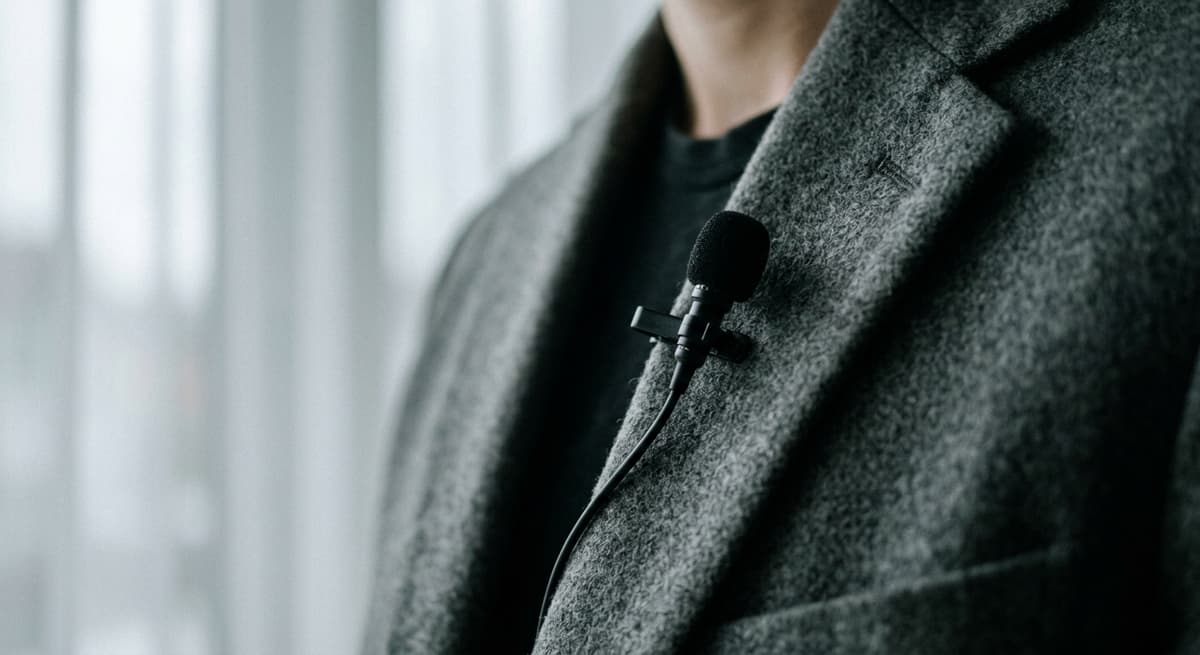
The All-Party Notification Requirement
Under ORS 165.540(1)(c), you must specifically inform every participant before recording an in-person conversation. Key details about this requirement:
- Notification must happen before recording begins, not during or after
- The notification must be specific and clear, not vague or implied
- Every person in the conversation must be informed, not just some
- The requirement applies in both public and private settings
- Even if you are a participant in the conversation, you cannot secretly record it
What Counts as "Specifically Informed"
The statute uses the phrase "specifically informed" rather than "consent." This means you need to tell people you are recording, but you do not necessarily need their affirmative agreement. If you announce that you are recording and a person continues the conversation, that person has been notified. Whether they choose to leave or stay is their decision.
However, there is a practical nuance. If someone objects to recording and asks you to stop, continuing to record could create complications. While the statute technically requires only notification, not consent, recording over someone's explicit objection could be used as evidence of bad faith in any subsequent legal dispute.
Settings Where the Notification Rule Applies
The all-party notification rule covers in-person conversations in virtually every setting:
- Private residences: Conversations in someone's home
- Workplaces: Meetings, hallway conversations, break room discussions
- Public spaces: Parks, sidewalks, restaurants, coffee shops
- Vehicles: Conversations between passengers in a car
- Stores and businesses: Customer interactions, sales conversations
- Outdoor spaces: Any face-to-face conversation regardless of location
The Ninth Circuit's 2025 en banc decision confirmed that Oregon's notification requirement extends to public settings. Recording a conversation on a public sidewalk still requires all-party notification.
Audio Recording of Phone and Electronic Communications

One-Party Consent Standard
For telephone and electronic communications, Oregon follows the majority rule in the United States. Under ORS 165.540(1)(a), you can record any phone call or electronic communication you participate in without telling the other party.
This covers:
- Landline and cell phone calls
- VoIP calls through Zoom, Teams, Google Meet, Skype, and similar platforms
- Video calls with audio (FaceTime, WhatsApp Video)
- Conference calls with multiple participants
- Any communication transmitted through electronic means
Video Conferencing Exception
An ordinary video conferencing call is treated as a conversation under ORS 165.540(1)(c) by default, so recording it secretly risks a Class A misdemeanor, even using a platform's built-in recording feature.
A narrow exception under ORS 165.540(6)(b) allows recording a video call without notifying every participant only when the person recording intends to capture alleged unlawful activity and is a law enforcement officer or acting in coordination with one, is acting in coordination with an attorney or a regulatory entity, or reasonably believes the recording may be used as evidence in a judicial or administrative proceeding. Routine recording of a video call for ordinary purposes does not qualify for this exception, so you still need to notify all participants before using platform recording features.
Exceptions to Oregon's Audio Recording Rules
Unconcealed Recording Devices
ORS 165.540(6)(a) provides an exception for unconcealed recording devices at certain events. If your recording device is not hidden, you may record at:
- Public or semipublic meetings, hearings, and trials
- Press conferences and public speeches
- Rallies, sporting events, and public demonstrations
- Regularly scheduled classes and seminars
- Private meetings where all participants knew or reasonably should have known recording was occurring
This exception is important for journalists, students, and anyone attending public events. However, it applies only when the device is visible and the setting fits one of the listed categories.
The Narrow Felony Exception
ORS 165.540(5)(a) permits a person to record a conversation during a felony that endangers human life without providing notification to all participants. This exception is extremely narrow:
- It applies only during the actual commission of a qualifying felony
- The felony must endanger human life, not just any felony
- It does not create a general right to gather evidence of suspected criminal activity
- Recording a heated argument, a workplace dispute, or a property crime does not qualify
- Oregon courts interpret this exception strictly
Relying on this exception outside of genuine life-threatening felony situations exposes you to criminal and civil liability.
Law Enforcement Exception
ORS 165.540(5) also permits recording when a law enforcement officer participates in the conversation and certain statutory conditions are met. Additionally, a person acting in coordination with law enforcement, an attorney, or a regulatory entity may record through a video conferencing program to capture alleged unlawful activity.
Audio Recording Devices and Technology
Smartphone Recording
Smartphones are the most common audio recording devices. In Oregon, using your phone to record follows the split consent framework:
- Recording a phone call on your smartphone: One-party consent applies. Legal if you are a participant.
- Recording an in-person conversation with your phone's voice recorder: All-party notification required. Every person must be specifically informed.
Dedicated Voice Recorders and AI Devices
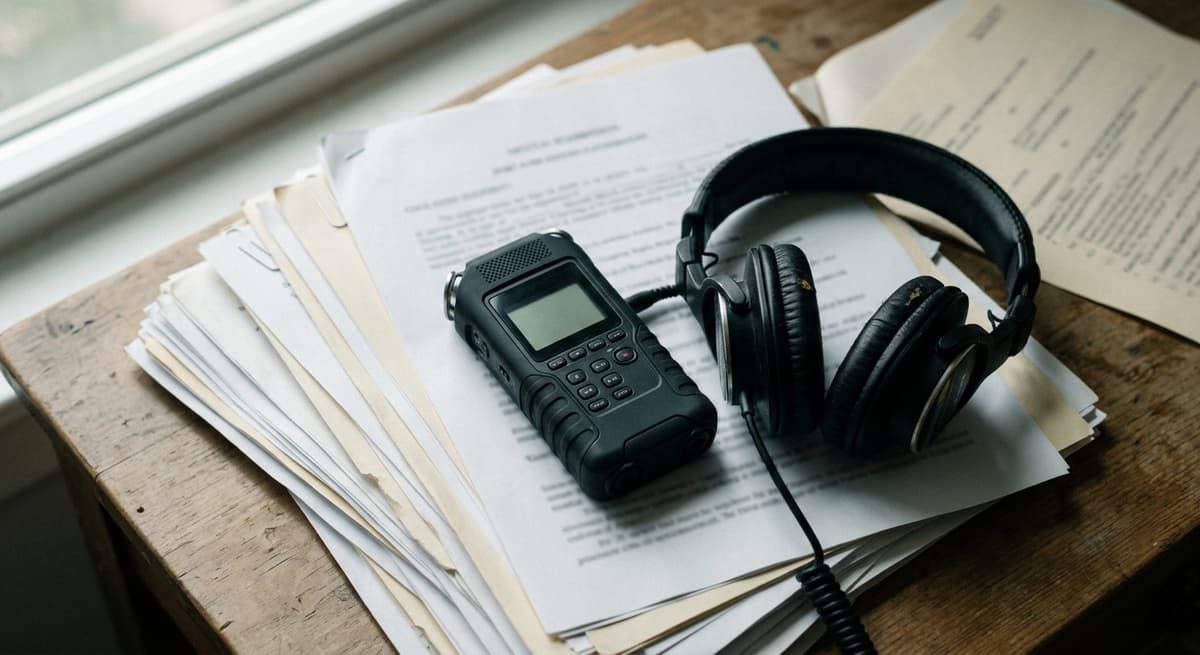
Standalone voice recorders, AI voice assistants with recording capabilities, and wearable audio devices all follow the same rules. The type of device does not change the legal analysis. What matters is whether you are recording a telephone/electronic communication or an in-person conversation.
AI-powered transcription tools like Otter.ai, Fireflies.ai, and similar services can record and transcribe in real time. For phone calls, these tools are legal under one-party consent. For in-person conversations, you must notify all participants before activating the AI recording tool.
Smart Speakers and Home Assistants
Smart speakers like Amazon Echo and Google Home continuously listen for wake words but do not typically record conversations. However, if you use a smart speaker feature that intentionally records a conversation with someone in your home, the all-party notification rule applies because the conversation is happening in person.
Penalties for Illegal Audio Recording in Oregon
Criminal Penalties
Violating ORS 165.540 by making an unauthorized audio recording is a Class A misdemeanor. Under ORS 161.615 and ORS 161.635:
| Penalty | Maximum |
|---|---|
| Jail time | Up to 364 days |
| Fine | Up to $6,250 |
| Probation | Up to 5 years |
Civil Liability
Under ORS 133.739, a person whose communications are willfully intercepted can sue for:
- Actual damages, with a minimum of $100 per day of violation or $1,000, whichever is greater
- Punitive damages at the court's discretion
- Reasonable attorney fees for the prevailing party
Evidentiary Consequences
Under ORS 41.910, audio recordings obtained in violation of Oregon law are inadmissible in any Oregon court proceeding. An illegally recorded conversation cannot be used as evidence, regardless of how relevant or important the recording might be.
Audio Recording and the First Amendment
The Project Veritas v. Schmidt Timeline
Oregon's audio recording law faced a significant First Amendment challenge that is now fully resolved:
- July 2023: A three-judge Ninth Circuit panel struck down the all-party notification requirement as an unconstitutional content-based restriction on speech
- January 2025: The full Ninth Circuit, sitting en banc with all judges, reversed the panel decision 10-2 and upheld the law as content-neutral
- October 2025: The U.S. Supreme Court declined to hear the case
The en banc court applied intermediate scrutiny and found that Oregon's interest in protecting conversational privacy is substantial and that the statute is narrowly tailored to serve that interest. The law does not restrict what people can say or discuss. It only requires that people be told when their words are being recorded.
Recording as Protected Activity
While Oregon's notification requirement limits secret recording, the broader act of recording is still protected under the First Amendment in many contexts. You can record in public spaces, record government officials performing their duties, and record at public meetings. The notification requirement simply means you must inform people when you are recording their conversations.
Oregon Recording Laws by Topic
Phone Call Recording | Audio Recording | Video Recording | Workplace Recording | Recording Police | Security Cameras | Recording in Public | Landlord-Tenant | Dashcam Laws | Schools | Medical Recording | Voyeurism & Hidden Cameras
More Oregon Recording Topics
More Oregon Laws
Frequently Asked Questions
Can I audio record a conversation in Oregon without telling everyone?
It depends on the type of conversation. For phone calls and electronic communications, Oregon follows one-party consent, so you can record without telling the other person. For in-person conversations, every participant must be specifically informed before recording under ORS 165.540(1)(c).
What is Oregon's split consent framework for audio recording?
Oregon treats telephone/electronic communications and in-person conversations under different rules. Phone calls require only one-party consent under ORS 165.540(1)(a). In-person conversations require all-party notification under ORS 165.540(1)(c). The type of communication determines which rule applies, not the recording device used.
Can I use an AI voice recorder for in-person conversations in Oregon?
You can use any recording device for in-person conversations in Oregon, including AI voice recorders, as long as you notify all participants before recording begins. The device itself does not change the legal analysis. The all-party notification requirement applies regardless of what tool you use.
Is Oregon's all-party notification requirement constitutional?
Yes. The Ninth Circuit upheld ORS 165.540(1)(c) in a 10-2 en banc ruling in January 2025 in Project Veritas v. Schmidt. The court found the law is content-neutral and narrowly tailored to protect conversational privacy. The U.S. Supreme Court declined to hear the case in October 2025.
What happens if I illegally audio record someone in Oregon?
Illegal audio recording is a Class A misdemeanor carrying up to 364 days in jail and a $6,250 fine. The victim can also sue for civil damages under ORS 133.739, with a minimum of $100 per day or $1,000. The recording is inadmissible as evidence under ORS 41.910.
Updates
Independently fact-checked against the cited primary sources; governing law re-checked for recent changes
Corrected the video-conferencing exception: ORS 165.540(6)(b) is a narrow carve-out for capturing alleged unlawful activity, not a blanket exemption for Zoom/Teams recordings, which default to all-party notification under (1)(c); also fixed a mis-cite of the unconcealed-device exception from (2) to the correct (6)(a).
Governing law re-checked for recent changes
Governing law re-checked for recent changes
Reviewed and approved by an editor
The Law Behind This Article
This article rests on the statutory provisions below, held in our own legal record and retrieved from the official source. Tap a section to read the operative text.
Oregon Revised Statutes, Chapter 165: Offenses Involving Fraud or Deception
§ 165.540Obtaining contents of communicationsIn forcecited in 19 of our articles
(1) Except as otherwise provided in ORS 133.724 or 133.726 or subsections (2) to (8) of this section, a person may not: (a) Obtain or attempt to obtain the whole or any part of a telecommunication or a radio communication to which the person is not a participant, by means of any device, contrivance, machine or apparatus, whether electrical, mechanical, manual or otherwise, unless consent is given by at least one participant. (b) Tamper with the wires, connections, boxes, fuses, circuits, lines or any other equipment or facilities of a telecommunication or radio communication company over which messages are transmitted, with the intent to obtain unlawfully the contents of a telecommunication or radio communication to which the person is not a participant. (c) Obtain or attempt to obtain the whole or any part of a conversation by means of any device, contrivance, machine or apparatus, whether electrical, mechanical, manual or otherwise, if not all participants in the conversation are specifically informed that their conversation is being obtained.
Official text (excerpt) · last checked 2026-08-31 · Read the full text in our law library · Verify at oregonlegislature.gov
Cited in 76 court opinions in our collectionLatest citing opinion in our collection: 2026
In the courts (editorial summary, independently checked):State v. Fleetwood (2000) applied ORS 165.540 to body wire evidence, holding that words spoken into a telephone are a telecommunication under subsection (1)(a) and that the (5)(a)(B) exception fails unless the officer or the officer's agent shares reciprocally in the conversation, so the recordings were inadmissible.
Opinions citing this section in our collection:
- State v. Klein (Oregon Supreme Court 2012, 352 Or. 302)“…eing 3 recorded. Conversations recorded in violation of ORS 165.540 are not admissible in 4 court excep…”
- North Pacific Lumber Co. v. Oliver (Oregon Supreme Court 1979, 286 Or. 639)✓A lumber wholesaler secretly monitored traders' calls; on de novo review the court said the practice may have violated ORS 165.540 but refused to rest unclean hands on it, since the ex-employee's calls were never monitored. The employer's noncompete suit failed on other grounds.
- State v. Fleetwood (Oregon Supreme Court 2000, 331 Or. 511)✓A detective wired an informant and recorded the suspect's side of a phone call and his talks with his mother and a juvenile seller; the court held those interceptions violated ORS 165.540(1)(a) and (1)(c) because the informant was not a participant, and upheld suppression.
Identified automatically from the court opinions citing this section — not a ranking of which case controls.
Also relied on in: Oregon Recording Laws (2026): Hybrid One-Party and All-Party Rules, Oregon Voyeurism and Hidden Camera Laws: Offenses, Penalties, and Protections, Oregon Landlord-Tenant Recording Laws: Surveillance, Privacy, and Consent
Oregon Revised Statutes, Chapter 161: General Provisions
§ 161.615Maximum terms of imprisonment for misdemeanorsIn forcecited in 5 of our articles
Sentences for misdemeanors shall be for a definite term. The court shall fix the term of imprisonment within the following maximum limitations: (1) For a Class A misdemeanor, 364 days. (2) For a Class B misdemeanor, 6 months. (3) For a Class C misdemeanor, 30 days. (4) For an unclassified misdemeanor, as provided in the statute defining the crime.
Official text (excerpt) · last checked 2026-07-29 · Read the full text in our law library · Verify at oregonlegislature.gov
Cited in 77 court opinions in our collectionLatest citing opinion in our collection: 2025
Opinions citing this section in our collection:
- City of Portland v. Dollarhide (Oregon Supreme Court 1986, 300 Or. 490)“…aximum sentence of one year imprisonment and a $2,500 fine (ORS 161.615, 161.635). The City argues that its man…”
- MacCrone v. Edwards Center, Inc. (Court of Appeals of Oregon 1999, 160 Or. App. 91)“…tly punishable by imprisonment up to a maximum of one year, ORS 161.615(1), and a maximum fine of $5,000, ORS 1…”
- State v. Wright (Court of Appeals of Oregon 1983, 63 Or. App. 482)“…1981, ch390, § 2), and a maximum prison term of one year. ORS 161.615(1). The only reason that the defendant’…”
Identified automatically from the court opinions citing this section — not a ranking of which case controls.
Also relied on in: Oregon Phone Call Recording Laws: Split Consent Rules and Penalties, Oregon AI Meeting Recording Laws: Split Consent and Video Conferencing Exception (2026), Oregon Surveillance Camera Laws (2026 Guide)
United States Code Title 18
§ 2511Interception and disclosure of wire, oral, or electronic communications prohibitedIn forcecited in 422 of our articles
Except as otherwise specifically provided in this chapter any person who— intentionally intercepts, endeavors to intercept, or procures any other person to intercept or endeavor to intercept, any wire, oral, or electronic communication; intentionally uses, endeavors to use, or procures any other person to use or endeavor to use any electronic, mechanical, or other device to intercept any oral communication when— such device is affixed to, or otherwise transmits a signal through, a wire, cable, or other like connection used in wire communication; or such device transmits communications by radio, or interferes with the transmission of such communication; or such person knows, or has reason to know, that such device or any component thereof has been sent through the mail or transported in interstate or foreign commerce; or such use or endeavor to use (A) takes place on the premises of any business or other commercial establishment the operations of which affect interstate or foreign commerce; or (B) obtains or is for the purpose of obtaining information relating to the operations of any business or other commercial establishment the operations of which affect interstate or foreign…
Official text (excerpt) · last checked 2026-08-28 · Read the full text in our law library · Verify at uscode.house.gov
Cited in 2,045 court opinions in our collectionLatest citing opinion in our collection: 2026
In the courts (editorial summary, independently checked):Griggs-Ryan v. Smith (1990) applied the Section 2511(2)(d) prior-consent exception, treating a tenant repeatedly told that all incoming calls were taped as having impliedly consented. United States v. United States District Court (1972) read the then-current Section 2511(3) as conferring no presidential surveillance power.
Opinions citing this section in our collection:
- Mitchell v. Forsyth (Supreme Court of the United States 1985, 472 U.S. 511)✓The Attorney General authorized a warrantless 1970 national security wiretap that caught the plaintiff's calls; the Court held the since-repealed Section 2511(3) disclaimer left the tap lawful under Title III, and that Mitchell had qualified immunity.
- United States v. United States District Court for the Eastern District of Michigan (Supreme Court of the United States 1972, 407 U.S. 297)✓The Attorney General approved warrantless wiretaps on members of a domestic group accused of bombing a CIA office; the Court read Section 2511(3) as a congressional disclaimer conferring no surveillance power, then held the Fourth Amendment required prior judicial approval.
- Forsyth v. Barr (Court of Appeals for the Fifth Circuit 1994, 19 F.3d 1527)✓Dallas police used, in an internal affairs probe of an officer, calls private parties allegedly intercepted illegally; assuming that was unlawful, the Fifth Circuit held Section 2517(1) and (2) allowed the disclosure and use, defeating the Section 2511(1)(c) and (d) claims.
Identified automatically from the court opinions citing this section — not a ranking of which case controls.
Also relied on in: Connecticut Recording Laws (2026): Hybrid Consent Rules Explained, US Recording Laws by State (2026): All 50 States Explained, Hawaii Recording Laws (2026): Hybrid Consent State Rules
Search our full record of US law — 2.1 million sections, every state + federal →
Sources and References
- ORS 165.540 - Obtaining Contents of Communications(oregonlegislature.gov).gov
- ORS 133.739 - Civil Remedies for Willful Interception(oregonlegislature.gov).gov
- ORS 161.615 and 161.635 - Misdemeanor Sentencing(oregonlegislature.gov).gov
- ORS 41.910 - Intercepted Communications Inadmissible(oregonlegislature.gov).gov
- Project Veritas v. Schmidt - Ninth Circuit En Banc Opinion (Jan. 2025)(cdn.ca9.uscourts.gov).gov
- Federal Wiretap Act - 18 U.S.C. 2511(law.cornell.edu)