
Utah
Utah Audio Recording Laws
Independently fact-checked against primary sources (last audited August 15, 2026). · Reviewed by the RecordingLaw editorial team. · Law checked current as of August 15, 2026. · 4 primary sources cited on this page. How we verify our legal content
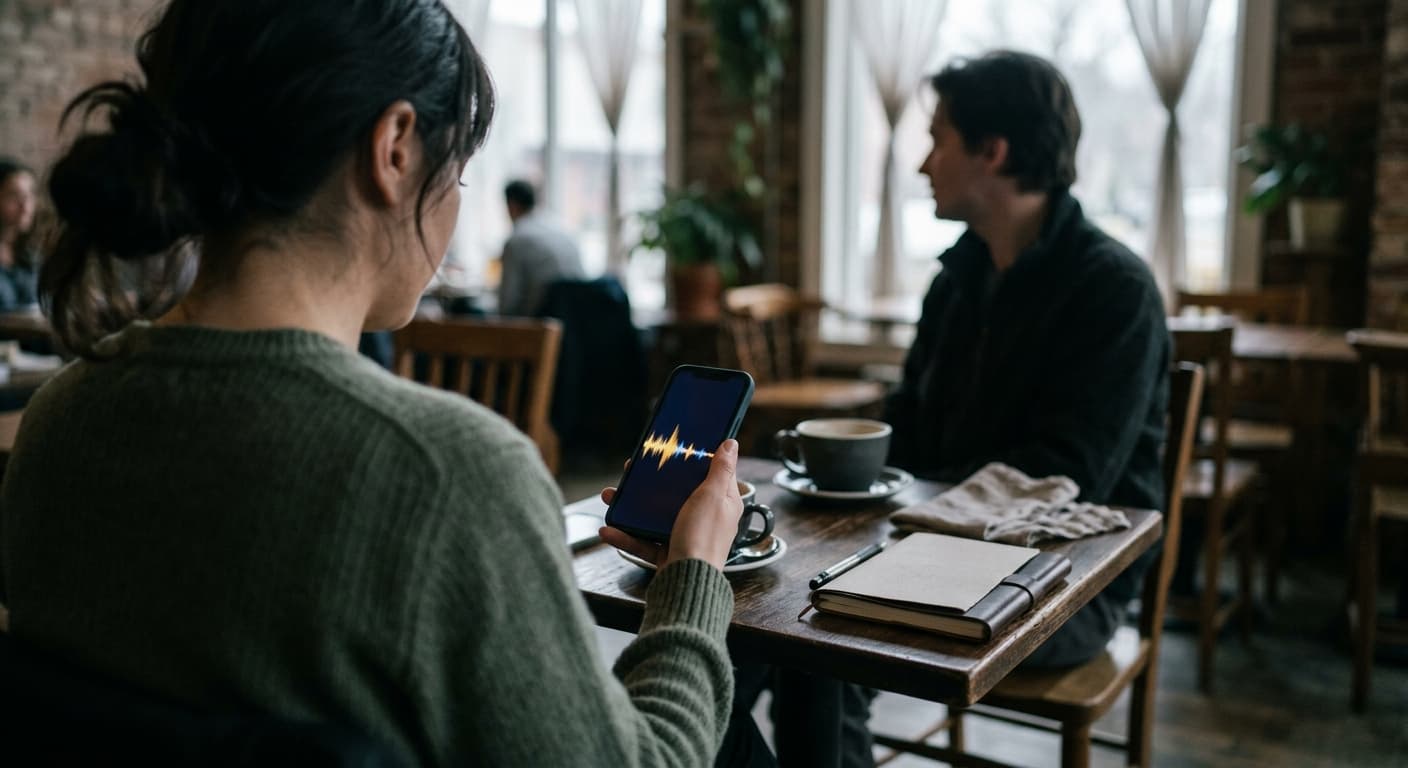
Utah is a one-party consent state for audio recording under Utah Code Ann. 77-23a-4. Any participant in a phone call or in-person conversation can legally record it without notifying the other parties. Illegal interception by a non-participant is a third degree felony carrying up to five years in prison.
Utah is a one-party consent state for audio recording. Under the Utah Interception of Communications Act (Utah Code Ann. 77-23a-4), you can legally record any phone call, in-person conversation, or electronic communication you participate in without notifying or getting permission from other participants.
How Utah's One-Party Consent Law Works
The Statutory Framework
Utah's audio recording rules are found in the Utah Interception of Communications Act (Utah Code Ann. Title 77, Chapter 23a). The key statutes are:
- Utah Code Ann. 77-23a-4 establishes the criminal offense of intercepting wire, electronic, or oral communications without authorization, and also provides the one-party consent exception.
- Utah Code Ann. 77-23a-11 creates a civil cause of action for victims of illegal interception.
- Utah Code Ann. 77-23a-3 defines key terms including wire, electronic, and oral communications.
Under 77-23a-4, it is unlawful to intentionally or knowingly intercept any wire, electronic, or oral communication. However, recording is lawful when at least one party to the communication consents. That consenting party can be you.
These statutes were reviewed during Utah's 2025 criminal code recodification. The core wiretapping provisions in Chapter 23a remained substantively unchanged.
What "One-Party Consent" Means in Practice
One-party consent means exactly one person involved in the communication, typically you, must know about and agree to the recording. You do not need to announce that a call or conversation is being recorded, and you do not need anyone else's verbal or written agreement. You can also give someone else prior consent to record a conversation or meeting on your behalf, even if you are not the one operating the recorder. The specific rules for phone calls and in-person conversations are covered below.
Types of Audio Communications Covered
Wire Communications
Wire communications include telephone calls, cell phone calls, and any communication transmitted over a wire at some point. Utah's one-party consent rule covers all wire communications.
Oral Communications
Oral communications are in-person conversations where one or more parties have a reasonable expectation of privacy. Public conversations at normal volume generally carry no privacy expectation and may be recorded freely.
Recording Phone Calls in Utah
Personal Phone Calls
You can record any personal phone call you participate in. This applies to cell phones, landlines, VoIP calls (Zoom, Teams, Meet), video call audio, and messaging apps. No announcement or permission is required.
Business Phone Calls
Utah businesses can record calls for quality assurance, training, compliance, and dispute resolution. An employee on the call provides the necessary one-party consent. Many businesses announce recording as a best practice, particularly for interstate calls.
Federal regulations under the Telephone Consumer Protection Act and FCC guidelines also apply to business call recording.
Interstate Phone Calls
When calling someone in a two-party consent state, the stricter law typically applies. States requiring all-party consent include California, Connecticut (civil liability only for phone-call recording under C.G.S. 52-570d; the criminal wiretap law is one-party), Florida, Illinois, Maryland, Massachusetts, Montana, Nevada (for phone calls), New Hampshire, Pennsylvania, and Washington.
The safest approach for interstate calls: announce the recording or get consent.
Recording In-Person Conversations
When Audio Recording Is Legal
You can record in-person conversations in Utah when:
- You are a direct participant
- You are in a public place where no reasonable privacy expectation exists
- One party has given you prior consent to record
When Audio Recording Is Illegal
Recording becomes illegal when:
- You are not a party and have no participant's consent
- You plant a hidden device to capture conversations you are absent from
- You intercept conversations for tortious, illegal, or commercial purposes
Recording in Your Own Home
You can record conversations in your own home if participating. You cannot plant recorders to capture guests' private conversations when you are not present, or record in areas where guests have privacy expectations (bathrooms, guest bedrooms).
Penalties for Illegal Audio Recording in Utah
Criminal Penalties
| Offense | Classification | Maximum Penalty |
|---|---|---|
| Illegal interception (standard) | Third degree felony | 5 years prison, $5,000 fine |
| First offense (non-tortious/non-commercial, unencrypted radio, not cellular/PLMR/paging) | Class A misdemeanor | Set by Utah's general misdemeanor sentencing law |
| First offense (non-tortious/non-commercial, cellular, public land mobile radio, or paging radio portion) | Class B misdemeanor | 6 months jail |
| Disclosing illegally obtained communications | Third degree felony | 5 years prison, $5,000 fine |
Civil Liability
Under Utah Code Ann. 77-23a-11, victims can recover whichever is greater: (a) actual damages plus any profits the violator made, or (b) statutory damages of $100 per day of violation or $10,000. On top of that amount, victims can also recover:
- Punitive damages in willful cases
- Attorney fees and litigation costs
- Injunctive relief
The statute of limitations is two years from the date the victim discovers the violation.
Good Faith Defense
Utah provides a complete defense for anyone who relied in good faith on a court order, warrant, grand jury subpoena, or other statutory authorization.
Using Audio Recordings as Evidence in Utah
Recordings made lawfully under one-party consent are generally admissible in Utah courts. Courts evaluate authentication, relevance, hearsay rules, and the balance of probative value versus prejudicial effect. If you plan to use a recording as evidence, keep the original file unedited, note the date, time, and participants, and talk to an attorney before sharing it publicly.
Common Audio Recording Scenarios
Can I Record My Landlord?
Yes, if you are part of the conversation.
Can I Record My Doctor?
Yes, as a participant in the medical appointment.
Can I Record My Boss?
Yes, under one-party consent. Employer policies may restrict recording and violating them could lead to discipline.
Can I Record a Government Official?
Yes. Utah's Open and Public Meetings Act (52-4-203) also requires public bodies to record their own open meetings.
More Utah Recording Laws
Audio Recording | Video Recording | Voyeurism & Hidden Cameras | Workplace Recording | Recording Police | Phone Call Recording | Security Cameras | Recording in Public | Landlord-Tenant | Dashcam Laws | Schools | Medical Recording
More Utah Recording Topics
More Utah Laws
Frequently Asked Questions
Is it legal to audio record a conversation in Utah without the other person knowing?
Yes. Utah is a one-party consent state under Utah Code Ann. 77-23a-4. As long as you are a participant in the conversation, you can record the audio without telling or getting permission from other parties.
Can I record a phone call in Utah?
Yes. You can record any phone call you participate in, including landline, cell phone, and VoIP calls. For interstate calls to two-party consent states, the stricter law typically applies.
What is the penalty for illegal audio recording in Utah?
Illegal interception is a third degree felony carrying up to 5 years in prison. A narrow misdemeanor alternative under 77-23a-4(10)(b) applies only to first offenses that are non-tortious, non-commercial, and involve an unencrypted radio communication: a Class A misdemeanor generally, or a Class B misdemeanor if the communication is the radio portion of a cellular, public land mobile radio, or paging service call. Civil liability includes $100 per day or $10,000 (whichever is greater) plus attorney fees and potential punitive damages.
Can I sue someone for recording me without consent in Utah?
Only if the recording was made illegally. Under Utah Code Ann. 77-23a-11, victims of unlawful interception can recover whichever is greater of actual damages plus the violator's profits, or statutory damages of $100 per day of violation or $10,000, plus attorney fees and punitive damages in willful cases. The statute of limitations is two years from discovery.
Can audio recordings be used as evidence in Utah courts?
Yes. Recordings made lawfully under one-party consent are generally admissible in both criminal and civil cases. The recording must be authenticated, relevant, and its probative value must outweigh prejudicial effect.
Updates
Hedged the Connecticut entry in the interstate all-party-consent list to reflect that Connecticut's criminal wiretap law is one-party consent, with all-party consent required only for civil liability on phone-call recording under C.G.S. 52-570d.
Independently fact-checked against the cited primary sources; governing law re-checked for recent changes
Corrected the classification of Utah's narrow first-offense misdemeanor exception under 77-23a-4(10)(b): it is a Class A misdemeanor for most unencrypted radio/cordless interceptions, and Class B only for cellular, public land mobile radio, or paging radio-portion communications.
Governing law re-checked for recent changes
Corrected penalty table: removed erroneous Class A misdemeanor row; 77-23a-4(10)(b) Class B misdemeanor is the only narrow first-offense alternative, limited to unencrypted radio/cordless interceptions that are non-tortious and non-commercial. Updated KeyTakeaway penalty description accordingly.
Reviewed and approved by an editor
The Law Behind This Article
This article rests on the statutory provisions below, held in our own legal record and retrieved from the official source. Tap a section to read the operative text.
Utah Code, Title 77: Criminal Procedure
§ 77-23a-4Offenses -- Criminal and civil -- Lawful interception.In forcecited in 19 of our articles
(1) (a) Except as otherwise specifically provided in this chapter, any person who violates Subsection (1)(b) is guilty of an offense and is subject to punishment under Subsection (10), or when applicable, the person is subject to civil action under Subsection (11). (b) A person commits a violation of this subsection who: (i) intentionally or knowingly intercepts, endeavors to intercept, or procures any other person to intercept or endeavor to intercept any wire, electronic, or oral communication; (ii) intentionally or knowingly uses, endeavors to use, or procures any other person to use or endeavor to use any electronic, mechanical, or other device to intercept any oral communication, when the device is affixed to, or otherwise transmits a signal through a wire, cable, or other like connection used in wire communication or when the device transmits communications by radio, or interferes with the transmission of the communication; (iii) intentionally or knowingly discloses or endeavors to disclose to any other person the contents of any wire, electronic, or oral communication, knowing or having reason to know that the information was obtained through the interception of a wire,…
Official text (excerpt) · last checked 2026-08-31 · Read the full text in our law library · Verify at le.utah.gov
Cited in 5 court opinions in our collectionLatest citing opinion in our collection: 2026
In the courts (editorial summary, independently checked):State v. Wood (2023) held a jail's recording of inmate calls fell within the consent exception in section 77-23a-4(7)(a) because the inmate impliedly consented by using phones he was told were monitored. The Quarasan Group, Inc. v. Nozani, LLC (2020) dismissed an eavesdropping claim once Utah law governed and did not bar the recording.
Opinions citing this section in our collection:
- State v. Wood (Utah Supreme Court 2023, 532 P.3d 997)✓A jail recorded an inmate's calls to his wife after warning him by handbook, placard and a message before each call; the Utah Supreme Court held he impliedly consented, so the interception fell within section 77-23a-4(7)(a) and suppression was denied.
- State v. Draughon (Court of Appeals of Utah 2026, 2026 UT App 52)“…rties to the call—consented to the call being recorded. See Utah Code §§ 77-23a-4(7)(b), -7. He claims Counsel should hav…”
- United States v. Maynard (Court of Appeals for the D.C. Circuit 2010, 615 F.3d 544)“…ined by the police acting pursuant to a warrant. See, e.g., Utah Code Ann. §§ 77-23a-4, 77-23a-7, 77-23a-15.5; Minn Stat §§ 62…”
Identified automatically from the court opinions citing this section — not a ranking of which case controls.
§ 77-23a-11Civil remedy for unlawful interception -- Action for relief.In forcecited in 6 of our articles
(1) Except under Subsections 77-23a-4(3), (4), and (5), a person whose wire, electronic, or oral communication is intercepted, disclosed, or intentionally used in violation of this chapter may in a civil action recover relief as appropriate from the person or entity that engaged in the violation. (2) In an action under this section appropriate relief includes: (a) preliminary and other equitable or declaratory relief as is appropriate; (b) damages under Subsection (3) and punitive damages in appropriate cases; and (c) a reasonable attorney's fee and reasonably incurred litigation costs.
Official text (excerpt) · last checked 2026-07-29 · Read the full text in our law library · Verify at le.utah.gov
United States Code Title 18
§ 2511Interception and disclosure of wire, oral, or electronic communications prohibitedIn forcecited in 418 of our articles
Except as otherwise specifically provided in this chapter any person who— intentionally intercepts, endeavors to intercept, or procures any other person to intercept or endeavor to intercept, any wire, oral, or electronic communication; intentionally uses, endeavors to use, or procures any other person to use or endeavor to use any electronic, mechanical, or other device to intercept any oral communication when— such device is affixed to, or otherwise transmits a signal through, a wire, cable, or other like connection used in wire communication; or such device transmits communications by radio, or interferes with the transmission of such communication; or such person knows, or has reason to know, that such device or any component thereof has been sent through the mail or transported in interstate or foreign commerce; or such use or endeavor to use (A) takes place on the premises of any business or other commercial establishment the operations of which affect interstate or foreign commerce; or (B) obtains or is for the purpose of obtaining information relating to the operations of any business or other commercial establishment the operations of which affect interstate or foreign…
Official text (excerpt) · last checked 2026-08-28 · Read the full text in our law library · Verify at uscode.house.gov
Cited in 2,045 court opinions in our collectionLatest citing opinion in our collection: 2026
In the courts (editorial summary, independently checked):Griggs-Ryan v. Smith (1990) applied the Section 2511(2)(d) prior-consent exception, treating a tenant repeatedly told that all incoming calls were taped as having impliedly consented. United States v. United States District Court (1972) read the then-current Section 2511(3) as conferring no presidential surveillance power.
Opinions citing this section in our collection:
- Mitchell v. Forsyth (Supreme Court of the United States 1985, 472 U.S. 511)✓The Attorney General authorized a warrantless 1970 national security wiretap that caught the plaintiff's calls; the Court held the since-repealed Section 2511(3) disclaimer left the tap lawful under Title III, and that Mitchell had qualified immunity.
- United States v. United States District Court for the Eastern District of Michigan (Supreme Court of the United States 1972, 407 U.S. 297)✓The Attorney General approved warrantless wiretaps on members of a domestic group accused of bombing a CIA office; the Court read Section 2511(3) as a congressional disclaimer conferring no surveillance power, then held the Fourth Amendment required prior judicial approval.
- Forsyth v. Barr (Court of Appeals for the Fifth Circuit 1994, 19 F.3d 1527)✓Dallas police used, in an internal affairs probe of an officer, calls private parties allegedly intercepted illegally; assuming that was unlawful, the Fifth Circuit held Section 2517(1) and (2) allowed the disclosure and use, defeating the Section 2511(1)(c) and (d) claims.
Identified automatically from the court opinions citing this section — not a ranking of which case controls.
Search our full record of US law — 2.1 million sections, every state + federal →
Sources and References
- Utah Code Ann. 77-23a-4 -- Interception of Communications(le.utah.gov).gov
- Utah Code Ann. 77-23a-11 -- Civil Remedies for Interception Violations(le.utah.gov).gov
- Utah Interception of Communications Act -- Chapter 23a(le.utah.gov).gov
- FCC Guide on Recording Telephone Conversations(fcc.gov).gov
- 18 U.S.C. 2511 -- Federal Wiretap Act(law.cornell.edu)
- Reporters Committee for Freedom of the Press -- Utah Recording Guide(rcfp.org)