Minnesota Workplace Recording Laws: Employee and Employer Rights
Independently fact-checked against primary sources (last audited August 15, 2026). · Reviewed by the RecordingLaw editorial team. · Law checked current as of August 9, 2026. · 7 primary sources cited on this page. How we verify our legal content
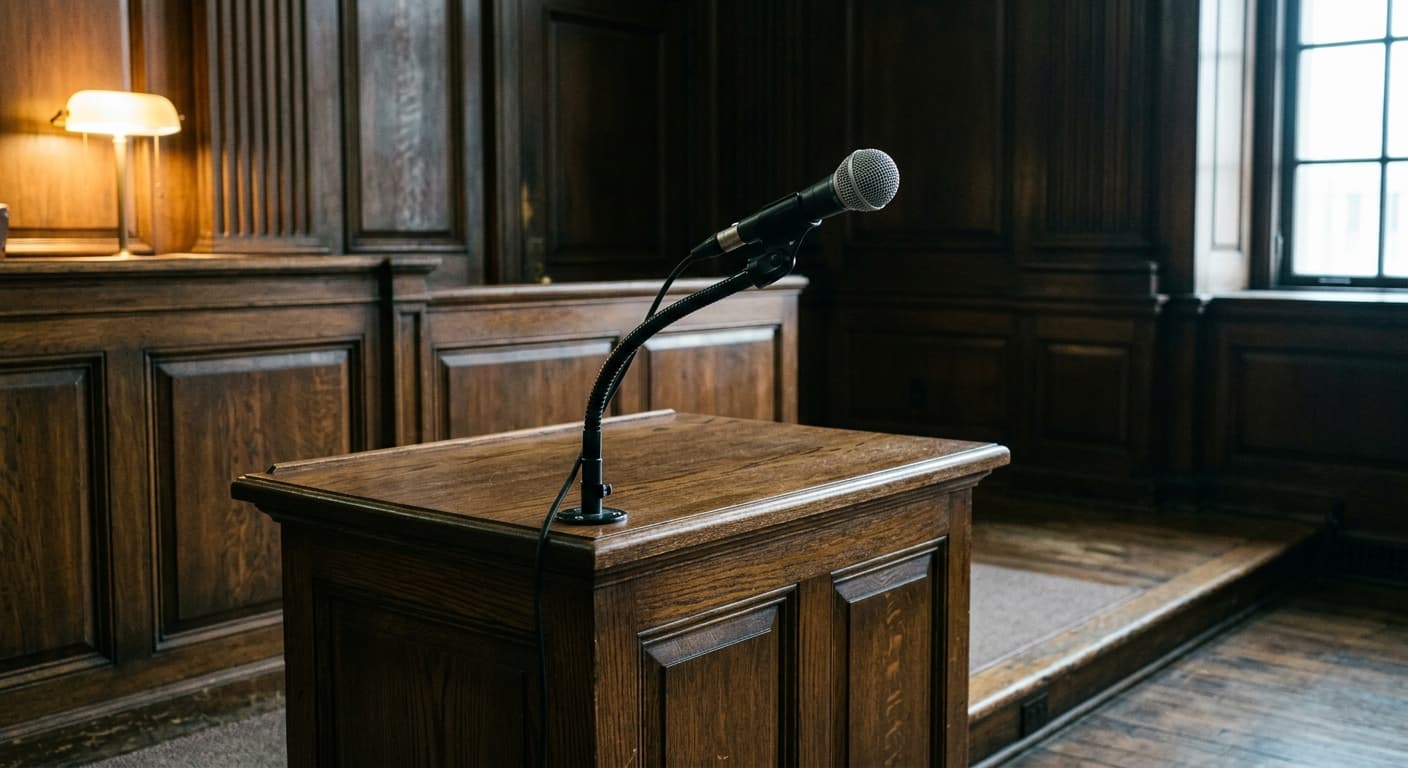
Minnesota follows a one-party consent rule under Minn. Stat. 626A.02, so any employee can legally record a workplace conversation they participate in without notifying supervisors or coworkers. Employers may still enforce no-recording policies as a condition of employment, and violating them can lead to termination.
Overview of Minnesota Workplace Recording Laws
Minnesota's one-party consent rule applies in the workplace just as it does in any other setting. Under Minn. Stat. Section 626A.02, any employee can legally record a workplace conversation they participate in without informing coworkers, supervisors, or HR representatives. No announcement or notification is required.
However, the intersection of state recording law, employer policies, federal labor law, and privacy statutes creates a more complex picture for workplace recording than many people realize. Understanding your rights and limitations as either an employee or an employer requires examining multiple legal frameworks.
Employee Rights to Record at Work
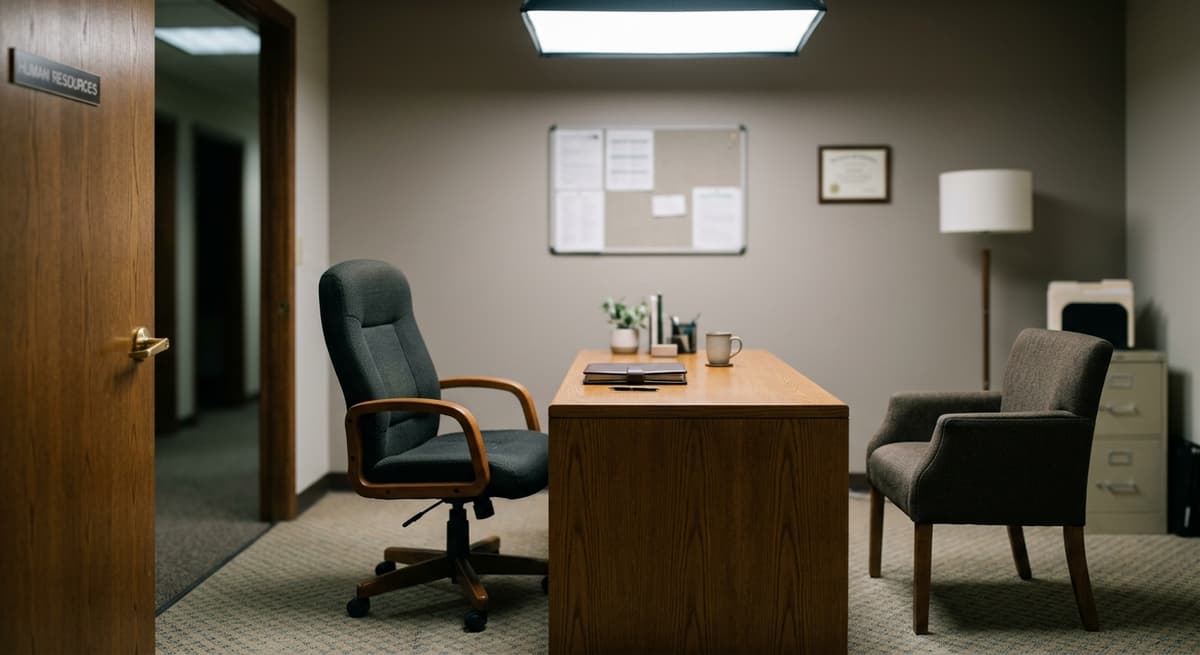
Recording Conversations with Supervisors and Coworkers
As a participant in any workplace conversation, a Minnesota employee can record:
- Performance reviews and disciplinary meetings
- Conversations with supervisors about work assignments
- HR meetings and complaints
- Discussions with coworkers about working conditions
- Phone calls with clients, vendors, or customers
- Training sessions where the employee is present
- Negotiations about pay, benefits, or working conditions
The legal requirement is straightforward: the person making the recording must be a party to the conversation. You cannot plant a recording device to capture conversations between other people when you are not present.
Common Reasons Employees Record at Work
Minnesota employees often record workplace interactions to:
- Document harassment or discrimination. Recordings can provide direct evidence of inappropriate behavior that might otherwise be difficult to prove.
- Preserve evidence of retaliation. If an employee has filed a complaint, recordings of subsequent interactions can show retaliatory treatment.
- Record performance review feedback. Having a recording ensures accuracy about what was said during a review.
- Document safety violations. Recordings can preserve evidence of unsafe working conditions or employer disregard for safety protocols.
- Protect against wrongful termination. Conversations leading up to a termination can be valuable evidence if the employee believes the firing was unlawful.
The Criminal or Tortious Purpose Limitation
Even in the workplace, the one-party consent exception does not apply if the recording is made for the purpose of committing a criminal or tortious act. An employee who records a conversation with the intent to blackmail a supervisor, commit corporate espionage, or steal trade secrets is not protected by Section 626A.02, Subdivision 2(d).
Recording to document legitimate concerns about working conditions, harassment, or legal compliance is not a criminal or tortious purpose and is fully protected under the one-party consent rule.
Employer No-Recording Policies
Can Employers Prohibit Recording?
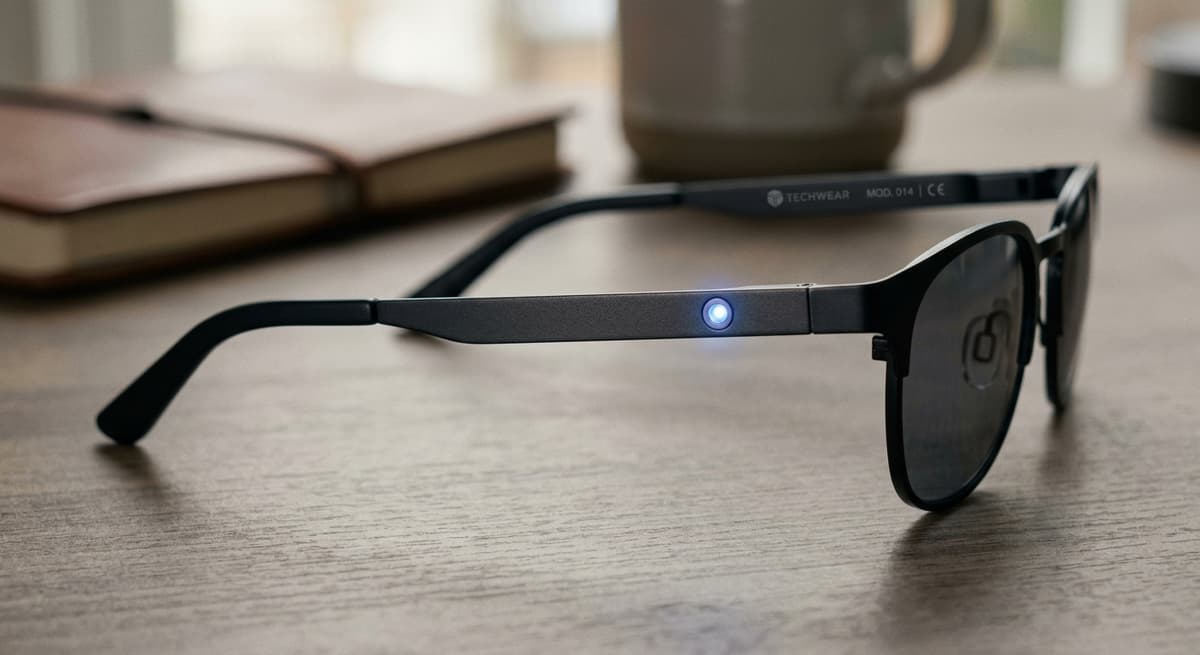
Yes. Minnesota employers can implement workplace policies that prohibit employees from recording conversations, meetings, or other workplace activities. While such recording is legal under state law, employers have broad authority to set conditions of employment.
A no-recording policy does not make the recording itself illegal. The recording remains lawful under Minn. Stat. Section 626A.02. However, an employee who violates a no-recording policy can face disciplinary consequences, including termination, for violating the policy rather than for the act of recording.
Limits on No-Recording Policies Under Federal Labor Law
The National Labor Relations Act (NLRA) places some limits on employer no-recording policies. The National Labor Relations Board (NLRB) has held that overly broad no-recording policies can interfere with employees' rights to engage in protected concerted activity under Section 7 of the NLRA.
Protected concerted activity includes employees acting together to address working conditions, wages, or other terms of employment. If employees are recording to document unsafe conditions, wage theft, or other collective concerns, a blanket no-recording policy may be unenforceable under the NLRA.
The controlling NLRB standard for work rules is Stericycle, Inc. (2023), which requires the Board to assess whether a reasonable employee would interpret a rule as coercive, with ambiguities construed against the employer. NLRB General Counsel Memo 25-05 (2025) was a housekeeping rescission memorandum, not a reversal of Stericycle. A no-recording policy that a reasonable employee could interpret as restricting protected concerted activity is presumptively unlawful under this standard.
Best Practices for Employer Policies
Employers who want to implement no-recording policies should:
- Clearly define the scope of the policy (what is prohibited and what is allowed)
- Explain the business justification for the policy
- Ensure the policy does not interfere with NLRA-protected activity
- Apply the policy consistently to all employees
- Include the policy in employee handbooks and training materials
- Consult with employment counsel before implementation
Employer Surveillance in the Workplace
Video Surveillance
Minnesota employers can install video surveillance cameras in common work areas where employees do not have a reasonable expectation of privacy. Permissible camera locations include:
- Lobbies and reception areas
- Hallways and corridors
- Warehouses, production floors, and manufacturing areas
- Parking lots and building exteriors
- Cash register areas and retail sales floors
- Loading docks and shipping areas
Prohibited Camera Locations
Under Minn. Stat. Section 609.746, subdivision 1, paragraph (e), it is a crime to use a device to photograph, record, or broadcast an image of a person with intent to capture that person's intimate parts without consent, when the device is used in a location where a reasonable person would have an expectation of privacy. Employers should treat the following as high-risk camera locations for that reason:
- Bathrooms and restrooms
- Locker rooms and changing areas
- Shower facilities
- Private nursing or lactation rooms
- Employee changing areas
A camera placed in one of these areas with intent to capture someone's intimate parts without consent is interference with privacy, resulting in gross misdemeanor charges for a first offense (up to 1 year in jail and $3,000 fine) or felony charges for repeat offenses or offenses involving minors (up to 2 years, or up to 4 years if the victim is a minor with a 36-plus month age gap and sexual intent is involved, and a $5,000 fine). A general security camera in these spaces that is not used with that intent does not violate the statute by location alone, though employers should still avoid placing cameras there as standard practice. The statute does carve out an exception: paragraphs (c), (d), and (e) do not apply to conduct in a medical facility or in a commercial establishment if the owner has posted conspicuous signs warning that the premises are under surveillance by the owner or the owner's employees. Employers relying on this exception should still weigh other privacy, employment, and biometric-data obligations before recording in these spaces.
Audio Surveillance in the Workplace
Workplace cameras with audio recording capabilities must comply with the one-party consent rule under Section 626A.02. An employer cannot simply leave audio-recording devices running in empty rooms to capture conversations between employees without any party's consent. At least one person present must be aware of and consent to the audio recording.
This means that audio-enabled security cameras in common areas are legally complex. If an employer places audio-recording cameras in a break room, the employer is not a party to the conversations being captured. Unless the employer has consent from at least one participant in each conversation, the audio recording may violate the wiretapping statute.
Many employment attorneys advise Minnesota employers to disable audio on workplace surveillance cameras or to post clear notices that audio recording is occurring, allowing employees to provide implied consent by continuing to use the area.
Monitoring Employee Communications
Email and Computer Monitoring
Minnesota employers generally have the right to monitor employee email and computer usage on company-owned equipment. Employees have a reduced expectation of privacy when using employer-provided devices and networks. Most courts recognize that employers can monitor:
- Emails sent and received on company accounts
- Internet browsing history on company networks
- Files stored on company computers
- Chat and messaging on company platforms
Employers should have clear written policies informing employees about monitoring practices. While not strictly required under Minnesota law, such policies strengthen the employer's legal position and reduce employee expectations of privacy.
Phone Call Monitoring
Employers can monitor and record business phone calls under the one-party consent rule. The employee participating in the call serves as the consenting party. Common legitimate purposes include:
- Quality assurance and customer service evaluation
- Training new employees
- Compliance documentation
- Dispute resolution
Personal phone calls made on company phones present a more nuanced issue. If an employer knows a call is personal, continued monitoring may be inappropriate. Federal courts have generally held that once an employer realizes a call is personal, monitoring should stop.
The MCDPA and Workplace Biometric Data
The Minnesota Consumer Data Privacy Act (Minn. Stat. ch. 325M), effective July 31, 2025, defines a covered consumer as a Minnesota resident acting only in an individual or household context, and its definition of consumer specifically excludes a natural person acting in a commercial or employment context (Minn. Stat. 325M.11). This means the MCDPA generally does not create a standalone consent duty for employers who collect biometric data, such as facial recognition or voiceprint data, from employees through workplace surveillance.
That exclusion is not a blanket green light, however. The one-party consent rule under Section 626A.02 still governs any audio component of biometric surveillance, and separate workplace, union, and data-security obligations can still apply even though the MCDPA's consumer definition does not reach employee data.
Specific Workplace Recording Scenarios
Recording HR Meetings
Minnesota employees can record meetings with HR representatives, including:
- Complaint intake meetings
- Investigation interviews
- Disciplinary hearings
- Termination meetings
- Benefits discussions
- Accommodation request meetings
The recording is legal under one-party consent as long as the employee is present and participating. HR departments may request that meetings not be recorded, and company policy may prohibit it, but the recording remains legal under state law.
Recording Union Activities
Union-related recording in the workplace receives additional protection under the NLRA. Employees engaged in union organizing, collective bargaining preparation, or other union activities have the right to record when doing so constitutes protected concerted activity.
Employers cannot discipline employees specifically for recording union-related activities, as this would constitute an unfair labor practice under Section 8(a)(1) of the NLRA. The NLRB has consistently held that employer interference with protected recording activity violates federal labor law.
Recording Safety Violations
Employees who record workplace safety violations are often protected by multiple legal frameworks:
- One-party consent under Minn. Stat. Section 626A.02 makes the recording legal
- OSHA whistleblower protections under 29 U.S.C. Section 660(c) prohibit retaliation for reporting safety concerns
- Minnesota Whistleblower Act (Minn. Stat. Section 181.932) protects employees who report violations of law to their employer or government agencies
Even if an employer has a no-recording policy, firing an employee for recording safety violations may trigger whistleblower protections.
Recording Discrimination and Harassment
Recordings of discriminatory or harassing behavior can be powerful evidence in employment discrimination cases. Minnesota employees can record:
- Discriminatory comments by supervisors or coworkers
- Sexual harassment incidents
- Racially hostile work environment conduct
- Disability-related discrimination in accommodation discussions
- Age-related discriminatory remarks
The Minnesota Human Rights Act (Minn. Stat. Chapter 363A) prohibits employment discrimination based on protected characteristics. Recordings that document violations can be submitted as evidence to the Minnesota Department of Human Rights or used in civil litigation.
Using Workplace Recordings as Evidence
Admissibility in Employment Lawsuits
Workplace recordings made under one-party consent are generally admissible in Minnesota employment litigation. Courts evaluate recordings under the same authentication standards that apply to all evidence, as set forth in Minnesota Rules of Evidence, Rule 901.
Recordings are particularly valuable in employment cases because they provide contemporaneous evidence of what was actually said, rather than relying on competing recollections months or years later.
Administrative Proceedings
Workplace recordings can also be used in administrative proceedings before agencies like:
- The Minnesota Department of Human Rights
- The Equal Employment Opportunity Commission (EEOC)
- The Minnesota Department of Labor and Industry
- The Minnesota Unemployment Insurance program
- OSHA investigations
These agencies generally accept lawfully made recordings as evidence in their proceedings.
Recordings and At-Will Employment
Minnesota is an at-will employment state, meaning employers can generally terminate employees for any reason that is not illegal. While recording at work is legal, an employer can fire an employee for violating a no-recording policy without running afoul of the wiretapping statute.
However, if the termination is retaliatory (for example, firing someone because their recording revealed illegal activity), the employee may have claims under the Minnesota Whistleblower Act or other anti-retaliation statutes.
Criminal and Civil Penalties
Penalties for Illegal Workplace Recording
Illegal recording in the workplace carries the same penalties as illegal recording in any other context:
| Statute | Offense | Classification | Maximum Penalty |
|---|---|---|---|
| Section 626A.02 | Illegal interception of communications | Felony | 5 years / $20,000 |
| Section 609.746 | Surreptitious surveillance in private area | Gross misdemeanor (first) | 1 year / $3,000 |
| Section 609.746 | Repeat surveillance offense | Felony | 2 years / $5,000 |
Civil liability under Minn. Stat. Section 626A.13 provides a two-prong damages choice under subd. 3(b): treble actual damages plus violator profits, OR statutory damages of the greater of $100 per day or $10,000 -- whichever prong is greater -- plus punitive damages and attorney fees.
More Minnesota Recording Laws
Audio Recording | Video Recording | Voyeurism & Hidden Cameras | Workplace Recording | Recording Police | Phone Call Recording | Security Cameras | Recording in Public | Landlord-Tenant | Dashcam Laws | Schools | Medical Recording
Back to Minnesota Recording Laws
More Minnesota Recording Topics
More Minnesota Laws
Frequently Asked Questions
Can I record my boss in Minnesota?
Yes. Under Minnesota's one-party consent law (Minn. Stat. Section 626A.02), you can record any conversation you participate in, including meetings with your boss, without their knowledge. However, your employer may have a no-recording policy, and violating it could result in disciplinary action or termination.
Can my employer record me at work in Minnesota?
Your employer can record video in common work areas like lobbies, hallways, and production floors. A camera placed in bathrooms, locker rooms, or changing areas violates Minn. Stat. Section 609.746 when it is used with intent to capture someone's intimate parts without consent; a general security camera in those areas not used for that purpose is not automatically a violation by location alone, though the statute exempts commercial establishments that post conspicuous surveillance-warning signs from some of these restrictions. Audio recording must comply with one-party consent rules, meaning someone present must consent to the audio capture.
Can I be fired for recording at work in Minnesota?
Yes, if your employer has a no-recording policy. While the recording itself is legal under state law, Minnesota is an at-will employment state and employers can terminate employees for violating workplace policies. However, termination may be unlawful if the recording documented illegal activity and is protected by whistleblower laws.
Can my employer monitor my work emails and phone calls in Minnesota?
Generally yes. Employers can monitor emails on company accounts, internet usage on company networks, and business phone calls where an employee participates. Employers should have clear written policies about monitoring. Minnesota's consumer privacy law (Minn. Stat. ch. 325M) does not add a separate consent requirement here because its definition of consumer excludes employees acting in an employment context, though other legal and policy considerations can still apply to biometric monitoring.
Can I use a workplace recording as evidence in a lawsuit in Minnesota?
Yes. Recordings made lawfully under one-party consent are generally admissible in Minnesota courts and administrative proceedings. The recording must be authenticated under Minnesota Rules of Evidence Rule 901. Workplace recordings are commonly used as evidence in harassment, discrimination, wrongful termination, and wage dispute cases.
Updates
Corrected an inaccurate claim that Minnesota's consumer privacy law requires employer consent for workplace biometric data (it excludes employees from its definition of consumer), and clarified that Minnesota's camera-placement privacy statute turns on intent to capture intimate images, not merely a camera's location.
Independently fact-checked against the cited primary sources
Governing law re-checked for recent changes
Corrected the employer-camera-location section: Minn. Stat. 609.746 exempts commercial establishments that post conspicuous surveillance-warning signs from some of its restrictions on locker room/changing area cameras, and minor-victim violations with a 36-plus month age gap and sexual intent carry up to 4 years, not a flat 2-year cap.
Updated a KeyTakeaways bullet to match the corrected body text: Minnesota's camera-placement restriction for bathrooms, locker rooms, and changing areas is not an exceptionless prohibition -- the statute exempts commercial establishments that post conspicuous surveillance-warning signs.
Governing law re-checked for recent changes
Corrected § 626A.13 subd. 3(b) damages to two-prong structure; updated NLRB section to cite Stericycle (2023) controlling standard and clarify GC 25-05 as housekeeping only; cross-referenced PELRA chapter 179A for public employees.
Reviewed and approved by an editor
The Law Behind This Article
This article rests on the statutory provisions below, held in our own legal record and retrieved from the official source. Tap a section to read the operative text.
Minnesota Statutes, Chapter 626A: WIRE, ELECTRONIC, OR ORAL COMMUNICATIONS; INTERCEPTION
§ 626A.02INTERCEPTION AND DISCLOSURE OF WIRE, ELECTRONIC, OR ORAL COMMUNICATIONS PROHIBITEDIn forcecited in 18 of our articles
Subdivision 1. Offenses. Except as otherwise specifically provided in this chapter any person who: (1) intentionally intercepts, endeavors to intercept, or procures any other person to intercept or endeavor to intercept, any wire, electronic, or oral communication; (2) intentionally uses, endeavors to use, or procures any other person to use or endeavor to use any electronic, mechanical, or other device to intercept any oral communication when: (i) such device is affixed to, or otherwise transmits a signal through, a wire, cable, or other like connection used in wire communication; or (ii) such device transmits communications by radio, or interferes with the transmission of such communication; (3) intentionally discloses, or endeavors to disclose, to any other person the contents of any wire, electronic, or oral communication, knowing or having reason to know that the information was obtained through the interception of a wire, electronic, or oral communication in violation of this subdivision; or (4) intentionally uses, or endeavors to use, the contents of any wire, electronic, or oral communication, knowing or having reason to know that the information was obtained through the…
Official text (excerpt) · last checked 2026-08-31 · Read the full text in our law library · Verify at revisor.mn.gov
Cited in 20 court opinions in our collectionLatest citing opinion in our collection: 2025
In the courts (editorial summary, independently checked):Copeland v. Hubbard Broadcasting, Inc. (1995) applied the 626A.02 party exemption, finding a secret recording made for commercial newsgathering was not intercepted for the purpose of a tortious act. State v. Page (1986) held an officer's use of a regular telephone extension in the ordinary course of duty was not an interception.
Opinions citing this section in our collection:
- Copeland v. Hubbard Broadcasting, Inc. (Court of Appeals of Minnesota 1995, 526 N.W.2d 402)“…l to the federal wiretapping statutes. Compare Minn.Stat. § 626A.02, subd. 1 (1992), with 18…”
- State v. Page (Court of Appeals of Minnesota 1986, 386 N.W.2d 330)“…g rule applies. See 18 U.S.C. § 2511 (1982); Minn.Stat. § 626A.02 (1984). The federal rule makes it unlaw…”
- State v. Olkon (Supreme Court of Minnesota 1980, 299 N.W.2d 89)✓An undercover deputy posing as an injury client taped his calls and office meetings with a lawyer later convicted of attempted theft by swindle; the court rejected suppression, holding one party's consent meant no warrant was needed, citing the statute's consent exception.
Identified automatically from the court opinions citing this section — not a ranking of which case controls.
Also relied on in: Minnesota Smart Glasses Recording Laws 2025, Minnesota AI Meeting Recording Laws (2026), Minnesota Surveillance Camera Laws (2026 Guide)
§ 626A.13CIVIL REMEDIESIn forcecited in 8 of our articles
Subdivision 1. In general. Except as provided in section 2511 (2)(a)(ii) of title 18 of the United States Code, a person whose wire, oral, or electronic communication is intercepted, disclosed, or intentionally used in violation of this chapter may in a civil action recover from the person or entity that engaged in that violation relief as may be appropriate. Subd. 2. Relief. In an action under this section, appropriate relief includes: (1) temporary and other equitable or declaratory relief as may be appropriate; (2) damages under subdivision 3 and punitive damages in appropriate cases; and (3) a reasonable attorney's fee and other litigation costs reasonably incurred. Subd. 3. Computation of damages.
Official text (excerpt) · last checked 2026-07-29 · Read the full text in our law library · Verify at revisor.mn.gov
Cited in 3 court opinions in our collectionLatest citing opinion in our collection: 1996
Opinions citing this section in our collection:
- Molenaar v. United Cattle Co. (Court of Appeals of Minnesota 1996, 553 N.W.2d 424)“…upp.) (false reports of maltreatment of vulnerable adults); Minn.Stat. § 626A.13, subd. 2(2) (1994) (wiretapping). [2]…”
- State v. Monsrud (Supreme Court of Minnesota 1983, 337 N.W.2d 652)“…338 A.2d 284 (1975). We decline to follow it. [4] Minn.Stat. § 626A.13 (1982), provides: Any person whose w…”
- American Computer Trust Leasing v. Jack Farrell Implement Co. (District Court, D. Minnesota 1991, 763 F. Supp. 1473)“…In Count VII, defendants seek treble damages pursuant to Minn.Stat. § 626A.13 for the alleged violation of Minn.Stat.…”
Identified automatically from the court opinions citing this section — not a ranking of which case controls.
Also relied on in: Minnesota Audio Recording Laws: One-Party Consent Rules and Penalties, Minnesota Phone Call Recording Laws: One-Party Consent and Interstate Rules, Minnesota Security Camera Laws: Residential, Commercial, and Privacy Rules
Minnesota Statutes, Chapter 181: EMPLOYMENT
§ 181.932DISCLOSURE OF INFORMATION BY EMPLOYEESIn forcecited in 3 of our articles
Subdivision 1. Prohibited action. An employer shall not discharge, discipline, penalize, interfere with, threaten, restrain, coerce, or otherwise retaliate or discriminate against an employee regarding the employee's compensation, terms, conditions, location, or privileges of employment because: (1) the employee, or a person acting on behalf of an employee, in good faith, reports a violation, suspected violation, or planned violation of any federal or state law or common law or rule adopted pursuant to law to an employer or to any governmental body or law enforcement official; (2) the employee is requested by a public body or office to participate in an investigation, hearing, inquiry; (3) the employee refuses an employer's order to perform an action that the employee has an objective basis in fact to believe violates any state or federal law or rule or regulation adopted pursuant to law, and the employee informs the employer that the order is being refused for that reason; (4) the employee, in good faith, reports a situation in which the quality of health care services provided by a health care facility, organization, or health care provider violates a standard established by…
Official text (excerpt) · last checked 2026-07-29 · Read the full text in our law library · Verify at revisor.mn.gov
Cited in 223 court opinions in our collectionLatest citing opinion in our collection: 2026
Opinions citing this section in our collection:
- Abraham v. County of Hennepin (Supreme Court of Minnesota 2002, 639 N.W.2d 342)“…taliatory discharge in violation of the Whistle-blower Act, Minn.Stat. § 181.932, subd. 1(a) (2000), and the Minnesota O…”
- Obst v. Microtron, Inc. (Supreme Court of Minnesota 2000, 614 N.W.2d 196)“…ge [1] in violation of Minnesota's whistle-blower statute, Minn.Stat. § 181.932, subd. 1(a) (1998). [2] The matter pro…”
- Kratzer v. Welsh Companies, LLC (Supreme Court of Minnesota 2009, 771 N.W.2d 14)“…ployment in violation of Minnesota's whistleblower statute, Minn.Stat. § 181.932, subd. 1(a) (2008). [1] The district c…”
Identified automatically from the court opinions citing this section — not a ranking of which case controls.
Also relied on in: Minnesota Whistleblower Laws: Protections and How to Report, Minnesota At-Will Employment Laws: Exceptions and Your Rights
Minnesota Statutes, Chapter 325M: CONSUMER DIGITAL AND DATA PRIVACY
§ 325M.11DEFINITIONSIn forcecited in 2 of our articles
(a) For purposes of sections 325M.10 to 325M.21, the following terms have the meanings given. (b) "Affiliate" means a legal entity that controls, is controlled by, or is under common control with another legal entity. For purposes of this paragraph, "control" or "controlled" means: ownership of or the power to vote more than 50 percent of the outstanding shares of any class of voting security of a company; control in any manner over the election of a majority of the directors or of individuals exercising similar functions; or the power to exercise a controlling influence over the management of a company. (c) "Authenticate" means to use reasonable means to determine that a request to exercise any of the rights under section 325M.14, subdivision 1, paragraphs (b) to (h), is being made by or rightfully on behalf of the consumer who is entitled to exercise the rights with respect to the personal data at issue. (d) "Biometric data" means data generated by automatic measurements of an individual's biological characteristics, including a fingerprint, a voiceprint, eye retinas, irises, or other unique biological patterns or characteristics that are used to identify a specific individual.
Official text (excerpt) · last checked 2026-07-29 · Read the full text in our law library · Verify at revisor.mn.gov
Also relied on in: Minnesota Biometric Privacy Laws: Collection, Consent & Penalties (2026)
Minnesota Statutes, Chapter 609: CRIMINAL CODE
§ 609.746INTERFERENCE WITH PRIVACYIn forcecited in 15 of our articles
Subdivision 1. Surreptitious intrusion; observation device. (a) A person is guilty of a gross misdemeanor who: (1) enters upon another's property; (2) surreptitiously gazes, stares, or peeps in the window or any other aperture of a house or place of dwelling of another; and (3) does so with intent to intrude upon or interfere with the privacy of a member of the household. (b) A person is guilty of a gross misdemeanor who: (1) enters upon another's property; (2) surreptitiously installs or uses any device for observing, photographing, recording, amplifying, or broadcasting sounds or events through the window or any other aperture of a house or place of dwelling of another; and (3) does so with intent to intrude upon or interfere with the privacy of a member of the household.
Official text (excerpt) · last checked 2026-08-31 · Read the full text in our law library · Verify at revisor.mn.gov
Cited in 15 court opinions in our collectionLatest citing opinion in our collection: 2026
In the courts (editorial summary, independently checked):State v. Pakhnyuk (2019) held the intent to intrude on privacy in section 609.746, subd. 1(a) attaches only to the peeping, not to entering the property. State v. Ulmer (2006) applied subd. 1(c) to a public restroom, holding the space above a urinal partition is an aperture and the shielded space is private.
Opinions citing this section in our collection:
- State v. Pakhnyuk (Supreme Court of Minnesota 2019, 926 N.W.2d 914)✓A houseguest sat on the roof and watched a 14-year-old undressing through a bedroom window; the Minnesota Supreme Court held the intent to intrude element attaches only to the peeping clause, not to entering the property, and affirmed the conviction.
- State v. Ulmer (Court of Appeals of Minnesota 2006, 719 N.W.2d 213)✓A man leaned over a urinal partition in a store restroom to watch a seven-year-old boy urinate; the court of appeals held a user has an expectation of privacy in that partitioned space and that the gap above the partition is an aperture under the statute.
- State v. Morris (Court of Appeals of Minnesota 2002, 644 N.W.2d 114)✓A man carried a camera concealed in a bag and filmed up a store clerk's skirt; the court of appeals held the area under a skirt is a place with an expectation of privacy and the camera itself an aperture, and rejected the commercial-establishment exemption.
Identified automatically from the court opinions citing this section — not a ranking of which case controls.
Also relied on in: Minnesota Landlord-Tenant Recording Laws: Cameras, Privacy, and Rights, Minnesota Medical Recording Laws: Patient Rights, HIPAA, and Provider Rules, Minnesota Laws on Recording in Public: Rights, Limits, and Privacy Rules
Search our full record of US law — 2.1 million sections, every state + federal →
Sources and References
- Minn. Stat. Section 626A.02(revisor.mn.gov).gov
- Minn. Stat. Section 609.746 - Interference with Privacy(revisor.mn.gov).gov
- Minn. Stat. Section 626A.13 - Civil Liability(revisor.mn.gov).gov
- Minn. Stat. Section 181.932 - Whistleblower Act(revisor.mn.gov).gov
- NLRB Employee Rights(nlrb.gov).gov
- OSHA Whistleblower Protections(osha.gov).gov
- Minnesota Department of Human Rights(mn.gov).gov