
Mississippi
Mississippi Audio Recording Laws: One-Party Consent Rules and Penalties (2026)
Independently fact-checked against primary sources (last audited August 15, 2026). · Reviewed by the RecordingLaw editorial team. · Law checked current as of August 15, 2026. · 2 primary sources cited on this page. How we verify our legal content
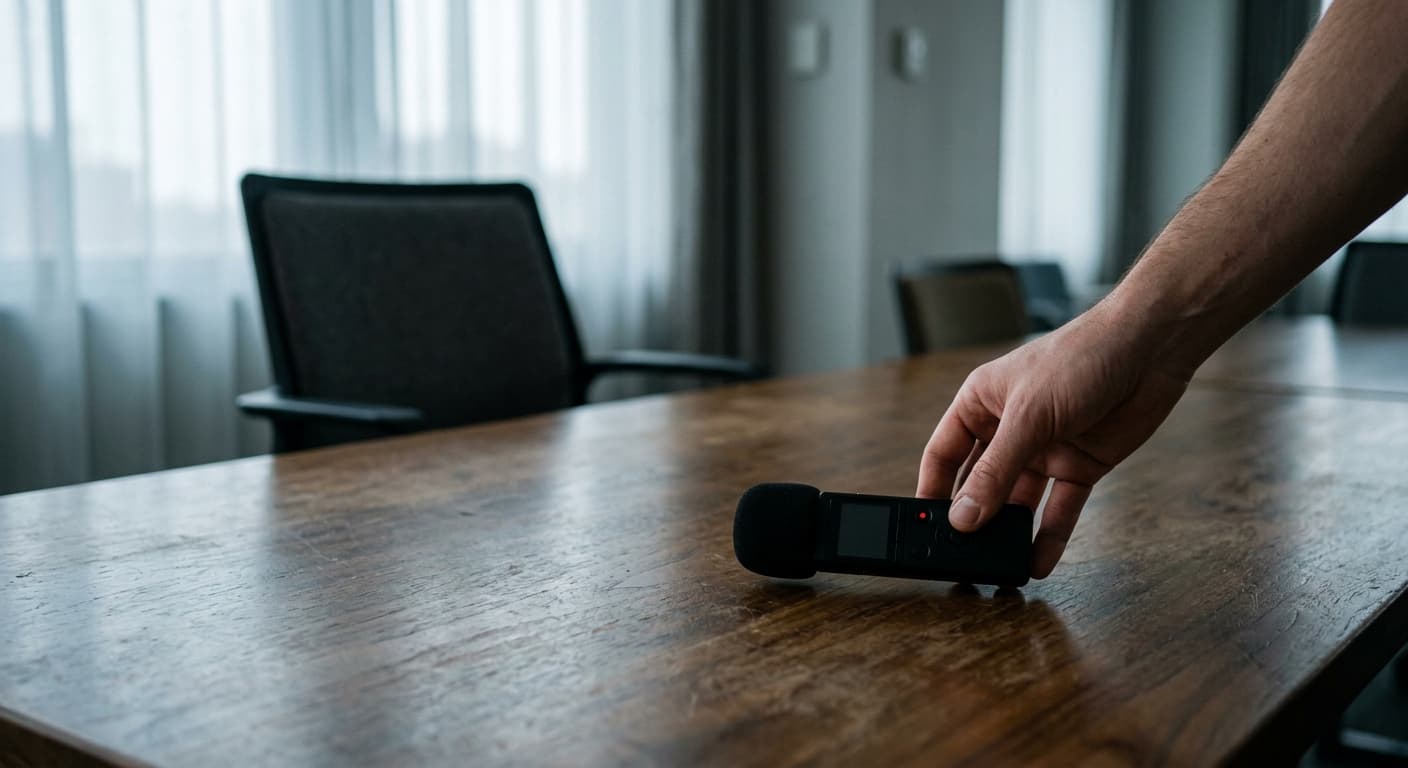
Mississippi is a one-party consent state for audio recording. Miss. Code Ann. section 41-29-531 permits any party to a phone call, in-person conversation, or electronic communication to record it without notifying other participants, as long as the recording serves no criminal or tortious purpose.
Mississippi is a one-party consent state for audio recording. Under Miss. Code Ann. section 41-29-531, you can legally record any phone call, in-person conversation, or electronic communication you participate in without notifying or getting permission from the other participants. The recording must not be made with criminal or tortious intent.
This guide explains how Mississippi's audio recording laws work, what types of audio communications are covered, when recording crosses the line into criminal conduct, and how to use lawful recordings as evidence. Whether you need to document a phone call for your records, preserve a conversation for a legal dispute, or record a meeting for accuracy, understanding the rules will keep you protected.
How Mississippi's One-Party Consent Law Works for Audio
The Statutory Framework
Mississippi's wiretapping and electronic surveillance laws are found in Title 41, Chapter 29, Article 7 of the Mississippi Code, spanning sections 41-29-501 through 41-29-537. The key provisions for audio recording are:
- Miss. Code Ann. section 41-29-505 sets out the judicial procedure for authorizing a law-enforcement wiretap order in a narcotics investigation; it does not itself prohibit interception. The general prohibition comes from Miss. Code Ann. section 41-29-533, below, which makes intercepting a communication in violation of the article a misdemeanor.
- Miss. Code Ann. section 41-29-531 creates the one-party consent exception, exempting any person who is a party to the communication or who has prior consent from at least one party.
- Miss. Code Ann. section 41-29-533 sets criminal penalties for violations.
- Miss. Code Ann. section 41-29-529 provides a civil cause of action for victims of illegal interception.
Under section 41-29-531(e), a person who is a party to a communication or who has received prior consent from one party is exempt from liability. The exception does not apply when the recording is made "for the purpose of committing any criminal or tortious act in violation of the Constitution or laws of the United States or of this state, or for the purpose of committing any other injurious act."
What "One-Party Consent" Means in Practice
One-party consent means exactly one person involved in the communication must know about and agree to the recording. That person is usually the one pressing the record button. You do not need to announce "this call is being recorded." You do not need verbal or written agreement from anyone else.
Here are common scenarios where one-party consent protects you:
- Recording a phone call you are on. Whether it is a landline, cell phone, or VoIP call through Zoom, Teams, or Google Meet, you can record the audio without telling the other party.
- Recording an in-person conversation you participate in. If you are having a face-to-face discussion, you can use your phone or a voice recorder to capture it.
- Authorizing someone else to record on your behalf. If you give a colleague permission to record a meeting you will attend, their recording is lawful because you (a party to the conversation) gave prior consent.
What One-Party Consent Does NOT Allow
The one-party consent exception has firm boundaries. You cannot:
- Record a conversation you are not part of and have no party's consent for. Placing a hidden recorder in a room to capture other people's private conversations is illegal.
- Intercept communications between two other people without either person's knowledge. Tapping a phone line or using software to capture someone else's calls violates the statute.
- Record with criminal or tortious intent. Even a lawfully situated recording becomes illegal if made for purposes of blackmail, extortion, harassment, or any other injurious act.
Types of Audio Communications Covered
Wire Communications
Mississippi's statute defines wire communications broadly under section 41-29-501. Wire communications include any communication made through wire, cable, or similar connection. This category covers:
- Traditional landline telephone calls
- Cordless phone calls
- Cellular phone calls
- Voice pagers
- Any mobile telephone communication
All wire communications fall under the one-party consent rule when you are a participant.
Oral Communications
Oral communications are spoken words uttered by a person who has a reasonable expectation that the conversation is not being intercepted. This covers face-to-face conversations in private settings such as:
- Meetings in offices or conference rooms
- Conversations in private residences
- Discussions in vehicles
- Any spoken exchange where the speaker reasonably expects privacy
If you are a participant in an oral communication, you can record it under the one-party consent rule. Conversations in public places where there is no reasonable expectation of privacy may be recorded by anyone, regardless of participation.
Electronic Communications
Section 41-29-501 defines electronic communications to include fax signals, computer-generated signals, scrambled or encrypted signals, and similar electronic transfers where the parties reasonably expect privacy. This covers:
- Voice over Internet Protocol (VoIP) calls, including Zoom, Microsoft Teams, Google Meet, FaceTime, and Skype
- Audio messages sent through messaging apps
- Podcast interviews and live audio streams where you are a participant
- Any audio transmitted electronically
Recording Phone Calls in Mississippi
Personal Phone Calls
You can record any personal phone call you participate in. This applies to:
- Calls made from or received on your cell phone
- Landline calls
- VoIP calls through services like Skype, WhatsApp, or Signal
- Video call audio through Zoom, Microsoft Teams, or Google Meet
You do not need to play a beep tone, announce the recording, or get permission. Simply being a party to the call satisfies the one-party consent requirement.
Business Phone Calls
Mississippi businesses can record calls for quality assurance, training, compliance, and dispute resolution purposes. The one-party consent rule means a business employee who participates in the call provides the necessary consent. Many businesses still announce recording as a best practice, using phrases like "This call may be recorded for quality assurance purposes."
Federal law under 18 U.S.C. section 2511 also follows a one-party consent standard, so Mississippi businesses operating under both state and federal jurisdiction face consistent rules.
Interstate and Cross-Border Calls
When you make a call from Mississippi to someone in another state, the recording laws of both states may apply. If you are in Mississippi calling someone in a two-party consent state like California, Florida, or Pennsylvania, the stricter law generally controls.
States requiring all-party consent for phone calls include California, Connecticut, Florida, Illinois, Maryland, Massachusetts, Montana, New Hampshire, Pennsylvania, and Washington. If you regularly record calls with people in these states, the safest approach is to inform all parties or get explicit consent.
For international calls, the laws of the foreign country may also apply. Many countries, including those in the European Union, have stricter privacy and recording laws than the United States.
Recording In-Person Conversations

When Audio Recording Is Legal
Mississippi law permits audio recording of in-person conversations when:
- You are a direct participant in the conversation
- You are in a public place where no reasonable expectation of privacy exists
- One of the parties to the conversation has given you prior consent to record
- The recording is not made with criminal or tortious intent
Public spaces like sidewalks, parks, government buildings, and retail stores generally carry no expectation of privacy for conversations held at normal volume. Recording in these locations does not require consent from anyone.
When Audio Recording Is Illegal
Recording in-person conversations becomes illegal when:
- You are not a party to the conversation and have no participant's consent
- You place a hidden recording device to capture conversations you are not part of
- You record with the intent to commit blackmail, extortion, harassment, or any other criminal or tortious act
- You record in a location where the speakers have a reasonable expectation of privacy and you are not participating
Recording in Your Own Home
You can record conversations in your own home if you are participating in them. This is common for documenting disputes with landlords, roommates, or service providers. However, you cannot plant a recording device and leave the room to capture conversations you are not part of. You also should not record guests in areas with a heightened privacy expectation, such as bathrooms or guest bedrooms.
The Criminal and Tortious Intent Limitation
Understanding the Restriction
Mississippi's one-party consent exception includes an important limitation that sets it apart from some other states. The recording must not be made "for the purpose of committing any criminal or tortious act." This is broader than just criminal intent. A tortious act is any wrongful act that could give rise to a civil lawsuit.
Under this standard, you cannot record for purposes of:
- Blackmail or extortion
- Facilitating any crime
- Harassment or intimidation
- Defamation or invasion of privacy
- Fraud or deception that causes harm
- Any other injurious act
What Constitutes Legitimate Purpose
If your intent is legitimate, the recording is lawful. Legitimate purposes include:
- Documenting a conversation for your personal records
- Preserving evidence for potential legal proceedings
- Ensuring accuracy of verbal agreements or instructions
- Recording customer service calls for dispute resolution
- Capturing evidence of threats, harassment, or discrimination directed at you
- Journalistic purposes and news gathering
Courts examine the purpose at the time of recording. If you made the recording for legitimate reasons, the fact that you later use it in a way the other party dislikes does not retroactively make the recording illegal.
Penalties for Illegal Audio Recording in Mississippi
Criminal Penalties
Under Miss. Code Ann. section 41-29-533, Mississippi has a tiered penalty structure:
| Offense | Classification | Penalty |
|---|---|---|
| Illegal interception of communications | Misdemeanor | Up to 1 year in county jail, up to $10,000 fine |
| Unauthorized disclosure of intercepted recording | Felony | Up to 5 years in state prison, up to $10,000 fine |
The distinction between interception and disclosure is significant. Illegally recording a conversation carries a lesser penalty than sharing the contents of that recording with others. This means that even if you accidentally record illegally, keeping the recording to yourself carries less legal risk than distributing it.
Civil Liability
Under Miss. Code Ann. section 41-29-529, victims of illegal recording can file a civil lawsuit and recover:
- Statutory damages of $100 per day for each day of violation or $1,000, whichever is greater
- Actual damages for any proven harm
- Punitive damages at the court's discretion
- Attorney fees and litigation costs
A good faith reliance on a court order or warrant is a complete defense to both civil and criminal liability.
Using Audio Recordings as Evidence in Mississippi
Admissibility Standards
Recordings made lawfully under Mississippi's one-party consent law are generally admissible as evidence in both state and federal courts. However, courts evaluate recordings based on several factors:
- Authentication. You must prove the recording is genuine and has not been altered. Courts typically require testimony about when, where, and how the recording was made.
- Relevance. The recording must relate to the issues in the case.
- Hearsay rules. Some statements captured in a recording may be excluded as hearsay, though many exceptions apply, including statements by a party opponent.
- Prejudicial vs. probative value. A judge may exclude a recording if its potential to unfairly influence the jury outweighs its evidentiary value.
Under the Mississippi Rules of Evidence, Rule 901 requires authentication as a condition precedent to admissibility. For audio recordings, this typically means testimony from the person who made the recording about the circumstances of its creation.
Criminal vs. Civil Cases
In criminal cases, illegally obtained recordings are typically inadmissible under the exclusionary rule and may result in separate criminal charges against the person who made the recording. In civil cases, rules can be more flexible, but Mississippi courts may still exclude illegally obtained evidence.
Best Practices for Preserving Audio Evidence
To maximize the evidentiary value of your recordings:
- Save the original file without editing or trimming. Courts look unfavorably on edited recordings.
- Note the date, time, location, and participants as soon as possible after the recording.
- Back up the recording in multiple locations. Save copies to cloud storage and a separate device.
- Do not share the recording publicly before legal proceedings if you plan to use it as evidence.
- Use a reliable recording device or app. Smartphone voice memo apps and dedicated digital recorders both work well.
Federal Law and Mississippi Audio Recording
Mississippi's recording laws exist alongside federal wiretapping law, codified at 18 U.S.C. sections 2510-2522. Federal law also follows a one-party consent standard under 18 U.S.C. section 2511(2)(d), meaning there is no conflict between Mississippi and federal requirements for most audio recording situations.
Federal law adds additional protections in certain contexts:
- Federal agencies conducting audio surveillance must comply with the federal Wiretap Act and may need court orders.
- Interstate communications may trigger federal jurisdiction.
- Audio communications stored on servers may also be protected under the Stored Communications Act, 18 U.S.C. section 2701.
For most individuals recording their own conversations in Mississippi, federal law does not impose any additional restrictions beyond what state law requires.
Specific Audio Recording Situations
Recording Customer Service Calls
You can record any customer service call you make or receive. As a participant, you provide the necessary one-party consent. Many companies also record their end of the call and announce it at the beginning, which provides mutual awareness.
Recording Conversations With Your Attorney
While you can legally record conversations with your attorney under one-party consent, doing so may affect the attorney-client privilege. If the recording is disclosed to a third party, it could waive the privilege for that conversation. Consult with your attorney before recording legal consultations.
Recording Conversations With Government Officials
You can record conversations with government employees at the local, state, and federal level when you are participating. This includes meetings with DHS workers, IRS agents, police officers, and other public servants. The Mississippi Open Meetings Act (section 25-41-1 et seq.) also permits recording of public government meetings.
Recording During Custody Disputes
Recording conversations with an ex-spouse or co-parent is legal when you are a participant. However, you should not record your children's private conversations when you are not present, use children as a means to secretly record the other parent, or record in a way that a family court judge would view as excessive surveillance.
More Mississippi Recording Laws
Audio Recording | Video Recording | Voyeurism & Hidden Cameras | Workplace Recording | Recording Police | Phone Call Recording | Security Cameras | Recording in Public | Landlord-Tenant | Dashcam Laws | Schools | Medical Recording
Back to Mississippi Recording Laws
More Mississippi Recording Topics
More Mississippi Laws
Frequently Asked Questions
Can I audio record a phone call in Mississippi without telling the other person?
Yes. Mississippi is a one-party consent state under Miss. Code Ann. section 41-29-531. As a participant in the phone call, you provide the necessary consent and do not need to inform or get permission from the other party.
Is it legal to record an in-person conversation in Mississippi?
Yes, as long as you are a participant in the conversation and are not recording with criminal or tortious intent. The one-party consent rule in section 41-29-531 applies to oral communications just as it does to phone calls.
What happens if I illegally record someone in Mississippi?
Illegal interception is a misdemeanor punishable by up to 1 year in county jail and a $10,000 fine. If you disclose the contents of an illegally intercepted recording, that is a felony carrying up to 5 years in state prison and a $10,000 fine. The victim can also sue for civil damages.
Can I use an audio recording as evidence in Mississippi court?
Yes, recordings made lawfully under the one-party consent rule are generally admissible. You must authenticate the recording by providing testimony about when, where, and how it was made. The recording must also be relevant to the case and not unfairly prejudicial.
Does Mississippi's audio recording law apply to VoIP and video call audio?
Yes. Mississippi Code section 41-29-501 defines protected communications to include electronic signals such as computer-generated signals. The audio portion of VoIP calls through Zoom, Teams, Google Meet, and similar services falls under the one-party consent rule.
Updates
Independently fact-checked against the cited primary sources; governing law re-checked for recent changes
Corrected the description of Miss. Code Ann. 41-29-505: it is the judicial procedure for authorizing a narcotics wiretap order, not the general prohibition on interception (that comes from 41-29-533).
Governing law re-checked for recent changes
Governing law re-checked for recent changes
Spoke propagation from parent hub: replaced all Justia URLs with legislature.ms.gov canonical source; replaced FindLaw Turner v. Driver citation with ca5.uscourts.gov (No. 15-11311) on police, public-recording, and video spokes; corrected is_gov flags for legislature.ms.gov entries in SourcesList components; added keywords and citations arrays to [dashcam](/dashboard-camera-legality-and-privacy-laws-is-it-illegal-to-use-dashcams-in-north-america), landlord-tenant, and schools spokes; updated workplace spoke NLRB section to cite Stericycle, Inc., 372 NLRB No. 113 (2023) as the controlling work-rule standard replacing Boeing. No fabricated cases (Lewis v. State, Glazner v. Glazner) or SB 2437 references found. No 47 CFR 64.501 or FCC 23-107 references found.
Reviewed and approved by an editor
The Law Behind This Article
This article rests on the statutory provisions below, held in our own legal record and retrieved from the official source. Tap a section to read the operative text.
Mississippi Code of 1972 Annotated
§ 41-29-531Exceptions to civil liability for violation of this article.In forcecited in 18 of our articles
This article shall not apply to: An operator of a switchboard, or an officer, employee or agent of a communication common carrier whose facilities are used in the transmission of a wire communication, intercepts a communication, or who discloses or uses an intercepted communication in the normal…
Official text (excerpt) · last checked 2026-08-31 · Read the full text in our law library · Verify at billstatus.ls.state.ms.us
Cited in 4 court opinions in our collectionLatest citing opinion in our collection: 2026
Opinions citing this section in our collection:
- Campbell v. MESC (Court of Appeals of Mississippi 2000, 782 So. 2d 751)“…le involved in the conversation are aware of the recording. Miss.Code Ann. § 41-29-531(e) (the statute does not apply to a con…”
- Brian S. Pope v. Deborah Baird Martin a/k/a Deborah L. Martin a/k/a Deborah Martin Pope a/k/a Deborah L. Pope (Court of Appeals of Mississippi 2023)“…vides a list of those who are immune from civil liability. Miss. Code Ann. § 41-29-531 (Rev. 2018). Relevant to the present ca…”
- Rosenberg (District Court, S.D. Mississippi 2026)“…olation of the Mississippi Security of Communications Act, Miss. Code Ann. §§ 41-29-531 to -537 (Count IX). See id. at 40-47.…”
Identified automatically from the court opinions citing this section — not a ranking of which case controls.
§ 41-29-501Definitions.In forcecited in 2 of our articles
As used in this article, the following terms shall have the meaning ascribed to them herein unless the context requires otherwise: “Aggrieved person” means a person who was a party to an intercepted wire, oral or other communication or a person against whom the interception was…
Official text (excerpt) · last checked 2020-07-08 · Read the full text in our law library
Cited in 6 court opinions in our collectionLatest citing opinion in our collection: 2023
Opinions citing this section in our collection:
- Ott v. State (Mississippi Supreme Court 1998, 722 So. 2d 576)“…erception under circumstances justifying that expectation." Miss.Code Ann. § 41-29-501(j) (Supp.1997). ¶ 28. According to Ot…”
- Herman Jackson, Jr. v. State of Mississippi (Court of Appeals of Mississippi 2018, 263 So. 3d 1003)“…rception under circumstances justifying that expectation.” Miss. Code Ann. § 41-29-501(j) (Rev. 2013). ¶16. In United State…”
- Campbell v. MESC (Court of Appeals of Mississippi 2000, 782 So. 2d 751)“…nversations are face-to-face or electronically transmitted. Miss.Code Ann. § 41-29-501(a), (g), (j), (n) & § 41-29-529 (Supp.1…”
Identified automatically from the court opinions citing this section — not a ranking of which case controls.
§ 41-29-505Judicial order authorizing interception of communications.In force
A judge of competent jurisdiction in the circuit court district of the location where the interception of wire, oral or other communications is sought, or a circuit court district contiguous to such circuit court district, may issue an order authorizing interception of wire, oral or other…
Official text (excerpt) · last checked 2020-07-08 · Read the full text in our law library
§ 41-29-529Civil action for violation of this article.In forcecited in 6 of our articles
(1) A person whose wire, oral or other communication is intercepted, disclosed or used in violation of this article shall have a civil cause of action against any person who intercepts, discloses or uses or procures another person to intercept, disclose or use the communication, and is entitled to…
Official text (excerpt) · last checked 2020-07-08 · Read the full text in our law library
Cited in 1 court opinions in our collectionLatest citing opinion in our collection: 2023
Opinions citing this section in our collection:
- Brian S. Pope v. Deborah Baird Martin a/k/a Deborah L. Martin a/k/a Deborah Martin Pope a/k/a Deborah L. Pope (Court of Appeals of Mississippi 2023)“…provides civil recourse for violation of the statute. See Miss. Code Ann. § 41-29-529 (Rev. 2018).13 Just like the federal s…”
Identified automatically from the court opinions citing this section — not a ranking of which case controls.
§ 41-29-533Penalties for violations of this article.In forcecited in 4 of our articles
(1) Any person who knowingly and intentionally possesses, installs, operates or monitors an electronic, mechanical or other device in violation of this article shall be guilty of a misdemeanor and, upon conviction thereof, shall be sentenced to not more than one (1) year in the county jail or fined…
Official text (excerpt) · last checked 2020-07-08 · Read the full text in our law library
United States Code Title 18
§ 2511Interception and disclosure of wire, oral, or electronic communications prohibitedIn forcecited in 418 of our articles
Except as otherwise specifically provided in this chapter any person who— intentionally intercepts, endeavors to intercept, or procures any other person to intercept or endeavor to intercept, any wire, oral, or electronic communication; intentionally uses, endeavors to use, or procures any other person to use or endeavor to use any electronic, mechanical, or other device to intercept any oral communication when— such device is affixed to, or otherwise transmits a signal through, a wire, cable, or other like connection used in wire communication; or such device transmits communications by radio, or interferes with the transmission of such communication; or such person knows, or has reason to know, that such device or any component thereof has been sent through the mail or transported in interstate or foreign commerce; or such use or endeavor to use (A) takes place on the premises of any business or other commercial establishment the operations of which affect interstate or foreign commerce; or (B) obtains or is for the purpose of obtaining information relating to the operations of any business or other commercial establishment the operations of which affect interstate or foreign…
Official text (excerpt) · last checked 2026-08-28 · Read the full text in our law library · Verify at uscode.house.gov
Cited in 2,045 court opinions in our collectionLatest citing opinion in our collection: 2026
In the courts (editorial summary, independently checked):Griggs-Ryan v. Smith (1990) applied the Section 2511(2)(d) prior-consent exception, treating a tenant repeatedly told that all incoming calls were taped as having impliedly consented. United States v. United States District Court (1972) read the then-current Section 2511(3) as conferring no presidential surveillance power.
Opinions citing this section in our collection:
- Mitchell v. Forsyth (Supreme Court of the United States 1985, 472 U.S. 511)✓The Attorney General authorized a warrantless 1970 national security wiretap that caught the plaintiff's calls; the Court held the since-repealed Section 2511(3) disclaimer left the tap lawful under Title III, and that Mitchell had qualified immunity.
- United States v. United States District Court for the Eastern District of Michigan (Supreme Court of the United States 1972, 407 U.S. 297)✓The Attorney General approved warrantless wiretaps on members of a domestic group accused of bombing a CIA office; the Court read Section 2511(3) as a congressional disclaimer conferring no surveillance power, then held the Fourth Amendment required prior judicial approval.
- Forsyth v. Barr (Court of Appeals for the Fifth Circuit 1994, 19 F.3d 1527)✓Dallas police used, in an internal affairs probe of an officer, calls private parties allegedly intercepted illegally; assuming that was unlawful, the Fifth Circuit held Section 2517(1) and (2) allowed the disclosure and use, defeating the Section 2511(1)(c) and (d) claims.
Identified automatically from the court opinions citing this section — not a ranking of which case controls.
§ 2701Unlawful access to stored communicationsIn forcecited in 19 of our articles
Except as provided in subsection (c) of this section whoever— intentionally accesses without authorization a facility through which an electronic communication service is provided; or intentionally exceeds an authorization to access that facility; and thereby obtains, alters, or prevents authorized access to a wire or electronic communication while it is in electronic storage in such system shall be punished as provided in subsection (b) of this section. The punishment for an offense under subsection (a) of this section is— if the offense is committed for purposes of commercial advantage, malicious destruction or damage, or private commercial gain, or in furtherance of any criminal or tortious act in violation of the Constitution or laws of the United States or any State— a fine under this title or imprisonment for not more than 5 years, or both, in the case of a first offense under this subparagraph; and a fine under this title or imprisonment for not more than 10 years, or both, for any subsequent offense under this subparagraph; and in any other case— a fine under this title or imprisonment for not more than 1 year or both, in the case of a first offense under this paragraph;…
Official text (excerpt) · last checked 2026-07-28 · Read the full text in our law library · Verify at uscode.house.gov
Cited in 724 court opinions in our collectionLatest citing opinion in our collection: 2026
Opinions citing this section in our collection:
- United States v. Warshak (Court of Appeals for the Sixth Circuit 2010, 631 F.3d 266)“…ied in good faith on the Stored Communications Act (“SCA”), 18 U.S.C. §§ 2701 et seq., a statute that allows the gove…”
- Guest v. Leis (Court of Appeals for the Sixth Circuit 2001, 255 F.3d 325)“…7 *340 In their brief, plaintiffs mention in passing 18 U.S.C. § 2701 , which prohibits intentional unlawful…”
- City of Ontario v. Quon (Supreme Court of the United States 2010, 560 U.S. 746)“…Raising claims under Rev. Stat. §1979, 42 U. S. C. §1983; 18 U. S. C. §2701 et seq., popularly known as the Stored…”
Identified automatically from the court opinions citing this section — not a ranking of which case controls.
Search our full record of US law — 2.1 million sections, every state + federal →
Sources and References
- Miss. Code Ann. section 41-29-531 - One-Party Consent Exception(law.justia.com)
- Miss. Code Ann. section 41-29-505 - Narcotics Wiretap Court-Order Procedure(law.justia.com)
- Miss. Code Ann. section 41-29-501 - Definitions(law.justia.com)
- Miss. Code Ann. section 41-29-533 - Penalties(law.justia.com)
- Miss. Code Ann. section 41-29-529 - Civil Action(law.justia.com)
- 18 U.S.C. section 2511 - Federal Wiretap Act(law.cornell.edu)
- Mississippi Legislature Official Site(legislature.ms.gov).gov
- Mississippi Rules of Evidence(courts.ms.gov).gov
- RCFP Reporters Recording Guide - Mississippi(rcfp.org)
- 18 U.S.C. section 2701 - Stored Communications Act(law.cornell.edu)