
Kansas
Kansas Audio Recording Laws
Independently fact-checked against primary sources (last audited August 15, 2026). · Reviewed by the RecordingLaw editorial team. · Law checked current as of August 15, 2026. · 5 primary sources cited on this page. How we verify our legal content
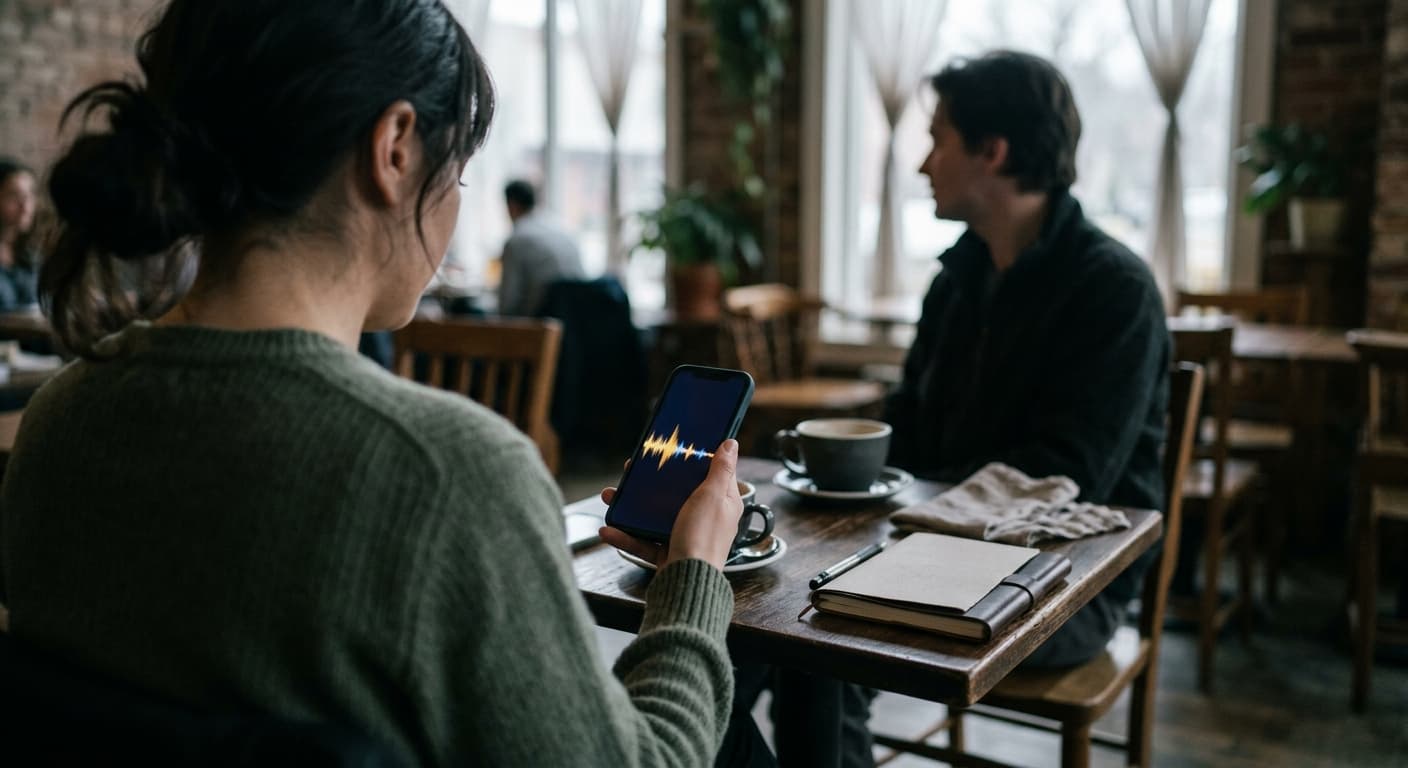
Kansas is a one-party consent state for audio recording. K.S.A. 21-6101 permits any participant in a phone call or in-person conversation to record it without notifying the other parties. You do not need anyone else's permission as long as you are part of the conversation.
Kansas permits audio recording under a one-party consent framework. Under K.S.A. 21-6101, you can legally record any phone call or in-person conversation as long as you are a participant or have obtained consent from at least one person involved. You do not need to inform the other parties that a recording is taking place.
This guide covers the specific statutes governing audio recording in Kansas, criminal and civil penalties for violations, how recordings are treated as evidence in court, and practical guidance for common recording situations.
Kansas One-Party Consent Law Explained
The Core Statute: K.S.A. 21-6101
Kansas addresses audio recording under its "Breach of Privacy" statute, K.S.A. 21-6101. The law makes it a crime to knowingly and without lawful authority engage in several categories of prohibited conduct related to audio interception and recording.
Subsection (a)(1) prohibits intercepting telephone, telegraph, or wireless communications without the consent of the sender or receiver. This covers wiretapping of phone calls, cell phone calls, and VoIP communications.
Subsection (a)(3) prohibits entering a private place with intent to listen surreptitiously to private conversations or discussions. This targets physical eavesdropping where someone sneaks into a location to overhear others.
Subsection (a)(4) prohibits installing or using any device to record, amplify, or transmit sounds originating in a private place without the consent of the person or persons entitled to privacy. This covers hidden microphones, covert recording devices, and surveillance equipment.
Subsection (a)(5) prohibits installing or using a device to intercept telephone or wireless communications without the consent of the person in control of those communication facilities.
The Kansas Supreme Court has consistently interpreted this statute to require consent from only one party to the conversation. In State v. Roudybush, 235 Kan. 834, 686 P.2d 100 (1984), the court confirmed that a participant in a communication may record it without informing the other parties, because the participant's own knowledge of the recording satisfies the consent requirement. As a participant, your awareness of the recording is sufficient.
What One-Party Consent Means in Practice
Under Kansas's one-party consent framework, your knowledge that you are recording a conversation is sufficient to make that recording lawful. This means:
- You can record any phone call you are part of without telling the other person
- You can record in-person conversations you participate in without announcing the recording
- You can use a voice recorder, smartphone app, or any other device to capture conversations you are involved in
- A third party can record a conversation if at least one participant has given that third party consent to do so
The law draws a firm line between recording conversations you are part of (legal) and secretly recording conversations between other people that you are not part of (illegal).
How Kansas Defines "Consent"
Kansas's statute does not require written or verbal consent. The consent of one party to the communication is enough. When you record a conversation you are participating in, your own awareness of the recording constitutes consent. No additional notice, disclosure, or agreement from the other parties is necessary.
This is different from two-party consent states like California, Florida, and Pennsylvania, where every participant must agree before a recording can begin.
How Kansas Defines "Private Place"
K.S.A. 21-6101(f) defines a "private place" as a location where a person may reasonably expect to be safe from uninvited intrusion or surveillance. This definition is important because the prohibition in subsection (a)(4) applies specifically to recording in private places.
Places that typically qualify as private include:
- Private homes and residences
- Hotel rooms
- Bathrooms and changing areas
- Private offices (when the door is closed)
- Medical examination rooms
Places generally not considered private under this statute:
- Public streets and sidewalks
- Parks and public squares
- Retail stores open to the public
- Government buildings open to the public
- Common areas of workplaces
Types of Audio Recording Covered
In-Person Conversations
Subsections (a)(3) and (a)(4) of K.S.A. 21-6101 cover audio recording of in-person conversations. You can legally record face-to-face conversations in Kansas when:
- You are an active participant in the conversation
- At least one participant has consented to the recording
- The conversation takes place in any location, whether public or private
You cannot legally record in-person conversations when:
- You are not a participant and no participant has consented
- You plant a recording device in a private place and leave to capture conversations you are not part of
- You enter a private place with the intent to listen surreptitiously to others' conversations
Telephone and VoIP Calls
Subsections (a)(1) and (a)(5) cover telephone, wireless, and electronic communications. Under one-party consent, you can record:
- Landline phone calls you participate in
- Cell phone calls you are part of
- VoIP calls through platforms like Zoom, Microsoft Teams, Google Meet, and Skype
- Video calls that include audio components
As a participant in the call, your knowledge of the recording satisfies the consent requirement.
Electronic Communications
While K.S.A. 21-6101 focuses primarily on voice communications, the reference to "wireless communications" in subsection (a)(1) extends to modern electronic transmission methods. The interception of electronic communications without proper consent falls within the statute's scope.
Voicemail and Stored Communications
Accessing someone else's voicemail or stored audio messages without authorization may violate both state and federal law. The federal Stored Communications Act (18 U.S.C. 2701) prohibits unauthorized access to stored electronic communications and works alongside Kansas state provisions.
Criminal Penalties for Illegal Audio Recording

Kansas treats illegal audio interception as a criminal offense under K.S.A. 21-6101. The penalties for audio-specific violations are consistent across subsections (a)(1) through (a)(5).
Classification and Sentencing
Violations of subsections (a)(1) through (a)(5) are classified as a Class A nonperson misdemeanor under Kansas law. The maximum penalties include:
- Up to 1 year in the county jail
- A fine of up to $2,500
- Probation or supervised release as an alternative to incarceration
Kansas sentencing guidelines for misdemeanors are found in K.S.A. 21-6611. A Class A nonperson misdemeanor is the most serious misdemeanor classification in Kansas.
Divulging Intercepted Communications
Subsection (a)(2) makes it separately illegal to divulge the contents of communications that were obtained through illegal interception. This means that even if you did not personally make the illegal recording, sharing or distributing its contents can result in criminal liability under the same Class A nonperson misdemeanor classification.
Penalty Summary Table
| Offense | Subsection | Classification | Maximum Penalty |
|---|---|---|---|
| Intercepting phone/wireless communications without consent | (a)(1) | Class A nonperson misdemeanor | 1 year jail, $2,500 fine |
| Divulging illegally intercepted communications | (a)(2) | Class A nonperson misdemeanor | 1 year jail, $2,500 fine |
| Entering private place to eavesdrop | (a)(3) | Class A nonperson misdemeanor | 1 year jail, $2,500 fine |
| Using devices to record in private places without consent | (a)(4) | Class A nonperson misdemeanor | 1 year jail, $2,500 fine |
| Intercepting communications without consent of facility controller | (a)(5) | Class A nonperson misdemeanor | 1 year jail, $2,500 fine |
Civil Liability for Illegal Audio Recording
Beyond criminal prosecution, victims of illegal audio recording in Kansas can pursue civil remedies under K.S.A. 22-2518.
Statutory Damages
K.S.A. 22-2518 provides for the following civil remedies:
- Actual damages, with a statutory minimum of $100 per day of violation or $1,000, whichever is greater
- Punitive damages at the court's discretion
- Reasonable attorney fees and litigation costs
The statutory minimum of $1,000 means that victims are guaranteed a meaningful recovery even when actual financial losses are difficult to quantify.
Good Faith Defense
A person who acted in good faith reliance on a court order authorizing interception has a complete defense against both criminal prosecution and civil liability. This defense protects law enforcement officers and others who rely on judicial authorization for their recording activities.
Statute of Limitations
Civil actions for illegal recording in Kansas must be filed within the applicable statute of limitations. Under Kansas civil procedure rules, the general limitations period for personal injury and privacy torts is two years from the date the violation is discovered or should have been discovered.
Audio Recordings as Evidence in Kansas Courts
General Admissibility
Audio recordings made legally under Kansas's one-party consent law are generally admissible as evidence in court proceedings. To admit a recording, the offering party must establish:
- Authentication: Proof that the recording is genuine and has not been tampered with or altered
- Relevance: The recording must relate to a matter at issue in the case
- Identification of speakers: The voices on the recording must be identified through testimony or other evidence
- Completeness: Courts may require the full recording to be made available, not just selected portions
Kansas Rules of Evidence
Kansas adopted rules modeled on the Federal Rules of Evidence. Under K.S.A. 60-456, authentication requires sufficient evidence to support a finding that the recording is what the offering party claims it to be. This can be accomplished through testimony from the person who made the recording, voice identification by someone familiar with the speakers, or forensic analysis.
Criminal Cases
In criminal proceedings, illegally obtained recordings are generally inadmissible. Courts will suppress recordings made in violation of K.S.A. 21-6101 when the defendant files an appropriate motion. Prosecutors who present illegally obtained audio evidence risk having convictions overturned on appeal.
Civil Cases
In civil litigation, Kansas courts apply the same general admissibility rules. However, courts retain discretion to exclude evidence under K.S.A. 60-445, which allows exclusion when the evidence's probative value is substantially outweighed by the risk of unfair and harmful surprise to a party who has not had a reasonable opportunity to anticipate that the evidence would be offered.
Family Court Proceedings
Audio recordings are frequently offered as evidence in Kansas family law cases, including divorce, custody, and protective order proceedings. Kansas courts generally accept legally obtained one-party consent recordings in these matters. Common uses include:
- Documenting verbal agreements about child custody or property
- Proving harassment, threats, or domestic abuse
- Recording conversations about finances during divorce proceedings
- Capturing evidence of parental alienation or neglect
Federal Law and Kansas Audio Recording
The Federal Wiretap Act
The federal Wiretap Act (18 U.S.C. 2511) follows a one-party consent model, which aligns with Kansas's approach. Under federal law, recording a conversation is legal as long as at least one party consents. Since Kansas's one-party consent standard matches the federal baseline, recordings legal under Kansas law are also legal under federal law.
Federal penalties for illegal wiretapping are significantly harsher than Kansas state penalties. A federal wiretap violation can result in up to 5 years in federal prison and fines up to $250,000.
The Stored Communications Act
The federal Stored Communications Act (18 U.S.C. 2701) prohibits unauthorized access to stored electronic communications. This applies when someone accesses another person's voicemail, saved audio files, or cloud-stored recordings without permission.
When Federal and State Law Interact
Federal wiretap law sets a floor for privacy protections. States can impose stricter requirements but cannot provide less protection than the federal standard. Since Kansas and federal law both follow one-party consent, there is no conflict for audio recordings made within Kansas.
Recording Across State Lines

Kansas borders four states, each with its own recording consent requirements. When you record a call involving someone in another state, you should consider which state's law applies.
Neighboring States and Their Consent Requirements
| State | Consent Requirement | Key Statute |
|---|---|---|
| Colorado | One-party consent | C.R.S. 18-9-303 |
| Missouri | One-party consent | Mo. Rev. Stat. 542.402 |
| Nebraska | One-party consent | Neb. Rev. Stat. 86-702 |
| Oklahoma | One-party consent | 13 Okla. Stat. 176.4 |
Kansas is fortunate in that all four of its neighboring states also follow one-party consent. This means cross-border calls with people in Colorado, Missouri, Nebraska, and Oklahoma are straightforward from a legal perspective.
Calls to Two-Party Consent States
When calling someone in a two-party consent state such as California, Florida, Illinois, or Pennsylvania, the stricter law may apply. To protect yourself:
- Determine where the other party is located before recording
- If the other party is in a two-party consent state, consider informing them that the call is being recorded
- Get explicit verbal consent at the start of the call when in doubt
- The safest approach is to announce recording and get verbal acknowledgment
Exemptions Under Kansas Law
K.S.A. 21-6101 provides several exemptions from criminal liability for audio interception:
Party Line Exception
Messages overheard through a regularly installed instrument on a telephone party line or extension are not covered under subsection (a)(1). This exemption recognizes that party lines and extensions were designed for shared use, and overhearing on such equipment is incidental rather than intentional interception.
Service Provider Exception
Telephone utility operators, interactive computer service providers, radio common carriers, telecommunications carriers, cable services, and satellite providers are exempt when acting in the normal course of their duties. This allows communications companies to monitor their networks for maintenance, quality control, and legal compliance without violating the statute.
Law Enforcement Exception
While K.S.A. 21-6101 does not explicitly detail law enforcement exceptions in its text, Kansas law permits court-ordered wiretapping and electronic surveillance through separate provisions. Law enforcement officers acting under valid court orders are not subject to criminal liability for audio interception conducted within the scope of that authorization.
AI Recording and Transcription Tools
The rise of AI-powered recording tools raises new considerations under Kansas audio recording law.
Legal Status of AI Tools in Kansas
Because Kansas follows one-party consent, you can use AI transcription services, meeting assistants, and voice recorders to capture conversations you participate in. This includes:
- AI meeting bots that join video calls (such as Otter.ai, Fireflies, or similar tools)
- Smartphone apps that record and transcribe calls
- Wearable AI voice recorders like Plaud
- Built-in transcription features in Zoom, Microsoft Teams, and Google Meet
Wearable Recording Devices
Kansas's one-party consent law under K.S.A. 21-6101 permits the use of wearable recording devices like AI voice recorders and smart glasses to record conversations you participate in. The person wearing the device satisfies the one-party consent requirement.
For more information on wearable technology and recording rights, see our guide on wearable recording devices at work.
Practical Considerations
- Data security matters. AI services may store recordings on third-party servers. Understand where your audio data is stored, how long it is retained, and who has access.
- Review transcripts for accuracy. AI transcription is not perfect. Errors in automated transcripts could be problematic if the transcript is later used as evidence.
- Consider notice even when not required. While one-party consent means you do not have to disclose AI recording, doing so can maintain professional relationships and avoid disputes.
Common Audio Recording Scenarios
Can I Record a Conversation With My Lawyer?
Yes. As a participant in the conversation, you can record discussions with your attorney under one-party consent. The attorney-client privilege protects the contents of the conversation regardless of whether it is recorded. However, your lawyer may have ethical rules regarding recording and may object.
Can I Record Customer Service Calls?
Yes. When you call a business and hear a message stating "this call may be recorded," that is the business exercising its one-party consent right. You have the same right as the other party on the call. You can record any customer service call you participate in.
Can I Record My Boss or Coworker?
Yes. As a one-party consent state, Kansas allows you to record conversations with supervisors, HR representatives, and coworkers as long as you are a participant. This can be valuable for documenting workplace harassment, performance reviews, or verbal agreements. However, your employer may have internal policies restricting recording devices.
Can I Record My Landlord?
Yes. You can record conversations with your landlord as long as you are present and participating. This is useful for documenting verbal agreements about repairs, disputes about lease terms, or evidence of harassment. For more details, see our guide on Kansas landlord-tenant recording laws.
Can I Record at a Government Meeting?
Yes. Kansas's Open Meetings Act (K.S.A. 75-4318) specifically provides that recording devices cannot be prohibited at open public meetings. You can record city council meetings, county commission meetings, school board meetings, and other public proceedings.
More Kansas Recording Laws
Audio Recording | Video Recording | Voyeurism Laws | Workplace Recording | Recording Police | Phone Call Recording | Security Cameras | Recording in Public | Landlord-Tenant Recording | Dashcam Laws | School Recording | Medical Recording
More Kansas Recording Topics
More Kansas Laws
Frequently Asked Questions
Is it legal to audio record a conversation in Kansas without telling the other person?
Yes. Kansas is a one-party consent state under K.S.A. 21-6101. As a participant in the conversation, your own knowledge of the recording satisfies the consent requirement. You do not need to inform or get permission from the other person. This applies to both in-person conversations and phone calls.
What are the penalties for illegally recording someone in Kansas?
Illegal audio recording is a Class A nonperson misdemeanor under K.S.A. 21-6101, carrying up to 1 year in jail and a fine of up to $2,500. Victims can also pursue civil damages under K.S.A. 22-2518, with a statutory minimum of $1,000, plus punitive damages and attorney fees.
Can an illegally recorded conversation be used as evidence in a Kansas court?
Generally, no. Kansas courts will suppress audio recordings obtained in violation of K.S.A. 21-6101 when a proper motion is filed. Illegally obtained recordings are typically inadmissible in both criminal and civil proceedings, and using them can result in separate criminal charges against the person who made the recording.
Does Kansas one-party consent apply to phone calls with people in other states?
Kansas law governs recordings made within Kansas. When calling someone in a two-party consent state like California, Florida, or Pennsylvania, the stricter state law may apply. The safest approach is to inform the other party and get consent when calling someone in a stricter state. All four states bordering Kansas (Colorado, Missouri, Nebraska, Oklahoma) also follow one-party consent.
Can I use an AI voice recorder or transcription app to record conversations in Kansas?
Yes. Because Kansas follows one-party consent, you can use AI transcription services, smartphone recording apps, wearable voice recorders like Plaud, and meeting assistant tools to capture conversations you participate in. Your participation in the conversation satisfies the legal consent requirement regardless of the recording technology used.
Updates
Independently fact-checked against the cited primary sources; governing law re-checked for recent changes
Corrected the K.S.A. 60-445 exclusion standard: the statute's ground for exclusion is unfair and harmful surprise to an unprepared party, not the broader FRE-403-style 'unfair prejudice, confusion of issues, or potential to mislead' test the article stated.
Governing law re-checked for recent changes
Removed an unsupported clause added to the K.S.A. 21-6101(f) "private place" definition; the statute's official text (ksrevisor.gov) contains only the "safe from uninvited intrusion or surveillance" language.
Governing law re-checked for recent changes
Added State v. Roudybush, 235 Kan. 834, 686 P.2d 100 (1984) as the controlling one-party-consent precedent in the case-law section. Confirmed K.S.A. 21-6101 penalty structure (Class A nonperson misdemeanor, 1 yr / $2,500) and K.S.A. 22-2518 civil remedy. Added UpdatesLog.
Reviewed and approved by an editor
The Law Behind This Article
This article rests on the statutory provisions below, held in our own legal record and retrieved from the official source. Tap a section to read the operative text.
Kansas Statutes Annotated, Chapter 21: CRIMES AND PUNISHMENTS
§ 21-6101Breach of privacy.In forcecited in 26 of our articles
(a) Breach of privacy is knowingly and without lawful authority: (1) Intercepting, without the consent of the sender or receiver, a message by telephone, telegraph, letter or other means of private communication; (2) divulging, without the consent of the sender or receiver, the existence or contents of such message if such person knows that the message was illegally intercepted, or if such person illegally learned of the message in the course of employment with an agency in transmitting such message; (3) entering with intent to listen surreptitiously to private conversations in a private place or to observe the personal conduct of any other person or persons entitled to privacy therein; (4) installing or using outside or inside a private place any device for hearing, recording, amplifying or broadcasting sounds originating in such place, which sounds would not ordinarily be audible or comprehensible without the use of such device, without the consent of the person or persons entitled to privacy therein; (5) installing or using any device or equipment for the interception of any telephone, telegraph or other wire or wireless communication without the consent of the person in…
Official text (excerpt) · last checked 2026-08-31 · Read the full text in our law library · Verify at ksrevisor.gov
Cited in 8 court opinions in our collectionLatest citing opinion in our collection: 2026
In the courts (editorial summary, independently checked):Recent Kansas decisions construe the image-dissemination subsection, K.S.A. 21-6101(a)(8), not the interception subsections. State v. Ivy (2025) held a reasonable expectation of privacy under that subsection has a subjective and an objective component. State v. Jamil (2026), unpublished, found disseminating needs no jury definition.
Opinions citing this section in our collection:
- State v. Ivy (Court of Appeals of Kansas 2025)✓Ivy posted on Snapchat a sexual video his ex-girlfriend had recorded and texted him during their relationship; the court applied a subjective and objective two-part test and held a jury could find she kept a reasonable expectation of privacy, affirming the conviction.
- In re Belcher (Supreme Court of Kansas 2024, 552 P.3d 1213)“…deotape, photograph, film or image obtained in violation of K.S.A. 21-6101(a)(6) or (a)(8), and amendments…”
- State v. Jamil (Court of Appeals of Kansas 2026)✓Jamil secretly filmed a woman undressed and unconscious at his home, then sent the videos to her boyfriend; the court held that sharing with a single recipient can be disseminating under K.S.A. 21-6101(a)(8) and that intent to harass could be inferred from his conduct.
Identified automatically from the court opinions citing this section — not a ranking of which case controls.
§ 21-6611Fines; crimes committed on or after July 1, 1993.In forcecited in 4 of our articles
(a) A person who has been convicted of a felony may, in addition to the sentence authorized by law, be ordered to pay a fine which shall be fixed by the court as follows: (1) For any off-grid felony crime, or any felony ranked in severity level 1 of the drug grid committed prior to July 1, 2012, or in severity levels 1 or 2 of the drug grid committed on or after July 1, 2012, as provided in K.S.A. 21-6805, and amendments thereto, a sum not exceeding $500,000; (2) for any felony ranked in severity levels 1 through 5 of the nondrug grid as provided in K.S.A. 21-6804, and amendments thereto, or in severity levels 2 or 3 of the drug grid committed prior to July 1, 2012, or in severity levels 3 or 4 of the drug grid committed on or after July 1, 2012, as provided in K.S.A. 21-6805, and amendments thereto, a sum not exceeding $300,000; and (3) for any felony ranked in severity levels 6 through 10 of the nondrug grid as provided in K.S.A. 21-6804, and amendments thereto, or in severity level 4 of the drug grid committed prior to July 1, 2012, or in severity level 5 of the drug grid committed on or after July 1, 2012, as provided in K.S.A.
Official text (excerpt) · last checked 2026-07-29 · Read the full text in our law library · Verify at ksrevisor.gov
Cited in 6 court opinions in our collectionLatest citing opinion in our collection: 2026
Opinions citing this section in our collection:
- Heinzman v. State (Court of Appeals of Kansas 2026)“…olation when, in fact, the maximum amount was $300,000. See K.S.A. 21-6611(a)(2). She also…”
- State v. Abell (Court of Appeals of Kansas 2026)“…hose two cases for the appropriate fines in compliance with K.S.A. 21-6611(a)(3), and for the district court to de…”
- State v. Washington (Court of Appeals of Kansas 2025)“…nclude fines, in addition to or instead of jail time, under K.S.A. 21-6611. Washington's argument misappl…”
Identified automatically from the court opinions citing this section — not a ranking of which case controls.
Kansas Statutes Annotated, Chapter 22: CRIMINAL PROCEDURE
§ 22-2518Same; civil action for damages; defense available in civil and criminal actions.In forcecited in 11 of our articles
(1) Any person whose wire, oral or electronic communication is intercepted, disclosed or used in violation of this act shall have a civil cause of action against any person who intercepts, discloses or uses, or procures any other person to intercept, disclose or use, such communications, and shall be entitled to recover from any such person: (a) Actual damages, but not less than liquidated damages computed at the rate of $100 a day for each day of violation or $1,000, whichever is greater; (b) punitive damages; and (c) reasonable attorneys' fees and other litigation costs reasonably incurred. (2) A good faith reliance by any person on a court order authorizing the interception of any wire, oral or electronic communication shall constitute a complete defense in any civil or criminal action brought against such person based upon such interception.
Official text (excerpt) · last checked 2026-07-29 · Read the full text in our law library · Verify at ksrevisor.gov
Cited in 6 court opinions in our collectionLatest citing opinion in our collection: 2024
Opinions citing this section in our collection:
- State v. Gibson (Supreme Court of Kansas 1994, 255 Kan. 474)“…f unlawfully intercepted *481 wire or oral communications. K.S.A. 22-2518 establishes a civil cause of action for…”
- Fields v. Atchison, Topeka, & Santa Fe Railway Co. (District Court, D. Kansas 1997, 985 F. Supp. 1308)“…18 U.S.C. § 2510 et seq., and the Kansas Wiretap Act, K.S.A. 22-2518, and invaded their privacy by intercept…”
- Banks v. Opat (District Court, D. Kansas 2021)“…ete defense against any civil action. 18 U.S.C. § 2520(d); K.S.A. § 22-2518(2). “To be in good faith, the officers’…”
Identified automatically from the court opinions citing this section — not a ranking of which case controls.
Kansas Statutes Annotated, Chapter 60: PROCEDURE, CIVIL
§ 60-445Discretion of judge to exclude admissible evidence.In forcecited in 2 of our articles
Except as in this article otherwise provided, the judge may in his or her discretion exclude evidence if he or she finds that its probative value is substantially outweighed by the risk that its admission will unfairly and harmfully surprise a party who has not had reasonable opportunity to anticipate that such evidence would be offered.
Official text (excerpt) · last checked 2026-07-29 · Read the full text in our law library · Verify at ksrevisor.gov
Cited in 323 court opinions in our collectionLatest citing opinion in our collection: 2026
Opinions citing this section in our collection:
- State v. Robinson (Supreme Court of Kansas 2015, 303 Kan. 11)“…admitting evidence of uncharged homicides in violation of K.S.A. 60-445 and K.S.A. 60-455; (4) allowing the med…”
- State v. Richmond (Supreme Court of Kansas 2009, 289 Kan. 419)“…d now argues that the testimony was inadmissible because of K.S.A. 60-445, 60-447, and 60-455. The State g…”
- State v. Prine (Supreme Court of Kansas 2013, 297 Kan. 460)“…55(d) reads in pertinent part: “(d) Except as provided in K.S.A. 60-445, and amendments thereto, in a criminal…”
Identified automatically from the court opinions citing this section — not a ranking of which case controls.
§ 60-456Testimony in form of opinion or inferences.In forcecited in 2 of our articles
(a) If the witness is not testifying as an expert, the testimony in the form of opinions or inferences is limited to such opinions or inferences as the judge finds: (1) Are rationally based on the perception of the witness; (2) are helpful to a clearer understanding of the testimony of the witness; and (3) are not based on scientific, technical or other specialized knowledge within the scope of subsection (b). (b) If scientific, technical or other specialized knowledge will help the trier of fact to understand the evidence or to determine a fact in issue, a witness who is qualified as an expert by knowledge, skill, experience, training or education may testify thereto in the form of an opinion or otherwise if: (1) The testimony is based on sufficient facts or data; (2) the testimony is the product of reliable principles and methods; and (3) the witness has reliably applied the principles and methods to the facts of the case. (c) Unless the judge excludes the testimony, the judge shall be deemed to have made the finding requisite to its admission.
Official text (excerpt) · last checked 2026-07-29 · Read the full text in our law library · Verify at ksrevisor.gov
Cited in 257 court opinions in our collectionLatest citing opinion in our collection: 2026
Opinions citing this section in our collection:
- Bledsoe v. State (Supreme Court of Kansas 2007, 283 Kan. 81)“…tionable, because it was admissible opinion testimony under K.S.A. 60-456. This statement also helped to explain…”
- State v. Aguirre (Supreme Court of Kansas 2021, 485 P.3d 576)“…ity of expert testimony, the 2014 legislative amendments to K.S.A. 60-456(b) embraced the analytical framework se…”
- State v. Shadden (Supreme Court of Kansas 2010, 290 Kan. 803)“…y analysis, the parties agree that the applicable rules are K.S.A. 60-456 and the foundation rule that is known a…”
Identified automatically from the court opinions citing this section — not a ranking of which case controls.
Kansas Statutes Annotated, Chapter 75: STATE DEPARTMENTS; PUBLIC OFFICERS AND EMPLOYEES
§ 75-4318Meetings of state and subdivisions open to public; exceptions; secret ballots; notice; agenda; cameras; photographic lights; recording devices; subordinate groups; live streaming of meetings, requirements, exceptions.In forcecited in 4 of our articles
(a) Subject to the provisions of subsection (g), all meetings for the conduct of the affairs of, and the transaction of business by, all legislative and administrative bodies and agencies of the state and political and taxing subdivisions thereof, including boards, commissions, authorities, councils, committees, subcommittees and other subordinate groups thereof, receiving or expending and supported in whole or in part by public funds shall be open to the public and no binding action by such public bodies or agencies shall be by secret ballot. Meetings of task forces, advisory committees or subcommittees of advisory committees created pursuant to a governor's executive order shall be open to the public in accordance with this act.
Official text (excerpt) · last checked 2026-07-29 · Read the full text in our law library · Verify at ksrevisor.gov
Cited in 40 court opinions in our collectionLatest citing opinion in our collection: 2024
Opinions citing this section in our collection:
- State Ex Rel. Murray v. Palmgren (Supreme Court of Kansas 1982, 231 Kan. 524)“…s to furnish information as required by subsection ( b ) of K.S.A. 75-4318 shall be liable for the payment of a ci…”
- Attorney General Opinion No. (Kansas Attorney General Reports 2007)“…ngs of bodies representing public agencies, as set forth by K.S.A. 75-4318 . 1 K.S.A. 72-4468 et seq. autho…”
Identified automatically from the court opinions citing this section — not a ranking of which case controls.
United States Code Title 18
§ 2511Interception and disclosure of wire, oral, or electronic communications prohibitedIn forcecited in 418 of our articles
Except as otherwise specifically provided in this chapter any person who— intentionally intercepts, endeavors to intercept, or procures any other person to intercept or endeavor to intercept, any wire, oral, or electronic communication; intentionally uses, endeavors to use, or procures any other person to use or endeavor to use any electronic, mechanical, or other device to intercept any oral communication when— such device is affixed to, or otherwise transmits a signal through, a wire, cable, or other like connection used in wire communication; or such device transmits communications by radio, or interferes with the transmission of such communication; or such person knows, or has reason to know, that such device or any component thereof has been sent through the mail or transported in interstate or foreign commerce; or such use or endeavor to use (A) takes place on the premises of any business or other commercial establishment the operations of which affect interstate or foreign commerce; or (B) obtains or is for the purpose of obtaining information relating to the operations of any business or other commercial establishment the operations of which affect interstate or foreign…
Official text (excerpt) · last checked 2026-08-28 · Read the full text in our law library · Verify at uscode.house.gov
Cited in 2,045 court opinions in our collectionLatest citing opinion in our collection: 2026
In the courts (editorial summary, independently checked):Griggs-Ryan v. Smith (1990) applied the Section 2511(2)(d) prior-consent exception, treating a tenant repeatedly told that all incoming calls were taped as having impliedly consented. United States v. United States District Court (1972) read the then-current Section 2511(3) as conferring no presidential surveillance power.
Opinions citing this section in our collection:
- Mitchell v. Forsyth (Supreme Court of the United States 1985, 472 U.S. 511)✓The Attorney General authorized a warrantless 1970 national security wiretap that caught the plaintiff's calls; the Court held the since-repealed Section 2511(3) disclaimer left the tap lawful under Title III, and that Mitchell had qualified immunity.
- United States v. United States District Court for the Eastern District of Michigan (Supreme Court of the United States 1972, 407 U.S. 297)✓The Attorney General approved warrantless wiretaps on members of a domestic group accused of bombing a CIA office; the Court read Section 2511(3) as a congressional disclaimer conferring no surveillance power, then held the Fourth Amendment required prior judicial approval.
- Forsyth v. Barr (Court of Appeals for the Fifth Circuit 1994, 19 F.3d 1527)✓Dallas police used, in an internal affairs probe of an officer, calls private parties allegedly intercepted illegally; assuming that was unlawful, the Fifth Circuit held Section 2517(1) and (2) allowed the disclosure and use, defeating the Section 2511(1)(c) and (d) claims.
Identified automatically from the court opinions citing this section — not a ranking of which case controls.
§ 2701Unlawful access to stored communicationsIn forcecited in 19 of our articles
Except as provided in subsection (c) of this section whoever— intentionally accesses without authorization a facility through which an electronic communication service is provided; or intentionally exceeds an authorization to access that facility; and thereby obtains, alters, or prevents authorized access to a wire or electronic communication while it is in electronic storage in such system shall be punished as provided in subsection (b) of this section. The punishment for an offense under subsection (a) of this section is— if the offense is committed for purposes of commercial advantage, malicious destruction or damage, or private commercial gain, or in furtherance of any criminal or tortious act in violation of the Constitution or laws of the United States or any State— a fine under this title or imprisonment for not more than 5 years, or both, in the case of a first offense under this subparagraph; and a fine under this title or imprisonment for not more than 10 years, or both, for any subsequent offense under this subparagraph; and in any other case— a fine under this title or imprisonment for not more than 1 year or both, in the case of a first offense under this paragraph;…
Official text (excerpt) · last checked 2026-07-28 · Read the full text in our law library · Verify at uscode.house.gov
Cited in 724 court opinions in our collectionLatest citing opinion in our collection: 2026
Opinions citing this section in our collection:
- United States v. Warshak (Court of Appeals for the Sixth Circuit 2010, 631 F.3d 266)“…ied in good faith on the Stored Communications Act (“SCA”), 18 U.S.C. §§ 2701 et seq., a statute that allows the gove…”
- Guest v. Leis (Court of Appeals for the Sixth Circuit 2001, 255 F.3d 325)“…7 *340 In their brief, plaintiffs mention in passing 18 U.S.C. § 2701 , which prohibits intentional unlawful…”
- City of Ontario v. Quon (Supreme Court of the United States 2010, 560 U.S. 746)“…Raising claims under Rev. Stat. §1979, 42 U. S. C. §1983; 18 U. S. C. §2701 et seq., popularly known as the Stored…”
Identified automatically from the court opinions citing this section — not a ranking of which case controls.
Search our full record of US law — 2.1 million sections, every state + federal →
Sources and References
- K.S.A. 21-6101 - Breach of Privacy (Kansas Revisor of Statutes)(ksrevisor.org).gov
- K.S.A. 22-2518 - Civil Action for Damages (Kansas Revisor of Statutes)(ksrevisor.gov).gov
- K.S.A. 21-6611 - Sentencing for Misdemeanors (Kansas Revisor of Statutes)(ksrevisor.org).gov
- K.S.A. 75-4318 - Kansas Open Meetings Act (Kansas Revisor of Statutes)(ksrevisor.gov).gov
- 18 U.S.C. 2511 - Federal Wiretap Act(law.cornell.edu)
- 18 U.S.C. 2701 - Stored Communications Act(law.cornell.edu)
- K.S.A. 60-456 - Authentication of Evidence (Kansas Revisor of Statutes)(ksrevisor.org).gov