
Georgia
Georgia Audio Recording Laws: One-Party Consent Rules and Penalties (2026)
Independently fact-checked against primary sources (last audited August 15, 2026). · Reviewed by the RecordingLaw editorial team. · Law checked current as of August 9, 2026. · 4 primary sources cited on this page. How we verify our legal content
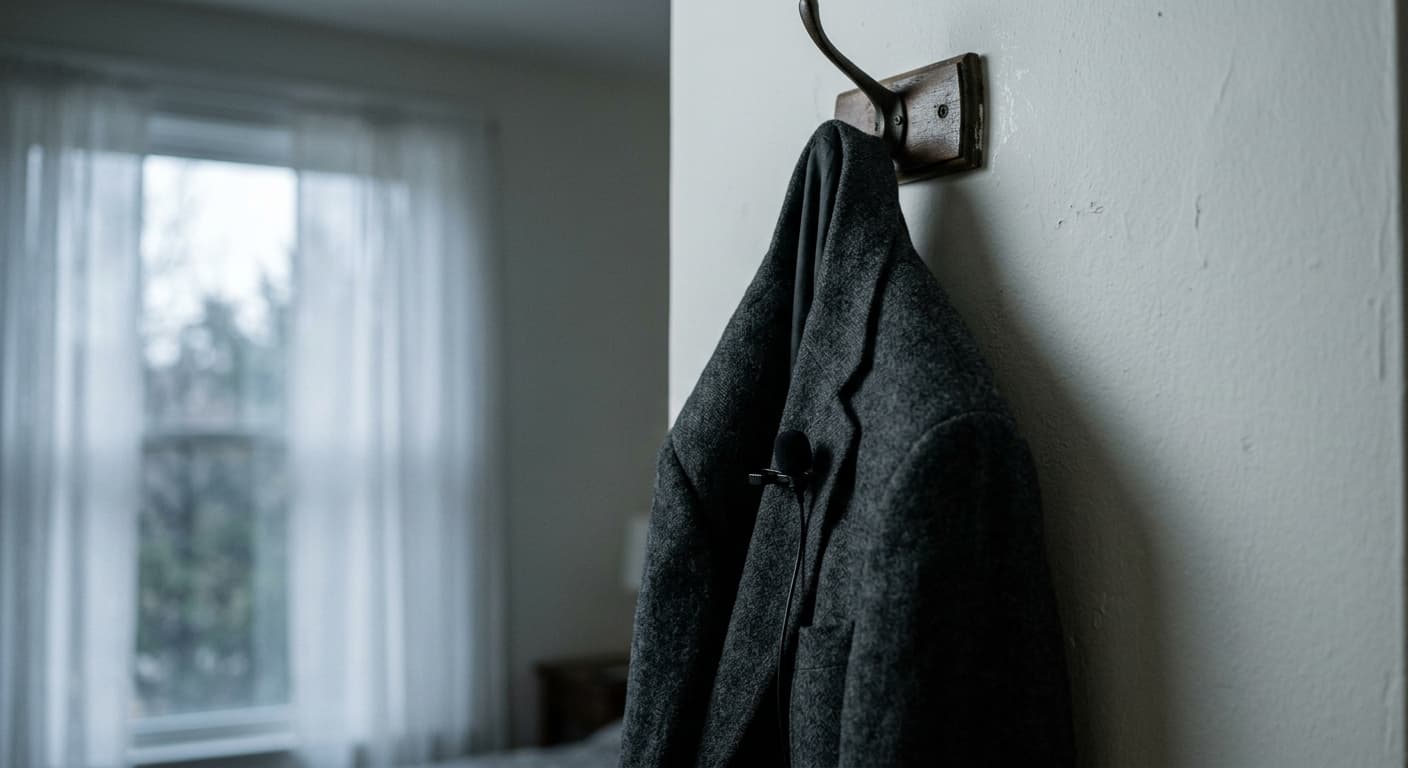
Georgia is a one-party consent state for audio recording under O.C.G.A. § 16-11-66. You can legally record any phone call or in-person conversation you participate in without notifying the other parties. Violating this law is a felony carrying 1 to 5 years in prison.
Georgia is a one-party consent state for audio recording. Under O.C.G.A. § 16-11-66, you can legally record any phone call, in-person conversation, or electronic communication you participate in without notifying or getting permission from other participants. This protection extends to wire, oral, and electronic communications.
This guide breaks down how Georgia's audio recording laws work in practice, what activities cross the line into criminal conduct, and how the audio rules differ from Georgia's stricter video recording requirements. Whether you want to record a phone call with a customer service representative, document a conversation with your landlord, or preserve evidence for a legal dispute, understanding these rules will keep you on the right side of the law.
How Georgia's One-Party Consent Law Works
The Statutory Framework
Georgia's audio recording rules come from two statutes that work together. O.C.G.A. § 16-11-62 establishes the broad prohibition against eavesdropping, surveillance, and intercepting private communications. O.C.G.A. § 16-11-66 then carves out the one-party consent exception.
Section 16-11-66(a) states that nothing in the wiretapping statute prohibits a person from intercepting a wire, oral, or electronic communication where that person is a party to the communication, or where one of the parties to the communication has given prior consent to the interception. This means two scenarios are legal:
- You record a conversation you are part of. You do not need to tell anyone else.
- Someone in the conversation gives you permission to record it. You can record even if you are not directly participating, as long as one participant has authorized the recording in advance.
What "One-Party Consent" Means in Practice
One-party consent means that exactly one person involved in the communication must know about and agree to the recording. That person is usually the one pressing the record button. You do not need to announce "this call is being recorded." You do not need a verbal or written agreement from the other parties.
Here are common scenarios where one-party consent protects you:
- Recording a phone call you are on. Whether it is a landline, cell phone, or VoIP call through Zoom, Teams, or Google Meet, you can record the audio without telling the other person.
- Recording an in-person conversation you participate in. If you are having a face-to-face discussion with someone, you can use your phone or a voice recorder to capture it.
- Authorizing someone else to record on your behalf. If you ask a colleague to record a meeting you will attend, their recording is lawful because you (a party to the conversation) gave prior consent.
What One-Party Consent Does NOT Allow
The one-party consent exception has clear boundaries. You cannot:
- Record a conversation you are not part of and have no party's consent for. Placing a hidden recorder in a room to capture other people's private conversations is illegal wiretapping.
- Intercept communications between two other people without either person's knowledge. Tapping a phone line or using software to capture someone else's calls violates the statute.
- Use the recording to engage in blackmail or extortion. Even a lawfully made recording becomes a tool for criminal liability if used to threaten or coerce someone.
Audio vs. Video: Georgia's Critical Distinction
Why the Rules Differ
Georgia treats audio and video recording under different legal standards, and understanding this split is essential. The Georgia Supreme Court has confirmed that the one-party consent rule in O.C.G.A. § 16-11-66 applies specifically to sound recordings, while the all-party consent requirement in O.C.G.A. § 16-11-62(2) applies to visual recordings of activities in private places.
| Feature | Audio Recording | Video Recording (Private Places) |
|---|---|---|
| Consent Standard | One-party | All-party |
| Governing Statute | O.C.G.A. § 16-11-66 | O.C.G.A. § 16-11-62(2) |
| Can you record without telling others? | Yes (if you are a party) | No (in private places) |
| Public spaces | No consent needed | No consent needed |
Practical Impact of the Audio/Video Split
This distinction matters in everyday situations. Consider these examples:
- You video call a friend on FaceTime. The audio portion falls under one-party consent. The video portion, if the other person is in a private place, technically falls under the stricter all-party standard. In practice, the act of initiating a video call implies consent to being seen, but recording that call and distributing the video without consent could violate O.C.G.A. § 16-11-62(2).
- You use a body camera at work. The audio it captures is protected by one-party consent if you are part of the conversations. The video it captures in private areas of the workplace could require all-party consent.
- You record a meeting in a conference room. Audio recording is lawful if you participate. Video recording that conference room (a private place) would require consent from everyone present.
Types of Audio Communications Covered

Wire Communications
Wire communications include traditional telephone calls, cell phone calls, and any communication that travels over a wire or cable at some point during transmission. Georgia's one-party consent rule covers all wire communications under O.C.G.A. § 16-11-66.
Oral Communications
Oral communications are face-to-face, spoken conversations. Under O.C.G.A. § 16-11-62(1), it is unlawful to intentionally and in a clandestine manner overhear, transmit, or record the private conversation of another that originates in any private place. The one-party consent exception in § 16-11-66 overrides this prohibition when you are a participant.
Electronic Communications
Electronic communications include emails, text messages, instant messages, and data transmissions. While Georgia's wiretapping statute primarily targets real-time interception, the federal Electronic Communications Privacy Act (18 U.S.C. § 2511) provides a parallel framework. Georgia's one-party consent rule aligns with the federal standard for electronic communications.
Recording Phone Calls Under Georgia Law
Personal Phone Calls
You can record any personal phone call you participate in. This applies to:
- Calls made from or received on your cell phone
- Landline calls
- VoIP calls through services like Skype, WhatsApp, or Signal
- Video call audio through Zoom, Microsoft Teams, or Google Meet
You do not need to play a beep tone, announce the recording, or get permission. Simply being a party to the call satisfies the one-party consent requirement.
Business Phone Calls
Georgia businesses can record calls for quality assurance, training, compliance, and dispute resolution purposes. The one-party consent rule means a business employee who participates in the call provides the necessary consent. Many businesses still announce recording as a best practice, using phrases like "This call may be recorded for quality assurance purposes."
Federal law under 18 U.S.C. § 2511(2)(d) also permits one-party consent recording, so Georgia businesses operating under both state and federal jurisdiction face consistent rules.
Interstate Phone Calls
When you call someone in another state, the recording laws of both states may apply. If you are in Georgia calling someone in a two-party consent state like California, Florida, or Pennsylvania, the stricter law generally controls.
States requiring all-party consent for phone calls include California, Florida, Illinois, Maryland, Massachusetts, Montana, New Hampshire, Pennsylvania, and Washington. A few states need extra caution: Connecticut is criminally one-party but imposes civil liability for recording a call without all-party consent (Conn. Gen. Stat. section 52-570d); Oregon requires all-party consent for in-person conversations but stays one-party for calls (ORS 165.540); Delaware's status is contested, since its wiretap statute reads one-party while a separate privacy statute pulls the other way; and Nevada, though generally a one-party state, is treated as functionally all-party for phone calls under the Nevada Supreme Court's reading of NRS 200.620 in Lane v. Allstate Ins. Co., 114 Nev. 1176 (1998). If you regularly record calls with people in these states, the safest approach is to inform all parties or get explicit consent.
Recording In-Person Conversations
When Audio Recording Is Legal
Georgia law permits audio recording of in-person conversations when:
- You are a direct participant in the conversation
- You are in a public place where no reasonable expectation of privacy exists
- One of the parties to the conversation has given you prior consent to record
Public spaces like sidewalks, parks, government buildings, and retail stores generally carry no expectation of privacy for conversations held at normal volume. Recording in these locations does not require consent from anyone.
When Audio Recording Is Illegal
Recording becomes illegal when:
- You are not a party to the conversation and have no participant's consent
- You use a hidden device to capture conversations in a clandestine manner from a private place
- You place a recording device in someone else's home, office, or vehicle without any party's knowledge
O.C.G.A. § 16-11-62(3) specifically prohibits going on or about the premises of another or any private place for the purpose of invading the privacy of others by eavesdropping upon their conversations or secretly observing their activities.
The Parental Exception
Monitoring Minor Children's Communications
O.C.G.A. § 16-11-66 includes a specific provision for parents. A parent or guardian of a child under 18 years of age may monitor or intercept their minor child's telephone conversations using an extension phone within the family home, with or without the child's consent.
This exception serves a protective purpose. Parents can listen to and record calls to:
- Protect their children from online predators
- Monitor for signs of bullying or harassment
- Identify potential criminal activity involving the child as a victim
- Ensure the child's general welfare
Reporting Criminal Evidence
If a parent discovers through monitoring that a conversation contains evidence of criminal conduct involving the child as a victim, the parent may disclose the content to a district attorney or law enforcement officer. Recordings made by parents under these circumstances that contain evidence of criminal activity are admissible in judicial proceedings.
Limits of the Parental Exception
The parental exception has specific boundaries:
- It applies only to telephone conversations intercepted via an extension phone in the family home
- It covers parents and legal guardians, not other relatives
- It applies only to children under 18
- It does not authorize installing spyware or keyloggers on a child's devices (those actions may fall under separate federal and state computer fraud laws)
Penalties for Illegal Audio Recording
Criminal Penalties
Under O.C.G.A. § 16-11-69, any person who violates the wiretapping and eavesdropping provisions is guilty of a felony. Penalties include:
| Penalty | Range |
|---|---|
| Prison time | 1 to 5 years |
| Fine | Up to $10,000 |
| Combined | Both prison and fine |
These penalties apply per violation. If you illegally record multiple conversations, each recording can result in a separate felony charge with its own sentencing range.
Civil Liability
Victims of illegal audio recording in Georgia can pursue civil remedies including:
- Invasion of privacy claims seeking compensatory damages for emotional distress and reputational harm
- Federal Wiretap Act claims under 18 U.S.C. § 2520, which allows recovery of whichever is greater: actual damages plus the violator's profits, or statutory damages equal to the greater of $100 per day of violation or $10,000, along with punitive damages and reasonable attorney fees
- Injunctive relief to prevent further illegal recording
- Intentional infliction of emotional distress claims in cases involving particularly egregious conduct
Evidence Suppression
Illegally obtained audio recordings are generally inadmissible in Georgia courts. Under both state evidence rules and the federal exclusionary rule, a recording made in violation of wiretapping laws cannot be used as evidence in criminal or civil proceedings. This means that even if the recording contains proof of wrongdoing by the other party, a court will likely refuse to consider it.
Using Audio Recordings as Evidence
Authentication Requirements
For a lawfully obtained audio recording to be admissible in Georgia courts, you must authenticate it. Under O.C.G.A. Title 24 (Georgia's evidence code), authentication typically requires:
- Testimony from a person with knowledge that the recording is what it claims to be
- Evidence that the recording device was working properly
- Proof that the recording has not been altered or edited
- Chain of custody documentation showing how the recording was preserved
Best Practices for Preserving Recordings
To maximize the evidentiary value of your recordings:
- Use a reliable recording device or app. Smartphone voice memo apps, dedicated digital recorders, and call recording apps all work, but choose one that produces clear audio.
- Do not edit the recording. Preserve the original file in its entirety. Editing raises questions about what was removed.
- Back up the recording immediately. Save copies to cloud storage and a separate device.
- Note the date, time, location, and participants. Write this information down as soon as possible after the recording.
- Store the recording securely. Protect it from accidental deletion or unauthorized access.
More Georgia Recording Laws
Audio Recording | Video Recording | Voyeurism & Hidden Cameras | Workplace Recording | Recording Police | Phone Call Recording | Security Cameras | Recording in Public | Landlord-Tenant | Dashcam Laws | Schools | Medical Recording
Back to Georgia Recording Laws
More Georgia Recording Topics
More Georgia Laws
Frequently Asked Questions
Can I Record a Conversation With My Landlord?
Yes. If you are participating in a face-to-face or phone conversation with your landlord, Georgia's one-party consent law permits you to record the audio without informing them. This can help document verbal agreements about repairs, disputes about lease terms, or instances of harassment.
Can I Record My Doctor's Appointment?
Yes. As a participant in the conversation, you can audio record your medical appointment. Many patients find this helpful for remembering complex medical instructions. Note that the 2022 amendment to O.C.G.A. § 16-11-62 added protections for patients at county health department facilities, prohibiting recording of other patients without their consent.
Can I Record a Government Official?
Yes. You can audio record conversations with government employees that you participate in. Georgia's Open Meetings Act (O.C.G.A. § 50-14-1) also explicitly permits visual and sound recording during public government meetings.
Can I Record in Court?
Georgia courts generally prohibit recording inside courtrooms without the judge's permission. Each court may have its own rules about recording devices. Always check with the court clerk before bringing a recording device into a courtroom.
Updates
Fixed a backward statute citation (the clandestine-recording and premises-eavesdropping provisions of O.C.G.A. section 16-11-62 were swapped), and aligned the interstate all-party-consent caution list with the rest of the cluster, adding Nevada, Oregon, and Delaware with precise hedges.
Independently fact-checked against the cited primary sources
Governing law re-checked for recent changes
Corrected the description of federal Wiretap Act civil damages: statutory damages are the greater of $100 per day of violation or a $10,000 floor, compared against actual damages plus profits (not a flat $10,000-per-violation figure).
Governing law re-checked for recent changes
Reviewed and approved by an editor
The Law Behind This Article
This article rests on the statutory provisions below, held in our own legal record and retrieved from the official source. Tap a section to read the operative text.
Official Code of Georgia Annotated
§ 16-11-66Interception of wire, oral, or electronic communication by party thereto; consent requirements for recording and divulging conversations to which child under 18 years is a party; parental exception.In forcecited in 18 of our articles
(a) Nothing in Code Section 16-11-62 shall prohibit a person from intercepting a wire, oral, or electronic communication where such person is a party to the communication or one of the parties to the communication has given prior consent to such interception. (b) After obtaining the consent…
Official text (excerpt) · last checked 2026-08-31 · Read the full text in our law library · Verify at advance.lexis.com
Cited in 43 court opinions in our collectionLatest citing opinion in our collection: 2020
In the courts (editorial summary, independently checked):State v. Cohen (2017) held OCGA 16-11-66(a) reaches only intercepted wire, oral, or electronic communications, so one party's consent does not authorize secretly video recording others in a private place. Bishop v. State (1999) barred vicarious parental consent under the text in force before the 2000 amendment.
Opinions citing this section in our collection:
- Dobbins v. State (Supreme Court of Georgia 1992, 262 Ga. 161)✓An investigator recorded a child's call to the defendant using only her father's consent and no warrant; the Supreme Court held the state had neither an investigation warrant nor valid consent of a party to the call, so the recording and its fruits were inadmissible.
- State v. Cohen (Supreme Court of Georgia 2017, 302 Ga. 616)✓A housekeeper secretly videoed her employer naked at home; the Supreme Court held the one-party-consent rule of OCGA 16-11-66(a) covers only intercepted wire, oral or electronic communications and does not permit video recording without the consent of all observed.
- State v. Madison (Court of Appeals of Georgia 2011, 311 Ga. App. 31)✓A molestation complainant secretly videoed the defendant in his law office; the court read the 16-11-66(a) participant exception to reach section 16-11-62, but found no wire, oral or electronic communication captured, so it affirmed suppression. Cohen overruled that reading.
Identified automatically from the court opinions citing this section — not a ranking of which case controls.
§ 16-11-62Eavesdropping, surveillance, or intercepting communication which invades privacy of another; divulging private message.In forcecited in 25 of our articles
It shall be unlawful for: (1) Any person in a clandestine manner intentionally to overhear, transmit, or record or attempt to overhear, transmit, or record the private conversation of another which shall originate in any private place; (2) Any person, through the use of any device, without the
Official text (excerpt) · last checked 2026-08-31 · Read the full text in our law library · Verify at legis.ga.gov
Cited in 94 court opinions in our collectionLatest citing opinion in our collection: 2026
In the courts (editorial summary, independently checked):Kelley v. State (1998) held OCGA 16-11-62(2) reached a guardian who photographed a nude 16-year-old in the family bathroom, with no exception for family members. Burgeson v. State (1996) held a conversation recorded in a patrol car was not covered, because no reasonable expectation of privacy existed there.
Opinions citing this section in our collection:
- Burgeson v. State (Supreme Court of Georgia 1996, 267 Ga. 102)✓Police secretly recorded two arrestees talking in the back of a patrol car. The court held a police car is much like a jail cell, with no reasonable expectation of privacy, so intercepting that conversation did not offend OCGA 16-11-62 and the tape was admissible.
- Kelley v. State (Court of Appeals of Georgia 1998, 233 Ga. App. 244)✓A guardian photographed her 16-year-old niece nude and passed out in the family bathtub. The court held OCGA 16-11-62(2) reaches any person with no family exception, that the film need not be developed, and that a jury could find the bathroom a private place.
- Dobbins v. State (Supreme Court of Georgia 1992, 262 Ga. 161)“…th the consent of one of the parties to the conversation. OCGA § 16-11-62 (1) provides that: It shall be unlawf…”
Identified automatically from the court opinions citing this section — not a ranking of which case controls.
§ 16-11-66.1Disclosure of stored wire or electronic communications; records; search warrants; issuance of subpoena; violation.In forcecited in 2 of our articles
(a) A law enforcement officer, a prosecuting attorney, or the Attorney General may require the disclosure of stored wire or electronic communications, as well as transactional records pertaining thereto, to the extent and under the procedures and conditions provided for by the laws of the United…
Official text (excerpt) · last checked 2021-08-17 · Read the full text in our law library
Cited in 15 court opinions in our collectionLatest citing opinion in our collection: 2026
Opinions citing this section in our collection:
- Hampton v. State (Supreme Court of Georgia 2014, 295 Ga. 665)“…apply the legal principles to the facts. Id. Citing OCGA §§ 16-11-66.1 (a)2; 16-11-673, and 18 USCA § 2703 (a)…”
- Registe v. State (Supreme Court of Georgia 2012, 292 Ga. 154)“…not clearly settled in the majority opinion, I believe that OCGA § 16-11-66.1 regulates only those situations in whic…”
- Lofton v. State (Supreme Court of Georgia 2021, 310 Ga. 770)“…Registe also argued that the release failed to comply with OCGA § 16-11-66.1 (d), which provides: “A subpoena for th…”
Identified automatically from the court opinions citing this section — not a ranking of which case controls.
§ 16-11-69Penalty for violations of part.In forcecited in 13 of our articles
Except as otherwise provided in subsection (d) of Code Section 16-11-66.1, any person violating any of the provisions of this part shall be guilty of a felony and, upon conviction thereof, shall be punished by imprisonment for not less than one nor more than five years or a fine not to exceed…
Official text (excerpt) · last checked 2021-08-17 · Read the full text in our law library
Cited in 8 court opinions in our collectionLatest citing opinion in our collection: 2019
Opinions citing this section in our collection:
- Rutter v. Rutter (Court of Appeals of Georgia 2012, 316 Ga. App. 894)“…a penal statute, a violation being punishable as a felony. OCGA § 16-11-69. As such, the rule of lenity is a prope…”
- Prophitt v. the State (Court of Appeals of Georgia 2016, 336 Ga. App. 262)“…The crime of invasion of privacy constitutes a felony, see OCGA § 16-11-69, and this Court has previously held tha…”
- Price v. State (Court of Appeals of Georgia 2013, 320 Ga. App. 85)“…rt order. 2 Because Price was convicted of a felony, see OCGA § 16-11-69, and sentenced to five years of confine…”
Identified automatically from the court opinions citing this section — not a ranking of which case controls.
§ 50-14-1Meetings to be open to public; limitation on action to contest agency action; recording; notice of time and place; access to minutes; teleconference.In forcecited in 5 of our articles
(a) As used in this chapter, the term: (1) "Agency" means: (A) Every state department, agency, board, bureau, office, commission, public corporation, and authority; (B) Every county, municipal corporation, school district, or other political subdivision of this state; (C) Every department, agenc
Official text (excerpt) · last checked 2026-08-04 · Read the full text in our law library · Verify at legis.ga.gov
Cited in 98 court opinions in our collectionLatest citing opinion in our collection: 2026
Opinions citing this section in our collection:
- WILLIAMS v. DEKALB COUNTY (Supreme Court of Georgia 2020, 308 Ga. 265)“…the commissioners for violating the Open Meetings Act, see OCGA § 50-14-1 et seq., before passing the salary ord…”
- Lue, Mayor v. Eady (Supreme Court of Georgia 2015)“…ries: alleged violations of the Georgia Open Meetings Act, OCGA § 50-14-1, et seq. (“Act”); alleged violations o…”
- Red & Black Publishing Co. v. Board of Regents (Supreme Court of Georgia 1993, 262 Ga. 848)“…q., but not to the proceedings under the Open Meetings Act, OCGA § 50-14-1 et seq. The trial court also granted de…”
Identified automatically from the court opinions citing this section — not a ranking of which case controls.
United States Code Title 18
§ 2511Interception and disclosure of wire, oral, or electronic communications prohibitedIn forcecited in 418 of our articles
Except as otherwise specifically provided in this chapter any person who— intentionally intercepts, endeavors to intercept, or procures any other person to intercept or endeavor to intercept, any wire, oral, or electronic communication; intentionally uses, endeavors to use, or procures any other person to use or endeavor to use any electronic, mechanical, or other device to intercept any oral communication when— such device is affixed to, or otherwise transmits a signal through, a wire, cable, or other like connection used in wire communication; or such device transmits communications by radio, or interferes with the transmission of such communication; or such person knows, or has reason to know, that such device or any component thereof has been sent through the mail or transported in interstate or foreign commerce; or such use or endeavor to use (A) takes place on the premises of any business or other commercial establishment the operations of which affect interstate or foreign commerce; or (B) obtains or is for the purpose of obtaining information relating to the operations of any business or other commercial establishment the operations of which affect interstate or foreign…
Official text (excerpt) · last checked 2026-08-28 · Read the full text in our law library · Verify at uscode.house.gov
Cited in 2,045 court opinions in our collectionLatest citing opinion in our collection: 2026
In the courts (editorial summary, independently checked):Griggs-Ryan v. Smith (1990) applied the Section 2511(2)(d) prior-consent exception, treating a tenant repeatedly told that all incoming calls were taped as having impliedly consented. United States v. United States District Court (1972) read the then-current Section 2511(3) as conferring no presidential surveillance power.
Opinions citing this section in our collection:
- Mitchell v. Forsyth (Supreme Court of the United States 1985, 472 U.S. 511)✓The Attorney General authorized a warrantless 1970 national security wiretap that caught the plaintiff's calls; the Court held the since-repealed Section 2511(3) disclaimer left the tap lawful under Title III, and that Mitchell had qualified immunity.
- United States v. United States District Court for the Eastern District of Michigan (Supreme Court of the United States 1972, 407 U.S. 297)✓The Attorney General approved warrantless wiretaps on members of a domestic group accused of bombing a CIA office; the Court read Section 2511(3) as a congressional disclaimer conferring no surveillance power, then held the Fourth Amendment required prior judicial approval.
- Forsyth v. Barr (Court of Appeals for the Fifth Circuit 1994, 19 F.3d 1527)✓Dallas police used, in an internal affairs probe of an officer, calls private parties allegedly intercepted illegally; assuming that was unlawful, the Fifth Circuit held Section 2517(1) and (2) allowed the disclosure and use, defeating the Section 2511(1)(c) and (d) claims.
Identified automatically from the court opinions citing this section — not a ranking of which case controls.
§ 2520Recovery of civil damages authorizedIn forcecited in 115 of our articles
Except as provided in section 2511(2)(a)(ii), any person whose wire, oral, or electronic communication is intercepted, disclosed, or intentionally used in violation of this chapter may in a civil action recover from the person or entity, other than the United States, which engaged in that violation such relief as may be appropriate. In an action under this section, appropriate relief includes— such preliminary and other equitable or declaratory relief as may be appropriate; damages under subsection (c) and punitive damages in appropriate cases; and a reasonable attorney’s fee and other litigation costs reasonably incurred.
Official text (excerpt) · last checked 2026-07-28 · Read the full text in our law library · Verify at uscode.house.gov
Cited in 860 court opinions in our collectionLatest citing opinion in our collection: 2026
In the courts (editorial summary, independently checked):Walker v. Darby (1990) held a 2520 plaintiff need not prove the contents of intercepted conversations, only interception and a justified expectation against it. Bartnicki v. Vopper (2001) barred 2520 damages against defendants who took no part in the interception, obtained the tape lawfully, and disclosed a matter of public concern.
Opinions citing this section in our collection:
- Jessie Walker v. Thomas E. Darby, Hugh L. Robinson, Jr., and Kenneth Day (Court of Appeals for the Eleventh Circuit 1990, 911 F.2d 1573)✓A postal letter carrier said three supervisors wired an intercom near his workstation to listen in. Reversing summary judgment, the Eleventh Circuit held a section 2520 plaintiff can show interception without proving the contents of specific conversations.
- Gelbard v. United States (Supreme Court of the United States 1972, 408 U.S. 41)“…disclosure, or use is entitled to recover civil damages, 18 U. S. C. § 2520 . Title III also bars the use as eviden…”
- DirecTV, Inc. v. Hoa Huynh (Court of Appeals for the Ninth Circuit 2007, 503 F.3d 847)“…7 U.S.C. § 605 (e)(4), or alternatively, for violations of 18 U.S.C. § 2520 (a), or alternatively, for violations o…”
Identified automatically from the court opinions citing this section — not a ranking of which case controls.
Search our full record of US law — 2.1 million sections, every state + federal →
Sources and References
- O.C.G.A. § 16-11-66(a) - One-Party Consent Exception(law.justia.com)
- O.C.G.A. § 16-11-62 - Eavesdropping, Surveillance, Intercepting Communication(law.justia.com)
- O.C.G.A. § 16-11-69 - Penalties for Violations(law.justia.com)
- O.C.G.A. § 16-11-66.1 - Stored Communications / Unlawful Eavesdropping(law.justia.com)
- State v. Cohen, 302 Ga. 616, 807 S.E.2d 861 (2017) - audio/video distinction
- 18 U.S.C. § 2511 - Federal Wiretap Act(law.cornell.edu)
- 18 U.S.C. § 2520 - Civil Damages for Wiretap Violations(law.cornell.edu)
- Georgia Open Meetings Act(law.georgia.gov).gov
- Georgia AG FAQ on Open Government(law.georgia.gov).gov
- NLRB - Employee Rights Under Section 7(nlrb.gov).gov
- FERPA FAQs on Photos and Videos(studentprivacy.ed.gov).gov
- Reporters Committee for Freedom of the Press - Georgia Recording Guide(rcfp.org)