
Virginia
Virginia Audio Recording Laws: One-Party Consent Rules and Penalties
Independently fact-checked against primary sources (last audited August 15, 2026). · Reviewed by the RecordingLaw editorial team. · Law checked current as of August 15, 2026. · 6 primary sources cited on this page. How we verify our legal content

Virginia is a one-party consent state under Va. Code Ann. 19.2-62, meaning you can legally record any phone call or conversation you participate in without notifying the other parties. You do not need a warrant or permission. Recording a conversation you are not part of is a Class 6 felony.
Virginia law permits audio recording under a one-party consent framework established by Va. Code Ann. 19.2-62. If you are a participant in a conversation, you can legally record the audio without telling the other parties. This applies to phone calls, face-to-face discussions, video calls, and any other form of oral or wire communication.
This guide covers the full scope of Virginia audio recording law, including what types of recordings are legal, the penalties for violations, how recordings function as evidence, and the unique civil admissibility limitation that catches many people off guard.
Virginia One-Party Consent Framework
What the Statute Says
The core provision is Va. Code Ann. 19.2-62, which makes it unlawful to intentionally intercept any wire, electronic, or oral communication. The statute then carves out a critical exception: recording is not a criminal offense when the person recording is a party to the communication, or when one of the parties has given prior consent to the interception.
This means you satisfy Virginia law any time you record a conversation you are part of. Your own participation counts as the required "one-party" consent.
Types of Audio Communications Covered
Virginia law defines three categories of communications protected by the wiretapping statute:
| Communication Type | Definition | Examples |
|---|---|---|
| Wire communications | Transmissions made through wire, cable, or similar connection | Landline calls, VoIP calls, cell phone calls |
| Oral communications | Spoken words uttered with an expectation of privacy | In-person conversations, meetings, discussions in private settings |
| Electronic communications | Non-voice transfers of data via electronic systems | Text messages, emails, video call chat features |
Audio recording primarily involves wire communications (phone calls) and oral communications (in-person speech). The one-party consent exception applies equally to both.
What "Expectation of Privacy" Means
Virginia law only protects oral communications where the speaker has a reasonable expectation that the conversation is not being intercepted. This is an important qualifier. Conversations in truly public settings where anyone could overhear you generally do not carry this expectation.
For example, if two people are talking loudly on a public sidewalk, there may be no reasonable expectation of privacy. But a private conversation in a closed office, a home, or a quiet corner of a restaurant typically does carry that expectation. The one-party consent rule applies when that expectation exists but one participant still chooses to record.
When Audio Recording Is Legal in Virginia
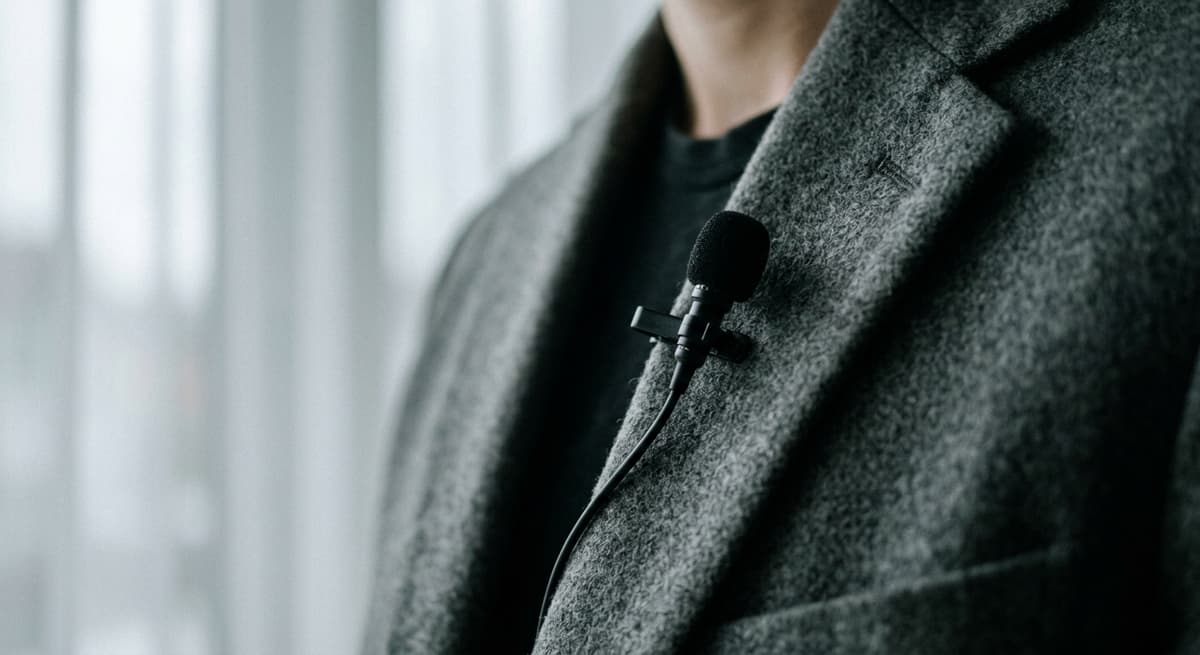
Recording Your Own Conversations
You can legally record audio of any conversation you participate in, including:
- Phone calls (landline, mobile, or VoIP)
- In-person meetings and discussions
- Video calls where you are an active participant
- Conversations in your home, office, car, or any other location
- Business negotiations and transactions
You do not need to announce that you are recording. You do not need a warrant. Your participation in the conversation is the only legal requirement.
Recording With Third-Party Consent
If you are not a party to the conversation, you can still legally record it as long as at least one participant has given you prior consent to do so. For instance, if Person A is going to have a phone call with Person B, Person A can authorize you to listen in and record that call.
Recording in Public Spaces
Audio recording in public spaces where there is no reasonable expectation of privacy generally does not trigger Virginia wiretapping laws at all. You can record ambient sounds, public speeches, street performances, protest chants, and other audio that occurs in openly public settings.
However, even in a public place, a private whispered conversation between two people who have taken steps to keep their discussion confidential may still carry a privacy expectation. Context matters.
When Audio Recording Is Illegal in Virginia

Recording Without Being a Party
If you are not participating in a conversation and no participant has consented, recording the audio is a criminal offense under Va. Code Ann. 19.2-62. Common illegal scenarios include:
- Placing a hidden recorder in a room and leaving before the conversation begins
- Using a listening device to eavesdrop on a phone call between two other people
- Installing spyware on someone else's phone to capture their calls
- Bugging a spouse's car or office without being present for the conversations
Using Intercepted Communications
Virginia law prohibits more than just the act of recording. Under Va. Code Ann. 19.2-62, it is also unlawful to:
- Intentionally disclose the contents of an illegally intercepted communication
- Intentionally use the contents of an illegally intercepted communication
- Procure or encourage someone else to illegally intercept a communication
Each of these acts carries the same Class 6 felony penalties as the original interception.
Criminal Penalties for Illegal Audio Recording
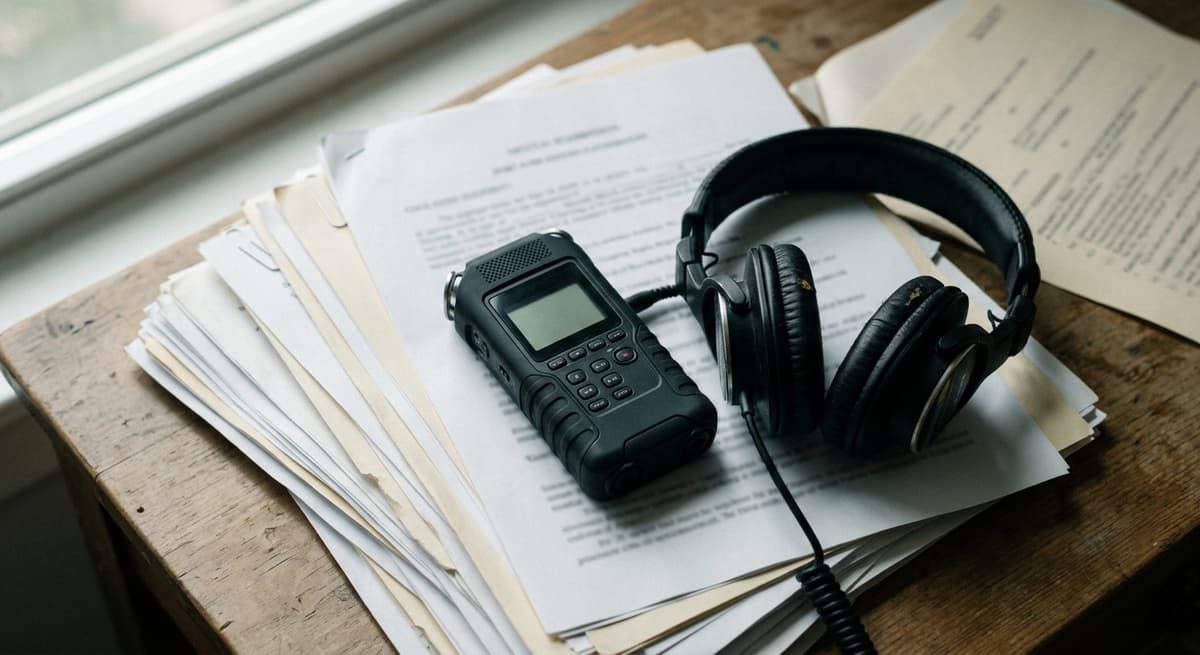
Class 6 Felony Classification
Violating Virginia's wiretapping law is a Class 6 felony under the state's criminal code. Virginia Class 6 felonies are "wobblers," meaning the court has discretion in sentencing.
| Sentencing Option | Penalty |
|---|---|
| Felony sentence | 1 to 5 years imprisonment |
| Misdemeanor treatment (jury or court discretion) | Up to 12 months in jail and/or fine up to $2,500 |
The court considers factors such as the defendant's criminal history, the nature of the intercepted communications, the purpose behind the recording, and any harm caused to the victim.
Exclusionary Rule
Under Va. Code Ann. 19.2-65, illegally intercepted communications cannot be received as evidence in any trial, hearing, or other proceeding in or before any court, grand jury, department, officer, agency, regulatory body, legislative committee, or other government authority. This exclusionary rule also covers evidence derived from the illegal interception.
An aggrieved party can file a motion to suppress the evidence before trial or other proceeding. The motion must be filed at least 10 days before the trial date.
Civil Liability for Illegal Audio Recording
Standard Damages Under Va. Code 19.2-69
Va. Code Ann. 19.2-69 provides a civil cause of action for anyone whose communications are illegally intercepted. The statute allows recovery of:
- Actual damages suffered
- Statutory damages of $400 per day of violation, with a minimum of $4,000
- Punitive damages for willful or intentional violations
- Reasonable attorney fees and litigation costs
Enhanced Damages for Privileged Communications
When the illegally intercepted communication involved a privileged relationship, the statutory damages increase to $800 per day with a minimum of $8,000. Privileged relationships under Virginia law include:
- Husband and wife communicating with each other
- Attorney and client
- Licensed medical practitioner and patient
- Licensed professional counselor and client
- Member of the clergy and congregant
This enhanced damages provision makes illegal wiretapping in the context of domestic disputes, legal consultations, or medical conversations especially costly.
Statute of Limitations
Va. Code 19.2-69 does not itself set a filing deadline. Virginia courts have held that a civil wiretap claim is not a "personal injury" action, so it falls under the general catch-all limitations period for personal actions, Va. Code 8.01-248, which requires the suit to be brought within two years after the right to sue accrues. Unlike the federal Wiretap Act (18 U.S.C. 2520(e)), Virginia's rule has no separate "date of discovery" extension -- the two years runs from accrual.
Audio Recording Admissibility in Virginia Courts
Criminal Cases
Audio recordings made under one-party consent are generally admissible in Virginia criminal proceedings. The recording must be authenticated (the offering party must demonstrate the recording is genuine and has not been altered), and standard rules of evidence regarding relevance and prejudice apply.
Under Va. Code Ann. 19.2-65, only illegally intercepted communications are excluded. Legally obtained one-party consent recordings face no special statutory bar in criminal cases.
Civil Cases and the Va. Code 8.01-420.2 Limitation
This is where Virginia law diverges from most other one-party consent states. Va. Code Ann. 8.01-420.2 imposes a significant restriction on the use of recorded phone conversations in civil proceedings.
Under this statute, no recorded telephone conversation may be admitted as evidence in a civil proceeding unless:
- All parties to the conversation were aware the conversation was being recorded at the time, or
- The recording contains admissions of criminal conduct that form the basis of the civil action, and at least one party knew about the recording
There is an additional carve-out: the criminal conduct exception does not apply in cases involving divorce, separate maintenance, or annulment.
Awareness must be demonstrated by a declaration at the beginning of the recorded conversation stating that it is being recorded.
What This Means Practically
If you secretly record a phone call in Virginia (which is legal under one-party consent), you may not be able to use that recording as evidence in a civil lawsuit. This catches many people off guard. The recording is legal to make, but not necessarily admissible in civil court.
This limitation applies specifically to phone conversations in civil proceedings. It does not apply to:
- In-person recordings (oral communications)
- Criminal cases
- Administrative proceedings (though individual agencies may have their own rules)
Authenticating Audio Recordings
To be admitted as evidence, Virginia courts require that audio recordings be properly authenticated. The offering party must show:
- The recording device was capable of accurately capturing the conversation
- The operator of the device was competent
- The recording is authentic and unaltered
- The voices on the recording are correctly identified
- The recording was preserved without tampering
Chain of custody documentation strengthens the evidentiary value of any audio recording.
Cross-State Audio Recording Issues
Bordering States With Different Laws
Virginia borders several states with varying recording consent requirements. This is especially important for phone calls, where the participants may be in different states.
| Bordering State | Consent Requirement |
|---|---|
| Maryland | All-party consent |
| West Virginia | One-party consent |
| Kentucky | One-party consent |
| Tennessee | One-party consent |
| North Carolina | One-party consent |
| District of Columbia | One-party consent |
Maryland is the critical concern. If you are in Virginia recording a call with someone in Maryland, Maryland law requires all-party consent. Courts generally apply the stricter law when a call crosses state lines, meaning you could face liability in Maryland even though the recording is legal under Virginia law.
Federal Law
Federal wiretapping law under 18 U.S.C. 2511 also follows a one-party consent standard. Since Virginia's law meets or exceeds the federal standard, federal law does not create additional restrictions for recordings made entirely within Virginia.
The Northern Virginia region has a large population of federal employees and contractors. Federal workplace recording policies may impose additional restrictions beyond what state law requires. Employees should check their agency's specific policies.
Audio Recording Devices and Technology
Legal Recording Tools
Virginia law does not restrict the type of device used to record audio. Any recording device is permissible as long as the one-party consent requirement is met. Common options include:
- Smartphone voice recorder apps
- Dedicated digital voice recorders
- AI-powered wearable recorders (such as the Plaud NotePin)
- Smartwatch recording features
- Computer-based recording software for VoIP calls
- Smart glasses with audio capture
Consent Requirements Do Not Change With Technology
The device does not alter the legal analysis. Whether you use a hidden lapel microphone, a smartphone in your pocket, or a dedicated recording device, the one-party consent standard remains the same. Your participation in the conversation satisfies the statute regardless of the hardware or software used to capture the audio.
Common Audio Recording Scenarios in Virginia
Recording Business Calls
Virginia businesses and individuals can record business calls they participate in without disclosure. This includes sales calls, customer service interactions, vendor negotiations, and internal business discussions. Many Virginia businesses still choose to provide notice ("this call may be recorded") as a best practice, but it is not legally required under one-party consent.
Recording Personal Disputes
Recording conversations about personal disputes, including family conflicts, neighbor disagreements, or consumer complaints, is legal as long as you are a participant. These recordings can be valuable for documentation purposes. Keep in mind that phone recordings may face the civil admissibility limitation if the dispute goes to court.
Recording for Journalism
Journalists in Virginia can record interviews and conversations they participate in without disclosing the recording. The Reporters Committee for Freedom of the Press confirms that Virginia's one-party consent law allows reporters to record their own interviews. There is no reporter-specific exception or restriction beyond the general wiretapping statute.
Recording Threats or Harassment
Recording threatening or harassing communications directed at you is legal and often advisable. These recordings can serve as evidence for obtaining a protective order under Va. Code Ann. 19.2-152.8 or for criminal prosecution of the harasser.
More Virginia Recording Laws
Audio Recording | Video Recording | Voyeurism and Hidden Cameras | Workplace Recording | Recording Police | Phone Call Recording | Security Cameras | Recording in Public | Landlord-Tenant Recording | Dashcam Laws | School Recording | Medical Recording
Back to Virginia Recording Laws
More Virginia Recording Topics
More Virginia Laws
Frequently Asked Questions
Is it legal to record a conversation in Virginia without telling the other person?
Yes. Virginia is a one-party consent state under Va. Code Ann. 19.2-62. As long as you are a participant in the conversation, you can record it without notifying the other parties. This applies to both phone calls and in-person conversations.
Can a secretly recorded phone call be used as evidence in Virginia civil court?
Generally no. Va. Code 8.01-420.2 restricts the admissibility of recorded phone conversations in civil proceedings unless all parties were aware of the recording at the time, or the recording contains admissions of criminal conduct (except in divorce cases). In-person recordings do not face this restriction.
What happens if I illegally record someone in Virginia?
Illegal recording is a Class 6 felony under Va. Code 19.2-62, punishable by 1 to 5 years in prison or up to 12 months in jail and a $2,500 fine if treated as a misdemeanor. Civil liability includes $400 per day of violation ($4,000 minimum), plus attorney fees and possible punitive damages.
Does Virginia law treat audio and video recording differently?
The wiretapping statute (Va. Code 19.2-62) specifically covers audio interception of wire, electronic, and oral communications. Video-only recording (without audio) is not governed by the wiretapping statute but may implicate other laws such as the voyeurism statute (Va. Code 18.2-386.1) or the peeping statute (Va. Code 18.2-130).
Can I record a phone call with someone in Maryland from Virginia?
While the recording is legal under Virginia law, Maryland requires all-party consent. Courts generally apply the stricter standard when a call crosses state lines. You could face legal liability under Maryland law for recording without the Maryland participant's knowledge and consent.
Updates
Independently fact-checked against the cited primary sources; governing law re-checked for recent changes
Governing law re-checked for recent changes
Corrected the civil statute-of-limitations claim under Va. Code 19.2-69: opened the official statute text and confirmed 19.2-69 contains no limitations clause at all. Virginia case law (a civil wiretap claim is not a 'personal injury' action) routes the claim instead to the general two-year catch-all in Va. Code 8.01-248, which runs from accrual with no discovery-rule extension -- the article's 'date the claimant first has a reasonable opportunity to discover the violation' language is the federal 18 U.S.C. 2520(e) standard, not Virginia's rule. Added the 8.01-248 citation.
Governing law re-checked for recent changes
Reviewed and approved by an editor
The Law Behind This Article
This article rests on the statutory provisions below, held in our own legal record and retrieved from the official source. Tap a section to read the operative text.
Code of Virginia, Title 19.2: Criminal Procedure
§ 19.2-62Interception, disclosure, etc., of wire, electronic or oral communications unlawful; penalties; exceptionsIn forcecited in 21 of our articles
A. Except as otherwise specifically provided in this chapter any person who: 1. Intentionally intercepts, endeavors to intercept or procures any other person to intercept or endeavor to intercept, any wire, electronic or oral communication; 2. Intentionally uses, endeavors to use, or procures any other person to use or endeavor to use any electronic, mechanical or other device to intercept any oral communication; 3. Intentionally discloses, or endeavors to disclose, to any other person the contents of any wire, electronic or oral communication knowing or having reason to know that the information was obtained through the interception of a wire, electronic or oral communication; or 4. Intentionally uses, or endeavors to use, the contents of any wire, electronic or oral communication, knowing or having reason to know that the information was obtained through the interception of a wire, electronic or oral communication; shall be guilty of a Class 6 felony. B. 1.
Official text (excerpt) · last checked 2026-08-31 · Read the full text in our law library · Verify at law.lis.virginia.gov
Cited in 11 court opinions in our collectionLatest citing opinion in our collection: 2025
In the courts (editorial summary, independently checked):Courts read Section 19.2-62 in step with the federal wiretap act. Global Policy Partners, LLC v. Yessin (2009) held that accessing email stored on a destination server is not an intercept, and Wilks v. Commonwealth (1977) held a conversation police recorded through a cooperating coconspirator was not a protected oral communication.
Opinions citing this section in our collection:
- Belmer v. Commonwealth (Court of Appeals of Virginia 2001, 36 Va. App. 448)✓A juvenile arrested for robbery whispered to his mother's boyfriend in a police interview room while a detective listened in; the court found no reasonable expectation of privacy, so Chapter 6, which carries the Section 19.2-62 ban, did not bar the detective's testimony.
- Wilks v. Commonwealth (Supreme Court of Virginia 1977, 217 Va. 885)✓An arson conspirator agreed to be wired and drew the defendant into a taped shop-talk about the fires; the court held the defendant had no justifiable expectation of noninterception, so the talk was not an oral communication protected by Chapter 6 and the tape was admissible.
- Bartnicki v. Vopper (Supreme Court of the United States 2001, 532 U.S. 514)“…16.02 (Supp. 2001); Utah Code Ann. § 77 23a4 (1982); Va. Code Ann. § 19.2-62 (1995); W. Va. Code § 62 -1D-3 (2000)…”
Identified automatically from the court opinions citing this section — not a ranking of which case controls.
§ 19.2-152.8Emergency protective orders authorizedIn forcecited in 2 of our articles
A. Any judge of a circuit court, general district court, juvenile and domestic relations district court or magistrate may issue a written or oral ex parte emergency protective order pursuant to this section in order to protect the health or safety of any person. B. When a law-enforcement officer or an alleged victim asserts under oath to a judge or magistrate that such person is being or has been subjected to an act of violence, force, or threat and on that assertion or other evidence the judge or magistrate finds that (i) there is probable danger of a further such act being committed by the respondent against the alleged victim or (ii) a petition or warrant for the arrest of the respondent has been issued for any criminal offense resulting from the commission of an act of violence, force, or threat, the judge or magistrate shall issue an ex parte emergency protective order imposing one or more of the following conditions on the respondent: 1. Prohibiting acts of violence, force, or threat or criminal offenses resulting in injury to person or property; 2.
Official text (excerpt) · last checked 2026-07-29 · Read the full text in our law library · Verify at law.lis.virginia.gov
Cited in 1 court opinions in our collectionLatest citing opinion in our collection: 2022
Opinions citing this section in our collection:
- Souter v. Irby (District Court, E.D. Virginia 2022)“…r (“EPO”) against Plaintiff. The EPO was issued pursuant to Va. Code § 19.2-152.8. The EPO states that Plaintiff “s…”
Identified automatically from the court opinions citing this section — not a ranking of which case controls.
§ 19.2-65When intercepted communications and evidence derived therefrom not to be received in evidenceIn forcecited in 3 of our articles
Whenever any wire or oral communication has been intercepted, no part of the contents of such communication and no evidence derived therefrom may be received in evidence in any trial, hearing or other proceeding in or before any court, grand jury, department, officer, commission, regulatory body, legislative committee or other agency of this Commonwealth or a political subdivision thereof if the disclosure of that information would be in violation of this chapter.
Official text (excerpt) · last checked 2026-07-29 · Read the full text in our law library · Verify at law.lis.virginia.gov
Cited in 2 court opinions in our collectionLatest citing opinion in our collection: 2011
Opinions citing this section in our collection:
- Wilks v. Commonwealth (Supreme Court of Virginia 1977, 217 Va. 885)“…nce if the disclosure would be in violation of the chapter. Va. Code § 19.2-65. But it is not a violation for a person…”
- United States v. Clenney (Court of Appeals for the Fourth Circuit 2011, 631 F.3d 658)“…te court obtained in violation of the statutory procedures. Va. Code Ann. § 19.2-65. But Virginia law does not attempt to d…”
Identified automatically from the court opinions citing this section — not a ranking of which case controls.
§ 19.2-69Civil action for unlawful interception, disclosure, or useIn forcecited in 9 of our articles
Any person whose wire, electronic, or oral communication is intercepted, disclosed, or used in violation of this chapter shall (i) have a civil cause of action against any person who intercepts, discloses, or uses, or procures any other person to intercept, disclose, or use, such communications and (ii) be entitled to recover from any such person: 1. Actual damages but not less than liquidated damages computed at the rate of $400 a day for each day of violation or $4,000, whichever is higher, provided that liquidated damages shall be computed at the rate of $800 a day for each day of violation or $8,000, whichever is higher, if the wire, electronic, or oral communication intercepted, disclosed, or used is between (i) persons married to each other; (ii) an attorney and client; (iii) a licensed practitioner of the healing arts and patient; (iv) a licensed professional counselor, licensed clinical social worker, licensed psychologist, or licensed marriage and family therapist and client; or (v) a clergy member and person seeking spiritual counsel or advice; 2. Punitive damages; and 3. A reasonable attorney fee and other litigation costs reasonably incurred.
Official text (excerpt) · last checked 2026-07-29 · Read the full text in our law library · Verify at law.lis.virginia.gov
Cited in 1 court opinions in our collectionLatest citing opinion in our collection: 2026
Opinions citing this section in our collection:
- Few (District Court, E.D. Virginia 2026)“…ing a civil claim for damages under Va. Code § 19.2-69. See Dkt. 1 at 1-3. Cc. Stat…”
Identified automatically from the court opinions citing this section — not a ranking of which case controls.
Code of Virginia, Title 18.2: Crimes and Offenses Generally
§ 18.2-10Punishment for conviction of felony; penaltyIn forcecited in 7 of our articles
The authorized punishments for conviction of a felony are: (a) For Class 1 felonies, imprisonment for life and, subject to subdivision (g), a fine of not more than $100,000. Any person who was 18 years of age or older at the time of the offense and who is sentenced to imprisonment for life upon conviction of a Class 1 felony shall not be eligible for (i) parole, (ii) any good conduct allowance or any earned sentence credits under Chapter 6 (§ 53.1-186 et seq.) of Title 53.1, or (iii) conditional release pursuant to § 53.1-40.01 or 53.1-40.02. (b) For Class 2 felonies, imprisonment for life or for any term not less than 20 years and, subject to subdivision (g), a fine of not more than $100,000. (c) For Class 3 felonies, a term of imprisonment of not less than five years nor more than 20 years and, subject to subdivision (g), a fine of not more than $100,000. (d) For Class 4 felonies, a term of imprisonment of not less than two years nor more than 10 years and, subject to subdivision (g), a fine of not more than $100,000.
Official text (excerpt) · last checked 2026-07-29 · Read the full text in our law library · Verify at law.lis.virginia.gov
Cited in 46 court opinions in our collectionLatest citing opinion in our collection: 2025
Opinions citing this section in our collection:
- Roper v. Simmons (Supreme Court of the United States 2005, 543 U.S. 551)“…minimum age) *580 Virginia Va. Code Ann. § 18.2-10 (a) (Lexis 2004) (minimum age…”
- Coker v. Georgia (Supreme Court of the United States 1977, 433 U.S. 584)“…5); Tenn. Code Ann. §§ 39-2402 , 39-2406, 39-3702 (1975); Va. Code Ann. §§ 18.2-10 , 18.2-31 (1975). Brief for Respondent…”
- Sumner v. Shuman (Supreme Court of the United States 1987, 483 U.S. 66)“…Tit. 21, §§ 701.7, 701.9 to 701.15 (1981 and Supp. 1986); Va. Code §§ 18.2-10(a) and 18.2-31(c) (1975), amended and c…”
Identified automatically from the court opinions citing this section — not a ranking of which case controls.
§ 18.2-130Peeping or spying into dwelling or enclosureIn forcecited in 9 of our articles
A. It shall be unlawful for any person to enter upon the property of another and secretly or furtively peep, spy or attempt to peep or spy into or through a window, door or other aperture of any building, structure, or other enclosure of any nature occupied or intended for occupancy as a dwelling, whether or not such building, structure or enclosure is permanently situated or transportable and whether or not such occupancy is permanent or temporary, or to do the same, without just cause, upon property owned by him and leased or rented to another under circumstances that would violate the occupant's reasonable expectation of privacy. B.
Official text (excerpt) · last checked 2026-07-29 · Read the full text in our law library · Verify at law.lis.virginia.gov
Cited in 1 court opinions in our collectionLatest citing opinion in our collection: 2026
Opinions citing this section in our collection:
- United States v. Watkins (Court of Appeals for the Tenth Circuit 2026)“…ah Code Ann. § 76-12-306;2 Vt. Stat. Ann. tit. 13, § 2605;3 Va. Code Ann. § 18.2-130;1 (in part),3 Wash. Rev. Code § 9A.44.1…”
Identified automatically from the court opinions citing this section — not a ranking of which case controls.
§ 18.2-386.1Unlawful creation of image of another; penaltyIn forcecited in 16 of our articles
A. It is unlawful for any person to knowingly and intentionally create any videographic or still image by any means whatsoever of any nonconsenting person if (i) that person is (a) totally nude; (b) clad in undergarments; (c) in a state of undress so as to expose the genitals, pubic area, buttocks, or female breast; or (d) not exposed to show the genitals, pubic area, buttocks, or female breast but such videographic or still image is obscene, as defined in § 18.2-372, when such nonconsenting person is in a restroom, dressing room, locker room, hotel room, motel room, tanning bed, tanning booth, bedroom, or other location; or (ii) the videographic or still image is created by placing the lens or image-gathering component of the recording device in a position directly beneath or between a person's legs for the purpose of capturing an image of the person's intimate parts or undergarments covering those intimate parts when the intimate parts or undergarments would not otherwise be visible to the general public; and when the circumstances set forth in clause (i) or (ii) are otherwise such that the person being recorded would have a reasonable expectation of privacy. B.
Official text (excerpt) · last checked 2026-08-31 · Read the full text in our law library · Verify at law.lis.virginia.gov
Code of Virginia, Title 8.01: Civil Remedies and Procedure
§ 8.01-248Personal actions for which no other limitation is specifiedIn force
Every personal action accruing on or after July 1, 1995, for which no limitation is otherwise prescribed, shall be brought within two years after the right to bring such action has accrued.
Official text (excerpt) · last checked 2026-07-29 · Read the full text in our law library · Verify at law.lis.virginia.gov
Cited in 99 court opinions in our collectionLatest citing opinion in our collection: 2025
Opinions citing this section in our collection:
- Jones v. R. S. Jones & Associates, Inc. (Supreme Court of Virginia 1993, 246 Va. 3)“…ith respect to which no limitation is otherwise prescribed. Va. Code § 8.01-248. Because the *5 plaintif…”
- Glass v. Trafalgar House Property, Inc. (Virginia Circuit Court 2002, 58 Va. Cir. 437)“…The statute of limitations is two years for such claims. Va. Code Ann. § 8.01-248 ; Parker-Smith v. Sto Corp., 262…”
- Ansari v. Pahlavi (Virginia Circuit Court 1991, 23 Va. Cir. 402)“…s, for which no limitation is otherwise prescribed." See, Va. Code § 8.01-248. The Court disagrees. Actions in detinu…”
Identified automatically from the court opinions citing this section — not a ranking of which case controls.
§ 8.01-420.2Limitation on use of recorded conversations as evidenceIn forcecited in 13 of our articles
No mechanical recording, electronic or otherwise, of a telephone conversation shall be admitted into evidence in any civil proceeding unless (i) all parties to the conversation were aware the conversation was being recorded or (ii) the portion of the recording to be admitted contains admissions that, if true, would constitute criminal conduct which is the basis for the civil action, and one of the parties was aware of the recording and the proceeding is not one for divorce, separate maintenance or annulment of a marriage. The parties' knowledge of the recording pursuant to clause (i) shall be demonstrated by a declaration at the beginning of the recorded portion of the conversation to be admitted into evidence that the conversation is being recorded. This section shall not apply to emergency reporting systems operated by police and fire departments and by emergency medical services agencies, nor to any communications common carrier utilizing service observing or random monitoring pursuant to § 19.2-62.
Official text (excerpt) · last checked 2026-07-29 · Read the full text in our law library · Verify at law.lis.virginia.gov
Cited in 2 court opinions in our collectionLatest citing opinion in our collection: 1991
Opinions citing this section in our collection:
- Leitman v. McAusland (Court of Appeals for the Fourth Circuit 1991, 934 F.2d 46)“…transcript could not be admitted into evidence pursuant to Va.Code § 8.01-420.2. 5 A state evidentiary rule, such as…”
Identified automatically from the court opinions citing this section — not a ranking of which case controls.
United States Code Title 18
§ 2511Interception and disclosure of wire, oral, or electronic communications prohibitedIn forcecited in 418 of our articles
Except as otherwise specifically provided in this chapter any person who— intentionally intercepts, endeavors to intercept, or procures any other person to intercept or endeavor to intercept, any wire, oral, or electronic communication; intentionally uses, endeavors to use, or procures any other person to use or endeavor to use any electronic, mechanical, or other device to intercept any oral communication when— such device is affixed to, or otherwise transmits a signal through, a wire, cable, or other like connection used in wire communication; or such device transmits communications by radio, or interferes with the transmission of such communication; or such person knows, or has reason to know, that such device or any component thereof has been sent through the mail or transported in interstate or foreign commerce; or such use or endeavor to use (A) takes place on the premises of any business or other commercial establishment the operations of which affect interstate or foreign commerce; or (B) obtains or is for the purpose of obtaining information relating to the operations of any business or other commercial establishment the operations of which affect interstate or foreign…
Official text (excerpt) · last checked 2026-08-28 · Read the full text in our law library · Verify at uscode.house.gov
Cited in 2,045 court opinions in our collectionLatest citing opinion in our collection: 2026
In the courts (editorial summary, independently checked):Griggs-Ryan v. Smith (1990) applied the Section 2511(2)(d) prior-consent exception, treating a tenant repeatedly told that all incoming calls were taped as having impliedly consented. United States v. United States District Court (1972) read the then-current Section 2511(3) as conferring no presidential surveillance power.
Opinions citing this section in our collection:
- Mitchell v. Forsyth (Supreme Court of the United States 1985, 472 U.S. 511)✓The Attorney General authorized a warrantless 1970 national security wiretap that caught the plaintiff's calls; the Court held the since-repealed Section 2511(3) disclaimer left the tap lawful under Title III, and that Mitchell had qualified immunity.
- United States v. United States District Court for the Eastern District of Michigan (Supreme Court of the United States 1972, 407 U.S. 297)✓The Attorney General approved warrantless wiretaps on members of a domestic group accused of bombing a CIA office; the Court read Section 2511(3) as a congressional disclaimer conferring no surveillance power, then held the Fourth Amendment required prior judicial approval.
- Forsyth v. Barr (Court of Appeals for the Fifth Circuit 1994, 19 F.3d 1527)✓Dallas police used, in an internal affairs probe of an officer, calls private parties allegedly intercepted illegally; assuming that was unlawful, the Fifth Circuit held Section 2517(1) and (2) allowed the disclosure and use, defeating the Section 2511(1)(c) and (d) claims.
Identified automatically from the court opinions citing this section — not a ranking of which case controls.
§ 2520Recovery of civil damages authorizedIn forcecited in 115 of our articles
Except as provided in section 2511(2)(a)(ii), any person whose wire, oral, or electronic communication is intercepted, disclosed, or intentionally used in violation of this chapter may in a civil action recover from the person or entity, other than the United States, which engaged in that violation such relief as may be appropriate. In an action under this section, appropriate relief includes— such preliminary and other equitable or declaratory relief as may be appropriate; damages under subsection (c) and punitive damages in appropriate cases; and a reasonable attorney’s fee and other litigation costs reasonably incurred.
Official text (excerpt) · last checked 2026-07-28 · Read the full text in our law library · Verify at uscode.house.gov
Cited in 860 court opinions in our collectionLatest citing opinion in our collection: 2026
In the courts (editorial summary, independently checked):Walker v. Darby (1990) held a 2520 plaintiff need not prove the contents of intercepted conversations, only interception and a justified expectation against it. Bartnicki v. Vopper (2001) barred 2520 damages against defendants who took no part in the interception, obtained the tape lawfully, and disclosed a matter of public concern.
Opinions citing this section in our collection:
- Jessie Walker v. Thomas E. Darby, Hugh L. Robinson, Jr., and Kenneth Day (Court of Appeals for the Eleventh Circuit 1990, 911 F.2d 1573)✓A postal letter carrier said three supervisors wired an intercom near his workstation to listen in. Reversing summary judgment, the Eleventh Circuit held a section 2520 plaintiff can show interception without proving the contents of specific conversations.
- Gelbard v. United States (Supreme Court of the United States 1972, 408 U.S. 41)“…disclosure, or use is entitled to recover civil damages, 18 U. S. C. § 2520 . Title III also bars the use as eviden…”
- DirecTV, Inc. v. Hoa Huynh (Court of Appeals for the Ninth Circuit 2007, 503 F.3d 847)“…7 U.S.C. § 605 (e)(4), or alternatively, for violations of 18 U.S.C. § 2520 (a), or alternatively, for violations o…”
Identified automatically from the court opinions citing this section — not a ranking of which case controls.
Search our full record of US law — 2.1 million sections, every state + federal →
Sources and References
- Va. Code Ann. 19.2-62 - Interception of Wire, Electronic or Oral Communications(law.lis.virginia.gov).gov
- Va. Code Ann. 19.2-65 - Intercepted Communications Not to Be Received in Evidence(law.lis.virginia.gov).gov
- Va. Code Ann. 19.2-69 - Civil Action for Unlawful Interception(law.lis.virginia.gov).gov
- Va. Code Ann. 8.01-420.2 - Limitation on Use of Recorded Conversations as Evidence(law.lis.virginia.gov).gov
- Va. Code Ann. 18.2-10 - Punishment for Class 6 Felony(law.lis.virginia.gov).gov
- 18 U.S.C. 2511 - Federal Wiretap Act(law.cornell.edu)
- RCFP Reporters Recording Guide - Virginia(rcfp.org)
- Va. Code Ann. 8.01-248 - Personal Actions for Which No Other Limitation Is Specified(law.lis.virginia.gov).gov