
Idaho
Idaho Workplace Recording Laws: Employee and Employer Rights (2026)
Independently fact-checked against primary sources (last audited August 15, 2026). · Reviewed by the RecordingLaw editorial team. · Law checked current as of August 15, 2026. · 6 primary sources cited on this page. How we verify our legal content
Under Idaho Code 18-6702, Idaho employees may record any workplace conversation they participate in without notifying coworkers or supervisors. Employer policies may restrict recording and violations can result in discipline, but the recording itself is lawful under state law.
Recording in the Idaho workplace sits at the intersection of state wiretapping law, employer property rights, employee privacy expectations, and federal labor protections. Idaho's one-party consent framework under Idaho Code 18-6702 gives both employees and employers broad legal authority to record conversations they participate in. However, workplace recording also involves questions about employer surveillance, company policies, union rights, and the boundaries of employee privacy.
This page covers the legal framework for recording in Idaho workplaces from both the employee and employer perspectives, including what is permitted, what is prohibited, and how federal law interacts with Idaho state law.
Employee Rights to Record at Work
The Legal Basis
Under Idaho Code 18-6702, any person who is a party to a conversation may record it without informing the other participants. This means Idaho employees can legally record:
- Conversations with their supervisors or managers
- Meetings with Human Resources representatives
- Performance reviews and disciplinary discussions
- Phone calls with coworkers, clients, or vendors
- Hallway conversations and informal discussions
- Job interviews and orientation sessions
- Union meetings they attend
The only requirement is that the employee must be a participant in the conversation. Planting a recording device in a conference room and leaving is not protected by one-party consent because the person recording is not a party to whatever conversations the device captures.
Why Employees Record at Work
Employees record workplace interactions for many legitimate reasons:
Documenting harassment or discrimination. Recording evidence of sexual harassment, racial discrimination, hostile work environment conditions, or other unlawful conduct can be critical for filing complaints with the Idaho Human Rights Commission or the U.S. Equal Employment Opportunity Commission (EEOC).
Protecting against retaliation. Employees who report safety violations, fraud, or other misconduct may record interactions to document retaliatory behavior by employers.
Preserving important instructions. Recording complex verbal instructions, project requirements, or safety protocols ensures accuracy and provides a reference point if disputes arise later.
Performance review documentation. Having a recording of what was said during a performance review protects against later disputes about what feedback was given or what expectations were set.
Wage and hour disputes. Recording conversations about pay rates, overtime expectations, break policies, and scheduling can be valuable evidence in wage claims filed with the Idaho Department of Labor.
Wearable Recording Devices at Work
AI voice recorders like Plaud and smart glasses like Meta Ray-Bans are increasingly common workplace recording tools. Under Idaho's one-party consent law, employees can use these devices to record conversations they participate in without informing others.
Smart glasses that capture video in addition to audio raise additional considerations. While audio recording follows the one-party consent framework, video recording in private spaces like restrooms or locker rooms violates Idaho's voyeurism statute (Idaho Code 18-6605). Employees using smart glasses should limit video capture to common areas and public-facing spaces.
For detailed guidance on wearable devices, see our resources on wearable recording devices at work and employer wearable recording device policies.
Employer Policies on Recording

Can Employers Prohibit Recording?
Yes. While Idaho law makes it legal for employees to record conversations they participate in, employers can establish workplace policies that restrict or prohibit recording on company premises. These policies do not override state law in the sense that the recording remains legal, but violating a company policy can result in:
- Verbal or written warnings
- Suspension
- Termination of employment
Idaho is an at-will employment state under Idaho common law, meaning employers can generally terminate employees for any reason that is not specifically prohibited by law. Violating a no-recording policy is generally a lawful basis for termination.
Limits on Employer No-Recording Policies
Employer recording policies are not unlimited. The National Labor Relations Board (NLRB) has held that overly broad no-recording policies can violate employees' rights under the National Labor Relations Act (NLRA).
NLRA Section 7 protections. Section 7 of the NLRA guarantees employees the right to engage in "concerted activity" for mutual aid or protection. This includes discussing wages, benefits, working conditions, and workplace safety with coworkers. The NLRB has ruled that recording conversations related to these protected activities can itself be protected conduct.
In Whole Foods Market, Inc. (2015), the NLRB found that a blanket no-recording policy violated Section 7 because it could reasonably be interpreted as chilling employees' rights to document conversations about wages and working conditions. However, the NLRB's position has shifted under different administrations, and employers should consult current NLRB guidance when drafting recording policies.
Best practice for employer policies. Rather than a blanket ban, employers should craft policies that:
- Explain the legitimate business reasons for recording restrictions
- Identify specific areas or situations where recording is prohibited
- Acknowledge that the policy does not restrict employees' legal rights under state or federal law
- Include carve-outs for legally protected activity
Employer Surveillance of Employees

Video Surveillance
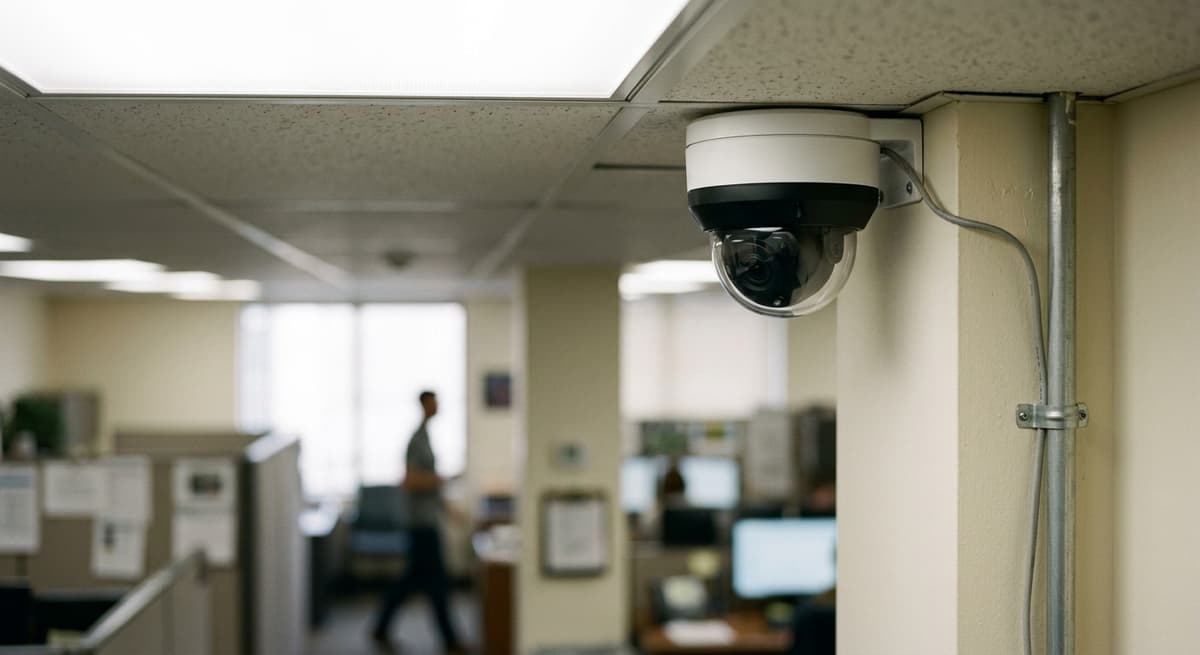
Idaho employers can install video surveillance cameras in the workplace, but the cameras must be placed in areas where employees do not have a reasonable expectation of privacy. Permissible locations include:
- Retail sales floors and customer service areas
- Warehouses, production floors, and loading docks
- Lobbies, reception areas, and building entrances
- Parking lots and exterior areas
- Common break rooms (subject to some limitations)
- Hallways and corridors
Cameras are prohibited in:
- Bathrooms and restrooms
- Locker rooms and changing areas
- Private offices where the employee has been given a privacy expectation
- Nursing or lactation rooms
- Any area specifically designated as private
Placing cameras in prohibited locations violates Idaho Code 18-6605 and may also violate federal workplace safety and privacy standards.
Audio Surveillance by Employers
Employer audio surveillance is more restricted than video. Under Idaho Code 18-6702, intercepting oral communications requires one-party consent. If an employer installs audio recording equipment in a workplace, someone who is a party to the conversations being recorded must consent.
Simply installing a microphone in a break room and recording employee conversations without anyone's knowledge or participation would violate the wiretapping statute. However, an employer who is on a phone call with an employee can record that call under the one-party consent rule.
Employee Monitoring and Electronic Communications
Employer monitoring of electronic communications (email, instant messages, web browsing) is generally governed by different legal frameworks than audio or video recording:
Company-owned devices and networks. Employers generally have the right to monitor communications made using company-owned equipment and networks. Employees typically have a reduced expectation of privacy when using employer-provided devices.
Personal devices. Employers have more limited rights to monitor employees' personal devices, even when those devices are used for work purposes. Accessing an employee's personal phone, email account, or social media without consent may violate federal computer fraud laws.
Notice requirements. While Idaho does not have a specific employee monitoring notification law, providing notice of monitoring practices is a best practice that reduces legal risk and supports any necessary enforcement actions.
Whistleblower Protections
Idaho employees who record workplace conversations for the purpose of documenting illegal activity may have additional protections under whistleblower laws.
Idaho Protection of Public Employees Act
Idaho Code 6-2101 through 6-2109 protects state and local government employees from retaliation for reporting a violation or suspected violation of a law, rule, or regulation, or waste of public funds, property, or manpower, the categories Idaho Code 6-2104 actually protects. Government employees who record conversations to gather evidence of such violations may be protected from adverse employment actions.
Federal Whistleblower Protections
Federal employees and employees in certain regulated industries have additional protections under federal whistleblower statutes, including:
- The Whistleblower Protection Act for federal employees
- OSHA whistleblower protections for employees reporting workplace safety violations
- The Sarbanes-Oxley Act for employees of publicly traded companies reporting financial fraud
These federal protections can shield employees from retaliation for recording conversations that document the reported violations.
Recording in Specific Workplace Scenarios
HR Meetings and Disciplinary Actions
Employees can record HR meetings, disciplinary sessions, and termination conversations in Idaho. These recordings can be valuable for:
- Verifying what was said during a termination meeting
- Documenting promises made by HR about severance, references, or benefits
- Recording the stated reasons for discipline (which can be compared to later stated reasons in litigation)
- Preserving evidence of discriminatory or retaliatory statements
HR professionals should be aware that employees may be recording any workplace interaction. This awareness can help ensure that HR communications are professional, legally compliant, and consistent.
Client and Customer Interactions
Employees who interact with clients, customers, or the public can record those conversations under Idaho's one-party consent rule. This is particularly relevant for:
- Sales representatives documenting verbal commitments
- Service providers recording complaint interactions
- Healthcare workers documenting patient interactions (subject to HIPAA considerations)
- Financial advisors recording client instructions
Union Activities and Collective Bargaining
Employees engaged in union organizing or collective bargaining activities have specific protections under the NLRA. Recording conversations related to these activities is generally protected, and employer policies that chill this activity may be unlawful.
Union representatives conducting grievance meetings, organizing discussions, or collective bargaining sessions may record these interactions unless specifically prohibited by a negotiated agreement between the union and employer.
Remote Work and Video Conferencing
With the rise of remote work, many Idaho employees participate in workplace conversations through video conferencing platforms like Zoom, Microsoft Teams, and Google Meet. Idaho's one-party consent law applies to these conversations, and a participating employee may record them.
However, some video conferencing platforms have built-in recording notifications that may alert other participants when recording begins. Employees should be aware of these platform features even though Idaho law does not require notification.
Recording and Employment Litigation
Admissibility of Workplace Recordings
Recordings made legally under Idaho's one-party consent law are generally admissible as evidence in employment litigation, including:
- Discrimination claims before the Idaho Human Rights Commission
- EEOC complaints and federal discrimination lawsuits
- Wage and hour claims before the Idaho Department of Labor
- Workers' compensation disputes
- Wrongful termination lawsuits
Courts evaluate recordings for authenticity, relevance, and compliance with the rules of evidence, but legally obtained one-party consent recordings are routinely admitted in employment cases.
Recordings in Arbitration and Mediation
Workplace recordings can also be used in alternative dispute resolution proceedings. Arbitrators and mediators may consider recordings as evidence, though the specific rules governing admissibility depend on the arbitration agreement or mediation protocol in place.
Limitations
Even legally obtained recordings have limitations as evidence:
- Recordings that capture protected attorney-client communications may be subject to privilege claims
- Recordings made in violation of company policy, while legal, may reflect negatively on the employee who made them
- Selective recording (recording only favorable interactions) may undermine the recorder's credibility
Best Practices for Employees
If you are considering recording workplace conversations in Idaho:
-
Understand that your recording is legal under Idaho Code 18-6702 as long as you are a participant in the conversation.
-
Review your employer's recording policy. Recording is legal, but violating a company policy could result in discipline or termination.
-
Consider the NLRA protections if your recording relates to wages, working conditions, or other concerted activity.
-
Use reliable recording equipment that produces clear, high-quality audio.
-
Do not alter recordings after they are made. Editing, splicing, or selectively deleting portions of a recording can undermine its evidentiary value and your credibility.
-
Store recordings securely with original metadata intact.
-
Consult an attorney before using recordings in a legal proceeding.
Best Practices for Employers
Idaho employers should take proactive steps to manage recording in the workplace:
-
Draft a clear, lawful recording policy that respects both business needs and employee rights. Avoid blanket bans that could violate the NLRA.
-
Provide notice of any surveillance systems. Even though Idaho does not require notice, transparency reduces legal risk and builds employee trust.
-
Never place cameras or recording devices in private spaces such as bathrooms, locker rooms, or changing areas.
-
Train managers and HR professionals to communicate as if they are being recorded, because they likely are.
-
Consult with employment counsel when addressing recording-related disputes or drafting policies.
Idaho Recording Law Sub-Topics
Audio Recording | Video Recording | Voyeurism Laws | Workplace Recording | Recording Police | Phone Call Recording | Security Cameras | Recording in Public | Landlord-Tenant | Dashcam Laws | School Recording | Medical Recording
More Idaho Recording Topics
More Idaho Laws
Frequently Asked Questions
Can I record my boss in Idaho without telling them?
Yes. Idaho is a one-party consent state under Idaho Code 18-6702, so you can legally record any conversation you participate in without informing your boss or any other participant. However, if your employer has a policy prohibiting recording, violating that policy could result in disciplinary action or termination.
Can my employer record me at work in Idaho?
Your employer can use video surveillance cameras in common work areas such as retail floors, lobbies, and parking lots. Cameras are prohibited in bathrooms, locker rooms, and changing areas. Audio recording by employers must comply with Idaho Code 18-6702, meaning someone who is a party to the recorded conversations must consent.
Can I be fired for recording at work in Idaho?
Yes. Idaho is an at-will employment state, and employers can terminate employees for violating a company no-recording policy. The recording itself is legal under state law, but the termination may also be lawful. However, if your recording relates to protected concerted activity under the NLRA (such as discussing wages or working conditions), termination could violate federal labor law.
Can I use a workplace recording as evidence in a lawsuit in Idaho?
Yes. Recordings made legally under Idaho's one-party consent law are generally admissible as evidence in employment litigation, including discrimination claims, wage disputes, wrongful termination cases, and workers' compensation proceedings. The recording must be authentic, relevant, and unaltered.
Can I use an AI voice recorder or smart glasses at work in Idaho?
Yes. Under Idaho Code 18-6702, you can use wearable recording devices like AI voice recorders (Plaud) or smart glasses (Meta Ray-Bans) to record conversations you participate in at work. Video recording through smart glasses must avoid private spaces like restrooms and locker rooms. Your employer's recording policy may separately restrict these devices.
Updates
Independently fact-checked against the cited primary sources; governing law re-checked for recent changes
Governing law re-checked for recent changes
Corrected the citation for Idaho's at-will employment doctrine: Idaho Code 44-2003 is the state's right-to-work statute barring compelled union membership, not the source of at-will employment.
Governing law re-checked for recent changes
Reviewed and approved by an editor
The Law Behind This Article
This article rests on the statutory provisions below, held in our own legal record and retrieved from the official source. Tap a section to read the operative text.
Idaho Code
§ 18-6702Interception and disclosure of wire, electronic or oral communications prohibitedIn forcecited in 21 of our articles
18-6702. Interception and disclosure of wire, electronic or oral communications prohibited. (1) Except as otherwise specifically provided in this chapter, any person shall be guilty of a felony and is punishable by imprisonment in the state prison for a term not to exceed five (5) years or by a…
Official text (excerpt) · last checked 2026-08-31 · Read the full text in our law library · Verify at legislature.idaho.gov
Cited in 6 court opinions in our collectionLatest citing opinion in our collection: 2019
In the courts (editorial summary, independently checked):Idaho courts have applied section 18-6702 to intercepted phone calls. Hoskins v. Howard (1998) held cordless telephone conversations are protected wire communications, so scanning, recording and disclosing one supported a claim. Chapman v. NYK Line North America (2009) noted 18-6702(2)(d) makes one-party-consent recording lawful.
Opinions citing this section in our collection:
- Hoskins v. Howard (Idaho Supreme Court 1998, 132 Idaho 311)✓A sheriff's deputy used a scanner to record a neighbor's cordless call and passed the tape on; the court held such calls are protected wire communications when part of the call crosses the phone network, so Section 18-6702 reached him, and vacated summary judgment in his favor.
- Chapman v. NYK LINE NORTH AMERICA, INC. (Idaho Supreme Court 2009, 147 Idaho 178)“…rsation with the consent of one party to the conversation. Idaho Code § 18-6702 (2)(d). Of course, an employer could im…”
- Bartnicki v. Vopper (Supreme Court of the United States 2001, 532 U.S. 514)“…16-11-66.1 (1996); Haw. Rev. Stat. § 803-42 (1993); Idaho Code § 18-6702 (1997); Ill. Comp. Stat., ch. 720, § 5…”
Identified automatically from the court opinions citing this section — not a ranking of which case controls.
§ 18-6605video voyeurismIn forcecited in 13 of our articles
18-6605. video voyeurism. (1) As used in this section: (a) "Broadcast" means the electronic transmittal of a visual image with the intent that it be viewed by a person or persons. (b) "Disseminate" means to make available by any means to any person.
Official text (excerpt) · last checked 2026-08-31 · Read the full text in our law library · Verify at legislature.idaho.gov
Cited in 14 court opinions in our collectionLatest citing opinion in our collection: 2026
Opinions citing this section in our collection:
- State v. Gomez-Alas (Idaho Supreme Court 2020, 167 Idaho 857)“…does not constitute an infamous crime against nature under Idaho Code sections 18-6605 and 18-6606; (2) there was…”
- State v. Martinez (Idaho Supreme Court 1986, 111 Idaho 281)“…4 ; Robbery, Idaho Code § 18-6503 ; Crime against nature, Idaho Code § 18-6605 ; Forcible sexual penetration by use of…”
- State v. Cook (Idaho Court of Appeals 2008, 146 Idaho 261)“…is unconstitutional. Id. at 712, 69 P.3d at 132. Idaho Code Section 18-6605, provides: Every pers…”
Identified automatically from the court opinions citing this section — not a ranking of which case controls.
§ 6-2101Legislative intent. The legislature hereby finds, determines and declares that government constitutes a large proportion of the Idaho work force and that it is beneficial to the citizens of this state to protect the integrity of government by providing a legal cause of action for public employees who experience adverse action from their employer as a result of reporting waste and violations of a law, rule or regulationIn forcecited in 2 of our articles
6-2101. Legislative intent. The legislature hereby finds, determines and declares that government constitutes a large proportion of the Idaho work force and that it is beneficial to the citizens of this state to protect the integrity of government by providing a legal cause of action for public…
Official text (excerpt) · last checked 2026-08-01 · Read the full text in our law library · Verify at legislature.idaho.gov
Cited in 18 court opinions in our collectionLatest citing opinion in our collection: 2026
Opinions citing this section in our collection:
- Mallonee v. State (Idaho Supreme Court 2004, 139 Idaho 615)“…he non-moving party on the summary judgment motion. Idaho Code § 6-2101 et seq. is commonly refer…”
- Van v. Portneuf Medical Center, Inc. (Idaho Supreme Court 2014, 156 Idaho 696)“…violation of the Idaho Protection of Public Employees Act, Idaho Code sections 6-2101 to 2109 (the “Whistle-blower Act”). The…”
- Sharon R. Hammer v. City of Sun Valley (Idaho Supreme Court 2016, 414 P.3d 1178)“…to the Idaho Protection of Public Employees Act (“IPPEA”), Idaho Code sections 6-2101, et seq., for retaliatory discharge. Th…”
Identified automatically from the court opinions citing this section — not a ranking of which case controls.
United States Code Title 18
§ 2511Interception and disclosure of wire, oral, or electronic communications prohibitedIn forcecited in 418 of our articles
Except as otherwise specifically provided in this chapter any person who— intentionally intercepts, endeavors to intercept, or procures any other person to intercept or endeavor to intercept, any wire, oral, or electronic communication; intentionally uses, endeavors to use, or procures any other person to use or endeavor to use any electronic, mechanical, or other device to intercept any oral communication when— such device is affixed to, or otherwise transmits a signal through, a wire, cable, or other like connection used in wire communication; or such device transmits communications by radio, or interferes with the transmission of such communication; or such person knows, or has reason to know, that such device or any component thereof has been sent through the mail or transported in interstate or foreign commerce; or such use or endeavor to use (A) takes place on the premises of any business or other commercial establishment the operations of which affect interstate or foreign commerce; or (B) obtains or is for the purpose of obtaining information relating to the operations of any business or other commercial establishment the operations of which affect interstate or foreign…
Official text (excerpt) · last checked 2026-08-28 · Read the full text in our law library · Verify at uscode.house.gov
Cited in 2,045 court opinions in our collectionLatest citing opinion in our collection: 2026
In the courts (editorial summary, independently checked):Griggs-Ryan v. Smith (1990) applied the Section 2511(2)(d) prior-consent exception, treating a tenant repeatedly told that all incoming calls were taped as having impliedly consented. United States v. United States District Court (1972) read the then-current Section 2511(3) as conferring no presidential surveillance power.
Opinions citing this section in our collection:
- Mitchell v. Forsyth (Supreme Court of the United States 1985, 472 U.S. 511)✓The Attorney General authorized a warrantless 1970 national security wiretap that caught the plaintiff's calls; the Court held the since-repealed Section 2511(3) disclaimer left the tap lawful under Title III, and that Mitchell had qualified immunity.
- United States v. United States District Court for the Eastern District of Michigan (Supreme Court of the United States 1972, 407 U.S. 297)✓The Attorney General approved warrantless wiretaps on members of a domestic group accused of bombing a CIA office; the Court read Section 2511(3) as a congressional disclaimer conferring no surveillance power, then held the Fourth Amendment required prior judicial approval.
- Forsyth v. Barr (Court of Appeals for the Fifth Circuit 1994, 19 F.3d 1527)✓Dallas police used, in an internal affairs probe of an officer, calls private parties allegedly intercepted illegally; assuming that was unlawful, the Fifth Circuit held Section 2517(1) and (2) allowed the disclosure and use, defeating the Section 2511(1)(c) and (d) claims.
Identified automatically from the court opinions citing this section — not a ranking of which case controls.
Search our full record of US law — 2.1 million sections, every state + federal →
Sources and References
- Idaho Code 18-6702 - Interception and Disclosure of Communications(legislature.idaho.gov).gov
- Idaho Code 18-6605 - Video Voyeurism(legislature.idaho.gov).gov
- Idaho Code 6-2101 - Protection of Public Employees(legislature.idaho.gov).gov
- Idaho Department of Labor(labor.idaho.gov).gov
- National Labor Relations Act(nlrb.gov).gov
- U.S. Equal Employment Opportunity Commission(eeoc.gov).gov
- 18 U.S.C. 2511 - Federal Wiretap Statute(law.cornell.edu)