
Iowa
Iowa Audio Recording Laws: One-Party Consent Rules and Penalties (2026)
Independently fact-checked against primary sources (last audited August 15, 2026). · Reviewed by the RecordingLaw editorial team. · Law checked current as of August 15, 2026. · 7 primary sources cited on this page. How we verify our legal content
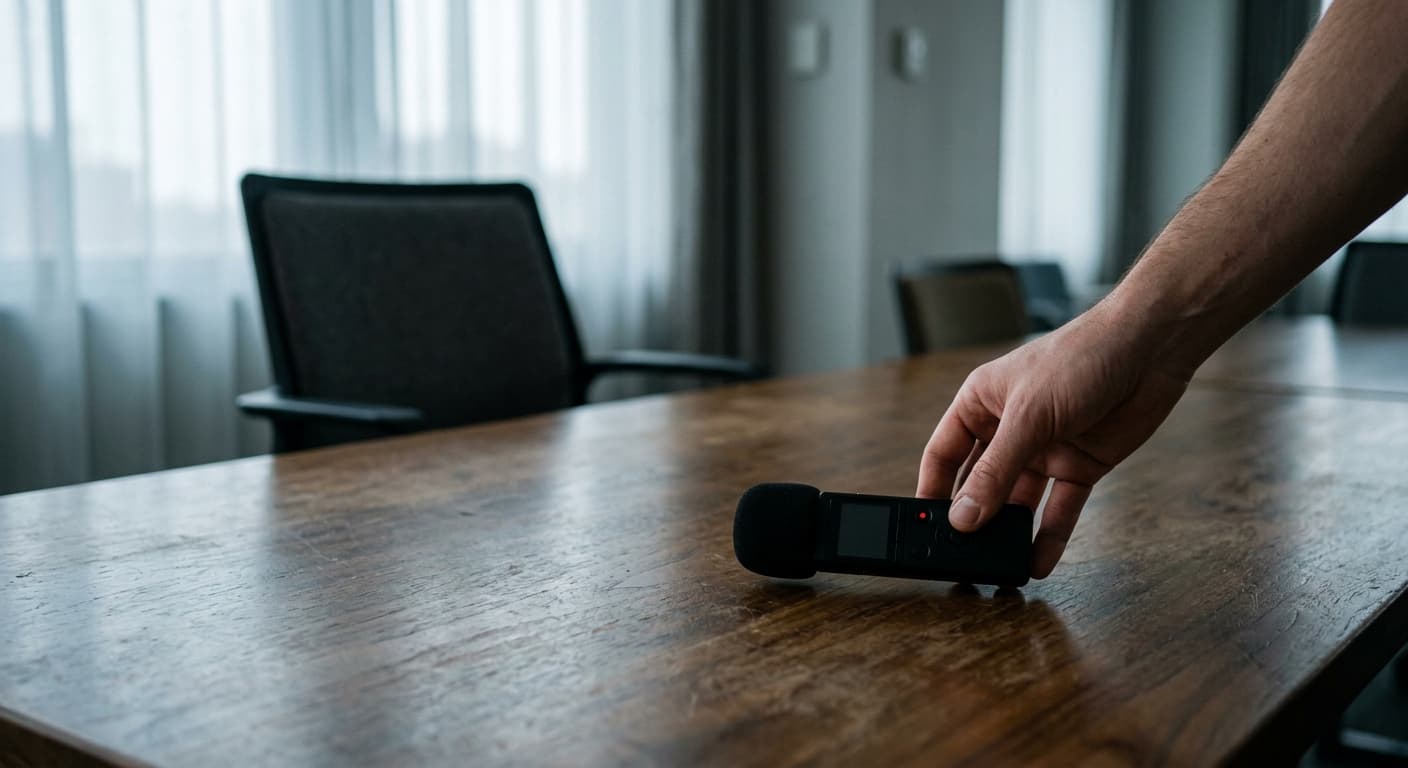
Iowa is a one-party consent state for audio recording. Under Iowa Code 808B.2, any participant in a conversation may record it without notifying the other parties. The exception does not apply when a recording is made for a criminal, tortious, or injurious purpose, and violations are a Class D felony.
Iowa allows audio recording of conversations under a one-party consent framework. Under Iowa Code Section 808B.2, you can legally record any phone call or in-person conversation as long as you are a participant or have obtained consent from at least one person involved. You do not need to inform the other parties that a recording is taking place.
However, Iowa's consent exception includes a unique limitation: the recording must not be made "for the purpose of committing a criminal or tortious act" or "for the purpose of committing any other injurious act." This guide covers the specific statutes governing audio recording in Iowa, the penalties for violations, how recordings are treated as evidence, and practical guidance for common situations.
Iowa One-Party Consent Law for Audio Recording
The Core Statute: Iowa Code 808B.2
Iowa's audio recording framework is established in Chapter 808B of the Iowa Code. Section 808B.1 defines the types of communications covered:
Wire communication means any aural transfer made in whole or in part through the use of facilities for the transmission of communications by wire, cable, or other similar connection. This covers landline phone calls, VoIP calls, and similar transmissions.
Oral communication means any oral communication uttered by a person exhibiting an expectation that the communication is not subject to interception, under circumstances justifying that expectation. This covers in-person conversations where the speaker has a reasonable privacy expectation.
Electronic communication means any transfer of signs, signals, writing, images, sounds, data, or intelligence of any nature transmitted in whole or in part by a wire, radio, electromagnetic, photoelectronic, or photooptical system. This covers text messages, emails, and digital communications.
Section 808B.2 makes it a crime to willfully intercept, endeavor to intercept, or procure any other person to intercept or endeavor to intercept any wire, oral, or electronic communication.
The One-Party Consent Exception
Under Iowa Code 808B.2(2)(c), it is not unlawful for a person acting under color of law or for any other person to intercept a wire, oral, or electronic communication where the person is a party to the communication or one of the parties to the communication has given prior consent to the interception, unless the communication is intercepted for the purpose of committing a criminal or tortious act in violation of the Constitution or laws of the United States or of any state or for the purpose of committing any other injurious act.
In practical terms, this means:
- You can record any phone call you are part of without telling the other person
- You can record in-person conversations you participate in without announcing the recording
- You can use a voice recorder, smartphone app, or any other device to capture conversations you are involved in
- A third party can record a conversation if at least one participant has given consent
The "No Criminal, Tortious, or Injurious Purpose" Limitation
Iowa's one-party consent exception is narrower than many other states because of its purpose limitation. Your recording loses legal protection if it is made for the purpose of:
Committing a crime such as blackmail, extortion, or harassment. If you record someone with the intent to use the recording to threaten or coerce them, the one-party consent exception does not apply.
Committing a tortious act such as invasion of privacy or defamation. If you record a conversation with the intent to selectively edit and distribute it to harm someone's reputation, the exception may not protect you.
Committing any other injurious act that causes harm to another person. This is the broadest category and could potentially include recordings made with the intent to embarrass, humiliate, or cause emotional distress.
Recording for legitimate purposes remains fully legal. These include documenting business transactions, preserving evidence for legal disputes, personal record-keeping, journalism, and protecting yourself in workplace or consumer disputes.
How Iowa Defines "Consent"
Iowa's statute does not require written or verbal consent. The consent of one party to the communication is sufficient. When you record a conversation you are participating in, your own awareness of the recording constitutes consent. No additional notice, disclosure, or agreement from the other parties is necessary under state law.
This is different from two-party consent states like California, Illinois, and Pennsylvania, where every participant must agree before recording begins.
Types of Audio Recording Covered Under Iowa Law
In-Person Conversations
The "oral communication" definition in Section 808B.1 covers in-person audio recording. You can legally record face-to-face conversations in Iowa when:
- You are an active participant in the conversation
- At least one participant has consented to the recording
- The recording is not made for a criminal, tortious, or injurious purpose
- The conversation takes place in any location, including private settings
You cannot legally record in-person conversations when:
- You are not a participant and no participant has consented
- You plant a recording device and leave the area to capture conversations you are not part of
- The recording is made for a prohibited purpose under 808B.2(2)(c)
The concept of "reasonable expectation of privacy" matters for oral communications. A conversation in a private office carries stronger privacy protections than a conversation on a busy public sidewalk. However, one-party consent applies regardless of the setting as long as you are a participant.
Telephone and VoIP Calls
The "wire communication" definition covers all telephone transmissions. Under one-party consent, you can record:
- Landline phone calls you participate in
- Cell phone calls you are part of
- VoIP calls through platforms like Zoom, Microsoft Teams, Google Meet, and Skype
- Video calls with audio components
- Conference calls where you are a participant
Electronic Communications
Section 808B.2 also covers electronic communications, including text-based and data transmissions. The interception of electronic communications without the consent of a party falls under the same statutory framework.
Voicemail and Stored Communications
Accessing someone else's voicemail or stored audio messages without authorization may violate both state and federal law. The federal Stored Communications Act (18 U.S.C. 2701) prohibits unauthorized access to stored electronic communications and works alongside Iowa's state provisions.
Iowa's Separate Eavesdropping Statute: Iowa Code 727.8
In addition to Chapter 808B, Iowa has a separate eavesdropping law under Iowa Code 727.8. This statute makes it a serious misdemeanor for any person, without right or authority, to:
- Tap into or connect a listening or recording device to any telephone or communication wire
- Use any electronic or mechanical means to listen to, record, or otherwise intercept a conversation or communication of any kind
Section 727.8 includes three important exceptions:
- Participant recording: A sender or recipient of a message, or a person openly present and participating in or listening to a communication, may record it
- Radio and wireless signals: Using a radio or television receiver to receive broadcast communications is permitted
- Monitoring devices: Property owners and lessees may use monitoring devices placed on their own real property for crime prevention purposes
The eavesdropping statute carries lighter penalties than Chapter 808B, but it provides an additional layer of protection against unauthorized audio surveillance. A violation of 727.8 is a serious misdemeanor rather than a felony.
Criminal Penalties for Illegal Audio Recording in Iowa
Iowa treats illegal audio interception as a serious criminal offense. The penalties differ depending on which statute is violated.
Class D Felony Under Iowa Code 808B.2
Unlawful interception of wire, oral, or electronic communications under Iowa Code 808B.2 is a Class D felony. Under the Iowa Criminal Sentencing Guidelines:
| Penalty | Amount |
|---|---|
| Prison time | Up to 5 years |
| Base fine (before surcharges) | $1,025 to $10,245 |
| Fine with surcharges | Exceeds $10,245 (Iowa Code Chapter 911 surcharges are added on top and are not capped by this range) |
| Crime services surcharge | 15% of fine |
| Court costs | Additional fees apply |
These penalty amounts are set by Iowa Code 902.9, with surcharges added under Iowa Code Chapter 911.
Serious Misdemeanor Under Iowa Code 727.8
Violation of Iowa's eavesdropping law is a serious misdemeanor:
| Penalty | Amount |
|---|---|
| Jail time | Up to 1 year |
| Fine | $430 to $2,560 |
Unlawful Disclosure Penalties
Iowa Code 808B.2 also makes it a crime to willfully disclose or use the contents of any wire, oral, or electronic communication that was illegally intercepted, knowing or having reason to know that the information was obtained through illegal interception. This means sharing an illegally recorded conversation carries the same Class D felony penalties as making the recording.
Civil Liability for Illegal Audio Recording

Under Iowa Code 808B.8, victims of illegal audio recording may bring a civil lawsuit and recover:
- Liquidated damages of $100 per day for each day of violation, or $1,000, whichever is greater
- Actual damages suffered as a result of the violation
- Punitive damages if the violation was willful, malicious, or reckless
- Injunctive relief to stop the illegal recording or prevent distribution
- Attorney's fees and reasonable litigation costs
A good faith reliance on a court order is a complete defense to both civil and criminal actions under this chapter.
The civil cause of action exists independently of any criminal prosecution. A victim can pursue both criminal charges and a civil lawsuit based on the same illegal recording.
Audio Recordings as Evidence in Iowa Courts
General Admissibility
Audio recordings made legally under Iowa's one-party consent law are generally admissible as evidence in court proceedings. To admit a recording, the offering party must establish:
- Authentication: Proof that the recording is genuine and has not been tampered with or altered. Keeping the original file with its metadata intact strengthens your case.
- Relevance: The recording must relate to a matter at issue in the case
- Identification of speakers: The voices on the recording must be identified, either by the recording party or through other testimony
- Completeness: Courts may require that the full recording (not just selected portions) be made available
Iowa courts follow the Iowa Rules of Evidence, which are modeled on the Federal Rules of Evidence. Under Iowa Rule of Evidence 5.901, evidence must be authenticated by showing it is what the proponent claims it to be.
Criminal Cases
In criminal proceedings, illegally obtained audio recordings are typically inadmissible under the exclusionary rule. The person who made the illegal recording may also face felony charges. Iowa Code 808B.7 specifically provides that illegally intercepted communications and evidence derived from them cannot be received in evidence in any trial, hearing, or other proceeding before any court, grand jury, department, officer, agency, regulatory body, legislative committee, or other authority.
Civil Cases
Iowa courts may apply a broader balancing test in civil proceedings, but illegally obtained audio evidence can still be excluded. The party who made the illegal recording also faces potential civil liability under Iowa Code 808B.8.
Family Law Cases
Audio recordings are frequently used in Iowa family law cases, including divorce, custody, and protective order proceedings. Iowa family courts generally allow legally obtained recordings as evidence when they are relevant to the issues being decided. Common uses include:
- Documenting verbal threats or harassment
- Recording conversations about child custody arrangements
- Preserving evidence of violations of court orders
- Capturing admissions relevant to property division
Audio Recording Across State Lines
When Iowa Law Applies
Iowa's one-party consent law applies when you are physically located in Iowa and recording a conversation. When one party is in Iowa and the other is in a different state, determining which law applies can be more complex.
States Bordering Iowa and Their Consent Requirements
| State | Consent Requirement | Key Statute |
|---|---|---|
| Illinois | Two-party consent (with exceptions) | 720 ILCS 5/14-2 |
| Minnesota | One-party consent | Minn. Stat. 626A.02 |
| Missouri | One-party consent | Mo. Rev. Stat. 542.402 |
| Nebraska | One-party consent | Neb. Rev. Stat. 86-702 |
| South Dakota | One-party consent | S.D. Codified Laws 23A-35A-20 |
| Wisconsin | One-party consent | Wis. Stat. 968.31 |
Illinois is the only neighboring state with a stricter consent requirement. If you are in Iowa recording a call with someone in Illinois, the stricter Illinois law may apply to that interaction.
Best Practices for Cross-Border Audio Recording
- Determine where the other party is located before recording
- If the other party is in a two-party consent state, consider informing them
- Get explicit verbal consent at the start of the call when in doubt
- Document the consent on the recording itself
Federal Law and Iowa Audio Recording
The Federal Wiretap Act
The federal Wiretap Act (18 U.S.C. 2511) follows a one-party consent model, which aligns with Iowa's approach. Under federal law, recording a conversation is legal as long as at least one party consents. Since Iowa's one-party consent standard matches the federal baseline, recordings that are legal under Iowa law are also legal under federal law.
When Federal Law Adds Additional Protections
Federal law may provide additional protections in certain situations:
- Recording on federal property may be subject to federal regulations
- Communications involving federal law enforcement may be governed by federal wiretap law
- Interstate communications may trigger federal jurisdiction
AI Recording and Transcription Tools in Iowa
The rise of AI-powered recording and transcription tools raises new considerations under Iowa's audio recording laws.
Legal Status in Iowa
Because Iowa follows one-party consent, you can use AI transcription services, meeting assistants, and voice recorders to capture conversations you participate in. This includes:
- AI meeting bots that join video calls (such as Otter.ai or Fireflies)
- Smartphone apps that record and transcribe calls
- Wearable AI voice recorders like Plaud
- Built-in transcription features in Zoom, Microsoft Teams, and Google Meet
Practical Considerations
- Data security: AI services may store recordings on third-party servers. Understand where your audio data goes, how long it is retained, and who has access.
- Transcript accuracy: AI transcription is not perfect. Errors in automated transcripts could be problematic if the transcript is later used as evidence.
- Notice as courtesy: While one-party consent means you do not have to disclose AI recording, doing so as a professional courtesy can maintain relationships and avoid disputes.
Common Audio Recording Scenarios in Iowa
Can I Record a Conversation With My Lawyer?
Yes, as a participant in the conversation, you can record discussions with your attorney under one-party consent. The attorney-client privilege protects the contents of the conversation regardless of whether it is recorded. However, your lawyer may have ethical rules about recording and may object.
Can I Record Customer Service Calls?
Yes. When a business plays a message stating "this call may be recorded," that is the business exercising its one-party consent right. You have the same right as the other party on the call. You can record any customer service call you participate in without additional notice.
Can Someone Else Record My Conversation for Me?
A third party can record a conversation on your behalf if you are a participant and you consent to the recording. For example, you could ask a friend to operate a recording device during your own conversation with someone else. The key requirement is that at least one party to the conversation consents.
Can I Record a Conversation in a Public Place?
Conversations in public spaces where others can freely overhear carry reduced privacy protections. Recording your own conversations in restaurants, cafes, or other public venues is legal under one-party consent. However, you still cannot use a device to secretly record other people's private conversations that you are not part of.
More Iowa Recording Laws
Audio Recording | Video Recording | Voyeurism and Hidden Cameras | Workplace Recording | Recording Police | Phone Call Recording | Security Cameras | Recording in Public | Landlord-Tenant Recording | Dashcam Laws | School Recording | Medical Recording
More Iowa Recording Topics
More Iowa Laws
Frequently Asked Questions
Is it legal to audio record a conversation in Iowa without telling the other person?
Yes. Iowa is a one-party consent state under Iowa Code 808B.2(2)(c). As a participant in the conversation, your own knowledge of the recording satisfies the consent requirement. You do not need to inform or get permission from the other person. This applies to both in-person conversations and phone calls, as long as the recording is not made for a criminal, tortious, or injurious purpose.
What are the penalties for illegally recording audio in Iowa?
Illegal interception under Iowa Code 808B.2 is a Class D felony, carrying up to 5 years in prison and fines ranging from $1,025 to $10,245 before Chapter 911 surcharges, which are added on top and push the total higher. Eavesdropping under Iowa Code 727.8 is a serious misdemeanor with up to 1 year in jail and fines up to $2,560. Victims can also file civil lawsuits seeking liquidated damages, actual damages, punitive damages, and attorney fees.
Can an illegally recorded audio conversation be used as evidence in Iowa?
Generally, no. Iowa Code 808B.7 specifically provides that illegally intercepted communications cannot be received in evidence in any trial, hearing, or other proceeding. In criminal cases, the exclusionary rule bars such evidence. The person who made the illegal recording may also face felony charges.
What does the no criminal, tortious, or injurious purpose limitation mean in Iowa?
Iowa's one-party consent exception only applies when the recording is not made for a prohibited purpose. If you record a conversation with the intent to commit a crime (such as blackmail), a tort (such as defamation), or any other injurious act, the one-party consent exception does not protect you. Recording for legitimate purposes like evidence preservation, journalism, or personal records remains fully legal.
Does Iowa's one-party consent law apply to phone calls with people in other states?
Iowa's one-party consent law governs recordings made within Iowa. However, if you call someone in a two-party consent state like Illinois (Iowa's neighbor), the stricter state law may apply. The safest approach is to inform the other party and get consent when calling someone in a state with stricter requirements.
Updates
Independently fact-checked against the cited primary sources; governing law re-checked for recent changes
Corrected the evidentiary-exclusion rule's citation from Iowa Code 808B.2 (the offense/consent-exceptions section) to the correct Iowa Code 808B.5, which is Iowa's actual 'prohibition of use as evidence of intercepted communications' provision.
Corrected the evidentiary-exclusion citation from Iowa Code 808B.5 to 808B.7: 808B.5 is the pretrial-application/order provision for authorized wiretaps (its only evidence-adjacent clause is a narrow 10-day pretrial notice requirement), while 808B.7, 'Contents of intercepted wire, oral, or electronic communication as evidence,' is Iowa's actual general rule barring illegally intercepted communications and derived evidence from any trial, hearing, or proceeding.
Governing law re-checked for recent changes
Corrected the Class D felony fine table and FAQ: Iowa Code 902.9 sets the base fine at $1,025-$10,245 (not $750-$7,500), with Chapter 911 surcharges added on top rather than already included in that range.
Governing law re-checked for recent changes
Reviewed and approved by an editor
The Law Behind This Article
This article rests on the statutory provisions below, held in our own legal record and retrieved from the official source. Tap a section to read the operative text.
Iowa Code, Chapter 808B: INTERCEPTION OF COMMUNICATIONS
§ 808B.2Unlawful acts — penalty.In forcecited in 18 of our articles
1. Except as otherwise specifically provided in this chapter, a person who does any of the following commits a class “D” felony: a. Willfully intercepts, endeavors to intercept, or procures any other person to intercept or endeavor to intercept, a wire, oral, or electronic communication. b. Willfully uses, endeavors to use, or procures any other person to use or endeavor to use an electronic, mechanical, or other device to intercept any oral communication when either of the following applies: (1) The device is affixed to, or otherwise transmits a signal through, a wire, cable, or other like connection used in wire communication. (2) The device transmits communications by radio, or interferes with the transmission of radio communications. c. Willfully discloses, or endeavors to disclose, to any other person the contents of a wire, oral, or electronic communication, knowing or having reason to know that the information was obtained through the interception of a wire, oral, or electronic communication in violation of this subsection. d.
Official text (excerpt) · last checked 2026-08-31 · Read the full text in our law library · Verify at legis.iowa.gov
Cited in 10 court opinions in our collectionLatest citing opinion in our collection: 2017
In the courts (editorial summary, independently checked):Iowa courts have applied 808B.2 to covert recordings by private parties. State v. Spencer (2007) read its one-party consent exception to include vicarious consent, but only where a parent has a good faith, objectively reasonable basis for consenting for a minor child. Papillon v. Jones (2017) applied it to a hidden home recorder.
Opinions citing this section in our collection:
- Brenda Papillon v. Bryon Jones (Supreme Court of Iowa 2017, 892 N.W.2d 763)✓A man left a hidden voice-activated recorder in his ex-girlfriend's home and captured her private phone calls, then used them in their custody case; the court affirmed liability under Section 808B.2 but held punitive damages require proof he knew he was violating the chapter.
- Amended June 6, 2017 Brenda Papillon v. Bryon Jones (Supreme Court of Iowa 2017)“…n in district court against Jones, alleging a violation of Iowa Code section 808B.2, which prohibits “willfully intercept[…”
- Iowa Beta Chapter of Phi Delta Theta Fraternity v. State, University of Iowa (Supreme Court of Iowa 2009, 763 N.W.2d 250)✓A nonmember hid a recorder in a fraternity's private meeting room and gave the tape to university officials who used it to discipline the chapter; the court held the tape was a protected oral communication and read "willfully" in Section 808B.2 to mean purposeful conduct.
Identified automatically from the court opinions citing this section — not a ranking of which case controls.
Iowa Code, Chapter 727: HEALTH, SAFETY, AND WELFARE
§ 727.8Electronic and mechanical eavesdropping.In forcecited in 15 of our articles
1. “Monitoring device” means a digital video or audio streaming or recording device that records, listens to, or otherwise intercepts video or audio communications in order to provide proof of or prevent criminal activity that is placed outside of a person’s dwelling or other structure that is not in a shared hallway and is on real property owned or leased by the person. 2. Any person, having no right or authority to do so, who taps into or connects a listening or recording device to any telephone or other communication wire, or who by any electronic or mechanical means listens to, records, or otherwise intercepts a conversation or communication of any kind, commits a serious misdemeanor. 3. This section does not apply to any of the following: a. The recording by a sender or recipient of a message or one who is openly present and participating in or listening to a communication from recording such message or communication. b. The use of any radio or television receiver to receive any communication transmitted by radio or wireless signal. c. The use of a monitoring device.
Official text (excerpt) · last checked 2026-07-29 · Read the full text in our law library · Verify at legis.iowa.gov
Cited in 8 court opinions in our collectionLatest citing opinion in our collection: 2024
In the courts (editorial summary, independently checked):State v. Reid (1986) read the section's exception to let a sender, recipient, or person openly present and participating record a conversation without all-party consent or a court order. State v. Philpott (2005) affirmed a conviction for leaving a voice-activated recorder running in an office during the defendant's absence.
Opinions citing this section in our collection:
- State v. Philpott (Supreme Court of Iowa 2005, 702 N.W.2d 500)✓A court clerk left a voice-activated recorder running on her desk while at lunch, capturing coworkers; the court affirmed her section 727.8 conviction, holding a jury could find she intended to record conversations that took place during her absence.
- State v. Reid (Supreme Court of Iowa 1986, 394 N.W.2d 399)✓Police had a ten-year-old girl call the defendant and taped the call, then videotaped his station interview without telling him; the court held both recordings fell within section 727.8's exception for a participant, so no court order or all-party consent was needed.
- State v. Fox (Supreme Court of Iowa 1992, 493 N.W.2d 829)✓A deputy monitored a county jail inmate's outgoing phone call, and what she said led to a cell search that turned up marijuana; the court held the right or authority to monitor under section 727.8 comes from chapter 808B, whose law-enforcement exception covered him.
Identified automatically from the court opinions citing this section — not a ranking of which case controls.
Iowa Code, Chapter 902: FELONIES
§ 902.9Maximum sentence for felons.In forcecited in 7 of our articles
1. The maximum sentence for any person convicted of a felony shall be that prescribed by statute or, if not prescribed by statute, if other than a class “A” felony shall be determined as follows: a. Reserved. b. A class “B” felon shall be confined for no more than twenty-five years. c. An habitual offender shall be confined for no more than fifteen years. d. A class “C” felon, not an habitual offender, shall be confined for no more than ten years, and in addition shall be sentenced to a fine of at least one thousand three hundred seventy dollars but not more than thirteen thousand six hundred sixty dollars. e. A class “D” felon, not an habitual offender, shall be confined for no more than five years, and in addition shall be sentenced to a fine of at least one thousand twenty-five dollars but not more than ten thousand two hundred forty-five dollars. 2. The surcharges required by sections 911.1, 911.2A, and 911.5 shall be added to a fine imposed on a class “C” or class “D” felon, as provided by those sections, and are not a part of or subject to the maximums set in this section.
Official text (excerpt) · last checked 2026-07-29 · Read the full text in our law library · Verify at legis.iowa.gov
Cited in 166 court opinions in our collectionLatest citing opinion in our collection: 2026
Opinions citing this section in our collection:
- State of Iowa v. Andre Letroy Antwan Harrington (Supreme Court of Iowa 2017)“…a sentence of incarceration greater than one year. See Iowa Code § 902.9(1)(a)–(e). Thus, any immigrati…”
- State v. Ayers (Supreme Court of Iowa 1999, 590 N.W.2d 25)“…imposed a $500 fine for each conviction. See Iowa Code §§ 902.9 (3), 903.1(2). Ayers appeals onl…”
- State v. Iowa District Court for Black Hawk County (Supreme Court of Iowa 2000, 616 N.W.2d 575)“…of incarceration not to exceed ten years. See Iowa Code § 902.9 (setting forth a maximum sentence of t…”
Identified automatically from the court opinions citing this section — not a ranking of which case controls.
Minnesota Statutes, Chapter 626A: WIRE, ELECTRONIC, OR ORAL COMMUNICATIONS; INTERCEPTION
§ 626A.02INTERCEPTION AND DISCLOSURE OF WIRE, ELECTRONIC, OR ORAL COMMUNICATIONS PROHIBITEDIn forcecited in 18 of our articles
Subdivision 1. Offenses. Except as otherwise specifically provided in this chapter any person who: (1) intentionally intercepts, endeavors to intercept, or procures any other person to intercept or endeavor to intercept, any wire, electronic, or oral communication; (2) intentionally uses, endeavors to use, or procures any other person to use or endeavor to use any electronic, mechanical, or other device to intercept any oral communication when: (i) such device is affixed to, or otherwise transmits a signal through, a wire, cable, or other like connection used in wire communication; or (ii) such device transmits communications by radio, or interferes with the transmission of such communication; (3) intentionally discloses, or endeavors to disclose, to any other person the contents of any wire, electronic, or oral communication, knowing or having reason to know that the information was obtained through the interception of a wire, electronic, or oral communication in violation of this subdivision; or (4) intentionally uses, or endeavors to use, the contents of any wire, electronic, or oral communication, knowing or having reason to know that the information was obtained through the…
Official text (excerpt) · last checked 2026-08-31 · Read the full text in our law library · Verify at revisor.mn.gov
Cited in 20 court opinions in our collectionLatest citing opinion in our collection: 2025
In the courts (editorial summary, independently checked):Copeland v. Hubbard Broadcasting, Inc. (1995) applied the 626A.02 party exemption, finding a secret recording made for commercial newsgathering was not intercepted for the purpose of a tortious act. State v. Page (1986) held an officer's use of a regular telephone extension in the ordinary course of duty was not an interception.
Opinions citing this section in our collection:
- Copeland v. Hubbard Broadcasting, Inc. (Court of Appeals of Minnesota 1995, 526 N.W.2d 402)“…l to the federal wiretapping statutes. Compare Minn.Stat. § 626A.02, subd. 1 (1992), with 18…”
- State v. Page (Court of Appeals of Minnesota 1986, 386 N.W.2d 330)“…g rule applies. See 18 U.S.C. § 2511 (1982); Minn.Stat. § 626A.02 (1984). The federal rule makes it unlaw…”
- State v. Olkon (Supreme Court of Minnesota 1980, 299 N.W.2d 89)✓An undercover deputy posing as an injury client taped his calls and office meetings with a lawyer later convicted of attempted theft by swindle; the court rejected suppression, holding one party's consent meant no warrant was needed, citing the statute's consent exception.
Identified automatically from the court opinions citing this section — not a ranking of which case controls.
Wisconsin Statutes, Chapter 968: Commencement Of Criminal Proceedings
§ 968.31Interception and disclosure of wire, electronic or oral communications prohibited.In forcecited in 22 of our articles
(1) Except as otherwise specifically provided in ss. 196.63 or 968.28 to 968.30, whoever commits any of the acts enumerated in this section is guilty of a Class H felony: (a) Intentionally intercepts, attempts to intercept or procures any other person to intercept or attempt to intercept, any wire, electronic or oral communication. (b) Intentionally uses, attempts to use or procures any other person to use or attempt to use any electronic, mechanical or other device to intercept any oral communication. (c) Discloses, or attempts to disclose, to any other person the contents of any wire, electronic or oral communication, knowing or having reason to know that the information was obtained through the interception of a wire, electronic or oral communication in violation of this section or under circumstances constituting violation of this section. (d) Uses, or attempts to use, the contents of any wire, electronic or oral communication, knowing or having reason to know that the information was obtained through the interception of a wire, electronic or oral communication in violation of this section or under circumstances constituting violation of this section.
Official text (excerpt) · last checked 2026-08-31 · Read the full text in our law library · Verify at docs.legis.wisconsin.gov
Cited in 23 court opinions in our collectionLatest citing opinion in our collection: 2026
In the courts (editorial summary, independently checked):State v. Maloney held recordings made with one party's prior consent fall under Section 968.31(2)(b) and (c), and that aiding a police sting is not an "injurious act." State v. Gilmore pointed to 968.31(2m) damages and 968.31(1)(e) penalties, reserving suppression for illegal interceptions.
Opinions citing this section in our collection:
- State v. Maloney (Wisconsin Supreme Court 2005, 281 Wis. 2d 595)✓A homicide suspect's girlfriend let police record her hotel room conversations with him in Las Vegas; the court held the videotapes lawful under 968.31(2)(b) and (c) because she was a consenting party, and that helping a lawful sting is not an injurious act.
- State v. Popenhagen (Wisconsin Supreme Court 2008, 309 Wis. 2d 601)“…Arnold, 51 Wis.2d at 442 , 187 N.W.2d 354 (citing Wis. Stat. § 968.31 (2)(b)). However, in considering all th…”
- State v. Gilmore (Wisconsin Supreme Court 1996, 201 Wis. 2d 820)✓Prosecutors filed a public complaint quoting 27 pages of lawfully wiretapped calls; the court held the unsealed filing violated the surveillance law but refused suppression, pointing to the civil action in 968.31(2m) and the criminal penalty in 968.31(1)(e) as the remedies.
Identified automatically from the court opinions citing this section — not a ranking of which case controls.
United States Code Title 18
§ 2511Interception and disclosure of wire, oral, or electronic communications prohibitedIn forcecited in 418 of our articles
Except as otherwise specifically provided in this chapter any person who— intentionally intercepts, endeavors to intercept, or procures any other person to intercept or endeavor to intercept, any wire, oral, or electronic communication; intentionally uses, endeavors to use, or procures any other person to use or endeavor to use any electronic, mechanical, or other device to intercept any oral communication when— such device is affixed to, or otherwise transmits a signal through, a wire, cable, or other like connection used in wire communication; or such device transmits communications by radio, or interferes with the transmission of such communication; or such person knows, or has reason to know, that such device or any component thereof has been sent through the mail or transported in interstate or foreign commerce; or such use or endeavor to use (A) takes place on the premises of any business or other commercial establishment the operations of which affect interstate or foreign commerce; or (B) obtains or is for the purpose of obtaining information relating to the operations of any business or other commercial establishment the operations of which affect interstate or foreign…
Official text (excerpt) · last checked 2026-08-28 · Read the full text in our law library · Verify at uscode.house.gov
Cited in 2,045 court opinions in our collectionLatest citing opinion in our collection: 2026
In the courts (editorial summary, independently checked):Griggs-Ryan v. Smith (1990) applied the Section 2511(2)(d) prior-consent exception, treating a tenant repeatedly told that all incoming calls were taped as having impliedly consented. United States v. United States District Court (1972) read the then-current Section 2511(3) as conferring no presidential surveillance power.
Opinions citing this section in our collection:
- Mitchell v. Forsyth (Supreme Court of the United States 1985, 472 U.S. 511)✓The Attorney General authorized a warrantless 1970 national security wiretap that caught the plaintiff's calls; the Court held the since-repealed Section 2511(3) disclaimer left the tap lawful under Title III, and that Mitchell had qualified immunity.
- United States v. United States District Court for the Eastern District of Michigan (Supreme Court of the United States 1972, 407 U.S. 297)✓The Attorney General approved warrantless wiretaps on members of a domestic group accused of bombing a CIA office; the Court read Section 2511(3) as a congressional disclaimer conferring no surveillance power, then held the Fourth Amendment required prior judicial approval.
- Forsyth v. Barr (Court of Appeals for the Fifth Circuit 1994, 19 F.3d 1527)✓Dallas police used, in an internal affairs probe of an officer, calls private parties allegedly intercepted illegally; assuming that was unlawful, the Fifth Circuit held Section 2517(1) and (2) allowed the disclosure and use, defeating the Section 2511(1)(c) and (d) claims.
Identified automatically from the court opinions citing this section — not a ranking of which case controls.
§ 2701Unlawful access to stored communicationsIn forcecited in 19 of our articles
Except as provided in subsection (c) of this section whoever— intentionally accesses without authorization a facility through which an electronic communication service is provided; or intentionally exceeds an authorization to access that facility; and thereby obtains, alters, or prevents authorized access to a wire or electronic communication while it is in electronic storage in such system shall be punished as provided in subsection (b) of this section. The punishment for an offense under subsection (a) of this section is— if the offense is committed for purposes of commercial advantage, malicious destruction or damage, or private commercial gain, or in furtherance of any criminal or tortious act in violation of the Constitution or laws of the United States or any State— a fine under this title or imprisonment for not more than 5 years, or both, in the case of a first offense under this subparagraph; and a fine under this title or imprisonment for not more than 10 years, or both, for any subsequent offense under this subparagraph; and in any other case— a fine under this title or imprisonment for not more than 1 year or both, in the case of a first offense under this paragraph;…
Official text (excerpt) · last checked 2026-07-28 · Read the full text in our law library · Verify at uscode.house.gov
Cited in 724 court opinions in our collectionLatest citing opinion in our collection: 2026
Opinions citing this section in our collection:
- United States v. Warshak (Court of Appeals for the Sixth Circuit 2010, 631 F.3d 266)“…ied in good faith on the Stored Communications Act (“SCA”), 18 U.S.C. §§ 2701 et seq., a statute that allows the gove…”
- Guest v. Leis (Court of Appeals for the Sixth Circuit 2001, 255 F.3d 325)“…7 *340 In their brief, plaintiffs mention in passing 18 U.S.C. § 2701 , which prohibits intentional unlawful…”
- City of Ontario v. Quon (Supreme Court of the United States 2010, 560 U.S. 746)“…Raising claims under Rev. Stat. §1979, 42 U. S. C. §1983; 18 U. S. C. §2701 et seq., popularly known as the Stored…”
Identified automatically from the court opinions citing this section — not a ranking of which case controls.
Explore the law
This article also draws on these acts and chapters (opening at their first section): Iowa Code, Chapter 808B: INTERCEPTION OF COMMUNICATIONS § 808B.1 (Definitions.) · Iowa Code, Chapter 911: SURCHARGE ADDED TO CRIMINAL PENALTIES § 911.1 (Crime services surcharge.)
Related law for further reading — not part of this article’s citations.
Search our full record of US law — 2.1 million sections, every state + federal →
Sources and References
- Iowa Code Chapter 808B - Interception of Communications(legis.iowa.gov).gov
- Iowa Code 808B.2 - Unlawful Acts and Penalty(legis.iowa.gov).gov
- Iowa Code 727.8 - Electronic and Mechanical Eavesdropping(legis.iowa.gov).gov
- Iowa Code 902.9 - Maximum Sentence for Felons(legis.iowa.gov).gov
- Iowa Code Chapter 911 - Surcharge Added to Criminal Penalties(legis.iowa.gov).gov
- Iowa Criminal Sentencing Guidelines 2024(iowacourts.gov).gov
- Iowa Rule of Evidence 5.901 - Authenticating or Identifying Evidence(legis.iowa.gov).gov
- 18 U.S.C. 2511 - Federal Wiretap Act(law.cornell.edu)
- 18 U.S.C. 2701 - Stored Communications Act(law.cornell.edu)