Automated License Plate Reader (ALPR) Laws Explained (2026)
Independently fact-checked against primary sources (last audited September 11, 2026). · 8 primary sources cited on this page. How we verify our legal content
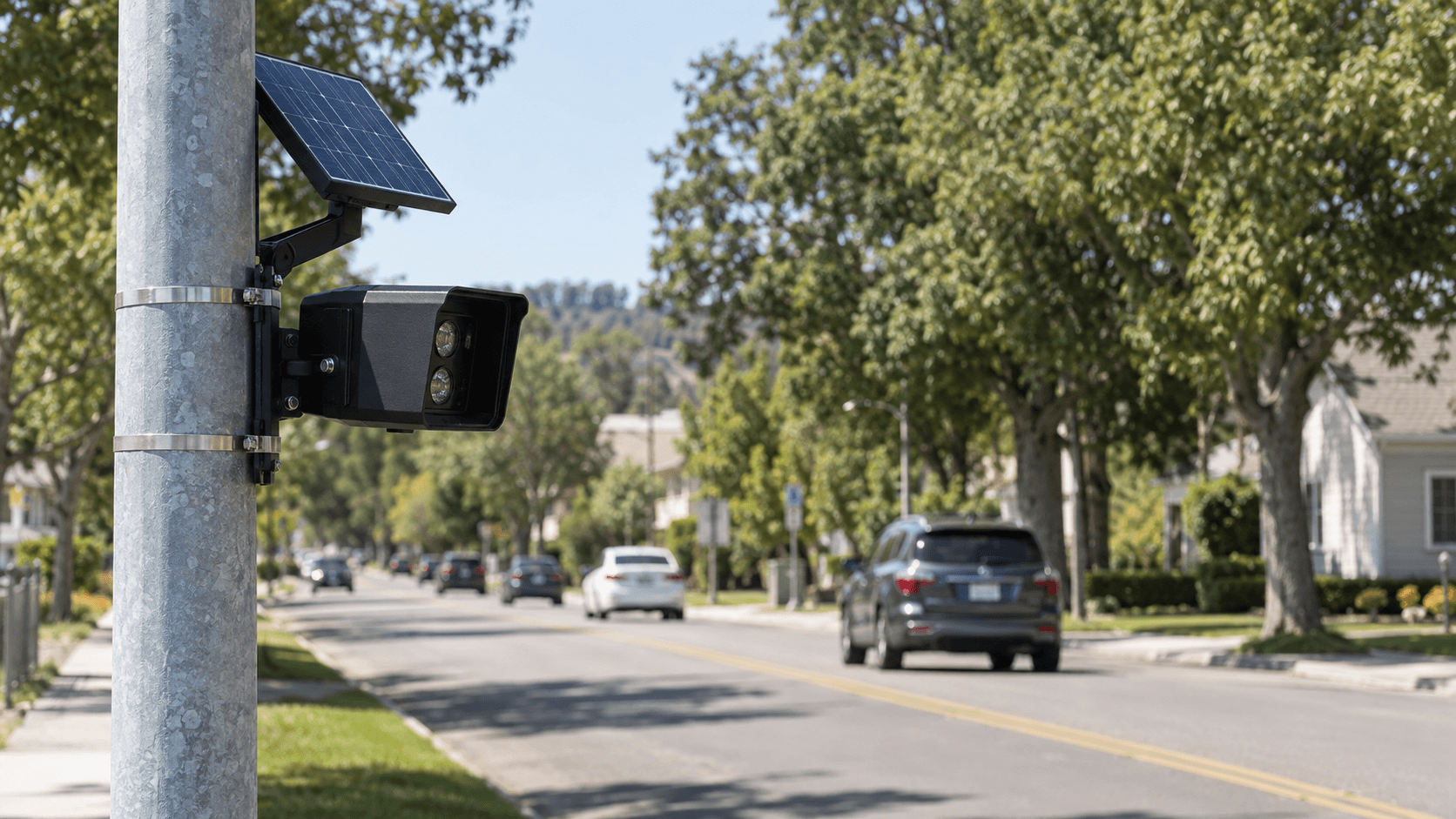
Automated license plate readers turn plate images, times, and locations into searchable records. The legality of an ALPR program depends on the operator, jurisdiction, purpose, retention, access, and sharing rules. This guide explains those questions and links directly to a section for every state and the District of Columbia.
Information reviewed September 11, 2026.
Scope: This hub addresses US automated license plate reader laws through current examples from California, Maryland, and Montana, plus carefully limited federal case context. State rules differ and may change. Use the linked comparison section and current primary authority for the jurisdiction involved.
What is an automated license plate reader?
An automated license plate reader, usually called an ALPR or LPR, combines a camera with software that reads a vehicle plate and creates a searchable record. A record can include the plate characters, capture time, location, an image, and other vehicle details. California Civil Code §1798.90.5 defines an ALPR system in terms of cameras, algorithms, and the resulting searchable database, which helps show that the legal issue extends beyond the physical camera.
Different steps can create different legal questions. A city may approve installation at a public meeting, an operator may collect and store the records, an officer may conduct a query, a vendor may host the database, and another agency may request access. A rule that permits one step does not necessarily authorize the others.

ALPRs also differ from cameras dedicated to issuing red-light or speed citations. A plate-reader system may collect records from passing vehicles without issuing any citation. For traffic enforcement cameras, see the traffic camera ticket guide.
What controls whether an ALPR program is lawful?
The answer begins with the jurisdiction and the act being evaluated. State statutes may define who is an operator or end-user, require a written policy, restrict permissible purposes, set retention periods, regulate sharing, or require audits and access logs. Local ordinances, contracts, and agency policies can add operational limits, while constitutional rules apply to the government conduct challenged in a particular case.
The operator matters because public agencies, vendors, businesses, and neighborhood associations do not always have identical duties. California, for example, defines operators and end-users separately and gives the term “person” a broad meaning under Civil Code §1798.90.5. Its surrounding provisions assign specific duties to covered operators and public agencies rather than creating a single permission for every user of the technology.
The safest research method is to separate five questions: who owns or operates the system, what data it collects, why a record is searched, how long data remains available, and who can receive it. A complete answer may require a statute, the agency's current policy, a contract or amendment, and an access or audit record.
How do California, Maryland, and Montana regulate ALPRs?
These three states illustrate different statutory structures. They are examples rather than substitutes for the ALPR laws by state comparison, which identifies the source and scope for every state and DC. A provision from one state should not be carried into another state's analysis.
California
California Civil Code §1798.90.51 requires covered operators to maintain reasonable safeguards and a public written usage and privacy policy. Required topics include authorized purposes, users and training, monitoring, sharing, custody, accuracy, retention, and destruction. Section 1798.90.52 requires access records with the date and time, query information, user and affiliation, and purpose, and limits use to authorized purposes.
A public agency that operates or plans to operate an ALPR system must provide an opportunity for public comment before implementation under Civil Code §1798.90.55(a). Subsection (b) restricts a public agency's sale, sharing, or transfer of ALPR information to another public agency and only as otherwise permitted by law, with a clarification for data-hosting and towing services.
Maryland
Maryland Public Safety §3-509 requires a legitimate law-enforcement purpose for using captured plate data. Historical data belongs to the agency and cannot be sold. Vendor access requires the agency's express request and authorization, and the statute restricts uploads while expressly addressing the Maryland Coordination and Analysis Center database.

The same section requires operational procedures, an audit process, privacy safeguards, personnel screening and training, breach reporting, and annual reporting. It separately excludes ALPR information from disclosure under the Maryland Public Information Act. The section does not specify a numeric retention period.
Montana
MCA §46-5-117 starts with a public-highway restriction for state and local agencies, then provides enumerated exceptions, including a law-enforcement exception with conditions. Covered police use requires a public written policy, annual auditing, access records, and use for specified official purposes. A positive reader match alone does not establish reasonable suspicion; the statute requires independent suspicion or its specified visual and other confirmation.
MCA §46-5-118 generally limits covered police data to 90 days. It allows longer retention through a qualifying preservation request or specified warrant and defines information a preservation request must contain. Montana therefore should not be described either as a complete police ALPR ban or as unrestricted authorization.
How do Flock's retention statements affect a local system?
Flock's published materials distinguish a general policy, customer-specific agreements, and a later product update. Its August 12, 2026 Evidence Policy states a 30-day standard unless a customer agreement provides otherwise, and says data is irretrievable after the retention period expires. Those are company representations and do not replace a state statute or identify the configuration of a particular account.
On August 13, Flock announced an updated seven-day recommendation and default, together with a forthcoming Evidence Mode for selected investigative records. The announcement expressly states that existing customers will keep their approved retention periods. It therefore does not prove that every installed camera changed to seven days.
For a fuller explanation of vendor, account, state-law, and case distinctions, read Are Flock Cameras Legal?. For a named agency, check its current agreement, policy revision date, retention setting, and any legally authorized preservation procedure.
What do recent court decisions establish?
Court decisions must be limited to the system, record, claim, and procedural posture they actually address. In Schmidt v. City of Norfolk, the Eastern District of Virginia granted summary judgment to the defendants on January 27, 2026. The plaintiffs had standing to challenge collection and storage but lacked standing to challenge database queries on the record presented, and the merits analysis focused on the proved capabilities and observational gaps of Norfolk's network.
An opening brief filed April 13, 2026 identifies Fourth Circuit No. 26-1227. The district opinion also does not approve every ALPR network or every database query nationwide.

Chatrie v. United States, decided June 29, 2026, concerned Google's Location History rather than ALPR data. The Supreme Court held that acquiring the location history at issue was a Fourth Amendment search, vacated the judgment, and remanded warrant-validity questions. Chatrie supplies context for location-data analysis but does not create a universal ALPR warrant rule.
Compare ALPR law in every state and DC
The comparison page contains one linked section for each state and the District of Columbia. Each link below goes to that jurisdiction's heading on the comparison page. The directory does not claim that every state has a dedicated ALPR statute or that all 51 jurisdictions follow the same categories.
Use the jurisdiction section as an entry point. Read its classification and limitations, open the cited primary source, and check effective dates before applying the rule to a current program.
How can residents evaluate a local ALPR program?
Start with documents tied to the specific operator. Useful materials include the current usage and privacy policy, the governing body's agenda and meeting record, the contract and amendments, the stated retention setting, sharing-partner controls, annual reports, and access or audit logs. These documents answer different questions and may be subject to different disclosure rules.
Do not assume that a vendor statement about customer control authorizes every disclosure. California's transfer restriction and Maryland's historical-data and vendor provisions illustrate why the governing statute still matters. Do not assume that a system alert itself establishes legal grounds for a stop either; Montana has an express match-alone limitation.
This guide does not promise access to an individual's raw plate history. A records request, public meeting process, agency complaint, or legal claim has requirements set by the relevant jurisdiction.
Last updated: September 11, 2026. This is general legal information, not legal advice.
Frequently Asked Questions
Are license plate reader cameras legal in every state?
There is no vendor-wide permission that resolves every activity. State and local rules can separately govern operation, searches, retention, sharing, vendors, audits, and public process. Use the linked jurisdiction section and its current primary authority.
Does every state have a specific ALPR statute?
This hub makes no categorical claim that every state does or does not have one. The comparison classifies each jurisdiction according to the authority verified for that section and states important limits or unresolved points.
How long is ALPR data retained?
The answer depends on applicable law, agency policy, the customer agreement, and a valid preservation process. Montana generally uses 90 days for the covered police data, while Flock's August 2026 announcement recommends seven days but preserves existing customers' approved periods.
Did Schmidt approve all Flock searches?
No. The Norfolk district-court opinion was tied to its evidentiary record, and the plaintiffs lacked standing to challenge database queries on that record.
Did Chatrie decide the constitutionality of ALPRs?
No. Chatrie concerned Google Location History. It held that the acquisition at issue was a search and remanded warrant-validity questions, but it did not decide an ALPR claim.
Where can I check my state's ALPR rule?
Use the state links above to open the matching section of the ALPR comparison page. Review the classification, source, scope, effective date, and limitations before relying on the entry.
Updates
Updated ALPR legal examples and court context; added the Flock guide and links to all 50 states and DC, with a Spanish version.
Independently fact-checked against the cited primary sources
Corrected the description of the Johnson County, Texas ALPR searches to match EFF's actual reporting (a first search of 1,295 networks/17,684 cameras reaching into Illinois and Washington, then a broader May 9 search of 6,809 networks/83,345 cameras), softened Flock Safety's client-community count to reflect that it moved from roughly 5,000 to more than 6,000 during 2026, and updated the Javorsky v. Flock class action to reflect its removal to federal court (N.D. Cal., No. 3:26-cv-02382) and first amended complaint.
Corrected Norfolk's Flock camera count from 176 to 172. The actual Schmidt v. City of Norfolk opinion (filed 2025-08-15) states the city 'operate[s] a network of 172 Flock cameras,' and a later Virginia Court of Appeals decision addressing the same Norfolk system (Robinson v. Commonwealth, April 2026) independently confirms 172 cameras. The other case-law specifics in this section (the ~188-camera Richmond/Chesterfield network in United States v. Martin, the 'merely augment the same inherent sensory faculties' quote, the mosaic-theory rejection, the Richmond venue, and the January 27, 2026 Schmidt summary-judgment date) were all independently confirmed correct against the actual opinions and required no fix.
The Law Behind This Article
This article rests on the statutory provisions below, held in our own legal record and retrieved from the official source. Tap a section to read the operative text.
California Civil Code
§ 1798.90.5In forcecited in 2 of our articles
The following definitions shall apply for purposes of this title: (a) “Automated license plate recognition end-user” or “ALPR end-user” means a person that accesses or uses an ALPR system, but does not include any of the following: (1) A transportation agency when subject to Section 31490 of the Streets and Highways Code. (2) A person that is subject to Sections 6801 to 6809, inclusive, of Title 15 of the United States Code and state or federal statutes or regulations implementing those sections, if the person is subject to compliance oversight by a state or federal regulatory agency with respect to those sections. (3) A person, other than a law enforcement agency, to whom information may be disclosed as a permissible use pursuant to Section 2721 of Title 18 of the United States Code. (b) “Automated license plate recognition information,” or “ALPR information” means information or data collected through the use of an ALPR system. (c) “Automated license plate recognition operator” or “ALPR operator” means a person that operates an ALPR system, but does not include a transportation agency when subject to Section 31490 of the Streets and Highways Code.
Official text (excerpt) · last checked 2026-07-28 · Read the full text in our law library · Verify at leginfo.legislature.ca.gov
Also relied on in: San Francisco Police Audit: Flock License Plate Data Improperly Searched for Federal Agencies (2026)
Maine Revised Statutes, Title 29-A: MOTOR VEHICLES AND TRAFFIC, Chapter 19: OPERATION
§ 2117-AUse of automated license plate recognition systemsIn force
1. Definitions. As used in this section, unless the context otherwise indicates, "automated license plate recognition system" means a system of one or more mobile or fixed high-speed cameras combined with computer algorithms to convert images of registration plates into computer-readable data. "Automated license plate recognition system" does not include a photo-monitoring system, as defined in Title 23, section 1980, subsection 2‑A, paragraph B, subparagraph (4), when used by the Maine Turnpike Authority or a law enforcement agency for toll enforcement purposes. 2. Prohibition. Except as otherwise provided in subsection 3, a person may not use an automated license plate recognition system. 3. Exception. Subsection 2 does not apply to: A. The Department of Transportation for the purposes of protecting public safety and transportation infrastructure; [PL 2009, c. 605, §1 (NEW).] B. The Department of Public Safety, Bureau of State Police for the purposes of commercial motor vehicle screening and inspection; and [PL 2009, c. 605, §1 (NEW).] C.
Official text (excerpt) · last checked 2026-07-30 · Read the full text in our law library · Verify at legislature.maine.gov
Code of Virginia, Title 2.2: Administration of Government
§ 2.2-5517Use of automatic license plate recognition systems by law-enforcement agenciesIn force
A. For purposes of this section: "Audit trail" means all records of queries and responses in an automatic license plate recognition system, and all records of actions in which system data is accessed, entered, updated, shared, or disseminated, including the (i) date and time of access; (ii) license plate number or other data elements used to query the system; (iii) specific purpose, as set forth in subsection D, for accessing or querying the system, including the offense type for any criminal investigation; (iv) associated call for service or case number; and (v) username of the person or persons who accessed or queried the system. "Audit trail data" means all forms of data collected or generated by an automatic license plate recognition system for purposes of producing an audit trail. "Automatic license plate recognition system" or "system" means a system of one or more high-speed cameras used in combination with computer algorithms to convert images of license plates, vehicles, or a combination of both into computer-readable data. "Division" means the Division of Purchases and Supply of the Department of General Services.
Official text (excerpt) · last checked 2026-07-29 · Read the full text in our law library · Verify at law.lis.virginia.gov
Search our full record of US law — 2.1 million sections, every state + federal →
Sources and References
- Civil Code §§1798.90.51(leginfo.legislature.ca.gov).gov
- 1798.90.52(leginfo.legislature.ca.gov).gov
- 1798.90.55(leginfo.legislature.ca.gov).gov
- Civil Code §1798.90.5(leginfo.legislature.ca.gov).gov
- Evidence Policy(www.flocksafety.com)
- August 13, 2026 announcement(www.flocksafety.com)
- MCA §46-5-118(mca.legmt.gov).gov
- Maryland Public Safety §3-509(mgaleg.maryland.gov).gov
- MCA §46-5-117(mca.legmt.gov).gov
- Schmidt v. City of Norfolk, No. 2:24-cv-00621, opinion filed January 27, 2026(ij.org)
- opening brief filed April 13, 2026(ij.org)
- Chatrie v. United States, No. 25-112, decided June 29, 2026(www.supremecourt.gov).gov