
Tennessee
Tennessee Audio Recording Laws: One-Party Consent Rules and Penalties
Independently fact-checked against primary sources (last audited August 15, 2026). · Reviewed by the RecordingLaw editorial team. · Law checked current as of August 15, 2026. · 6 primary sources cited on this page. How we verify our legal content

Tennessee is a one-party consent state under Tenn. Code Ann. 39-13-601, so you can legally audio record any conversation you participate in without notifying the other parties. Recording a private conversation you are not part of, without consent from at least one participant, is a Class D felony.
Tennessee allows you to audio record any conversation you participate in without telling the other people involved. The state's wiretapping and electronic surveillance law, Tenn. Code Ann. section 39-13-601, establishes Tennessee as a one-party consent state. This means one person in the conversation must know about and agree to the recording, and that person can be you.
This guide explains Tennessee's audio recording laws in detail, covering what types of recordings are legal, where the boundaries are, what penalties exist for violations, and how to use audio recordings as evidence.
Tennessee's Audio Recording Statute Explained
The Core Legal Framework
Tennessee's recording laws are codified in Title 39, Chapter 13, Part 6 of the Tennessee Code Annotated under the heading "Invasion of Privacy." The key provision, section 39-13-601, prohibits the intentional interception of wire, oral, or electronic communications without the consent of at least one party to the communication.
The statute creates exceptions for several categories, including:
- Recordings made by a party to the communication or with prior consent from one party
- Law enforcement interceptions authorized by court order
- Communications service providers acting within normal business operations
- Interception of electronic communications through a system configured to be readily accessible to the general public, or of certain public-safety and amateur radio transmissions
Three Categories of Protected Communications
Tennessee law distinguishes between three types of communications that the audio recording statute protects:
Wire communications include any aural transfer made in whole or in part through wire, cable, or similar connection. This covers traditional telephone calls, VoIP services, and any audio transmitted through a wired connection.
Oral communications are spoken words uttered by a person who has a reasonable expectation that the communication is not being intercepted. This is the category that governs most in-person conversation recording. The reasonable expectation of privacy requirement means that conversations in truly public settings may not qualify for protection.
Electronic communications encompass any transfer of signs, signals, writing, images, sounds, data, or intelligence transmitted electronically. This covers text-based communications, digital audio transmissions, and similar electronic formats.
The Reasonable Expectation of Privacy Standard
For oral communications, the protection only applies when the speaker reasonably expects privacy. Courts evaluate this on a case-by-case basis, considering factors such as:
- The location where the conversation took place
- The volume at which the speakers were talking
- Whether steps were taken to prevent others from overhearing
- The presence or absence of other people nearby
- Whether the area was public, semi-public, or private
A whispered conversation in a closed office carries a strong expectation of privacy. A loud conversation on a busy sidewalk does not. This distinction determines whether one-party consent is even needed for a particular recording.
Legal Audio Recording Scenarios in Tennessee

Recording Your Own Conversations
The most straightforward application of the law is recording conversations you participate in. As a party to the conversation, your own consent satisfies the one-party requirement. You can use:
- A smartphone recording app
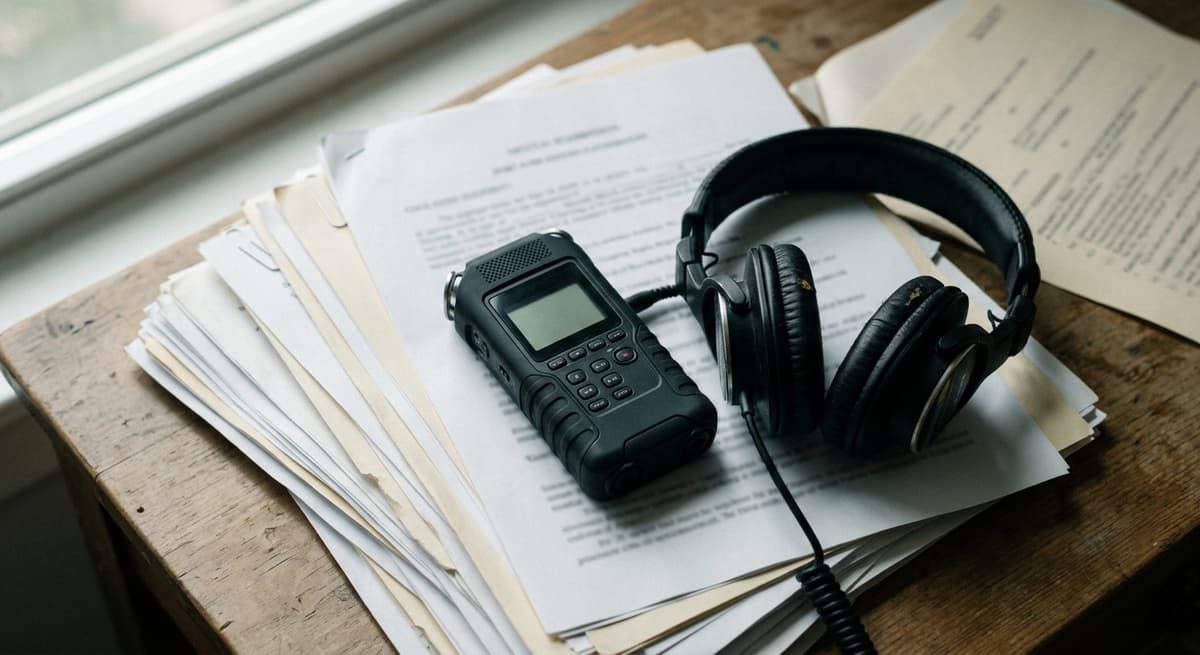
- A dedicated digital voice recorder
- A wearable recording device
- Computer software that captures audio
- Any other electronic device capable of recording sound
You do not need to inform the other participants, place the recording device in plain sight, or obtain any form of written or verbal permission.
Recording With Third-Party Consent
You do not need to be the one doing the recording. If someone else gives you consent to record their conversation, that consent satisfies the one-party requirement. For example, if a friend asks you to record their meeting because they cannot take notes, the friend's consent as a party to the meeting makes your recording legal.
The consenting party must be an actual participant in the conversation, not merely someone who knows about it. A bystander who overhears a conversation and agrees to your recording does not satisfy the consent requirement if they are not part of the conversation itself.
Recording in Public Places
Because Tennessee's wiretapping statute only protects oral communications where the speaker has a reasonable expectation of privacy, recording audio in many public settings does not require any consent at all. Examples include:
- Street conversations that anyone could overhear
- Speeches at public rallies or demonstrations
- Public government meetings covered by the Tennessee Open Meetings Act
- Loud exchanges in restaurants, stores, or parks
- Statements made at press conferences or public events
However, even in public spaces, some conversations may carry a privacy expectation. Two people speaking quietly at a secluded park bench might reasonably expect privacy despite being technically in public.
Illegal Audio Recording in Tennessee

What Crosses the Line
Audio recording becomes illegal in Tennessee when:
- You record a private conversation that you are not a party to and lack consent from any participant
- You use electronic surveillance equipment to intercept communications without authorization
- You record for the purpose of committing a criminal or tortious act, even if you are a party to the conversation
- You disclose or use the contents of a communication you know was illegally intercepted
The Intent Requirement
Tennessee's statute requires that the interception be "intentional." Accidental recordings, such as a voice recorder that was left running by mistake, generally do not trigger criminal liability. However, once you become aware of the accidental recording, continuing to listen to or use its contents could create legal exposure.
The criminal purpose exception is also important. You cannot record a conversation, even one you are part of, if your purpose is to facilitate a crime. This includes recording as part of a blackmail scheme, recording to gather information for stalking, or recording to further any other illegal objective.
Penalties for Violations
Criminal Penalties
| Offense | Classification | Penalty |
|---|---|---|
| Illegal interception of wire or oral communications | Class D Felony | 2 to 12 years imprisonment, up to $5,000 fine |
| Illegal disclosure of intercepted communications | Class D Felony | 2 to 12 years imprisonment, up to $5,000 fine |
| Cellular or cordless phone interception | Class A Misdemeanor | Up to 11 months 29 days, up to $2,500 fine |
| Cellular interception with dissemination | Class E Felony | 1 to 6 years imprisonment |
Sentencing falls within these ranges based on the defendant's prior criminal history under Tenn. Code Ann. section 40-35-112.
Civil Penalties
Tennessee repealed its state civil cause of action for illegal interception, former Tenn. Code Ann. section 39-13-603, effective May 28, 2024 under 2024 Tenn. Pub. Ch. 1045 (SB 2221), section 3. Tennessee law no longer provides a state civil remedy, including the former $10,000 statutory minimum, for victims of illegal recording.
Victims may still be able to pursue civil damages under the federal Wiretap Act, 18 U.S.C. section 2520, when the interception also violates federal law. Federal statutory damages are the greater of $100 per day or $10,000, plus punitive damages and attorney fees in appropriate cases, but that claim proceeds in federal court under federal law, not Tennessee's repealed statute.
Audio Recording in Specific Settings
In the Workplace
Tennessee employees can legally audio record workplace conversations they participate in. This includes meetings with supervisors, HR discussions, disciplinary hearings, and conversations with coworkers. Employers can also record in common work areas.
However, employers may have policies prohibiting recording. While violating such a policy is not a crime, it can lead to termination in Tennessee's at-will employment environment. The National Labor Relations Board has found that blanket no-recording policies can violate workers' Section 7 rights in certain circumstances.
In Your Home
You can record conversations in your own home when you are a participant. You cannot install hidden recording devices to capture conversations between other people in your home when you are not present. Placing a recorder in a room and leaving to capture what guests say without your participation crosses into illegal wiretapping territory.
During Legal Proceedings
Audio recording inside Tennessee courtrooms is subject to the rules of the presiding judge and Tennessee Supreme Court Rule 30, which governs media coverage of court proceedings. You should not assume that one-party consent gives you the right to record inside a courtroom.
Depositions and other formal legal proceedings have their own recording rules governed by the Tennessee Rules of Civil Procedure. Court reporters typically handle official recording of depositions.
Medical Appointments
Patients in Tennessee can record their own medical appointments under the one-party consent law. HIPAA does not prohibit patients from recording their own visits. However, healthcare providers may have policies about recording. A provider could ask you to stop recording or could decline to continue the appointment.
Using Audio Recordings as Evidence
Admissibility Standards
Audio recordings are generally admissible in Tennessee courts if they were made legally and meet basic evidentiary requirements:
- Authenticity: The recording must be shown to be genuine and unaltered
- Relevance: The content must relate to an issue in the case
- Audibility: The recording must be clear enough for the jury or judge to understand
- Identification: Witnesses must be able to identify the voices on the recording
Under the Tennessee Rules of Evidence, the party offering the recording must lay a proper foundation before it can be admitted.
Preserving Audio Evidence
To maximize the evidentiary value of an audio recording:
- Save the original file without any editing
- Record the date, time, location, and participants immediately
- Store the file securely with at least one backup copy
- Avoid sharing the recording before legal proceedings
- Maintain a written log of when and how the recording was made
- Consult an attorney about procedures for presenting audio evidence
Illegally Obtained Recordings
Recordings obtained in violation of Tenn. Code Ann. section 39-13-601 are generally not admissible in Tennessee courts. The exclusionary principle serves as a deterrent against illegal surveillance. Additionally, the person who made the illegal recording faces both criminal prosecution and civil liability.
Tennessee Recording Laws by Topic
Phone Call Recording | Audio Recording | Video Recording | Workplace Recording | Recording Police | Security Cameras | Recording in Public | Landlord-Tenant | Dashcam Laws | Schools | Medical Recording | Voyeurism & Hidden Cameras
Back to Tennessee Recording Laws
More Tennessee Recording Topics
More Tennessee Laws
Frequently Asked Questions
Can I audio record a conversation in Tennessee without telling anyone?
Yes. Tennessee is a one-party consent state under Tenn. Code Ann. section 39-13-601. If you are a participant in the conversation, your own consent is enough to make the recording legal. You do not need to inform or get permission from anyone else.
Is it legal to secretly record someone in Tennessee?
It depends on whether you are part of the conversation. If you are participating in the conversation, you can record it secretly. If you are not part of the conversation and do not have consent from any participant, recording it is a Class D felony.
Can I record a conversation in a public place in Tennessee without consent?
Generally yes. Tennessee's wiretapping law only protects oral communications where the speaker has a reasonable expectation of privacy. In most public settings, speakers do not have this expectation, so audio recording does not require consent from anyone.
What happens if I illegally record someone in Tennessee?
Illegal audio recording is a Class D felony under Tenn. Code Ann. section 39-13-602, carrying 2 to 12 years in prison and fines up to $5,000. Tennessee repealed its state civil cause of action for illegal recording, former section 39-13-603, effective May 28, 2024. A victim may still be able to sue in federal court under the federal Wiretap Act, 18 U.S.C. section 2520.
Can audio recordings be used as evidence in Tennessee court?
Yes. Audio recordings made in compliance with Tennessee's one-party consent law are generally admissible in both criminal and civil cases. The recording must be authenticated, relevant, and audible. Illegally obtained recordings are typically excluded.
Updates
Independently fact-checked against the cited primary sources; governing law re-checked for recent changes
Governing law re-checked for recent changes
Removed a fabricated 'emergency situations involving immediate danger' exception from the list of Tenn. Code Ann. section 39-13-601 exceptions and replaced it with an exception the statute actually contains (readily-accessible electronic communications and certain radio transmissions).
Governing law re-checked for recent changes
Corrected this page to reflect that Tennessee repealed its state civil damages statute (Tenn. Code Ann. section 39-13-603) effective May 28, 2024; victims of illegal recording may still pursue civil damages under the federal Wiretap Act, 18 U.S.C. section 2520.
Reviewed and approved by an editor
The Law Behind This Article
This article rests on the statutory provisions below, held in our own legal record and retrieved from the official source. Tap a section to read the operative text.
Tennessee Code Annotated
§ 39-13-601Wiretapping and electronic surveillance — Prohibited acts — Exceptions.In forcecited in 20 of our articles
(a)(1) Except as otherwise specifically provided in §§ 39-13-601 — [former] 39-13-603 [repealed] and title 40, chapter 6, part 3, a person commits an offense who: (A) Intentionally intercepts, endeavors to intercept, or procures any other person to intercept or endeavor to intercept, any wire, oral
Official text (excerpt) · last checked 2026-08-31 · Read the full text in our law library · Verify at publications.tnsosfiles.com
Cited in 25 court opinions in our collectionLatest citing opinion in our collection: 2026
In the courts (editorial summary, independently checked):Lawrence v. Lawrence held a parent may vicariously consent under Section 39-13-601 to recording a 2 1/2-year-old child's phone call with the other parent. State of Tennessee v. Henry Floyd Sanders noted that a body-wire recording made with one party's consent is lawful under the section's exceptions.
Opinions citing this section in our collection:
- Lawrence v. Lawrence (Court of Appeals of Tennessee 2010, 360 S.W.3d 416)“…called upon to construe the term “consent” as it is used in Tenn. Code Ann. § 39-13-601 to determine whether Mother had an “unr…”
- Harold Dean McDaniel v. Kimberly Ruth McDaniel (Court of Appeals of Tennessee 2010)“…ourt: I have had an opportunity to look at T.C.A. 39-13-601(a)(1), (A) and (B), and…”
- State of Tennessee v. Henry Floyd Sanders (Tennessee Supreme Court 2014, 452 S.W.3d 300)✓Police recorded a front yard conversation in which a man admitted touching his ex-partner's daughter; the court upheld admission of the recording as a voluntary statement to a confidante and noted that this type of recording is sanctioned as lawful by 39-13-601(b)(4)-(5).
Identified automatically from the court opinions citing this section — not a ranking of which case controls.
§ 39-13-603Civil actions — Injunctive relief — Damages — Defenses — Limitation of actions.Repealedcited in 11 of our articles
(a) Except as provided in § 39-13-601(b)(4), any aggrieved person whose wire, oral or electronic communication is intentionally intercepted, disclosed, or used in violation of § 39-13-601 or title 40, chapter 6, part 3 may in a civil action recover from the person or entity that engaged in that…
Official text (excerpt) · last checked 2026-08-06 · Read the full text in our law library · Verify at publications.tnsosfiles.com
Cited in 8 court opinions in our collectionLatest citing opinion in our collection: 2018
Opinions citing this section in our collection:
- Robinson v. Fulliton (Court of Appeals of Tennessee 2003, 140 S.W.3d 312)“…il damages provision of the Tennessee wiretapping statutes, Tenn. Code Ann. § 39-13-603. The trial court, sitting without a jur…”
- Montgomery v. Montgomery (Court of Appeals of Tennessee 2005, 181 S.W.3d 720)“…0), whichever is greater” plus attorney fees and costs. See Tenn. Code Ann. § 39-13-603(a)(1). On appeal, Defendant argues that…”
- State of Tennessee v. William Keith Paulson, alias (Court of Criminal Appeals of Tennessee 2009)“…ted.” Violation of subsection (a) is a Class A misdemeanor. T.C.A. § 39-13-603(a)(3). As previously noted, subsection…”
Identified automatically from the court opinions citing this section — not a ranking of which case controls.
§ 40-35-112Sentence ranges.In forcecited in 2 of our articles
(a) A Range I sentence is as follows: (1) For a Class A felony, not less than fifteen (15) nor more than twenty-five (25) years; (2) For a Class B felony, not less than eight (8) nor more than twelve (12) years; (3) For a Class C felony, not less than three (3) nor more than six (6) years; (4)…
Official text (excerpt) · last checked 2021-05-21 · Read the full text in our law library
Cited in 1,170 court opinions in our collectionLatest citing opinion in our collection: 2026
Opinions citing this section in our collection:
- State v. Alvarado (Court of Criminal Appeals of Tennessee 1996, 961 S.W.2d 136)“…15) to twenty-five (25) years for a Range I offender. See Tenn.Code Ann. § 40-35-112(a)(l). A Range I sentence of three (3)…”
- State v. Smith (Court of Criminal Appeals of Tennessee 2000, 48 S.W.3d 159)“…ted a class A felony, Tenn.Code Ann. § 40-35-108(c) (1997), Tenn.Code Ann. § 40-35-112(c)(1) (1997), imposing a concurrent, da…”
- Bland v. Dukes (Court of Criminal Appeals of Tennessee 2002, 97 S.W.3d 133)“…aximum of twelve years in Range I for a Class B felony. See Tenn. Code Ann. 40-35-112(a)(2). As for the sentence for voluntar…”
Identified automatically from the court opinions citing this section — not a ranking of which case controls.
United States Code Title 18
§ 2511Interception and disclosure of wire, oral, or electronic communications prohibitedIn forcecited in 418 of our articles
Except as otherwise specifically provided in this chapter any person who— intentionally intercepts, endeavors to intercept, or procures any other person to intercept or endeavor to intercept, any wire, oral, or electronic communication; intentionally uses, endeavors to use, or procures any other person to use or endeavor to use any electronic, mechanical, or other device to intercept any oral communication when— such device is affixed to, or otherwise transmits a signal through, a wire, cable, or other like connection used in wire communication; or such device transmits communications by radio, or interferes with the transmission of such communication; or such person knows, or has reason to know, that such device or any component thereof has been sent through the mail or transported in interstate or foreign commerce; or such use or endeavor to use (A) takes place on the premises of any business or other commercial establishment the operations of which affect interstate or foreign commerce; or (B) obtains or is for the purpose of obtaining information relating to the operations of any business or other commercial establishment the operations of which affect interstate or foreign…
Official text (excerpt) · last checked 2026-08-28 · Read the full text in our law library · Verify at uscode.house.gov
Cited in 2,045 court opinions in our collectionLatest citing opinion in our collection: 2026
In the courts (editorial summary, independently checked):Griggs-Ryan v. Smith (1990) applied the Section 2511(2)(d) prior-consent exception, treating a tenant repeatedly told that all incoming calls were taped as having impliedly consented. United States v. United States District Court (1972) read the then-current Section 2511(3) as conferring no presidential surveillance power.
Opinions citing this section in our collection:
- Mitchell v. Forsyth (Supreme Court of the United States 1985, 472 U.S. 511)✓The Attorney General authorized a warrantless 1970 national security wiretap that caught the plaintiff's calls; the Court held the since-repealed Section 2511(3) disclaimer left the tap lawful under Title III, and that Mitchell had qualified immunity.
- United States v. United States District Court for the Eastern District of Michigan (Supreme Court of the United States 1972, 407 U.S. 297)✓The Attorney General approved warrantless wiretaps on members of a domestic group accused of bombing a CIA office; the Court read Section 2511(3) as a congressional disclaimer conferring no surveillance power, then held the Fourth Amendment required prior judicial approval.
- Forsyth v. Barr (Court of Appeals for the Fifth Circuit 1994, 19 F.3d 1527)✓Dallas police used, in an internal affairs probe of an officer, calls private parties allegedly intercepted illegally; assuming that was unlawful, the Fifth Circuit held Section 2517(1) and (2) allowed the disclosure and use, defeating the Section 2511(1)(c) and (d) claims.
Identified automatically from the court opinions citing this section — not a ranking of which case controls.
§ 2520Recovery of civil damages authorizedIn forcecited in 115 of our articles
Except as provided in section 2511(2)(a)(ii), any person whose wire, oral, or electronic communication is intercepted, disclosed, or intentionally used in violation of this chapter may in a civil action recover from the person or entity, other than the United States, which engaged in that violation such relief as may be appropriate. In an action under this section, appropriate relief includes— such preliminary and other equitable or declaratory relief as may be appropriate; damages under subsection (c) and punitive damages in appropriate cases; and a reasonable attorney’s fee and other litigation costs reasonably incurred.
Official text (excerpt) · last checked 2026-07-28 · Read the full text in our law library · Verify at uscode.house.gov
Cited in 860 court opinions in our collectionLatest citing opinion in our collection: 2026
In the courts (editorial summary, independently checked):Walker v. Darby (1990) held a 2520 plaintiff need not prove the contents of intercepted conversations, only interception and a justified expectation against it. Bartnicki v. Vopper (2001) barred 2520 damages against defendants who took no part in the interception, obtained the tape lawfully, and disclosed a matter of public concern.
Opinions citing this section in our collection:
- Jessie Walker v. Thomas E. Darby, Hugh L. Robinson, Jr., and Kenneth Day (Court of Appeals for the Eleventh Circuit 1990, 911 F.2d 1573)✓A postal letter carrier said three supervisors wired an intercom near his workstation to listen in. Reversing summary judgment, the Eleventh Circuit held a section 2520 plaintiff can show interception without proving the contents of specific conversations.
- Gelbard v. United States (Supreme Court of the United States 1972, 408 U.S. 41)“…disclosure, or use is entitled to recover civil damages, 18 U. S. C. § 2520 . Title III also bars the use as eviden…”
- DirecTV, Inc. v. Hoa Huynh (Court of Appeals for the Ninth Circuit 2007, 503 F.3d 847)“…7 U.S.C. § 605 (e)(4), or alternatively, for violations of 18 U.S.C. § 2520 (a), or alternatively, for violations o…”
Identified automatically from the court opinions citing this section — not a ranking of which case controls.
Search our full record of US law — 2.1 million sections, every state + federal →
Sources and References
- Tenn. Code Ann. Title 39, Chapter 13, Part 6 - Invasion of Privacy(law.justia.com)
- Tenn. Code Ann. section 39-13-601 - Wiretapping and Electronic Surveillance(law.justia.com)
- 2024 Tenn. Pub. Ch. 1045 (SB 2221), § 3 — repealed Tenn. Code Ann. § 39-13-603 (civil action for interception) effective May 28, 2024(publications.tnsosfiles.com).gov
- Tennessee Open Meetings Act - Comptroller of the Treasury(comptroller.tn.gov).gov
- Tennessee Rules of Evidence(tncourts.gov).gov
- Tennessee Supreme Court Rule 30 - Media Coverage(tncourts.gov).gov
- Tennessee Rules of Civil Procedure(tncourts.gov).gov
- National Labor Relations Act(nlrb.gov).gov
- Federal Wiretap Act - 18 U.S.C. section 2511(law.cornell.edu)
- Federal Wiretap Act civil remedies - 18 U.S.C. section 2520(law.cornell.edu)
- Tenn. Code Ann. section 40-35-112 - Sentencing Ranges(law.justia.com)