
Florida
Florida Audio Recording Laws: All-Party Consent Rules and Penalties (2026)
Independently fact-checked against primary sources (last audited August 22, 2026). · Reviewed by the RecordingLaw editorial team. · Law checked current as of August 22, 2026. · 6 primary sources cited on this page. How we verify our legal content

Florida requires all-party consent before anyone records a wire, oral, or electronic communication under Fla. Stat. 934.03. Recording a private conversation without every participant's consent is a third-degree felony carrying up to five years in prison and a $5,000 fine.
Florida enforces one of the strictest audio recording laws in the United States. Under Florida Statute 934.03, every person involved in a wire, oral, or electronic communication must consent before anyone can record it. This all-party consent requirement applies to phone calls, face-to-face conversations, and any electronic communications. Violating this law is a third-degree felony carrying up to five years in state prison and a $5,000 fine.
Understanding how Florida's audio recording law works is essential for residents, businesses, journalists, and anyone who uses recording devices in the state. The consequences of recording without consent go beyond criminal penalties and include civil lawsuits with statutory damages, attorney's fees, and injunctive relief.
What Does Florida Statute 934.03 Prohibit?
Florida Statute 934.03 is the core statute within the Florida Security of Communications Act (Chapter 934). It makes the following actions illegal:
- Intentionally intercepting or attempting to intercept any wire, oral, or electronic communication
- Using any electronic, mechanical, or other device to eavesdrop on or record oral communications
- Disclosing the contents of any intercepted communication to any other person
- Using information obtained through illegal interception for any purpose
The statute defines "intercept" broadly. It covers recording, listening to, and capturing communications through any device or method without proper authorization from all parties involved.
What Qualifies as an "Oral Communication"?
Under Section 934.02(2), an "oral communication" is any communication uttered by a person who has a reasonable expectation that the communication is not subject to interception. The key factor is whether the speaker reasonably believed the conversation was private.
A conversation whispered between two people in a quiet office qualifies as an oral communication. A speech delivered at a public rally to hundreds of people does not, because the speaker has no reasonable expectation of privacy.
What Qualifies as a "Wire Communication"?
Section 934.02(1) defines a "wire communication" as any aural transfer made in whole or in part through wire, cable, or other connection between the point of origin and the point of reception. This includes traditional landline telephone calls, VoIP calls, and any audio transmitted through wired infrastructure.
What Qualifies as an "Electronic Communication"?
Section 934.02(12) covers any transfer of signs, signals, writing, images, sounds, data, or intelligence transmitted by wire, radio, electromagnetic, photoelectronic, or photooptical system. This includes text messages, emails, and data transmissions, though certain exceptions apply for tone-only paging devices and tracking devices.
How All-Party Consent Works in Florida
Florida's all-party consent rule means that before recording any private communication, you must obtain permission from every person participating in the conversation. If three people are on a phone call, all three must agree. If five coworkers are in a meeting, all five must consent.
Forms of Consent
Florida law does not specify a particular form of consent. Consent can be:
- Verbal: Stating at the beginning of a conversation that you intend to record and receiving agreement from all parties
- Written: Obtaining signed consent forms before recording
- Implied: In certain business contexts, such as when an automated message announces "this call may be recorded" and the caller remains on the line
The safest practice is to obtain explicit verbal or written consent and to document it. Implied consent is harder to prove in court if a dispute arises.
What Happens When Someone Objects?
If any party to a communication objects to being recorded, you must stop recording immediately. Continuing to record after someone has refused consent constitutes a violation of Section 934.03, regardless of whether the recording was initially authorized.
Criminal Penalties for Illegal Audio Recording
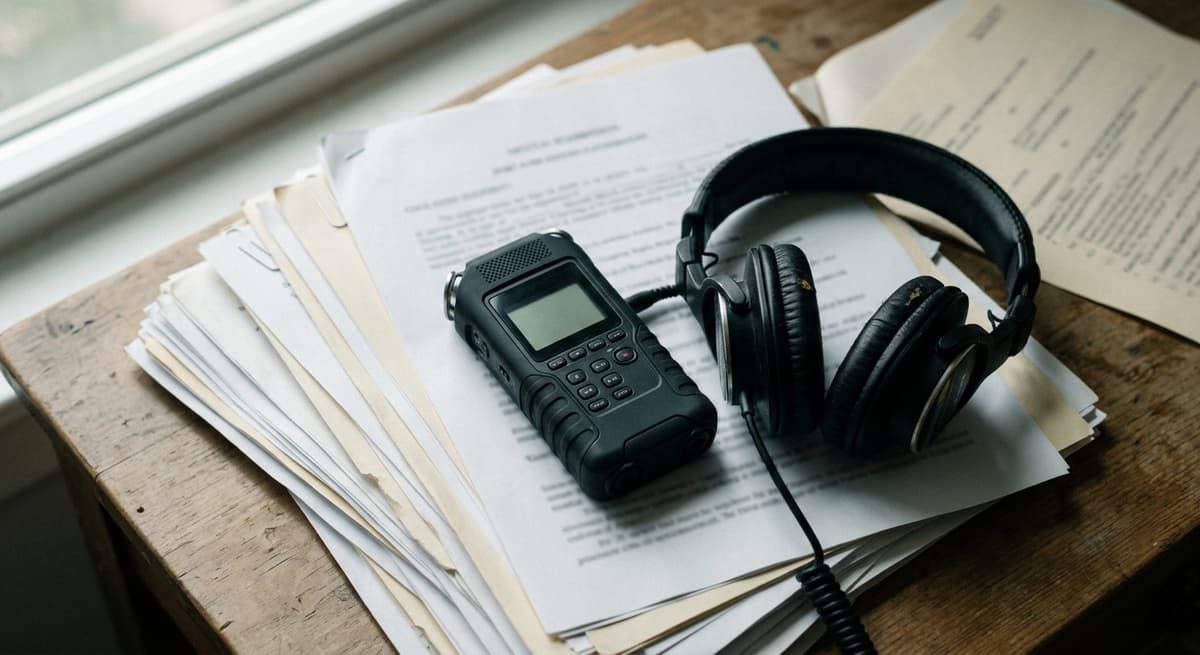
Violations of Florida's audio recording law carry serious criminal consequences. Under Fla. Stat. 934.03, the following offenses are classified as third-degree felonies:
| Offense | Classification | Maximum Prison | Maximum Fine |
|---|---|---|---|
| Illegal interception of communications | Third-Degree Felony | 5 years | $5,000 |
| Disclosure of intercepted communications | Third-Degree Felony | 5 years | $5,000 |
| Use of illegally intercepted information | Third-Degree Felony | 5 years | $5,000 |
Under Fla. Stat. 775.082, a third-degree felony is punishable by a definite term of imprisonment not exceeding five years. Under Fla. Stat. 775.083, fines can reach $5,000.
Reduced Penalty Exception
Section 934.03(4)(a) provides a narrow exception: a first offense involving interception of certain radio communications that was not done for tortious, illegal, or criminal purposes and was not for commercial gain may be treated as a first-degree misdemeanor (up to one year in jail, $1,000 fine) rather than a felony.
Civil Liability Under Fla. Stat. 934.10
Beyond criminal prosecution, victims of illegal audio recording can sue under Florida Statute 934.10. Civil remedies include:
- Liquidated damages: $100 per day of violation or $1,000, whichever amount is higher
- Actual damages: Compensation for all harm suffered beyond the statutory minimum
- Punitive damages: Additional penalties awarded for particularly egregious conduct
- Attorney's fees: Recovery of legal costs incurred in bringing the lawsuit
- Equitable relief: Court orders (injunctions) to prevent ongoing violations
A victim can pursue civil litigation independently of any criminal prosecution. This means a person who illegally records a conversation could face both prison time and a civil judgment for damages arising from the same incident.
Exceptions to Florida's Audio Recording Law
Florida's all-party consent requirement has several limited exceptions codified in Section 934.03(2):
Law Enforcement Exception (934.03(2)(c))
An investigative or law enforcement officer, or a person acting under the direction of such an officer, may intercept a wire, oral, or electronic communication when that person is a party to the communication or when one party has given prior consent. The recording must be made for the purpose of obtaining evidence of a criminal act.
This is a critical distinction: only law enforcement personnel can conduct one-party consent recordings in Florida. A private citizen who records a conversation to document a crime still commits a felony under Florida law, unlike states such as California that provide a crime-evidence exception for civilians.
Communications Service Provider Exception (934.03(2)(a))
Operators of switchboards and agents of communication service providers may intercept communications in the normal course of employment while performing activities necessary to service rendition or protection of the provider's rights or property.
All-Party Consent Exception (934.03(2)(d))
Any person may intercept a wire, oral, or electronic communication when all parties to the communication have given prior consent. This is not so much an exception as a restatement of the core legal requirement.
No Expectation of Privacy
Conversations held in settings where participants have no reasonable expectation of privacy fall outside the statute's protections. Shouting across a crowded restaurant, speaking at a public government meeting, or making announcements in an open public area are examples of situations where the speaker cannot reasonably expect privacy.
Emergency Services (911)
Employees of public utilities may intercept and record incoming wire communications on designated 911 telephone numbers and published nonemergency telephone numbers staffed by trained dispatchers at public safety answering points.
Recording Conversations in Person
Recording face-to-face conversations in Florida follows the same all-party consent requirement that governs phone calls. Before placing a voice recorder, smartphone, or any audio-capturing device in a room where a private conversation will take place, you must inform every person present and obtain their consent.
When In-Person Recording Is Legal
- All participants have given their consent before the recording starts
- The conversation occurs in a public setting with no reasonable expectation of privacy
- Law enforcement has authorized or directed the recording under Section 934.03(2)(c)
- The conversation takes place at a public government meeting covered by Florida's Sunshine Law (Fla. Stat. 286.011)
When In-Person Recording Is Illegal
- Recording private conversations without every participant's knowledge and consent
- Placing hidden recording devices in private settings such as homes, offices, or hotel rooms
- Using wearable devices with microphones to capture private conversations without disclosure
- Recording conversations in areas where participants reasonably expect privacy, even within public buildings
The "Reasonable Expectation of Privacy" Test
Courts evaluate whether a person held a reasonable expectation of privacy on a case-by-case basis. Factors include:
- The location of the conversation (private home vs. public park)
- Whether the speakers took steps to keep the conversation private (closing a door, lowering their voice)
- How many other people were nearby and could overhear
- Whether the setting is generally understood to be public or private
A conversation in a closed conference room carries a much stronger expectation of privacy than one held in an open-plan office. Even in a public space, two people who step away from a group and speak quietly may have a reasonable expectation of privacy.
Wearable Audio Devices and AI Recorders
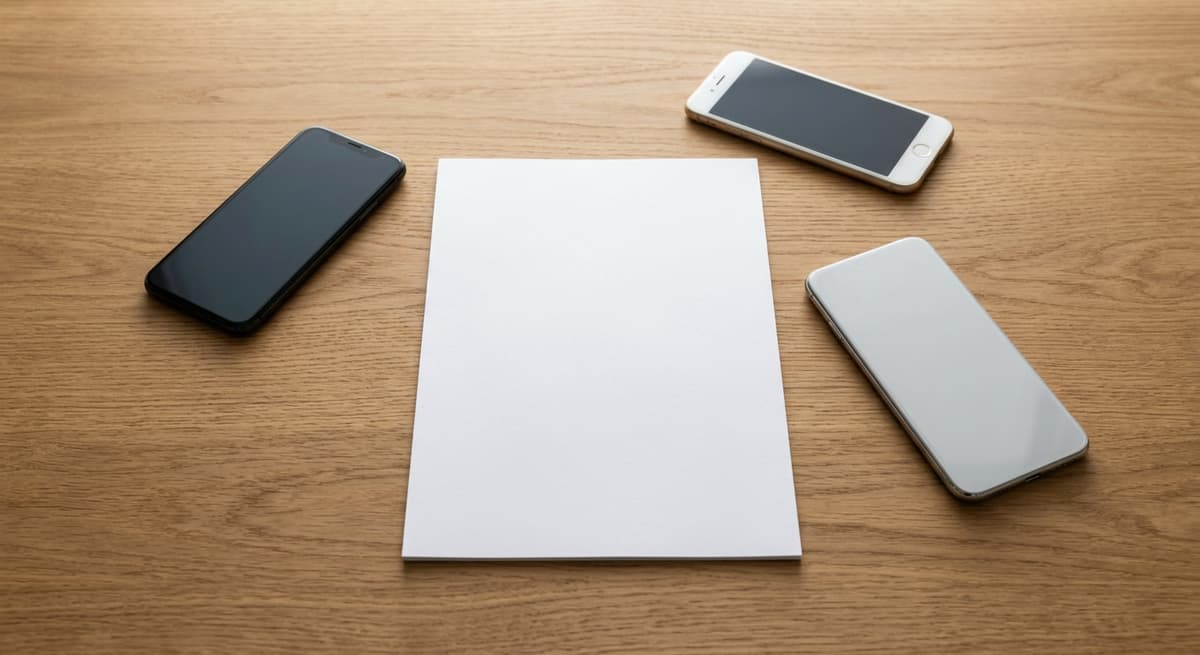
Smartwatches, AI voice recorders, smart glasses, body-mounted cameras with microphones, and other wearable technology that captures audio are governed by the same all-party consent rule under Fla. Stat. 934.03. Florida law does not distinguish between a hidden microphone and a wearable gadget. If the device intercepts or records a wire, oral, or electronic communication without consent from every participant, the operator commits a third-degree felony.
No Crime-Evidence Exception for Private Citizens
Unlike California, which allows private citizens to record without consent when gathering evidence of certain serious crimes, Florida provides no such exception. Only law enforcement officers acting under the authority of Fla. Stat. 934.03(2)(c) may conduct one-party consent recordings for the purpose of obtaining evidence of criminal activity.
A private citizen who uses a wearable device to secretly record a conversation, even to document a crime in progress, faces felony charges. Any recording obtained that way is likely inadmissible in court under Florida's exclusionary provisions.
Practical Guidance for Wearable Devices
Before wearing any audio-capable device into a private setting in Florida:
- Inform every person present that the device can record audio
- Obtain explicit consent from each person
- If anyone objects, disable the audio recording capability or remove the device
- Consider using video-only mode in public settings where audio consent is impractical
Admissibility of Audio Recordings in Court
For an audio recording to be admissible as evidence in Florida courts, it must meet several requirements:
- Lawful acquisition: The recording must have been obtained with consent from all parties
- Authentication: The party offering the recording must prove it is what it claims to be
- Integrity: The recording must not have been altered, edited, or tampered with
- Relevance: The recording must be relevant to the matter being litigated
Illegally obtained recordings are generally inadmissible in Florida courts. Recording without consent not only exposes you to criminal charges but also means the evidence you gathered will likely be excluded from any legal proceeding.
Federal Law vs. Florida Law
Federal wiretap law, codified at 18 U.S.C. 2511, follows a one-party consent model. Under federal law, a participant in a conversation may record it without informing the other parties.
Florida's all-party consent requirement is stricter than the federal baseline. Federal law sets a floor, not a ceiling, for privacy protections. States like Florida can impose greater restrictions. When Florida law and federal law conflict, the stricter standard (Florida's) applies to communications occurring within or involving Florida.
Interstate and Cross-Border Recordings
When a Florida resident calls someone in another state, the question of which law applies depends on the states involved and the specific circumstances. General principles include:
- Florida's strict all-party consent rule applies to the Florida party
- Courts typically apply the stricter standard when state laws conflict
- The safest practice is to get consent from everyone on the call
- If you are in a one-party consent state calling a Florida resident, Florida's law may still apply to protect the Florida party
For anyone who regularly makes interstate calls involving Florida residents, obtaining consent from all parties every time is the only reliable way to stay compliant.
Good Faith Defense
Florida law recognizes a good faith defense in civil actions. Under Fla. Stat. 934.10, if a person made a good faith determination that their conduct was permitted under Florida or federal law, that determination may serve as a complete defense to civil or criminal liability. However, relying on this defense is risky, and it does not replace the obligation to obtain consent.
Florida Audio Recording Laws at a Glance
| Key Point | Details |
|---|---|
| Consent Type | All-party (two-party) consent |
| Key Statute | Fla. Stat. 934.03 |
| Criminal Classification | Third-degree felony |
| Maximum Prison Sentence | 5 years |
| Maximum Fine | $5,000 |
| Civil Damages (minimum) | $100/day or $1,000, whichever is higher |
| Crime-Evidence Exception | Law enforcement only (no private citizen exception) |
| Applies To | Phone calls, in-person conversations, electronic communications |
| Wearable Devices | Subject to same all-party consent rules |
More Florida Recording Laws
Audio Recording | Video Recording | Voyeurism & Hidden Cameras | Workplace Recording | Recording Police | Phone Call Recording | Security Cameras | Recording in Public | Landlord-Tenant | Dashcam Laws | Schools | Medical Recording
Back to Florida Recording Laws
More Florida Recording Topics
More Florida Laws
Frequently Asked Questions
Is it legal to audio record a conversation in Florida without consent?
No. Florida is a strict all-party consent state under Fla. Stat. 934.03. Recording any private wire, oral, or electronic communication without the consent of every participant is a third-degree felony punishable by up to 5 years in prison and a $5,000 fine. This applies to phone calls, in-person conversations, and electronic communications alike.
Can I use a voice recorder app on my phone in Florida?
You may use a voice recorder app, but only if every person being recorded consents before you start recording. Using a voice recorder app to secretly capture a private conversation violates Florida Statute 934.03 and is a third-degree felony. The type of device does not change the legal requirement for all-party consent.
Can I record someone committing a crime in Florida?
No, not without their consent. Unlike some states that provide a crime-evidence exception for private citizens, Florida offers no such exception. Only law enforcement officers acting under Fla. Stat. 934.03(2)(c) may conduct one-party consent recordings to gather evidence of criminal activity. A private citizen who secretly records a conversation to document a crime still faces felony charges.
What civil damages can I recover if someone illegally records me in Florida?
Under Fla. Stat. 934.10, you can recover liquidated damages of $100 per day of violation or $1,000, whichever is higher, plus actual damages, punitive damages, attorney's fees, and equitable relief such as injunctions. Civil lawsuits can be filed in addition to any criminal prosecution for the same illegal recording.
Does Florida's audio recording law apply to AI voice recorders and smart glasses?
Yes. Wearable audio devices, AI voice recorders, smart glasses with microphones, and all other audio-capturing technology are subject to the same all-party consent requirement under Fla. Stat. 934.03. Florida law does not distinguish between device types. If the device captures a private conversation without consent from every participant, the operator commits a third-degree felony.
Updates
Independently fact-checked against the cited primary sources; governing law re-checked for recent changes
Governing law re-checked for recent changes
Governing law re-checked for recent changes
Title updated to 2026. No substantive law changes on audio recording since original publication; all-party consent rule and penalties unchanged.
Reviewed and approved by an editor
The Law Behind This Article
This article rests on the statutory provisions below, held in our own legal record and retrieved from the official source. Tap a section to read the operative text.
Florida Statutes
§ 934.03Interception and disclosure of wire, oral, or electronic communications prohibited.In forcecited in 51 of our articles
(1) Except as otherwise specifically provided in this chapter, any person who:(a) Intentionally intercepts, endeavors to intercept, or procures any other person to intercept or endeavor to intercept any wire, oral, or electronic communication; (b) Intentionally uses, endeavors to use, or procures any other person to use or endeavor to use any electronic, mechanical, or other device to intercept any oral communication when:1. Such device is affixed to, or otherwise transmits a signal through, a wire, cable, or other like connection used in wire communication; or 2.
Official text (excerpt) · last checked 2026-08-31 · Read the full text in our law library · Verify at leg.state.fl.us
Cited in 74 court opinions in our collectionLatest citing opinion in our collection: 2026
In the courts (editorial summary, independently checked):State v. Walls (1978) held that recording an in-home oral communication without the consent of all parties violated section 934.03 and required suppression, and State v. Inciarrano (1985) held the statute protects only communications uttered with a reasonable expectation of privacy.
Opinions citing this section in our collection:
- State v. Walls (Supreme Court of Florida 1978, 356 So. 2d 294)✓An extortion victim secretly recorded threats made to him in his own home; the court held that was a protected oral communication, that recording it without every party's consent violated Section 934.03, and that Section 934.06 barred using the tape as evidence.
- SHARRON TASHA FORD v. CITY OF BOYNTON BEACH (District Court of Appeal of Florida 2021)“…ng oral communications in violation of the wiretap statute, section 934.03, Florida Statutes (2009), and for obstructing without vio…”
- State v. Calhoun (Circuit Court for the Judicial Circuits of Florida 1984, 7 Fla. Supp. 2d 3)“…hall not be violated” . . . (emphasis mine) Furthermore, section 934.03, Florida Statutes, makes it unlawful for *6 any person (…”
Identified automatically from the court opinions citing this section — not a ranking of which case controls.
§ 286.011Public meetings and records; public inspection; criminal and civil penalties.In forcecited in 6 of our articles
(1) All meetings of any board or commission of any state agency or authority or of any agency or authority of any county, municipal corporation, or political subdivision, except as otherwise provided in the Constitution, including meetings with or attended by any person elected to such board or commission, but who has not yet taken office, at which official acts are to be taken are declared to be public meetings open to the public at all times, and no resolution, rule, or formal action shall be considered binding except as taken or made at such meeting. The board or commission must provide reasonable notice of all such meetings. (2) The minutes of a meeting of any such board or commission of any such state agency or authority shall be promptly recorded, and such records shall be open to public inspection. The circuit courts of this state shall have jurisdiction to issue injunctions to enforce the purposes of this section upon application by any citizen of this state. (3)(a) Any public officer who violates any provision of this section is guilty of a noncriminal infraction, punishable by fine not exceeding $500.
Official text (excerpt) · last checked 2026-07-28 · Read the full text in our law library · Verify at leg.state.fl.us
Cited in 115 court opinions in our collectionLatest citing opinion in our collection: 2023
Opinions citing this section in our collection:
- Town of Palm Beach v. Gradison (Supreme Court of Florida 1974, 296 So. 2d 473)“…nsidered binding except as taken or made at such meeting." Fla. Stat. § 286.011 , F.S.A. The only question to be dete…”
- City of Miami Beach v. Berns (Supreme Court of Florida 1971, 245 So. 2d 38)“…ment." We must first determine whether the provisions of Fla. Stat. § 286.011 , F.S.A., supersedes or repeals Fla. S…”
- Wood v. Marston (Supreme Court of Florida 1983, 442 So. 2d 934)“…At issue is the applicability of Florida's Sunshine Law, section 286.011, Florida Statutes (1979), to a faculty committee which se…”
Identified automatically from the court opinions citing this section — not a ranking of which case controls.
§ 775.082Penalties; applicability of sentencing structures; mandatory minimum sentences for certain reoffenders previously released from prison.In forcecited in 8 of our articles
(1)(a) Except as provided in paragraph (b), a person who has been convicted of a capital felony shall be punished by death if the proceeding held to determine sentence according to the procedure set forth in s. 921.141 results in a determination that such person shall be punished by death, otherwise such person shall be punished by life imprisonment and shall be ineligible for parole. (b)1. A person who actually killed, intended to kill, or attempted to kill the victim and who is convicted under s. 782.04 of a capital felony, or an offense that was reclassified as a capital felony, which was committed before the person attained 18 years of age shall be punished by a term of imprisonment for life if, after a sentencing hearing conducted by the court in accordance with s. 921.1401, the court finds that life imprisonment is an appropriate sentence. If the court finds that life imprisonment is not an appropriate sentence, such person shall be punished by a term of imprisonment of at least 40 years. A person sentenced pursuant to this subparagraph is entitled to a review of his or her sentence in accordance with s. 921.1402(2)(a). 2.
Official text (excerpt) · last checked 2026-07-28 · Read the full text in our law library · Verify at leg.state.fl.us
Cited in 291 court opinions in our collectionLatest citing opinion in our collection: 2026
In the courts (editorial summary, independently checked):State v. Dixon (1973) held Section 775.082, with sections 782.04 and 921.141, constitutional under the test of Furman v. Georgia. Kenneth R. Jackson v. State of Florida (2017) held that Section 775.082(2)'s automatic life-sentence remedy did not apply after Hurst v. Florida, which invalidated only certain sentencing procedures.
Opinions citing this section in our collection:
- State v. Dixon (Supreme Court of Florida 1973, 283 So. 2d 1)✓Four consolidated murder cases challenged Florida's post-Furman capital scheme; the Florida Supreme Court held sections 775.082, 782.04 and 921.141 constitutional, reading the listed aggravating and mitigating circumstances as definite enough to channel sentencing discretion.
- Woods v. State (District Court of Appeal of Florida 1999, 740 So. 2d 20)✓Woods committed an unarmed robbery about a month after release from prison and was sentenced to 15 years as a prison releasee reoffender under section 775.082(8); the court affirmed, rejecting separation of powers, vagueness and equal protection challenges.
- Kenneth R. Jackson v. State of Florida (Supreme Court of Florida 2017, 42 Fla. L. Weekly Supp. 361)✓Jackson was sentenced to death for a murder during a sexual battery on an 11-1 jury recommendation; the court found Hurst error but held section 775.082(2)'s life-sentence remedy inapplicable, since Hurst voided only part of section 921.141, and ordered a new penalty phase.
Identified automatically from the court opinions citing this section — not a ranking of which case controls.
§ 775.083Fines.In forcecited in 2 of our articles
(1) A person who has been convicted of an offense other than a capital felony may be sentenced to pay a fine in addition to any punishment described in s. 775.082; when specifically authorized by statute, he or she may be sentenced to pay a fine in lieu of any punishment described in s. 775.082. A person who has been convicted of a noncriminal violation may be sentenced to pay a fine. Fines for designated crimes and for noncriminal violations shall not exceed:(a) $15,000, when the conviction is of a life felony. (b) $10,000, when the conviction is of a felony of the first or second degree. (c) $5,000, when the conviction is of a felony of the third degree. (d) $1,000, when the conviction is of a misdemeanor of the first degree. (e) $500, when the conviction is of a misdemeanor of the second degree or a noncriminal violation. (f) Any higher amount equal to double the pecuniary gain derived from the offense by the offender or double the pecuniary loss suffered by the victim. (g) Any higher amount specifically authorized by statute. Fines imposed in this subsection shall be deposited by the clerk of the court in the fine and forfeiture fund established pursuant to s. 142.01.
Official text (excerpt) · last checked 2026-07-28 · Read the full text in our law library · Verify at leg.state.fl.us
Cited in 74 court opinions in our collectionLatest citing opinion in our collection: 2026
Opinions citing this section in our collection:
- Pullam v. State (District Court of Appeal of Florida 2011, 55 So. 3d 674)“…ten judgment for fines and costs includes a $200 fine under section 775.083, Florida Statutes (2009). Fines under section 775.083 are…”
- Stone v. State (District Court of Appeal of Florida 1986, 11 Fla. L. Weekly 2562)“…stem. In contrast, a fine imposed as punishment pursuant to section 775.083, Florida Statutes (1985), is placed into a government's g…”
- Amendments to the Florida Rules of Criminal Procedure (Supreme Court of Florida 2004, 29 Fla. L. Weekly Supp. 568)“…ecked and completed. Fines imposed as part of a sentence to section 775.083, Florida Statutes, are to be recorded on the sentence pag…”
Identified automatically from the court opinions citing this section — not a ranking of which case controls.
§ 934.10Civil remedies.In forcecited in 12 of our articles
(1) Any person whose wire, oral, or electronic communication is intercepted, disclosed, or used in violation of ss. 934.03-934.09 shall have a civil cause of action against any person or entity who intercepts, discloses, or uses, or procures any other person or entity to intercept, disclose, or use, such communications and shall be entitled to recover from any such person or entity which engaged in that violation such relief as may be appropriate, including:(a) Preliminary or equitable or declaratory relief as may be appropriate; (b) Actual damages, but not less than liquidated damages computed at the rate of $100 a day for each day of violation or $1,000, whichever is higher; (c) Punitive damages; and (d) A reasonable attorney’s fee and other litigation costs reasonably incurred. (2) A good faith reliance on:(a) A court order, subpoena, or legislative authorization as provided in ss. 934.03-934.09, (b) A request of an investigative or law enforcement officer under s. 934.09(7), or (c) A good faith determination that Florida or federal law, other than 18 U.S.C. s.
Official text (excerpt) · last checked 2026-07-28 · Read the full text in our law library · Verify at leg.state.fl.us
Cited in 33 court opinions in our collectionLatest citing opinion in our collection: 2026
In the courts (editorial summary, independently checked):Minotty v. Baudo (2010) held the civil action reaches only actual interception, not attempts, and does not cover silent video surveillance. Jatar v. Lamaletto (2000) affirmed summary judgment where the plaintiff had no reasonable expectation of privacy. Burgess v. Burgess (1984) held interspousal immunity does not bar the action.
Opinions citing this section in our collection:
- Burgess v. Burgess (Supreme Court of Florida 1984, 447 So. 2d 220)“…mages brought by one spouse against the other spouse, under Section 934.10, Florida Statutes (1979)? Burgess v. Burgess, 417 S…”
- Minotty v. Baudo (District Court of Appeal of Florida 2010, 42 So. 3d 824)✓A doctor hid cameras in colleagues' offices, but the microphones never worked, so only silent video was captured. The court held section 934.10 gives a civil claim only for actual interception of oral communications, not attempts or silent video, and reversed those judgments.
- Roberts v. Jardine (District Court of Appeal of Florida 1978, 358 So. 2d 588)✓Sued under section 934.10 for secretly taping a phone call, the defendant refused to answer interrogatories. The court held she could invoke the Fifth Amendment, since interception is also a crime, and could not be defaulted for it, but had to produce the tape already played.
Identified automatically from the court opinions citing this section — not a ranking of which case controls.
United States Code Title 18
§ 2511Interception and disclosure of wire, oral, or electronic communications prohibitedIn forcecited in 418 of our articles
Except as otherwise specifically provided in this chapter any person who— intentionally intercepts, endeavors to intercept, or procures any other person to intercept or endeavor to intercept, any wire, oral, or electronic communication; intentionally uses, endeavors to use, or procures any other person to use or endeavor to use any electronic, mechanical, or other device to intercept any oral communication when— such device is affixed to, or otherwise transmits a signal through, a wire, cable, or other like connection used in wire communication; or such device transmits communications by radio, or interferes with the transmission of such communication; or such person knows, or has reason to know, that such device or any component thereof has been sent through the mail or transported in interstate or foreign commerce; or such use or endeavor to use (A) takes place on the premises of any business or other commercial establishment the operations of which affect interstate or foreign commerce; or (B) obtains or is for the purpose of obtaining information relating to the operations of any business or other commercial establishment the operations of which affect interstate or foreign…
Official text (excerpt) · last checked 2026-08-28 · Read the full text in our law library · Verify at uscode.house.gov
Cited in 2,045 court opinions in our collectionLatest citing opinion in our collection: 2026
In the courts (editorial summary, independently checked):Griggs-Ryan v. Smith (1990) applied the Section 2511(2)(d) prior-consent exception, treating a tenant repeatedly told that all incoming calls were taped as having impliedly consented. United States v. United States District Court (1972) read the then-current Section 2511(3) as conferring no presidential surveillance power.
Opinions citing this section in our collection:
- Mitchell v. Forsyth (Supreme Court of the United States 1985, 472 U.S. 511)✓The Attorney General authorized a warrantless 1970 national security wiretap that caught the plaintiff's calls; the Court held the since-repealed Section 2511(3) disclaimer left the tap lawful under Title III, and that Mitchell had qualified immunity.
- United States v. United States District Court for the Eastern District of Michigan (Supreme Court of the United States 1972, 407 U.S. 297)✓The Attorney General approved warrantless wiretaps on members of a domestic group accused of bombing a CIA office; the Court read Section 2511(3) as a congressional disclaimer conferring no surveillance power, then held the Fourth Amendment required prior judicial approval.
- Forsyth v. Barr (Court of Appeals for the Fifth Circuit 1994, 19 F.3d 1527)✓Dallas police used, in an internal affairs probe of an officer, calls private parties allegedly intercepted illegally; assuming that was unlawful, the Fifth Circuit held Section 2517(1) and (2) allowed the disclosure and use, defeating the Section 2511(1)(c) and (d) claims.
Identified automatically from the court opinions citing this section — not a ranking of which case controls.
Explore the law
This article also draws on these acts and chapters (opening at their first section): Florida Statutes § 934.01 (Legislative findings.)
Related law for further reading — not part of this article’s citations.
Search our full record of US law — 2.1 million sections, every state + federal →
Sources and References
- Florida Statute 934.03 - Interception and Disclosure of Wire, Oral, or Electronic Communications Prohibited(flsenate.gov).gov
- Florida Statute 934.10 - Civil Remedies for Unlawful Interception(flsenate.gov).gov
- Florida Chapter 934 - Security of Communications Act(leg.state.fl.us).gov
- Florida Statute 775.082 - Penalties(flsenate.gov).gov
- Florida Statute 775.083 - Fines(flsenate.gov).gov
- Florida Statute 286.011 - Government in the Sunshine Law(leg.state.fl.us).gov
- 18 U.S.C. Section 2511 - Federal Wiretap Act(law.cornell.edu)