
New Jersey
New Jersey Workplace Recording Laws: Employee and Employer Rights
Independently fact-checked against primary sources (last audited August 15, 2026). · Reviewed by the RecordingLaw editorial team. · Law checked current as of August 15, 2026. · 5 primary sources cited on this page. How we verify our legal content
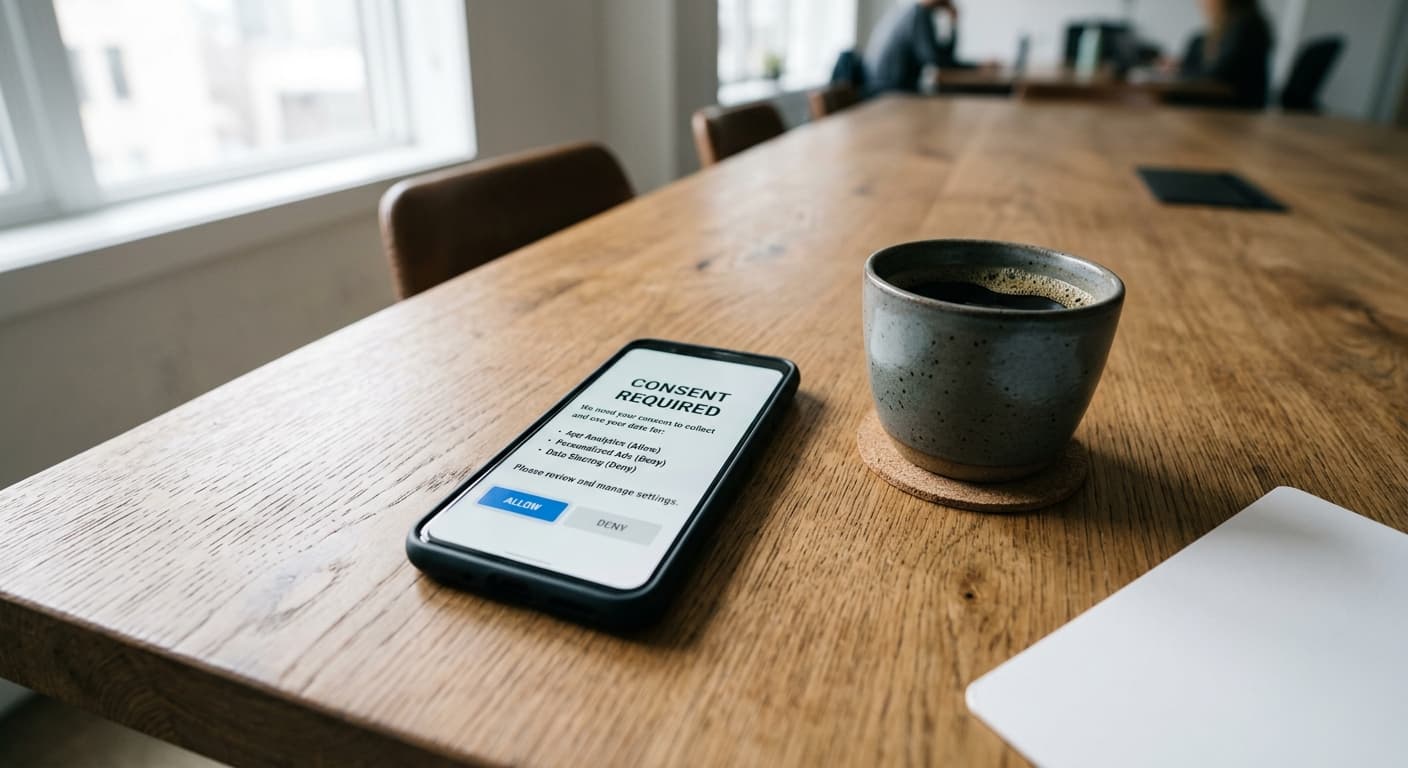
New Jersey employees may record workplace conversations they participate in without notifying coworkers or supervisors. Under N.J.S.A. 2A:156A-4, your own participation satisfies the one-party consent rule, making secret recording of meetings, disciplinary hearings, and HR conversations legal under state law.
New Jersey's one-party consent law gives employees significant recording rights in the workplace. Under N.J. Stat. Ann. 2A:156A-4, you can record any workplace conversation you participate in without telling your employer, coworkers, or anyone else involved. Combined with the state's powerful Conscientious Employee Protection Act (CEPA), New Jersey workers have some of the broadest recording and whistleblower protections in the country.
This guide covers employee recording rights, employer surveillance rules, CEPA protections, no-recording policies, and how workplace recordings can be used as evidence in New Jersey.
Employee Recording Rights in the Workplace
What Employees Can Record
As a New Jersey employee, the one-party consent rule under N.J. Stat. Ann. 2A:156A-4 allows you to record:
- Meetings with your supervisor or manager about performance, assignments, or discipline
- HR conversations including investigations, complaints, and policy discussions
- Conversations with coworkers about working conditions, pay, or safety concerns
- Phone calls with clients or vendors that you participate in
- Performance reviews and evaluation meetings
- Disciplinary hearings and termination meetings
- Training sessions and orientation programs
You do not need to announce that you are recording. You do not need written or verbal consent from anyone else in the conversation. Your own participation satisfies the legal requirement.
What Employees Cannot Record
The one-party consent rule has clear limits:
- Conversations you are not part of: You cannot leave a recorder in a conference room to capture meetings you do not attend
- Other employees' private calls: You cannot record phone calls between coworkers unless you are on the call
- Conversations in private areas: Recording in bathrooms, locker rooms, or changing areas can violate N.J. Stat. Ann. 2C:14-9
- Recordings for criminal or tortious purposes: Recording to harass, blackmail, or extort someone is illegal even under one-party consent
Recording Methods
New Jersey law does not restrict the type of device employees use for lawful recording. Common workplace recording methods include:
- Smartphone voice recording apps
- Dedicated digital voice recorders kept in a pocket or bag
- AI wearable devices like Plaud NotePin
- Smart glasses with audio recording capability
- Computer screen and audio recording software for virtual meetings
CEPA: New Jersey's Whistleblower Protection
What CEPA Protects
The Conscientious Employee Protection Act (N.J. Stat. Ann. 34:19-1 et seq.) is one of the most comprehensive whistleblower protection laws in the United States. CEPA prohibits employers from retaliating against employees who:
- Disclose or threaten to disclose to a supervisor or public body an activity, policy, or practice of the employer that the employee reasonably believes violates a law, rule, or regulation
- Provide information to or testify before any public body conducting an investigation into any violation of law
- Object to or refuse to participate in any activity, policy, or practice that the employee reasonably believes violates a law, rule, regulation, or is fraudulent or criminal
- Object to or refuse to participate in any activity that the employee reasonably believes is incompatible with a clear mandate of public policy concerning public health, safety, welfare, or protection of the environment
How CEPA Protects Workplace Recordings
CEPA's connection to recording law is significant. When an employee records workplace conversations to document unlawful employer conduct, CEPA may protect that employee from retaliation. The analysis works like this:
- The employee must have made the recording lawfully under the one-party consent rule (meaning the employee was a party to the conversation)
- The employee must reasonably believe the recorded conduct violates a law, rule, regulation, or clear mandate of public policy
- The employer retaliates against the employee for making the recording or disclosing the recorded evidence
If all three conditions are met, the employee has a potential CEPA claim against the employer.
CEPA Remedies
Employees who prevail in CEPA claims can recover:
- Reinstatement to their former position or an equivalent position
- Back pay and lost wages with interest
- Compensatory damages for emotional distress and other harm
- Reasonable attorney's fees and costs
- Punitive damages in cases of willful or wanton misconduct
- Injunctive relief to prevent further retaliation
New Jersey courts have interpreted CEPA broadly in favor of employees. The law protects employees even if the conduct they reported does not ultimately turn out to be illegal, as long as the employee's belief was objectively reasonable.
Important Limitations of CEPA
CEPA protection is not unlimited:
- The recording itself must be lawful under the one-party consent rule
- The employee must have a reasonable belief that illegal conduct is occurring
- Recording for personal grudges or general dissatisfaction without a reasonable belief of illegality may not qualify
- CEPA has a one-year statute of limitations from the retaliatory action
- Employees should generally report the conduct to a supervisor or public body to strengthen their CEPA claim
Employer Surveillance Rights

Video Surveillance in the Workplace
New Jersey employers can install video surveillance cameras in areas where employees do not have a reasonable expectation of privacy:
Permitted locations:
- Entrances, exits, and lobbies
- Hallways and corridors
- Production floors and warehouse areas
- Retail sales floors and checkout areas
- Parking lots and loading docks
- Common work areas and open office spaces
Prohibited locations:
- Bathrooms and restrooms
- Locker rooms and changing areas
- Private offices where employees are told they have privacy
- Lactation rooms
- Any area where employees have a reasonable expectation of privacy
Recording video that captures exposed intimate parts in a prohibited location violates N.J. Stat. Ann. 2C:14-9(b), a crime of the third degree carrying 3 to 5 years imprisonment and a fine up to $15,000; mere observation without recording is graded fourth degree.
Audio Surveillance by Employers
Audio recording by employers follows the same wiretapping statute that applies to individuals. Under the one-party consent rule, an employer can record conversations where at least one party consents. In practice, this means:
- An employer can record business calls if an employee on the call consents or has been directed to record
- An employer cannot secretly record conversations between employees without at least one participant's knowledge
- Installing hidden microphones to capture conversations that no employer representative participates in is illegal wiretapping
Notification Requirements
New Jersey does not have a specific statute requiring employers to notify employees about workplace surveillance. However, providing notice is considered best practice and may be required by:
- Employment contracts that address monitoring and privacy
- Union collective bargaining agreements that include surveillance provisions
- Industry-specific regulations in sectors like finance and healthcare
- Company handbook policies that create contractual obligations
No-Recording Policies in the Workplace
Can Employers Ban Recording?
Many New Jersey employers have written policies prohibiting employees from recording in the workplace. These policies create an employment condition, not a change in criminal law. The important distinction is:
- A company policy cannot make a lawful recording illegal under New Jersey state law
- An employer can discipline or terminate an employee for violating a no-recording policy
- The recording itself remains legally valid even if it was made in violation of company policy
- The recording may still be admissible as evidence in legal proceedings
NLRA Restrictions on No-Recording Policies
The National Labor Relations Act (NLRA) limits how broadly employers can restrict workplace recording. The National Labor Relations Board (NLRB) has found that overly broad no-recording policies can violate Section 7 of the NLRA, which protects employees' rights to engage in protected concerted activity.
Protected concerted activity includes:
- Recording evidence of unsafe working conditions
- Documenting wage and hour violations
- Gathering evidence of discrimination or harassment affecting a group of employees
- Recording conversations about organizing or union activity
An employer's no-recording policy that would reasonably be interpreted as prohibiting these activities may be found unlawful by the NLRB. Under the current standard established in Stericycle, Inc., 372 NLRB No. 113 (2023), workplace rules are evaluated from the perspective of an employee who might reasonably read the rule as restricting Section 7 rights. Note that NLRB General Counsel Memorandum GC 25-05 (February 2025) rescinded certain prior GC memos as a housekeeping measure but did not change the Stericycle standard, which remains controlling. Employers can still maintain narrowly tailored recording policies that serve legitimate business interests without a chilling effect on protected activity.
Navigating Company Policy vs. Legal Rights
If your employer has a no-recording policy, consider the following before recording:
- Review the policy carefully to understand exactly what it prohibits and what the consequences are
- Assess your purpose: Are you recording to document conduct you reasonably believe is illegal? CEPA may protect you
- Consider the risk: Even with legal protection, you may face the burden of proving your CEPA claim if terminated
- Consult an attorney if you are considering recording to document potentially illegal employer conduct
- Preserve recordings securely in case you need them for legal proceedings
Using Workplace Recordings as Evidence
Employment Lawsuits
Workplace recordings made under New Jersey's one-party consent law are generally admissible in employment-related lawsuits. Common uses include:
- Discrimination claims: Recordings of discriminatory statements or decisions
- Harassment claims: Audio evidence of hostile work environment or quid pro quo harassment
- Wrongful termination: Recordings contradicting the employer's stated reason for termination
- Wage and hour disputes: Evidence of verbal agreements about pay, hours, or overtime
- CEPA claims: Recordings documenting the unlawful conduct and subsequent retaliation
Workers' Compensation Proceedings
Recordings can also be relevant in workers' compensation cases, particularly to document:
- Conversations about workplace injuries and their causes
- Employer responses to injury reports
- Statements about unsafe working conditions
- Attempts by employers to discourage filing claims
Admissibility Requirements
For a workplace recording to be admissible in New Jersey court, it must be:
- Legally obtained under the one-party consent rule
- Authenticated as a genuine, unaltered recording
- Relevant to the issues in the case
- Not unduly prejudicial compared to its probative value
Courts may exclude even legally obtained recordings if their prejudicial effect substantially outweighs their relevance. However, recordings of direct evidence like discriminatory statements or threats are typically admitted because their probative value is high.
Specific Workplace Recording Scenarios
Recording a Termination Meeting
You can record your own termination meeting. Many employment attorneys advise clients to record these meetings when possible. The recording preserves exactly what was said about the reason for termination, any severance offers, and any statements that might support a wrongful termination claim.
Recording a Hostile Work Environment
If you are experiencing workplace harassment, recording conversations where harassment occurs can provide powerful evidence. Under one-party consent, you can record any harassing conversation you are part of. Combined with CEPA protections, this evidence can support both internal complaints and legal action.
Recording Safety Violations
Employees who record evidence of workplace safety violations may be protected under both CEPA and the federal Occupational Safety and Health Act (OSH Act). The OSH Act's anti-retaliation provision under Section 11(c) prohibits employers from retaliating against employees who report safety concerns to OSHA.
Recording Wage and Hour Violations
Recording conversations about pay rates, overtime, off-the-clock work, or tip pooling can help document violations of the New Jersey Wage and Hour Law (N.J. Stat. Ann. 34:11-56a et seq.) or the federal Fair Labor Standards Act. These recordings can support complaints to the New Jersey Department of Labor or the U.S. Department of Labor.
Penalties for Illegal Workplace Recording
Criminal Penalties
Recording a workplace conversation you are not part of, without consent from any participant, is a crime of the third degree under N.J. Stat. Ann. 2A:156A-3:
| Offense | Classification | Penalty |
|---|---|---|
| Unlawful interception | Crime of the Third Degree | 3 to 5 years imprisonment, up to $15,000 fine |
Civil Liability
Victims of illegal workplace recording can sue under N.J. Stat. Ann. 2A:156A-24:
- Actual damages or $100 per day ($1,000 minimum)
- Punitive damages for willful violations
- Attorney's fees and costs
- Injunctive relief
Employer Liability
Employers who engage in illegal surveillance can face:
- Criminal prosecution under the wiretapping statute
- Civil lawsuits from affected employees
- CEPA claims if they retaliate against employees who report the illegal surveillance
- Regulatory action from the New Jersey Department of Labor
New Jersey Recording Laws by Topic
Phone Call Recording | Audio Recording | Video Recording | Workplace Recording | Recording Police | Security Cameras | Recording in Public | Landlord-Tenant | Dashcam Laws | Schools | Medical Recording | Voyeurism & Hidden Cameras
Back to New Jersey Recording Laws
More New Jersey Recording Topics
More New Jersey Laws
Frequently Asked Questions
Can I record my boss in New Jersey without their knowledge?
Yes. New Jersey is a one-party consent state under N.J. Stat. Ann. 2A:156A-4. You can record any conversation with your boss that you participate in without telling them. However, if your employer has a no-recording policy, violating it could result in disciplinary action or termination.
Does CEPA protect me if I record my employer breaking the law?
CEPA may protect you from retaliation if you record evidence of conduct you reasonably believe is illegal, as long as the recording itself was made lawfully under the one-party consent rule. CEPA remedies include reinstatement, back pay, compensatory damages, and attorney fees.
Can my employer fire me for recording at work in New Jersey?
An employer can terminate you for violating a company no-recording policy, even though the recording is legal under New Jersey law. However, CEPA may protect you from termination if you recorded to document unlawful employer conduct. The NLRA also limits how broadly employers can restrict recording related to protected concerted activity.
Can my employer secretly record me at work?
Your employer can use video surveillance in common work areas but cannot install cameras in bathrooms, locker rooms, or changing areas. Audio surveillance by employers must comply with the one-party consent rule, meaning at least one person in the recorded conversation must know about and consent to the recording.
Can I use a workplace recording as evidence in a lawsuit in New Jersey?
Yes. Workplace recordings made under New Jersey's one-party consent law are generally admissible in employment lawsuits, discrimination claims, harassment cases, and other legal proceedings. The recording must be authenticated as genuine and relevant to the case.
Updates
Corrected the criminal grading for covert intimate-area recording (third degree under N.J. Stat. Ann. 2C:14-9(b)) and repointed a dead whistleblower resource link.
Independently fact-checked against the cited primary sources; governing law re-checked for recent changes
Reviewed and approved by an editor
The Law Behind This Article
This article rests on the statutory provisions below, held in our own legal record and retrieved from the official source. Tap a section to read the operative text.
New Jersey Statutes (Unannotated)
§ 2A:156A-3Interception, disclosure, use of wire, electronic, oral communication; violationIn forcecited in 12 of our articles
3. Except as otherwise specifically provided in this act, any person who: a. Purposely intercepts, endeavors to intercept, or procures any other person to intercept or endeavor to intercept any wire, electronic or oral communication; or b. Purposely discloses or endeavors to disclose to any other person the contents of any wire, electronic or oral communication, or evidence derived therefrom, knowing or having reason to know that the information was obtained through the interception of a wire, electronic or oral communication; or c. Purposely uses or endeavors to use the contents of any wire, electronic or oral communication, or evidence derived therefrom, knowing or having reason to know, that the information was obtained through the interception of a wire, electronic or oral communication; shall be guilty of a crime of the third degree. Subsections b. and c. of this section shall not apply to the contents of any wire, electronic or oral communication, or evidence derived therefrom, that has become common knowledge or public information.
Official text (excerpt) · last checked 2026-08-28 · Read the full text in our law library · Verify at lis.njleg.state.nj.us
Also relied on in: New Jersey Recording Laws (2026): One-Party Consent Rules, New Jersey AI Meeting Recording Laws (2026), New Jersey Dashcam Laws: Legality, Mounting, and Evidence Rules
Search our full record of US law — 2.1 million sections, every state + federal →
Sources and References
- N.J. Stat. Ann. 2A:156A-4 - Lawful Interception Activities(law.justia.com)
- N.J. Division on Civil Rights (whistleblower resources)(nj.gov).gov
- N.J. Stat. Ann. 2A:156A-3 - Prohibited Interception(law.justia.com)
- N.J. Stat. Ann. 2C:14-9 - Invasion of Privacy(law.justia.com)
- National Labor Relations Act(nlrb.gov).gov
- OSHA - Occupational Safety and Health Act(osha.gov).gov
- New Jersey Department of Labor - Wage and Hour(nj.gov).gov
- Fair Labor Standards Act(dol.gov).gov
- N.J. Stat. Ann. 2A:156A-24 - Civil Liability(law.justia.com)