GPS Tracking Laws by State: Is It Legal to Put a Tracker on a Car? (2026)
Independently fact-checked against primary sources (last audited June 17, 2026). · Law checked current as of August 9, 2026. How we verify our legal content

GPS Tracking Laws by State: Is It Legal to Put a Tracker on a Car? (2026)
Here is the short answer. Putting a GPS tracker on a car you own or lease is legal in every state. Putting one on someone else's car without their consent is a crime in most states, and even where no specific tracking statute exists, it can support stalking or harassment charges almost anywhere.
The longer answer is a patchwork. Roughly two dozen states now have standalone tracking-device crimes on the books, another dozen or so name GPS tracking inside their stalking statutes, and about ten states still have no law that mentions electronic tracking at all. The same AirTag placed on the same bumper can be a felony in Florida and Hawaii, a misdemeanor in California and Texas, and technically uncharged conduct in Idaho or South Dakota until the tracking becomes a pattern of stalking.
Police are a separate question with a clear answer. In United States v. Jones (2012), the U.S. Supreme Court held that attaching a GPS device to a vehicle and monitoring its movements is a Fourth Amendment search, so law enforcement generally needs a warrant before tracking your car.
This page gives you the full 50-state picture in one table, then walks through the federal rules, employer tracking, the post-AirTag wave of new laws, and what to do if you find a tracker on your own vehicle. Every state name in the table links to a detailed guide for that state.
GPS Tracking Laws by State
The table below summarizes the controlling law in each state. The Type column tells you what kind of law it is. A "Device statute" is a standalone crime for placing a tracking device. A "Stalking prong" means the stalking statute explicitly names GPS or electronic tracking. "Stalking (general)" means broad surveillance language that courts apply to GPS. "Civil + stalking" means a dedicated civil lawsuit plus criminal stalking coverage. A "Gap state" has no tracking-specific language at all, so victims depend on general stalking or harassment laws. The PI column flags whether licensed private investigators get a statutory exception.
| State | Tracking law | Type | Penalty (base) | PI exception? |
|---|---|---|---|---|
| Alabama | Ala. Code 13A-6-95 and 13A-6-96 (2023) | Device statute | Class A misd.; Class C felony with criminal intent | No |
| Alaska | AS 11.41.270 stalking (GPS named) | Stalking prong | Class A misdemeanor | No |
| Arizona | ARS 13-2923 (12 hours or 2 occasions) | Stalking prong | Class 5 felony | No |
| Arkansas | Ark. Code 5-71-208(a)(2)(A) (Act 600 of 2025) | Device statute | Class A misdemeanor | Yes (affirmative defense) |
| California | Penal Code 637.7 | Device statute | Misdemeanor plus $5,000 civil per violation | No (license revocation) |
| Colorado | CRS 13-20-1301 civil action (2024) plus 18-3-602 stalking | Civil + stalking | Class 5 felony stalking; civil damages | No |
| Connecticut | CGS 53a-181f electronic stalking | Stalking prong | Class D felony | No |
| Delaware | 11 Del. C. 1335(a)(8) | Device statute | Class A misdemeanor | No (parents yes) |
| District of Columbia | D.C. Code 22-3133 stalking (any device) | Stalking prong | Up to 12 months | No |
| Florida | Fla. Stat. 934.425 | Device statute | Third-degree felony | No (expressly excluded) |
| Georgia | OCGA 16-5-90 stalking; OCGA 16-11-62(8) GPS device (protective order cases) | Stalking + narrow device rule | Misdemeanor (first offense); 1-5 yr felony in protective order cases | No |
| Hawaii | HRS 803-42(a)(8) | Device statute | Class C felony | No |
| Idaho | None; stalking 18-7906 only | Gap state | Misdemeanor stalking | n/a |
| Illinois | 720 ILCS 5/21-2.5 | Device statute | Class A misdemeanor | No |
| Indiana | Ind. Code 35-46-8.5-1 (Millie's Law, 2023) | Device statute | Class A misd.; Level 6 felony | Property-interest exception |
| Iowa | Iowa Code 708.11A | Device statute | Serious misd.; Class C felony with stalking | Legitimate-purpose element |
| Kansas | KSA 21-5427(f)(1)(G) (2023) | Stalking prong | Class A person misdemeanor | Legitimate-purpose |
| Kentucky | KRS 508.152 (2023) | Device statute | Class A misdemeanor | No |
| Louisiana | La. R.S. 14:323 | Device statute | Fine and/or up to 6 months | No |
| Maine | 17-A MRS 210-A stalking (tracks) | Stalking prong | Class D crime | No |
| Maryland | Crim. Law 3-802 stalking (tracking clause) | Stalking prong | Misdemeanor, up to 5 years | Commercial-purpose exception |
| Massachusetts | None; harassment ch. 265 s. 43A | Gap state | Up to 2.5 years (harassment) | n/a |
| Michigan | MCL 750.539l | Device statute | Misdemeanor, 1 year, plus civil damages | Yes (limited) |
| Minnesota | Minn. Stat. 626A.35 | Device statute | Up to 364 days | No (owner consent) |
| Mississippi | None; stalking 97-3-107 | Gap state | Misdemeanor stalking | n/a |
| Missouri | None; stalking 565.225 and 565.227 | Gap state | Class A misdemeanor stalking | n/a |
| Montana | MCA 45-5-220 stalking (GPS named) | Stalking prong | 1 year, $1,000 fine | No |
| Nebraska | None; LB 1059 died April 2026 | Gap state | Class I misdemeanor harassment | n/a |
| Nevada | NRS 200.930 (2023) | Device statute | Misd., escalating to Category C felony | No |
| New Hampshire | RSA 644-A | Device statute (civil) | Civil action (private); Class B misd. (government) | No |
| New Jersey | None; stalking 2C:12-10 | Gap state | Fourth-degree stalking | n/a |
| New Mexico | None; stalking 30-3A-3 | Gap state | Misdemeanor stalking | n/a |
| New York | Penal Law 120.45(2) (Jackie's Law) | Stalking prong | Class B misd., up to Class D felony | No |
| North Carolina | NCGS 14-196.3(b)(5) cyberstalking | Device statute | Class 2 misdemeanor | Yes |
| North Dakota | NDCC 12.1-17-07.1 (single act) | Stalking prong | Class A misdemeanor | Yes (statutory defense) |
| Ohio | ORC 2903.216 (eff. March 2025) | Device statute | First-degree misd.; fourth-degree felony with priors | Yes (limited) |
| Oklahoma | 21 O.S. 1173 (following incl. GPS) | Stalking prong | Misdemeanor, 1 year | No |
| Oregon | ORS 163.715 | Device statute | Class A misd.; Class C felony with stalking history | No |
| Pennsylvania | None; HB 407 pending in Senate | Gap state | First-degree misd. stalking (2709.1) | n/a |
| Rhode Island | RIGL 11-69-1 (all occupants must consent) | Device statute | Misdemeanor, 1 year | No |
| South Carolina | None; harassment 16-3-1700 surveillance language | Gap state | Misdemeanor harassment | Yes (contracted PIs) |
| South Dakota | None; stalking 22-19A-1 | Gap state | Class 1 misdemeanor | n/a |
| Tennessee | Tenn. Code 39-13-606 (all owners must consent) | Device statute | Class A misdemeanor | No |
| Texas | Penal Code 16.06; 42.07 apps (2023) | Device statute | Class A misd. (device); Class B misd. (apps) | Yes (written consent) |
| Utah | Utah Code 76-12-305 (2026 expansion) | Device statute | Class A misd. plus civil damages | Yes (with checks) |
| Vermont | None; stalking 13 VSA 1061 and 1062 | Stalking (general) | 2 years, $5,000 fine | n/a |
| Virginia | Va. Code 18.2-60.5 (deceptive means) | Device statute | Class 1 misdemeanor | Yes (restricted 2022) |
| Washington | RCW 9A.46.110(1)(a)(iv) (single act) | Stalking prong | Gross misd.; Class B felony | Yes (licensed PI defense) |
| West Virginia | None; 61-2-9a monitor and surveil language | Stalking (general) | Misdemeanor, 6 months | n/a |
| Wisconsin | Wis. Stat. 940.315 | Device statute | Class A misdemeanor | No (employers yes) |
| Wyoming | Wyo. Stat. 6-2-506 (GPS prong) | Stalking prong | Misd., 1 year, $750 fine | No |
A few patterns jump out of the table. Felony-first states like Florida, Hawaii, and Connecticut treat a single act of secret tracking as a serious crime. Consent-design states like Rhode Island and Tennessee go further than most by requiring consent from every occupant or every owner, not just one. And the gap states cluster in the Northeast, the Plains, and the Deep South, which means millions of Americans live where placing a tracker is not itself a chargeable offense.
The Federal Layer
There is no general federal statute that bans a private citizen from putting a GPS tracker on someone else's car. Congress regulates wiretaps and stored communications, but vehicle location tracking by private individuals was left to the states, which is why the table above varies so much.
For police, the rule is federal and uniform. In United States v. Jones, 565 U.S. 400 (2012), FBI agents attached a GPS device to a suspect's Jeep and tracked it for 28 days without a valid warrant. The Supreme Court held unanimously that this was a search under the Fourth Amendment. As a practical matter, law enforcement now obtains a warrant before attaching a tracker to a vehicle, and evidence from warrantless tracking is at risk of suppression.
One federal criminal statute does reach private tracking: 18 U.S.C. 2261A, the interstate stalking law. If someone uses a GPS device, an AirTag, or a tracking app as part of a course of conduct that crosses state lines and places the victim in fear or causes substantial emotional distress, federal prosecutors can charge it, and they have in several AirTag stalking cases.
Two adjacent issues are worth separating from this topic. Court-ordered location tracking, such as a GPS ankle monitor in a criminal case, runs under a completely different set of rules, which we cover in our guide to ankle monitors. And government tracking of cars by automated license plate readers is its own fast-moving fight, like the Boulder lawsuit over Flock license plate cameras.
Can My Employer Track My Car?
Employers generally may put GPS on vehicles the company owns. A delivery van, a fleet pickup, or a company sedan belongs to the employer, and tracking your own property is lawful in every state. Most disputes arise at the edges: tracking outside work hours, tracking a personal vehicle used for work, or tracking without telling anyone.

New Jersey has the strictest rule in the country. Under N.J.S.A. 34:6B-22, a private employer must give written notice to an employee before using a tracking device in any vehicle the employee operates, including the employee's own car. Violations carry civil penalties of up to $1,000 for a first offense and up to $2,500 for each one after that.
Connecticut takes a broader but softer approach. Conn. Gen. Stat. 31-48d requires employers to give prior written notice of the types of electronic monitoring they may use, which covers GPS along with email and camera monitoring. California's AB 984 (2022) addressed the new digital license plates: employers may use location features only during work hours, only when strictly necessary for the job, and must let employees disable tracking outside work time.
Several state tracking statutes also carve employers out expressly. Wisconsin, North Carolina, and Rhode Island all write employer exceptions directly into their device laws for company-owned or business-use vehicles. If you drive your personal car for work, the safest assumption nationwide is that your employer needs your consent, and in New Jersey it needs your signature.
AirTags and the New Wave of Tracking Laws
For two decades, GPS tracking laws were written with $300 hardwired trackers in mind. Then Apple released the AirTag in 2021 at $29, and police reports of tag-enabled stalking spiked across the country. State legislatures noticed, and the period from 2023 through 2026 has produced the fastest wave of tracking legislation in U.S. history.
The 2023 class was the largest. Indiana passed Millie's Law (Ind. Code 35-46-8.5-1), named for a stalking victim whose abuser tracked her with a GPS device. Kentucky created KRS 508.152, its first standalone tracking crime. Nevada enacted NRS 200.930 with penalties that escalate from a misdemeanor to a Category C felony for repeat or protective-order violations. Texas closed its tracking-app loophole by amending its harassment statute through HB 2715, adding to the device crime it already had in Penal Code 16.06.
The wave kept building. Colorado created a dedicated civil cause of action against secret trackers in 2024 (CRS 13-20-1301), letting victims sue for damages without waiting on prosecutors. Ohio's ORC 2903.216 took effect in March 2025 with a rule found almost nowhere else: consent to tracking is presumed revoked the moment one spouse files for divorce, and the device must come off within 72 hours. Arkansas passed Act 600 in 2025, making it harassment under Ark. Code 5-71-208 to use a tracking device to follow a person without consent, with an affirmative defense for licensed professionals on official assignments. Florida raised the stakes in 2024 and 2025, upgrading its tracking crime to a third-degree felony and to a second-degree felony when the tracking facilitates a dangerous crime. Utah's amended statute takes effect for 2026, expanding coverage from vehicles to tracking of persons and tracking by app.
Expect the map to keep changing. Pennsylvania's HB 407 is pending in its Senate, Nebraska's LB 1059 died in April 2026 but will likely return, and several gap states have study committees on AirTag abuse. The spoke pages linked in the table track each state's pending bills.
What to Do If You Find a Tracker on Your Car
First, do not smash it, throw it away, or drop it in a passing truck. The device is physical evidence. Its serial number can identify the buyer, and in AirTag cases police can subpoena Apple for the owner's account. Destroying it can gut a stalking prosecution and, in a domestic violence situation, immediately alerts the person tracking you that you found it.
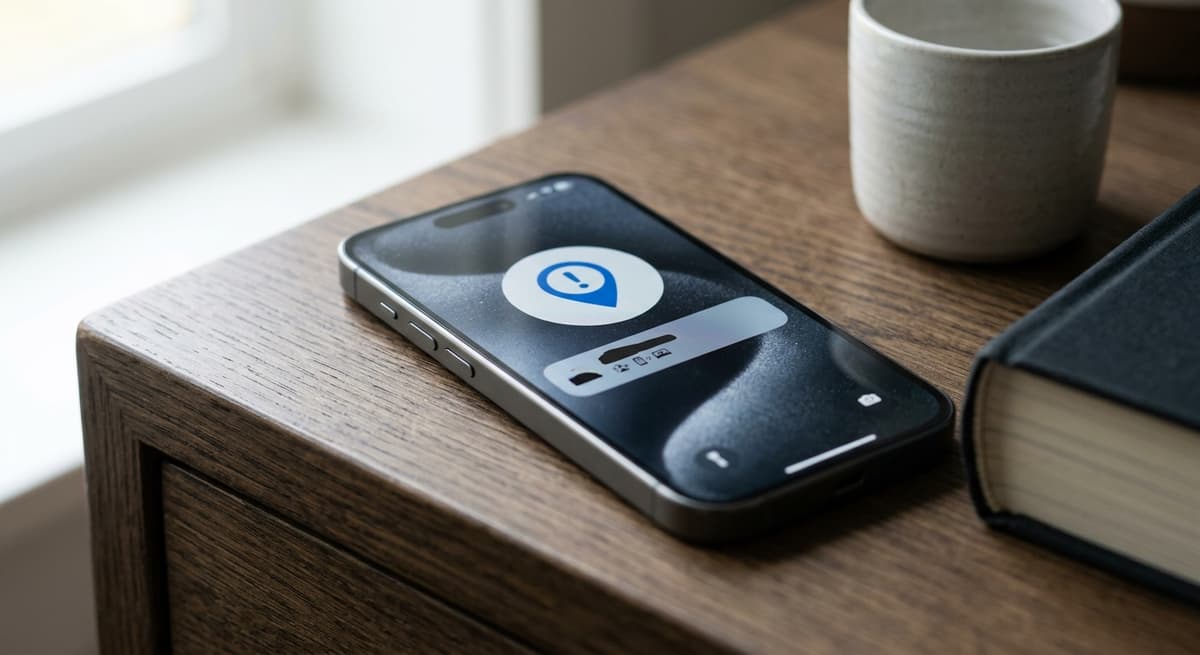
Document everything before you touch it. Photograph the device exactly where you found it, in the wheel well, under the bumper, behind the license plate, or plugged into the OBD-II port under the dash. Note the date, time, and location. If your iPhone or Android phone gave you an unknown-tracker alert, screenshot it.
Then call your local police non-emergency line, or 911 if you believe you are in danger. Ask for a report number even if the officer seems unsure what to do with it; that report becomes the foundation for criminal charges or a protective order later. In most states a discovered tracker is strong evidence for a stalking-based restraining order, and in device-statute states it may be a complete crime by itself.
If the likely tracker is a current or former partner, treat the situation as a safety issue, not just a legal one. The National Domestic Violence Hotline (1-800-799-7233) helps victims plan around technology-enabled abuse, including when and whether to remove a tracker, since removal can escalate an abuser's behavior. Trackers also rarely travel alone; an abuser using GPS often uses hidden cameras too, so review our guide to surveillance camera laws as well.
Spouses, Divorce, and Tracking
The hardest cases sit inside marriages, because most tracking statutes turn on the owner's consent and spouses often co-own the car. If both names are on the title, the tracking spouse arguably consented as an owner, and in several states that defeats the device crime. It does not defeat a stalking charge, though. Stalking statutes look at the course of conduct and the fear it causes, not the title certificate, and judges issuing protective orders take secret tracking seriously regardless of who owns the vehicle.

New Jersey's leading civil case shows the other side of the line. In Villanova v. Innovative Investigations, a wife had a private investigator place a GPS unit in the family vehicle her husband drove. The appellate court found no invasion of privacy because the car traveled only on public roads where the husband had no reasonable expectation of privacy. That 2011 reasoning is exactly what newer statutes were written to override, and it remains a reason New Jersey's gap-state status matters.
Ohio now answers the divorce question by statute. Under ORC 2903.216, any consent between spouses is presumed revoked when either files for divorce or dissolution, or when a protection order issues, and the tracker must be removed or disabled within 72 hours. No other state automates revocation that way yet, but family lawyers in every state treat a divorce filing as the practical end of any implied consent. Tracking a spouse after the petition is filed is how evidence gets excluded and how respondents in custody cases end up explaining themselves to a criminal judge.
Aerial surveillance raises related but distinct questions. See drone laws by state for privacy, trespass, and law-enforcement warrant rules once a drone is involved.
Sources
- United States v. Jones, 565 U.S. 400 (2012), U.S. Supreme Court
- 18 U.S.C. 2261A - Federal stalking statute
- National Conference of State Legislatures - Private Use of Location Tracking Devices: State Statutes
- California Penal Code 637.7 - Electronic tracking devices
- Florida Statutes 934.425 - Installation of tracking devices or applications
- Ohio Revised Code 2903.216 - Illegal use of a tracking device or application
- Texas Penal Code 16.06 - Unlawful installation of tracking device
- New Jersey P.L. 2021, c. 449 (N.J.S.A. 34:6B-22) - Employer vehicle tracking-device notice law
Disclaimer: This article is for informational purposes only and is not legal advice. Tracking laws change quickly, and how they apply depends on the facts of your situation, including who owns the vehicle and whether any court orders are in place. If you are dealing with unwanted tracking or are unsure whether your own use of a tracker is legal, consult a licensed attorney in your state. If you are in immediate danger, call 911.
Frequently Asked Questions
Is it illegal to put a tracker on someone's car without them knowing?
In most states, yes. More than 30 states make non-consensual tracking a crime through a device statute or a GPS prong in their stalking law, with penalties from a misdemeanor up to a felony in states like Florida, Hawaii, and Connecticut. In the roughly ten gap states it is not automatically a crime, but repeated tracking that frightens the victim can still be charged as stalking or harassment.
Can I put a GPS tracker on my own car?
Yes, in every state. Tracking a vehicle you own or lease is lawful nationwide, which is why dealerships, lenders, fleet operators, and parents of teen drivers use trackers openly. The legal risk only appears when you track a car you do not own, or when a court order such as a protective order overrides your ownership rights.
Can I put an AirTag on my spouse's car?
It is risky even where it is technically legal. If the car is titled only in your spouse's name, placing a tracker without consent is a crime in most states. If you co-own the car, some device statutes treat your consent as an owner as sufficient, but a stalking charge and a protective order are still on the table. In Ohio, any consent is presumed revoked the moment a divorce is filed, and the tracker must come off within 72 hours.
Can I put a tracker on my child's car?
Generally yes for a minor child, especially if you own the car or co-sign the title. Several statutes, including Delaware's, write in an express exception for parents tracking their minor children. Once your child turns 18, the analysis changes: an adult child is just another adult, and tracking a car you do not own requires their consent in device-statute states.
Can my employer track my personal car?
Not without your consent in most situations. Company-owned vehicles are fair game everywhere, but your personal car is your property. New Jersey requires written notice before an employer tracks any vehicle an employee operates, including personal cars, with civil penalties for violations. Connecticut requires written notice of electronic monitoring generally, and California limits employer use of digital license plate location data to working hours.
Do police need a warrant to put a GPS tracker on my car?
Yes, as a general rule. In United States v. Jones (2012), the U.S. Supreme Court held that attaching a GPS device to a vehicle and monitoring its movements is a Fourth Amendment search. Narrow exceptions like exigent circumstances exist, but warrantless tracker evidence is routinely challenged and suppressed.
Can a private investigator legally put a tracker on a car?
Only in a minority of states. Texas allows it with written consent of the vehicle owner, and North Carolina, North Dakota, South Carolina, Utah, Virginia, and Washington give licensed investigators an exception or defense, usually with conditions like protective-order checks. California expressly refuses a PI exception and can revoke an investigator's license for a violation, and Florida excluded PIs from its exception list when it upgraded the crime to a felony.
How do I find a GPS tracker on my car?
Check the usual hiding spots: inside wheel wells, under bumpers, behind the license plate, under seats, in the spare tire well, and in the OBD-II port under the dashboard. Magnetic cases stick to flat metal under the chassis. iPhones automatically alert you to unknown AirTags traveling with you, Android has a built-in unknown tracker alert, and Bluetooth scanner apps can find other tag brands. A mechanic can do a lift inspection for hardwired units.
What should I do if I find an AirTag on my car?
Do not destroy it. Photograph it where you found it, then use any NFC-capable phone to tap it, which shows its serial number and whether it is flagged as lost. Save that screen. Call the police and give them the serial number, because Apple can identify the registered owner in response to law enforcement requests. If the owner turns out to be an ex or someone you fear, ask about a protective order the same day.
Can I legally remove a tracker I find on my car?
Yes. It is your vehicle, and you have no obligation to leave someone else's device transmitting your location. The smarter move is to document it first, let police see it in place if they can respond, and preserve the device as evidence rather than discarding it. In domestic violence situations, talk to an advocate before removing it, because removal tells the abuser you know.
Is tracking someone with an AirTag considered stalking?
It can be, in every state. Even gap states with no device statute treat repeated location tracking as part of a stalking course of conduct when it causes fear or distress. Federal prosecutors have also charged AirTag tracking under 18 U.S.C. 2261A, the interstate stalking statute. The device statutes in states like Ohio, Florida, and Nevada simply let prosecutors charge the placement itself without proving a pattern.
Can GPS tracking data be used in divorce court?
Sometimes, and it cuts both ways. Data from a tracker you lawfully placed on a vehicle you own may be admissible, depending on the judge and the state. Data from an unlawful tracker can be excluded, can poison a custody case, and can expose the spouse who placed it to criminal charges. After a divorce filing, assume any implied consent is gone; Ohio makes that revocation automatic by statute.
Updates
Governing law re-checked for recent changes
Governing law re-checked for recent changes
Independently fact-checked against the cited primary sources
State-by-state comparison
Each state guide below is paired with the governing statute our editors adjudicated for it, held in our own legal record and verified against the official source.
Each statute shown is the same adjudicated anchor its state guide renders, independently verified against primary sources. A dash means not yet adjudicated in our record — never that no law exists.
The Law Behind This Article
This article rests on the statutory provisions below, held in our own legal record and retrieved from the official source. Tap a section to read the operative text.
Code of Alabama 1975, Title 13A: Criminal Code.
§ 13A-6-95Electronic Stalking in the First Degree.In forcecited in 2 of our articles
(a) A person who, without the consent of the owner or except as otherwise authorized by law, places any electronic tracking device on the property of another person with the intent to surveil, stalk, or harass, or for any other unlawful purpose, is guilty of the crime of electronic stalking in the first degree. (b)(1) Except as otherwise provided in subdivision (2), a violation of this section is a Class C felony. (2) A person who violates this section and whose conduct violates an existing domestic violence protection order, elder abuse protection order, temporary restraining order, or any other court order, shall be guilty of a Class B felony. (c) In any criminal proceeding brought pursuant to this section, the crime shall be considered to have been committed in all of the following: (1) The county in which any part of the crime took place. (2) The county where the electronic tracking device was discovered. (3) The county of residence of the owner of the property. (d) The statute of limitations shall begin at the time of the discovery of the electronic tracking device.
Official text (excerpt) · last checked 2026-07-29 · Read the full text in our law library · Verify at alison.legislature.state.al.us
Also relied on in: Alabama GPS Tracking Laws: Is It Legal to Put a Tracker on a Car? (2026)
California Penal Code
§ 637.7In forcecited in 3 of our articles
(a) No person or entity in this state shall use an electronic tracking device to determine the location or movement of a person. (b) This section shall not apply when the registered owner, lessor, or lessee of a vehicle has consented to the use of the electronic tracking device with respect to that vehicle. (c) This section shall not apply to the lawful use of an electronic tracking device by a law enforcement agency. (d) As used in this section, “electronic tracking device” means any device attached to a vehicle or other movable thing that reveals its location or movement by the transmission of electronic signals. (e) A violation of this section is a misdemeanor. (f) A violation of this section by a person, business, firm, company, association, partnership, or corporation licensed under Division 3 (commencing with Section 5000) of the Business and Professions Code shall constitute grounds for revocation of the license issued to that person, business, firm, company, association, partnership, or corporation, pursuant to the provisions that provide for the revocation of the license as set forth in Division 3 (commencing with Section 5000) of the Business and Professions Code.
Official text (excerpt) · last checked 2026-08-26 · Read the full text in our law library · Verify at leginfo.legislature.ca.gov
Cited in 17 court opinions in our collectionLatest citing opinion in our collection: 2025
In the courts (editorial summary, independently checked):California courts have applied Penal Code 637.7 to GPS trackers. Simmons v. Bauer Media Group USA, LLC held a suit over an investigator's tracker was not protected newsgathering under the anti-SLAPP statute; People v. Agnelli, a superior court appellate division, reversed a tracking conviction as vague for a consenting co-owner.
Opinions citing this section in our collection:
- People v. Agnelli (California Court of Appeal 2021)✓A man placed a GPS tracker on a car he co-owned with his estranged wife and was convicted under section 637.7(a); the court reversed, holding the statute unconstitutionally vague as applied because it does not say whether every registered co-owner must consent.
- Simmons v. Bauer Media Group USA, LLC (California Court of Appeal 2020)✓A tabloid publisher's hired private investigator put a tracker on Richard Simmons's caretaker's car; the court held the claims, built on that section 637.7 violation, arose from illegal conduct rather than protected newsgathering, and left the anti-SLAPP denial in place.
- The People v. Barnes (California Court of Appeal 2013, 216 Cal. App. 4th 1508)✓Police pinged a robbery victim's stolen cell phone with her consent and stopped the man carrying it; the court decided the case on Fourth Amendment grounds and cited section 637.7 only as instructive, noting its exceptions for owner consent and lawful law enforcement use.
Identified automatically from the court opinions citing this section — not a ranking of which case controls.
Also relied on in: California Employee Monitoring Laws: Employer Rules (2026), California GPS Tracking Laws: Is It Legal to Put a Tracker on a Car? (2026)
Florida Statutes
§ 934.425Installation or use of tracking devices or tracking applications; exceptions; penalties.In forcecited in 4 of our articles
(1) As used in this section, the term:(a) “Business entity” means any form of corporation, partnership, association, cooperative, joint venture, business trust, or sole proprietorship that conducts business in this state. (b) “Tracking application” means any software program whose primary purpose is to track or identify the location or movement of an individual. (c) “Tracking device” means any device whose primary purpose is to reveal its location or movement by the transmission of electronic signals. (d) “Person” means an individual but does not include a business entity. (2) Except as provided in subsection (4), a person may not knowingly:(a) Install or place a tracking device or tracking application on another person’s property without that person’s consent; or (b) Use a tracking device or tracking application to determine the location or movement of another person or another person’s property without that person’s consent.
Official text (excerpt) · last checked 2026-07-28 · Read the full text in our law library · Verify at leg.state.fl.us
Also relied on in: Florida Makes Using a GPS Tracker or AirTag to Aid a Violent Crime a Second-Degree Felony, Florida Employee Monitoring Laws: Employer Rules (2026), Florida GPS Tracking Laws: Is It Legal to Put a Tracker on a Car? (2026)
Official Code of Georgia Annotated
§ 16-11-62Eavesdropping, surveillance, or intercepting communication which invades privacy of another; divulging private message.In forcecited in 25 of our articles
It shall be unlawful for: (1) Any person in a clandestine manner intentionally to overhear, transmit, or record or attempt to overhear, transmit, or record the private conversation of another which shall originate in any private place; (2) Any person, through the use of any device, without the
Official text (excerpt) · last checked 2026-08-31 · Read the full text in our law library · Verify at legis.ga.gov
Cited in 94 court opinions in our collectionLatest citing opinion in our collection: 2026
In the courts (editorial summary, independently checked):Kelley v. State (1998) held OCGA 16-11-62(2) reached a guardian who photographed a nude 16-year-old in the family bathroom, with no exception for family members. Burgeson v. State (1996) held a conversation recorded in a patrol car was not covered, because no reasonable expectation of privacy existed there.
Opinions citing this section in our collection:
- Burgeson v. State (Supreme Court of Georgia 1996, 267 Ga. 102)✓Police secretly recorded two arrestees talking in the back of a patrol car. The court held a police car is much like a jail cell, with no reasonable expectation of privacy, so intercepting that conversation did not offend OCGA 16-11-62 and the tape was admissible.
- Kelley v. State (Court of Appeals of Georgia 1998, 233 Ga. App. 244)✓A guardian photographed her 16-year-old niece nude and passed out in the family bathtub. The court held OCGA 16-11-62(2) reaches any person with no family exception, that the film need not be developed, and that a jury could find the bathroom a private place.
- Dobbins v. State (Supreme Court of Georgia 1992, 262 Ga. 161)“…th the consent of one of the parties to the conversation. OCGA § 16-11-62 (1) provides that: It shall be unlawf…”
Identified automatically from the court opinions citing this section — not a ranking of which case controls.
Also relied on in: Georgia Data Privacy Laws: Breach Notification & Consumer Rights (2026), Georgia Ring Doorbell Laws: What You Need to Know in 2026, Georgia Surveillance Camera Laws (2026 Guide)
§ 16-5-90Stalking; psychological evaluation.In forcecited in 5 of our articles
(a)(1) A person commits the offense of stalking when he or she follows, places under surveillance, or contacts another person at or about a place or places without the consent of the other person for the purpose of harassing and intimidating the other person.…
Official text (excerpt) · last checked 2026-08-26 · Read the full text in our law library · Verify at gcfv.georgia.gov
Cited in 167 court opinions in our collectionLatest citing opinion in our collection: 2026
In the courts (editorial summary, independently checked):Chan v. Ellis (2015) held that website commentary directed only to the public is not "contact" under OCGA 16-5-90 (a)(1), which reaches communication aimed at a specific person without consent. Johnson v. State (1994) rejected vagueness and overbreadth challenges, reading "contact" with the harassing and intimidating purpose element.
Opinions citing this section in our collection:
- Chan v. Ellis (Supreme Court of Georgia 2015, 296 Ga. 838)✓A website operator hosted nearly 2,000 posts about a poet, who won a stalking injunction; the court held commentary directed only to the public is not "contact" under OCGA 16-5-90(a)(1), and that she failed to prove any contact was without her consent, so it reversed.
- Johnson v. State (Supreme Court of Georgia 1994, 264 Ga. 590)✓A defendant convicted of misdemeanor stalking and burglary argued OCGA 16-5-90 was vague and overbroad; the court held "contact" is readily understood and the statute reaches only a knowing and willful course of conduct done to harass and intimidate, and it affirmed.
- Troncalli v. Jones (Court of Appeals of Georgia 1999, 237 Ga. App. 10)✓A woman won a jury verdict against a man who touched her breasts at a party, chased her car and made a throat cutting gesture; the court held OCGA 16-5-90 defines a crime and creates no private tort of stalking, so the general verdict could not stand and was reversed.
Identified automatically from the court opinions citing this section — not a ranking of which case controls.
Also relied on in: Georgia Laws on Recording in Public: What Is Legal (2026), Georgia Video Recording Laws: All-Party Consent in Private Places (2026), Georgia Employee Monitoring Laws: Employer Rules (2026)
Kansas Statutes Annotated, Chapter 21: CRIMES AND PUNISHMENTS
§ 21-5427Stalking.In forcecited in 5 of our articles
(a) Stalking is: (1) Recklessly engaging in a course of conduct targeted at a specific person which would cause a reasonable person in the circumstances of the targeted person to fear for such person's safety, or the safety of a member of such person's immediate family and the targeted person is actually placed in such fear; (2) engaging in a course of conduct targeted at a specific person with knowledge that the course of conduct will place the targeted person in fear for such person's safety or the safety of a member of such person's immediate family; (3) after being served with, or otherwise provided notice of, any protective order included in K.S.A. 21-3843, prior to its repeal or K.S.A.
Official text (excerpt) · last checked 2026-07-29 · Read the full text in our law library · Verify at ksrevisor.gov
Cited in 12 court opinions in our collectionLatest citing opinion in our collection: 2026
In the courts (editorial summary, independently checked):Kansas courts have construed K.S.A. 21-5427. State v. Loganbill (2022) held reckless stalking requires the targeted person's subjective and objectively reasonable fear, and secretly photographing or filming someone repeatedly may be a course of conduct. State v. Harrington (2026) affirmed a stalking conviction for covert GPS tracking.
Opinions citing this section in our collection:
- State v. Loganbill (Court of Appeals of Kansas 2022)✓A fourth grade teacher secretly photographed and filmed a ten year old student's buttocks all school year; the court affirmed the reckless stalking conviction, holding such repeated secret filming can be a course of conduct and that the child's fear may arise after it ends.
- State v. Colwell (Court of Appeals of Kansas 2025)✓Days after a protection from stalking order issued, Colwell sent unsigned flowers to J.M. and called her from an unknown number; the court held the officer's return of service satisfied the disputed notice element of K.S.A. 21-5427(a)(3) and affirmed the stalking conviction.
- State v. Hernandez (Court of Appeals of Kansas 2019)✓Hernandez pleaded no contest to misdemeanor stalking on a complaint citing K.S.A. 21-5427 without naming a subsection; the court refused to let him withdraw the plea but remanded for findings fixing the subsection, because it changes the level of any second offense.
Identified automatically from the court opinions citing this section — not a ranking of which case controls.
Also relied on in: Kansas GPS Tracking Laws: Is It Legal to Put a Tracker on a Car? (2026), Kansas Laws on Recording in Public, Kansas Employee Monitoring Laws (2026): Workplace Surveillance Rights
Kentucky Revised Statutes, Chapter 508: ASSAULT AND RELATED OFFENSES
§ 508.152Unlawful use of a tracking deviceIn forcecited in 3 of our articles
(1) As used in this section: (a) "Motor vehicle" has the same meaning as "vehicle" in KRS 186.010(8)(a); (b) "Protective order" has the same meaning as in KRS 508.130; and (c) "Tracking device" means an electronic or mechanical device that is designed or intended to allow a person to remotely determine or track the position or movement of another person or an object, regardless of whether that information is recorded. (2) A person is guilty of unlawful use of a tracking device when he or she intentionally: (a) Installs or places a tracking device, or causes a tracking device to be installed or placed, in or on a motor vehicle without the knowledge and consent of the owner of the motor vehicle or, if the motor vehicle is leased, the lessee or authorized operator of the motor vehicle; (b) Tracks the location of a motor vehicle with a tracking device without the knowledge and consent of either the owner or the authorized operator of the motor vehicle or, if the motor vehicle is leased, either the lessee or authorized operator of the motor vehicle; (c) While being the restrained party under a protective order, uses a tracking device to track the location of a motor vehicle…
Official text (excerpt) · last checked 2026-08-26 · Read the full text in our law library · Verify at apps.legislature.ky.gov
Also relied on in: Kentucky GPS Tracking Laws: Is It Legal to Put a Tracker on a Car? (2026), Kentucky Employee Monitoring Laws (2026): Workplace Surveillance Rights
Michigan Compiled Laws
§ 750.539lTracking device; placement or installment on motor vehicle without consent; violation as misdemeanor; penalty; exemptions; inapplicability of subsection (2)(j); liability for damages; definitionsIn forcecited in 6 of our articles
(1) A person who does any of the following is guilty of a misdemeanor punishable by imprisonment for not more than 1 year or a fine of not more than $1,000.00, or both: (a) Installs or places a tracking device, or causes a tracking device to be installed or placed, in or on a motor vehicle without the knowledge and consent of the owner of that motor vehicle or, if the motor vehicle is leased, the lessee of that motor vehicle. (b) Tracks the location of a motor vehicle with a tracking device without the knowledge and consent of either the owner or the authorized operator of that motor vehicle or, if the motor vehicle is leased, either the lessee or the authorized operator of that motor vehicle. (c) While being the restrained party under a protective order, tracks the location of a motor vehicle operated or occupied by an individual protected under that order with a tracking device.
Official text (excerpt) · last checked 2026-07-30 · Read the full text in our law library · Verify at legislature.mi.gov
Cited in 1 court opinions in our collectionLatest citing opinion in our collection: 2016
Opinions citing this section in our collection:
- People of Michigan v. Michael Joseph Ouellette (Michigan Court of Appeals 2016)“…rized installation of a tracking device on a motor vehicle, MCL 750.539l. Defendant was sentenced, as a third ha…”
Identified automatically from the court opinions citing this section — not a ranking of which case controls.
Also relied on in: Michigan Employee Monitoring Laws (2026): Social Media, GPS & Cameras, Michigan GPS Tracking Laws: Is It Legal to Put a Tracker on a Car? (2026), Michigan Surveillance Camera Laws (2026 Guide)
Minnesota Statutes, Chapter 626A: WIRE, ELECTRONIC, OR ORAL COMMUNICATIONS; INTERCEPTION
§ 626A.35GENERAL PROHIBITION ON PEN REGISTER, TRAP AND TRACE DEVICE, AND MOBILE TRACKING DEVICE USE; EXCEPTIONIn forcecited in 3 of our articles
Subdivision 1. In general. Except as provided in this section, no person may install or use a pen register, trap and trace device, or mobile tracking device without first obtaining a court order under section 626A.37. Subd. 2. Exception. The prohibition of subdivision 1 does not apply with respect to the use of a pen register or a trap and trace device by a provider of electronic or wire communication service: (1) relating to the operation, maintenance, and testing of a wire or electronic communication service or to the protection of the rights or property of the provider, or to the protection of users of that service from abuse of service or unlawful use of service; or (2) to record the fact that a wire or electronic communication was initiated or completed in order to protect the provider, another provider furnishing service toward the completion of the wire communication, or a user of that service, from fraudulent, unlawful, or abusive use of service; or (3) where the consent of the user of that service has been obtained. Subd. 2a. Exception.
Official text (excerpt) · last checked 2026-08-26 · Read the full text in our law library · Verify at revisor.mn.gov
Cited in 2 court opinions in our collectionLatest citing opinion in our collection: 2016
Opinions citing this section in our collection:
- State v. Hormann (Court of Appeals of Minnesota 2011, 805 N.W.2d 883)“…al interest in the car exempted him from prosecution. See Minn.Stat. § 626A.35, subd. 2a (2008) (providing that the pr…”
- State of Minnesota v. Joshua Dwight Liebl (Court of Appeals of Minnesota 2016, 886 N.W.2d 512)“…4 conducted in compliance with Minn. Stat. §§ 626A.35–.39 (2014); and alternatively argued t…”
Identified automatically from the court opinions citing this section — not a ranking of which case controls.
Also relied on in: Minnesota Employee Monitoring Laws (2026): Cameras, GPS & Privacy, Minnesota GPS Tracking Laws: Is It Legal to Put a Tracker on a Car? (2026)
Ohio Revised Code
§ 2903.216Illegal use of a tracking device or applicationIn forcecited in 3 of our articles
(A) As used in this section: (1) "Business entity" means any form of corporation, partnership, association, cooperative, joint venture, business trust, or sole proprietorship that conducts business in this state.
Official text (excerpt) · last checked 2026-07-31 · Read the full text in our law library · Verify at codes.ohio.gov
Also relied on in: Ohio GPS Tracking Laws: Is It Legal to Put a Tracker on a Car? (2026), Ohio Employee Monitoring Laws: Workplace Surveillance and GPS Tracking (2026)
Texas Penal Code
§ 16.06UNLAWFUL INSTALLATION OF TRACKING DEVICEIn forcecited in 3 of our articles
(a) In this section: (1) "Electronic or mechanical tracking device" means a device capable of emitting an electronic frequency or other signal that may be used by a person to identify, monitor, or record the location of another person or object. (2) "Motor vehicle" has the meaning assigned by Section 501.002, Transportation Code. (b) A person commits an offense if the person knowingly installs an electronic or mechanical tracking device on a motor vehicle owned or leased by another person. (c) An offense under this section is a Class A misdemeanor.
Official text (excerpt) · last checked 2026-08-26 · Read the full text in our law library · Verify at statutes.capitol.texas.gov
Cited in 4 court opinions in our collectionLatest citing opinion in our collection: 2024
Opinions citing this section in our collection:
- Ex Parte Herbert E. Dishman III (Texas Court of Appeals, 9th District (Beaumont) 2018)“…offense of unlawful installation of a tracking device. See Tex. Penal Code Ann. § 16.06 (West 2011). After an evidentiary hear…”
- Wendi Mae Davidson v. State (Texas Court of Appeals, 3rd District (Austin) 2008)“…Tex. Code Crim. Proc. Ann. art. 18.21 (West Supp. 2007); Tex. Penal Code Ann. § 16.06 (West 2003). Appellant also asserted…”
- Davidson v. State (Texas Court of Appeals, 3rd District (Austin) 2008, 249 S.W.3d 709)“…9; Tex.Code Crim. Proc. Ann. art. 18.21 (West Supp.2007); Tex. Penal Code Ann. § 16.06 (West 2003). Appellant also asserted t…”
Identified automatically from the court opinions citing this section — not a ranking of which case controls.
Also relied on in: Texas Employee Monitoring Laws: Workplace Surveillance, Tracking, and Biometrics (2026), Texas GPS Tracking Laws: Is It Legal to Put a Tracker on a Car? (2026)
Code of Virginia, Title 18.2: Crimes and Offenses Generally
§ 18.2-60.5Unauthorized use of electronic tracking device; penaltyIn forcecited in 3 of our articles
A. Any person who installs or places an electronic tracking device through intentionally deceptive means and without consent, or causes an electronic tracking device to be installed or placed through intentionally deceptive means and without consent, and uses such device to track the location of any person is guilty of a Class 1 misdemeanor. B. The provisions of this section shall not apply to the installation, placement, or use of an electronic tracking device by: 1. A law-enforcement officer, judicial officer, probation or parole officer, or employee of the Department of Corrections when any such person is engaged in the lawful performance of official duties and in accordance with other state or federal law; 2. The parent or legal guardian of a minor when tracking (i) the minor or (ii) any person authorized by the parent or legal guardian as a caretaker of the minor at any time when the minor is under the person's sole care; 3. A legally authorized representative of a vulnerable adult, as defined in § 18.2-369; 4. The owner of fleet vehicles, when tracking such vehicles; 5.
Official text (excerpt) · last checked 2026-07-29 · Read the full text in our law library · Verify at law.lis.virginia.gov
Also relied on in: Virginia Employee Monitoring Laws: Workplace Surveillance and Social Media (2026), Virginia GPS Tracking Laws: Is It Legal to Put a Tracker on a Car? (2026)
Wisconsin Statutes, Chapter 940: Crimes Against Life And Bodily Security
§ 940.315Global positioning devices.In forcecited in 3 of our articles
(1) Whoever does any of the following is guilty of a Class A misdemeanor: (a) Places a global positioning device or a device equipped with global positioning technology on a vehicle owned or leased by another person without that person’s consent. (b) Intentionally obtains information regarding another person’s movement or location generated by a global positioning device or a device equipped with global positioning technology that has been placed without that person’s consent.
Official text (excerpt) · last checked 2026-08-26 · Read the full text in our law library · Verify at docs.legis.wisconsin.gov
Also relied on in: Wisconsin GPS Tracking Laws: Is It Legal to Put a Tracker on a Car? (2026), Wisconsin Employee Monitoring Laws: Workplace Surveillance and Social Media (2026)
United States Code Title 18
§ 2261AStalkingIn forcecited in 53 of our articles
Whoever— travels in interstate or foreign commerce or is present within the special maritime and territorial jurisdiction of the United States, or enters or leaves Indian country, with the intent to kill, injure, harass, intimidate, or place under surveillance with intent to kill, injure, harass, or intimidate another person, and in the course of, or as a result of, such travel or presence engages in conduct that— places that person in reasonable fear of the death of, or serious bodily injury to— that person; an immediate family member (as defined in section 115) of that person; a spouse or intimate partner of that person; or the pet, service animal, emotional support animal, or horse of that person; or causes, attempts to cause, or would be reasonably expected to cause substantial emotional distress to a person described in clause (i), (ii), or (iii) of subparagraph (A); or with the intent to kill, injure, harass, intimidate, or place under surveillance with intent to kill, injure, harass, or intimidate another person, uses the mail, any interactive computer service or electronic communication service or electronic communication system of interstate commerce, or any other…
Official text (excerpt) · last checked 2026-07-28 · Read the full text in our law library · Verify at uscode.house.gov
Cited in 350 court opinions in our collectionLatest citing opinion in our collection: 2026
In the courts (editorial summary, independently checked):Federal appeals courts have construed and upheld Section 2261A. United States v. Walker (2011) read in the course of, or as a result of such travel disjunctively, so pre-travel threats plus resulting fear sufficed. United States v. Amy Gonzalez (2018) held it neither overbroad nor vague and no First Amendment violation as applied.
Opinions citing this section in our collection:
- United States v. Walker (Court of Appeals for the First Circuit 2011, 665 F.3d 212)✓After emailing threats to his estranged wife, the defendant flew from Michigan to Puerto Rico and was arrested on arrival. The court read the disjunctive phrase in 2261A(1) to cover travel that itself places the target in reasonable fear, and upheld the stalking conviction.
- United States v. Amy Gonzalez (Court of Appeals for the Third Circuit 2018, 905 F.3d 165)✓Relatives waged a years-long campaign against a mother that ended in a courthouse shooting. The court held 2261A is neither overbroad nor vague because it reaches harassing conduct, and that the mental states it lists are alternative means, not elements; convictions affirmed.
- United States v. Wills (Court of Appeals for the Fourth Circuit 2003, 346 F.3d 476)✓A burglary suspect pursued the witness who identified him at a preliminary hearing; the witness later died. The court held the evidence met each element of 2261A: travel from D.C. to Virginia, intent to harm or harass, and reasonable fear of death; conviction affirmed.
Identified automatically from the court opinions citing this section — not a ranking of which case controls.
Also relied on in: Colorado GPS Tracking Laws: Is It Legal to Put a Tracker on a Car? (2026), Illinois GPS Tracking Laws: Is It Legal to Put a Tracker on a Car? (2026), Washington DC GPS Tracking Laws: Is It Legal to Put a Tracker on a Car? (2026)
Explore the law
The laws cited above reference these related sections in their own text:
- Michigan Compiled Laws § 600.2950 — Personal protection order; restraining or enjoining spouse, former spouse, individual with child in common, individual in dating relationship, or person residing or having resided in same household from certain conduct; respondent required to carry concealed weapon; omitting address of residence from documents; issuance, contents, effectiveness, duration, and service of personal protection order; entering order into law enforcement information network; notice; failure to comply with order; false statement to court; enforcement; respondent less than 18 years of age; ownership interest in animal; definitions view in our statute record · read at the official source
- Michigan Compiled Laws § 600.2950a — Personal protection order restraining or enjoining individual from engaging in conduct prohibited under MCL 750.411h, 750.411i, or 750.411s; facts alleging stalking; conduct; respondent required to carry concealed weapon; omitting address of residence from documents; reasons for issuing or refusing to grant order; mutual order prohibited; effectiveness, issuance, contents, and duration of order; duties of court clerk; entering order into L.E.I.N.; service; notice to law enforcement agency; enforcement; refusal or failure to comply; false statement to court; purchase or possession of firearm; person less than 18 years ; issuance to prisoner prohibited; definitions view in our statute record · read at the official source
- Michigan Compiled Laws § 600.8321 — Civil process; service view in our statute record · read at the official source
Related law for further reading — not part of this article’s citations.
Search our full record of US law — 2.1 million sections, every state + federal →
Sources and References
- United States v. Jones, 565 U.S. 400 (2012)(supremecourt.gov)
- 18 U.S.C. 2261A - Federal stalking statute(law.cornell.edu)
- NCSL - Private Use of Location Tracking Devices: State Statutes(ncsl.org)
- California Penal Code 637.7 - Electronic tracking devices(leginfo.legislature.ca.gov)
- Florida Statutes 934.425 - Installation of tracking devices or applications(leg.state.fl.us)
- Ohio Revised Code 2903.216 - Illegal use of a tracking device or application(codes.ohio.gov)
- Texas Penal Code 16.06 - Unlawful installation of tracking device(statutes.capitol.texas.gov)
- New Jersey P.L. 2021, c. 449 (N.J.S.A. 34:6B-22) - Employer vehicle tracking-device notice law(pub.njleg.state.nj.us)