
Connecticut
Connecticut Ring Doorbell Laws: What You Need to Know in 2026
Independently fact-checked against primary sources (last audited August 17, 2026). · Reviewed by the RecordingLaw editorial team. · Law checked current as of August 17, 2026. · 9 primary sources cited on this page. How we verify our legal content
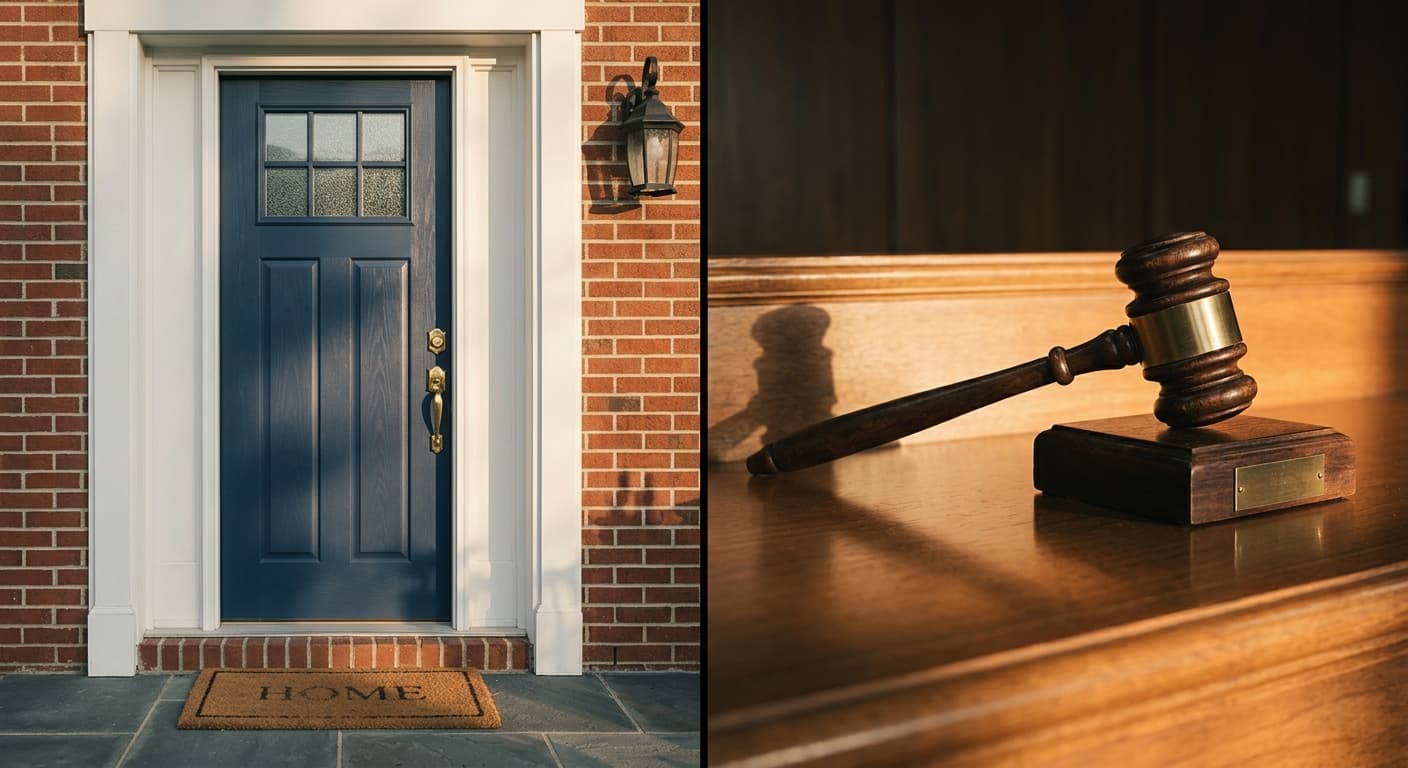
Connecticut homeowners increasingly rely on Ring doorbell cameras for package theft prevention, visitor screening, and general security. However, the state's strict eavesdropping and wiretapping laws create real legal risks for anyone who records audio through these devices without proper consent.
The core issue is not video. Recording video of your front porch, driveway, or walkway is generally legal in Connecticut. The problem is audio. Connecticut's eavesdropping statute (CGS 53a-189) makes it a crime to record a private, in-person conversation unless at least one party to that conversation consents, and a separate statute, CGS 52-570d, requires consent from every party (or a recorded verbal notice, or a repeating audible tone) before recording a private telephone call. Ring doorbells record both video and audio by default.
Connecticut Audio Recording Laws and Ring Doorbells
Connecticut has two overlapping statutes that govern audio recording, and both are relevant to Ring doorbell owners.
CGS 53a-187 Through 53a-189: Eavesdropping
Under CGS 53a-187, Connecticut defines two key terms. Wiretapping means the intentional overhearing or recording of a telephonic or telegraphic communication by someone other than the sender or receiver, without the consent of either party. Mechanical overhearing of a conversation means the intentional overhearing or recording of a conversation by a person not present, without the consent of at least one party, using any instrument or device.
CGS 53a-189 makes it a Class D felony to engage in either wiretapping or mechanical overhearing. A Class D felony in Connecticut carries a sentence of up to 5 years in prison, a fine of up to $5,000, or both.
For Ring doorbell owners, this means recording a conversation between two visitors on your porch, without either person's consent, could technically qualify as mechanical overhearing under this statute.

CGS 52-570d: All-Party Consent for Telephone Calls
Connecticut's all-party consent rule is narrower than many homeowners assume. It lives in CGS 52-570d, and it applies only to recording private telephone conversations, not in-person conversations picked up by a doorbell microphone. Under 52-570d, a person may not record a private telephone call unless every party consents in advance in writing or at the start of the recording, a verbal notice is recorded at the start of the call, or the recording device plays a distinct tone repeating roughly every 15 seconds.
Ring doorbell audio does not fall under this telephone-specific statute. It falls under the eavesdropping law discussed above (CGS 53a-187 to 53a-189), Connecticut's one-party consent standard for in-person conversations. Violations of that statute are prosecuted criminally.
The civil side is narrower than the criminal side, and the gap matters for doorbell audio. CGS 54-41r, part of Chapter 959a (Connecticut's law-enforcement wiretap-order chapter), creates a civil cause of action for interceptions that violate that chapter or sections 53a-187 to 53a-189. But by its own terms it runs only to "any person whose wire communication is intercepted, disclosed or used," and CGS 54-41a defines a wire communication as one carried over telephone or telegraph facilities operated by a common carrier. A conversation on a front porch is not a wire communication, so the visitor or neighbor recorded by a doorbell microphone has no 54-41r claim on the face of the statute even though the recording may still be a crime.
Where 54-41r does apply, it entitles the plaintiff to actual damages but not less than liquidated damages of $100 per day of violation or $1,000, whichever is higher, plus punitive damages and a reasonable attorney's fee and litigation costs. Illegal recording of a private telephone call is remedied separately and more modestly: CGS 52-570d(c) lets a person aggrieved by a violation sue in the Superior Court for damages, together with costs and a reasonable attorney's fee, with no liquidated-damages floor and no punitive damages.
How This Applies to Ring Doorbells
Ring doorbell cameras record audio by default whenever they detect motion or someone presses the doorbell button. If the device captures a private conversation between visitors, delivery workers, or neighbors without their knowledge, the homeowner could face liability under Connecticut's eavesdropping statutes.
The key legal question is whether conversations on a front porch constitute "private" conversations with a reasonable expectation of privacy. Connecticut courts have not issued a definitive ruling on this specific scenario as of April 2026. However, the safer legal approach is to either disable audio recording or post clear signage notifying visitors that audio and video recording is in progress.
Video Recording Laws and Ring Doorbells in Connecticut
Connecticut does not have a specific statute that prohibits homeowners from recording video on their own property. Video surveillance of public-facing areas, including front porches, driveways, sidewalks, and yards, is generally permissible because people in these spaces do not have a reasonable expectation of privacy.
Voyeurism Statute: CGS 53a-189a
Connecticut's voyeurism law (CGS 53a-189a) does restrict video recording in certain circumstances. Under this statute, a person commits voyeurism by maliciously and knowingly photographing, filming, or recording another person without their knowledge and consent when that person is not in plain view and has a reasonable expectation of privacy.
This statute primarily targets hidden cameras in bathrooms, bedrooms, changing rooms, and similar private spaces. A Ring doorbell pointed at a front porch or walkway would not typically violate this law because visitors in those areas are in plain view.
However, if a Ring camera's field of view extends into a neighbor's window, bedroom, or other private area, the voyeurism statute could apply. Homeowners should angle their cameras to capture only their own property and public-facing areas.

Practical Guidelines for Video
- Point the camera at your own property: porch, walkway, driveway, and yard
- Avoid capturing the interior of neighboring homes through windows
- Ring's privacy zone feature allows homeowners to black out specific areas of the camera's field of view
- Video recording without audio in public-facing areas carries minimal legal risk in Connecticut
HOA and Ring Doorbells in Connecticut
Connecticut's Common Interest Ownership Act (CIOA, CGS Chapter 828) governs condominiums and common interest communities formed after December 31, 1983. Under CIOA, associations have broad authority to adopt and enforce rules regarding exterior modifications to units and common areas.
What HOAs Can Restrict
Many Connecticut HOAs and condominium associations include provisions in their declarations, bylaws, or rules that regulate exterior modifications. A Ring doorbell mounted on the exterior of a unit door or near a common hallway may require association approval depending on the governing documents.
Common restrictions include:
- Requiring written approval before installing any exterior device
- Specifying approved colors, sizes, or types of doorbell cameras
- Prohibiting cameras that record common areas like hallways, lobbies, or parking garages
- Limiting the field of view to the unit owner's own entryway
What HOAs Cannot Do
No Connecticut statute specifically prohibits HOAs from restricting Ring doorbells. However, associations that ban all security devices entirely may face pushback from unit owners citing safety concerns. The practical approach for most associations is to adopt a policy that permits doorbell cameras with reasonable conditions, such as limiting the recording angle and requiring audio to be disabled.
Before purchasing a Ring doorbell, condominium and HOA residents in Connecticut should review their association's governing documents and request written approval if required.
Landlord and Tenant Rights for Ring Doorbells
Connecticut landlord-tenant law does not contain a specific statute addressing doorbell camera installation. However, several general principles apply.
Tenant Installation Rights
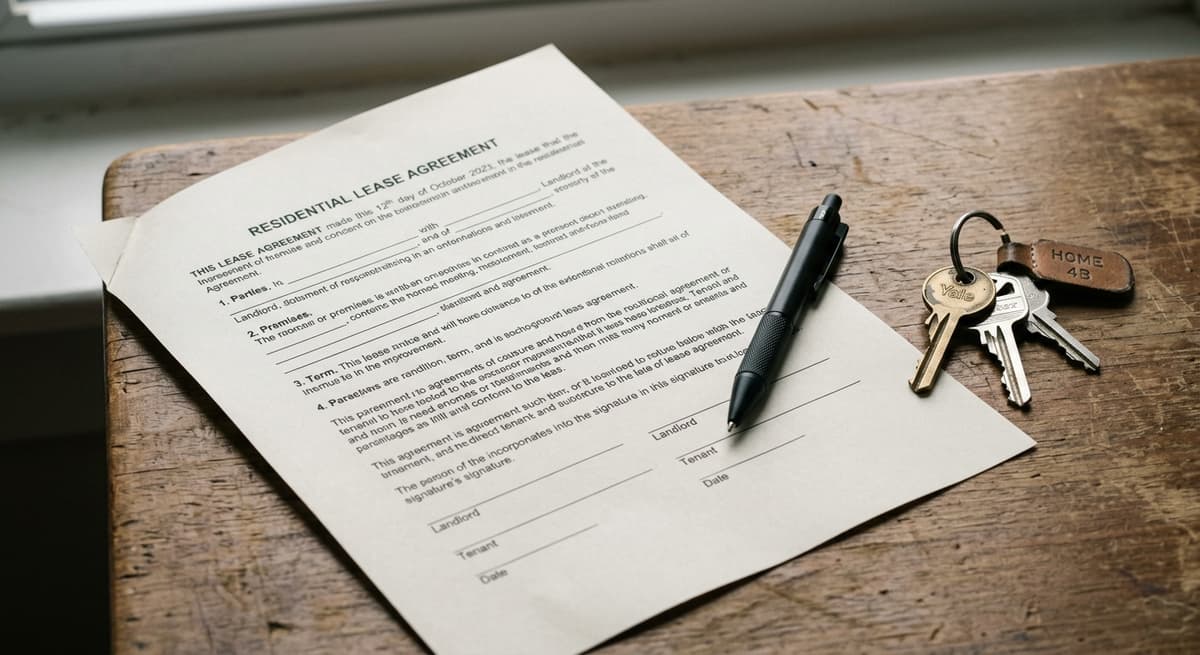
Tenants who want to install a Ring doorbell typically need their landlord's permission, especially if installation requires drilling into the door frame or exterior wall. Most lease agreements include clauses about modifications to the rental unit, and mounting a doorbell camera qualifies as a modification.
Wireless Ring doorbells that attach with adhesive or existing screws may require less formal approval, but checking the lease first is the safest approach.
Landlord Surveillance Limitations
Landlords in Connecticut can install security cameras in common areas of apartment buildings, including lobbies, elevators, hallways, and amenity rooms. These are spaces where tenants have no reasonable expectation of privacy.
However, landlords cannot install cameras (with or without audio) that record inside a tenant's unit, at a tenant's private entrance, or in any area where tenants have a reasonable expectation of privacy. Connecticut's voyeurism statute (CGS 53a-189a) and eavesdropping laws both apply to landlords.
A 2022 Connecticut General Assembly research report confirmed that landlords must balance security needs with tenants' privacy rights when installing surveillance equipment on rental properties.
Audio Recording in Rental Properties
Connecticut's recording rules apply equally to landlords and tenants. In-person audio at a building entrance falls under the criminal eavesdropping statute, which requires the consent of at least one party to the conversation, so a landlord who installs a Ring doorbell with audio enabled at a building entrance could face eavesdropping charges if the device records tenant conversations without consent.
Law Enforcement Access to Ring Doorbell Footage
Police in Connecticut can obtain Ring doorbell footage through several legal channels.
Voluntary Consent
The most common method is simply asking the homeowner to share footage voluntarily. Homeowners have the right to refuse this request. If a homeowner declines, police can then seek a warrant.
Search Warrants and Subpoenas
Connecticut judges can issue search warrants for Ring doorbell footage if police demonstrate probable cause that the footage contains evidence of a crime. Law enforcement can also subpoena footage stored on Ring's (Amazon's) cloud servers directly through legal process.
Ring's published law enforcement guidelines confirm that the company responds to valid legal orders, including search warrants, subpoenas, and court orders.
Emergency Exceptions
Ring's policy allows the company to disclose footage to law enforcement without a warrant or user consent when Ring believes someone faces "danger of death or serious physical injury." Amazon makes this determination internally, without court review.
Recent Policy Changes
In January 2024, Amazon announced that Ring would no longer allow police to request footage directly from users through the Request for Assistance tool on the Neighbors app. However, in April 2025, Ring partnered with Axon (the company behind police body cameras and tasers) to create a new system where officers can send voluntary requests for footage through Axon's evidence management platform. Connecticut residents should be aware that participation is optional, and declining a request does not identify the resident to law enforcement.
Penalties for Illegal Recording in Connecticut
Connecticut imposes serious penalties for unauthorized audio recording.

Criminal Penalties
| Offense | Classification | Maximum Prison | Maximum Fine |
|---|---|---|---|
| Eavesdropping (CGS 53a-189) | Class D Felony | 5 years | $5,000 |
| Voyeurism, first offense (CGS 53a-189a) | Class D Felony | 5 years | $5,000 |
| Voyeurism, subsequent offense or victim under 16 (CGS 53a-189a) | Class C Felony | 10 years | $10,000 |
| Illegal wiretapping by officials (Ch. 959a) | Class C Felony | 10 years | $10,000 |
| Disseminating voyeuristic material (CGS 53a-189b) | Class D Felony | 5 years | $5,000 |
Civil Liability
Beyond criminal penalties, Connecticut provides civil remedies for illegal recording, but each is tied to a specific statute and neither is a general claim for doorbell audio.
Under CGS 54-41r, a person whose wire communication was intercepted in violation of Chapter 959a or of CGS 53a-187 to 53a-189 can recover:
- Actual damages, but not less than liquidated damages of $100 per day of violation or $1,000 (whichever is higher)
- Punitive damages
- A reasonable attorney's fee and other litigation costs
Under CGS 52-570d(c), a person aggrieved by the illegal recording of a private telephone call may bring a civil action in the Superior Court for damages, together with costs and a reasonable attorney's fee. That subsection carries no liquidated-damages floor and no punitive damages.
Because 54-41r reaches only wire communications, a neighbor who discovers their in-person conversation was recorded by a Ring doorbell without consent cannot rely on it. The conduct can still be reported for criminal prosecution as eavesdropping under CGS 53a-189, but any damages claim would have to rest on a theory outside these two recording statutes.
How to Use a Ring Doorbell Legally in Connecticut
Following these guidelines can help Connecticut residents minimize legal risk when using a Ring doorbell camera.
Disable or Manage Audio Recording
The safest option is to disable audio recording entirely through the Ring app settings. Connecticut's strict eavesdropping laws make audio recording the primary legal concern. If audio is disabled, the legal risk drops significantly.
For homeowners who want to keep audio enabled for two-way communication (such as speaking with delivery drivers through the Ring app), the live two-way talk feature may be less legally problematic because both parties are aware of the conversation. However, passive audio recording of conversations where the homeowner is not a participant remains legally risky.
Post Visible Signage
Placing a clear, visible sign near the Ring doorbell that states "Audio and Video Recording in Progress" provides notice to visitors. While signage alone does not guarantee legal compliance, it strengthens the argument that visitors were aware of and implicitly consented to recording by continuing to remain in the area, which matters most for conversations the device owner is not a party to.
Use Ring's Privacy Zones
Ring's privacy zone feature allows homeowners to block out specific portions of the camera's field of view. Use this feature to exclude neighboring properties, windows, and any areas where recording could raise privacy concerns.
Check HOA and Lease Rules
Before installation, review any applicable HOA declarations, bylaws, or lease agreements. Obtain written approval if required by the governing documents.
Limit Cloud Storage and Sharing
Be cautious about sharing Ring footage on social media or with third parties. Footage that captures identifiable individuals without their consent could raise additional privacy concerns under Connecticut law.
More Connecticut Laws
Connecticut has several other laws that may affect homeowners and residents:
- Connecticut Recording Laws cover the full scope of the state's consent requirements for audio and video recording
- Connecticut Hit and Run Laws outline penalties for leaving the scene of an accident
- Connecticut Lemon Laws protect buyers of defective vehicles
- Connecticut Data Privacy Laws cover the Connecticut Data Privacy Act and consumer data protections
This article provides general legal information about Connecticut Ring doorbell laws as of April 2026. Laws and their interpretation can change. Consult an attorney for advice specific to your situation.
Frequently Asked Questions
Is it legal to have a Ring doorbell in Connecticut?
Ring doorbells are legal in Connecticut for video recording of your own property. The legal concern is audio recording. Connecticut's eavesdropping law (CGS 53a-189) criminalizes recording a private conversation when no party to it consented. Disabling audio or posting clear signage reduces legal risk.
Can my neighbor's Ring doorbell record my property in Connecticut?
Connecticut does not prohibit a neighbor from recording video of areas visible from their property. However, if the camera captures audio of a private conversation and no party to that conversation consented, it may violate CGS 53a-189. If the camera records into private areas like bedrooms through windows, the voyeurism statute (CGS 53a-189a) could also apply.
Do I need to tell visitors about my Ring doorbell in Connecticut?
Connecticut does not have a specific notification statute for doorbell cameras. However, because the state's eavesdropping law requires the consent of at least one party to a recorded conversation, and neither the homeowner nor the device is typically a party to a conversation between two visitors, posting a visible sign stating that audio and video recording is in progress is strongly recommended. This notice can serve as evidence that visitors were aware of the recording and effectively consented to it.
Can Connecticut police access my Ring doorbell footage without my permission?
Police generally need either your voluntary consent or a search warrant to access Ring footage. Ring also responds to valid subpoenas and court orders. In emergency situations where someone faces danger of death or serious physical injury, Ring may share footage with law enforcement without a warrant or the homeowner's consent.
What are the penalties for illegal audio recording with a Ring doorbell in Connecticut?
Eavesdropping is a Class D felony in Connecticut under CGS 53a-189, carrying up to 5 years in prison and a $5,000 fine. The civil side is narrower. The damages action in CGS 54-41r (actual damages with a $100-per-day or $1,000 liquidated minimum, plus punitive damages and attorney's fees) runs only to a person whose wire communication was intercepted, so it does not on its face cover someone whose in-person porch conversation was captured. A separate remedy in CGS 52-570d(c) covers illegally recorded private telephone calls and allows damages, costs, and a reasonable attorney's fee.
Updates
Corrected the civil-remedy section: the damages action in CGS 54-41r runs only to a person whose wire communication was intercepted, so it does not cover an in-person porch conversation picked up by a doorbell camera, and the separate telephone-recording remedy in CGS 52-570d(c) is limited to damages, costs and attorney's fees; also corrected a key takeaway that wrongly stated Connecticut requires all-party consent for in-person conversations.
Corrected the page's consent framework for Connecticut: Ring doorbell audio (an in-person conversation) is governed by the state's one-party consent eavesdropping law, not the all-party consent rule, which applies only to recording telephone calls under a different statute the page had not cited. Also restored the graduated felony tiers for the voyeurism penalty and corrected the date of Ring's partnership with Axon.
Independently fact-checked against the cited primary sources; governing law re-checked for recent changes
Governing law re-checked for recent changes
Reviewed and approved by an editor
The Law Behind This Article
This article rests on the statutory provisions below, held in our own legal record and retrieved from the official source. Tap a section to read the operative text.
Connecticut General Statutes, Title 53a (Penal Code), Chapter 952
§ 53a-189Eavesdropping: Class D felony.In forcecited in 16 of our articles
(a) A person is guilty of eavesdropping when he unlawfully engages in wiretapping or mechanical overhearing of a conversation. (b) Eavesdropping is a class D felony.
Official text (excerpt) · last checked 2026-08-31 · Read the full text in our law library · Verify at cga.ct.gov
Cited in 14 court opinions in our collectionLatest citing opinion in our collection: 2020
In the courts (editorial summary, independently checked):Washington v. Meachum (1996) held the eavesdropping statutes, section 53a-189 among them, are violated only when neither party to a call knows it is being monitored. State v. McLoughlin (1998), a trial court ruling on a scanner intercept, read 53a-189 to cover cordless calls, a question no Connecticut appellate court had decided.
Opinions citing this section in our collection:
- State v. McLoughlin (Connecticut Superior Court 1998, 45 Conn. Super. Ct. 497)“…on. Subsequently, the defendant was charged in violation of General Statutes § 53a-189, eavesdropping, which is a class D felo…”
- Rado v. Board of Education of the Borough of Naugatuck (Supreme Court of Connecticut 1990, 216 Conn. 541)✓A tenured teacher acquitted of eavesdropping was fired after a panel found he tampered with the school phone system to overhear staff calls; the court treated that conduct as proscribed by section 53a-189 and upheld the moral-misconduct finding.
- Washington v. Meachum (Supreme Court of Connecticut 1996, 238 Conn. 692)✓Inmates challenged prison rules allowing officials to monitor and record their nonprivileged phone calls; the Connecticut Supreme Court held the eavesdropping statutes are violated only when neither party knows the call is being monitored, so the noticed recording was lawful.
Identified automatically from the court opinions citing this section — not a ranking of which case controls.
Also relied on in: Connecticut Recording Laws (2026): Hybrid Consent Rules Explained, Connecticut Phone Call Recording Laws: All-Party Consent Rules and Penalties (2026), Connecticut Audio Recording Laws: Mixed Consent Rules and Penalties (2026)
§ 53a-187Definitions. Applicability.In forcecited in 18 of our articles
(a) The following definitions are applicable to sections 53a-188 and 53a-189: (1) “Wiretapping” means the intentional overhearing or recording of a telephonic or telegraphic communication or a communication made by cellular radio telephone by a person other than a sender or receiver thereof, without the consent of either the sender or receiver, by means of any instrument, device or equipment. The normal operation of a telephone or telegraph corporation and the normal use of the services and facilities furnished by such corporation pursuant to its tariffs shall not be deemed “wiretapping”. (2) “Mechanical overhearing of a conversation” means the intentional overhearing or recording of a conversation or discussion, without the consent of at least one party thereto, by a person not present thereat, by means of any instrument, device or equipment. (3) “Unlawfully” means not specifically authorized by law. For purposes of this section, “cellular radio telephone” means a wireless telephone authorized by the Federal Communications Commission to operate in the frequency bandwidth reserved for cellular radio telephones.
Official text (excerpt) · last checked 2026-07-29 · Read the full text in our law library · Verify at cga.ct.gov
Cited in 12 court opinions in our collectionLatest citing opinion in our collection: 2021
In the courts (editorial summary, independently checked):Connecticut courts read section 53a-187's definitions to reach only surreptitious, nonconsensual monitoring. State v. Grullon (1989) applied it to place one-party-consent recordings outside the eavesdropping statutes, and Washington v. Meachum (1996) held those statutes are violated only when neither party knows the call is monitored.
Opinions citing this section in our collection:
- State v. Grullon (Supreme Court of Connecticut 1989, 212 Conn. 195)✓Police recorded the defendant's calls with his brother, who consented; the court held that replacing the older wiretap penal statute with section 53a-187, which reaches recording only when no party consents, gave no reason to exclude the transcripts.
- Washington v. Meachum (Supreme Court of Connecticut 1996, 238 Conn. 692)✓Inmates challenged prison rules allowing nonprivileged collect calls to be monitored after posted signs, signed forms and a recurring tone; reading section 53a-187's consent-based definitions, the court held the eavesdropping statutes are violated only when neither party knows.
- State v. McVeigh (Supreme Court of Connecticut 1993, 224 Conn. 593)✓Police used a scanner in a neighbor's apartment to record a couple's cordless phone calls; the court rejected the State's argument that a 1989 amendment adding cellular phones to section 53a-187's wiretapping definition left cordless calls unprotected, and ordered suppression.
Identified automatically from the court opinions citing this section — not a ranking of which case controls.
Also relied on in: Connecticut Dashcam Laws: Mounting Rules, Audio Recording, and Evidence (2026), Connecticut Landlord-Tenant Recording and Surveillance Laws (2026), Connecticut Medical Recording Laws: Patients, Doctors, and HIPAA Rules (2026)
§ 53a-189aVoyeurism: Class D or C felony.In forcecited in 13 of our articles
(a) A person is guilty of voyeurism when, (1) with malice, such person knowingly photographs, films, videotapes or otherwise records the image of another person (A) without the knowledge and consent of such other person, (B) while such other person is not in plain view, and (C) under circumstances where such other person has a reasonable expectation of privacy, (2) with intent to arouse or satisfy the sexual desire of such person or any other person, such person knowingly photographs, films, videotapes or otherwise records the image of another person (A) without the knowledge and consent of such other person, (B) while such other person is not in plain view, and (C) under circumstances where such other person has a reasonable expectation of privacy, (3) with the intent to arouse or satisfy the sexual desire of such person, commits simple trespass, as provided in section 53a-110a, and observes, in other than a casual or cursory manner, another person (A) without the knowledge or consent of such other person, (B) while such other person is inside a dwelling, as defined in section 53a-100, and not in plain view, and (C) under circumstances where such other person has a reasonable…
Official text (excerpt) · last checked 2026-08-31 · Read the full text in our law library · Verify at cga.ct.gov
Cited in 6 court opinions in our collectionLatest citing opinion in our collection: 2026
In the courts (editorial summary, independently checked):In State v. Panek (2018) the Connecticut Supreme Court held that the 'not in plain view' element of section 53a-189a refers to the view of the general public, not of the person recording, and that the statute reaches a nonconsensual recording made in the victim's immediate presence. It rejected a vagueness challenge.
Opinions citing this section in our collection:
- State v. Panek (Supreme Court of Connecticut 2018, 328 Conn. 219)✓A man secretly recorded women during sexual encounters in his own home and argued they were in his plain view, so the voyeurism statute did not reach him; the Connecticut Supreme Court held the 'not in plain view' element refers to the public's view, reversing the dismissal.
- Middlesex Insurance v. Mara (District Court, D. Connecticut 2010, 699 F. Supp. 2d 439)✓Neighbors sued a homeowner for a campaign of harassment, including a voyeurism count under the statute for videotaping a woman; the federal court found every count alleged intentional acts excluded from his homeowner's policy and declared the insurer had no duty to defend.
- Project Veritas v. Michael Schmidt (Court of Appeals for the Ninth Circuit 2023, 72 F.4th 1043)“…ev. Stat. Ann. §§ 18-9-301(8), 18-9- 304(1)(a) Connecticut: Conn. Gen. Stat. Ann. § 53a-189a(a)(1); Connecticut v. Panek, 177 A.3d 1…”
Identified automatically from the court opinions citing this section — not a ranking of which case controls.
Also relied on in: Connecticut Laws on Recording in Public: What Is Legal (2026), Connecticut School Recording Laws: Students, Teachers, and Campus Rules (2026), Connecticut Security Camera Laws: Home, Business, and Workplace Rules (2026)
Connecticut General Statutes, Title 52 (Civil Actions), Chapter 925
§ 52-570dAction for illegal recording of private telephonic communications.In forcecited in 21 of our articles
(a) No person shall use any instrument, device or equipment to record an oral private telephonic communication unless the use of such instrument, device or equipment (1) is preceded by consent of all parties to the communication and such prior consent either is obtained in writing or is part of, and obtained at the start of, the recording, or (2) is preceded by verbal notification which is recorded at the beginning and is part of the communication by the recording party, or (3) is accompanied by an automatic tone warning device which automatically produces a distinct signal that is repeated at intervals of approximately fifteen seconds during the communication while such instrument, device or equipment is in use.
Official text (excerpt) · last checked 2026-08-28 · Read the full text in our law library · Verify at cga.ct.gov
Cited in 22 court opinions in our collectionLatest citing opinion in our collection: 2024
In the courts (editorial summary, independently checked):Holler v. Buckley Broadcasting Corp. (1998) held section 52-570d creates a cause of action unknown at common law that is strictly construed, and does not reach a third party's rerecording of an already illegal tape. Jezouit v. Malloy (2019) held the statute does not waive the state's sovereign immunity from suit.
Opinions citing this section in our collection:
- Holler v. Buckley Broadcasting Corp. (Connecticut Appellate Court 1998, 47 Conn. App. 764)✓A girlfriend secretly taped a radio employee's call, and a coworker re-recorded that tape and used it to get him fired. The court held section 52-570d, strictly construed, bars taping a private call but not a third party's re-recording of an already illegal tape.
- Jezouit v. Malloy (Connecticut Appellate Court 2019, 193 Conn. App. 576)“…his complaint because (1) he brought his claim pursuant to General Statutes § 52-570d, which he contends waives sovereign imm…”
- State v. Skok (Supreme Court of Connecticut 2015)“…on without the consent of all parties to the communication. General Statutes § 52-570d (a) prohibits the use of ‘‘any instrume…”
Identified automatically from the court opinions citing this section — not a ranking of which case controls.
Also relied on in: Can I Sue Someone for Recording Me on Private or Public Property?, Connecticut Video Recording Laws: Consent, Surveillance, and Privacy Rules (2026), Connecticut Workplace Recording Laws: Employee Rights and Employer Rules (2026)
Search our full record of US law — 2.1 million sections, every state + federal →
Sources and References
- CGS 53a-187 - Definitions and Applicability (Eavesdropping)(cga.ct.gov).gov
- CGS 53a-189 - Eavesdropping: Class D Felony(cga.ct.gov).gov
- Conn. Gen. Stat. 52-570d - Civil action for illegal recording of telephone conversations(cga.ct.gov).gov
- CGS 53a-189a - Voyeurism Statute(cga.ct.gov).gov
- Connecticut Common Interest Ownership Act (CIOA) - Chapter 828(cga.ct.gov).gov
- Connecticut Law on Landlords Installing Security Cameras (OLR Research Report)(cga.ct.gov).gov
- Ring Law Enforcement Information Requests(ring.com)
- FTC Action Against Ring for Privacy Violations(ftc.gov).gov
- Connecticut OLR Report on Recording Phone Calls(cga.ct.gov).gov
- Connecticut Laws Regulating Surveillance (OLR Report)(cga.ct.gov).gov
- CGS 54-41r - Remedies of party intercepted; defense (and 54-41a definition of wire communication)(cga.ct.gov)