
Georgia
Georgia Ring Doorbell Laws: What You Need to Know in 2026
Independently fact-checked against primary sources (last audited August 17, 2026). · Reviewed by the RecordingLaw editorial team. · Law checked current as of August 9, 2026. · 2 primary sources cited on this page. How we verify our legal content
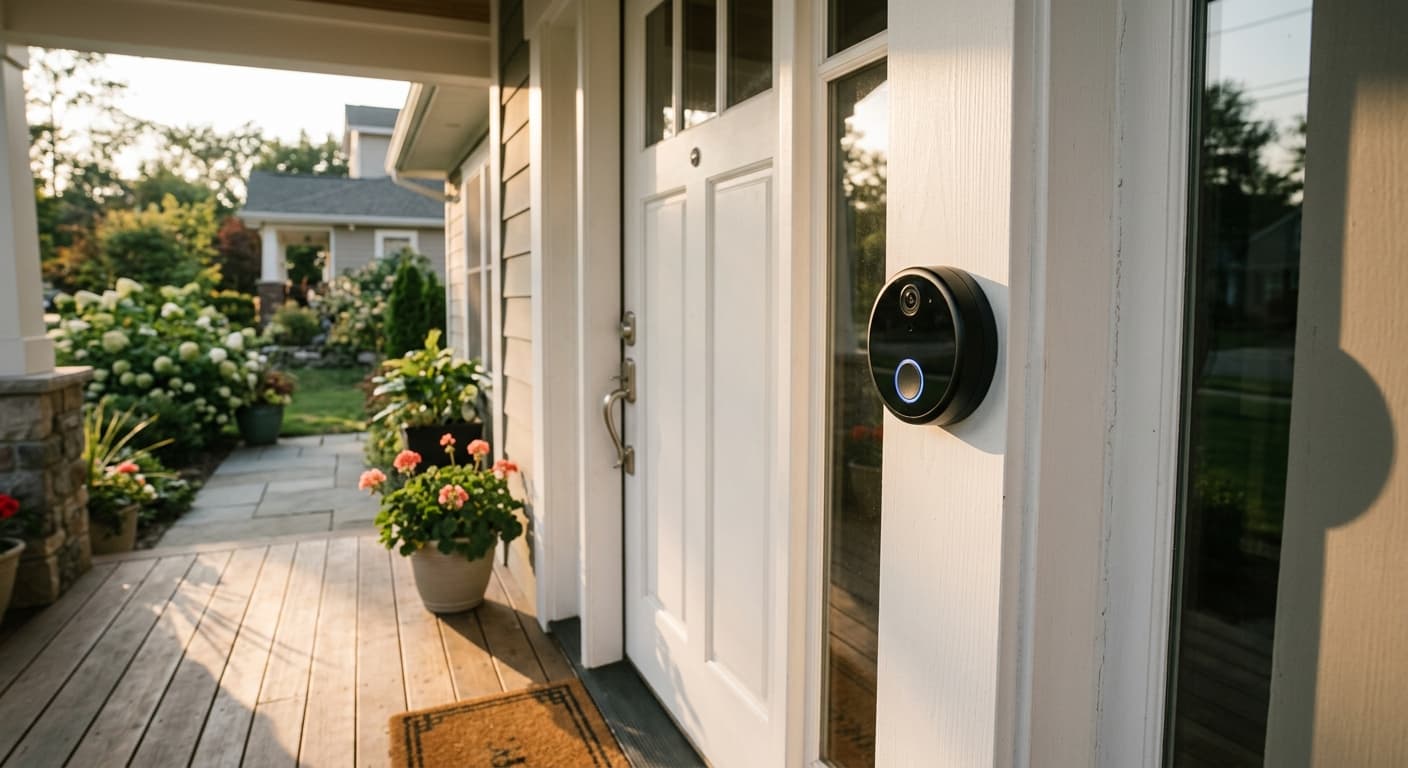
Georgia's recording laws create a clear framework for Ring doorbell camera use, though the rules differ depending on whether your device captures audio, video, or both. The state's one-party consent rule makes audio recording relatively straightforward for homeowners. Video surveillance carries additional restrictions when it captures activity in private places. Understanding these distinctions is critical for any Georgia resident who owns or plans to install a Ring doorbell camera.
Audio Recording Laws and Ring Doorbells in Georgia
Georgia's One-Party Consent Rule
Georgia follows a one-party consent standard for audio recordings. Under O.C.G.A. § 16-11-66, a person may intercept a wire, oral, or electronic communication when that person is a party to the communication, or when one of the parties has given prior consent to the interception.
In practical terms, this means your Ring doorbell can legally record audio of conversations at your front door as long as you (the device owner) are one of the participants. When a visitor rings the bell and you respond through the Ring app, you become a party to that conversation and satisfy the one-party consent requirement.
When Audio Recording Becomes Problematic
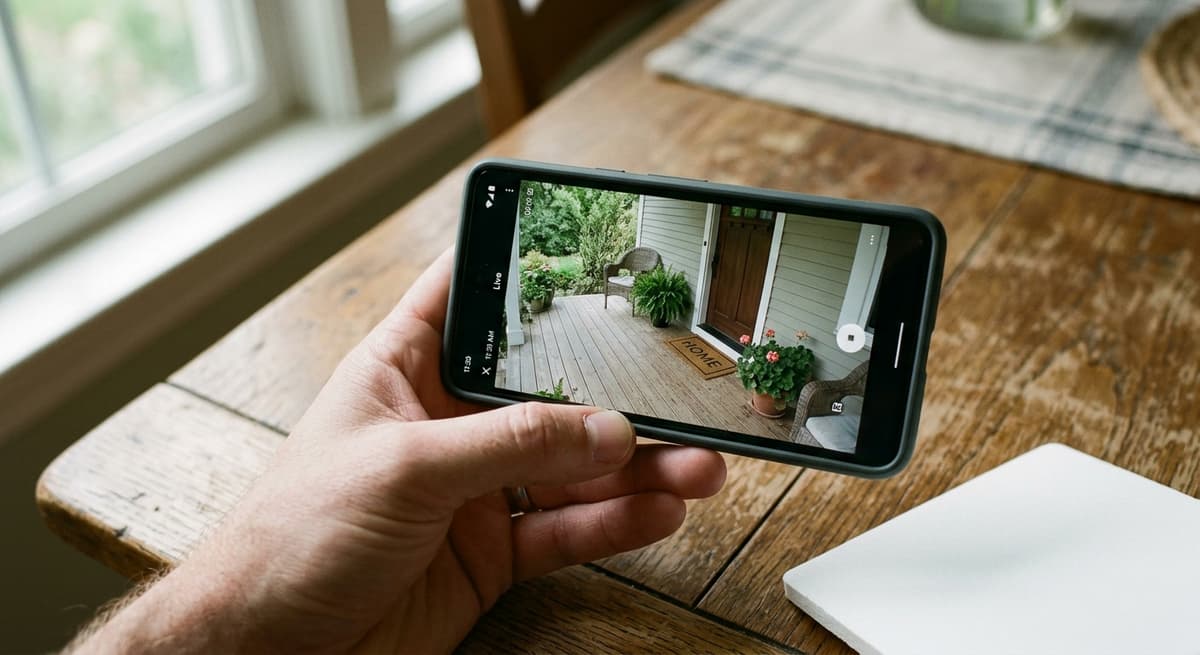
The one-party consent exception under O.C.G.A. § 16-11-66 applies only to communications where you are an active participant. If your Ring doorbell records audio of two visitors talking to each other on your porch while you are not participating in or monitoring the conversation, the legal picture changes.
O.C.G.A. § 16-11-62(1) makes it unlawful for any person to "in a clandestine manner intentionally overhear, transmit, or record the private conversation of another which shall originate in any private place." The key question is whether your front porch qualifies as a "private place" under the statute. Georgia courts have generally treated areas visible to the public, like a front porch, as less likely to carry a reasonable expectation of privacy. However, enclosed porches, gated entryways, or areas shielded from public view could receive different treatment.
To reduce legal risk, many Georgia Ring doorbell owners keep the audio recording feature enabled only when actively using two-way talk, or they post a visible notice that audio and video recording is in progress.
Video Recording Laws and Ring Doorbells
The All-Party Consent Requirement for Private Places
Georgia's video surveillance rules differ significantly from its audio rules. Under O.C.G.A. § 16-11-62(2), it is unlawful for any person, "through the use of any device, without the consent of all persons observed, to observe, photograph, or record the activities of another which occur in any private place and out of public view."
This means a Ring doorbell camera pointed at a public-facing area like your driveway, front walkway, or street is generally legal. The statute targets recording of activities that happen in private places and out of public view.
The Homeowner Security Device Exception
The general private-place rule is not the only provision that matters, and for a doorbell camera it is not the most important one. O.C.G.A. § 16-11-62(2) carries its own express exceptions, and two of them cover ordinary homeowner security cameras directly.
Under subparagraph (2)(B), it is not unlawful "for an owner or occupier of real property to use for security purposes, crime prevention, or crime detection any device to observe, photograph, or record the activities of persons who are on the property or an approach thereto in areas where there is no reasonable expectation of privacy." A Ring doorbell mounted beside your own front door, watching the walkway and porch that visitors approach, sits squarely inside that language.
Subparagraph (2)(C) goes further. It permits the use of a security device "to observe, photograph, or record the activities of persons who are within the curtilage of the residence of the person using such device," and it adds that a recording made under that subparagraph "may be disclosed by such resident to the district attorney or a law enforcement officer and shall be admissible in a judicial proceeding, without the consent of any person observed, photographed, or recorded."
Read together, these exceptions mean Georgia law does not merely tolerate residential doorbell cameras by implication. It names them. A homeowner recording their own approach and curtilage for security reasons is operating inside an express statutory carve-out, not relying on an argument about whether a porch counts as a private place. Note the limits, though: subparagraph (2)(B) is tied to areas "where there is no reasonable expectation of privacy," and both exceptions turn on a genuine security, crime-prevention, or crime-detection purpose. A camera repositioned to watch a neighbor's private space is not serving that purpose and does not inherit the exception.
Avoiding Neighbor Privacy Violations
A critical concern for Georgia Ring doorbell owners is camera placement relative to neighboring properties. Georgia law prohibits recording activities inside another person's home or other private spaces. A residential security camera that can capture footage of the interior of a neighbor's home may violate O.C.G.A. § 16-11-62, even if curtains or blinds partially obscure the view.
Ring doorbell cameras have a wide-angle lens (typically 155 to 180 degrees), which means they can inadvertently capture portions of neighboring properties. To stay within legal boundaries, position your Ring doorbell so it primarily captures your own property and public areas. Avoid angling the camera toward a neighbor's windows, enclosed patio, or backyard.
The Public vs. Private Place Distinction
The Georgia statute hinges on whether the recorded activity occurs in a "private place" and "out of public view." Activities happening on a public sidewalk, in a front yard visible from the street, or on an open front porch are generally not considered private under Georgia law. Ring doorbell footage of these areas is typically lawful because the subjects have no reasonable expectation of privacy in spaces visible to the general public.
HOA and Ring Doorbells in Georgia
HOA Authority Over Camera Installation
Georgia homeowners associations (HOAs) can regulate doorbell camera installation through their covenants, conditions, and restrictions (CC&Rs) and architectural guidelines. Under the Georgia Property Owners' Association Act (O.C.G.A. § 44-3-220 et seq.), associations that have opted into the POAA have the authority to approve or deny exterior modifications to homes, as long as their declaration does not restrict this authority. That authority comes from O.C.G.A. § 44-3-231, which gives the association power, "[e]xcept to the extent prohibited by the instrument and subject to any restrictions and limitations specified therein," to "grant or withhold approval of any action by one or more lot owners" that "would change the exterior appearance of any lot, or any structure thereon," or to appoint an architectural control committee to do so. Separately, O.C.G.A. § 44-3-223 requires every lot owner to comply with the association instrument and with reasonable rules adopted under it, and lets the association seek damages or injunctive relief, and impose fines where the instrument allows, when an owner does not.
Common HOA restrictions on Ring doorbells in Georgia include requiring architectural review committee approval before installation, mandating specific camera models or colors that blend with the property exterior, limiting the field of view to prevent recording of common areas, and restricting or prohibiting audio recording in shared spaces.
Challenging HOA Camera Restrictions
Georgia law requires HOAs to enforce their rules uniformly and without discrimination. If an HOA selectively enforces camera restrictions against certain homeowners while allowing others to keep their devices, the affected homeowner may have grounds to challenge the enforcement. Review your community's governing documents carefully before installing a Ring doorbell, and submit any required architectural modification requests in writing.
Landlord and Tenant Rights
Tenant Installation of Ring Doorbells
Georgia does not have a specific statute addressing tenant installation of doorbell cameras. The general rule is that tenants need landlord permission before making exterior modifications to a rental property, and installing a Ring doorbell typically requires drilling into the door frame or exterior wall.
Before purchasing a Ring doorbell for your rental unit, review your lease agreement for clauses about exterior modifications, security devices, or alterations to the property. Getting written permission from your landlord is the safest approach. Some landlords welcome security cameras as property protection, while others may have concerns about liability, aesthetics, or damage to the structure.
Landlord Obligations and Restrictions
Georgia landlords who install surveillance cameras on rental properties face specific legal boundaries. Under O.C.G.A. § 16-11-62, landlords cannot install cameras that record tenant activities in private spaces. Cameras in common areas like parking lots, building entrances, and shared hallways are generally permissible, but landlords should disclose the presence and location of all cameras in the lease agreement or through separate written notice.
A landlord who installs hidden cameras inside a rental unit, including in doorways or entryways that tenants treat as private, could face felony charges under Georgia's surveillance statute.
Law Enforcement Access to Ring Footage in Georgia
Warrant and Subpoena Requirements
Georgia law enforcement officers generally need a valid search warrant to compel access to your Ring doorbell footage. The Fourth Amendment to the U.S. Constitution and Article I, Section I, Paragraph XIII of the Georgia Constitution protect against unreasonable searches and seizures, which includes digital recordings stored on private devices or cloud accounts.
Georgia also has its own statute on compelled access to material held by a service provider. O.C.G.A. § 16-11-66.1 governs disclosure of stored wire or electronic communications and the transactional records that go with them. Subsections (a) and (b) tie the standard to federal law: an officer, a prosecuting attorney, or the Attorney General may require disclosure "to the extent and under the procedures and conditions provided for by the laws of the United States," and a provider of electronic communication service or remote computing service must produce the material when the requester complies with those federal provisions.
That matters because the federal standard is not warrant-only across the board. It is stricter for the contents of a communication than for records about it. Georgia's statute reflects the difference: subsection (d) provides that "a subpoena for the production of stored wire or electronic communications and transactional records pertaining thereto may be issued at any time upon a showing by a law enforcement official, a prosecuting attorney, or the Attorney General that the subpoenaed material relates to a pending criminal investigation." Subsection (c) separately gives search warrants for such production state-wide application.
So the practical picture is more layered than "police always need a warrant." A warrant is the expected route for the video itself. But § 16-11-66.1 is aimed at the provider holding the data rather than at you, and it leaves a subpoena route open for stored communications and transactional records on a showing tied to a pending investigation. Footage that lives only on your own device is a different question, reached through a warrant or your consent rather than through a demand on Ring.
Ring's corporate policy, updated in 2024, states that the company will no longer honor law enforcement requests for user footage without a valid search warrant or explicit user consent. Previously, Ring had a process allowing police to request footage through its Neighbors app, but that program was discontinued.
Voluntary Sharing of Footage
Georgia residents can voluntarily share their Ring doorbell footage with law enforcement at any time. Police may ask for footage during investigations involving crimes that occurred near your home, and you are free to cooperate or decline. Sharing footage voluntarily does not require a warrant because you, as the owner of the recording, are consenting to its release.
Emergency Exceptions
Under the federal Electronic Communications Privacy Act (18 U.S.C. § 2702), Ring may disclose user footage to law enforcement without a warrant when the company believes there is an imminent danger of death or serious physical injury. This emergency exception is narrow and applies only in life-threatening situations.
Penalties for Illegal Recording in Georgia
Criminal Penalties
Section 16-11-62 defines the prohibited conduct but sets no punishment of its own. The penalty comes from a separate section, O.C.G.A. § 16-11-69, which provides that "any person violating any of the provisions of this part shall be guilty of a felony and, upon conviction thereof, shall be punished by imprisonment for not less than one nor more than five years or a fine not to exceed $10,000.00, or both." Because it reaches the whole part, § 16-11-69 supplies the penalty for illegal audio recording under § 16-11-62(1), unauthorized video surveillance in private places under § 16-11-62(2), and the distribution of illegally obtained recordings under § 16-11-62(6) alike. The one carve-out § 16-11-69 names is subsection (d) of § 16-11-66.1, which is punishable as contempt instead.
The felony classification makes Georgia's penalties among the more severe in the United States. A conviction creates a permanent criminal record that can affect employment, housing, and professional licensing.
Civil Liability
Beyond criminal penalties, Georgia law provides civil remedies for victims of illegal recording. Individuals whose privacy has been violated through unlawful surveillance can pursue civil lawsuits seeking compensatory damages for emotional distress, punitive damages in cases of willful or egregious conduct, and injunctive relief to stop ongoing surveillance.
Under O.C.G.A. § 16-11-67, recordings obtained in violation of the eavesdropping statute are generally inadmissible as evidence in civil or criminal proceedings. Georgia courts also recognize a cause of action for invasion of privacy through wiretapping, regardless of whether the illegally obtained information was ever published or disclosed.
FTC Enforcement and Ring-Specific Consequences
In 2023, the Federal Trade Commission (FTC) reached a $5.8 million settlement with Ring over allegations that the company's poor privacy practices allowed employees to access customer video feeds and left recordings vulnerable to hackers. While this action targeted Ring as a company rather than individual users, it underscores the importance of configuring your Ring doorbell's privacy settings properly, including enabling two-factor authentication and limiting shared access.
How to Use a Ring Doorbell Legally in Georgia
Following these guidelines can help Georgia residents stay within the law when using a Ring doorbell camera:
Camera Placement: Position your Ring doorbell to capture your own property and public-facing areas. Avoid pointing the camera directly at a neighbor's windows, enclosed patio, or backyard where they have a reasonable expectation of privacy.
Audio Recording: Georgia's one-party consent law permits audio recording when you are a party to the conversation. Consider posting a visible sign near your Ring doorbell stating that audio and video recording is in progress. This provides additional legal protection and puts visitors on notice.
HOA Compliance: If you live in an HOA community, review your CC&Rs and architectural guidelines before installation. Submit any required modification requests and wait for approval before mounting the device.
Lease Review: Tenants should check their lease agreement and get written landlord permission before installing a Ring doorbell on a rental property.
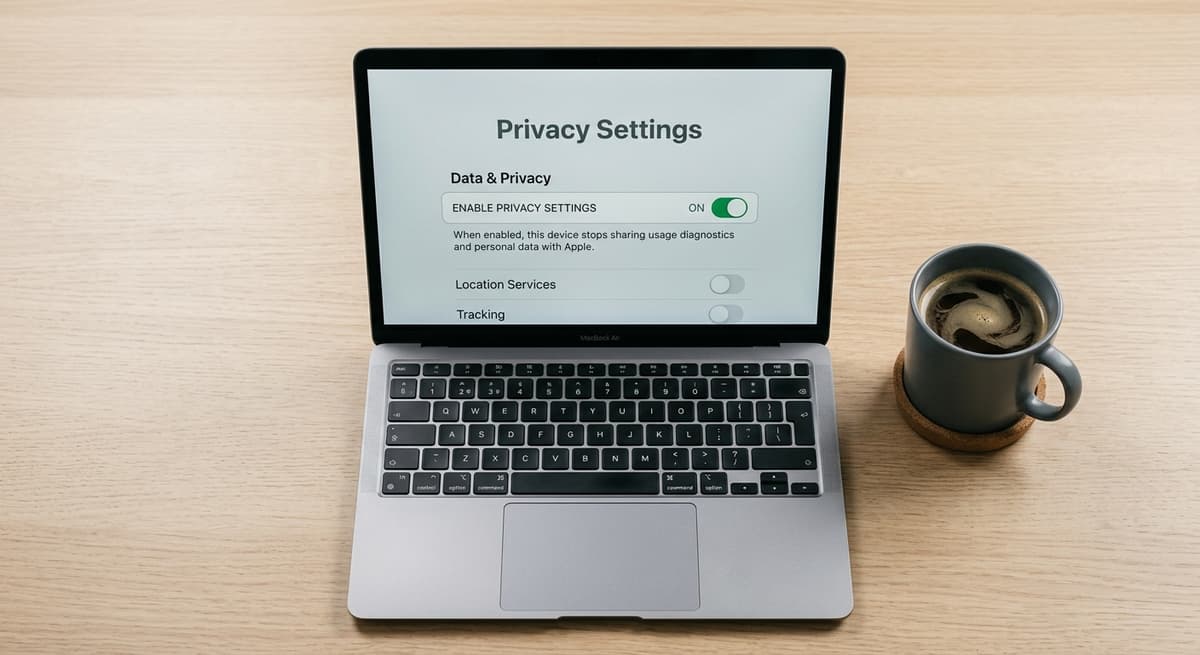
Privacy Settings: Enable end-to-end encryption on your Ring account, use two-factor authentication, and regularly review which users have access to your footage. Adjust motion zones to minimize recording of areas outside your property.
Footage Retention: Be mindful of how long you store Ring footage. While Georgia law does not set a specific retention limit for personal security recordings, keeping footage indefinitely increases the risk of unauthorized access or misuse.
Law Enforcement Requests: Know your rights when police ask for your Ring footage. You can voluntarily share recordings, but law enforcement generally needs a valid search warrant to compel access. Consulting an attorney before responding to formal legal requests is advisable.
More Georgia Laws
Explore additional Georgia legal topics on Recording Law:
- Georgia Recording Laws cover the full scope of audio and video recording rules across the state.
- Georgia Hit and Run Laws explain reporting requirements and penalties for leaving the scene of an accident.
- Georgia Lemon Law outlines protections for buyers of defective vehicles.
This article provides general legal information about Ring doorbell laws in Georgia as of April 2026. Laws change, and their application depends on specific circumstances. Consult a Georgia attorney for advice specific to your situation.
Frequently Asked Questions
Can my Ring doorbell legally record audio in Georgia?
Georgia is a one-party consent state under O.C.G.A. § 16-11-66. Your Ring doorbell can record audio when you are actively participating in the conversation, such as during a two-way talk through the Ring app. Recording conversations between third parties without any participant's consent may violate O.C.G.A. § 16-11-62.
Is it legal for my Ring doorbell to record my neighbor's property in Georgia?
Georgia law under O.C.G.A. § 16-11-62 prohibits recording activities in private places out of public view without consent. Your Ring doorbell can capture incidental views of neighboring yards or public areas, but pointing it directly at a neighbor's windows or private spaces could violate the statute and result in felony charges.
Can my HOA in Georgia ban Ring doorbells?
Georgia HOAs can regulate doorbell camera installation through their CC&Rs and architectural guidelines. Under the Georgia Property Owners' Association Act, associations with the proper authority can require approval, mandate specific models, or restrict camera placement. Review your community's governing documents before installing a Ring doorbell.
Do police in Georgia need a warrant to access my Ring footage?
For the footage itself, a warrant is the expected route, and Ring's updated 2024 policy requires a valid search warrant or user consent before it releases footage. The rule is not warrant-only across the board, though. O.C.G.A. § 16-11-66.1 governs compelled disclosure of stored electronic communications by a service provider, ties the standard to federal law, and allows a subpoena for stored communications and transactional records on a showing that the material relates to a pending criminal investigation. You can voluntarily share footage at any time, but police cannot force you to hand it over without legal process.
What are the penalties for illegal Ring doorbell recording in Georgia?
Violating O.C.G.A. § 16-11-62 is a felony in Georgia. The penalty is set by a separate section, O.C.G.A. § 16-11-69, which prescribes imprisonment for not less than one nor more than five years, a fine not to exceed $10,000, or both. Victims can also pursue civil lawsuits for compensatory and punitive damages. Illegally obtained recordings are generally inadmissible in court under O.C.G.A. § 16-11-67.
Updates
Added Georgia's express homeowner security-camera exceptions in O.C.G.A. § 16-11-62(2)(B) and (2)(C), corrected the criminal penalty to its actual source in § 16-11-69, pin-cited the HOA provisions that grant architectural-approval authority instead of the Act's short-title section, and added the state stored-communications statute, § 16-11-66.1, including its subpoena route.
Independently fact-checked against the cited primary sources
Governing law re-checked for recent changes
Governing law re-checked for recent changes
Reviewed and approved by an editor
The Law Behind This Article
This article rests on the statutory provisions below, held in our own legal record and retrieved from the official source. Tap a section to read the operative text.
Official Code of Georgia Annotated
§ 16-11-62Eavesdropping, surveillance, or intercepting communication which invades privacy of another; divulging private message.In forcecited in 25 of our articles
It shall be unlawful for: (1) Any person in a clandestine manner intentionally to overhear, transmit, or record or attempt to overhear, transmit, or record the private conversation of another which shall originate in any private place; (2) Any person, through the use of any device, without the
Official text (excerpt) · last checked 2026-08-31 · Read the full text in our law library · Verify at legis.ga.gov
Cited in 94 court opinions in our collectionLatest citing opinion in our collection: 2026
In the courts (editorial summary, independently checked):Kelley v. State (1998) held OCGA 16-11-62(2) reached a guardian who photographed a nude 16-year-old in the family bathroom, with no exception for family members. Burgeson v. State (1996) held a conversation recorded in a patrol car was not covered, because no reasonable expectation of privacy existed there.
Opinions citing this section in our collection:
- Burgeson v. State (Supreme Court of Georgia 1996, 267 Ga. 102)✓Police secretly recorded two arrestees talking in the back of a patrol car. The court held a police car is much like a jail cell, with no reasonable expectation of privacy, so intercepting that conversation did not offend OCGA 16-11-62 and the tape was admissible.
- Kelley v. State (Court of Appeals of Georgia 1998, 233 Ga. App. 244)✓A guardian photographed her 16-year-old niece nude and passed out in the family bathtub. The court held OCGA 16-11-62(2) reaches any person with no family exception, that the film need not be developed, and that a jury could find the bathroom a private place.
- Dobbins v. State (Supreme Court of Georgia 1992, 262 Ga. 161)“…th the consent of one of the parties to the conversation. OCGA § 16-11-62 (1) provides that: It shall be unlawf…”
Identified automatically from the court opinions citing this section — not a ranking of which case controls.
Also relied on in: Georgia Data Privacy Laws: Breach Notification & Consumer Rights (2026), Georgia Surveillance Camera Laws (2026 Guide), Georgia Windshield Mounting Laws (2026 Guide)
§ 16-11-66Interception of wire, oral, or electronic communication by party thereto; consent requirements for recording and divulging conversations to which child under 18 years is a party; parental exception.In forcecited in 18 of our articles
(a) Nothing in Code Section 16-11-62 shall prohibit a person from intercepting a wire, oral, or electronic communication where such person is a party to the communication or one of the parties to the communication has given prior consent to such interception. (b) After obtaining the consent…
Official text (excerpt) · last checked 2026-08-31 · Read the full text in our law library · Verify at advance.lexis.com
Cited in 43 court opinions in our collectionLatest citing opinion in our collection: 2020
In the courts (editorial summary, independently checked):State v. Cohen (2017) held OCGA 16-11-66(a) reaches only intercepted wire, oral, or electronic communications, so one party's consent does not authorize secretly video recording others in a private place. Bishop v. State (1999) barred vicarious parental consent under the text in force before the 2000 amendment.
Opinions citing this section in our collection:
- Dobbins v. State (Supreme Court of Georgia 1992, 262 Ga. 161)✓An investigator recorded a child's call to the defendant using only her father's consent and no warrant; the Supreme Court held the state had neither an investigation warrant nor valid consent of a party to the call, so the recording and its fruits were inadmissible.
- State v. Cohen (Supreme Court of Georgia 2017, 302 Ga. 616)✓A housekeeper secretly videoed her employer naked at home; the Supreme Court held the one-party-consent rule of OCGA 16-11-66(a) covers only intercepted wire, oral or electronic communications and does not permit video recording without the consent of all observed.
- State v. Madison (Court of Appeals of Georgia 2011, 311 Ga. App. 31)✓A molestation complainant secretly videoed the defendant in his law office; the court read the 16-11-66(a) participant exception to reach section 16-11-62, but found no wire, oral or electronic communication captured, so it affirmed suppression. Cohen overruled that reading.
Identified automatically from the court opinions citing this section — not a ranking of which case controls.
Also relied on in: Georgia Recording Laws (2026): One-Party Audio, All-Party Video, Georgia AI Meeting Recording Laws (2026), Georgia Audio Recording Laws: One-Party Consent Rules and Penalties (2026)
§ 16-11-67Admissibility of evidence obtained in violation of part.In forcecited in 3 of our articles
No evidence obtained in a manner which violates any of the provisions of this part shall be admissible in any court of this state except to prove violations of this part. (Ga. L. 1967, p. 844, § 1; Code 1933, § 26-3007, enacted by Ga. L. 1968, p. 1249, § 1.)
Official text (excerpt) · last checked 2021-08-17 · Read the full text in our law library
Cited in 41 court opinions in our collectionLatest citing opinion in our collection: 2026
Opinions citing this section in our collection:
- Ransom v. Ransom (Supreme Court of Georgia 1985, 253 Ga. 656)“…Ann. § 26-2001, quoted in the majority opinion. In enacting OCGA § 16-11-67 the legislature effected an additional…”
- Registe v. State (Supreme Court of Georgia 2012, 292 Ga. 154)“…er OCGA § lG-ll-ee.Uor 18USC § 2702 (c) (4). 1 2 However, OCGA § 16-11-67 provides: “No evidence obtained in a ma…”
- Suggs v. State (Supreme Court of Georgia 2021, 310 Ga. 762)“…nversation that he had with Appellant. Appellant relies on OCGA § 16-11-67, which says: “No evidence obtained in…”
Identified automatically from the court opinions citing this section — not a ranking of which case controls.
Also relied on in: Was the Trump-Raffensperger Call Recording Legal Under Georgia Law?
§ 44-3-220Short title.In force
This article shall be known and may be cited as the "Georgia Property Owners' Association Act." (Code 1981, § 44-3-220 , enacted by Ga. L. 1994, p. 1879, § 1.)
Official text (excerpt) · last checked 2021-08-17 · Read the full text in our law library
Cited in 25 court opinions in our collectionLatest citing opinion in our collection: 2026
Opinions citing this section in our collection:
- Patricia Marino v. Clary Lakes Homeowners Association, Inc. (Court of Appeals of Georgia 2013)“…erty Owners’ Association Act (the “POA Act” or the “Act”), OCGA § 44-3-220 et seq.; that the Marinos were estopped…”
- Crabapple Lake Parc Community Ass'n v. Circeo (Court of Appeals of Georgia 2013, 325 Ga. App. 101)“…cordance with the Georgia Property Owners’ Association Act, OCGA § 44-3-220 et seq. The association was previously…”
- Timberstone Homeowner's Ass'n v. Summerlin (Supreme Court of Georgia 1996, 266 Ga. 322)“…the terms of the Georgia Property Owners’ Association Act, OCGA § 44-3-220 et seq., was a prerequisite for future…”
Identified automatically from the court opinions citing this section — not a ranking of which case controls.
United States Code Title 18
§ 2702Voluntary disclosure of customer communications or recordsIn forcecited in 18 of our articles
Except as provided in subsection (b) or (c)— a person or entity providing an electronic communication service to the public shall not knowingly divulge to any person or entity the contents of a communication while in electronic storage by that service; and a person or entity providing remote computing service to the public shall not knowingly divulge to any person or entity the contents of any communication which is carried or maintained on that service— on behalf of, and received by means of electronic transmission from (or created by means of computer processing of communications received by means of electronic transmission from), a subscriber or customer of such service; solely for the purpose of providing storage or computer processing services to such subscriber or customer, if the provider is not authorized to access the contents of any such communications for purposes of providing any services other than storage or computer processing; and a provider of remote computing service or electronic communication service to the public shall not knowingly divulge a record or other information pertaining to a subscriber to or customer of such service (not including the contents of…
Official text (excerpt) · last checked 2026-07-28 · Read the full text in our law library · Verify at uscode.house.gov
Cited in 259 court opinions in our collectionLatest citing opinion in our collection: 2026
In the courts (editorial summary, independently checked):Freeman v. Directv, Inc. (2006) held Sections 2702 and 2707 do not support secondary liability claims such as aiding and abetting or conspiracy. Alexander v. Verizon Wireless (2017) applied Section 2702(c)(4)'s emergency exception and found a provider's good-faith reliance on a law enforcement request a complete defense.
Opinions citing this section in our collection:
- Matthew Alexander v. Verizon Wireless Services, LL (Court of Appeals for the Fifth Circuit 2017, 875 F.3d 243)✓A detective sent Verizon a certified emergency form after an arson, and Verizon released the subscriber's non-content cell records; the Fifth Circuit applied an objective good faith standard to section 2702(c)(4) and held Verizon statutorily immune from the SCA suit.
- Doe 1 v. AOL LLC (Court of Appeals for the Ninth Circuit 2009, 552 F.3d 1077)“…rs, alleging violations of federal electronic privacy law, 18 U.S.C. § 2702 (a). A subclass of AOL members who are…”
- Freeman v. Directv, Inc. (Court of Appeals for the Ninth Circuit 2006, 457 F.3d 1001)✓Users whose message board posts were seized from a website operator and passed to DirecTV sued for aiding and abetting and conspiracy; the Ninth Circuit held sections 2702 and 2707 name who can be liable and do not support secondary liability, affirming dismissal.
Identified automatically from the court opinions citing this section — not a ranking of which case controls.
Also relied on in: Stored Communications Act Explained: 18 U.S.C. § 2701, Hawaii Ring Doorbell Laws: What You Need to Know in 2026, Maryland Ring Doorbell Laws: What You Need to Know in 2026
Search our full record of US law — 2.1 million sections, every state + federal →
Sources and References
- O.C.G.A. § 16-11-62 - Unlawful Eavesdropping or Surveillance(law.justia.com)
- O.C.G.A. § 16-11-66 - One-Party Consent Exception(law.justia.com)
- O.C.G.A. § 16-11-67 - Admissibility of Evidence(law.justia.com)
- Georgia Property Owners Association Act (O.C.G.A. § 44-3-220 et seq.)(law.justia.com)
- Georgia Constitution - Article I, Section I(legis.ga.gov).gov
- Electronic Communications Privacy Act (18 U.S.C. § 2702)(law.cornell.edu)
- FTC Action Against Ring LLC - Privacy Violations(ftc.gov).gov
- Ring Law Enforcement Guidelines(support.ring.com)
- Georgia Recording Laws - Reporters Committee for Freedom of the Press(rcfp.org)
- Ring Law Enforcement Information Requests Policy(ring.com)
- O.C.G.A. § 16-11-69 - Penalty for Violations of Part(law.justia.com)
- O.C.G.A. § 16-11-66.1 - Disclosure of Stored Wire or Electronic Communications; Search Warrants; Issuance of Subpoena(law.justia.com)
- O.C.G.A. § 44-3-231 - Powers and Duties of Property Owners' Association(law.justia.com)
- O.C.G.A. § 44-3-223 - Compliance With Provisions of Instrument and With Rules and Regulations(law.justia.com)