
Maryland
Maryland Ring Doorbell Laws: What You Need to Know in 2026
Independently fact-checked against primary sources (last audited August 17, 2026). · Reviewed by the RecordingLaw editorial team. · Law checked current as of August 17, 2026. · 7 primary sources cited on this page. How we verify our legal content
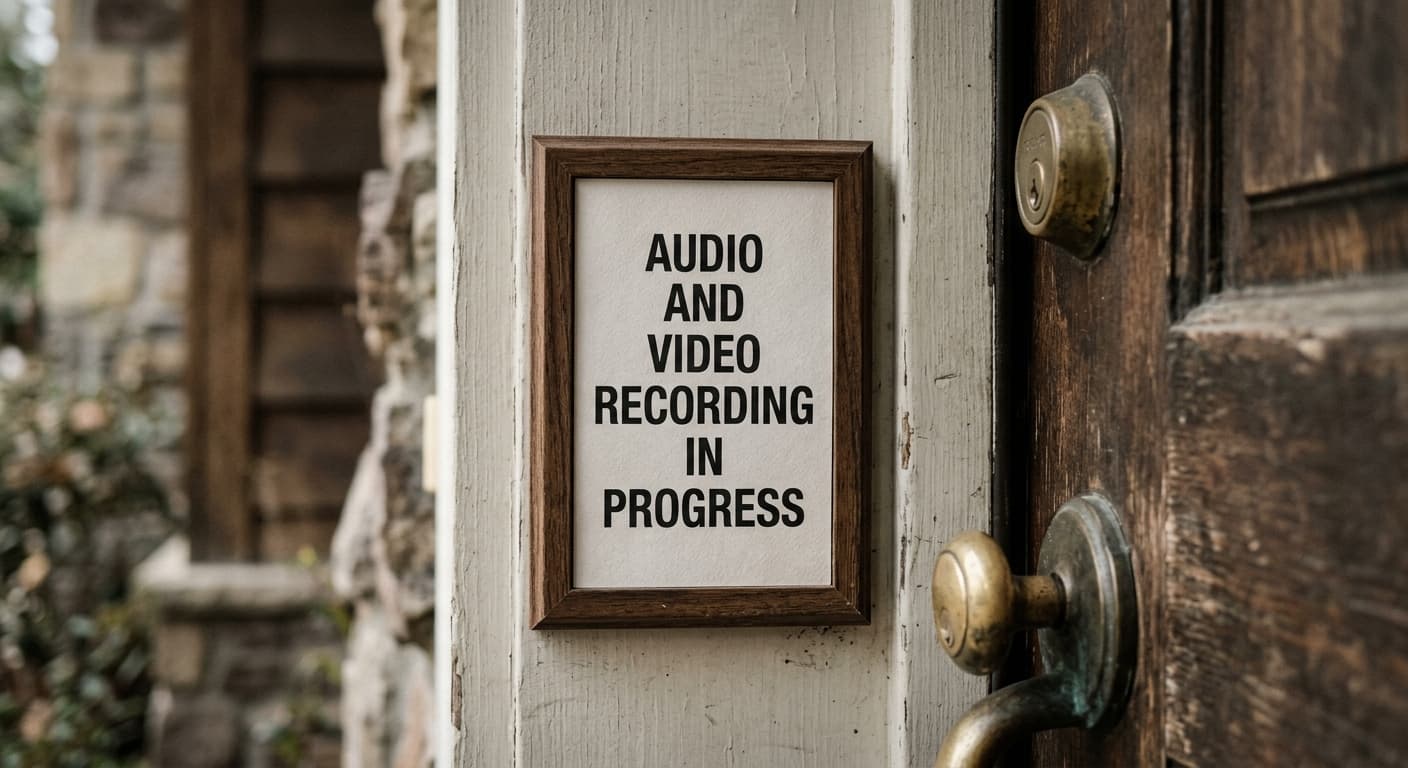
Maryland is an all-party consent state, and that makes Ring doorbell ownership legally complicated. Under Md. Code, Cts. & Jud. Proc. section 10-402, willfully intercepting an oral, wire, or electronic communication without the consent of every participant is a felony carrying up to 5 years in prison and a $10,000 fine. That can reach the audio captured by Ring doorbells, but the statute carries a limit on its face: section 10-401(13)(i) defines an oral communication as "any conversation or words spoken to or by any person in private conversation," so words that are not part of a private conversation fall outside section 10-402 altogether.
The video component of a Ring doorbell is subject to different rules. Video surveillance of outdoor areas is generally legal in Maryland, but the audio recording function creates significant criminal exposure for homeowners who leave it enabled. Maryland's 2026 reform bills (SB 661 and HB 802) died in the House Judiciary Committee without a House floor vote when the session adjourned, so the all-party consent requirement remains fully in effect.
Audio Recording Laws and Ring Doorbells in Maryland
Maryland's wiretapping statute, Md. Code, Cts. & Jud. Proc. section 10-402, is one of the strictest in the country. The law makes it unlawful to willfully intercept, endeavor to intercept, or procure any other person to intercept any wire, oral, or electronic communication without the consent of all parties.
What All-Party Consent Means for Ring Doorbells
A Ring doorbell with audio recording enabled captures every conversation that occurs within its microphone range. When two visitors talk on your porch, when a delivery driver speaks to a neighbor, or when a family walks past your door, the Ring records their voices without their knowledge or consent.
Whether any of that is a crime turns on two elements the state would have to prove. First, section 10-402(a)(1) reaches only a person who acts willfully. Second, the statute protects an oral communication, which section 10-401(13)(i) defines as any conversation or words spoken to or by any person in private conversation. Words spoken on an open porch, a driveway, or a public sidewalk, where the speakers can be overheard by anyone standing nearby, are frequently not a private conversation and fall outside section 10-402 for that reason.
Those two elements are why a continuously running doorbell camera is not automatically a separate felony for every voice it captures. They are also fact-specific, which is why disabling audio remains the low-risk choice.
Criminal Penalties for Audio Recording Violations
Violating Md. Code, Cts. & Jud. Proc. section 10-402 is a felony. A conviction carries up to 5 years in state prison, a fine of up to $10,000, or both. The state must prove a willful interception of a communication the statute actually protects, so the felony attaches to conduct meeting those elements rather than to the mere presence of a microphone.
Civil Liability Under Section 10-410
Beyond criminal penalties, victims of illegal recording can pursue civil claims under Md. Code, Cts. & Jud. Proc. section 10-410. A successful plaintiff can recover the greater of actual damages, $100 per day of violation, or $1,000. The court may also award punitive damages, attorney fees, and litigation costs.
A narrower rule applies only to unscrambled private satellite-video or specified radio communications: under Md. Code, Cts. & Jud. Proc. section 10-402(f), a second or subsequent violation involving that narrow category of communication carries a mandatory civil fine of not less than $500. This fine does not apply to ordinary oral, wire, or electronic communications, such as a Ring doorbell recording a conversation.
The Legislative Push to Reform Maryland's Wiretapping Law
Maryland lawmakers have recognized that the current wiretapping statute was written decades before Ring doorbells and modern security cameras existed. Reform bills have been introduced in recent sessions, but none has passed; the most recent efforts died in committee when the 2026 session adjourned.
SB 61 (2025 Session)
Senate Bill 61, introduced in January 2025, proposed two new exceptions to the all-party consent requirement. The first would have allowed recording audio in public places when the speaker should reasonably anticipate being overheard. The second would have permitted security cameras installed on property owned, leased, or lawfully controlled by the recording party to capture audio on that property.
SB 61 died in committee in April 2025 without receiving a vote. Despite its failure, the bill established the framework that subsequent reform efforts have built upon.
SB 661 and HB 802 (2026 Session)
The 2026 session saw SB 661 and HB 802, both titled "Wiretapping and Electronic Surveillance - Intercepted Communications - Admissibility of Evidence." Both would have allowed the contents of an intercepted communication to be received in evidence under certain circumstances, and SB 661 went further by authorizing a person to intercept a communication that is a recording of the commission or attempted commission of a listed crime and by providing an affirmative defense to a wiretap charge. Neither bill was a general exception for home security audio. These bills focused on the evidentiary side of the problem: even when a Ring doorbell captures audio of a crime, the audio portion is currently inadmissible in Maryland courts because it was obtained in violation of the wiretapping statute.
SB 661 passed the Senate 36-2 on March 5, 2026, and crossed over to the House Judiciary Committee, which held a hearing on March 31, 2026. HB 802 had a House Judiciary hearing on February 24, 2026. Neither bill received a floor vote before the 2026 session adjourned, so both died in committee. No admissibility carve-out was enacted; Ring doorbell owners should watch for a new bill in a future session rather than these two.
Why Reform Matters for Ring Owners
Under current law, a Ring doorbell that captures audio of someone committing a crime on your property creates an awkward legal situation. The video footage is admissible in court, but the audio is not. The homeowner who provided the footage to police could theoretically face felony charges for making the audio recording in the first place, though prosecutions of homeowners for security camera audio have been rare.
Video Recording Laws and Ring Doorbells
Maryland treats video recording differently from audio. No state statute requires consent for video-only surveillance in areas where people lack a reasonable expectation of privacy.
Where Video Recording Is Permitted
Property owners in Maryland can install video surveillance cameras, including Ring doorbells, on their own property. The camera can legally record outdoor areas like porches, driveways, sidewalks, and front yards. These are considered public-facing areas where people do not have a reasonable expectation of privacy.
A property owner has no legal duty to disclose that video recording is taking place in these outdoor areas.
Visual Surveillance Restrictions
Md. Code, Crim. Law section 3-901 prohibits conducting visual surveillance of a person in a private place without that person's consent, but the statute defines "private place" narrowly as a dressing room or rest room in a retail store. A violation is a misdemeanor carrying up to 30 days in jail and a $1,000 fine.
Md. Code, Crim. Law section 3-902 reaches a broader set of private places, but it turns on prurient intent. Section 3-902(b)(2) expressly exempts a person who, without prurient intent, conducts visual surveillance of an individual "to protect property or public safety or prevent crime," which describes the ordinary doorbell camera. A violation is a misdemeanor carrying up to 1 year in jail and a $2,500 fine.
The Maryland statute aimed squarely at cameras and homes is Md. Code, Crim. Law section 3-903. It makes it a misdemeanor to place a camera on real property where a private residence is located in order to conduct deliberate surreptitious observation of an individual inside that residence, punishable by up to 1 year in jail and a $2,500 fine. Section 3-903(b)(7) then exempts filming of a private residence by a camera "that is not located on the real property where the private residence is located," so a doorbell camera mounted on your own house sits outside that prohibition even when a neighbor's window falls inside its field of view.
None of those three statutes, then, flatly forbids a doorbell camera whose view happens to include a neighbor's windows. Aiming one there is still a poor idea: it invites a civil invasion-of-privacy or nuisance claim, and it undercuts the property-protection framing that the section 3-902(b)(2) exemption rests on. Use Ring's privacy zones to mask neighboring windows and other spaces where people expect privacy.
HOA Rules and Ring Doorbells in Maryland
Maryland's Homeowners Association Act (Md. Code, Real Prop. Title 11B) governs HOA authority. While the Act does not specifically address security cameras, HOAs retain broad power to regulate exterior modifications through their CC&Rs and architectural guidelines.
HOA Approval Requirements
Most Maryland HOAs classify Ring doorbell installation as an architectural modification requiring prior approval from an architectural review committee. Common grounds for denial include aesthetic concerns, camera placement that records common areas, and potential privacy impacts on neighboring units.
Maryland HOA law prohibits associations from adopting certain types of restrictions, but security camera regulations are generally considered a valid exercise of HOA authority. Review your community's governing documents before installing a Ring doorbell.
Condominium Considerations
Maryland condominium associations (governed by Md. Code, Real Prop. Title 11) own the exterior walls, hallways, and common elements. A unit owner who installs a Ring doorbell on a condo's exterior wall is modifying association property. Most condo bylaws require board approval for any modifications to common elements.
Landlord and Tenant Rights
Maryland rental properties present additional legal layers for Ring doorbell installations.
Tenant-Installed Ring Doorbells
Tenants in Maryland should obtain written landlord permission before installing a Ring doorbell. Exterior modifications typically require landlord approval, and drilling holes for a doorbell mount could affect the security deposit.
The audio recording issue is especially important for tenants. A Ring doorbell in a multi-unit building could capture conversations between other tenants in hallways or shared entryways. Under Maryland's all-party consent law, this creates potential felony liability for the tenant who owns the device.
Disabling audio recording before installing a Ring doorbell in a Maryland rental property is the safest approach for tenants.
Landlord-Installed Cameras
Maryland landlords can install video surveillance cameras in common areas like parking lots, building entrances, and lobbies. These areas are not private under the visual surveillance statute. Cameras inside tenant units or aimed at private tenant spaces (bedroom windows, bathroom windows) with prurient intent violate Md. Code, Crim. Law section 3-902.
If a landlord installs Ring doorbells with audio recording enabled on a multi-unit building, the landlord faces the same all-party consent issues as any other Ring owner in Maryland.
Law Enforcement Access to Ring Footage
Maryland follows the same federal framework as other states regarding law enforcement access to Ring footage.
Warrant and Legal Process Requirements
Law enforcement in Maryland typically needs a warrant, subpoena, or court order to obtain Ring footage from Amazon. Since 2024, Ring has required valid legal process before releasing customer recordings. The company discontinued its "Request for Assistance" feature that previously allowed police to request footage directly through the Neighbors app.
Police can still knock on a homeowner's door and ask them to voluntarily share Ring footage. Homeowners have no legal obligation to comply with a voluntary request.
Emergency Exceptions
Ring may release footage without user permission when the company determines someone faces "danger of death or serious physical injury." This emergency exception is based on federal law (18 U.S.C. section 2702) and operates independently of Maryland state law.
The Audio Admissibility Problem
Even when Maryland law enforcement obtains Ring footage through a valid warrant, the audio portion is currently inadmissible as evidence if the recording violated section 10-402. This creates a practical limitation on the usefulness of Ring audio in criminal prosecutions. SB 661 and HB 802 (2026) would have addressed this gap by allowing intercepted audio to be admitted where, among other conditions, "the interest of justice will be best served by the admission into evidence of the contents of the communication," but both bills died in the House Judiciary Committee without a vote when the 2026 session adjourned.
Penalties for Illegal Recording in Maryland
Maryland imposes some of the harshest penalties in the country for unauthorized recording.
Criminal Penalties
| Offense | Statute | Classification | Maximum Prison Time | Maximum Fine |
|---|---|---|---|---|
| Illegal wiretapping (audio) | Cts. & Jud. Proc. section 10-402 | Felony | 5 years | $10,000 |
| Visual surveillance without consent | Crim. Law section 3-901 | Misdemeanor | 30 days | $1,000 |
| Visual surveillance with prurient intent | Crim. Law section 3-902 | Misdemeanor | 1 year | $2,500 |
| Camera placed on residential property to observe inside a residence | Crim. Law section 3-903 | Misdemeanor | 1 year | $2,500 |
Civil Penalties
| Remedy | Amount |
|---|---|
| Minimum statutory damages | $1,000 |
| Daily violation damages | $100 per day |
| Punitive damages | Court discretion |
| Attorney fees and costs | Recoverable |
| Mandatory fine (satellite/radio repeat violation only) | $500 minimum |
Practical Enforcement Reality
While Maryland's penalties for wiretapping violations are severe on paper, prosecutions of homeowners for Ring doorbell audio recordings have been rare. Law enforcement and prosecutors have generally focused enforcement on intentional eavesdropping rather than passive security camera audio. The statute's text leaves room on both sides: it reaches only a willful interception of a private conversation, and neither element is automatically satisfied by an always-on doorbell camera. A neighbor who files a complaint could still trigger an investigation.
How to Use a Ring Doorbell Legally in Maryland
Given Maryland's strict all-party consent law, Ring doorbell owners need to take specific precautions.
Disable audio recording. The single most important step for Maryland Ring doorbell owners. The Ring app allows users to turn off audio recording entirely. This eliminates the felony risk under section 10-402 while preserving the camera's video surveillance capabilities.
If keeping audio enabled, post clear signage. Some legal commentators suggest that posting a visible sign stating "Audio and video recording in progress" near the Ring doorbell could establish implied consent from visitors who proceed past the sign. Maryland courts have not definitively ruled on whether this constitutes valid consent under section 10-402, so this approach carries risk.
Use Ring's privacy zones. Configure the camera to exclude neighboring windows, private areas, and any spaces where people have a reasonable expectation of privacy from the recording field.
Check HOA and condo rules. Review governing documents and obtain any required approvals before installation. Submit architectural review applications where required.
Get landlord permission if renting. Obtain written authorization before installing and consider the audio implications in multi-unit buildings.
Watch for future legislation. SB 661 and HB 802 (2026) went to the admissibility of already-intercepted communications rather than creating an exception for home security audio recordings, and both died in the House Judiciary Committee without a vote when the 2026 session ended. Check the Maryland General Assembly website for any new bill introduced in a future session.
Enable end-to-end encryption. If you keep any recordings, Ring's E2EE feature provides an additional layer of protection for your stored footage.
More Maryland Laws
Explore other Maryland legal topics on RecordingLaw.com:
- Maryland Recording Laws
- Maryland Hit and Run Laws
- Maryland Lemon Law
- Maryland Surveillance Camera Laws
- Maryland Data Privacy Laws
This article provides general legal information about Maryland Ring doorbell laws and is not legal advice. Maryland's wiretapping statute carries felony penalties, and lawmakers continue to introduce reform bills, though none has passed as of 2026. Consult an attorney for advice specific to your situation.
Frequently Asked Questions
Is it legal to have a Ring doorbell with audio in Maryland?
The video component of a Ring doorbell is legal in Maryland. The audio component is where the legal risk exists. Under Md. Code, Cts. & Jud. Proc. section 10-402, willfully intercepting a private conversation without the consent of all parties is a felony carrying up to 5 years in prison and a $10,000 fine. The statute protects only words spoken in a private conversation, so audio of people who can plainly be overheard by anyone nearby may fall outside it, though that line is fact-specific. The safest approach is to disable audio recording in the Ring app. Legislative reform efforts (SB 661, HB 802) were introduced in the 2026 session but died in the House Judiciary Committee without a vote when the session adjourned.
Can my neighbor sue me for my Ring doorbell recording their conversations in Maryland?
Yes, if the recording violated the wiretap statute. Under Md. Code, Cts. & Jud. Proc. section 10-410, a person whose private conversation was unlawfully intercepted can file a civil lawsuit. Damages include the greater of actual damages, $100 per day of violation, or $1,000, plus potential punitive damages and attorney fees. If you have a Ring doorbell with audio enabled in Maryland and it captures your neighbor's private conversations, you face both civil liability and potential felony criminal exposure.
Will Maryland change its wiretapping law to allow Ring doorbell audio?
Maryland lawmakers have introduced several reform bills. SB 61 (2025) proposed a security camera exception but died in committee. SB 661 and HB 802 (2026) focused on making intercepted audio admissible as evidence in criminal cases; SB 661 passed the Senate 36-2, but both bills died in the House Judiciary Committee when the 2026 session adjourned. No exception for home security camera audio has been enacted into law. The all-party consent requirement remains fully in effect.
Can police use Ring doorbell audio as evidence in Maryland?
Under current Maryland law, audio recordings made without all-party consent are inadmissible as evidence, even if obtained through a valid warrant. Video footage from a Ring doorbell is admissible, but not the audio. SB 661 and HB 802 (2026) would have allowed intercepted audio to be admitted when the interest of justice requires it, but both bills died in the House Judiciary Committee when the 2026 session adjourned without enacting any change.
What should I do with my Ring doorbell's audio recording feature in Maryland?
Disable it. Open the Ring app, go to your device settings, and turn off audio recording. This eliminates the risk of felony wiretapping charges under section 10-402 while keeping your video surveillance fully functional. If you choose to keep audio enabled, post prominent signage and understand that you accept significant legal risk. No Maryland court has ruled that signage alone satisfies the all-party consent requirement.
Updates
Corrected the wiretap discussion to reflect that Maryland's statute reaches only a willful interception of a private conversation, replaced an unsupported visual-surveillance prohibition with the actual statutes including Crim. Law 3-903, and fixed a contradictory description of the 2026 bills SB 661 and HB 802.
Updated the status of Maryland's 2026 wiretapping-reform bills: SB 661 passed the Senate 36-2 but both it and HB 802 died in the House Judiciary Committee without a floor vote when the 2026 session adjourned, so no admissibility exception for illegally intercepted audio was enacted.
Independently fact-checked against the cited primary sources; governing law re-checked for recent changes
Corrected the scope of the $500 mandatory civil fine (satellite/radio communications only, not general wiretapping) and fixed two misattributions of the broader bathroom/bedroom/changing-area "private place" definition from section 3-901 (retail-store dressing/rest rooms only) to section 3-902; also replaced a placeholder "Varies/Varies" penalty with the statute's fixed 30-day/$1,000 maximum.
Governing law re-checked for recent changes
Reviewed and approved by an editor
The Law Behind This Article
This article rests on the statutory provisions below, held in our own legal record and retrieved from the official source. Tap a section to read the operative text.
Maryland Code, Courts and Judicial Proceedings Article
§ 10-402In forcecited in 26 of our articles
§10–402. (a) Except as otherwise specifically provided in this subtitle it is unlawful for any person to: (1) Willfully intercept, endeavor to intercept, or procure any other person to intercept or endeavor to intercept, any wire, oral, or electronic communication; (2) Willfully disclose, or endeavor to disclose, to any other person the contents of any wire, oral, or electronic communication, knowing or having reason to know that the information was obtained through the interception of a wire, oral, or electronic communication in violation of this subtitle; or (3) Willfully use, or endeavor to use, the contents of any wire, oral, or electronic communication, knowing or having reason to know that the information was obtained through the interception of a wire, oral, or electronic communication in violation of this subtitle. (b) Any person who violates subsection (a) of this section is guilty of a felony and is subject to imprisonment for not more than 5 years or a fine of not more than $10,000, or both.
Official text (excerpt) · last checked 2026-08-31 · Read the full text in our law library · Verify at mgaleg.maryland.gov
Cited in 12 court opinions in our collectionLatest citing opinion in our collection: 2026
In the courts (editorial summary, independently checked):Applying section 10-402, Fearnow v. Chesapeake & Potomac Telephone Co. (1995) held that liability under the Maryland Wiretap Act requires proof the defendant acted willfully, an intentional violation or reckless disregard of a known legal duty; an employee's failure to check for a court order was only a jury factor on willfulness.
Opinions citing this section in our collection:
- Fearnow v. Chesapeake & Potomac Telephone Co. (Court of Special Appeals of Maryland 1995, 104 Md. App. 1)✓Police hid a tape recorder on an officer's headquarters phone line with a phone company employee's help and no court order; the court held a section 10-402(a) claim requires proof of willful interception, and failing to ask about a court order went only to willfulness.
- Maryland Attorney General Opinion 110OAG60 (Maryland Attorney General Reports 2025)“…or wire communications without the consent of all parties. Md. Code Ann., Cts. & Jud. Proc. § 10-402(a). However, the Wiretap Act contains e…”
- Boehner, John A. v. McDermott, James A. (Court of Appeals for the D.C. Circuit 1999, 191 F.3d 463)“…1992); Me.Rev.Stat. Ann. tit. 15, §§ 710, 711 (West 1998); Md.Code Ann., Cts & Jud. Proc. § 10-402 (1998); Mass. Gen. Laws Ann. ch. 272,…”
Identified automatically from the court opinions citing this section — not a ranking of which case controls.
Also relied on in: US Recording Laws by State (2026): All 50 States Explained, Is Plaud HIPAA Compliant? Kind Of. Here's What to Know (2026), Maryland Audio Recording Laws: Two-Party Consent Rules and Penalties (2026)
§ 10-410In forcecited in 10 of our articles
§10–410. (a) Any person whose wire, oral, or electronic communication is intercepted, disclosed, or used in violation of this subtitle shall have a civil cause of action against any person who intercepts, discloses, or uses, or procures any other person to intercept, disclose, or use the communications, and be entitled to recover from any person: (1) Actual damages but not less than liquidated damages computed at the rate of $100 a day for each day of violation or $1,000, whichever is higher; (2) Punitive damages; and (3) A reasonable attorney’s fee and other litigation costs reasonably incurred. (b) A good faith reliance on a court order or legislative authorization shall constitute a complete defense to any civil or criminal action brought under this subtitle or under any other law.
Official text (excerpt) · last checked 2026-07-29 · Read the full text in our law library · Verify at mgaleg.maryland.gov
Cited in 2 court opinions in our collectionLatest citing opinion in our collection: 2023
In the courts (editorial summary, independently checked):Fearnow v. Chesapeake & Potomac Telephone Co. (1995) held that punitive damages under section 10-410(a) require malice, meaning a knowing and deliberate violation of the Maryland Wiretap Act, and that a reckless disregard of a known legal duty does not supply it. It also rejected reputational damages not caused by the interception itself.
Opinions citing this section in our collection:
- Fearnow v. Chesapeake & Potomac Telephone Co. (Court of Special Appeals of Maryland 1995, 104 Md. App. 1)✓A police chief had an officer's headquarters phone extension tapped with a telephone technician's help; the court held liability under section 10-410 requires proof the technician acted wilfully, a jury question, and that punitive damages require a showing of malice.
- Think Tank, Inc. v. ITegrity, Inc. (District Court, D. Maryland 2023)“…against Bawa and [Tegrity under the Maryland Wiretap Act, Md. Code Ann., Cts. & Jud. Proc. § 10-410 (West 2022), also related to Bawa’s use…”
Identified automatically from the court opinions citing this section — not a ranking of which case controls.
Also relied on in: Maryland Dashcam Laws: Legality, Audio Rules, and Evidence Use (2026), Maryland Landlord-Tenant Recording Laws: Cameras, Audio, and Privacy (2026), Maryland Medical Recording Laws: Patient Rights, HIPAA, and Consent (2026)
Maryland Code, Criminal Law Article
§ 3-901In forcecited in 5 of our articles
§3–901. (a) (1) In this section the following words have the meanings indicated. (2) “Private place” means a dressing room or rest room in a retail store. (3) “Visual surveillance” means surveillance by: (i) direct sight; (ii) the use of mirrors; (iii) the use of cameras; or (iv) the use of an electronic device that can be used surreptitiously to observe an individual. (b) This section does not apply to any otherwise lawful surveillance conducted by a law enforcement officer while performing official duties. (c) A person may not conduct or procure another to conduct visual surveillance of an individual in a private place without the consent of that individual. (d) A person who violates this section is guilty of a misdemeanor and on conviction is subject to imprisonment not exceeding 30 days or a fine not exceeding $1,000 or both. (e) It is not a defense to a prosecution under this section that the defendant owns the premises where the private place is located. (f) (1) An individual who was under visual surveillance in violation of this section has a civil cause of action against any person who conducted or procured a person to conduct the visual surveillance.
Official text (excerpt) · last checked 2026-07-29 · Read the full text in our law library · Verify at mgaleg.maryland.gov
Cited in 3 court opinions in our collectionLatest citing opinion in our collection: 2026
Opinions citing this section in our collection:
- 110OAG40 (Maryland Attorney General Reports 2025)“…her statutes impose restrictions on video surveillance. See Md. Code Ann., Crim. Law § 3-901(c) (prohibiting “visual surveillance,”…”
- Maryland Attorney General Opinion 110OAG40 (Maryland Attorney General Reports 2025)“…her statutes impose restrictions on video surveillance. See Md. Code Ann., Crim. Law § 3-901(c) (prohibiting “visual surveillance,”…”
- United States v. Watkins (Court of Appeals for the Tenth Circuit 2026)“…at. Ann. § 14:284; Me. Rev. Stat. Ann. tit. 17-A, § 511;1,3 Md. Code Ann., Crim. Law § 3-901;3 Md. Code Ann., Crim. Law § 3-902;2,3…”
Identified automatically from the court opinions citing this section — not a ranking of which case controls.
Also relied on in: Maryland Smart Glasses Recording Laws 2026, Maryland Employee Monitoring Laws: Passwords, Cameras & GPS, Maryland Surveillance Camera Laws: What You Need to Know (2026)
§ 3-902In forcecited in 6 of our articles
§3–902. (a) (1) In this section the following words have the meanings indicated. (2) “Camera” includes any electronic device that can be used surreptitiously to observe an individual. (3) “Female breast” means a portion of the female breast below the top of the areola. (4) “Private area of an individual” means the naked or undergarment–clad genitals, pubic area, buttocks, or female breast of an individual. (5) (i) “Private place” means a room in which a person can reasonably be expected to fully or partially disrobe and has a reasonable expectation of privacy, in: 1. an office, business, or store; 2. a recreational facility; 3. a restaurant or tavern; 4. a hotel, motel, or other lodging facility; 5. a theater or sports arena; 6. a school or other educational institution; 7. a bank or other financial institution; 8. any part of a family child care home used for the care and custody of a child; 9. a residence; or 10. another place of private or public use or accommodation. (ii) “Private place” includes a tanning room, dressing room, bedroom, or restroom. (6) (i) “Visual surveillance” means the deliberate, surreptitious observation of an individual by any means.
Official text (excerpt) · last checked 2026-08-31 · Read the full text in our law library · Verify at mgaleg.maryland.gov
Cited in 1 court opinions in our collectionLatest citing opinion in our collection: 2026
Opinions citing this section in our collection:
- United States v. Watkins (Court of Appeals for the Tenth Circuit 2026)“…nn. tit. 17-A, § 511;1,3 Md. Code Ann., Crim. Law § 3-901;3 Md. Code Ann., Crim. Law § 3-902;2,3 Md. Code Ann., Crim. Law § 6-408;1…”
Identified automatically from the court opinions citing this section — not a ranking of which case controls.
Also relied on in: Maryland Voyeurism and Hidden Camera Laws: Penalties and Protections (2026), Maryland Recording Laws (2026): All-Party Consent Rules, Maryland Video Recording Laws: Surveillance Rules and Privacy Limits (2026)
United States Code Title 18
§ 2702Voluntary disclosure of customer communications or recordsIn forcecited in 18 of our articles
Except as provided in subsection (b) or (c)— a person or entity providing an electronic communication service to the public shall not knowingly divulge to any person or entity the contents of a communication while in electronic storage by that service; and a person or entity providing remote computing service to the public shall not knowingly divulge to any person or entity the contents of any communication which is carried or maintained on that service— on behalf of, and received by means of electronic transmission from (or created by means of computer processing of communications received by means of electronic transmission from), a subscriber or customer of such service; solely for the purpose of providing storage or computer processing services to such subscriber or customer, if the provider is not authorized to access the contents of any such communications for purposes of providing any services other than storage or computer processing; and a provider of remote computing service or electronic communication service to the public shall not knowingly divulge a record or other information pertaining to a subscriber to or customer of such service (not including the contents of…
Official text (excerpt) · last checked 2026-07-28 · Read the full text in our law library · Verify at uscode.house.gov
Cited in 259 court opinions in our collectionLatest citing opinion in our collection: 2026
In the courts (editorial summary, independently checked):Freeman v. Directv, Inc. (2006) held Sections 2702 and 2707 do not support secondary liability claims such as aiding and abetting or conspiracy. Alexander v. Verizon Wireless (2017) applied Section 2702(c)(4)'s emergency exception and found a provider's good-faith reliance on a law enforcement request a complete defense.
Opinions citing this section in our collection:
- Matthew Alexander v. Verizon Wireless Services, LL (Court of Appeals for the Fifth Circuit 2017, 875 F.3d 243)✓A detective sent Verizon a certified emergency form after an arson, and Verizon released the subscriber's non-content cell records; the Fifth Circuit applied an objective good faith standard to section 2702(c)(4) and held Verizon statutorily immune from the SCA suit.
- Doe 1 v. AOL LLC (Court of Appeals for the Ninth Circuit 2009, 552 F.3d 1077)“…rs, alleging violations of federal electronic privacy law, 18 U.S.C. § 2702 (a). A subclass of AOL members who are…”
- Freeman v. Directv, Inc. (Court of Appeals for the Ninth Circuit 2006, 457 F.3d 1001)✓Users whose message board posts were seized from a website operator and passed to DirecTV sued for aiding and abetting and conspiracy; the Ninth Circuit held sections 2702 and 2707 name who can be liable and do not support secondary liability, affirming dismissal.
Identified automatically from the court opinions citing this section — not a ranking of which case controls.
Also relied on in: Stored Communications Act Explained: 18 U.S.C. § 2701, Georgia Ring Doorbell Laws: What You Need to Know in 2026, Hawaii Ring Doorbell Laws: What You Need to Know in 2026
Search our full record of US law — 2.1 million sections, every state + federal →
Sources and References
- Md. Code, Cts. & Jud. Proc. § 10-402 (Wiretapping and Electronic Surveillance)(mgaleg.maryland.gov).gov
- Md. Code, Crim. Law § 3-901 (Visual Surveillance)(mgaleg.maryland.gov).gov
- Md. Code, Crim. Law § 3-902 (Visual Surveillance with Prurient Intent)(mgaleg.maryland.gov).gov
- Md. Code, Cts. & Jud. Proc. § 10-410 (Civil Liability for Wiretapping)(mgaleg.maryland.gov).gov
- SB 61 (2025) - Wiretapping and Electronic Surveillance - Security Camera Exception(mgaleg.maryland.gov).gov
- SB 661 (2026) - Intercepted Communications - Admissibility of Evidence(trackbill.com)
- Maryland Lawmakers Look to Reform Recording Laws (Maryland Matters, Nov 2025)(marylandmatters.org)
- Md. Code, Real Prop. Title 11B (Maryland Homeowners Association Act)(mgaleg.maryland.gov).gov
- Ring Law Enforcement Guidelines(ring.com)
- 18 U.S.C. § 2702 (Stored Communications Act)(law.cornell.edu)
- FTC Ring Privacy Settlement (2023)(ftc.gov).gov
- Md. Code, Cts. & Jud. Proc. § 10-401(13)(i) (Definition of Oral Communication)(mgaleg.maryland.gov)
- Md. Code, Crim. Law § 3-903 (Camera Surveillance of a Private Residence)(mgaleg.maryland.gov)
- Maryland SB 661 (2026) - Intercepted Communications - Admissibility of Evidence (bill history and synopsis)(mgaleg.maryland.gov)
- Maryland HB 802 (2026) - Intercepted Communications - Admissibility of Evidence (bill history and synopsis)(mgaleg.maryland.gov)