
Arizona
Arizona Ring Doorbell Laws: What You Need to Know in 2026
Independently fact-checked against primary sources (last audited August 17, 2026). · Reviewed by the RecordingLaw editorial team. · Law checked current as of August 17, 2026. · 5 primary sources cited on this page. How we verify our legal content
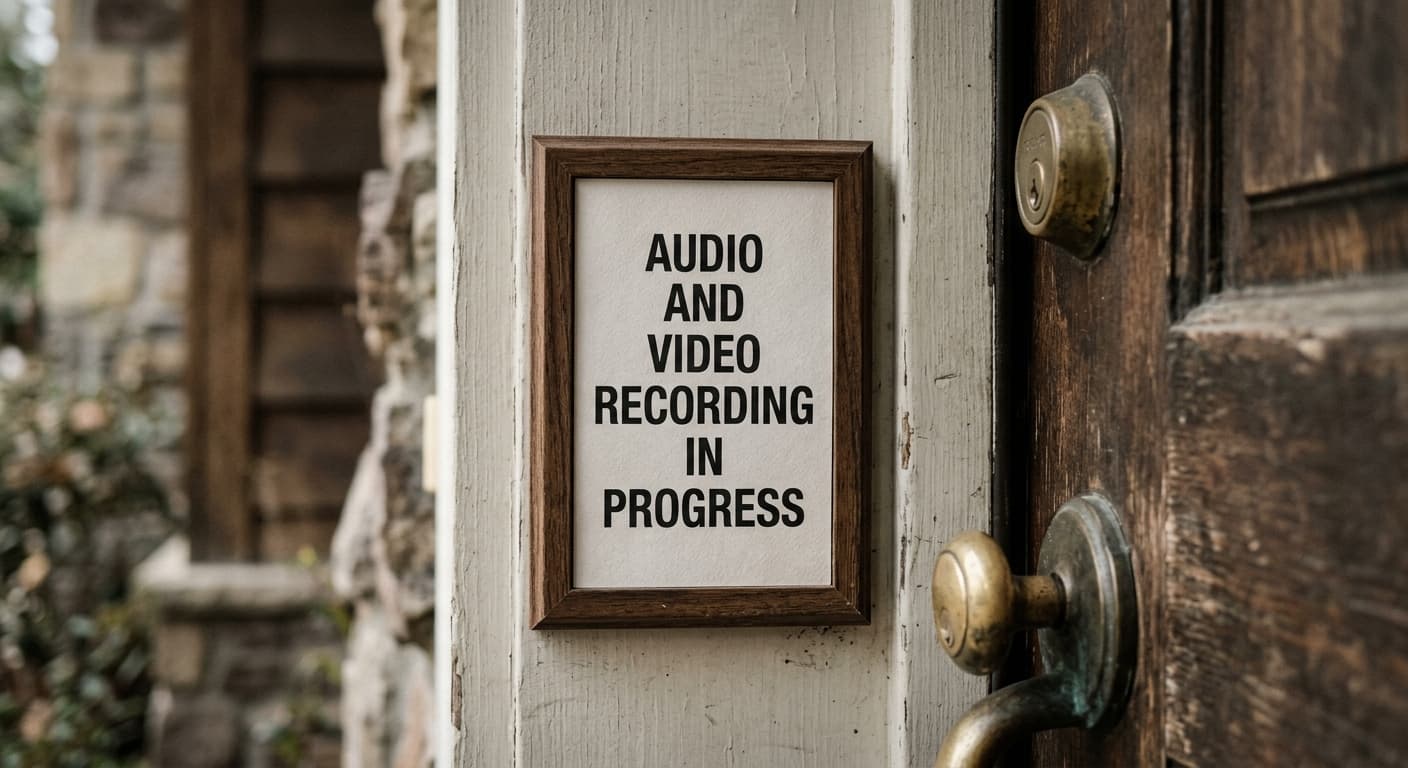
Arizona's warm climate means front doors see heavy traffic year-round, making Ring doorbells a popular home security choice across the state. But Arizona treats illegal recording more seriously than most states. While Arizona follows a one-party consent rule for audio recording, violations are classified as felonies rather than misdemeanors. Under Arizona Revised Statutes § 13-3005, intercepting communications without proper consent is a Class 5 felony. Ring doorbell owners in Arizona need to understand these stakes before activating their device's audio features.
Arizona Audio Recording Laws and Ring Doorbells
Audio recording is the primary legal concern for Ring doorbell owners in Arizona. Every Ring doorbell captures audio through a built-in microphone, and Arizona's wiretapping statute governs when that audio can be legally recorded.
One-Party Consent Rule
Arizona follows a one-party consent framework under ARS § 13-3005. The statute makes it a crime to intercept a "wire or electronic communication" or a "conversation or discussion" unless the person is a party to the communication, is present during the conversation, or has obtained consent from one party.
For Ring doorbell owners, this means that conversations the homeowner participates in through the Ring app's two-way talk feature can be legally recorded. The homeowner is a party to the conversation, and their consent satisfies the one-party requirement.

Reasonable Expectation of Privacy
Arizona's wiretapping law applies only to communications where speakers have "an expectation that the communication is not subject to interception under circumstances justifying the expectation." This standard plays a significant role in Ring doorbell cases.
Conversations on a front porch, doorstep, or near a visible doorbell camera may carry a reduced expectation of privacy. Public sidewalks, streets, and areas visible from public spaces carry no reasonable expectation of privacy under Arizona law. A Ring doorbell that captures audio from these areas presents lower legal risk than one positioned to record conversations in enclosed, private spaces.
When Audio Recording Creates Legal Risk
The legal risk increases when the Ring doorbell records private conversations the homeowner does not participate in. Two people having a conversation on a covered patio near the Ring camera, for example, may expect that conversation to be private. If the homeowner is not a party to that conversation and has not obtained consent from any participant, recording it could constitute illegal interception under ARS § 13-3005.
Because Arizona classifies this offense as a felony rather than a misdemeanor, the consequences of a violation are substantially more severe than in neighboring states. Disabling audio recording on the Ring device eliminates this risk entirely.
Video Recording Laws in Arizona
Arizona permits video surveillance on your own property for security purposes. No state statute prohibits homeowners from installing visible security cameras, including Ring doorbells, that record video of their own front door, porch, driveway, and walkway.
Public Areas and Neighboring Property
Video recording of areas visible from public spaces is broadly permitted in Arizona. A Ring doorbell that incidentally captures a portion of a neighbor's property, a sidewalk, or a street is generally legal because these areas carry limited privacy expectations.
Arizona's criminal privacy statutes are narrower than many homeowners assume. Deliberately aiming a Ring camera at a neighbor's window or into their backyard is not by itself a crime under the voyeurism statute (ARS § 13-1424), which reaches only recording made for the purpose of sexual stimulation that captures a person undressed, engaged in sexual conduct, urinating or defecating, or that captures genitalia, buttock, or female breast not otherwise visible to the public. A separate statute, ARS § 13-3019, covers secret recording without any sexual-purpose element, but it is confined to restrooms, bathrooms, locker rooms, bedrooms, and comparable locations where the subject is undressed or engaged in those same acts, or to recordings that capture those same intimate body parts. A camera trained on a fenced backyard or a window, without those circumstances, falls outside both statutes. It can still generate a civil dispute, an HOA complaint, or a neighbor conflict, so aiming the camera at your own property remains the sound practice.
Voyeurism Statute (ARS § 13-1424)
Arizona's voyeurism law prohibits knowingly invading the privacy of another person without their knowledge for the purpose of sexual stimulation. The statute also prohibits disclosing, distributing, or publishing photographs or recordings made in violation of the law.
Both halves of the definition in subsection C must be satisfied. The person must have a reasonable expectation that they will not be photographed, videotaped, filmed, digitally recorded, or otherwise viewed, and the recording must capture them while in a state of undress or partial dress, while engaged in sexual intercourse or sexual contact, or while urinating or defecating, or in a manner that captures their genitalia, buttock, or female breast that is not otherwise visible to the public. Recording that misses either half is outside the statute, however intrusive the camera angle feels.
Security Camera Exemption
ARS § 13-1424(D)(1) includes an exemption for security cameras, and it carries three conditions rather than two. The recording must be for security purposes, notice of the recording equipment must be clearly posted in the location, and the location must be one in which the person has a reasonable expectation of privacy. ARS § 13-3019(C)(1) sets out the same three-part exemption for the surreptitious-recording offense. Ring doorbell owners who display a notice indicating that recording is in progress benefit from this exemption, but it reaches the voyeurism and surreptitious-recording offenses only and does nothing for audio recording under the wiretap statute.
Penalties for Voyeurism
Voyeurism in Arizona is a Class 5 felony. A first offense carries a presumptive sentence of 1.5 years in prison, with a mitigated minimum of 6 months and an aggravated maximum of 2.5 years. Voyeurism under ARS § 13-1424 is not among the offenses that require sex offender registration under ARS § 13-3821. Fines can reach up to $150,000.
HOA Rules and Ring Doorbells in Arizona
Arizona has one of the most active HOA landscapes in the country, with a significant percentage of homes located in planned communities governed by CC&Rs. These communities can regulate Ring doorbell installation.

HOA Authority Over Security Cameras
Arizona's Planned Community Act (ARS Title 33, Chapter 16) and Condominium Act (ARS Title 33, Chapter 9) govern HOA authority. While Arizona law protects homeowner rights to display flags, political signs, and solar energy devices, no specific statute prevents HOAs from regulating security cameras or doorbell cameras.
HOAs can require architectural review committee approval before installation. CC&Rs may restrict the type, size, placement, or appearance of exterior devices, including Ring doorbells. Some Arizona HOAs have adopted specific security camera policies that allow doorbell cameras but impose conditions on camera angle, recording range, or aesthetic integration.
Navigating Arizona HOA Requirements
Before installing a Ring doorbell, homeowners in an Arizona HOA should review the CC&Rs and architectural guidelines. Submitting a written request to the architectural review committee and obtaining approval before installation protects against potential enforcement actions.
If the HOA denies the request, homeowners can appeal through the process outlined in the CC&Rs. Arizona's HOA dispute resolution process under ARS § 32-2199 provides a framework for resolving disagreements between homeowners and associations, including an administrative hearing process through the Arizona Department of Real Estate.
Landlord and Tenant Rights
Arizona's Residential Landlord and Tenant Act (ARS Title 33, Chapter 10) governs the relationship between landlords and tenants regarding property modifications, including security device installation.

Tenant Installation Rights
Arizona tenants generally need the landlord's consent before making modifications to the rental property. Installing a wired Ring doorbell that requires drilling or electrical work clearly qualifies as a modification requiring landlord approval.
Battery-powered Ring models that do not require permanent changes to the property present a stronger case for tenant installation. However, tenants should still review their lease agreement for restrictions on exterior devices or modifications and seek written landlord approval before installation.
Landlord Disclosure Best Practices
No Arizona statute requires landlords to disclose the location of security cameras on rental properties. Arizona's Residential Landlord and Tenant Act (ARS Title 33, Chapter 10) does not address cameras at all. Disclosure is still the recommended practice, since informing tenants reduces disputes and helps demonstrate reasonableness if a disagreement over privacy arises.
If smart home devices are installed in the rental, the lease should still clearly identify each device and its function even though it is not legally required. Landlords should obtain informed, written consent for any device that collects data, particularly devices that record audio, since audio recording without tenant consent, even if incidental, may violate Arizona's wiretap statute (ARS § 13-3005).
Landlord Entry and Surveillance
Under ARS § 33-1343, landlords must provide at least two days' notice before entering a tenant's dwelling, except in emergencies; the statute does not specify that the notice must be in writing. Using a Ring doorbell to monitor tenant comings and goings in common areas is generally permissible, but surveillance should not extend to areas where tenants have a reasonable expectation of privacy.
Law Enforcement Access to Ring Footage
Arizona residents have specific rights when law enforcement requests Ring doorbell footage. Understanding these rights helps homeowners make informed decisions.
Voluntary vs. Compelled Disclosure
Arizona police can ask homeowners to voluntarily share Ring footage. Homeowners have no legal obligation to comply with a verbal or written request. They can share footage voluntarily or decline without legal consequence.
If the homeowner declines, law enforcement can obtain a search warrant by demonstrating probable cause to a judge. Police can also issue a subpoena, which has a lower legal threshold, to compel Amazon (Ring's parent company) to produce footage directly.
Ring's Disclosure Policy
As of April 2026, Ring requires a valid legal order (warrant, subpoena, or court order) before sharing customer footage with law enforcement. Ring discontinued its earlier practice of allowing police departments to request footage directly through the Neighbors app.
Ring retains an emergency exception for situations involving imminent danger of death or serious physical injury. In these cases, Ring may provide footage to law enforcement without a warrant or customer consent.
Arizona Law Enforcement Partnerships
Hundreds of police departments across the country, including departments in Arizona, have participated in partnerships with Ring. These partnerships facilitate communication between law enforcement and Ring users but do not give police direct access to footage without proper legal process or voluntary user cooperation.
Penalties for Illegal Recording in Arizona
Arizona imposes some of the harshest penalties in the country for recording violations. Unlike many states that treat these offenses as misdemeanors, Arizona classifies illegal wiretapping as a felony.

Illegal Interception (ARS § 13-3005)
Intercepting wire, electronic, or oral communications without the consent of at least one party is a Class 5 felony. Sentencing for a first offense includes a presumptive term of 1.5 years in prison, with a mitigated minimum of 6 months and an aggravated maximum of 2.5 years. Fines can be substantial.
Installing a Pen Register or Trap Device (ARS § 13-3005)
Installing or using a pen register or trap and trace device on another person's communication lines without lawful authority is a Class 6 felony. Sentencing includes a presumptive term of 1 year with a mitigated minimum of 4 months.
Voyeurism (ARS § 13-1424)
Using a camera to view someone's private areas without consent for sexual stimulation is a Class 5 felony. The same sentencing range applies: 6 months to 2.5 years in prison. Distributing recordings made in violation of this statute carries additional penalties.
Civil Liability
Beyond criminal penalties, Arizona law allows individuals whose communications are illegally intercepted to bring a civil lawsuit. The cause of action is ARS § 12-731, not the criminal wiretap statute, which contains no civil remedy of its own. Under ARS § 12-731(A), a plaintiff may recover equitable or declaratory relief plus damages in the amount that is the greater of actual damages plus any profits the violator made, statutory damages of $100 for each day of the violation, or statutory damages of $10,000, together with punitive damages in appropriate cases and reasonable attorney fees and costs of litigation. Under ARS § 12-731(B), the action must be commenced within one year after the plaintiff first has a reasonable opportunity to discover the violation.
How to Use a Ring Doorbell Legally in Arizona
These guidelines help Arizona residents comply with state law while using Ring doorbell cameras.
Post a Visible Notice
Arizona's voyeurism and surreptitious-recording statutes exempt security recording where notice of the equipment is clearly posted in the location. Placing a visible sign near the Ring doorbell puts visitors on notice and supports that exemption. Understand its limit: no Arizona statute makes a posted sign a defense to the wiretap law. The exemptions to ARS § 13-3005 are listed in ARS § 13-3012 and cover communication service providers, lawful process, consent of a party, and certain radio communications, none of which a homeowner's sign triggers. A sign does not reduce audio-recording exposure, which is the primary legal concern for Ring owners in Arizona.
Consider Disabling Audio
Given Arizona's felony-level penalties for illegal interception, Ring doorbell owners should carefully evaluate whether audio recording is necessary. Disabling the microphone in the Ring app eliminates the wiretapping concern entirely while preserving video surveillance.
Aim at Your Own Property
Point the Ring doorbell at your front door, porch, walkway, and driveway. Avoid angling the camera toward a neighbor's windows, enclosed patios, or other areas where they expect privacy.
Get HOA Approval First
If you live in an Arizona planned community, submit an architectural review request before installing the Ring doorbell. Keep a copy of the written approval for your records.
Disclose to Tenants
Arizona law does not require landlords to disclose camera locations, but doing so is good practice. Landlords installing Ring doorbells on rental properties should inform tenants of the camera's location and capabilities, include details in the lease agreement, and obtain written consent for audio recording features to reduce the risk of a wiretap-statute dispute.
Secure Your Ring Account
Enable two-factor authentication and use a strong, unique password. The FTC's 2023 enforcement action against Ring, which resulted in a $5.8 million settlement, underscored the risks of weak security practices. Regular firmware updates and periodic review of account access help protect against unauthorized use.
Know Your Rights with Police
Sharing Ring footage with law enforcement is voluntary unless police present a valid warrant or subpoena. Homeowners who choose to share should document what footage was provided and to which agency.
More Arizona Laws
Arizona has additional laws that affect residents' rights and responsibilities:
- Arizona Recording Laws cover all aspects of audio and video recording consent in the state.
- Arizona Hit and Run Laws explain the legal requirements after a traffic accident.
- Arizona Lemon Law protects consumers who purchase defective vehicles.
This article provides general legal information about Ring doorbell laws in Arizona, not legal advice. Laws and their interpretations can change. Consult an attorney licensed in Arizona for advice specific to your situation.
Frequently Asked Questions
Is it legal to use a Ring doorbell in Arizona?
Yes, using a Ring doorbell is legal in Arizona. Video recording from your own property is permitted, and audio recording is legal when you participate in the recorded conversation under Arizona's one-party consent law (ARS § 13-3005). Posting a visible notice supports the security exemption to Arizona's voyeurism statute, but it is not a defense to the wiretap statute. Consider disabling audio if you do not need two-way communication, as Arizona treats illegal interception as a felony.
What are the penalties for illegally recording someone with a Ring doorbell in Arizona?
Illegal interception of communications in Arizona is a Class 5 felony under ARS § 13-3005, carrying a presumptive sentence of 1.5 years in prison. Sentencing ranges from 6 months (mitigated) to 2.5 years (aggravated) for a first offense. Victims can also sue under ARS § 12-731, which allows the greater of actual damages plus the violator's profits, $100 for each day of the violation, or $10,000, plus punitive damages in appropriate cases and attorney fees. These penalties are significantly harsher than the misdemeanor charges most states impose.
Can my neighbor's Ring doorbell legally record my property in Arizona?
A Ring doorbell that captures video of areas visible from public spaces, such as a shared sidewalk or street, is generally legal in Arizona. A camera pointed at your window or into an enclosed backyard is not by itself a crime. The voyeurism statute (ARS § 13-1424) applies only where the recording is made for sexual stimulation and captures nudity, sexual conduct, urination or defecation, or intimate body parts not otherwise visible to the public, and ARS § 13-3019 is confined to bathrooms, bedrooms, locker rooms and similar locations or to those same intimate images. Outside those circumstances the dispute is a civil, HOA, or neighbor matter rather than a criminal one.
Can my Arizona landlord install a Ring doorbell without telling me?
Arizona law does not require landlords to disclose the location of security cameras on rental properties, since the state's Residential Landlord and Tenant Act does not address cameras. Disclosure is still recommended: if the Ring doorbell records audio, the landlord should obtain written tenant consent, since audio recording without consent may violate Arizona's wiretap statute, and lease agreements should identify each surveillance device and its capabilities.
Can Arizona police access my Ring doorbell footage?
Arizona police cannot force you to share Ring footage without a valid legal order. You can voluntarily share or decline without legal consequence. If you decline, police can obtain a search warrant or subpoena to compel Ring (Amazon) to produce the footage. Ring may share footage without your consent only in emergency situations involving imminent danger of death or serious physical injury.
Updates
Corrected the scope of Arizona's voyeurism statute (ARS § 13-1424), which requires a sexual-stimulation purpose and specific nudity or intimate-image circumstances rather than any invasion of a general privacy expectation, added the full three-part security-camera exemption and the narrower ARS § 13-3019 offense, moved the civil damages discussion to the correct statute (ARS § 12-731) with its actual remedies, and clarified that a posted recording notice is not a defense under the wiretap statute.
Corrected a fabricated sex-offender-registration claim for voyeurism, fixed a wrong HOA dispute-resolution statute citation, reframed landlord camera-location disclosure as a recommended best practice rather than a legal requirement (Arizona has no such statute), and clarified that the state's landlord-entry-notice law does not require the notice to be in writing.
Independently fact-checked against the cited primary sources; governing law re-checked for recent changes
Governing law re-checked for recent changes
Reviewed and approved by an editor
The Law Behind This Article
This article rests on the statutory provisions below, held in our own legal record and retrieved from the official source. Tap a section to read the operative text.
Arizona Revised Statutes, Title 13 (Criminal Code), Chapter 30 (EAVESDROPPING AND COMMUNICATIONS)
§ 13-3005Interception of wire, electronic and oral communications; installation of pen register or trap and trace device; classification; exceptionsIn forcecited in 21 of our articles
A. Except as provided in this section and section 13-3012, a person is guilty of a class 5 felony who either: 1. Intentionally intercepts a wire or electronic communication to which he is not a party, or aids, authorizes, employs, procures or permits another to so do, without the consent of either a sender or receiver thereof. 2. Intentionally intercepts a conversation or discussion at which he is not present, or aids, authorizes, employs, procures or permits another to so do, without the consent of a party to such conversation or discussion. 3. Intentionally intercepts the deliberations of a jury or aids, authorizes, employs, procures or permits another to so do. B. Except as provided in sections 13-3012 and 13-3017, a person who intentionally and without lawful authority installs or uses a pen register or trap and trace device on the telephone lines or communications facilities of another person which are utilized for wire or electronic communication is guilty of a class 6 felony.
Official text (excerpt) · last checked 2026-08-31 · Read the full text in our law library · Verify at azleg.gov
Cited in 7 court opinions in our collectionLatest citing opinion in our collection: 2025
In the courts (editorial summary, independently checked):State v. Morrison (2002) held that 13-3005 criminalizes unlawful interception but provides no exclusionary remedy, so a recording made in violation of it is not automatically inadmissible. State v. Hauss (1984) held the section inapplicable to a police station interview room talk where no reasonable expectation of privacy existed.
Opinions citing this section in our collection:
- State v. Morrison (Court of Appeals of Arizona 2002, 203 Ariz. 489)“…ause it was made without his or her consent in violation of A.R.S. § 13-3005 and 18 U.S.C. § 2511 and was, therefo…”
- State v. Hauss (Court of Appeals of Arizona 1984, 142 Ariz. 159)✓Police secretly recorded an arrested suspect's talk with his girlfriend in a station interview room, after telling her the room was being monitored; the court held there was no reasonable expectation of privacy in that setting, so section 13-3005 did not apply.
- State v. Allgood (Court of Appeals of Arizona 1992, 171 Ariz. 522)“…communication.” (Emphasis added.) See also A.R.S. § 13-3005. (penalizing as a class 5 felony interc…”
Identified automatically from the court opinions citing this section — not a ranking of which case controls.
Also relied on in: Arizona Recording Laws (2026): One-Party Consent Rules, One-Party Consent States: Complete 2026 Guide, Arizona Audio Recording Laws: Complete Guide to Consent Rules
Arizona Revised Statutes, Title 13 (Criminal Code), Chapter 14 (SEXUAL OFFENSES)
§ 13-1424Voyeurism; classificationIn forcecited in 8 of our articles
A. It is unlawful to knowingly invade the privacy of another person without the knowledge of the other person for the purpose of sexual stimulation. B. It is unlawful for a person to disclose, display, distribute or publish a photograph, videotape, film or digital recording that is made in violation of subsection A of this section without the consent or knowledge of the person depicted. C. For the purposes of this section, a person's privacy is invaded if both of the following apply: 1. The person has a reasonable expectation that the person will not be photographed, videotaped, filmed, digitally recorded or otherwise viewed or recorded. 2. The person is photographed, videotaped, filmed, digitally recorded or otherwise viewed, with or without a device, either: (a) While the person is in a state of undress or partial dress. (b) While the person is engaged in sexual intercourse or sexual contact. (c) While the person is urinating or defecating. (d) In a manner that directly or indirectly captures or allows the viewing of the person's genitalia, buttock or female breast, whether clothed or unclothed, that is not otherwise visible to the public. D.
Official text (excerpt) · last checked 2026-08-04 · Read the full text in our law library · Verify at azleg.gov
Cited in 15 court opinions in our collectionLatest citing opinion in our collection: 2026
Opinions citing this section in our collection:
- State v. Blazak (Arizona Supreme Court 1977, 114 Ariz. 199)“…timony and not to the admissibility of the evidence. A.R.S. § 13-1424 permits a peace officer to apply to a m…”
- State v. Grijalva (Arizona Supreme Court 1975, 111 Ariz. 476)“…fense sought to suppress certain evidence taken pursuant to ARS § 13-1424, including photographs of the defendant…”
- Long v. Garrett (Court of Appeals of Arizona 1974, 22 Ariz. App. 397)“…tioner's special action challenges the constitutionality of A.R.S. § 13-1424, both on its face and as construed and…”
Identified automatically from the court opinions citing this section — not a ranking of which case controls.
Also relied on in: Arizona Security Camera Laws: Rules for Homes and Businesses, Arizona Video Recording Laws: Rules for Cameras and Filming, Arizona Surreptitious Recording & Voyeurism Laws: ARS 13-3019 Penalties (2026)
Arizona Revised Statutes, Title 13 (Criminal Code), Chapter 7 (SENTENCING AND IMPRISONMENT)
§ 13-702First time felony offenders; sentencing; definitionIn forcecited in 10 of our articles
A. Unless a specific sentence is otherwise provided, the term of imprisonment for a first felony offense shall be the presumptive sentence determined pursuant to subsection D of this section. Except for those felonies involving a dangerous offense or if a specific sentence is otherwise provided, the court may increase or reduce the presumptive sentence within the ranges set by subsection D of this section. Any reduction or increase shall be based on the aggravating and mitigating circumstances listed in section 13-701, subsections D and E and shall be within the ranges prescribed in subsection D of this section. B.
Official text (excerpt) · last checked 2026-08-04 · Read the full text in our law library · Verify at azleg.gov
Cited in 446 court opinions in our collectionLatest citing opinion in our collection: 2026
Opinions citing this section in our collection:
- State v. Shattuck (Arizona Supreme Court 1984, 140 Ariz. 582)“…ly under the authority of the language in what is currently A.R.S. § 13-702(D)(11) [formerly A.R.S. 13-702(D)(9)] —…”
- State v. Henderson (Arizona Supreme Court 2005, 210 Ariz. 561)“…t fit within the list of statutory aggravators codified in A.R.S. § 13-702.C: infliction or thr…”
- State v. Walton (Arizona Supreme Court 1989, 159 Ariz. 571)“…he Arizona death penalty statute. Under the provisions of A.R.S. § 13-702(D), which applies to noncapital sentenc…”
Identified automatically from the court opinions citing this section — not a ranking of which case controls.
Also relied on in: Arizona Phone Call Recording Laws: What You Need to Know, Arizona Hit and Run Laws: Penalties and What to Do, Arizona Smart Glasses Recording Laws (2026)
Search our full record of US law — 2.1 million sections, every state + federal →
Sources and References
- ARS § 13-3005 - Interception of Wire, Electronic and Oral Communications(azleg.gov).gov
- ARS § 13-1424 - Voyeurism; Classification(azleg.gov).gov
- ARS § 13-702 - First Time Felony Offenders; Sentencing(azleg.gov).gov
- Arizona Residential Landlord and Tenant Act(housing.az.gov).gov
- Arizona Recording Guide - Reporters Committee for Freedom of the Press(rcfp.org)
- FTC Says Ring Employees Illegally Surveilled Customers (May 2023)(ftc.gov).gov
- Arizona Recording Law - Digital Media Law Project(dmlp.org)
- Smart Home Technology and Privacy Laws for Arizona Tenants and Landlords - Gottlieb Law(gottlieblawaz.com)
- ARS § 13-3005 - WomensLaw.org Statute Text(womenslaw.org)
- Arizona Residential Landlord and Tenant Act - Arizona Legislature(az.elaws.us)
- ARS § 12-731 - Recovery of Civil Damages (interception of communications)(azleg.gov)
- ARS § 13-3019 - Surreptitious Photographing, Videotaping, Filming or Digitally Recording or Viewing; Exemptions(azleg.gov)
- ARS § 13-3012 - Exemptions from Arizona's Interception Statutes(azleg.gov)