
Iowa
Iowa Ring Doorbell Laws: What You Need to Know in 2026
Independently fact-checked against primary sources (last audited August 17, 2026). · Reviewed by the RecordingLaw editorial team. · Law checked current as of August 17, 2026. · 8 primary sources cited on this page. How we verify our legal content
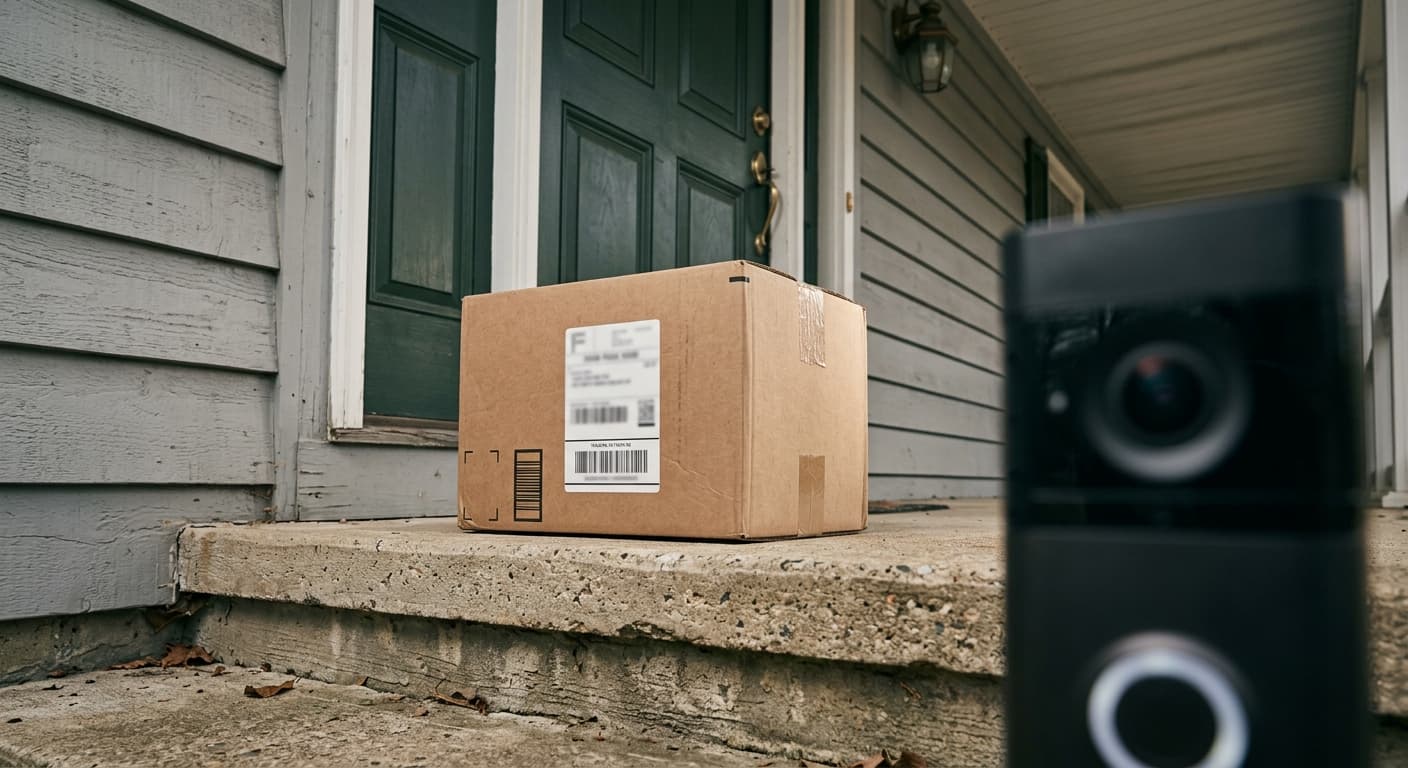
Iowa is a one-party consent state for audio recording, which means Ring doorbell owners face fewer legal hurdles than residents in all-party consent states. Iowa law permits recording a conversation when at least one participant consents, and video recording of your own property is broadly allowed.
Iowa's eavesdropping statute, voyeurism laws, and trespass-related surveillance rules still set boundaries that Ring doorbell owners need to respect. Audio recording that falls outside the statutory exceptions, cameras pointed into private areas, and placing devices on someone else's property can all trigger criminal penalties.
Audio Recording Laws and Ring Doorbells in Iowa
Iowa has two statutes that govern audio recording: the electronic eavesdropping law (Iowa Code 727.8) and the interception of communications statute (Iowa Code Chapter 808B). Both follow a one-party consent framework, and both contain an express exception for residential security cameras, which is favorable for Ring doorbell owners.
One-Party Consent Under Iowa Code 808B
Under Iowa Code 808B.2(2)(c), it is not unlawful for a person who is not acting under color of law to intercept a wire, oral, or electronic communication if the person is a party to the communication or if one of the parties to the communication has given prior consent to the interception. This is the core one-party consent provision.
For Ring doorbell owners, this means recording audio of a conversation through the two-way talk feature is lawful. When you speak with someone at your door through Ring's intercom, you are a party to the conversation, and your consent satisfies the statute.
Chapter 808B also contains a separate exception written for property owners. Under Iowa Code 808B.2(2)(d), an owner or lessee of real property does not violate the chapter by intercepting an oral communication through a surveillance system placed in or on that real property, installed with the knowledge and consent of all lawful owners or lessees, and used for the purpose of detecting or preventing criminal activity on the property or in an area accessible to the general public in its immediate vicinity. A doorbell camera installed by the homeowner for security sits inside this exception even when nobody is speaking through the app.
Iowa Code 727.8: Eavesdropping
Iowa Code 727.8 provides a separate but complementary rule. Any person who, without right or authority, taps into or connects a listening or recording device to any telephone or other communication wire, or who by electronic or mechanical means listens to, records, or otherwise intercepts a conversation or communication of any kind, commits a serious misdemeanor.
Subsection 3 then lists three things the section does not apply to: recording by the sender or recipient of a message or by someone who is openly present and participating in or listening to a communication, the use of any radio or television receiver to receive a communication transmitted by radio or wireless signal, and the use of a monitoring device.
That third exception is the one that matters most to Ring owners. Iowa Code 727.8(1) defines a monitoring device as a digital video or audio streaming or recording device that records, listens to, or otherwise intercepts video or audio communications in order to provide proof of or prevent criminal activity, that is placed outside of a person's dwelling or other structure, that is not in a shared hallway, and that is on real property owned or leased by the person. A doorbell camera mounted beside your own front door to deter and document package theft, trespass, and break-ins is the paradigm case.
Read together with 808B.2(2)(d), this means a homeowner's doorbell camera that passively records audio at the front door is generally covered by an express statutory exemption rather than sitting in a legal gray area. You do not need every visitor's consent, and you do not need to be listening live.
The exceptions do have limits, and each element matters. The device has to be outside your own dwelling or structure, not in a shared hallway, on real property you own or lease, and used to prove or prevent criminal activity. A camera in a shared apartment corridor, a camera mounted on property that is not yours, or a device used to listen in on other people for reasons unrelated to security falls outside the exemption and back under the general rule in subsection 2.
Practical Audio Recording Advice
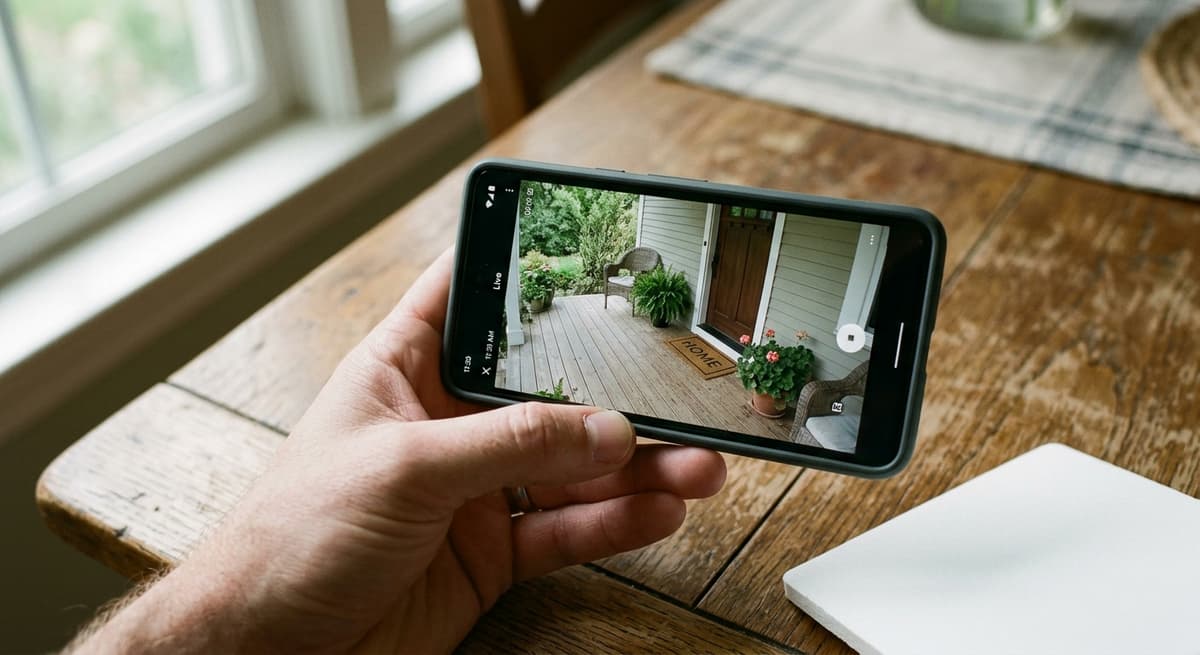
Using the two-way talk feature puts you squarely inside the participant exception whenever you actually speak with a visitor. For passive recordings, the monitoring device exception in Iowa Code 727.8(3)(c) is what does the work, so the practical priorities are keeping the camera on property you own or lease, out of any shared hallway, and pointed at your own approach rather than into a neighbor's space.
Posting a visible notice that audio and video recording is in progress remains good practice. It reduces any expectation of privacy at your door and defuses disputes with visitors and delivery drivers, even though Iowa law does not require it for a device that already falls within the monitoring device exception.
Video Recording Laws and Ring Doorbells
Iowa does not have a single comprehensive video surveillance statute for residential cameras. Video recording on your own property and of public areas is generally permitted. The restrictions come from specific statutes addressing privacy violations, voyeurism, and trespass.
General Video Recording Rules
Iowa law allows video recording in areas where people do not have a reasonable expectation of privacy. This includes your front porch, driveway, sidewalks, and other areas visible from public view. A Ring doorbell pointed at these areas is lawful for video recording purposes.
Iowa Code 709.21: Invasion of Privacy (Nudity)
Iowa Code 709.21 makes it a crime to knowingly view, photograph, or film another person for the purpose of arousing or gratifying the sexual desire of any person, when all three of the following are also true: the other person does not consent or cannot consent, the other person is in a state of full or partial nudity, and the other person has a reasonable expectation of privacy while in that state. The sexual purpose is a required element of the offense, not an aggravating factor added on top of it, so a recording that captures nudity without that purpose is not a violation of this section. The offense is an aggravated misdemeanor, punishable by up to 2 years in prison and a fine between $855 and $8,540.
Section 709.21 has a single penalty tier. Subsection 3 makes any violation of the section an aggravated misdemeanor, and there is no lesser version of the offense that a sexual purpose then escalates. A conviction is a registrable sex offense under Iowa Code 692A.102.
For a doorbell camera, this statute is only reachable in unusual circumstances. The camera would have to capture someone in a state of undress somewhere they reasonably expected privacy, such as through a bathroom, bedroom, or changing area window, and it would have to be aimed or used for sexual gratification. A Ring doorbell pointed at your own front door does not come close. A camera deliberately positioned to look into a neighbor's window is where the real exposure begins.
Iowa Code 727.8A: Camera Use During Trespass
Iowa Code 727.8A addresses the specific scenario of placing cameras on property where you are trespassing. A person who commits a trespass as defined in section 716.7 and knowingly places or uses a camera or electronic surveillance device that transmits or records images or data while the device is on the trespassed property commits an aggravated misdemeanor for a first offense and a Class D felony for a second or subsequent offense.
This statute makes it clear that mounting a Ring camera on a neighbor's property without permission, such as on their fence, porch, or structure, is not just a trespass but carries enhanced penalties when a recording device is involved. It is also the clearest reason the monitoring device exception in 727.8 is written around property you own or lease.
HOA and Ring Doorbells in Iowa
Iowa homeowners associations have the authority to regulate Ring doorbell installations through their governing documents and bylaws.
Common HOA Restrictions
Iowa HOAs that address Ring doorbells typically include rules covering:
- Architectural review committee (ARC) approval before exterior device installation.
- Placement guidelines to prevent cameras from capturing neighboring units or private common areas.
- Aesthetic requirements for camera color, size, and mounting location.
- Audio recording policies, particularly in condo buildings where hallways and common areas are shared.
Iowa HOA Authority
Iowa has no general homeowners association act, and it has not adopted the Uniform Common Interest Ownership Act. An Iowa HOA's power to regulate exterior installations comes from its own recorded declaration, its covenants, conditions and restrictions, and its bylaws, which bind owners as a matter of contract and property law rather than by statutory grant. Condominium regimes are organized under Iowa Code Chapter 499B, the horizontal property law, but that chapter governs how the regime is formed and administered rather than handing associations architectural control over doorbell cameras.
Iowa Code Chapter 501B is sometimes cited as a source of HOA authority. It is not. Chapter 501B is the Revised Uniform Unincorporated Nonprofit Association Act, an entity-form statute that says how an unincorporated association may hold property and be sued, and it confers no rulemaking power over common elements or the exterior appearance of units.
The practical result is unchanged: if your declaration or architectural guidelines restrict exterior devices, that restriction is enforceable against you. The document to read before you drill is your CC&Rs, not the Iowa Code.
Can an Iowa HOA Ban Ring Doorbells?
Yes. Iowa HOAs can prohibit Ring doorbells through their governing documents. Owners who install devices in violation of those documents may face fines, mandatory removal, or legal action to enforce compliance. Iowa does not have a state statute that overrides an association's recorded restrictions on doorbell cameras.
Landlord and Tenant Rights
Iowa landlord-tenant law (Iowa Code Chapter 562A, the Uniform Residential Landlord and Tenant Act) does not specifically address Ring doorbell cameras, but general principles govern the relationship.
Tenant Installation Rights
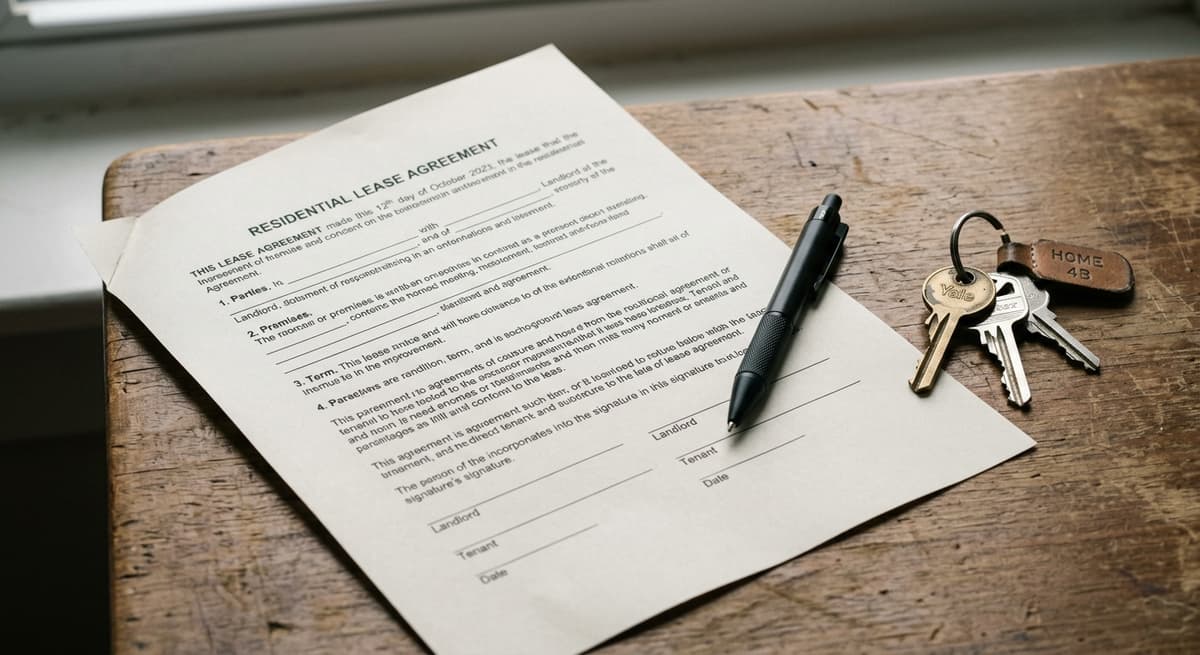
Iowa tenants generally have the right to enjoy their rental unit in peace, which includes reasonable security measures. Interior security cameras within the tenant's unit are typically permitted. Exterior installations, including Ring doorbells mounted on a front door or shared hallway, usually require the landlord's written permission because the tenant does not own the door or exterior structure.
Tenants should review their lease for provisions addressing modifications to the property, smart home devices, or security camera installations. If the lease is silent on the issue, requesting written permission from the landlord before installation is the recommended approach.
Landlord Obligations
Iowa landlords can install Ring doorbells on rental properties as part of the property's security features. The landlord should disclose the presence of any recording devices to tenants, particularly if audio recording is enabled. Iowa's one-party consent law permits recording conversations the landlord participates in, and Iowa Code 808B.2(2)(d) covers a security surveillance system the owner installs on the property, but using a camera to monitor tenants for reasons unrelated to security is a different matter.
Landlords cannot use Ring doorbells to monitor the interior of a tenant's unit. Iowa Code 562A.19 requires landlords to maintain the premises and respect the tenant's right to privacy. Using a Ring doorbell to surveil a tenant's personal activities could constitute harassment or an invasion of privacy.
Shared Building Considerations
In multi-unit buildings, a Ring doorbell in a shared hallway records all tenants and visitors passing through. This is also the one placement the eavesdropping exception expressly excludes, because Iowa Code 727.8(1) defines a monitoring device as one that is not in a shared hallway. Landlords installing cameras in common areas should provide written notice to all tenants and should be deliberate about whether audio recording is enabled.
Law Enforcement Access to Ring Footage
Iowa follows federal and state constitutional protections against unreasonable searches, which limit how police can access Ring doorbell footage.
How Police Obtain Footage
- Search warrants: Iowa law enforcement can obtain a search warrant from an Iowa court compelling Ring (through Amazon) to provide footage. This requires probable cause.
- Voluntary consent: Ring doorbell owners can voluntarily share footage with police at any time. No warrant is required when the owner consents to disclosure.
- Court orders: A court order based on specific, articulable facts can compel Ring to disclose subscriber information.
- Emergency exceptions: Under federal law (18 U.S.C. 2702), Ring may disclose footage without a warrant in emergencies involving imminent danger of death or serious physical injury.
Ring's Law Enforcement Policy
Ring routes all law enforcement requests through Amazon's Law Enforcement Request Tracker (ALERT). Ring does not produce video or audio content in response to subpoenas. A valid search warrant is required for content data.
Amazon ended the Neighbors Public Safety Service in January 2024, removing the ability for police to directly request footage from Ring users through the app. As of 2026, Ring partners with Axon to facilitate evidence sharing, with users opting in to provide recordings through Axon's platform.
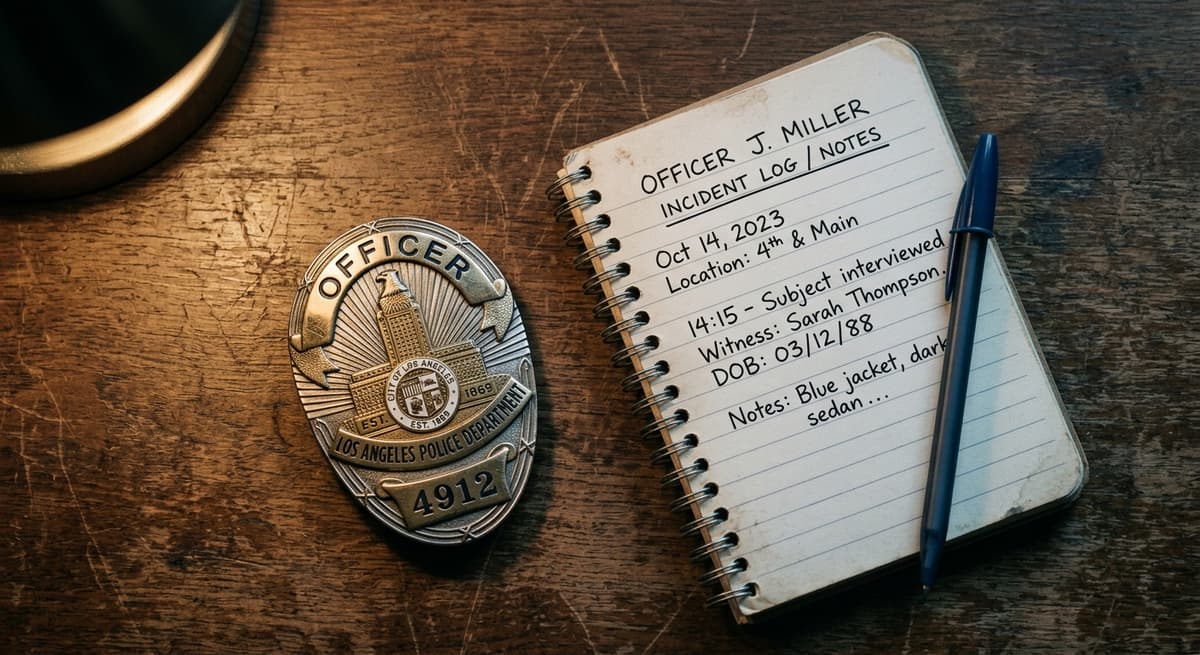
Iowa-Specific Considerations
The Iowa Public Information Board has addressed questions about the applicability of Iowa's open records law (Iowa Code 22.7) to camera footage in certain contexts. Ring doorbell footage owned by a private homeowner is not a public record. Footage voluntarily shared with police may become part of a criminal investigation file, subject to Iowa's public records exemptions for ongoing investigations.
Penalties for Illegal Recording in Iowa
Iowa imposes criminal penalties at several levels for recording violations. The fine ranges below come from the general misdemeanor and felony sentencing statutes, Iowa Code 903.1 and 902.9.
| Offense | Classification | Jail/Prison | Fine |
|---|---|---|---|
| Eavesdropping (Iowa Code 727.8) | Serious misdemeanor | Up to 1 year | $430-$2,560 |
| Unlawful interception (Iowa Code 808B.2) | Class D felony | Up to 5 years | $1,025-$10,245 |
| Camera use during trespass, first offense (727.8A) | Aggravated misdemeanor | Up to 2 years | $855-$8,540 |
| Camera use during trespass, second offense (727.8A) | Class D felony | Up to 5 years | $1,025-$10,245 |
| Invasion of privacy/nudity (Iowa Code 709.21) | Aggravated misdemeanor | Up to 2 years | $855-$8,540 |
These penalties apply only where no statutory exception covers the conduct. For an ordinary residential doorbell camera, the monitoring device exception in Iowa Code 727.8(3)(c) and the property owner surveillance exception in Iowa Code 808B.2(2)(d) will usually apply.
The distinction between Iowa Code 727.8 (serious misdemeanor) and 808B.2 (Class D felony) is significant. Section 727.8 covers basic eavesdropping, while 808B.2 targets the willful interception of wire, oral, or electronic communications. Using electronic equipment to intentionally intercept private communications carries the heavier penalty.
How to Use a Ring Doorbell Legally in Iowa
Iowa's one-party consent framework and its express security-camera exceptions make Ring doorbell use straightforward, but following these guidelines helps avoid legal problems:
-
Use two-way talk for audio recording. When you speak with a visitor through Ring's intercom feature, you are a party to the conversation. This satisfies Iowa's one-party consent requirement under Iowa Code 808B.2.
-
Post visible signage. A sign near your Ring doorbell informing visitors that audio and video recording is in progress reduces any expectation of privacy at your door and helps defuse disputes, though Iowa law does not require it.
-
Point your camera at your own property. Aim your Ring doorbell at your front door, porch, and driveway. Avoid capturing the interior of a neighbor's home, their private yard, or any area where someone could reasonably expect privacy.
-
Do not install cameras on others' property. Placing a Ring camera on a neighbor's property, even on a shared fence that belongs to them, violates Iowa Code 727.8A and can result in aggravated misdemeanor charges.
-
Check HOA and lease rules. Review your HOA's CC&Rs or lease agreement before installing a Ring doorbell. Obtain written approval if your governing documents require it.
-
Keep the device inside the monitoring device exception. Iowa Code 727.8(3)(c) exempts a device placed outside your own dwelling, not in a shared hallway, on real property you own or lease, and used to prove or prevent criminal activity. Leaving audio enabled at your own front door is within that exception. Mounting the camera in a shared corridor, on property that is not yours, or using it to listen to people for reasons unrelated to security is what takes you outside it.
-
Know your rights with police. Sharing Ring footage with law enforcement is voluntary unless police present a valid warrant. You can decline requests and are not penalized for doing so.
More Iowa Laws
Explore other Iowa legal guides on Recording Law:
- Iowa Recording Laws cover the state's full wiretapping and eavesdropping statutes.
- Iowa Hit and Run Laws explain reporting obligations and penalties.
- Iowa Lemon Law covers consumer protections for defective vehicle purchases.
This article provides general legal information about Ring doorbell laws in Iowa. Laws change, and their application depends on specific facts and circumstances. Consult an attorney licensed in Iowa for advice specific to your situation.
Frequently Asked Questions
Is it legal to have a Ring doorbell in Iowa?
Yes. Iowa permits Ring doorbells for residential security. As a one-party consent state, Ring doorbell owners can record audio of conversations they participate in, and Iowa Code 727.8(3)(c) separately exempts the use of a monitoring device from the eavesdropping statute. Video recording of your own property and public-facing areas is broadly legal under Iowa law.
Can my Ring doorbell record audio in Iowa?
Yes. Two separate provisions cover it. Under Iowa Code 808B.2(2)(c), recording is lawful when you are a party to the conversation or when one participant has given prior consent, which Ring's two-way talk feature satisfies. Separately, Iowa Code 727.8(3)(c) exempts the use of a monitoring device, defined as a video or audio recording device placed outside your own dwelling, not in a shared hallway, on real property you own or lease, and used to prove or prevent criminal activity. Iowa Code 808B.2(2)(d) provides a parallel exception for a property owner's or lessee's security surveillance system.
Is it illegal in Iowa if my Ring doorbell records a conversation I am not part of?
Generally no, when the device qualifies as a monitoring device. Iowa Code 727.8(3)(c) exempts monitoring devices from the eavesdropping statute, and Iowa Code 808B.2(2)(d) exempts an owner's or lessee's security surveillance system used to detect or prevent criminal activity on their property. The exceptions turn on placement and purpose: the camera must be outside your own dwelling, not in a shared hallway, on property you own or lease, and used for security.
What happens if my Ring camera records my neighbor in Iowa?
Recording your neighbor in public-facing areas (sidewalk, their driveway) is generally lawful. Deliberately aiming a camera into their home or through their windows could support a nuisance or invasion of privacy claim, and Iowa Code 709.21 applies where someone in a state of full or partial nudity is filmed without consent, in a place they reasonably expected privacy, for the purpose of sexual gratification. Position your camera to focus on your own property.
Can my Iowa HOA ban Ring doorbells?
Yes. Iowa HOAs can prohibit or restrict Ring doorbell installations through their recorded declaration, covenants, and architectural review committees. Iowa has no general homeowners association statute and has not adopted the Uniform Common Interest Ownership Act, so the association's authority comes from its own governing documents rather than from a state code chapter. No Iowa law overrides those recorded restrictions.
Can Iowa police access my Ring doorbell footage without a warrant?
Police can access your Ring footage only with your voluntary consent, a valid search warrant, or in limited emergency situations under federal law. Ring processes all law enforcement requests through Amazon's ALERT system and requires a warrant for video and audio content.
Updates
Corrected the Iowa eavesdropping analysis to include the monitoring-device exemption in Iowa Code 727.8(3)(c) and the property-owner surveillance exemption in 808B.2(2)(d), which cover an ordinary residential doorbell camera; restored the required sexual-purpose element to the Iowa Code 709.21 invasion-of-privacy discussion; updated the misdemeanor fine ranges to the current figures in Iowa Code 903.1; and replaced an incorrect statutory basis for Iowa HOA authority with the governing documents that actually supply it.
Independently fact-checked against the cited primary sources; governing law re-checked for recent changes
Governing law re-checked for recent changes
Corrected the Class D felony fine range in the penalties table from the pre-2020 $750-$7,500 schedule to the current $1,025-$10,245 range set by Iowa Code 902.9(1)(e).
Governing law re-checked for recent changes
Reviewed and approved by an editor
The Law Behind This Article
This article rests on the statutory provisions below, held in our own legal record and retrieved from the official source. Tap a section to read the operative text.
Iowa Code, Chapter 808B: INTERCEPTION OF COMMUNICATIONS
§ 808B.2Unlawful acts — penalty.In forcecited in 18 of our articles
1. Except as otherwise specifically provided in this chapter, a person who does any of the following commits a class “D” felony: a. Willfully intercepts, endeavors to intercept, or procures any other person to intercept or endeavor to intercept, a wire, oral, or electronic communication. b. Willfully uses, endeavors to use, or procures any other person to use or endeavor to use an electronic, mechanical, or other device to intercept any oral communication when either of the following applies: (1) The device is affixed to, or otherwise transmits a signal through, a wire, cable, or other like connection used in wire communication. (2) The device transmits communications by radio, or interferes with the transmission of radio communications. c. Willfully discloses, or endeavors to disclose, to any other person the contents of a wire, oral, or electronic communication, knowing or having reason to know that the information was obtained through the interception of a wire, oral, or electronic communication in violation of this subsection. d.
Official text (excerpt) · last checked 2026-08-31 · Read the full text in our law library · Verify at legis.iowa.gov
Cited in 10 court opinions in our collectionLatest citing opinion in our collection: 2017
In the courts (editorial summary, independently checked):Iowa courts have applied 808B.2 to covert recordings by private parties. State v. Spencer (2007) read its one-party consent exception to include vicarious consent, but only where a parent has a good faith, objectively reasonable basis for consenting for a minor child. Papillon v. Jones (2017) applied it to a hidden home recorder.
Opinions citing this section in our collection:
- Brenda Papillon v. Bryon Jones (Supreme Court of Iowa 2017, 892 N.W.2d 763)✓A man left a hidden voice-activated recorder in his ex-girlfriend's home and captured her private phone calls, then used them in their custody case; the court affirmed liability under Section 808B.2 but held punitive damages require proof he knew he was violating the chapter.
- Amended June 6, 2017 Brenda Papillon v. Bryon Jones (Supreme Court of Iowa 2017)“…n in district court against Jones, alleging a violation of Iowa Code section 808B.2, which prohibits “willfully intercept[…”
- Iowa Beta Chapter of Phi Delta Theta Fraternity v. State, University of Iowa (Supreme Court of Iowa 2009, 763 N.W.2d 250)✓A nonmember hid a recorder in a fraternity's private meeting room and gave the tape to university officials who used it to discipline the chapter; the court held the tape was a protected oral communication and read "willfully" in Section 808B.2 to mean purposeful conduct.
Identified automatically from the court opinions citing this section — not a ranking of which case controls.
Also relied on in: Iowa Recording Laws (2026): One-Party Consent Rules, Iowa Smart Glasses Recording Laws (2026), Iowa Security Camera Laws: Home, Business, and HOA Rules (2026)
Iowa Code, Chapter 727: HEALTH, SAFETY, AND WELFARE
§ 727.8Electronic and mechanical eavesdropping.In forcecited in 15 of our articles
1. “Monitoring device” means a digital video or audio streaming or recording device that records, listens to, or otherwise intercepts video or audio communications in order to provide proof of or prevent criminal activity that is placed outside of a person’s dwelling or other structure that is not in a shared hallway and is on real property owned or leased by the person. 2. Any person, having no right or authority to do so, who taps into or connects a listening or recording device to any telephone or other communication wire, or who by any electronic or mechanical means listens to, records, or otherwise intercepts a conversation or communication of any kind, commits a serious misdemeanor. 3. This section does not apply to any of the following: a. The recording by a sender or recipient of a message or one who is openly present and participating in or listening to a communication from recording such message or communication. b. The use of any radio or television receiver to receive any communication transmitted by radio or wireless signal. c. The use of a monitoring device.
Official text (excerpt) · last checked 2026-07-29 · Read the full text in our law library · Verify at legis.iowa.gov
Cited in 8 court opinions in our collectionLatest citing opinion in our collection: 2024
In the courts (editorial summary, independently checked):State v. Reid (1986) read the section's exception to let a sender, recipient, or person openly present and participating record a conversation without all-party consent or a court order. State v. Philpott (2005) affirmed a conviction for leaving a voice-activated recorder running in an office during the defendant's absence.
Opinions citing this section in our collection:
- State v. Philpott (Supreme Court of Iowa 2005, 702 N.W.2d 500)✓A court clerk left a voice-activated recorder running on her desk while at lunch, capturing coworkers; the court affirmed her section 727.8 conviction, holding a jury could find she intended to record conversations that took place during her absence.
- State v. Reid (Supreme Court of Iowa 1986, 394 N.W.2d 399)✓Police had a ten-year-old girl call the defendant and taped the call, then videotaped his station interview without telling him; the court held both recordings fell within section 727.8's exception for a participant, so no court order or all-party consent was needed.
- State v. Fox (Supreme Court of Iowa 1992, 493 N.W.2d 829)✓A deputy monitored a county jail inmate's outgoing phone call, and what she said led to a cell search that turned up marijuana; the court held the right or authority to monitor under section 727.8 comes from chapter 808B, whose law-enforcement exception covered him.
Identified automatically from the court opinions citing this section — not a ranking of which case controls.
Also relied on in: Iowa Audio Recording Laws: One-Party Consent Rules and Penalties (2026), Iowa Dashcam Laws: Recording Rules, Windshield Mounting, and Legal Limits (2026), Iowa Landlord-Tenant Recording Laws: Surveillance and Privacy Rights (2026)
§ 727.8ACameras or electronic surveillance devices — trespass.In forcecited in 9 of our articles
A person committing a trespass as defined in section 716.7 who knowingly places or uses a camera or electronic surveillance device that transmits or records images or data while the device is on the trespassed property commits an aggravated misdemeanor for a first offense and a class “D” felony for a second or subsequent offense.
Official text (excerpt) · last checked 2026-07-29 · Read the full text in our law library · Verify at legis.iowa.gov
Cited in 2 court opinions in our collectionLatest citing opinion in our collection: 2026
Opinions citing this section in our collection:
- Animal Legal Defense Fund v. Kimberly Reynolds (Court of Appeals for the Eighth Circuit 2024, 89 F.4th 1071)“…or data while the device is on the trespassed property[.]” Iowa Code § 727.8A (“the Act”). Five animal-welfare groups…”
- Iowa Citizens for Community Improvement v. Kimberly Reynolds (Court of Appeals for the Eighth Circuit 2026)“…animal-welfare groups sued several Iowa officials, alleging Iowa Code § 727.8A violates their members’ First Amendment…”
Identified automatically from the court opinions citing this section — not a ranking of which case controls.
Also relied on in: Iowa Surveillance Camera Laws (2026 Guide), Iowa Laws on Recording in Public: First Amendment Rights and Limits (2026), Iowa Video Recording Laws: Where You Can and Cannot Film (2026)
Iowa Code, Chapter 709: SEXUAL ABUSE
§ 709.21Invasion of privacy — nudity.In forcecited in 12 of our articles
1. A person who knowingly views, photographs, or films another person, for the purpose of arousing or gratifying the sexual desire of any person, commits invasion of privacy if all of the following apply: a. The other person does not consent or is unable to consent to being viewed, photographed, or filmed. b. The other person is in a state of full or partial nudity. c. The other person has a reasonable expectation of privacy while in a state of full or partial nudity. 2. As used in this section: a. “Full or partial nudity” means the showing of any part of the human genitals or pubic area or buttocks, or any part of the nipple of the breast of a female, with less than fully opaque covering. b. “Photographs or films” means the making of any photograph, motion picture film, videotape, or any other recording or transmission of the image of a person. 3. A person who violates this section commits an aggravated misdemeanor.
Official text (excerpt) · last checked 2026-08-31 · Read the full text in our law library · Verify at legis.iowa.gov
Cited in 19 court opinions in our collectionLatest citing opinion in our collection: 2026
In the courts (editorial summary, independently checked):Iowa courts apply section 709.21 element by element. State of Iowa v. Nathaniel Wade Marchant affirmed a conviction on circumstantial proof of hidden bedroom cameras; State of Iowa v. Paul Andrew Monahan reversed, finding no objectively reasonable expectation of privacy at open public restroom urinals.
Opinions citing this section in our collection:
- State of Iowa v. Paul Andrew Monahan (Court of Appeals of Iowa 2018, 919 N.W.2d 635)✓A man was convicted under section 709.21 for allegedly looking at teenage boys at urinals in a public restroom at a track meet; the court reversed, finding no objectively reasonable expectation of privacy at those open urinals and insufficient evidence of a sexual purpose.
- Iowa Supreme Court Attorney Disciplinary Board v. Templeton (Supreme Court of Iowa 2010, 784 N.W.2d 761)✓A lawyer repeatedly peered into women's bedroom and bathroom windows and pleaded guilty to six counts of invasion of privacy under section 709.21; the court did not interpret the statute but held those convictions reflected adversely on his fitness to practice law.
- State of Iowa v. Nathaniel Wade Marchant (Court of Appeals of Iowa 2026)✓The mother's live-in partner hid a camera in her 13-year-old daughter's bedroom, and over 1,000 nude images were found on his phones; the court held the circumstantial evidence sufficed to sustain his invasion-of-privacy conviction under section 709.21(1).
Identified automatically from the court opinions citing this section — not a ranking of which case controls.
Also relied on in: Iowa Voyeurism and Hidden Camera Laws: Iowa Code 709.21 Penalties (2026), Iowa Workplace Recording Laws: Employee and Employer Rights (2026), Iowa Deepfake Laws: AI Images, Voice Cloning & Penalties (2026)
United States Code Title 18
§ 2702Voluntary disclosure of customer communications or recordsIn forcecited in 18 of our articles
Except as provided in subsection (b) or (c)— a person or entity providing an electronic communication service to the public shall not knowingly divulge to any person or entity the contents of a communication while in electronic storage by that service; and a person or entity providing remote computing service to the public shall not knowingly divulge to any person or entity the contents of any communication which is carried or maintained on that service— on behalf of, and received by means of electronic transmission from (or created by means of computer processing of communications received by means of electronic transmission from), a subscriber or customer of such service; solely for the purpose of providing storage or computer processing services to such subscriber or customer, if the provider is not authorized to access the contents of any such communications for purposes of providing any services other than storage or computer processing; and a provider of remote computing service or electronic communication service to the public shall not knowingly divulge a record or other information pertaining to a subscriber to or customer of such service (not including the contents of…
Official text (excerpt) · last checked 2026-07-28 · Read the full text in our law library · Verify at uscode.house.gov
Cited in 259 court opinions in our collectionLatest citing opinion in our collection: 2026
In the courts (editorial summary, independently checked):Freeman v. Directv, Inc. (2006) held Sections 2702 and 2707 do not support secondary liability claims such as aiding and abetting or conspiracy. Alexander v. Verizon Wireless (2017) applied Section 2702(c)(4)'s emergency exception and found a provider's good-faith reliance on a law enforcement request a complete defense.
Opinions citing this section in our collection:
- Matthew Alexander v. Verizon Wireless Services, LL (Court of Appeals for the Fifth Circuit 2017, 875 F.3d 243)✓A detective sent Verizon a certified emergency form after an arson, and Verizon released the subscriber's non-content cell records; the Fifth Circuit applied an objective good faith standard to section 2702(c)(4) and held Verizon statutorily immune from the SCA suit.
- Doe 1 v. AOL LLC (Court of Appeals for the Ninth Circuit 2009, 552 F.3d 1077)“…rs, alleging violations of federal electronic privacy law, 18 U.S.C. § 2702 (a). A subclass of AOL members who are…”
- Freeman v. Directv, Inc. (Court of Appeals for the Ninth Circuit 2006, 457 F.3d 1001)✓Users whose message board posts were seized from a website operator and passed to DirecTV sued for aiding and abetting and conspiracy; the Ninth Circuit held sections 2702 and 2707 name who can be liable and do not support secondary liability, affirming dismissal.
Identified automatically from the court opinions citing this section — not a ranking of which case controls.
Also relied on in: Stored Communications Act Explained: 18 U.S.C. § 2701, Georgia Ring Doorbell Laws: What You Need to Know in 2026, Hawaii Ring Doorbell Laws: What You Need to Know in 2026
Iowa Code, Chapter 902: FELONIES
§ 902.9Maximum sentence for felons.In forcecited in 7 of our articles
1. The maximum sentence for any person convicted of a felony shall be that prescribed by statute or, if not prescribed by statute, if other than a class “A” felony shall be determined as follows: a. Reserved. b. A class “B” felon shall be confined for no more than twenty-five years. c. An habitual offender shall be confined for no more than fifteen years. d. A class “C” felon, not an habitual offender, shall be confined for no more than ten years, and in addition shall be sentenced to a fine of at least one thousand three hundred seventy dollars but not more than thirteen thousand six hundred sixty dollars. e. A class “D” felon, not an habitual offender, shall be confined for no more than five years, and in addition shall be sentenced to a fine of at least one thousand twenty-five dollars but not more than ten thousand two hundred forty-five dollars. 2. The surcharges required by sections 911.1, 911.2A, and 911.5 shall be added to a fine imposed on a class “C” or class “D” felon, as provided by those sections, and are not a part of or subject to the maximums set in this section.
Official text (excerpt) · last checked 2026-07-29 · Read the full text in our law library · Verify at legis.iowa.gov
Cited in 166 court opinions in our collectionLatest citing opinion in our collection: 2026
Opinions citing this section in our collection:
- State of Iowa v. Andre Letroy Antwan Harrington (Supreme Court of Iowa 2017)“…a sentence of incarceration greater than one year. See Iowa Code § 902.9(1)(a)–(e). Thus, any immigrati…”
- State v. Ayers (Supreme Court of Iowa 1999, 590 N.W.2d 25)“…imposed a $500 fine for each conviction. See Iowa Code §§ 902.9 (3), 903.1(2). Ayers appeals onl…”
- State v. Iowa District Court for Black Hawk County (Supreme Court of Iowa 2000, 616 N.W.2d 575)“…of incarceration not to exceed ten years. See Iowa Code § 902.9 (setting forth a maximum sentence of t…”
Identified automatically from the court opinions citing this section — not a ranking of which case controls.
Also relied on in: Iowa GPS Tracking Laws: Is It Legal to Put a Tracker on a Car? (2026)
Explore the law
This article also draws on these acts and chapters (opening at their first section): Iowa Code, Chapter 808B: INTERCEPTION OF COMMUNICATIONS § 808B.1 (Definitions.)
Related law for further reading — not part of this article’s citations.
Search our full record of US law — 2.1 million sections, every state + federal →
Sources and References
- Iowa Code 808B.2 - Unlawful Interception of Communications(legis.iowa.gov).gov
- Iowa Code 727.8 - Electronic and Mechanical Eavesdropping(legis.iowa.gov).gov
- Iowa Code 727.8A - Camera or Electronic Surveillance During Trespass(legis.iowa.gov).gov
- Iowa Code 709.21 - Invasion of Privacy (Nudity)(legis.iowa.gov).gov
- Iowa Code 902.9 - Maximum Sentence for Felons(legis.iowa.gov).gov
- Iowa Code Chapter 808B - Interception of Communications(legis.iowa.gov).gov
- Iowa Public Information Board - Camera Footage and Public Records(ipib.iowa.gov).gov
- Ring Law Enforcement Information Requests(ring.com)
- Iowa Consumer Data Protection Act (SF 262)(legis.iowa.gov).gov
- Iowa Code 903.1 - Maximum Sentence for Misdemeanants(legis.iowa.gov)
- Iowa Code Chapter 501B - Revised Uniform Unincorporated Nonprofit Association Act(legis.iowa.gov)
- Iowa Code Title XII Chapter Index (2026) - confirms Chapter 501B and Chapter 499B titles(legis.iowa.gov)
- Iowa Code 692A.102 - Sex Offender Registry Offense Classifications(legis.iowa.gov)