
Oregon
Oregon Phone Call Recording Laws: Split Consent Rules and Penalties
Independently fact-checked against primary sources (last audited August 22, 2026). · Reviewed by the RecordingLaw editorial team. · Law checked current as of August 22, 2026. · 7 primary sources cited on this page. How we verify our legal content
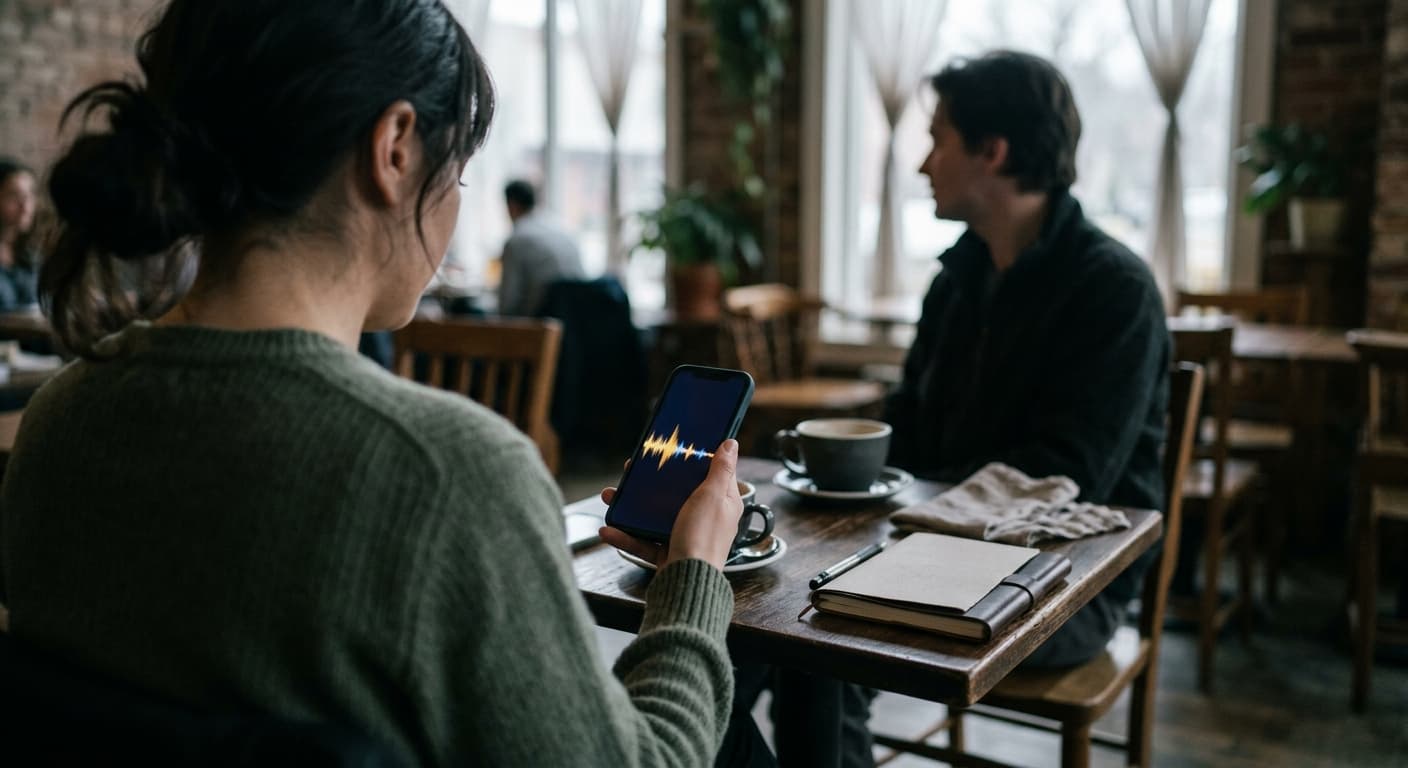
Oregon follows one-party consent for telephone calls under ORS 165.540(1)(a), meaning any participant may record a phone call without notifying the other party. This rule covers landline, cell, VoIP, and video calls. Oregon applies a stricter all-party notification standard only to in-person conversations, not to telephone communications.
Oregon allows you to record your own phone calls without telling the other person. Under ORS 165.540(1)(a), the state follows a one-party consent framework for telephone and electronic communications. As long as you are a participant in the call, your own consent satisfies the legal requirement.
This rule applies specifically to telephone and electronic communications. Oregon treats in-person conversations under a completely different standard, requiring all participants to be specifically informed before recording. Understanding this split consent framework is essential to staying on the right side of the law.
How Oregon's Split Consent Framework Applies to Phone Calls
One-Party Consent for Telephone Calls
ORS 165.540(1)(a) prohibits obtaining or attempting to obtain the whole or any part of a telecommunication or a radio communication to which the person is not a participant, unless consent has been given by one participant. The key phrase is "not a participant." If you are a participant in the call, the statute does not restrict you at all.
This means you can:
- Record any phone call you are part of without notifying the other party
- Use any recording device or app to capture the call
- Record calls on landlines, cell phones, VoIP platforms, and video calls with audio
- Record both personal and business calls you participate in
Why Phone Calls and In-Person Conversations Have Different Rules
Oregon's legislature crafted ORS 165.540 with a deliberate distinction between electronic and oral communications. Telephone calls and electronic communications fall under subsection (1)(a), which uses the one-party consent standard. In-person oral conversations fall under subsection (1)(c), which requires that all participants be "specifically informed" of any recording.
The reasoning behind this split is rooted in privacy expectations. Oregon's legislature determined that people have a heightened expectation of privacy during face-to-face conversations compared to telephone communications. The Ninth Circuit validated this reasoning in its January 2025 en banc decision in Project Veritas v. Schmidt, which upheld the in-person notification requirement as content-neutral and narrowly tailored.
For phone calls specifically, the one-party consent standard means you do not need to worry about the stricter in-person rules.
Types of Phone Calls Covered Under Oregon Law
Personal Cell Phone and Landline Calls
You can record any personal phone call you participate in, whether placed from a cell phone, landline, or internet-connected device. The statute covers all "telecommunications," which includes traditional telephone networks and modern cellular connections.
VoIP and Video Calls
Calls placed through Voice over Internet Protocol services like Skype and FaceTime, where you are simply talking with one other person, fall under the electronic communications provisions of ORS 165.540(1)(a). The one-party consent rule applies to these calls.
An ordinary video conferencing call through a platform like Zoom, Microsoft Teams, or Google Meet, however, is treated as a conversation under ORS 165.540(1)(c) by default, so recording it secretly risks a Class A misdemeanor even using the platform's built-in recording feature. A narrow exception under ORS 165.540(6)(b) allows recording a video conferencing call without notifying every participant only when the person recording intends to capture alleged unlawful activity and is a law enforcement officer or acting in coordination with one, is acting in coordination with an attorney or a regulatory entity, or reasonably believes the recording may be used as evidence in a judicial or administrative proceeding.
Conference Calls
When multiple people are on a conference call, the one-party consent rule still applies. Your participation in the call gives you legal authority to record the entire conversation. You do not need consent from each participant on the line.
Text-Based Communications
While ORS 165.540 focuses on audio interception, the statute also covers "electronic communications" more broadly. Text messages, emails, and other written electronic communications are generally not subject to the same interception rules because they do not involve real-time audio capture. However, intercepting someone else's electronic messages without authorization can violate federal law under 18 U.S.C. 2511.
Recording Phone Calls Across State Lines

The Interstate Recording Problem
Each U.S. state sets its own recording consent rules. When you place a call from Oregon to someone in another state, a conflict of laws question arises. Courts and legal authorities generally apply the stricter state's law to interstate calls.
Oregon's one-party consent for phone calls is the majority rule in the United States. However, several states require all parties to consent before a phone call can be recorded.
States With Stricter Phone Recording Laws
If you call someone in any of the following states, you should inform them before recording:
| State | Key Statute |
|---|---|
| California | Penal Code 632 |
| Connecticut | Conn. Gen. Stat. 52-570d |
| Florida | Fla. Stat. 934.03 |
| Illinois | 720 ILCS 5/14-2 |
| Maryland | Md. Code, Cts. & Jud. Proc. 10-402 |
| Massachusetts | Mass. Gen. Laws ch. 272, 99 |
| Montana | Mont. Code Ann. 45-8-213 |
| New Hampshire | N.H. Rev. Stat. Ann. 570-A:2 |
| Pennsylvania | 18 Pa.C.S. 5703 |
| Washington | RCW 9.73.030 |
Washington is particularly relevant for Oregon residents because of geographic proximity. Washington requires consent from all parties to record any private conversation, whether by phone or in person. If you call a Washington number from Oregon, you should follow Washington's stricter standard.
Best Practice for Interstate Calls
A simple statement at the beginning of the call provides protection: "I am recording this call for my records." If the other person stays on the line after hearing this, courts generally treat that as implied consent.
Federal Wiretapping Law
Federal law under 18 U.S.C. 2511 follows the same one-party consent standard as Oregon for phone calls. Recordings made in compliance with Oregon's one-party consent rule also satisfy federal requirements.
One previously relevant federal rule -- 47 CFR section 64.501, which required telephone companies to provide beep tones or verbal announcements before recording calls -- was removed by the FCC effective November 20, 2017. That rule no longer applies, and the FCC has not replaced it with a new interstate call-recording disclosure rule. FCC Order 24-24 (2024) addresses a different subject, consumers revoking consent to robocalls and robotexts under the TCPA, and does not govern call-recording notice. Private call recording by individuals is governed by state law under the one-party consent framework.
Business Phone Call Recording in Oregon

Employer Rights
Oregon businesses can record phone calls for legitimate business purposes under the one-party consent framework. Common reasons include:
- Quality assurance and customer service training
- Compliance documentation for regulated industries
- Maintaining records of verbal agreements
- Monitoring employee performance on customer calls
If the business or its employee is a party to the call, the one-party consent requirement is satisfied. Employers do not need to notify callers under Oregon phone recording law, though many choose to do so as a best practice.
Employee Rights
Employees in Oregon can record their own work-related phone calls under the one-party consent rule. This includes calls with supervisors, HR representatives, clients, and coworkers. Because these are telephone communications, the stricter in-person notification rule does not apply.
However, employer policies may restrict or prohibit call recording. Violating an internal company policy can result in disciplinary action or termination, even though the recording itself is legal under state law. The National Labor Relations Act offers some protection when employees record calls related to protected concerted activity, such as documenting workplace safety violations or wage disputes.
Best Practices for Business Recording
- Play an automated disclosure at the start of customer service calls
- Train employees on the difference between phone recording (one-party consent) and in-person recording (all-party notification)
- Establish written recording policies and distribute them to all staff
- Store recordings securely and comply with data retention requirements
- When calling customers in other states, default to informing the other party
Using Recorded Phone Calls as Evidence in Oregon
Admissibility Rules
Phone call recordings made in compliance with Oregon's one-party consent law are generally admissible as evidence in Oregon courts. To introduce a recording, you need to establish:
- Authentication: The recording is genuine and has not been altered
- Identification: A witness can identify the voices on the recording
- Relevance: The recording relates to the issues in the case
- Chain of custody: The recording has been properly preserved since it was made
Inadmissible Recordings
Under ORS 41.910, recordings obtained in violation of the law are inadmissible in Oregon courts. If you record a phone call without being a participant and without consent from any party, that recording cannot be used as evidence even if it contains relevant information.
Common Uses in Court
Legally recorded phone calls are frequently used as evidence in:
- Family law cases: Custody disputes, divorce proceedings, and harassment claims
- Contract disputes: Proving the terms of verbal agreements
- Employment cases: Documenting discrimination, retaliation, or hostile work environment claims
- Personal injury cases: Recording statements from insurance adjusters or opposing parties
- Criminal cases: Providing evidence of threats, fraud, or other criminal conduct
Tips for Preserving Recording Evidence
- Keep the original recording file unedited
- Record the date, time, duration, and participants immediately after each call
- Store the original in a secure location with at least one backup copy
- Do not share the recording before presenting it in court
- Consult with an attorney about proper evidence introduction procedures
Penalties for Illegal Phone Call Recording in Oregon
Criminal Penalties
Violating ORS 165.540(1)(a) by recording a phone call you are not a party to without consent is a Class A misdemeanor in Oregon. Under ORS 161.615 and ORS 161.635:
| Penalty | Maximum |
|---|---|
| Jail time | Up to 364 days |
| Fine | Up to $6,250 |
| Probation | Up to 5 years |
Civil Liability
Under ORS 133.739, a person whose phone communications are willfully intercepted can bring a civil lawsuit. Available remedies include:
- Actual damages, but not less than $100 per day of violation or $1,000, whichever is greater
- Punitive damages at the court's discretion
- Reasonable attorney fees for the prevailing party
A good faith reliance on a court order or legislative authorization is a complete defense to civil claims.
The Felony Exception Does Not Apply to Phone Calls
Oregon's narrow felony exception under ORS 165.540(5)(a) permits recording an in-person conversation without notification during a felony that endangers human life. This exception was designed for in-person situations and does not expand your rights regarding phone call recording. The one-party consent rule for phone calls already permits recording calls you participate in, so the felony exception is rarely relevant in the phone call context.
AI Transcription and Call Recording Tools
AI-powered transcription services like Otter.ai, Fireflies.ai, and platform-native transcription in Zoom and Microsoft Teams have become standard tools for capturing phone conversations. In Oregon, using these tools follows the same one-party consent rules as any other phone recording method.
If you are a party to the call, you can activate AI recording and transcription without notifying the other participants. Some AI tools join calls as a separate "bot" participant, which may alert others that recording is active. Review your tool's settings to understand how it appears to other call participants.
For video conferencing platforms specifically, Oregon's ORS 165.540(6)(b) exemption is narrow: it excuses skipping notification only when the person recording intends to capture alleged unlawful activity and is a law enforcement officer or acting in coordination with one, is acting in coordination with an attorney or a regulatory entity, or reasonably believes the recording may be used as evidence in a judicial or administrative proceeding. For an ordinary AI-assisted video call, that means you still need to notify every participant before turning on the platform's built-in recording feature.
Oregon Recording Laws by Topic
Phone Call Recording | Audio Recording | Video Recording | Workplace Recording | Recording Police | Security Cameras | Recording in Public | Landlord-Tenant | Dashcam Laws | Schools | Medical Recording | Voyeurism & Hidden Cameras
More Oregon Recording Topics
More Oregon Laws
Frequently Asked Questions
Can I record a phone call in Oregon without telling the other person?
Yes. Oregon follows one-party consent for telephone calls under ORS 165.540(1)(a). As long as you are a participant in the call, you can record it without informing the other person. This rule applies to landline calls, cell phone calls, VoIP calls, and video calls with audio.
Does Oregon's all-party notification rule apply to phone calls?
No. Oregon uses a split consent framework. The all-party notification requirement under ORS 165.540(1)(c) only applies to in-person oral conversations. Telephone and electronic communications follow the one-party consent standard under ORS 165.540(1)(a).
Can I record a phone call from Oregon to Washington state?
You should inform the Washington participant before recording. Washington requires consent from all parties under RCW 9.73.030, and the stricter law generally applies in interstate calls. A simple statement that you are recording provides protection.
Can my employer record my work phone calls in Oregon?
Yes. Under Oregon's one-party consent rule for telephone calls, your employer can record business calls as long as at least one party consents. The employer or the employee on the call satisfies this requirement. Internal company policies may also govern when and how recordings are made.
What is the penalty for illegally recording a phone call in Oregon?
Illegally recording a phone call in Oregon is a Class A misdemeanor carrying up to 364 days in jail and a fine of up to $6,250. Victims can also file civil lawsuits under ORS 133.739 seeking actual damages (minimum $100 per day or $1,000), punitive damages, and attorney fees.
Updates
Independently fact-checked against the cited primary sources; governing law re-checked for recent changes
Corrected two restatements of the video-conferencing exception: ORS 165.540(6)(b) is a narrow carve-out for capturing alleged unlawful activity, not a general rule making Zoom/Teams recording 'legally straightforward'; ordinary video conferencing calls default to all-party notification under (1)(c).
Governing law re-checked for recent changes
Corrected a fabricated federal citation: FCC Order 24-24 (2024) governs TCPA robocall/robotext consent revocation, not call-recording disclosure, so it does not fill the gap left by the 2017 repeal of 47 CFR 64.501; there is currently no FCC-specific interstate call-recording disclosure rule.
Governing law re-checked for recent changes
Reviewed and approved by an editor
The Law Behind This Article
This article rests on the statutory provisions below, held in our own legal record and retrieved from the official source. Tap a section to read the operative text.
Oregon Revised Statutes, Chapter 165: Offenses Involving Fraud or Deception
§ 165.540Obtaining contents of communicationsIn forcecited in 19 of our articles
(1) Except as otherwise provided in ORS 133.724 or 133.726 or subsections (2) to (8) of this section, a person may not: (a) Obtain or attempt to obtain the whole or any part of a telecommunication or a radio communication to which the person is not a participant, by means of any device, contrivance, machine or apparatus, whether electrical, mechanical, manual or otherwise, unless consent is given by at least one participant. (b) Tamper with the wires, connections, boxes, fuses, circuits, lines or any other equipment or facilities of a telecommunication or radio communication company over which messages are transmitted, with the intent to obtain unlawfully the contents of a telecommunication or radio communication to which the person is not a participant. (c) Obtain or attempt to obtain the whole or any part of a conversation by means of any device, contrivance, machine or apparatus, whether electrical, mechanical, manual or otherwise, if not all participants in the conversation are specifically informed that their conversation is being obtained.
Official text (excerpt) · last checked 2026-08-31 · Read the full text in our law library · Verify at oregonlegislature.gov
Cited in 76 court opinions in our collectionLatest citing opinion in our collection: 2026
In the courts (editorial summary, independently checked):State v. Fleetwood (2000) applied ORS 165.540 to body wire evidence, holding that words spoken into a telephone are a telecommunication under subsection (1)(a) and that the (5)(a)(B) exception fails unless the officer or the officer's agent shares reciprocally in the conversation, so the recordings were inadmissible.
Opinions citing this section in our collection:
- State v. Klein (Oregon Supreme Court 2012, 352 Or. 302)“…eing 3 recorded. Conversations recorded in violation of ORS 165.540 are not admissible in 4 court excep…”
- North Pacific Lumber Co. v. Oliver (Oregon Supreme Court 1979, 286 Or. 639)✓A lumber wholesaler secretly monitored traders' calls; on de novo review the court said the practice may have violated ORS 165.540 but refused to rest unclean hands on it, since the ex-employee's calls were never monitored. The employer's noncompete suit failed on other grounds.
- State v. Fleetwood (Oregon Supreme Court 2000, 331 Or. 511)✓A detective wired an informant and recorded the suspect's side of a phone call and his talks with his mother and a juvenile seller; the court held those interceptions violated ORS 165.540(1)(a) and (1)(c) because the informant was not a participant, and upheld suppression.
Identified automatically from the court opinions citing this section — not a ranking of which case controls.
Also relied on in: Oregon Recording Laws (2026): Hybrid One-Party and All-Party Rules, Oregon Voyeurism and Hidden Camera Laws: Offenses, Penalties, and Protections, Oregon Audio Recording Laws: Split Consent Rules for Conversations and Calls
Florida Statutes
§ 934.03Interception and disclosure of wire, oral, or electronic communications prohibited.In forcecited in 51 of our articles
(1) Except as otherwise specifically provided in this chapter, any person who:(a) Intentionally intercepts, endeavors to intercept, or procures any other person to intercept or endeavor to intercept any wire, oral, or electronic communication; (b) Intentionally uses, endeavors to use, or procures any other person to use or endeavor to use any electronic, mechanical, or other device to intercept any oral communication when:1. Such device is affixed to, or otherwise transmits a signal through, a wire, cable, or other like connection used in wire communication; or 2.
Official text (excerpt) · last checked 2026-08-31 · Read the full text in our law library · Verify at leg.state.fl.us
Cited in 74 court opinions in our collectionLatest citing opinion in our collection: 2026
In the courts (editorial summary, independently checked):State v. Walls (1978) held that recording an in-home oral communication without the consent of all parties violated section 934.03 and required suppression, and State v. Inciarrano (1985) held the statute protects only communications uttered with a reasonable expectation of privacy.
Opinions citing this section in our collection:
- State v. Walls (Supreme Court of Florida 1978, 356 So. 2d 294)✓An extortion victim secretly recorded threats made to him in his own home; the court held that was a protected oral communication, that recording it without every party's consent violated Section 934.03, and that Section 934.06 barred using the tape as evidence.
- SHARRON TASHA FORD v. CITY OF BOYNTON BEACH (District Court of Appeal of Florida 2021)“…ng oral communications in violation of the wiretap statute, section 934.03, Florida Statutes (2009), and for obstructing without vio…”
- State v. Calhoun (Circuit Court for the Judicial Circuits of Florida 1984, 7 Fla. Supp. 2d 3)“…hall not be violated” . . . (emphasis mine) Furthermore, section 934.03, Florida Statutes, makes it unlawful for *6 any person (…”
Identified automatically from the court opinions citing this section — not a ranking of which case controls.
Also relied on in: Can an Employer Record Conversations Without Consent? (2026), Federal Wiretap Act and ECPA: The Complete Guide (2026), Is It Illegal to Video Record Someone Without Their Consent? (2026)
Oregon Revised Statutes, Chapter 133: Arrest and Related Procedures; Search and Seizure; Extradition
§ 133.726Interception of oral communication without order; order for interception of oral communication; application; grounds for issuance; contents of order; penaltiesIn force
(1) Notwithstanding ORS 133.724, under the circumstances described in this section, a law enforcement officer is authorized to intercept an oral communication to which the officer or a person under the direct supervision of the officer is a party, without obtaining an order for the interception of a wire, electronic or oral communication under ORS 133.724. (2) For purposes of this section and ORS 133.736, a person is a party to an oral communication if the oral communication is made in the person’s immediate presence and is audible to the person regardless of whether the communication is specifically directed to the person. (3) An ex parte order for intercepting an oral communication in any county of this state under this section may be issued by any judge as defined in ORS 133.525 upon written application made upon oath or affirmation of the district attorney or a deputy district attorney authorized by the district attorney for the county in which the order is sought or upon the oath or affirmation of any peace officer as defined in ORS 133.005.
Official text (excerpt) · last checked 2026-07-29 · Read the full text in our law library · Verify at oregonlegislature.gov
Cited in 15 court opinions in our collectionLatest citing opinion in our collection: 2025
Opinions citing this section in our collection:
- State v. Klein (Oregon Supreme Court 2012, 352 Or. 302)“…that Hutchens supplied, the police obtained an order under ORS 133.726, the 15 body-wire statute, to interc…”
- State v. Fleetwood (Oregon Supreme Court 2000, 331 Or. 511)“…6 *519 The second pertinent statute is ORS 133.726, which provides, in part: “(1) A…”
- State v. Lissy (Oregon Supreme Court 1987, 304 Or. 455)“…evidence through electronic surveillance orders pursuant to ORS 133.726. Any evidence obtained by this route sh…”
Identified automatically from the court opinions citing this section — not a ranking of which case controls.
Oregon Revised Statutes, Chapter 161: General Provisions
§ 161.615Maximum terms of imprisonment for misdemeanorsIn forcecited in 5 of our articles
Sentences for misdemeanors shall be for a definite term. The court shall fix the term of imprisonment within the following maximum limitations: (1) For a Class A misdemeanor, 364 days. (2) For a Class B misdemeanor, 6 months. (3) For a Class C misdemeanor, 30 days. (4) For an unclassified misdemeanor, as provided in the statute defining the crime.
Official text (excerpt) · last checked 2026-07-29 · Read the full text in our law library · Verify at oregonlegislature.gov
Cited in 77 court opinions in our collectionLatest citing opinion in our collection: 2025
Opinions citing this section in our collection:
- City of Portland v. Dollarhide (Oregon Supreme Court 1986, 300 Or. 490)“…aximum sentence of one year imprisonment and a $2,500 fine (ORS 161.615, 161.635). The City argues that its man…”
- MacCrone v. Edwards Center, Inc. (Court of Appeals of Oregon 1999, 160 Or. App. 91)“…tly punishable by imprisonment up to a maximum of one year, ORS 161.615(1), and a maximum fine of $5,000, ORS 1…”
- State v. Wright (Court of Appeals of Oregon 1983, 63 Or. App. 482)“…1981, ch390, § 2), and a maximum prison term of one year. ORS 161.615(1). The only reason that the defendant’…”
Identified automatically from the court opinions citing this section — not a ranking of which case controls.
Also relied on in: Oregon AI Meeting Recording Laws: Split Consent and Video Conferencing Exception (2026), Oregon Surveillance Camera Laws (2026 Guide)
Revised Code of Washington
§ 9.73.030Intercepting, recording, or divulging private communication—Consent required—Exceptions.In forcecited in 41 of our articles
(1) Except as otherwise provided in this chapter, it shall be unlawful for any individual, partnership, corporation, association, or the state of Washington, its agencies, and political subdivisions to intercept, or record any: (a) Private communication transmitted by telephone, telegraph, radio, or other device between two or more individuals between points within or without the state by any device electronic or otherwise designed to record and/or transmit said communication regardless how such device is powered or actuated, without first obtaining the consent of all the participants in the communication; (b) Private conversation, by any device electronic or otherwise designed to record or transmit such conversation regardless how the device is powered or actuated without first obtaining the consent of all the persons engaged in the conversation.
Official text (excerpt) · last checked 2026-08-31 · Read the full text in our law library · Verify at app.leg.wa.gov
Cited in 221 court opinions in our collectionLatest citing opinion in our collection: 2026
In the courts (editorial summary, independently checked):Washington courts have policed what counts as a private communication under Sec. 9.73.030: State v. Gunwall (1986) concluded a pen register intercept comes within a private communication transmitted by telephone, while State v. Riley (1993) held a line trap that reveals only the calling number does not record one.
Opinions citing this section in our collection:
- State v. Salinas (Washington Supreme Court 1992, 119 Wash. 2d 192)“…alties for divulging a telegram or opening a sealed letter. RCW 9.73.030-.070, making it unlawful to intercept,…”
- State v. Gunwall (Washington Supreme Court 1986, 106 Wash. 2d 54)✓Everett police pulled a suspected cocaine dealer's toll records and put a pen register on her line without valid legal process; the court held a pen register intercept is a private communication transmitted by telephone, installable only under the eavesdropping statutes.
- State v. Brown (Washington Supreme Court 1997, 132 Wash. 2d 529)✓Palm Springs officers secretly recorded a Washington murder suspect's statements after his arrest; the court treated RCW 9.73.090, not 9.73.030, as the provision reaching recordings of arrested persons, and held the Privacy Act did not require suppressing that recording.
Identified automatically from the court opinions citing this section — not a ranking of which case controls.
Also relied on in: US Recording Laws by State (2026): All 50 States Explained, Washington Recording Laws (2026): All-Party Consent Rules, Is Plaud HIPAA Compliant? Kind Of. Here's What to Know (2026)
United States Code Title 18
§ 2511Interception and disclosure of wire, oral, or electronic communications prohibitedIn forcecited in 422 of our articles
Except as otherwise specifically provided in this chapter any person who— intentionally intercepts, endeavors to intercept, or procures any other person to intercept or endeavor to intercept, any wire, oral, or electronic communication; intentionally uses, endeavors to use, or procures any other person to use or endeavor to use any electronic, mechanical, or other device to intercept any oral communication when— such device is affixed to, or otherwise transmits a signal through, a wire, cable, or other like connection used in wire communication; or such device transmits communications by radio, or interferes with the transmission of such communication; or such person knows, or has reason to know, that such device or any component thereof has been sent through the mail or transported in interstate or foreign commerce; or such use or endeavor to use (A) takes place on the premises of any business or other commercial establishment the operations of which affect interstate or foreign commerce; or (B) obtains or is for the purpose of obtaining information relating to the operations of any business or other commercial establishment the operations of which affect interstate or foreign…
Official text (excerpt) · last checked 2026-08-28 · Read the full text in our law library · Verify at uscode.house.gov
Cited in 2,045 court opinions in our collectionLatest citing opinion in our collection: 2026
In the courts (editorial summary, independently checked):Griggs-Ryan v. Smith (1990) applied the Section 2511(2)(d) prior-consent exception, treating a tenant repeatedly told that all incoming calls were taped as having impliedly consented. United States v. United States District Court (1972) read the then-current Section 2511(3) as conferring no presidential surveillance power.
Opinions citing this section in our collection:
- Mitchell v. Forsyth (Supreme Court of the United States 1985, 472 U.S. 511)✓The Attorney General authorized a warrantless 1970 national security wiretap that caught the plaintiff's calls; the Court held the since-repealed Section 2511(3) disclaimer left the tap lawful under Title III, and that Mitchell had qualified immunity.
- United States v. United States District Court for the Eastern District of Michigan (Supreme Court of the United States 1972, 407 U.S. 297)✓The Attorney General approved warrantless wiretaps on members of a domestic group accused of bombing a CIA office; the Court read Section 2511(3) as a congressional disclaimer conferring no surveillance power, then held the Fourth Amendment required prior judicial approval.
- Forsyth v. Barr (Court of Appeals for the Fifth Circuit 1994, 19 F.3d 1527)✓Dallas police used, in an internal affairs probe of an officer, calls private parties allegedly intercepted illegally; assuming that was unlawful, the Fifth Circuit held Section 2517(1) and (2) allowed the disclosure and use, defeating the Section 2511(1)(c) and (d) claims.
Identified automatically from the court opinions citing this section — not a ranking of which case controls.
Also relied on in: Connecticut Recording Laws (2026): Hybrid Consent Rules Explained, Hawaii Recording Laws (2026): Hybrid Consent State Rules, Louisiana Recording Laws (2026): One-Party Consent Rules
Search our full record of US law — 2.1 million sections, every state + federal →
Sources and References
- ORS 165.540 - Obtaining Contents of Communications(oregonlegislature.gov).gov
- ORS 133.739 - Action for Violation of ORS 133.724 or 133.726(oregonlegislature.gov).gov
- ORS 161.615 - Maximum Prison Terms for Misdemeanors(oregonlegislature.gov).gov
- ORS 41.910 - Intercepted Communications Inadmissible(oregonlegislature.gov).gov
- Project Veritas v. Schmidt - Ninth Circuit En Banc Opinion (Jan. 2025)(cdn.ca9.uscourts.gov).gov
- Federal Wiretap Act - 18 U.S.C. 2511(law.cornell.edu)
- Washington RCW 9.73.030 - Intercepting Private Communications(app.leg.wa.gov).gov
- National Labor Relations Act(nlrb.gov).gov