
Wisconsin
Wisconsin Ring Doorbell Laws: What You Need to Know in 2026
Independently fact-checked against primary sources (last audited August 17, 2026). · Reviewed by the RecordingLaw editorial team. · Law checked current as of August 17, 2026. · 10 primary sources cited on this page. How we verify our legal content
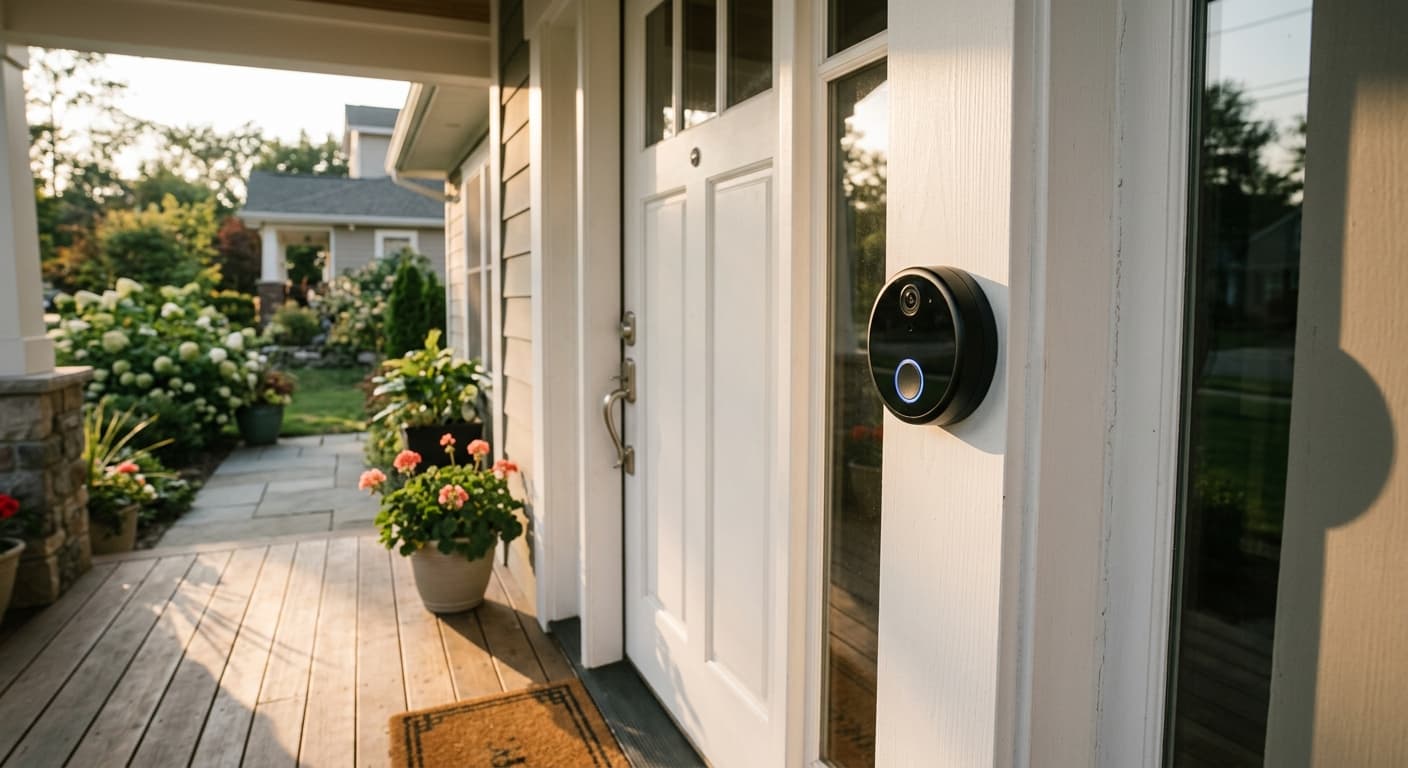
Ring doorbells have become a common sight on front porches across Wisconsin. These devices record video around the clock and capture audio through built-in microphones, raising questions about how they interact with Wisconsin's recording and privacy laws. The good news for Wisconsin homeowners is that the state follows a one-party consent rule for audio recording under Wis. Stat. 968.31, provided the recording is not made for the purpose of committing a criminal, tortious, or otherwise injurious act. But video surveillance, neighbor privacy, and HOA restrictions add layers of complexity that every Ring owner in the state should understand.
Wisconsin Audio Recording Laws and Ring Doorbells
The primary legal concern with Ring doorbells in Wisconsin involves audio recording. Every Ring doorbell model includes a microphone that captures sound alongside video. This audio capability brings Wisconsin's wiretapping statute into play.
One-Party Consent Rule
Wisconsin follows a one-party consent framework under Wis. Stat. 968.31. The statute prohibits the intentional interception of wire, electronic, or oral communications. However, Wis. Stat. 968.31(2)(c) provides an exception for private individuals not acting under color of law when the person is a party to the communication, or when one party to the communication has given prior consent to the interception.
That exception is conditional. By its own terms it does not apply if the communication is intercepted for the purpose of committing any criminal or tortious act in violation of the constitution or laws of the United States or of any state, or for the purpose of committing any other injurious act. The final clause is broader than the federal analogue at 18 U.S.C. 2511(2)(d), which stops at criminal and tortious purposes, so a Wisconsin homeowner who records with a harmful motive can lose the protection even without an underlying crime or tort.
For Ring doorbell owners, this means the audio recording is legal when the homeowner participates in the conversation and the recording is not being made for one of those prohibited purposes. When a visitor rings the doorbell and the homeowner answers through the Ring app, the homeowner is a party to that exchange. Their participation satisfies the one-party consent requirement under Wisconsin law.
When Audio Recording Raises Legal Concerns
The legal picture becomes less clear when the Ring doorbell records conversations the homeowner is not part of. If two people have a private conversation on the porch and the Ring device captures that audio, the homeowner has potentially intercepted a communication without the consent of any participant.
Wisconsin's statute defines "oral communication" as any oral communication uttered by a person exhibiting an expectation that the communication is not subject to interception, under circumstances justifying that expectation (Wis. Stat. 968.27(12)). A conversation on an open front porch, visible from the street, may not carry a reasonable expectation of privacy. No Wisconsin court has directly addressed this specific scenario with Ring doorbells, as of April 2026.
Practical Audio Compliance
Ring devices allow homeowners to disable audio recording through the app settings. Wisconsin residents who want to eliminate any legal gray area around eavesdropping can turn off the microphone. This preserves the video surveillance functionality while removing the wiretapping concern entirely.
Video Recording Laws in Wisconsin
Wisconsin takes a more permissive approach to video surveillance than to audio recording. The state's primary video surveillance law is Wis. Stat. 942.08, which addresses invasion of privacy through surveillance devices.
What the Statute Covers
Under Wis. Stat. 942.08, it is illegal to knowingly install a surveillance device in any private place, or use a surveillance device to observe in a private place, with the intent to observe any nude or partially nude person without that person's consent. The statute defines "private place" as a location where a person may reasonably expect to be safe from being observed without knowledge and consent.
A front porch, driveway, walkway, or the area in front of a home's entrance is not a "private place" under this definition. People approaching a front door in view of the street and neighboring properties do not have a reasonable expectation that they are unobserved. Ring doorbell cameras pointed at these areas operate within the boundaries of Wisconsin law.
Limits on Video Recording
While recording your own front door area is legal, pointing a Ring camera to capture areas where someone has a reasonable expectation of privacy creates legal risk. Recording through a neighbor's windows, into their bathroom, or into fenced-off private areas could violate Wis. Stat. 942.08. The statute classifies such violations as a Class A misdemeanor when committed with voyeuristic intent, and Wis. Stat. 942.08(4) raises the offense to a Class I felony if a victim had not turned 18 at the time of the violation.
Positioning the Ring doorbell to capture your own entryway, porch, and driveway while avoiding direct views into neighbors' private spaces is both a legal safeguard and a best practice for Wisconsin residents.
HOA Rules and Ring Doorbells in Wisconsin
Homeowners associations and condominium associations in Wisconsin can set rules that affect Ring doorbell installation. Wisconsin governs condominiums under Wis. Stat. Chapter 703 and homeowners associations under Wis. Stat. 710.18.
What HOAs and Condo Associations Can Restrict
An association's declaration, bylaws, or rules and regulations may include provisions about exterior modifications, aesthetics, or electronic devices attached to the building exterior. If a Ring doorbell qualifies as an exterior modification under the governing documents, the homeowner or unit owner may need board approval before installation.
Condominium associations in Wisconsin have particular authority over common elements and limited common elements under Wis. Stat. Chapter 703. A front door or the area surrounding it may be classified as a limited common element in a condo, giving the association control over what can be attached to it.

How to Navigate Association Requirements
Before purchasing a Ring doorbell, Wisconsin residents living in an HOA or condo community should review their declaration, bylaws, and any rules regarding exterior modifications or security devices. Requesting written approval from the board before installation creates documentation that protects the homeowner if disputes arise.
Some Wisconsin associations have adopted specific security camera policies that permit doorbell cameras but impose restrictions on camera angle, size, or recording capabilities. Checking with the property management office provides the most current information on what is permitted.
Landlord and Tenant Rights in Wisconsin
Renters in Wisconsin face additional considerations when installing Ring doorbells. Wisconsin's landlord-tenant relationship is governed by Wis. Stat. Chapter 704 and the Wisconsin Administrative Code ATCP 134 (Residential Rental Practices).
Tenant Installation Rights
Wisconsin tenants generally need landlord permission before making alterations to the rental property. The Wisconsin Department of Agriculture, Trade and Consumer Protection (DATCP) Landlord-Tenant Guide notes that tenants should not make alterations or improvements without the landlord's written consent. A Ring doorbell that requires drilling into a door frame or exterior wall typically qualifies as an alteration.
Battery-powered Ring models that use adhesive mounting may present a lower barrier, but tenants should still check the lease agreement for clauses about exterior modifications, electronic devices, or security equipment. Getting written approval from the landlord before installation prevents disputes and protects the security deposit.
Landlord Obligations
Wisconsin landlords who install Ring doorbells on rental properties must comply with the same recording laws that apply to all residents. Recording a tenant's conversations without the consent of at least one participant would violate Wisconsin's wiretapping statute (Wis. Stat. 968.31). Separately, placing a recording device inside the rental unit to observe a nude or partially nude tenant without consent would violate Wisconsin's invasion of privacy statute (Wis. Stat. 942.08), which targets voyeuristic surveillance rather than ordinary conversations.
Landlords who provide Ring doorbells as part of the property should disclose the device and its recording capabilities to tenants. Including this disclosure in the lease agreement helps both parties avoid legal disputes.
Law Enforcement Access to Ring Footage in Wisconsin
Law enforcement agencies in Wisconsin can obtain Ring doorbell footage through several legal pathways. Understanding these options helps Ring owners know their rights when police make a request.
Voluntary and Compelled Disclosure
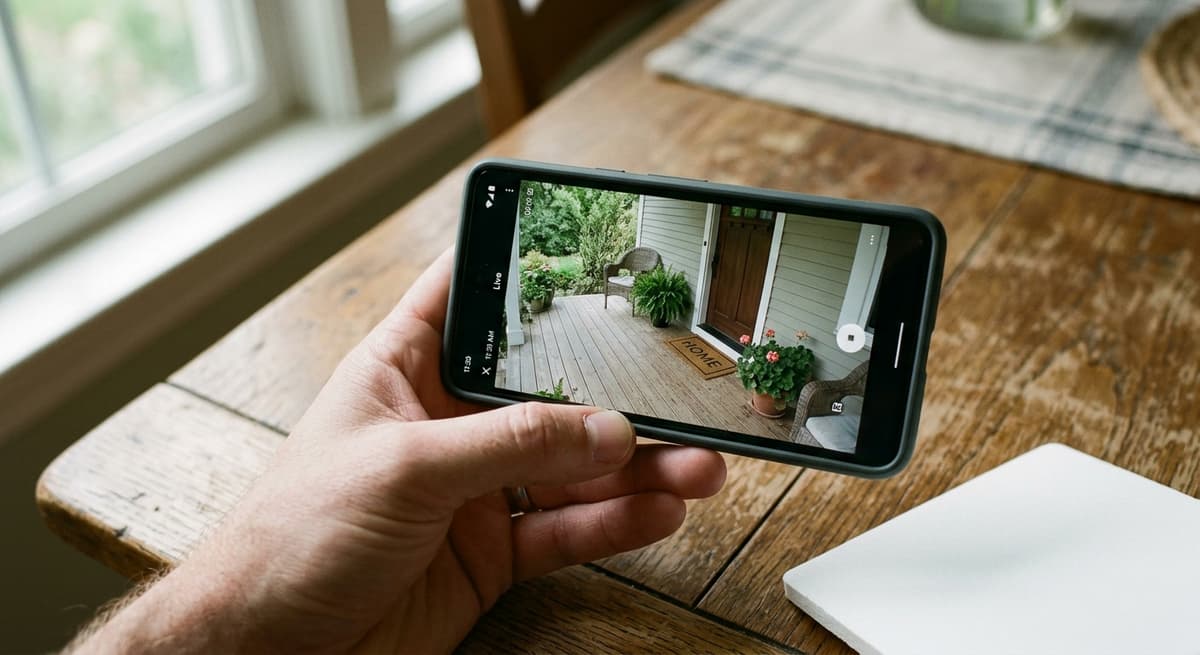
Wisconsin police can ask a homeowner to voluntarily share Ring footage. The homeowner has the right to agree or decline this request. If the homeowner declines, law enforcement can pursue a search warrant or subpoena to obtain the footage.
Under the Fourth Amendment to the U.S. Constitution, a search warrant requires probable cause and approval from a judge or magistrate. Wisconsin's own statutory framework for electronic surveillance under Wis. Stat. 968.28 through 968.30 establishes procedures for law enforcement to intercept communications with proper judicial authorization.
Ring's Disclosure Policies
As of April 2026, Ring (owned by Amazon) requires a valid legal order before sharing customer footage with law enforcement. Ring previously allowed police departments to request footage directly from users through the Neighbors app, but the company ended that practice.
Ring maintains an exception for emergency situations. When law enforcement certifies that there is imminent danger of death or serious physical injury, Ring may provide footage without a warrant or the user's consent. Ring publishes transparency reports detailing the number of legal requests received each reporting period.
FTC Enforcement and Ring Privacy
The Federal Trade Commission took action against Ring LLC in May 2023 for failing to restrict employee and contractor access to customer videos and failing to implement adequate security protections. Ring agreed to pay $5.8 million in consumer refunds and was required to delete data derived from videos it had unlawfully reviewed. The FTC distributed payments to over 117,000 affected customers in 2024. Wisconsin Ring users should enable two-factor authentication and keep firmware updated to protect against unauthorized access.
Penalties for Illegal Recording in Wisconsin
Wisconsin imposes both criminal and civil penalties for recording violations. The severity depends on the specific offense.
Illegal Interception (Wis. Stat. 968.31)
Intentionally intercepting wire, electronic, or oral communications without proper consent is a Class H felony in Wisconsin. Penalties include up to 6 years in prison and a fine of up to $10,000. Equipment used in the violation may be seized as contraband and forfeited to the state.
Civil Liability for Interception
Beyond criminal penalties, Wis. Stat. 968.31(2m) gives any person whose communication is intercepted, disclosed, or used in violation of Wis. Stat. 968.28 to 968.37 a civil cause of action. The victim can recover actual damages, but not less than liquidated damages computed at $100 per day of violation or $1,000, whichever is higher. The same subsection also entitles the victim to punitive damages and to a reasonable attorney's fee and other litigation costs reasonably incurred.
Invasion of Privacy (Wis. Stat. 942.08)
Using a surveillance device to observe someone in a private place without consent and with voyeuristic intent is a Class A misdemeanor in Wisconsin. This carries penalties of up to 9 months in jail and a fine of up to $10,000. Under Wis. Stat. 942.08(4), the same conduct is a Class I felony if a victim had not attained the age of 18 at the time of the violation.
Recording Devices in Private Places
Installing a recording device in a private place without consent can also trigger liability under Wisconsin's broader privacy statutes. The Wisconsin Legislative Council's 2021 information memo on civil and criminal penalties for invasions of privacy outlines the full range of potential consequences, including both statutory damages and injunctive relief.
How to Use a Ring Doorbell Legally in Wisconsin
Following these guidelines helps Wisconsin residents stay within the law when using Ring doorbell cameras.
Position the Camera Appropriately
Point the Ring doorbell toward your own property: the front door, porch, walkway, and driveway. Avoid angling the camera to capture areas where neighbors have a reasonable expectation of privacy, such as through windows or into enclosed backyards.
Consider Disabling Audio Recording
Turning off the microphone through the Ring app eliminates the primary legal risk in Wisconsin. Video-only recording avoids triggering the wiretapping statute entirely and still provides meaningful security coverage.
Record for Security, Not to Target Anyone
Because the one-party consent exception in Wis. Stat. 968.31(2)(c) drops away when a recording is made for a criminal, tortious, or other injurious purpose, motive matters in Wisconsin. Use the device for ordinary home security rather than to gather material against a neighbor, an ex-partner, or anyone else, and the exception stays available.
Post a Notice of Recording
While Wisconsin does not require signage for residential security cameras, posting a visible notice near the Ring doorbell that audio and video recording is in progress can strengthen a legal defense. Visitors who see the notice and continue approaching have arguably consented to being recorded.
Review HOA, Condo, and Lease Terms
Check the governing documents before installing a Ring doorbell in a Wisconsin HOA or condominium community. Tenants should get written landlord approval before installation. Keep copies of all approvals and correspondence.
Understand Law Enforcement Requests
Wisconsin homeowners are not legally required to share Ring footage with police upon a verbal request. If police ask for footage, the homeowner can decline and request that they obtain a warrant. Cooperating is a personal choice, not a legal obligation, unless law enforcement presents a valid court order.
Enable Security Features
The FTC's 2023 action against Ring highlighted the importance of account security. Enable two-factor authentication, use a strong unique password, and keep the Ring app and device firmware updated. These steps help prevent unauthorized access to your footage.
More Wisconsin Laws
Wisconsin has additional laws that affect residents' daily lives. Here are related legal topics:
- Wisconsin Recording Laws cover all aspects of audio and video recording consent in the state.
- Wisconsin Hit and Run Laws explain the legal requirements after a traffic accident.
- Wisconsin Lemon Law protects consumers who purchase defective vehicles.
This article provides general legal information about Ring doorbell laws in Wisconsin, not legal advice. Laws and their interpretations can change. Consult an attorney licensed in Wisconsin for advice specific to your situation.
Frequently Asked Questions
Is it legal to have a Ring doorbell in Wisconsin?
Yes, using a Ring doorbell is legal in Wisconsin. Video recording from your own property is broadly permitted under state law. Audio recording is legal when you participate in the conversation being recorded, satisfying Wisconsin's one-party consent rule under Wis. Stat. 968.31(2)(c). That exception has a limit: it does not apply if the recording is made for the purpose of committing any criminal or tortious act, or any other injurious act. To avoid potential issues with passively recording third-party conversations, consider disabling the audio feature in the Ring app settings.
Can my neighbor's Ring doorbell record my property in Wisconsin?
A neighbor's Ring doorbell that captures video of areas visible from public spaces, such as a shared sidewalk or street, is generally legal in Wisconsin. Wisconsin's invasion of privacy law, Wis. Stat. 942.08, reaches a camera only when a nudity or sexual-purpose element is present: installing or using a surveillance device in a private place with intent to observe a nude or partially nude person without consent, or looking into certain private places for the purpose of sexual arousal or gratification. A camera merely aimed at your window or fenced yard, without that element, is not a violation of 942.08.
Can Wisconsin police force me to share my Ring doorbell footage?
Wisconsin police cannot compel you to share Ring footage through a verbal request alone. You can voluntarily agree or decline. If you decline, law enforcement can obtain a valid search warrant or subpoena to compel Amazon (Ring's parent company) to produce the footage directly. In emergency situations involving imminent danger of death or serious physical injury, Ring may share footage with law enforcement without the owner's consent.
What are the penalties for illegally recording someone with a Ring doorbell in Wisconsin?
Illegal interception of communications under Wis. Stat. 968.31 is a Class H felony in Wisconsin, carrying up to 6 years in prison and a fine of up to $10,000. Under Wis. Stat. 968.31(2m), victims can also pursue actual damages, but not less than $100 per day of violation or $1,000, whichever is higher, plus punitive damages and a reasonable attorney's fee and litigation costs. Invasion of privacy through a surveillance device under Wis. Stat. 942.08 is a Class A misdemeanor, punishable by up to 9 months in jail and a $10,000 fine, and rises to a Class I felony under Wis. Stat. 942.08(4) if a victim was under 18 at the time.
Can my Wisconsin HOA or condo association ban Ring doorbells?
Wisconsin HOAs and condominium associations can restrict or regulate Ring doorbell installation through their governing documents, including declarations, bylaws, and community rules. Condominiums governed under Wis. Stat. Chapter 703 may have particular authority over limited common elements like front door areas. Review your association's governing documents and request written board approval before installation.
Updates
Corrected the citation for Wisconsin's definition of oral communication to Wis. Stat. 968.27(12), corrected the civil-remedy provision to Wis. Stat. 968.31(2m) covering ss. 968.28 to 968.37 and added the punitive damages and attorney fees it allows, added the purpose limitation on Wisconsin's one-party consent exception, and clarified that Wis. Stat. 942.08 requires a nudity or sexual-purpose element and rises to a Class I felony when a victim was under 18.
Independently fact-checked against the cited primary sources; governing law re-checked for recent changes
Governing law re-checked for recent changes
Corrected the one-party consent pincite (the private-citizen exception is 968.31(2)(c), not (2)(b), which applies only to law enforcement), and separated the landlord-tenant conversation-recording rule (governed by the wiretap statute) from the video voyeurism statute it had been incorrectly attributed to.
Governing law re-checked for recent changes
Reviewed and approved by an editor
The Law Behind This Article
This article rests on the statutory provisions below, held in our own legal record and retrieved from the official source. Tap a section to read the operative text.
Wisconsin Statutes, Chapter 968: Commencement Of Criminal Proceedings
§ 968.31Interception and disclosure of wire, electronic or oral communications prohibited.In forcecited in 22 of our articles
(1) Except as otherwise specifically provided in ss. 196.63 or 968.28 to 968.30, whoever commits any of the acts enumerated in this section is guilty of a Class H felony: (a) Intentionally intercepts, attempts to intercept or procures any other person to intercept or attempt to intercept, any wire, electronic or oral communication. (b) Intentionally uses, attempts to use or procures any other person to use or attempt to use any electronic, mechanical or other device to intercept any oral communication. (c) Discloses, or attempts to disclose, to any other person the contents of any wire, electronic or oral communication, knowing or having reason to know that the information was obtained through the interception of a wire, electronic or oral communication in violation of this section or under circumstances constituting violation of this section. (d) Uses, or attempts to use, the contents of any wire, electronic or oral communication, knowing or having reason to know that the information was obtained through the interception of a wire, electronic or oral communication in violation of this section or under circumstances constituting violation of this section.
Official text (excerpt) · last checked 2026-08-31 · Read the full text in our law library · Verify at docs.legis.wisconsin.gov
Cited in 23 court opinions in our collectionLatest citing opinion in our collection: 2026
In the courts (editorial summary, independently checked):State v. Maloney held recordings made with one party's prior consent fall under Section 968.31(2)(b) and (c), and that aiding a police sting is not an "injurious act." State v. Gilmore pointed to 968.31(2m) damages and 968.31(1)(e) penalties, reserving suppression for illegal interceptions.
Opinions citing this section in our collection:
- State v. Maloney (Wisconsin Supreme Court 2005, 281 Wis. 2d 595)✓A homicide suspect's girlfriend let police record her hotel room conversations with him in Las Vegas; the court held the videotapes lawful under 968.31(2)(b) and (c) because she was a consenting party, and that helping a lawful sting is not an injurious act.
- State v. Popenhagen (Wisconsin Supreme Court 2008, 309 Wis. 2d 601)“…Arnold, 51 Wis.2d at 442 , 187 N.W.2d 354 (citing Wis. Stat. § 968.31 (2)(b)). However, in considering all th…”
- State v. Gilmore (Wisconsin Supreme Court 1996, 201 Wis. 2d 820)✓Prosecutors filed a public complaint quoting 27 pages of lawfully wiretapped calls; the court held the unsealed filing violated the surveillance law but refused suppression, pointing to the civil action in 968.31(2m) and the criminal penalty in 968.31(1)(e) as the remedies.
Identified automatically from the court opinions citing this section — not a ranking of which case controls.
Also relied on in: One-Party Consent States: Complete 2026 Guide, Wisconsin Security Camera Laws: Home, Business, and HOA Rules (2026), Wisconsin Video Recording Laws: Surveillance, Filming, and Privacy Rules (2026)
§ 968.27Definitions.In forcecited in 4 of our articles
In ss. 968.28 to 968.375: (1) “Aggrieved person” means a person who was a party to any intercepted wire, electronic or oral communication or a person against whom the interception was directed. (2) “Aural transfer” means a transfer containing the human voice at any point from the point of origin to the point of reception. (3) “Contents,” when used with respect to any wire, electronic, or oral communication, includes any information concerning the substance, purport, or meaning of that communication. (4) “Electronic communication” means any transfer of signs, signals, writing, images, sounds, data or intelligence of any nature wholly or partially transmitted by a wire, radio, electromagnetic, photoelectronic or photooptical system. “Electronic communication” does not include any of the following: (a) The radio portion of a cordless telephone communication that is transmitted between the cordless telephone handset and the base unit. (b) Any wire or oral communication. (c) Any communication made through a tone-only paging device. (d) Any communication from a tracking device.
Official text (excerpt) · last checked 2026-07-29 · Read the full text in our law library · Verify at docs.legis.wisconsin.gov
Cited in 19 court opinions in our collectionLatest citing opinion in our collection: 2024
Opinions citing this section in our collection:
- State v. Nicolas Subdiaz-Osorio (Wisconsin Supreme Court 2014, 357 Wis. 2d 41)“…serious physical injury 11 According to Wis. Stat. § 968.27(13) (2009-10), "Pen regist…”
- State v. Gilmore (Wisconsin Supreme Court 1996, 201 Wis. 2d 820)“…the Wisconsin Electronic Surveillance Control Law (WESCL), Wis. Stat. §§ 968.27-968.37 . We hold that while WESC…”
- State v. Sveum (Court of Appeals of Wisconsin 2009, 319 Wis. 2d 498)“…See Wisconsin's Electronic Surveillance Control Law, Wis. Stat. §§ 968.27 -.33 (2007-08). 7 B…”
Identified automatically from the court opinions citing this section — not a ranking of which case controls.
Also relied on in: Wisconsin Audio Recording Laws: One-Party Consent Rules and Penalties (2026), Wisconsin Phone Call Recording Laws: Consent Rules for All Call Types (2026), Wisconsin Recording Laws (2026): One-Party Consent Rules
§ 968.28Application for court order to intercept communications.In forcecited in 2 of our articles
The attorney general together with the district attorney of any county may approve a request of an investigative or law enforcement officer to apply to the chief judge of the judicial administrative district for the county where the interception is to take place for an order authorizing or approving the interception of wire, electronic or oral communications. The chief judge may under s. 968.30 grant an order authorizing or approving the interception of wire, electronic or oral communications by investigative or law enforcement officers having responsibility for the investigation of the offense for which the application is made. The authorization shall be permitted only if the interception may provide or has provided evidence of the commission of the offense of homicide, felony murder, kidnapping, commercial gambling, bribery, extortion, dealing in controlled substances or controlled substance analogs, a computer crime that is a felony under s. 943.70, sexual exploitation of a child under s. 948.05, trafficking of a child under s. 948.051, child enticement under s. 948.07, grooming of a child for sexual activity under s.
Official text (excerpt) · last checked 2026-07-29 · Read the full text in our law library · Verify at docs.legis.wisconsin.gov
Cited in 9 court opinions in our collectionLatest citing opinion in our collection: 2024
Opinions citing this section in our collection:
- State v. Sveum (Wisconsin Supreme Court 2010, 328 Wis. 2d 369)“…ception of wire, electronic, or oral communications, see Wis. Stat. §§ 968.28-968.31 , and the installation and use o…”
- State v. House (Wisconsin Supreme Court 2007, 302 Wis. 2d 1)“…ed in authorizing a wiretap for offenses not enumerated in Wis. Stat. § 968.28 . I write separately because I read "de…”
- State Ex Rel. Two Unnamed v. Peterson (Wisconsin Supreme Court 2015, 363 Wis. 2d 1)“…der, and kidnapping to soliciting a child for prostitution, Wis. Stat. § 968.28, and such orders may not exceed 30 days…”
Identified automatically from the court opinions citing this section — not a ranking of which case controls.
Also relied on in: Wisconsin Surveillance Camera Laws (2026 Guide)
Wisconsin Statutes, Chapter 942: Crimes Against Reputation, Privacy And Civil Liberties
§ 942.08Invasion of privacy.In forcecited in 13 of our articles
(1) In this section: (a) “Nude or partially nude person” means any human being who has less than fully and opaquely covered genitals, pubic area or buttocks, any female human being who has less than a fully opaque covering over any portion of a breast below the top of the nipple, or any male human being with covered genitals in a discernibly turgid state. (b) “Private place” means a place where a person may reasonably expect to be safe from being observed without his or her knowledge and consent. (c) “Surveillance device” means any device, instrument, apparatus, implement, mechanism or contrivance used, designed to be used to observe, or capable of observing, the activities of a person. “Surveillance device” includes a peephole. (2) Except as provided in sub. (4), whoever does any of the following is guilty of a Class A misdemeanor: (a) Knowingly installs a surveillance device in any private place, or uses a surveillance device to observe in a private place, with the intent to observe any nude or partially nude person without the consent of the person observed.
Official text (excerpt) · last checked 2026-08-31 · Read the full text in our law library · Verify at docs.legis.wisconsin.gov
Cited in 7 court opinions in our collectionLatest citing opinion in our collection: 2026
In the courts (editorial summary, independently checked):Wisconsin courts have applied Wis. Stat. 942.08 to hidden surveillance of nudity. Gillund v. Meridian Mutual Insurance (2009) concluded that secretly videotaping a houseguest violated 942.08(2) and that, unlike the civil privacy statute, it requires specific intent. State v. Jahnke (2008) described 942.08 as addressing live viewing.
Opinions citing this section in our collection:
- Gillund v. Meridian Mutual Insurance (Court of Appeals of Wisconsin 2009, 323 Wis. 2d 1)✓An uncle secretly videotaped his niece undressed in his home; applying Wis. Stat. 942.08(2) (1999-2000), the court held his admitted conduct violated the criminal invasion of privacy statute even though he was never convicted, so the penal-law exclusion barred coverage.
- State v. Culver (Court of Appeals of Wisconsin 2018, 384 Wis. 2d 222)✓Convicted of posting nude photos of a woman online, Culver attacked the definition of "nude or partially nude person" that the post-or-publish statute borrows from Wis. Stat. 942.08(1)(a); the court declined to analyze it in detail and said it reasonably tracked common usage.
- State v. Jahnke (Court of Appeals of Wisconsin 2008, 316 Wis. 2d 324)“…nces. As the State points out, at least one other statute, Wis. Stat. § 942.08 , our "Peeping Tom" law, addresses live…”
Identified automatically from the court opinions citing this section — not a ranking of which case controls.
Also relied on in: Wisconsin Landlord-Tenant Recording Laws: Cameras, Surveillance, and Privacy (2026), Wisconsin Medical Recording Laws: Patient Rights, HIPAA, and Consent (2026), Wisconsin Laws on Recording in Public: Filming, Photography, and Privacy (2026)
Wisconsin Statutes, Chapter 710: Miscellaneous Property Provisions
§ 710.18Homeowners’ associations; regulation.In force
(1) Definitions. In this section: (a) “Assessment” means a regular or special charge or fee for common expenses, or a charge, fee, or fine against a specific residential lot or residential lot owner, that an association is authorized to levy or impose under the covenants and restrictions for a residential planned community. (b) “Association” means an entity that is created to manage or regulate, or to enforce covenants and restrictions for, a residential planned community and that consists of members, stockholders, or other owners substantially all of whom are owners of residential lots that are part of the residential planned community. “Association” does not include a condominium association, as defined in s. 703.02 (1m). (c) 1. “Covenants and restrictions” means a declaration, covenant, or other instrument, including any amendments to the declaration, covenant, or instrument, that describes a residential planned community and that does all of the following: a.
Official text (excerpt) · last checked 2026-07-29 · Read the full text in our law library · Verify at docs.legis.wisconsin.gov
Wisconsin Statutes, Chapter 939: Crimes
§ 939.50Classification of felonies.In forcecited in 8 of our articles
(1) Felonies in the statutes are classified as follows: (a) Class A felony. (b) Class B felony. (c) Class C felony. (d) Class D felony. (e) Class E felony. (f) Class F felony. (g) Class G felony. (h) Class H felony. (i) Class I felony. (2) A felony is a Class A, B, C, D, E, F, G, H, or I felony when it is so specified in the statutes. (3) Penalties for felonies are as follows: (a) For a Class A felony, life imprisonment. (b) For a Class B felony, imprisonment not to exceed 60 years. (c) For a Class C felony, a fine not to exceed $100,000 or imprisonment not to exceed 40 years, or both. (d) For a Class D felony, a fine not to exceed $100,000 or imprisonment not to exceed 25 years, or both. (e) For a Class E felony, a fine not to exceed $50,000 or imprisonment not to exceed 15 years, or both. (f) For a Class F felony, a fine not to exceed $25,000 or imprisonment not to exceed 12 years and 6 months, or both. (g) For a Class G felony, a fine not to exceed $25,000 or imprisonment not to exceed 10 years, or both. (h) For a Class H felony, a fine not to exceed $10,000 or imprisonment not to exceed 6 years, or both.
Official text (excerpt) · last checked 2026-07-29 · Read the full text in our law library · Verify at docs.legis.wisconsin.gov
Cited in 95 court opinions in our collectionLatest citing opinion in our collection: 2026
Opinions citing this section in our collection:
- State v. Lechner (Wisconsin Supreme Court 1998, 217 Wis. 2d 392)“…ce to the penalty structure the legislature established in Wis. Stat. §§ 939.50 through 939.52. "While the word 'serio…”
- State v. Gerald D. Taylor (Wisconsin Supreme Court 2013, 347 Wis. 2d 30)“…mum term of imprisonment for a Class H felony is six years. Wis. Stat. § 939.50(3)(h)——(i).…”
- State v. Head (Wisconsin Supreme Court 2002, 255 Wis. 2d 194)“…s two-element offense was punishable by life imprisonment. Wis. Stat. § 939.50 (3)(a) (1985-86). ¶ 56. Section 940.0…”
Identified automatically from the court opinions citing this section — not a ranking of which case controls.
Also relied on in: Wisconsin Voyeurism and Hidden Camera Laws: Privacy Crimes and Penalties (2026), How Many Years for Second Degree Murder? Sentences by State (2026), Wisconsin Smart Glasses Recording Laws
Explore the law
This article also draws on these acts and chapters (opening at their first section): Wisconsin Statutes, Chapter 703: Condominiums § 703.01 (Condominium ownership act.)
Related law for further reading — not part of this article’s citations.
Search our full record of US law — 2.1 million sections, every state + federal →
Sources and References
- Wis. Stat. 968.31 - Interception and Disclosure of Wire, Electronic or Oral Communications Prohibited(docs.legis.wisconsin.gov).gov
- Wis. Stat. 968.27 - Definitions (Wiretapping and Electronic Surveillance)(docs.legis.wisconsin.gov).gov
- Wis. Stat. 942.08 - Invasion of Privacy(docs.legis.wisconsin.gov).gov
- Wis. Stat. 939.50 - Classification of Felonies(docs.legis.wisconsin.gov).gov
- Wis. Stat. Chapter 703 - Condominiums(docs.legis.wisconsin.gov).gov
- Wis. Stat. 710.18 - Homeowners Associations(docs.legis.wisconsin.gov).gov
- Wisconsin DATCP Landlord-Tenant Guide(datcp.wi.gov).gov
- Civil and Criminal Penalties for Invasions of Privacy - Wisconsin Legislative Council (2021)(docs.legis.wisconsin.gov).gov
- FTC Says Ring Employees Illegally Surveilled Customers (May 2023)(ftc.gov).gov
- FTC Sends Refunds to Ring Customers (April 2024)(ftc.gov).gov