Washington DC Ring Doorbell Laws: What You Need to Know in 2026
Independently fact-checked against primary sources (last audited August 17, 2026). · Reviewed by the RecordingLaw editorial team. · Law checked current as of August 17, 2026. · 12 primary sources cited on this page. How we verify our legal content
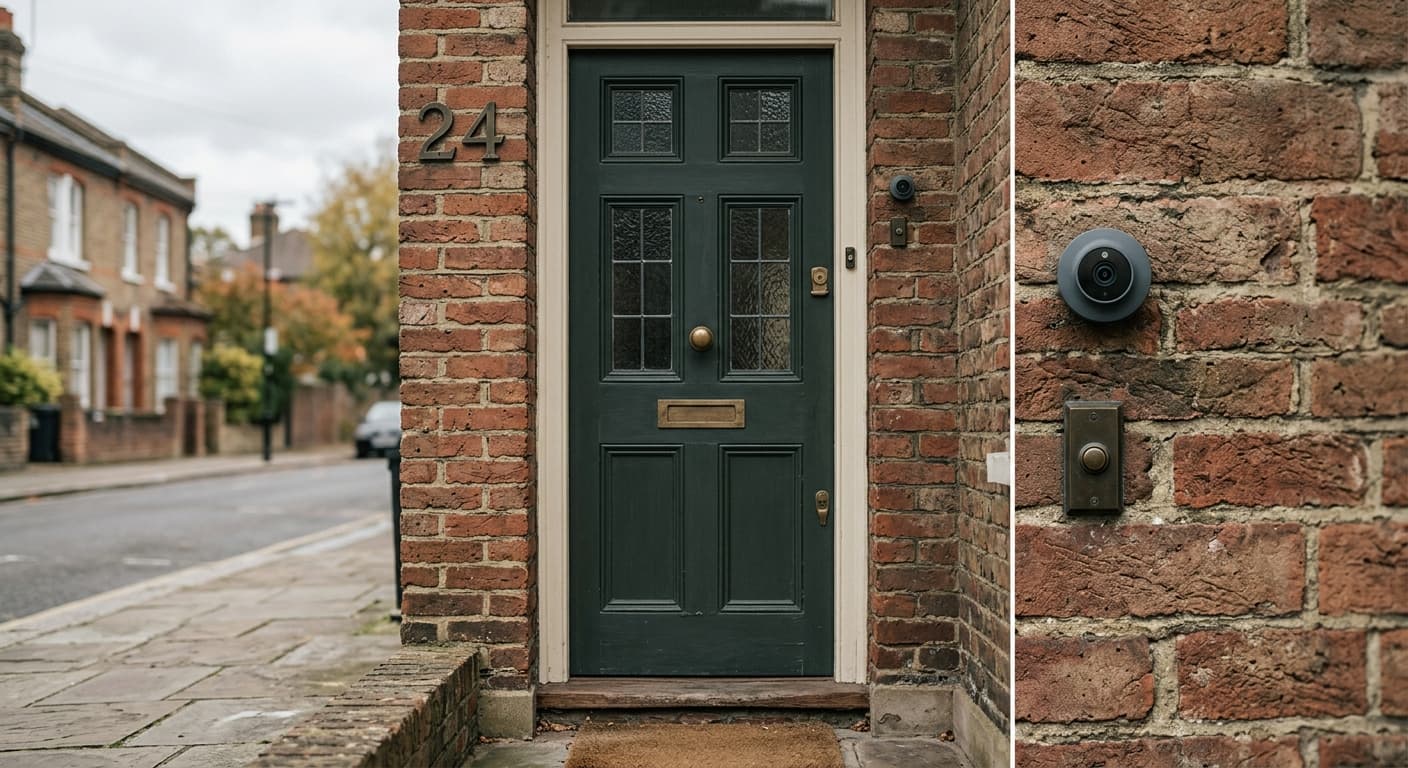
Ring doorbells are a common security feature in Washington, DC, from Capitol Hill row houses to apartment buildings in Northwest. The District of Columbia occupies a unique legal position as a federal district, not a state, which means DC has its own criminal code alongside federal law. For Ring doorbell owners, the key statute is D.C. Code 23-542, which governs the interception of wire and oral communications. Despite a common misconception that DC requires all-party consent, the District actually follows a one-party consent standard for audio recording. DC also stands out for its Private Security Camera Rebate Program, which provides financial incentives for residents to install cameras like Ring doorbells.
DC Audio Recording Laws and Ring Doorbells
Audio recording is the most significant legal concern with Ring doorbells in Washington, DC. Every Ring doorbell model includes a built-in microphone that captures sound alongside video, bringing the District's wiretapping statute into play.
One-Party Consent Rule
Washington, DC follows a one-party consent framework under D.C. Code 23-542. The statute prohibits the willful interception of wire or oral communications. However, D.C. Code 23-542(b)(3) provides an exception for a person not acting under color of law to intercept a wire or oral communication where such person is a party to the communication, or where one of the parties to the communication has given prior consent to such interception.
There is a common misconception that DC is an all-party consent jurisdiction. This is incorrect. The statute's plain language permits recording when at least one party to the conversation consents, placing DC squarely in the one-party consent category alongside the majority of U.S. states.
For Ring doorbell owners, this means the audio recording is legal when the homeowner participates in the conversation. When a visitor rings the doorbell and the homeowner answers through the Ring app, the homeowner is a party to that exchange. Their participation satisfies the one-party consent requirement.
Important Limitation on Consent
D.C. Code 23-542(b)(3) includes a critical limitation. The one-party consent exception does not apply if the communication is intercepted for the purpose of committing any criminal or tortious act in violation of the Constitution or laws of the United States, any State, or the District of Columbia, or for the purpose of committing any other injurious act. This means the recording cannot be made with the intent to use it for an unlawful purpose. Recording for legitimate home security purposes satisfies this requirement.
When Audio Recording Raises Concerns
The legal gray area emerges when a Ring doorbell passively records conversations the homeowner is not part of. If two people have a private conversation on the front steps and the Ring device captures that audio, the homeowner has potentially intercepted a communication without the consent of any participant.
D.C. Code 23-541(2) defines "oral communication" as any oral communication uttered by a person exhibiting an expectation that such communication is not subject to interception under circumstances justifying such expectation. A conversation on an open front porch or stoop in a dense urban environment like DC, where foot traffic is constant and passersby are within earshot, may not carry a reasonable expectation of privacy. No DC court has directly addressed this question in the context of Ring doorbells, as of April 2026.
Practical Steps for Audio Compliance
Ring devices allow homeowners to disable audio recording through the app settings. DC residents who want to eliminate any legal ambiguity can turn off the microphone while keeping video surveillance active. This removes the wiretapping concern while preserving the core security functionality.
Video Recording Laws in DC
Washington, DC's approach to video surveillance involves multiple statutory provisions, reflecting the District's dual nature as both a residential community and the seat of the federal government.
Voyeurism Statute
D.C. Code 22-3531 is narrower than its reputation, and it is worth reading the categories closely. Subsections (b) and (c) reach secretly or surreptitiously observing, and electronically recording without express and informed consent, an individual who is using a bathroom or rest room, totally or partially undressed or changing clothes, or engaging in sexual activity. Subsection (d) makes it unlawful to intentionally capture an image of a private area of an individual, which subsection (a)(2) defines as the naked or undergarment-clad genitals, pubic area, anus, or buttocks, or female breast below the top of the areola, under circumstances in which the individual has a reasonable expectation of privacy and without express and informed consent.
A reasonable expectation of privacy is a qualifier that operates inside those categories. The statute does not prohibit recording generally wherever someone might expect privacy.
The statute also carries express exceptions in subsection (e). D.C. Code 22-3531(e)(2) exempts security monitoring in one's own home, which is the provision most directly relevant to a resident with a Ring doorbell. D.C. Code 22-3531(e)(3) separately exempts security monitoring in any building where there are signs prominently displayed informing persons that the entire premises or designated portions of the premises are under surveillance.
A Ring doorbell camera pointed at a front door, stoop, walkway, or sidewalk captures areas where people do not have a reasonable expectation of privacy. These public-facing areas in DC's neighborhoods, from Georgetown to Anacostia, are spaces where residents and visitors expect to be observed.
Signage Considerations
The signage exception in D.C. Code 22-3531(e)(3) is written around buildings and premises under surveillance, but a resident does not need to rely on it. D.C. Code 22-3531(e)(2) separately exempts security monitoring in one's own home, and it attaches no signage condition. For residential Ring doorbell cameras, recording video in public-facing areas does not require signage. Posting a small notice indicating that recording is in progress can still be useful, but it is not a statutory requirement for residential doorbell cameras.
Limits on Video Recording
Angling a Ring camera into a neighbor's home creates legal risk in DC, though the voyeurism statute only reaches its enumerated categories. Capturing a neighbor who is using a bathroom, totally or partially undressed or changing clothes, or engaging in sexual activity, or intentionally capturing an image of a private area as subsection (a)(2) defines it, can violate D.C. Code 22-3531. Violations are classified as misdemeanors punishable by a fine of up to $2,500 or imprisonment for up to 1 year, or both.
DC's Private Security Camera Rebate Program
Washington, DC is one of the few jurisdictions in the country that actively encourages residents to install security cameras through a government rebate program. The Private Security Camera System Incentive Program, established under D.C. Code 7-2831 and administered by the Office of Victim Services and Justice Grants (OVSJG), provides financial incentives for purchasing and installing security cameras, including Ring doorbells.
Program Details
As of April 2026, the program offers a rebate of up to $200 per camera and a maximum of $500 per residential address. To qualify, residents purchase and install their security camera system, then apply for the rebate through OVSJG. Ring doorbells and similar video doorbell cameras are eligible devices under the program.
Registration with Metropolitan Police
Registering the camera with the Metropolitan Police Department (MPD) is a condition of receiving the rebate, not an optional step. D.C. Code 7-2831(a)(2) provides that a security camera system purchased and installed under the program shall be registered with MPD, and D.C. Code 7-2831(b)(2) lists registration among the eligibility requirements a property owner or lessee must meet to claim the rebate. OVSJG's program instructions match the statute and tell applicants not to submit a rebate application until the equipment is installed and registered with MPD. Enrolling in CameraConnect DC outside the rebate program remains voluntary.
Registration does not give police direct access to the camera feed. It lets MPD know where private security cameras are located so officers can request footage from the owner if an incident occurs nearby, and the homeowner retains full control over whether to share footage. Under D.C. Code 7-2831(f)(2), program rules also require the recipient to certify that the system will not be used to intentionally record specific individuals conducting lawful activity.
HOA and Condo Association Rules in DC
Washington, DC has a large condominium population, and condo associations can set rules that affect Ring doorbell installation. The District governs condominiums under D.C. Code Title 42, Chapter 19 (Condominium Act of 1976).
What Associations Can Restrict
Under D.C. Code 42-1903.08, unit owners' associations have the power to adopt and amend bylaws or rules and regulations for the governance and operation of the condominium. This authority can extend to regulating exterior modifications, including the installation of doorbell cameras.
A front door in a DC condo building may be considered a common element or limited common element under the condominium declaration. If so, the association has authority over what can be attached to it. Some DC condo boards have adopted specific policies addressing Ring doorbells and similar devices, often requiring board approval before installation.
The Department of Housing and Community Development (DHCD) publishes a Condominium Association Bill of Rights and Responsibilities that outlines the general rights and obligations of unit owners and associations in the District. Reviewing this document alongside the specific condo's governing documents provides the clearest picture of what is permitted.
Navigating Association Requirements
Before purchasing a Ring doorbell, DC residents in a condo or HOA community should review the declaration, bylaws, and any house rules for provisions about security devices, exterior modifications, or electronic equipment. Requesting written approval from the board before installation creates documentation that protects the unit owner if disputes arise.
Landlord and Tenant Rights in DC
Washington, DC has some of the strongest tenant protection laws in the country, which adds important context for Ring doorbell installation in rental properties.
Tenant Installation Rights
DC tenants generally need landlord permission before making modifications to the rental property. The District's landlord-tenant statutes (D.C. Code Title 42, Chapters 32 and 35) govern the relationship between housing providers and tenants. A Ring doorbell that requires drilling into a door frame or wall qualifies as a physical modification that typically requires landlord approval.
Battery-powered Ring models that attach with adhesive mounting may present fewer issues, but tenants should still check the lease for provisions about exterior modifications, security devices, or electronic equipment. Getting written landlord approval before installation prevents disputes and protects the security deposit.
The Office of the Tenant Advocate (OTA) provides guidance on tenant rights in the District. Tenants with questions about installing security devices can contact OTA for assistance.
Landlord Obligations
DC landlords who install Ring doorbells on rental properties must comply with the District's recording laws. Landlords cannot use Ring doorbells to record tenants' private conversations without consent. Placing recording devices where tenants have a reasonable expectation of privacy, such as a bathroom or bedroom inside the unit, could violate both D.C. Code 23-542 (wiretapping) and D.C. Code 22-3531 (voyeurism). The home security exception in D.C. Code 22-3531(e)(2) covers monitoring in one's own home, and a unit occupied by a tenant is the tenant's home.
Landlords who provide Ring doorbells as part of the rental property should disclose the device and its recording capabilities to tenants. Including this disclosure in the lease agreement helps both parties understand the boundaries.
Law Enforcement Access to Ring Footage in DC
Law enforcement in Washington, DC has access to an extensive public camera network, but private Ring doorbell footage remains under the homeowner's control unless law enforcement follows proper legal channels.
Voluntary and Compelled Disclosure
DC police, including the Metropolitan Police Department (MPD), can ask a homeowner to voluntarily share Ring footage. The homeowner has the right to agree or decline. If the homeowner declines, law enforcement can obtain a search warrant based on probable cause, or pursue a subpoena or court order.
Under the Fourth Amendment to the U.S. Constitution, a search warrant requires probable cause and judicial approval. DC's own procedures for intercepting communications under D.C. Code 23-546 through 23-550 establish additional requirements for law enforcement access to electronic communications.
CameraConnect DC and Police Access
The MPD's CameraConnect DC program allows residents to register their security cameras, including Ring doorbells. Enrollment is voluntary on its own, though registration becomes mandatory for anyone claiming the OVSJG rebate. Registration does not grant police direct access to camera feeds or stored footage. If an incident occurs nearby, MPD may contact the registered camera owner to request footage. The owner retains full discretion over whether to share.
Ring's Disclosure Policies
As of April 2026, Ring (owned by Amazon) requires a valid legal order before sharing customer footage with law enforcement. Ring ended its previous practice of allowing police to request footage directly from users through the Neighbors app.
Ring does maintain an exception for emergency situations. When law enforcement certifies imminent danger of death or serious physical injury, Ring may provide footage without a warrant or the user's consent.
FTC Enforcement and Ring Privacy
The Federal Trade Commission took action against Ring LLC in May 2023, charging the company with failing to restrict employee and contractor access to customer videos and failing to implement basic security protections. Ring agreed to pay $5.8 million in consumer refunds. The FTC distributed payments to over 117,000 affected customers in 2024. DC Ring users should enable two-factor authentication and keep firmware updated to protect against unauthorized access.
Penalties for Illegal Recording in DC
Washington, DC imposes both criminal and civil penalties for recording violations.
Illegal Interception (D.C. Code 23-542)
Willfully intercepting wire or oral communications without proper consent is punishable by a fine of up to $12,500 or imprisonment for up to 5 years, or both. The fine amount is set under the District's general criminal fine schedule in D.C. Code 22-3571.01.
Civil Liability for Interception (D.C. Code 23-554)
Any person whose wire or oral communication is intercepted in violation of D.C. Code 23-542 has a civil cause of action. The victim can recover actual damages or liquidated damages computed at the rate of $100 per day of violation, with a minimum of $1,000, whichever is higher, plus punitive damages and reasonable attorney's fees and litigation costs.
Voyeurism (D.C. Code 22-3531)
Secretly observing or electronically recording a person who is using a bathroom, undressed or changing clothes, or engaged in sexual activity, and intentionally capturing an image of a private area under circumstances in which the individual has a reasonable expectation of privacy without consent, are misdemeanors. Penalties include a fine of up to $2,500 or imprisonment for up to 1 year, or both. Distributing images taken in violation of the statute is a felony carrying up to 5 years.
Federal Law Considerations
Because DC is a federal district, both D.C. law and federal law apply. The federal Wiretap Act (18 U.S.C. 2511) also follows a one-party consent standard. A recording that complies with D.C. Code 23-542 will generally comply with the federal Wiretap Act as well, since both require only one-party consent.
How to Use a Ring Doorbell Legally in DC
These guidelines help DC residents use Ring doorbell cameras within the law.
Position the Camera Appropriately
Point the Ring doorbell toward your own property: the front door, stoop, walkway, and sidewalk approach. Avoid angling the camera to capture the interior of a neighbor's home, particularly bathrooms, bedrooms, or changing areas.
Consider the DC Camera Rebate Program
Before purchasing a Ring doorbell, check whether the OVSJG Private Security Camera Rebate Program is accepting applications. The rebate of up to $200 per camera can offset a significant portion of the cost. Plan on registering the camera with MPD, since D.C. Code 7-2831(b)(2) makes registration a condition of the rebate.
Consider Disabling Audio Recording
Turning off the microphone through the Ring app eliminates the primary legal risk under DC's wiretapping statute. Video-only recording avoids triggering D.C. Code 23-542 entirely while still providing effective home security.
Know the Home Security Exception
D.C. Code 22-3531(e)(2) exempts security monitoring in one's own home from the voyeurism statute. A resident running a Ring doorbell on their own property is squarely inside that exception, which is a stronger footing than the signage exception in subsection (e)(3). Posting a visible notice that audio and video recording is in progress is still a reasonable courtesy, but DC does not require signage for residential security cameras.
Review Condo and Lease Terms
Check the condominium declaration, bylaws, and house rules before installing a Ring doorbell in a DC condo building. Tenants should get written landlord approval before installation. Contact the Office of the Tenant Advocate with questions about tenant rights regarding security devices.
Understand Law Enforcement Requests
DC homeowners are not legally required to share Ring footage with police upon a verbal request. The homeowner can decline and ask that police obtain a warrant. Registering a camera with CameraConnect DC, whether voluntarily or as a rebate condition, does not waive the homeowner's right to refuse a request.
Enable Security Features
Enable two-factor authentication on the Ring account, use a strong unique password, and keep the Ring app and device firmware updated. The FTC's 2023 enforcement action against Ring underscored the importance of these measures.
More DC Laws
Washington, DC has additional laws that affect residents' daily lives. Here are related legal topics:
- DC Recording Laws cover all aspects of audio and video recording consent in the District.
- DC Hit and Run Laws explain the legal requirements after a traffic accident.
- DC Lemon Law protects consumers who purchase defective vehicles.
This article provides general legal information about Ring doorbell laws in Washington, DC, not legal advice. Laws and their interpretations can change. Consult an attorney licensed in the District of Columbia for advice specific to your situation.
Frequently Asked Questions
Is Washington, DC a one-party or all-party consent jurisdiction for recording?
Washington, DC is a one-party consent jurisdiction under D.C. Code 23-542. This means at least one party to a conversation must consent to the recording for it to be legal. A common misconception classifies DC as an all-party consent jurisdiction, but the statute's plain language permits recording when one party consents, provided the recording is not made for the purpose of committing a criminal, tortious, or injurious act.
Is it legal to have a Ring doorbell in Washington, DC?
Yes, using a Ring doorbell is legal in DC. Video recording from your own property is broadly permitted, and D.C. Code 22-3531(e)(2) expressly exempts security monitoring in one's own home from the voyeurism statute. Audio recording is legal when you participate in the conversation, satisfying DC's one-party consent requirement under D.C. Code 23-542. DC even offers a Private Security Camera Rebate Program that reimburses residents up to $200 per camera for purchasing security devices like Ring doorbells.
Can my neighbor's Ring doorbell legally record me in DC?
A Ring doorbell that captures video of public-facing areas like sidewalks, stoops, and shared walkways is generally legal in DC. The District's voyeurism statute, D.C. Code 22-3531, is narrower than many people assume: it reaches secretly observing or recording someone using a bathroom, totally or partially undressed or changing clothes, or engaging in sexual activity, and intentionally capturing an image of a private area. A camera deliberately angled to capture one of those things could violate the statute, a misdemeanor punishable by up to 1 year in jail. Recording that falls outside those categories is not voyeurism under DC law.
Can DC police access my Ring doorbell footage without my permission?
DC police cannot compel you to share Ring footage through a verbal request. You can voluntarily agree or decline. Registering with MPD's CameraConnect DC program does not give police direct access to your footage, even though registration is required if you claim the OVSJG camera rebate. If you decline to share footage, law enforcement can obtain a valid search warrant or subpoena to compel Amazon (Ring's parent company) to produce the footage.
Do I have to register my Ring doorbell with DC police to get the camera rebate?
Yes. D.C. Code 7-2831(a)(2) provides that a security camera system purchased and installed under the Private Security Camera System Incentive Program shall be registered with the Metropolitan Police Department, and D.C. Code 7-2831(b)(2) lists registration among the eligibility requirements for the rebate. OVSJG instructs applicants not to submit a rebate application until the equipment is installed and registered. Registering a camera with MPD outside the rebate program is voluntary, and registration never gives police direct access to your camera feed.
What are the penalties for illegally recording someone with a Ring doorbell in DC?
Illegal interception of communications under D.C. Code 23-542 carries a fine of up to $12,500 or imprisonment for up to 5 years, or both. Victims can also pursue civil damages of at least $1,000 or $100 per day of violation under D.C. Code 23-554. Voyeurism under D.C. Code 22-3531 is a misdemeanor with up to 1 year in jail and a $2,500 fine, and distributing images taken in violation of the statute is a felony carrying up to 5 years.
Updates
Corrected the description of DC’s voyeurism statute to its enumerated categories, added the statutory home-security exception in D.C. Code 22-3531(e)(2), and corrected the security-camera rebate section to state that registering the camera with MPD is a condition of the rebate.
Independently fact-checked against the cited primary sources; governing law re-checked for recent changes
Governing law re-checked for recent changes
Governing law re-checked for recent changes
Reviewed and approved by an editor
The Law Behind This Article
This article rests on the statutory provisions below, held in our own legal record and retrieved from the official source. Tap a section to read the operative text.
Code of the District of Columbia, Title 23: Criminal Procedure. - Chapter 5: Warrants and Arrests. - Subchapter III: Wire Interception and Interception of Oral Communications.
§ 23-542Interception, disclosure, and use of wire or oral communications prohibited.In forcecited in 22 of our articles
(a) Except as otherwise specifically provided in this subchapter, any person who in the District of Columbia — (1) willfully intercepts, endeavors to intercept, or procures any other person to intercept or endeavor to intercept any wire or oral communication; (2) willfully discloses or endeavors to disclose to any other person the contents of any wire or oral communication, or evidence derived therefrom, knowing or having reason to know that the information was obtained through the interception of a wire or oral communication; or (3) willfully uses or endeavors to use the contents of any wire or oral communication, or evidence derived therefrom, knowing or having reason to know, that the information was obtained through the interception of a wire or oral communication; shall be fined not more than the amount set forth in [§ 22-3571.01] or imprisoned not more than five years, or both; except that paragraphs (2) and (3) of this subsection shall not apply to the contents of any wire or oral communication, or evidence derived therefrom, that has become common knowledge or public information.
Official text (excerpt) · last checked 2026-08-31 · Read the full text in our law library · Verify at github.com
Cited in 16 court opinions in our collectionLatest citing opinion in our collection: 2024
In the courts (editorial summary, independently checked):District of Columbia courts have construed the one-party consent provision of D.C. Code 23-542(b)(2). United States v. Sell (1985) held the consent must be voluntary, the government meeting its burden by showing the party cooperated knowing what officers were doing. Thomas v. United States (2017) applied it to an interstate call.
Opinions citing this section in our collection:
- United States v. Sell (District of Columbia Court of Appeals 1985, 487 A.2d 225)✓Police recorded a woman's calls with an officer she accused of coercing sex acts. Construing the one-party consent provision for the first time, the court held the government need only show she cooperated knowing what police were doing, and reversed the suppression order.
- David Thomas v. United States (District of Columbia Court of Appeals 2017)“…s. & .lud. Proc. § 10- 402 [c)(.'£)(ii) (West 2015). Under D.C. Code § 23-542." the legislature has clearly defined w…”
- Thomas v. United States (District of Columbia Court of Appeals 2017, 171 A.3d 151)✓Police in the District recorded a call between a voyeurism victim and the defendant, who was in Maryland and did not consent. The court held this section governs admissibility in District courts and does not incorporate Maryland's two-party rule, so suppression was denied.
Identified automatically from the court opinions citing this section — not a ranking of which case controls.
§ 23-541Definitions.In forcecited in 5 of our articles
As used in this subchapter — (1) the term “wire communication” means any communication made in whole or in part through the use of facilities for the transmission of communications by the aid of wire, cable, or other like connection between the point of origin and the point of reception furnished or operated by any person engaged as a common carrier in providing or operating such facilities; (2) the term “oral communication” means any oral communication uttered by a person exhibiting an expectation that the communication is not subject to interception under circumstances justifying the expectation; (3) the term “intercept” means the aural acquisition of the contents of any wire or oral communication through the use of any intercepting device; (4) the term “intercepting device” means any electronic, mechanical, or other device or apparatus which can be used to intercept a wire or oral communication other than — (A) any telephone or telegraph instrument, equipment, or facility, or any component thereof, (i) furnished to the subscriber or user by a communications common carrier in the ordinary course of its business and being used by the subscriber or user in the ordinary course…
Official text (excerpt) · last checked 2026-07-30 · Read the full text in our law library · Verify at github.com
Cited in 8 court opinions in our collectionLatest citing opinion in our collection: 2023
Opinions citing this section in our collection:
- United States v. Sell (District of Columbia Court of Appeals 1985, 487 A.2d 225)“…itution because she had not recanted her statement. . D.C.Code §§ 23-541, -556 (1981). . Section 23-542(b)…”
- United States v. Gerald F. Johnson, United States of America v. Thomas Johnson, United States of America v. Edward T. Wooten (Court of Appeals for the D.C. Circuit 1982, 696 F.2d 115)“…conceded, D.C.Code Ann. § 23-547 (1981), read together with D.C.Code Ann. § 23-541(7) (1981), explicitly authorizes the is…”
- Democracy Partners, LLC v. Project Veritas Action Fund (District Court, District of Columbia 2018)“…against all defendants (id. ¶¶ 78-85); (4) violation of D.C. Code § 23-541 et seq. (“D.C. Wiretap Act”) against al…”
Identified automatically from the court opinions citing this section — not a ranking of which case controls.
§ 23-554Authorization for recovery of civil damages.In forcecited in 14 of our articles
(a) Any person whose wire or oral communication is intercepted, disclosed, or used in violation of this subchapter shall — (1) have a civil cause of action against any person who intercepts, discloses, or uses, or procures any other person to intercept, disclose, or use, such communications; and (2) be entitled to recover from any such person — (A) actual damages, but not less than liquidated damages computed at the rate of $100 a day for each day of violation, or $1,000 whichever is higher; (B) punitive damages; and (C) a reasonable attorney’s fee and other litigation costs reasonably incurred. (b) Good faith reliance on a court order or legislative authorization shall constitute a complete defense to an action brought under this section or any other law. (c) As used in this section, the term “person” includes the District of Columbia. The District of Columbia shall not assert any governmental immunity to avoid liability under this section. Judgment against the District of Columbia shall not constitute a bar to action against any other person.
Official text (excerpt) · last checked 2026-07-30 · Read the full text in our law library · Verify at github.com
Cited in 3 court opinions in our collectionLatest citing opinion in our collection: 2022
Opinions citing this section in our collection:
- Democracy Partners, LLC v. Project Veritas Action Fund (District Court, District of Columbia 2020)“…each day of violation, or $1,000, whichever is higher. See D.C. Code § 23-554(a)(2)(A). Both statutes also allow for…”
- Council on American-Islamic Relations Action Network, Inc. v. Gaubatz (District Court, District of Columbia 2022)“…oral or wire communication.” D.C. Code § 23-542(a)(2)-(3); D.C. Code § 23-554(a)(1) (authorizing civil action for re…”
Identified automatically from the court opinions citing this section — not a ranking of which case controls.
Code of the District of Columbia, Title 22: Criminal Offenses and Penalties. - Chapter 35A: Voyeurism.
§ 22-3531Voyeurism.In forcecited in 12 of our articles
(a) For the purposes of this section, the term: (1) “Electronic device” means any electronic, mechanical, or digital equipment that captures visual or aural images, including cameras, computers, tape recorders, video recorders, and cellular telephones. (2) “Private area” means the naked or undergarment-clad genitals, pubic area, anus, or buttocks, or female breast below the top of the areola. (b) Except as provided in subsection (e) of this section, it is unlawful for any person to occupy a hidden observation post or to install or maintain a peephole, mirror, or any electronic device for the purpose of secretly or surreptitiously observing an individual who is: (1) Using a bathroom or rest room; (2) Totally or partially undressed or changing clothes; or (3) Engaging in sexual activity. (1) Except as provided in subsection (e) of this section, it is unlawful for a person to electronically record, without the express and informed consent of the individual being recorded, an individual who is: (A) Using a bathroom or rest room; (B) Totally or partially undressed or changing clothes; or (C) Engaging in sexual activity.
Official text (excerpt) · last checked 2026-08-31 · Read the full text in our law library · Verify at github.com
Cited in 14 court opinions in our collectionLatest citing opinion in our collection: 2026
In the courts (editorial summary, independently checked):BERNARD FREUNDEL v. UNITED STATES (2016) held section 22-3531(c) permits a separate punishment for each person unlawfully recorded, upholding 52 counts. In re Prosecution of Clinton Perrow (2017) held subsection (g), which assigned voyeurism prosecutions to the DC Attorney General, invalid under the Home Rule Act.
Opinions citing this section in our collection:
- BERNARD FREUNDEL v. UNITED STATES (District of Columbia Court of Appeals 2016, 146 A.3d 375)✓A rabbi hid cameras in a mikvah changing room and recorded 52 women undressing over several years; the court held section 22-3531(c) is directed at individual privacy and permits a separate conviction and sentence for each victim recorded.
- In re Prosecution of Clinton Perrow (District of Columbia Court of Appeals 2017, 172 A.3d 894)✓A man was charged with voyeurism for using his phone to record under a woman's dress; the court held voyeurism is a distinct offense from disorderly conduct or lewd acts, so subsection (g) assigning it to the DC Attorney General is invalid.
- Mario Giovani Valendzuela-Castillo v. United States (District of Columbia Court of Appeals 2018, 180 A.3d 74)✓A restaurant worker quietly entered a ladies' room and lay on the floor to look under a stall door at a customer; the court held that position was a hidden observation post under section 22-3531(b)(1) even though he was concealed only briefly.
Identified automatically from the court opinions citing this section — not a ranking of which case controls.
Code of the District of Columbia, Title 7: Human Health Care and Safety. - Chapter 28: Security and Fire Alarm Systems Regulations. - Subchapter II: Private Security Camera System Incentive Program.
§ 7-2831Private Security Camera System Incentive Program.In forcecited in 2 of our articles
(1) There is established a Private Security Camera System Incentive Program ("Program"), to be administered by the Mayor, to encourage the purchase and installation of the following: (A) A security camera system on the exterior of a building owned or leased by an individual, business, nonprofit, religious institution, or an entity as that term is defined in § 29-101.02(10); (B) A security camera system on the interior of a building owned or leased by a business that has less than $2.5 million federal gross receipts or sales; and (C) Glass break sensors installed on the interior of a building owned or leased by a business that has less than $2.5 million federal gross receipts or sales. (2) A security camera system purchased and installed pursuant to paragraph (1)(A) or (B) of this subsection shall be registered with the Metropolitan Police Department.
Official text (excerpt) · last checked 2026-07-30 · Read the full text in our law library · Verify at github.com
Code of the District of Columbia, Title 42: Real Property. - Chapter 19: Condominiums. - Subchapter III: Control and Governance of Condominiums.
§ 42-1903.08Unit owners’ associations; powers and rights; deemed attorney-in-fact to grant and accept beneficial easements.In force
(a) Except to the extent expressly prohibited by the condominium instruments, and subject to any restrictions and limitations specified herein, the unit owners’ association shall have the: (1) Power to adopt and amend bylaws or rules and regulations; (2) Power to adopt and amend a budget for revenues, expenditures, and reserves, and collect assessments for common expenses from unit owners; (3) Power to hire or discharge a managing agent or other employees, agents, or independent contractors; (4) Power to institute, defend, or intervene in litigation or administrative proceedings in the name of the unit owners’ association on behalf of the unit owners’ association or 2 or more unit owners on any matter that affects the condominium; (5) Power to make a contract or incur liability; (6) Power to regulate the use, maintenance, repair, replacement, or modification of common elements; (7) Power to cause an additional improvement to be made as a part of the common elements; (8) Power to acquire, hold, encumber, or convey in the name of the unit owners’ association any right, title, or interest to real or personal property; (9) Power to grant an easement, lease, license, or…
Official text (excerpt) · last checked 2026-07-30 · Read the full text in our law library · Verify at github.com
Cited in 3 court opinions in our collectionLatest citing opinion in our collection: 2024
Opinions citing this section in our collection:
- Rayner v. Yale Steam Laundry Condo. Ass'n. (District of Columbia Court of Appeals 2023)“…VI (retaliatory action) to clarify its statutory basis in D.C. Code § 42-1903.08(a)(11). 6 The trial court grant…”
- May v. River East at Grandview (District of Columbia Court of Appeals 2024)“…iding for their care, upkeep, and maintenance for repairs, D.C. Code § 42-1903.08(d)—after the “expiration of the period…”
- Unit Owners Ass'n of 2337 Champlain St. Condo. v. 2337 Champlain St., LLC (District of Columbia Court of Appeals 2024)“…f law has been fully briefed and argued. 40 D.C. Code § 42-1903.08(b). As discussed above, the declarant o…”
Identified automatically from the court opinions citing this section — not a ranking of which case controls.
Code of the District of Columbia, Title 22: Criminal Offenses and Penalties. - Chapter 35B: Fines for Criminal Offenses.
§ 22-3571.01Fines for criminal offenses.In forcecited in 9 of our articles
(a) Notwithstanding any other provision of the law, and except as provided in § 22-3571.02, a defendant who has been found guilty of an offense under the District of Columbia Official Code punishable by imprisonment may be sentenced to pay a fine as provided in this section. (b) An individual who has been found guilty of such an offense may be fined not more than the greatest of: (1) $100 if the offense is punishable by imprisonment for 10 days or less; (2) $250 if the offense is punishable by imprisonment for 30 days, or one month, or less but more than 10 days; (3) $500 if the offense is punishable by imprisonment for 90 days, or 3 months, or less but more than 30 days; (4) $1,000 if the offense is punishable by imprisonment for 180 days, or 6 months, or less but more than 90 days; (5) $2,500 if the offense is punishable by imprisonment for one year or less but more than 180 days; (6) $12,500 if the offense is punishable by imprisonment for 5 years or less but more than one year; (7) $25,000 if the offense is punishable by imprisonment for 10 years or less but more than 5 years; (8) $37,500 if the offense is punishable by imprisonment for 15 years or less but more than…
Official text (excerpt) · last checked 2026-07-30 · Read the full text in our law library · Verify at github.com
Cited in 5 court opinions in our collectionLatest citing opinion in our collection: 2025
Opinions citing this section in our collection:
- Gilberto Lopez-Ramirez v. United States (District of Columbia Court of Appeals 2017, 171 A.3d 169)“…dardized the maximum fine for 180-day crimes at 31,000. See D.C. Code § 22-3571.01 ibi (2012 Repi. a supp. 2014); 60 D.C.R…”
- Mario Giovani Valendzuela-Castillo v. United States (District of Columbia Court of Appeals 2018, 180 A.3d 74)“…eamlining Act set maximum fines for misdemeanors at $1000); D.C. Code § 22-3571.01 (2013 Repl.) (standardizing $1000 as th…”
- Tornero v. United States (District of Columbia Court of Appeals 2025)“…onment may be sentenced to pay a fine as provided” therein. D.C. Code § 22-3571.01(a). The provision also enumerates the s…”
Identified automatically from the court opinions citing this section — not a ranking of which case controls.
United States Code Title 18
§ 2511Interception and disclosure of wire, oral, or electronic communications prohibitedIn forcecited in 422 of our articles
Except as otherwise specifically provided in this chapter any person who— intentionally intercepts, endeavors to intercept, or procures any other person to intercept or endeavor to intercept, any wire, oral, or electronic communication; intentionally uses, endeavors to use, or procures any other person to use or endeavor to use any electronic, mechanical, or other device to intercept any oral communication when— such device is affixed to, or otherwise transmits a signal through, a wire, cable, or other like connection used in wire communication; or such device transmits communications by radio, or interferes with the transmission of such communication; or such person knows, or has reason to know, that such device or any component thereof has been sent through the mail or transported in interstate or foreign commerce; or such use or endeavor to use (A) takes place on the premises of any business or other commercial establishment the operations of which affect interstate or foreign commerce; or (B) obtains or is for the purpose of obtaining information relating to the operations of any business or other commercial establishment the operations of which affect interstate or foreign…
Official text (excerpt) · last checked 2026-08-28 · Read the full text in our law library · Verify at uscode.house.gov
Cited in 2,045 court opinions in our collectionLatest citing opinion in our collection: 2026
In the courts (editorial summary, independently checked):Griggs-Ryan v. Smith (1990) applied the Section 2511(2)(d) prior-consent exception, treating a tenant repeatedly told that all incoming calls were taped as having impliedly consented. United States v. United States District Court (1972) read the then-current Section 2511(3) as conferring no presidential surveillance power.
Opinions citing this section in our collection:
- Mitchell v. Forsyth (Supreme Court of the United States 1985, 472 U.S. 511)✓The Attorney General authorized a warrantless 1970 national security wiretap that caught the plaintiff's calls; the Court held the since-repealed Section 2511(3) disclaimer left the tap lawful under Title III, and that Mitchell had qualified immunity.
- United States v. United States District Court for the Eastern District of Michigan (Supreme Court of the United States 1972, 407 U.S. 297)✓The Attorney General approved warrantless wiretaps on members of a domestic group accused of bombing a CIA office; the Court read Section 2511(3) as a congressional disclaimer conferring no surveillance power, then held the Fourth Amendment required prior judicial approval.
- Forsyth v. Barr (Court of Appeals for the Fifth Circuit 1994, 19 F.3d 1527)✓Dallas police used, in an internal affairs probe of an officer, calls private parties allegedly intercepted illegally; assuming that was unlawful, the Fifth Circuit held Section 2517(1) and (2) allowed the disclosure and use, defeating the Section 2511(1)(c) and (d) claims.
Identified automatically from the court opinions citing this section — not a ranking of which case controls.
Search our full record of US law — 2.1 million sections, every state + federal →
Sources and References
- D.C. Code 23-542 - Interception, Disclosure, and Use of Wire or Oral Communications Prohibited(code.dccouncil.gov).gov
- D.C. Code 23-541 - Definitions (Wire Interception and Interception of Oral Communications)(code.dccouncil.gov).gov
- D.C. Code 23-554 - Authorization for Recovery of Civil Damages(code.dccouncil.gov).gov
- D.C. Code 22-3531 - Voyeurism(code.dccouncil.gov).gov
- D.C. Code 22-3571.01 - Fines for Criminal Offenses(code.dccouncil.gov).gov
- D.C. Code 7-2831 - Private Security Camera System Incentive Program(code.dccouncil.gov).gov
- Private Security Camera Rebate Program - OVSJG(ovsjg.dc.gov).gov
- CameraConnect DC - Metropolitan Police Department(mpdc.dc.gov).gov
- D.C. Code 42-1903.08 - Unit Owners Associations Powers and Rights(code.dccouncil.gov).gov
- Condominium Association Bill of Rights and Responsibilities - DHCD(dhcd.dc.gov).gov
- Office of the Tenant Advocate - Tenant Bill of Rights(ota.dc.gov).gov
- FTC Says Ring Employees Illegally Surveilled Customers (May 2023)(ftc.gov).gov